
But most brands still treat tax season as a compliance calendar event—a predictable window to launch awareness campaigns, run some display, and hope the funnel delivers. In 2026, that playbook is leaving money on the field. The brands that win "Tax Day" will be those that have already moved past seasonal thinking altogether, building media operations around outcome-driven automation, transparent cross-channel intelligence, and a consumer who skips the ten blue links entirely. They ask a question and trust the first answer they get.
Consider the benchmark being set at the top of the market. Intuit's TurboTax campaign this season stretches across partnerships with the NCAA, Netflix, Amazon Prime Video, and even Fortnite Creative—a full-funnel, multi-channel operation powered by agentic AI and backed by a network of 13,000 human tax experts. That's what "all-in" looks like at scale. For brands without a nine-figure media budget, the competitive lever isn't volume of spend. It's speed, precision, and trust.
The $65 billion question: Who captures refund-driven intent?
Start with the macro picture, because it sets the stakes for everything that follows.
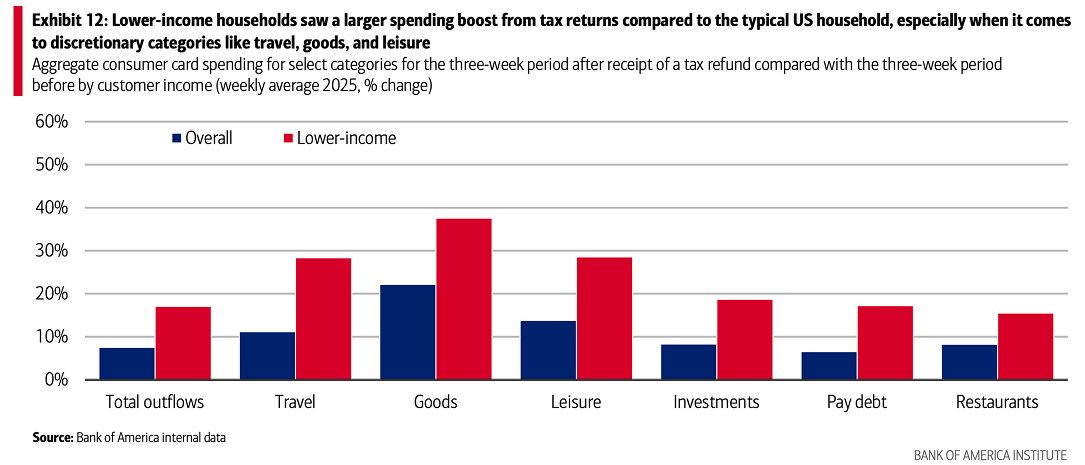
- Bank of America estimates that 2026 tax refunds will land roughly $65 billion higher than last year—an 18% jump—with the total consumer stimulus from the One Big Beautiful Bill Act reaching $135 to $140 billion.
- The average refund has already climbed past $3,800, and the House Ways and Means Committee projects an 18% increase over 2025, fuelled by expanded deductions on tips, overtime, auto loan interest, and a significantly raised SALT cap. By any measure, this is the largest refund season in recent memory.
Where does that money go? Morgan Stanley's consumer research points to hardline retail, casual dining, travel, and apparel as the clearest beneficiaries, estimating that the outsized refunds could drive a 4.1% lift in real disposable income during Q1. But this isn't a rising tide that lifts all boats. BofA's data reveals a persistent "K-shaped" dynamic: higher-income household spending grew 2.4% in the months leading into 2026, while lower-income households managed just 0.4%. The windfall lands unevenly, and smart targeting needs to reflect that.

The strategic opportunity here isn't about reaching "taxpayers" as a broad audience. It's about intercepting refund-driven intent at the moment the money hits—and doing so through channels that combine real-time audience signals with the immersive attention of a big screen. Comscore's 2026 State of Programmatic Report found that CTV and audio are the only two channels seeing year-over-year programmatic budget growth, with 45% of marketers actively shifting spend from linear TV into CTV. That's where the attention is migrating. Refund-season media plans need to follow.
{{super-bowl-1="/tables"}}
The automation gap: When the professionals evolve, the messaging must too
Tax season has always been defined by the people who make it work—the accountants, preparers, and advisors pulling long hours through April. But in 2026, the nature of that work is fundamentally changing, and the shift carries implications well beyond the profession itself.
The pressure is structural.
- Over 300,000 accountants have left the profession since 2020, with three-quarters of CPAs approaching retirement age.
- Firms can't hire their way out of this—so they're building their way out instead. Wolters Kluwer reports that 72% of tax and accounting professionals now use AI on a weekly basis.
- Basis, an AI startup building autonomous agents for tax preparation and financial close, hit a $1.15 billion valuation in February and is already deployed across 30% of the top 25 US accounting firms.
- Accrual launched the same month with $75 million in funding, claiming firms on its platform have cut preparation time by over 85%.
What does this mean for marketers? Something deceptively simple: the language of tax services is changing. The industry is moving from data entry to data validation, from compliance work to strategic advisory. Consumer-facing campaigns that still lead with "we handle the paperwork" are talking about a job that increasingly belongs to a machine. The winning creative in 2026 speaks to confidence, expertise, and financial outcomes, leaving process language behind.
{{super-bowl-2="/tables"}}
The "zero-click" advisor: If you're not the answer, you're invisible
Here's a scenario playing out millions of times this filing season. A consumer types "Should I convert my IRA to a Roth before April 15?" into ChatGPT, Perplexity, or Google's AI Overview. They receive a synthesized answer pulled from multiple sources. They never visit a single website. They never see your ad. And they make their decision based on whichever brand the algorithm decided to trust.
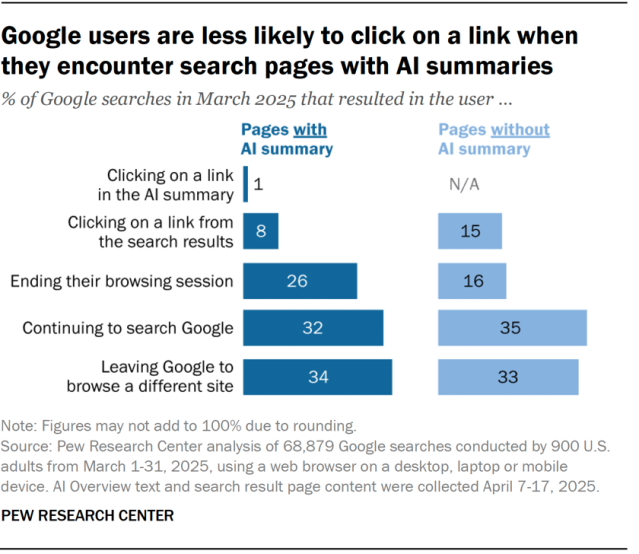
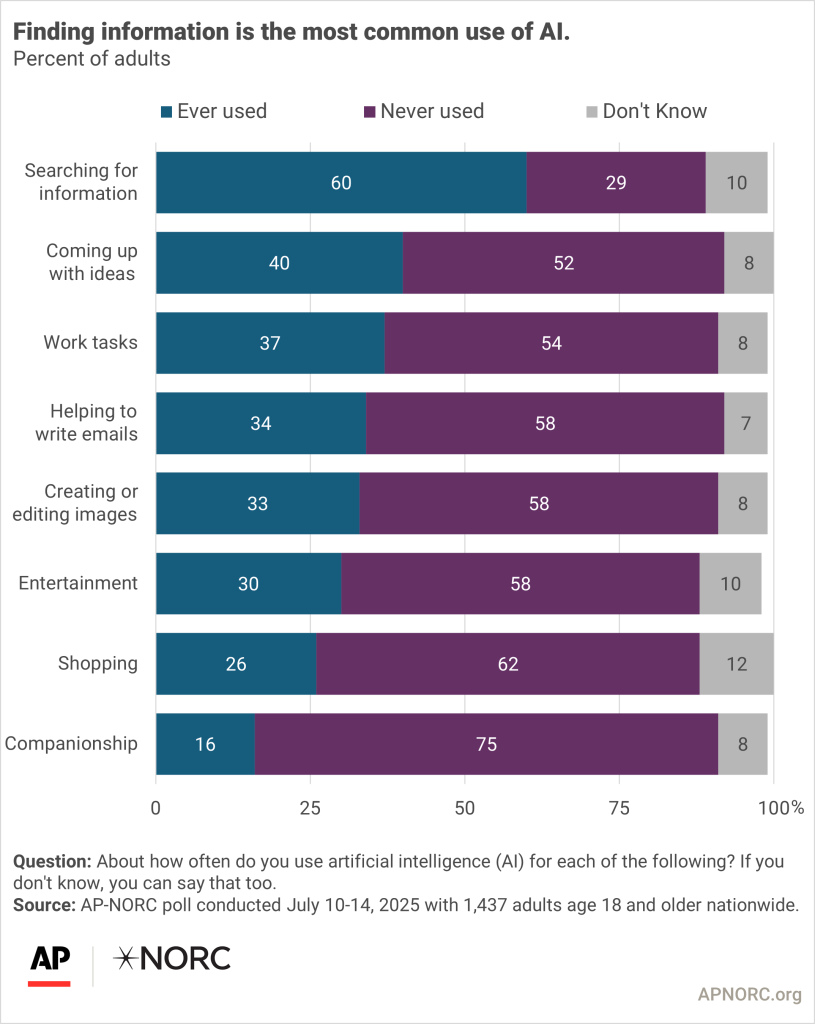
Call it a trend if you like, but it's already operating at scale. Organic search traffic for financial services has dropped 7% year-over-year according to Similarweb, while AP-NORC data shows 60% of US adults now use AI tools to search for information. ChatGPT alone now reaches 900 million weekly active users—a figure larger than the combined populations of the US, the EU, and Canada.
The emerging discipline designed to address this—Answer Engine Optimization, or AEO—is about structuring your content so that AI platforms can find it, verify it, and cite it as the authoritative answer. Not just rank it. Cite it. PwC's recent analysis of AI search in banking argues that SEO alone is no longer sufficient, and that AEO must now sit alongside it as a core marketing discipline.
This is where media strategy and content strategy have to stop operating as separate workstreams. In an Open Garden framework, cross-platform data visibility, unbiased inventory access, and structured authoritative content feed into the same system. If your media runs inside a walled garden silo while your content sits unstructured on a legacy CMS, you're invisible in the channels where consumers are actually making financial decisions. You're not in the answer. And if you're not in the answer, you're not in the consideration set.
The deepfake tax season: Transparency as a performance metric
Every tax season brings fraud. This one is different. Analysts have called 2026 the first "AI-native" fraud event—and the numbers justify the alarm. McAfee's research found that 84% of Americans worry AI is making tax scams more convincing, while nearly one in four report having already fallen victim to a tax-related scheme. Criminals are using voice cloning, deepfake video, and stolen preparer credentials to manufacture trust at scale—with phishing messages timed precisely to the filing calendar.
Marketers should take this personally. Consumers questioning the legitimacy of every message they receive means ad environment has moved from background detail to deciding factor. A financial services brand running on opaque programmatic supply during tax season risks blending into the very noise it's trying to rise above.
The CTV market is already forcing a reckoning on this front. As The Drum reported, agencies are "de-layering"—stripping out intermediaries between budget and inventory to regain visibility on fees and supply quality. Curated, transparent supply paths aren't just more cost-efficient. In a season of heightened consumer scepticism, they're how you protect the trust that makes your advertising work in the first place.
The three-week sprint: Why creative agility wins compressed windows
One final pressure point. The window of peak tax-season attention has been compressing for years, and in 2026, the meaningful action clusters into roughly three weeks—the run-up to April 15 when urgency overtakes everything else.
That compression demands a different kind of creative operation. Static campaigns planned in December and left to run don't cut it. The brands winning this window are those whose creative adapts in real time—educational and advisory in the early season, then shifting hard toward urgency and conversion as the deadline closes in. Comscore found that 82% of marketers now consider AI-powered optimization essential, and it's easy to see why. Dynamic creative, cross-channel frequency management, and real-time budget reallocation are no longer competitive advantages. In a three-week sprint, they're table stakes.
The Open Garden playbook
Pull the threads together and a clear picture emerges. Tax season 2026 is defined by a historic refund injection, a compressed window of consumer attention, AI-driven behaviour that bypasses traditional discovery, and a fraud environment that punishes opacity. In every case, the brands that win are those with full visibility into their media spend, unbiased execution across platforms, and the content infrastructure to be cited in AI answers.
That's the case for AI Digital's Open Garden framework: DSP-agnostic execution across 15+ platforms, AI-powered supply selection through Smart Supply, and the cross-channel intelligence of Elevate, ensuring that media investment drives real business outcomes rather than platform profits.
The scrimmage is well underway. Your brand is already on the field. The gap that matters now is between a media strategy built for the final three weeks and one still lacing up on the sideline.
These are the patterns I'm watching closely this season, and the ones I think every financial services marketer should have on their radar. If you're navigating similar questions, let's catch up. I'm always happy to dig into this further.
.webp)