Online Audio Advertising: How Digital Audio Ads Engage Audiences in 2026

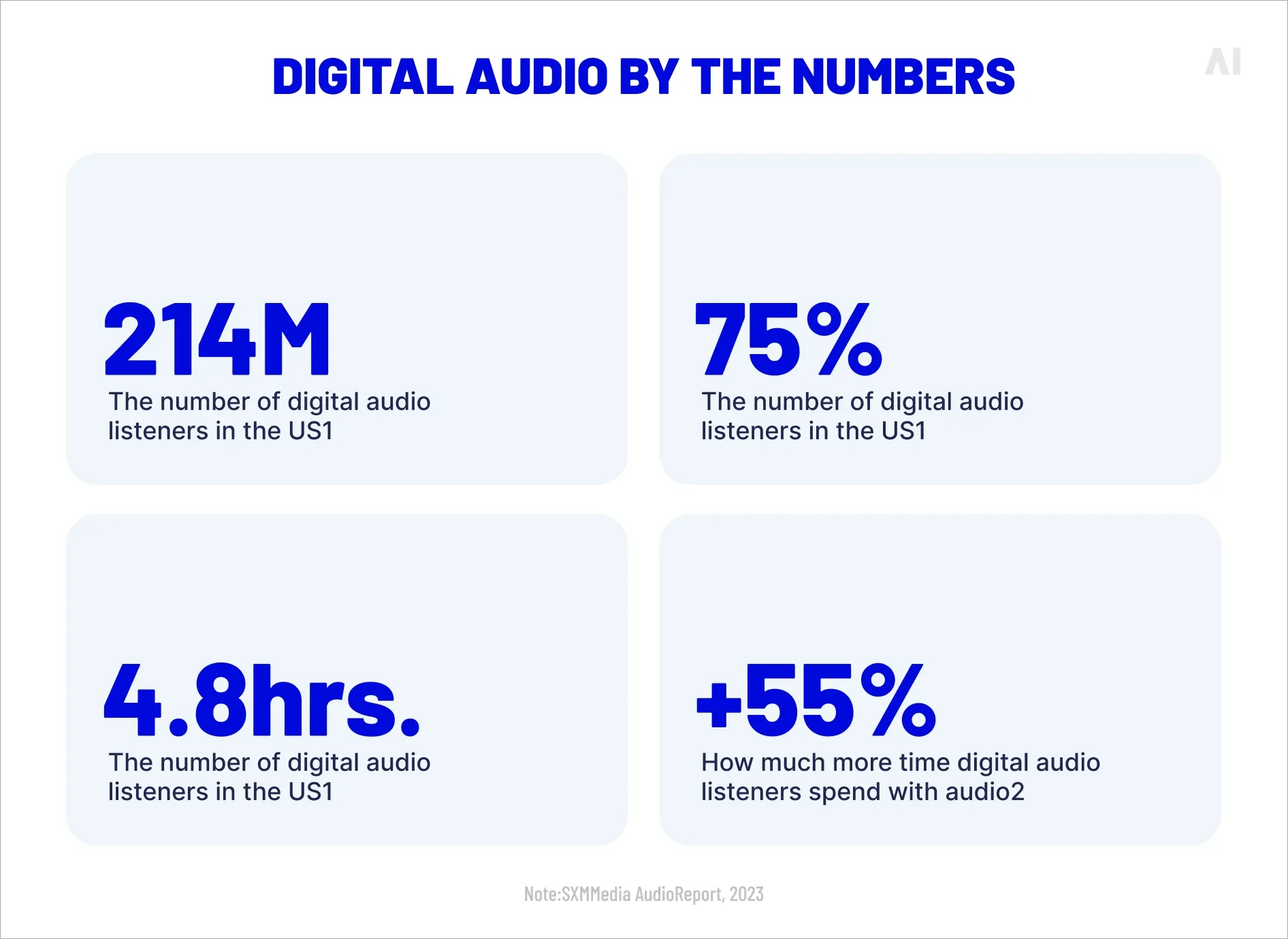
Digital audio advertising has evolved from traditional radio ads into a fully measurable, multi-platform channel that reaches audiences across streaming apps, podcasts, and connected audio environments. Today, online audio advertising benefits from a rare combination of scale and attention: adults now spend nearly 1 hour and 45 minutes per day listening to digital audio, often during moments when visual channels cannot compete.

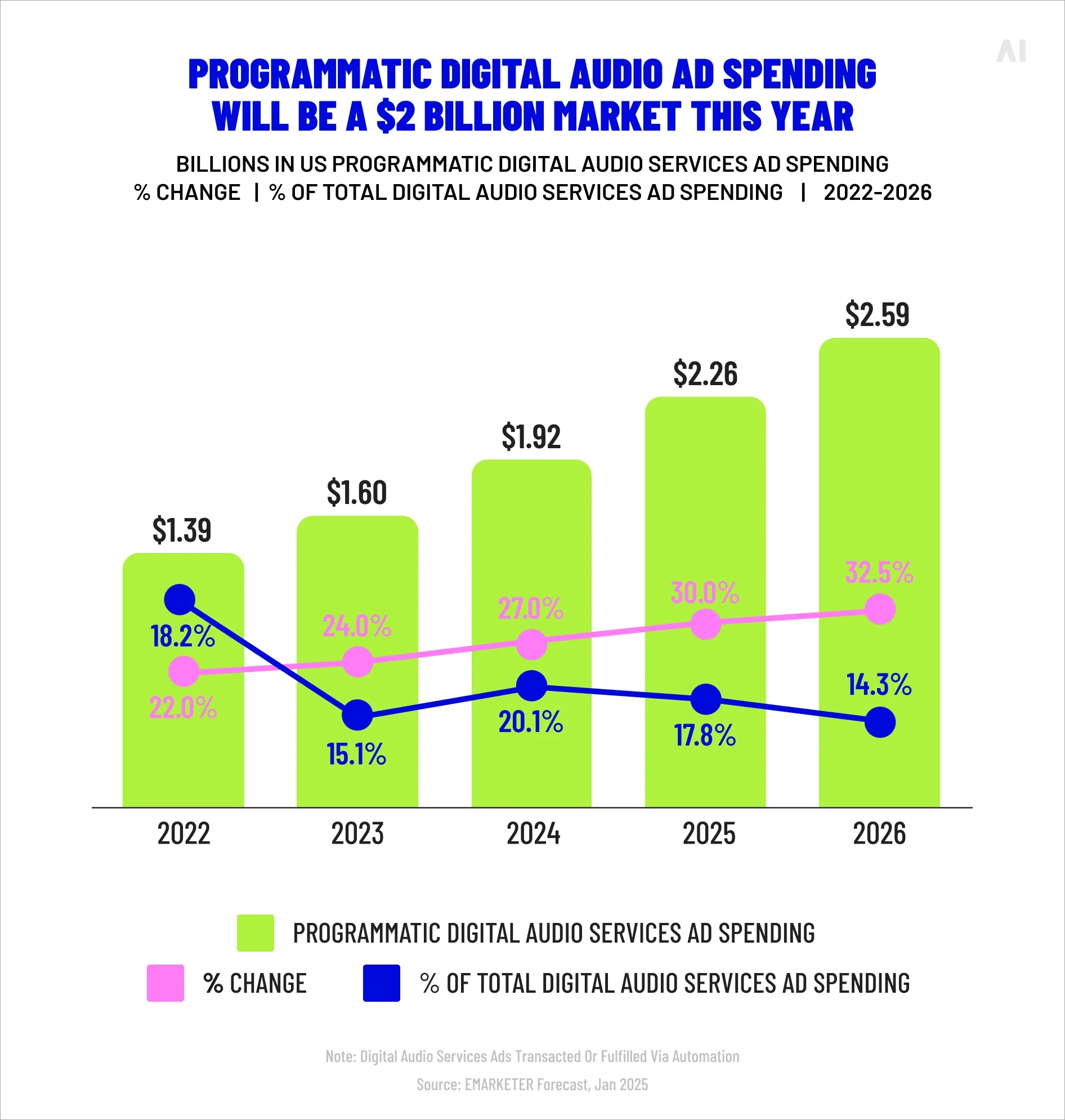
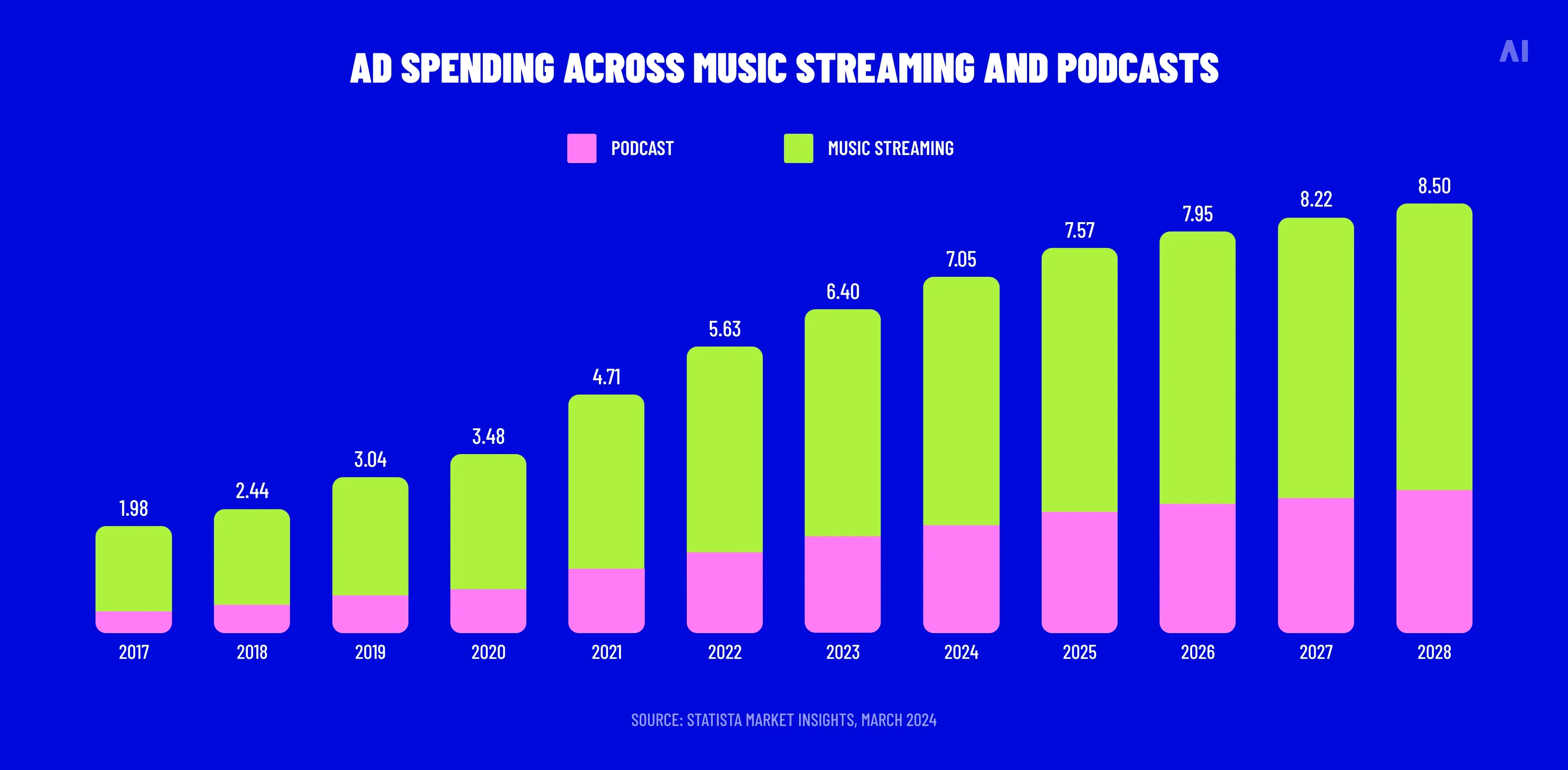
This shift matters because listener behavior and ad budgets are moving in the same direction. Global digital audio ad spend continues to grow at double-digit rates, with podcast advertising revenue projected to approach $5.5 billion by 2026 and total digital audio advertising spend exceeding $7.9 billion worldwide. As streaming replaces broadcast, advertisers are reallocating budgets from linear radio advertising toward programmatic digital audio ads that offer targeting, flexibility, and real-time optimization.
At the same time, expectations around accountability have changed. Modern digital audio ads support audience-based buying, frequency control, and post-campaign measurement — making audio advertising a performance-ready channel, not just a branding play. With programmatic expected to account for roughly one-third of all digital audio ad spend in 2026, brands can activate audio marketing with the same precision they expect from display, video, and CTV.
⚡️In a media environment defined by fragmented attention and rising competition, online audio stands out for its ability to deliver relevance at scale. For a broader view of how digital audio, programmatic, and emerging channels fit into the evolving media mix, see AI Digital’s perspective on Media Trends 2026.
What is online audio advertising?
Online audio advertising refers to paid audio ads delivered through digital environments where users stream or consume audio content via the internet. These digital audio ads appear across music streaming platforms, podcasts, digital radio, and other connected audio experiences such as reaching listeners on mobile devices, desktops, smart speakers, and in-car systems. Unlike traditional radio advertising, online audio allows advertisers to move beyond broad demographics. Brands use digital audio advertising because it supports precise targeting, personalized messaging, and measurable performance.
From a value perspective, online audio advertising combines the emotional impact of sound with the accountability of digital media. The global audio advertising market (which includes streaming and podcast ad revenue) is valued at around $38 billion in 2025 and is expected to continue expanding with ongoing adoption in programmatic and streaming environments. Podcast ad spending alone is projected to reach $4.46 billion in 2025, with U.S. podcast ad revenue hitting about $2.6 billion by 2026, reflecting continued investment growth from brands.
📊 The AI Digital report highlights that voice technology will continue its rapid adoption trajectory, with voice assistant users in the US projected to reach nearly 170 million by 2028, growing at a 3.3% CAGR from 2023. More significantly, 58% of consumers already use voice search to inquire about deals and promotions.
Businesses should prepare for:
- Conversational commerce: Voice-activated purchasing will become mainstream, requiring brands to optimize for voice-driven customer journeys.
- Audio-first creative strategies: As the AI Digital report shows, platforms like Spotify (103.6 million US listeners) and Amazon Music (49.4 million) represent massive opportunities for immersive audio engagement.
- Voice search optimization: Traditional SEO will evolve to incorporate conversational queries and context-aware responses.
💬 "There is going to be a way to use my voice for the ads. You have to obviously give the approval for the voice, but it opens up, from an advertising standpoint, all these different great possibilities for you," says Bill Simmons, a podcaster with Spotify, illustrating AI's innovative use in audio ad creation.
Digital audio advertising vs. traditional radio
The shift from traditional radio to digital audio advertising is driven by how precisely brands can reach audiences and measure outcomes. While radio still offers broad reach, online audio advertising gives advertisers far more control, flexibility, and accountability — which is why budgets continue to move toward digital audio.
{{How Digital Audio Ads Engage Audiences in 2026="/tables"}}
💡In practice, brands are choosing digital audio advertising because it combines the emotional impact of sound with the precision of digital media. Instead of paying for broad exposure, advertisers can reach specific audiences, control frequency, and understand how audio ads contribute to overall campaign performance.
Digital audio ad formats
Digital audio advertising offers a range of formats tailored to specific campaign objectives — from building brand awareness to driving engagement and even measurable performance outcomes. Understanding where and how each format works helps marketers design audio strategies that align with broader media goals.
1. In-stream audio ads
In-stream audio ads run within digital audio content — similar to how ads play on traditional radio but in streamed environments like music services or digital stations. These are typically short, pre-recorded spots that play between songs or program segments.
Use in-stream for broad reach and reliable delivery. Completion rates are typically high because there’s nothing to watch or dismiss during a music stream. Spotify’s own benchmark pegs average audio completion around 91%, which makes this format a steady vehicle for awareness and message reinforcement.
2. Podcast advertising
.webp)
Podcast advertising integrates ads into podcast episodes, either as host-read endorsements or produced spots at the beginning, middle, or end of a show.
The IAB/PwC U.S. Podcast Advertising Revenue Study (2024) reported $1.925B in 2023 revenue and projects the market to approach $2.6B by 2026a —useful signal that accountability and scale are improving together. Podcasts excel at building listener affinity and engagement, especially for niche or passionate audiences. They are particularly strong for campaigns that want to tie messaging to contextual content and trusted voices.
3. Programmatic digital audio ads
Programmatic digital audio ads use automated, data-driven buying to deliver audio ads across multiple platforms and inventory sources. This format leverages audience data, real-time bidding, and optimization logic to place ads where they’ll perform best.
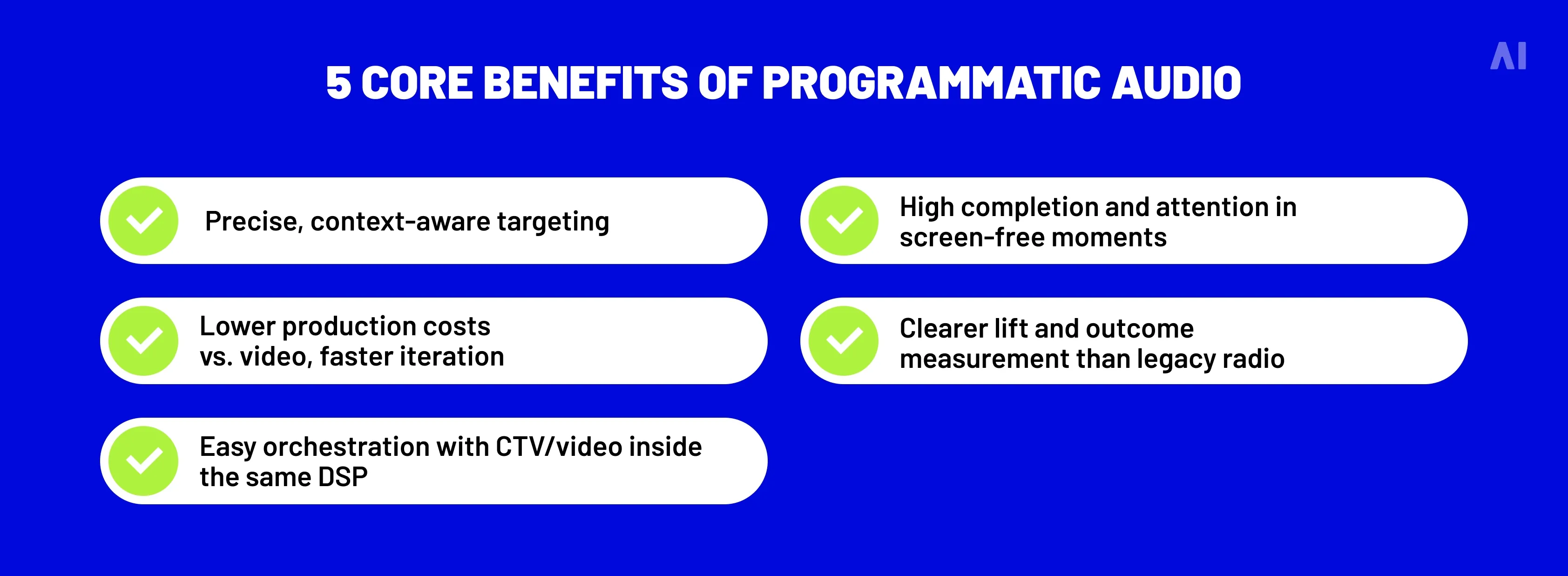
💡Because of this precision and scalability, programmatic audio supports a wide range of objectives — from efficient reach and frequency to more like incremental audience delivery and cost control.
💡Studies show that combining programmatic audio with other channels like video yields up to 18% higher short-term return on ad spend due to better audience alignment across touchpoints.
⚡️For a deeper dive into how programmatic audio advertising actually works and why it has become central to modern audio strategies, this AI Digital resource on Programmatic Audio Advertising breaks it down clearly and practically.
4. Interactive and voice-enabled audio ads
Interactive and voice-enabled audio ads invite listeners to actively engage with an ad using voice commands or simple interactive prompts. Delivered through smart speakers and voice assistants, these formats allow users to request more information, hear an offer again, or trigger next steps through spoken responses — without breaking the listening experience.
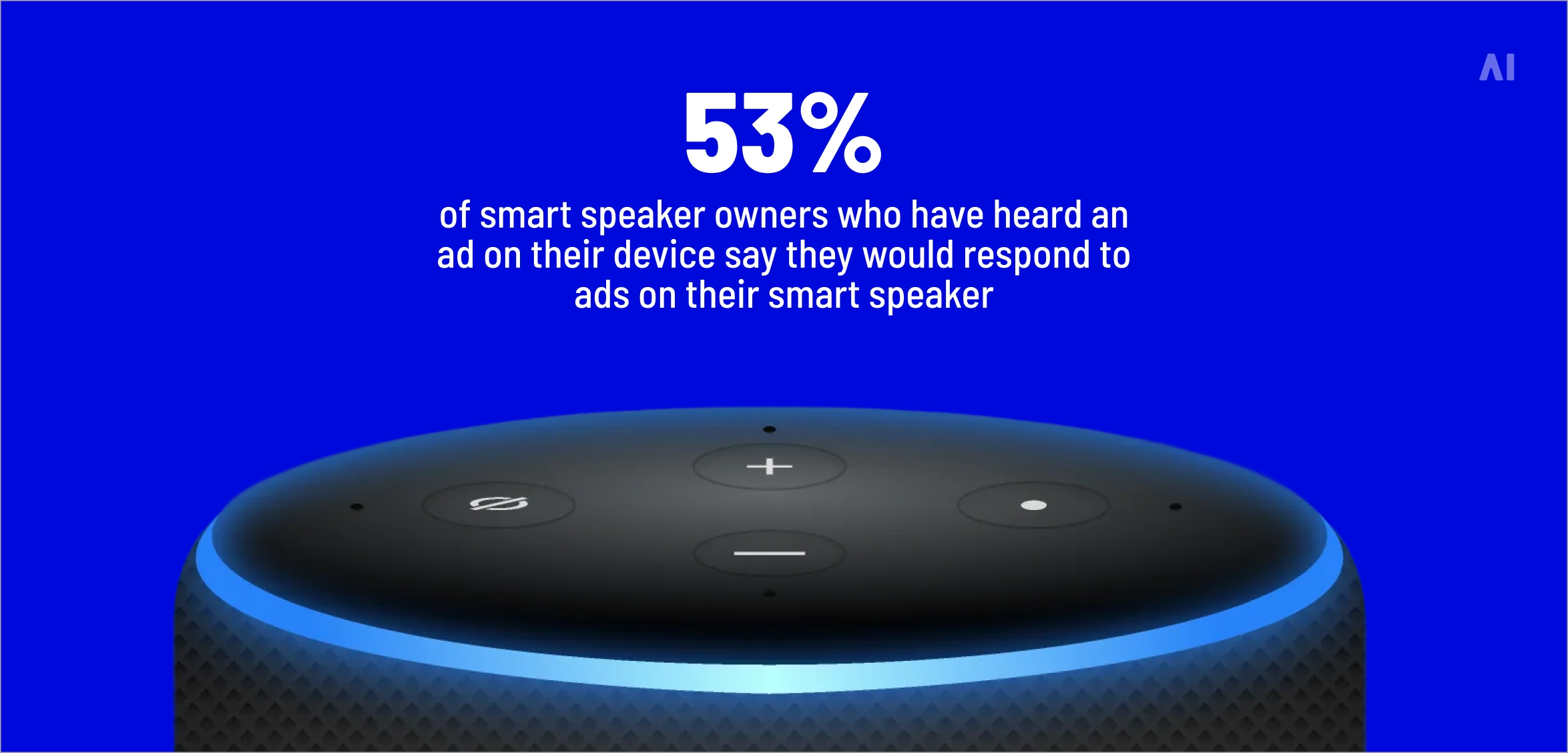
What makes this format especially effective is listener receptiveness. Research shows that over 53% of smart speaker users say they are likely to respond to ads played on voice-enabled devices, while nearly 40% report that these ads feel more engaging and less intrusive than traditional formats. This creates a rare moment where audio ads drive real interaction, not just passive exposure.
From a performance perspective, voice-enabled audio supports engagement and direct action objectives. Almost half of smart speaker users say they are more likely to consider a brand after hearing a voice-activated ad, signaling strong lift in brand consideration and mid-funnel impact. As voice technology adoption continues to expand across homes, cars, and personal devices, these formats offer scalable reach combined with high-intent interaction.
💡When paired with clear, conversational calls to action, interactive audio advertising turns the intimacy of the listening environment into a measurable advantage — helping brands move audiences from awareness to action without relying on screens.
5. Dynamic creative audio ads (DCO)
Dynamic creative audio ads (DCO) adapt the audio message in real time based on audience signals and context — such as location, time of day, weather, or listening behavior — instead of serving a one-size-fits-all spot. This capability lets advertisers tailor messaging for individual listeners at scale, improving relevance and impact within the same campaign framework.
The growing adoption of dynamic capabilities reflects a broader strategic shift. Recent audio adtech reports show that dynamic creative and optimization features (including DCO) are considered a key driver for audio investment, with nearly 43 % of advertisers and agencies citing dynamic creative capabilities as a primary reason to increase spend in digital audio — one of the top motivations alongside brand-building and advanced targeting.
⚡️In 2026, DCO in digital audio empowers brands to deliver contextualized, relevant messaging at scale, aligning creative with listener moments and data insights to maximize impact across the full funnel. For more on how dynamic creatives power smarter campaigns, see the upcoming article Dynamic Creative Optimization (DCO): How It Works & How to Drive Real Performance.
6. Multi-platform audio experiences
Multi-platform audio experiences coordinate audio advertising across multiple listening environments — including music streaming apps, podcasts, digital radio, smart speakers, mobile devices, desktops, and in-car audio systems. Rather than treating each channel in isolation, advertisers deliver consistent, sequenced audio messaging as audiences move fluidly between devices throughout the day.
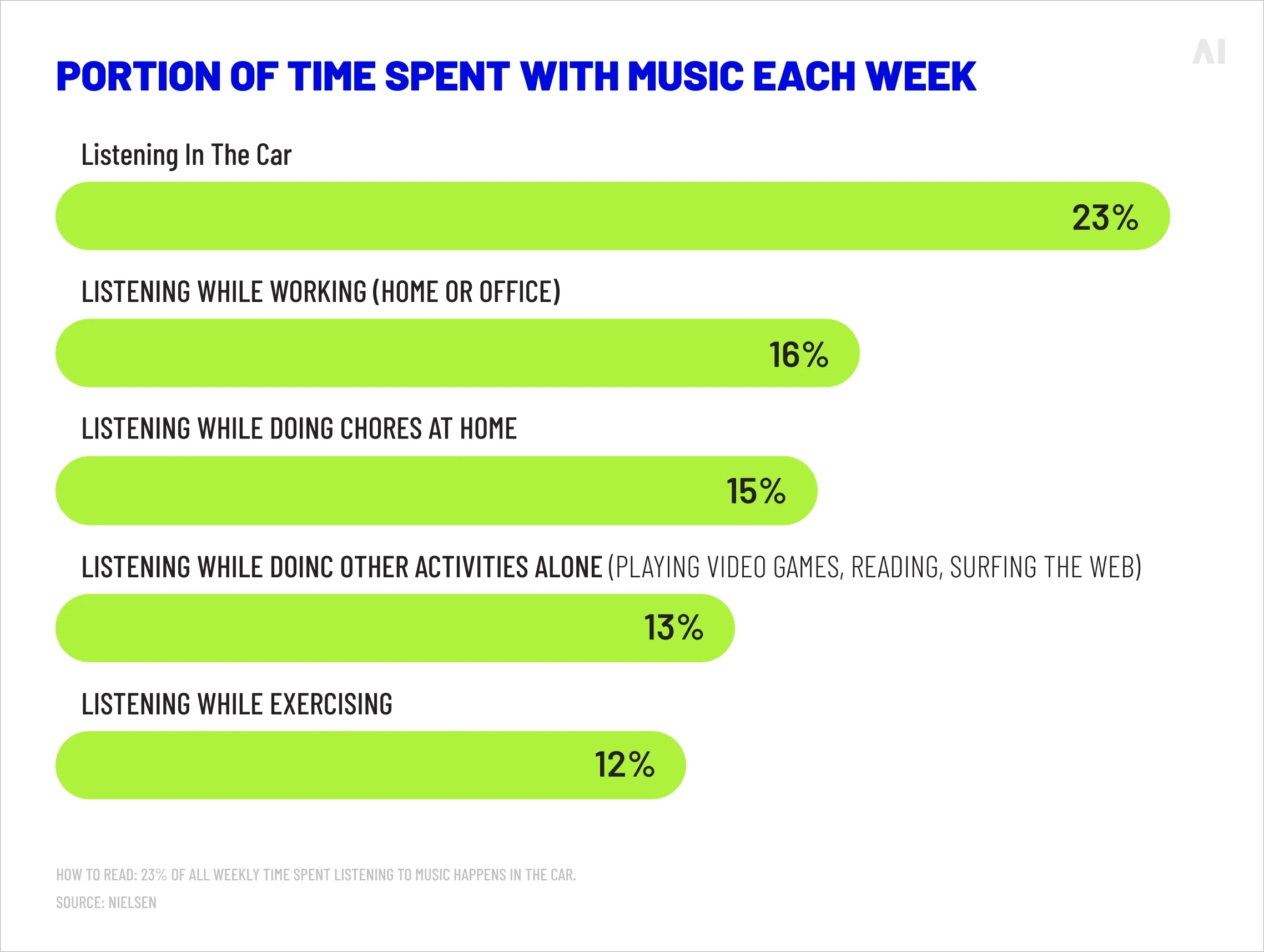
This approach matters because listener behavior is inherently cross-device. People may start the day with podcasts at home, stream music on mobile during commutes, and listen via connected speakers or cars later on. Multi-platform audio campaigns help brands maintain presence, manage frequency, and reinforce messaging without overexposure — supporting both brand awareness and consideration objectives.
⚡️To understand how advertisers connect identities and messaging across devices and environments, see the upcoming article What Is Cross-Device Targeting in Advertising?. It explores how cross-device strategies enable smarter sequencing, better frequency control, and more accurate measurement across digital audio and beyond.
Why online audio matters in 2026
Online audio advertising is a growth engine driven by precision, engagement, and shifting budgets toward digital media formats that can be measured and optimized. As audiences fragment and attention becomes harder to earn, brands are reallocating spend to formats that reach listeners in meaningful, predictable ways.
Targeted digital reach
.webp)
One of the biggest advantages of digital audio advertising is its ability to deliver highly targeted messages to specific audiences. Platforms increasingly use AI and machine learning to analyze listener data and match ads to the people most likely to respond, moving far beyond age-and-gender assumptions to behavioral, contextual, and intent-informed targeting. These methods reduce wasted impressions and help advertisers reach listeners at optimal moments.
⚡️For a deeper look at how AI enables precise audience delivery in modern campaigns, see this AI Digital article on AI-targeted advertising.
Brand awareness in low-clutter environments
Listeners in 2026 spend substantial time with digital audio — from streaming services to podcasts — often in contexts where visual interruption is absent and attention remains focused on sound. In these relatively low-clutter environments, audio ads can cut through more naturally than crowded social feeds or banner placements, supporting brand awareness objectives without the noise of competing visuals.
⚡️Coordinating audio presence with broader campaigns helps reinforce brand messages and extend reach to engaged listeners. (read more: Performance Marketing vs Brand Marketing: Key Differences and Strategic Implications)
Strong engagement and completion rates
Audio ads are often listened to all the way through. Research shows that audio ads can boost brand recall by 24–45 % on average, and spoken brand mentions improve memorability by over 30 %. These performance signals demonstrate that audiences are not only receptive to audio content but often retain and respond to messages delivered in sound formats.
⚡️For more on how digital media KPIs apply to these outcomes, see this AI Digital piece on digital marketing performance metrics.
Cost-efficiency across digital channels
Because online audio advertising can deploy flexible targeting and real-time measurement, it often delivers more efficient campaign outcomes compared with traditional broadcast formats. By avoiding broad, untargeted placements and instead reaching precise audience segments, advertisers tighten frequency control, reduce wasted spend, and can make data-driven adjustments mid-flight — a major advantage as budgets tighten and scrutiny increases.
💡This cost-efficiency — coupled with growing digital share of overall ad spend — reinforces why marketers are shifting dollars away from traditional media and toward scalable digital formats that tie attention to outcomes.
Audience insights: Who’s listening to digital audio?
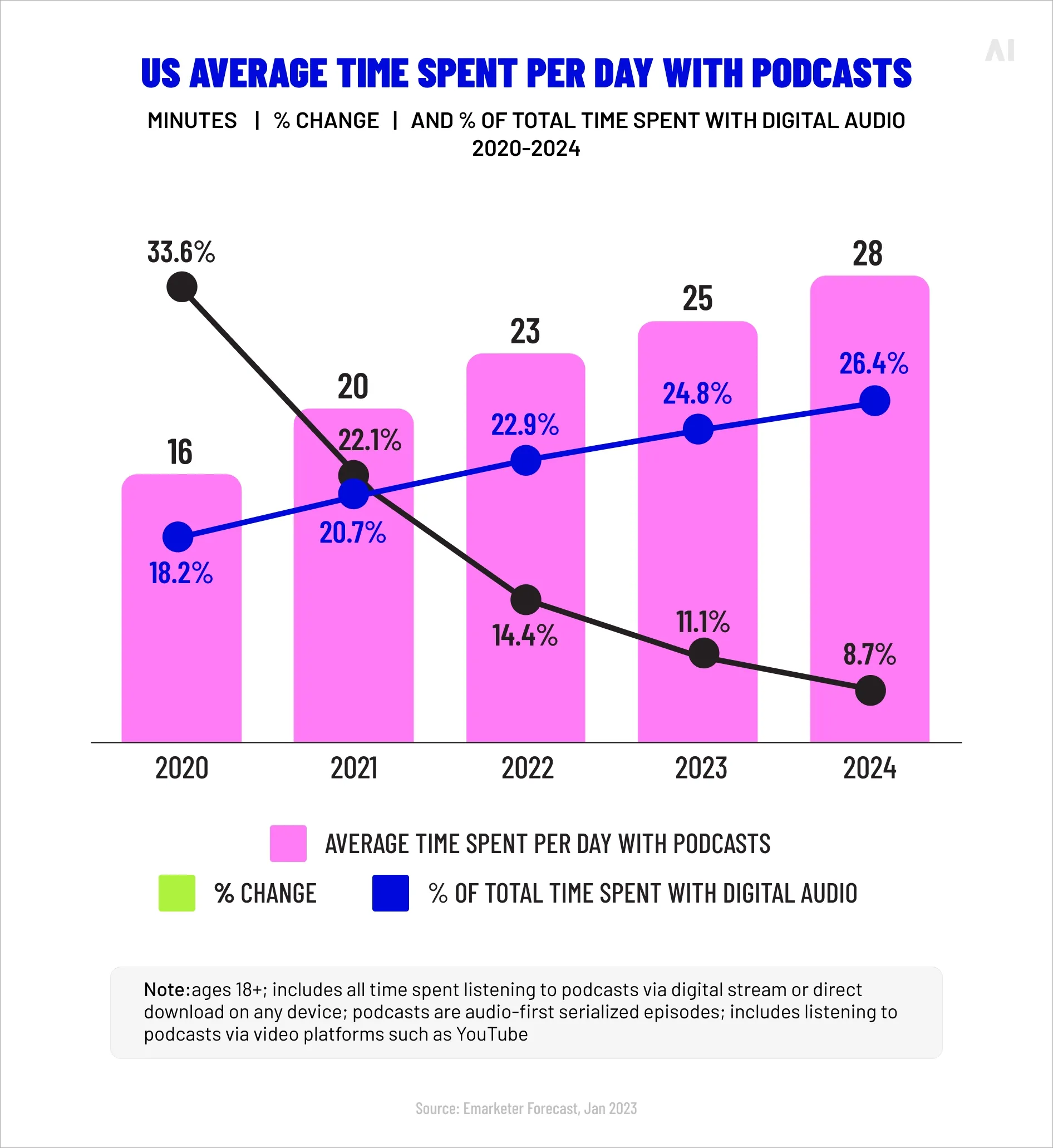
The growth of digital audio advertising is rooted in who’s listening — and how deeply audio fits into daily life. In 2026, digital audio audiences are broad, cross-generational, and highly engaged, making online audio advertising effective far beyond niche use cases.
Podcast audiences are among the most valuable segments in audio advertising. Podcast listeners tend to be highly attentive, with industry studies consistently showing ad completion rates above 90% for podcast ads. Because podcasts are often consumed intentionally — during commutes, workouts, or focused listening time — ads benefit from strong recall and trust transfer, especially in host-read formats.
Demographically, podcast listeners skew younger to mid-career, with a strong presence among 25–44-year-olds, higher education levels, and above-average household income. This makes podcast advertising particularly effective for brand building, consideration, and mid-funnel engagement, especially in categories like tech, finance, retail, and lifestyle.
Music streaming platforms deliver massive reach and consistent daily usage, making them a cornerstone of digital audio ads at scale. Streaming listeners span all age groups, with especially strong adoption among Gen Z and Millennials, who increasingly prefer streaming over traditional radio.

Across both podcasts and streaming, audio ads benefit from low ad avoidance compared to visual formats. Listeners are less likely to multitask away from audio, and most platforms limit ad clutter, which improves attention and message retention. As a result, digital audio advertising consistently delivers strong completion rates and brand recall, even without visual support.
In 2026, the digital audio audience is a collection of intentional listeners and habitual streamers, united by time spent, attention, and openness to audio ads — giving advertisers both scale and quality in one channel.
How to drive campaign success with AI Digital
At AI Digital, we approach online audio advertising as a performance-ready channel — not an experimental add-on. As a US-based media intelligence and programmatic leader, we help brands turn fragmented audio environments into predictable, measurable growth opportunities. Through our Elevate platform, we unify data, inventory, and optimization to give advertisers full control over digital audio campaigns from planning to performance.
AI-powered media intelligence
Our advantage starts with AI-powered media intelligence. We analyze billions of data signals across digital audio environments to understand who is listening, where attention concentrates, and which placements drive outcomes. This intelligence allows us to move beyond surface-level targeting and help brands make informed decisions about audience selection, format mix, and investment levels.
⚡️By combining machine learning with real-world media performance data, we enable smarter audience segmentation, predictive reach modeling, and deeper insight into campaign effectiveness. This approach helps our clients reduce waste, improve relevance, and scale audio investments with confidence. Learn more about our approach to advertising intelligence.
Real-time optimization and campaign transparency
We believe optimization should happen while campaigns are live — not after budgets are spent. AI Digital provides real-time optimization across digital audio, allowing us to dynamically reallocate spend, adjust targeting, and fine-tune delivery based on actual performance signals.
Equally important is transparency. Our reporting gives clients clear visibility into reach, frequency, engagement, and performance drivers, so every decision is backed by data. This level of clarity turns audio advertising into a channel that can be optimized with the same rigor as display, video, or CTV.
Premium curated digital inventory
As leaders in programmatic media, we know that performance starts with supply quality. Through Smart Supply, we provide access to premium, curated digital audio inventory — including top streaming platforms, trusted podcast networks, and high-quality digital radio environments.
💡By combining premium inventory with our intelligence and optimization layers, we help brands achieve scale without sacrificing relevance or brand safety.
Conclusion: Make digital audio a core part of your 2026 media plan
As we look across the media landscape in 2026, digital audio advertising stands out not just for its reach, but for how it reaches audiences and what it delivers. Brands that make audio a core channel — not an afterthought — benefit from targeted digital reach, high engagement in low-clutter environments, and measurable results that connect directly to business objectives.
Digital audio enables marketers to combine precision targeting with moments of genuine listener attention across streaming, podcasts, and connected audio. Audiences don’t just hear these messages — they engage with them, remember them, and act on them. With transparent measurement and real-time optimization, online audio advertising now delivers the accountability modern media plans demand.
At AI Digital, we bring strategy, intelligence, and execution together to help brands activate audio with confidence. From AI-powered decisioning to premium inventory and transparent reporting, we enable advertisers to turn audio into a predictable, performance-ready channel. Learn how we support brands across the full media lifecycle here: What We Do.
⚡️To understand how our AI-driven approach is reshaping programmatic advertising, including digital audio, explore our perspective on the future of intelligent media: The Future is Now.
💡Take the next step with AI Digital and make digital audio a core driver of your media success.
.webp)