IPTV vs OTT: What’s the Real Difference and Which Streaming Model Fits Your Business


In 2026, the global shift to internet-based video delivery continues to accelerate, making the choice between OTT and IPTV foundational for broadcasters, platform operators, and advertisers designing future-proof media delivery and monetization strategies. The global video streaming market—inclusive of both Internet Protocol Television (IPTV) and over-the-top streaming (OTT) services—is projected to grow from roughly USD 969.6 billion in 2026 to more than USD 3.3 trillion by 2034, at a compound annual growth rate of approximately 17 percent. This expansion reflects sustained demand for flexible content distribution across connected TV, mobile, tablet, and desktop ecosystems, and signals that streaming technology will continue overtaking traditional distribution methods well into the next decade.
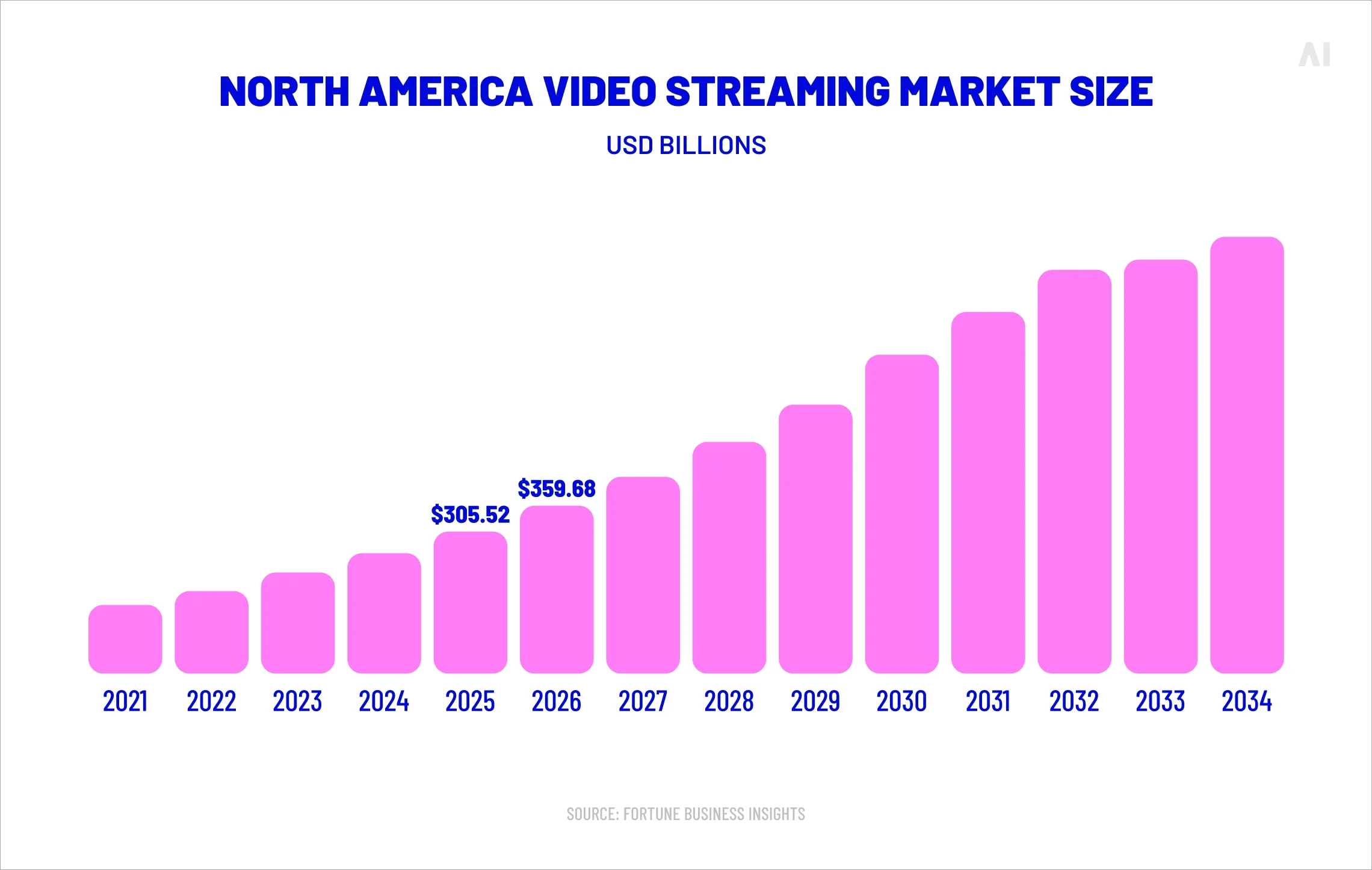
Despite shared reliance on Internet Protocol networks, oversimplified explanations often treat IPTV and OTT as interchangeable, which obscures key differences in delivery infrastructure, technical design, monetization, quality control, and strategic business implications. Understanding the difference between IPTV and OTT is essential for digital media professionals structuring platform architectures, selecting deployment models, and optimizing streaming advertising across both managed and unmanaged networks.
At its core, IPTV—Internet Protocol Television—delivers television content over closed, managed IP networks, usually operated by telecom or broadband providers, enabling tightly controlled quality of service and predictable performance characteristics. In contrast, OTT platforms distribute video content over the open public internet, leveraging content delivery networks and a wide array of consumer devices without traditional set-top hardware requirements.
💡These fundamental distinctions underpin divergent approaches to infrastructure, scalability, user experience, audience reach, and monetization strategies, including subscription, advertising, and hybrid models.
This article provides a detailed, data-driven comparison of IPTV and OTT, clarifies misconceptions such as “IPTV is just OTT” or “OTT replaces IPTV,” and offers decision-oriented guidance for media, advertising, and platform leaders evaluating content distribution infrastructure in 2026 and beyond.
What is IPTV?
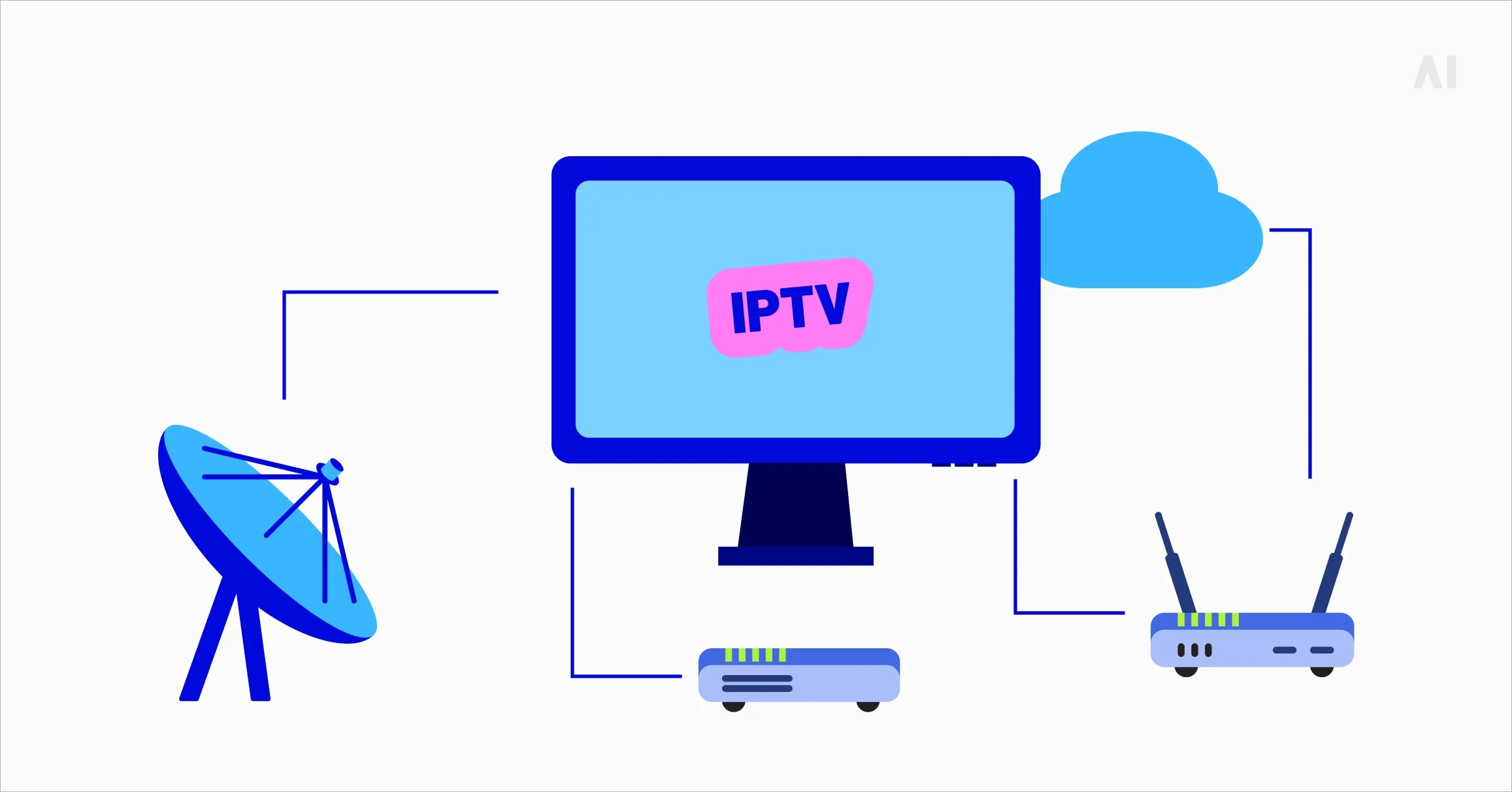
IPTV is a television delivery model in which video content is transmitted using IP-based infrastructure within a closed, managed network environment. Unlike open-internet streaming, IPTV operates inside controlled ecosystems typically owned or governed by telecom operators, internet service providers, or private network operators. This structure allows providers to tightly manage how content is distributed, accessed, and experienced by end users.
What defines IPTV is not the use of IP itself, but the level of control over the delivery path. Content travels across dedicated or logically isolated networks rather than the public internet, enabling service providers to enforce strict policies around bandwidth allocation, latency, reliability, security, and service prioritization. As a result, IPTV is commonly used for carrier-grade television services, enterprise video networks, hospitality TV systems, and national pay-TV platforms where consistency and predictability are mandatory.
From a business perspective, IPTV aligns with models that prioritize service reliability, contractual quality guarantees, regulated distribution, and long-term customer relationships. This makes it well suited for traditional broadcasters and telecom-led platforms that bundle television with broadband, voice, and other managed services.
How IPTV works
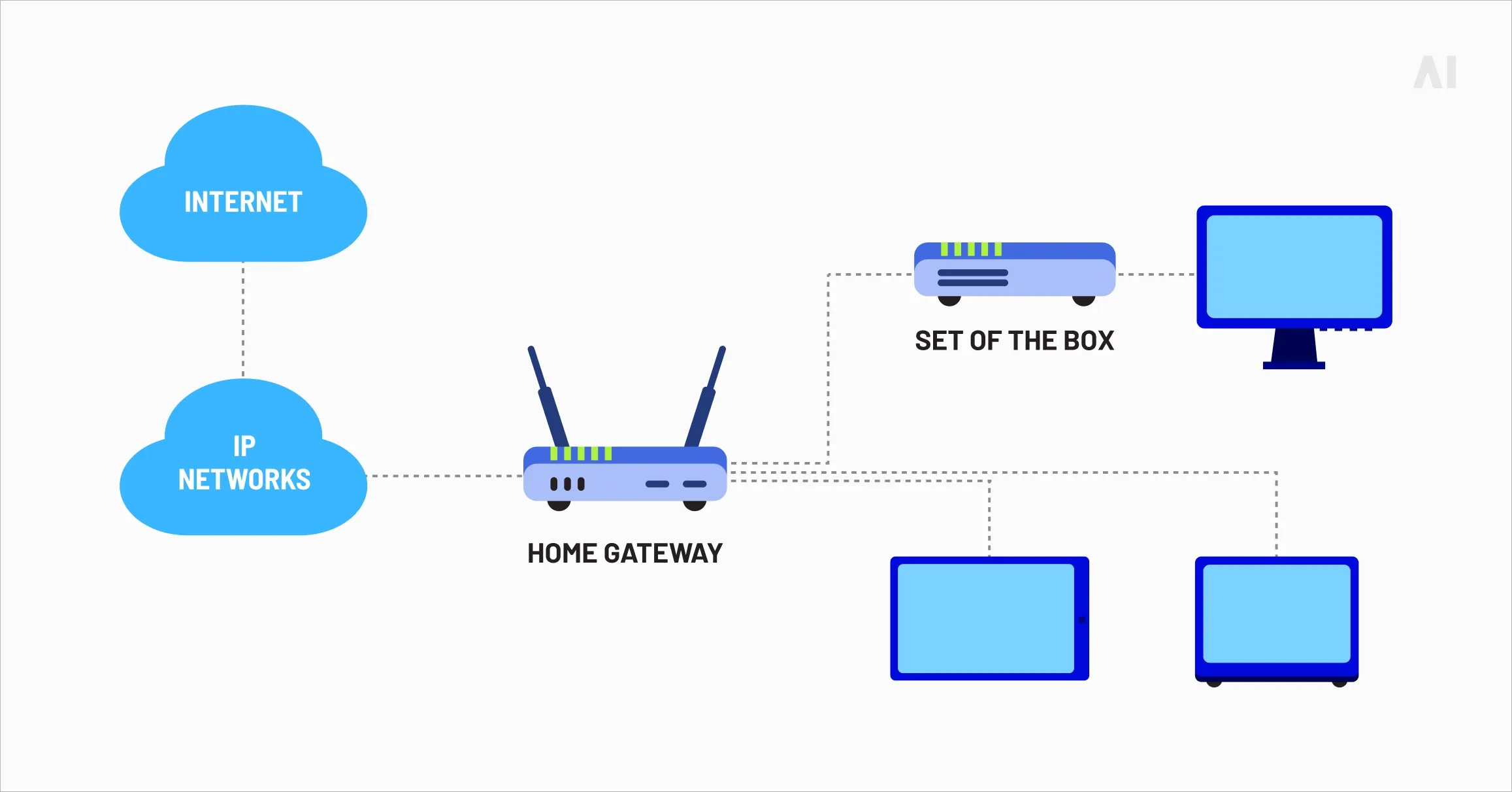
IPTV operates through a centrally managed delivery workflow designed to maintain end-to-end control from content ingestion to viewer playback. Content is first ingested from broadcasters, studios, or live feeds into the operator’s headend or central platform, where it is encoded, packaged, and prepared for distribution according to predefined quality and bitrate profiles.
Once processed, streams are distributed across the provider’s managed IP network, often using multicast for live television and unicast for on-demand content. Because the network is controlled, the operator can prioritize video traffic over other data, ensuring stable playback even during peak usage periods. This approach reduces buffering, minimizes latency, and delivers a consistent user experience across all supported devices.
On the consumer side, playback typically occurs through operator-approved set-top boxes or tightly integrated applications, allowing the provider to control device behavior, software updates, authentication, and access rights. This closed-loop model simplifies quality assurance and customer support but also introduces higher infrastructure and operational costs, as the provider is responsible for maintaining both the network and the delivery platform.
💡Overall, IPTV’s architecture reflects a trade-off: greater reliability and service guarantees in exchange for reduced flexibility and scalability compared to open-internet models. This balance is central to understanding where IPTV fits—and where it does not—within modern media and advertising strategies.
What is OTT?
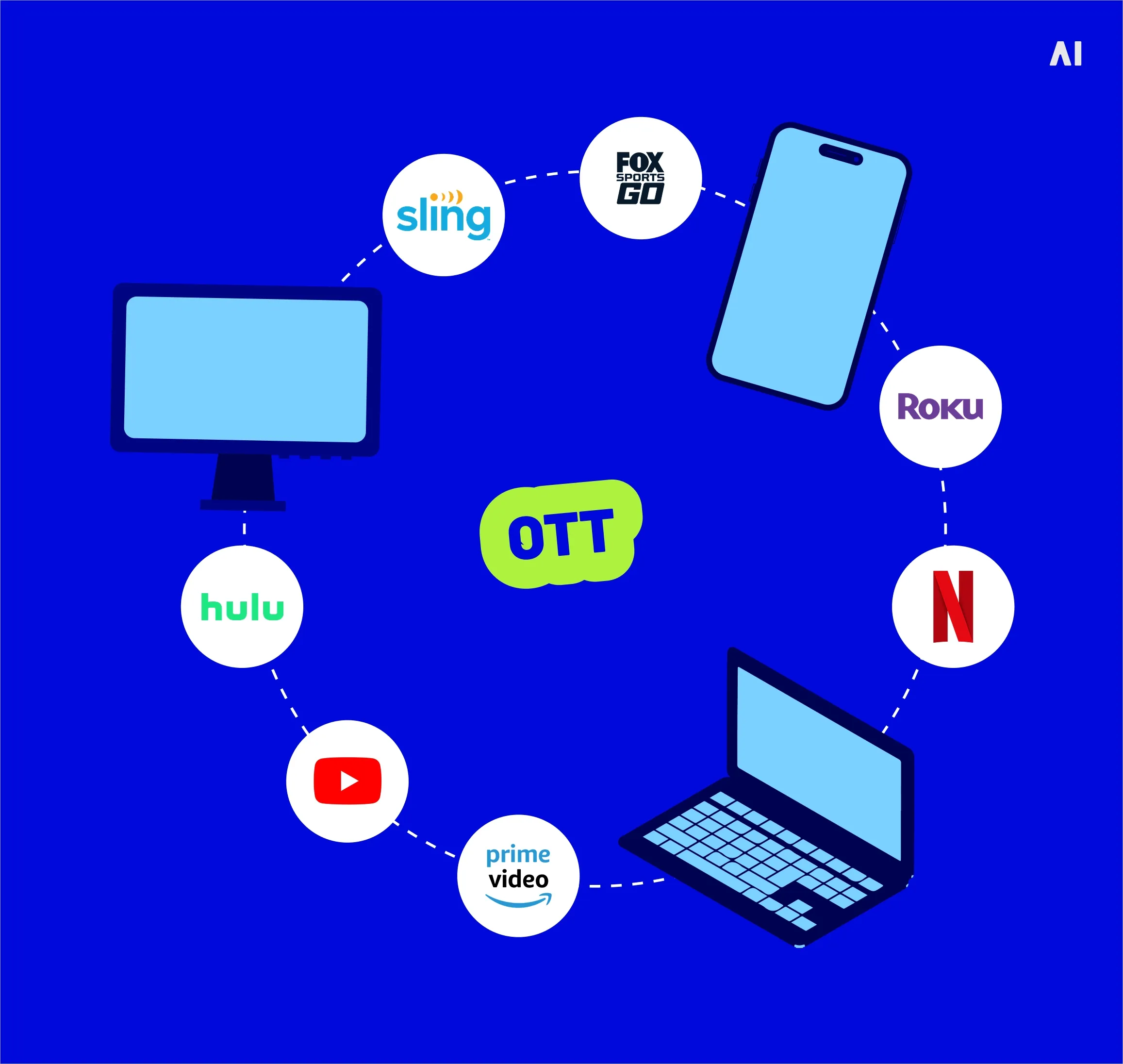
OTT refers to a video delivery model in which content is streamed directly to consumers over the open public internet, without relying on ISP-controlled or operator-managed network infrastructure. Unlike IPTV, OTT platforms do not require ownership or control of the delivery network; instead, they operate independently of telecom providers and reach audiences wherever an internet connection is available.
What distinguishes OTT is its reliance on open, internet-scale distribution rather than closed systems. OTT platforms deliver content using:
- The public internet, rather than private or segmented networks
- Content delivery networks (CDNs) to distribute video efficiently across regions
- Device-agnostic access, enabling playback across smart TVs, mobile devices, tablets, desktops, streaming sticks, and gaming consoles
This architecture allows OTT services to scale rapidly across geographies and devices, supporting global streaming platforms, regional broadcasters, niche publishers, and ad-supported streaming services alike. As a result, OTT has become the dominant model for connected TV expansion, streaming platform growth, and digital-first content distribution, particularly where speed to market and audience reach outweigh strict service guarantees.

💡From a monetization perspective, OTT supports , including subscription-based services, advertising-supported streaming, FAST channels, transactional video, and hybrid approaches.
⚡️In this in-depth guide, OTT Advertising Explained, from AI Digital, you’ll learn why marketers are shifting dollars from traditional TV to OTT ad strategies that deliver precise targeting, measurable outcomes, and cross-device engagement.
How OTT streaming works
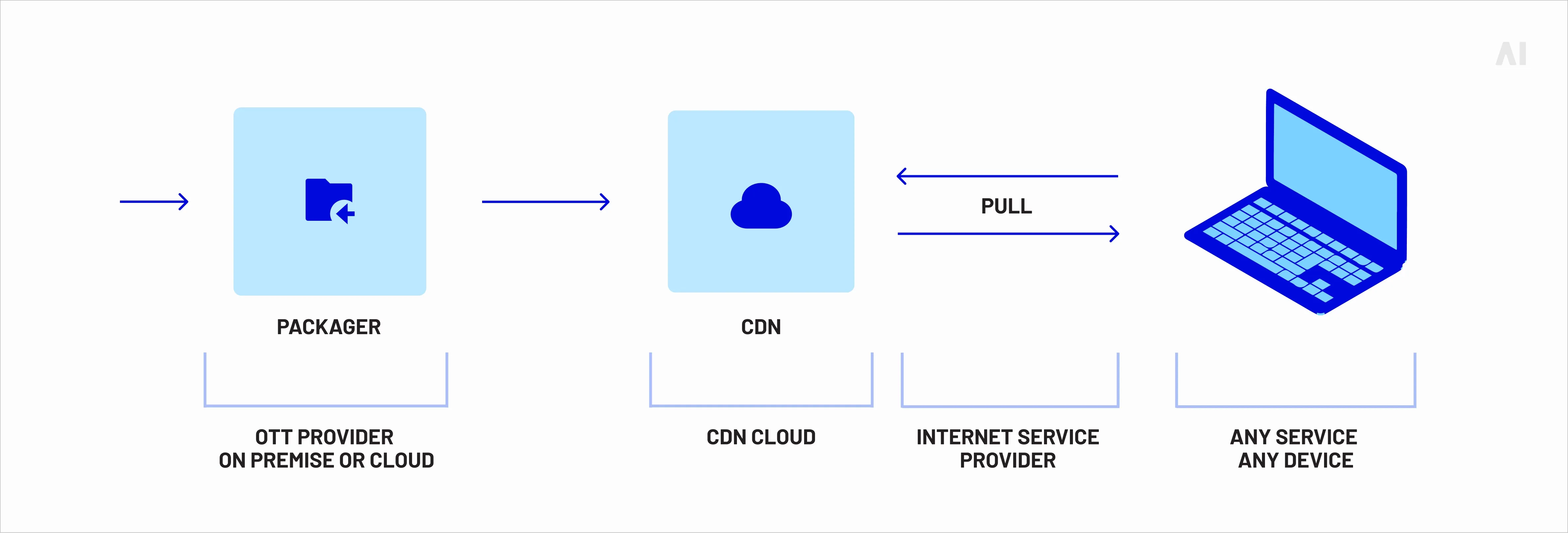
OTT streaming operates through a distributed, internet-native delivery workflow designed for flexibility and scale rather than end-to-end network control. Content is first ingested from studios, broadcasters, or live sources into cloud-based platforms, where it is encoded into multiple bitrate and resolution variants to support adaptive streaming.
These streams are then distributed via global or regional CDNs, which cache content closer to end users and dynamically route requests based on network conditions, device type, and geographic location. Because delivery occurs over the public internet, OTT platforms cannot control last-mile network conditions, but they can optimize performance through adaptive bitrate streaming, intelligent routing, and redundancy across CDN providers.
On the viewer side, OTT content is accessed through applications or web players installed on consumer devices, without the need for operator-issued hardware. This device independence significantly reduces deployment friction and enables rapid audience expansion, but it also introduces greater variability in playback quality, latency, and measurement consistency compared to managed IPTV environments.
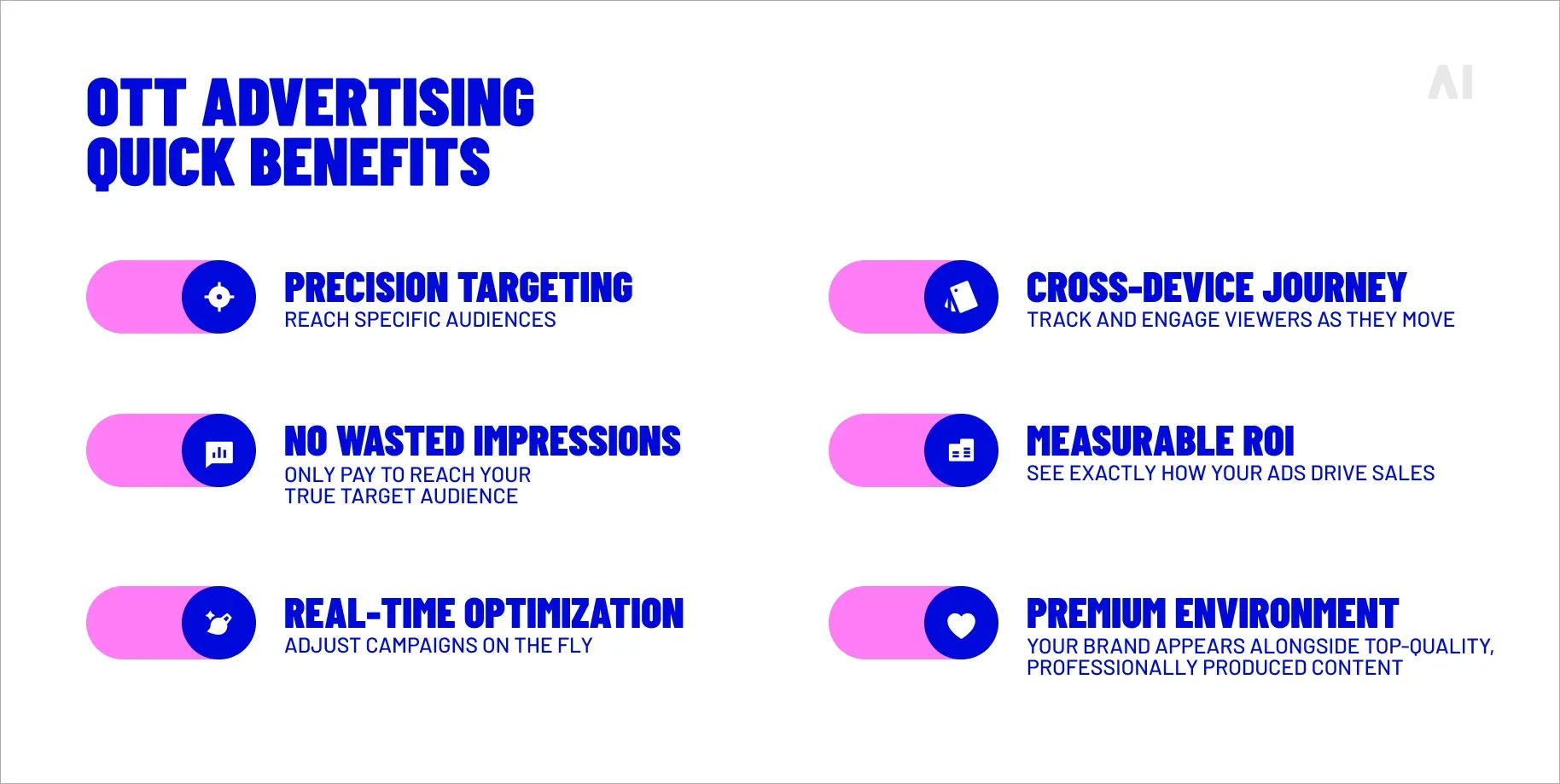
From a cost and strategy standpoint, OTT represents a different trade-off than IPTV. OTT minimizes upfront infrastructure investment and accelerates scalability, but shifts performance risk to the open internet and places greater emphasis on software optimization, CDN strategy, and data-driven monetization. These characteristics make OTT particularly attractive for platforms prioritizing global reach, flexible monetization, and fast innovation cycles, even as they introduce new challenges in quality assurance and advertising control.
IPTV vs OTT: key differences in technology and delivery
Although IPTV and OTT both use IP-based video delivery, their technical foundations are fundamentally different, and those differences directly shape performance, control, scalability, and operational complexity. Rather than being interchangeable, IPTV and OTT are optimized for distinct delivery environments and business priorities, which is why both models continue to coexist in 2026.
Below is a technical and operational comparison focused on how delivery architecture influences real-world outcomes.
{{26-IPTV-vs-OTT-Whats-the-Real-Difference-1="/tables"}}
💡Bottom line: IPTV optimizes for control, reliability, and service guarantees, while OTT optimizes for . These delivery-layer differences shape everything downstream—from user experience consistency to advertising execution and monetization strategy.
⚡️For a deeper look at how OTT delivery intersects with the evolving connected TV ecosystem and the measurement challenges shaping today’s streaming landscape, explore AI Digital’s analysis of OTT vs CTV, which breaks down the technical distinctions, business implications, and why accurate audience measurement matters for advertisers and platform owners navigating both OTT and CTV environments.
IPTV vs OTT: business and monetization models
While IPTV and OTT are often compared at a technical level, their commercial structures and monetization mechanics differ just as fundamentally. The way each model bills users, activates advertising, and manages content rights is directly shaped by its delivery architecture. As a result, IPTV and OTT scale revenue in structurally different ways, influencing cost predictability, monetization flexibility, and long-term platform economics.
Subscription and billing models
{{26-IPTV-vs-OTT-Whats-the-Real-Difference-2="/tables"}}
IPTV typically operates within contract-based subscription frameworks managed by telecom or broadband providers. Billing is tightly integrated into existing customer relationships, with television services often bundled alongside internet, mobile, or voice plans. This creates stable, recurring revenue streams, lower churn, and predictable lifetime value, but limits pricing experimentation and rapid offer iteration.
OTT platforms rely on direct-to-consumer billing models, usually managed through apps, payment gateways, or app stores. This enables faster market entry, flexible pricing tiers, promotional experimentation, and global reach. However, OTT subscriptions experience higher churn and acquisition costs, requiring continuous investment in content, user experience, and lifecycle marketing to sustain growth.
Advertising capabilities and monetization flexibility
Advertising in IPTV environments is traditionally operator-controlled and infrastructure-bound. Inventory is often limited to linear ad slots or basic addressable formats, with targeting constrained by household-level data and regulatory frameworks. While this ensures brand safety and delivery consistency, it restricts flexibility and real-time optimization.
{{26-IPTV-vs-OTT-Whats-the-Real-Difference-3="/tables"}}
OTT platforms enable highly flexible, data-driven advertising models, including AVOD, FAST, and hybrid subscription-plus-ad tiers. Ad insertion is typically server-side or app-based, allowing dynamic ad decisioning, audience segmentation, frequency management, and cross-device measurement. This flexibility makes OTT especially attractive for programmatic CTV buying and performance-oriented streaming advertising.
Content rights and distribution control
IPTV platforms operate within strictly defined content rights agreements, often limited by geography, network footprint, and contractual distribution terms. Because delivery occurs inside controlled networks, content owners retain strong enforcement over access, redistribution, and playback conditions, which is particularly important for premium live sports, regulated broadcasts, and exclusive carriage deals.
{{26-IPTV-vs-OTT-Whats-the-Real-Difference-4="/tables"}}
💡In essence, IPTV monetizes through stability and control, while OTT monetizes through flexibility and scale. Understanding these differences is critical for media and advertising leaders designing sustainable revenue models across evolving streaming ecosystems.
⚡️For a deeper look at how OTT monetization intersects with connected TV planning and activation — including the media buying tactics and targeting strategies that power converged streaming campaigns, explore our step-by-step guide on CTV media buying.
Advertising in IPTV vs OTT
Advertising is one of the areas where the differences between IPTV and OTT become most visible in practice. The delivery environment directly determines how ads are targeted, inserted, measured, and optimized, shaping what is possible for advertisers and ad tech platforms. While both support addressable television in different forms, their capabilities diverge significantly when it comes to data usage, real-time decisioning, and programmatic execution.
Targeting and personalization
IPTV advertising operates within operator-controlled ecosystems, where targeting is typically based on household-level data such as subscription packages, geography, or basic demographic signals. Because IPTV platforms are tied to closed networks and regulated service environments, personalization tends to be deterministic but limited in scope. This makes IPTV suitable for controlled addressable TV use cases, but less adaptable to rapid audience segmentation or behavioral targeting.
OTT environments enable far more granular targeting and personalization, drawing on device-level signals, app behavior, content consumption patterns, and consented first-party data. Ads can be tailored dynamically by device type, viewing context, frequency exposure, and inferred audience segments. This flexibility supports performance-driven and audience-centric advertising strategies, particularly in connected TV environments.
Ad insertion and measurement
In IPTV systems, ad insertion is usually network- or headend-based, with ads stitched into linear streams before delivery. Measurement relies on operator reporting and panel-based methodologies, which provide stable but less granular insight into exposure, reach, and frequency. Real-time optimization is limited, and cross-device attribution is often unavailable.
OTT advertising relies primarily on server-side or app-level ad insertion, enabling dynamic ad selection at the moment of playback. This architecture supports near real-time measurement, impression-level reporting, and integration with modern analytics and attribution frameworks. As a result, OTT environments align more closely with digital advertising standards while maintaining television-scale reach.
Addressable and programmatic opportunities
IPTV supports addressable advertising within defined operator footprints, but programmatic activation is often constrained by infrastructure and inventory availability. Addressability exists, yet it is typically executed through direct deals or operator-managed marketplaces rather than open, demand-side platforms.
OTT is inherently designed for programmatic and addressable advertising at scale. Inventory can be accessed through DSPs, enriched with data, and optimized continuously across campaigns. This makes OTT a core channel for CTV media buying strategies, enabling advertisers to combine television impact with digital precision.
In summary, IPTV advertising prioritizes control and predictability, while OTT advertising prioritizes flexibility, data-driven targeting, and programmatic scale. Understanding these distinctions is critical when aligning advertising strategy with platform capabilities and performance goals.
⚡️For a clear comparison of how addressable television differs from connected TV advertising environments and what those differences mean for planning, targeting, and monetization — explore AI Digital’s guide on Addressable TV vs Connected TV. This article breaks down the technical and strategic distinctions between the two, explains where each excels in reach and precision, and highlights how advertisers can leverage both in modern programmatic OTT and CTV media-buying strategies.
User experience: IPTV vs OTT
From the viewer’s perspective, IPTV and OTT deliver very different user experiences, and those differences directly influence retention, churn, and monetization performance. Because user experience is shaped by the underlying delivery model, decisions made at the infrastructure level surface clearly in how reliable, flexible, and personalized the service feels to the end user.
Reliability and stream quality
IPTV is designed to deliver highly consistent stream quality, particularly for live and linear television. Because content is delivered over managed networks, viewers experience minimal buffering, stable bitrates, and predictable latency, even during peak viewing hours. This reliability supports long viewing sessions and reinforces the perception of IPTV as a premium, utility-like service—factors that contribute to lower churn in subscription-led models.
OTT streaming quality varies depending on network conditions, device performance, and geographic location. While adaptive bitrate streaming helps maintain playback continuity, quality fluctuations and latency spikes are more visible to users, especially during high-traffic events. This variability increases the importance of UX optimization, content discovery, and personalization to sustain engagement and retention.
Flexibility and device access
IPTV experiences are typically tied to operator-approved devices, such as set-top boxes or controlled applications. While this ensures consistency, it limits where and how users can watch content. Viewing is often anchored to the home environment, which can restrict engagement beyond traditional television use cases.
OTT services offer maximum flexibility in device access, allowing users to start, stop, and resume content across smart TVs, mobile devices, tablets, desktops, and streaming hardware. This freedom supports modern viewing behaviors such as binge watching, second-screen usage, and on-the-go consumption—key drivers of engagement and lifetime value in OTT platforms.
Interactivity and personalization
IPTV personalization is generally rule-based and service-level, such as channel recommendations, content bundles, or basic viewer profiles. Interactive features exist but are often constrained by hardware and middleware limitations, resulting in slower innovation cycles.
OTT platforms enable deep interactivity and AI-driven personalization, including real-time recommendations, personalized home screens, dynamic ad loads, and adaptive content presentation. These capabilities increase perceived relevance, session length, and conversion across both subscription and ad-supported models.
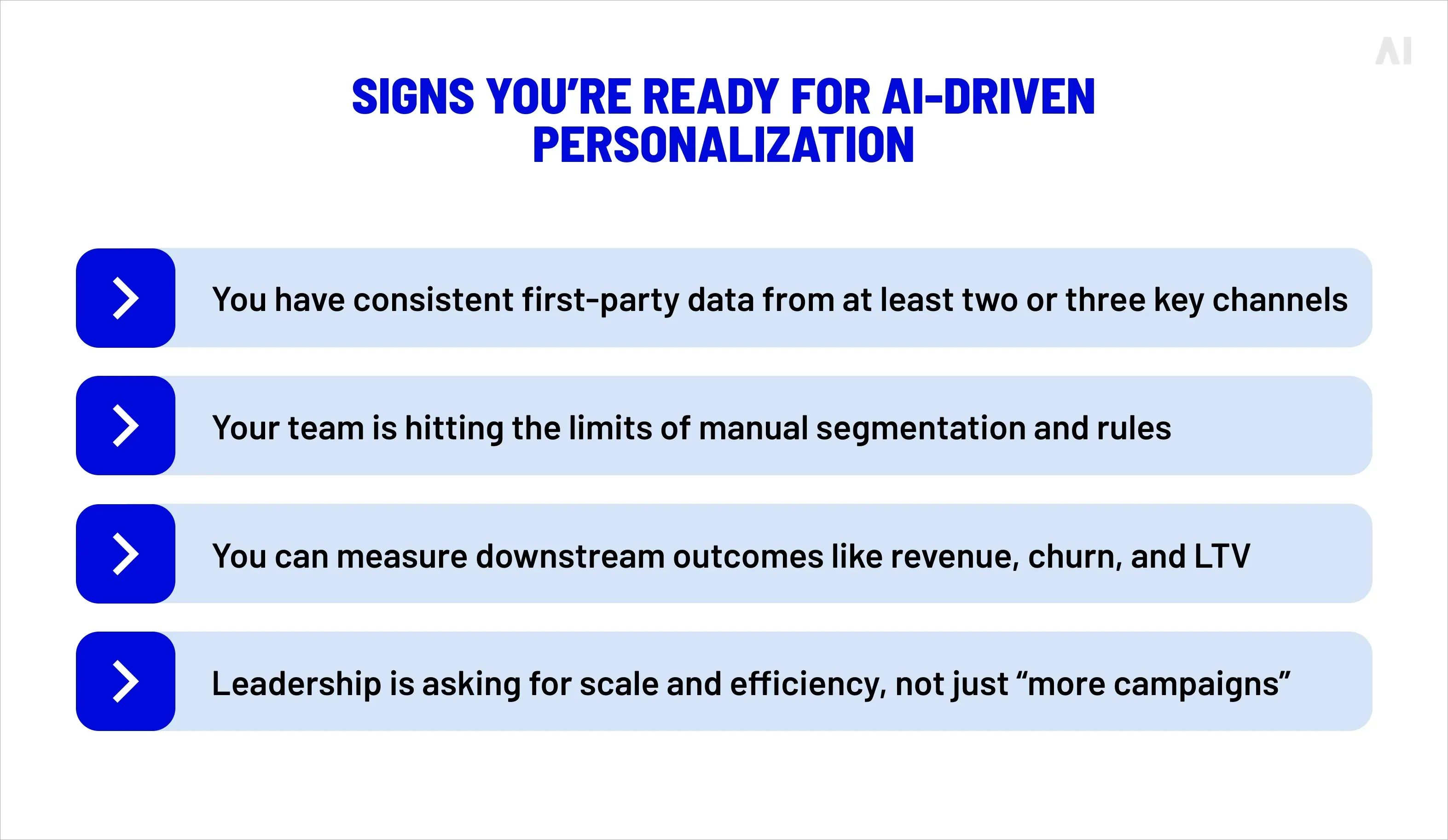
⚡️For a deeper understanding of how advanced personalization can reduce churn and boost monetization efficiency across OTT and CTV platforms, explore AI Digital’s analysis of intelligent personalization strategies.
Use cases: when IPTV makes sense
Despite the rapid growth of OTT, IPTV remains the preferred delivery model in scenarios where control, reliability, and operational predictability are non-negotiable. In these environments, IPTV’s managed-network architecture aligns better with business requirements than open-internet streaming. From a strategic standpoint, IPTV works best when content delivery is part of a broader, integrated service ecosystem—an area where AI Digital’s expertise in managed supply, controlled activation, and closed-loop optimization becomes particularly relevant.
Telecom and ISP-led TV services

IPTV is a natural fit for telecom and ISP-led television offerings, where video is bundled with broadband, mobile, or fixed-line services. In these models, operators benefit from end-to-end visibility across the delivery stack, enabling consistent quality of service, enforceable SLAs, and predictable customer experience at scale.
⚡️From a monetization and advertising perspective, IPTV aligns well with AI Digital’s Smart Supply approach, where inventory is managed, curated, and activated within controlled environments. This allows operators and broadcasters to protect premium inventory, ensure brand safety, and maintain governance over data usage—particularly important in regulated markets and national broadcast ecosystems.
Hospitality and closed environments

Hotels, resorts, cruise ships, hospitals, and campus environments often require private, self-contained video delivery systems that function independently of public internet variability. IPTV enables centralized content control, localized channel lineups, language targeting, and service-level reliability across thousands of endpoints.
In these use cases, IPTV becomes a foundation for Elevate-style value creation, where video delivery supports guest experience, internal communications, and contextual monetization opportunities. Because the environment is closed, content owners and operators can deploy tailored experiences without exposing inventory or data to external platforms—an increasingly important consideration as privacy and compliance requirements tighten.
Enterprise and private networks
Enterprises, government institutions, and large organizations often use IPTV for internal broadcasting, training, executive communications, and secure live events. These deployments prioritize network isolation, access control, and predictable performance, making open-internet OTT unsuitable.
Here, IPTV fits naturally within an open-garden strategy, where distribution is intentionally limited to trusted networks and authenticated users. AI Digital’s perspective emphasizes that not all scale is public scale—controlled scale can be more valuable when content sensitivity, data governance, or operational certainty are critical. In such environments, IPTV delivers measurable outcomes without the volatility associated with public-internet delivery.
In summary, IPTV makes sense when video delivery must be controlled, curated, and contractually reliable.
Use cases: when OTT is the better choice
OTT clearly outperforms IPTV in scenarios where scale, speed, and commercial flexibility are more important than network-level control. When the goal is to reach large, diverse audiences across devices and markets, OTT’s open-internet architecture enables business models that would be impractical—or impossible—within closed IPTV environments.
From AI Digital’s perspective, OTT is the foundation for modern, data-driven media growth, especially when paired with intelligent supply strategy and performance-oriented activation.
Direct-to-consumer streaming platforms
OTT is the optimal choice for direct-to-consumer streaming platforms that want full control over branding, pricing, user experience, and data without relying on telecom operators or bundled distribution agreements. In these scenarios, OTT enables platforms to launch independently, update features frequently, and iterate on content discovery, personalization, and pricing strategies based on real-time user behavior.
Because OTT platforms own the application layer, they can experiment with subscription tiers, free trials, hybrid access models, and dynamic user journeys. This level of agility is not achievable in IPTV environments, where service changes often depend on operator approval and infrastructure updates.
⚡️From a revenue perspective, OTT also supports advanced streaming TV advertising, allowing platforms to blend subscription income with targeted advertising and performance-driven monetization.
Global content distribution
OTT clearly outperforms IPTV for international and cross-border content distribution. IPTV services are inherently limited by network footprint, regulatory constraints, and physical infrastructure, making rapid geographic expansion complex and capital-intensive.
OTT platforms, by contrast, can enter new markets by extending CDN coverage and localizing applications—without rebuilding the delivery network. This enables content owners to distribute programming globally while adapting monetization, language, ad load, and compliance requirements on a market-by-market basis. For global media brands, OTT is the only practical model for simultaneous multi-region launches and scalable audience growth.
Ad-supported and hybrid models
OTT is particularly well suited for ad-supported (AVOD), FAST, and hybrid subscription-plus-ad models, where revenue depends on flexibility, addressability, and continuous optimization. Unlike IPTV, which often relies on predefined linear ad slots, OTT allows ads to be dynamically inserted, targeted, and optimized at the impression level.
This makes OTT the preferred environment for platforms that want to maximize yield across diverse demand sources, adjust ad loads dynamically, and integrate programmatic buying. Hybrid models—combining paid access with advertising—benefit especially from OTT’s ability to balance user experience with monetization in real time, something IPTV infrastructures are not designed to support at scale.
IPTV and OTT convergence: are the lines blurring?
As streaming ecosystems mature, the distinction between IPTV and OTT is no longer as rigid as it once was. Rather than one model replacing the other, the industry is moving toward convergence, where IPTV and OTT increasingly coexist within hybrid architectures. This convergence is driven by device evolution, user expectations, and the growing influence of connected TV (CTV) as the primary viewing environment.
{{26-IPTV-vs-OTT-Whats-the-Real-Difference-5="/tables"}}
⚡️This shift has major implications for media buying, measurement, and supply strategy. For a comprehensive analysis of how modern connected TV advertising ecosystems are evolving — and what it means for marketers and publishers, explore AI Digital’s deep dive into CTV advertising.
Common misconceptions about IPTV vs OTT
As streaming adoption has accelerated, simplified narratives have emerged that misrepresent how IPTV and OTT actually function in modern media ecosystems. These misconceptions often lead to poor strategic decisions by assuming that one model universally replaces the other.
- “OTT replaces IPTV…”
OTT has not replaced IPTV; instead, it has expanded the addressable video market. IPTV continues to underpin large-scale, high-reliability television services, particularly in telecom-led and regulated environments. OTT extends reach and flexibility but does not replicate IPTV’s managed delivery guarantees.
- “IPTV is outdated…”
IPTV is often labeled as legacy technology, yet it continues to evolve through cloud-managed infrastructure, software-defined networks, and hybrid delivery architectures. Its relevance persists wherever quality assurance, service control, and contractual reliability are required.
- “OTT always scales cheaper…”
While OTT reduces upfront infrastructure investment, it introduces variable costs related to CDN usage, user acquisition, content licensing, and churn. At scale, these costs can exceed those of IPTV’s fixed infrastructure, especially for high-traffic or live content scenarios.
The future of IPTV and OTT
Looking toward 2026 and beyond, IPTV and OTT are being reshaped by technological convergence rather than competition, driven by market growth, advertising shifts, and platform evolution:
- IPTV market expansion underscores ongoing investment in managed delivery. The global IPTV market is forecast to grow significantly from an estimated USD 102.73 billion in 2026, projected to reach approximately USD 269.95 billion by 2033 at a robust CAGR near 14–17 percent across key forecasts. This reflects sustained demand for controlled distribution in subscription and enterprise environments even as OTT grows.
- OTT and CTV are driving the broader streaming economy. The overall global video streaming market is projected to expand from about USD 969.56 billion in 2026 to over USD 3.3 trillion by 2034 at roughly 17 percent CAGR, reflecting growth in both subscription and ad-supported streaming formats across OTT.
- Connected TV advertising is becoming a dominant monetization layer, fueling convergence across delivery models. Programmatic CTV ad spend alone is projected to reach around USD 33 billion in 2026, with continued expansion expected as advertisers reallocate budgets from search and social toward streaming channels. Nearly seven in ten CTV advertisers plan to increase CTV spend in 2026, with average increases near 17 percent, indicating strong demand for addressable, data-driven ad inventory.
- New delivery and ad tech formats reflect hybrid adoption. Hours watched on major FAST and AVOD platforms grew by 43 percent year-over-year, with ad-supported tiers gaining household share, signaling how OTT formats are integrating with more traditional video experiences.
💡These data points illustrate how both delivery models are evolving: cloud-managed IPTV continues to grow as part of broader media infrastructure, while OTT—especially CTV—serves as the primary vector for scalable audience reach, advertising scale, and hybrid monetization models.
Conclusion: IPTV vs OTT — how to choose the right model
Choosing between IPTV and OTT in 2026 is not about following industry hype, but about aligning delivery architecture with business objectives, audience strategy, and monetization priorities.
Key takeaways:
- Choose IPTV when service reliability, network control, and predictable subscriber revenue are core requirements.
- Choose OTT when rapid scaling, multi-device reach, and flexible monetization are critical to growth.
- Let advertising strategy guide the decision, as addressability, programmatic access, and measurement capabilities vary significantly by model.
- Expect hybrid models to be the norm, combining the strengths of IPTV and OTT rather than forcing a single approach.
⚡️Ultimately, sustainable success comes from intelligent supply design, where inventory, data, and monetization are aligned with delivery realities. This is the foundation of AI Digital’s Smart Supply approach—helping media and advertising leaders maximize value across IPTV, OTT, and converged CTV environments.
AI Digital’s Smart Supply approach is built specifically for this converged environment. Rather than treating IPTV, OTT, and CTV as isolated channels, Smart Supply provides a unified framework for how inventory is structured, exposed, and monetized across managed and open delivery models. It focuses on ensuring that premium inventory remains protected in controlled environments, while scalable OTT and CTV supply is activated intelligently across programmatic and direct demand channels.
From a business perspective, Smart Supply helps media and advertising leaders maximize yield without sacrificing control. It supports:
- Curated inventory access rather than open oversupply
- Clear separation between premium, controlled, and scalable inventory tiers
- Programmatic enablement where it adds value, not where it erodes margins
- Measurement frameworks aligned with delivery constraints and user experience
In a landscape where IPTV ensures reliability, OTT ensures reach, and CTV unifies the viewing experience, Smart Supply acts as the orchestration layer—connecting delivery, data, and monetization into a coherent strategy. This is how platforms move beyond short-term monetization tactics and build durable, future-ready revenue models across IPTV, OTT, and converged CTV environments.