CTV Media Buying: How Connected TV Ads Are Planned, Bought, and Optimized


Connected TV advertising has grown from a supplementary video channel into a core component of digital media strategies. U.S. CTV ad spending continues to accelerate, with forecasts showing it will surpass linear TV spend by 2028. Nearly 70% of CTV advertisers plan to increase budgets in 2026 by an average of 17%, underscoring the channel's momentum.
Yet many brands struggle with CTV performance. The problem rarely stems from creative quality or audience interest. Instead, it originates in unclear inventory quality, unrealistic CPM expectations, and insufficient buying expertise. Connected TV media buying in 2026 requires a hybrid approach: programmatic execution meets data strategy in a privacy-conscious environment where direct publisher relationships still matter.
Unlike broad awareness campaigns, CTV media buying demands attention to supply paths, deal structures, frequency management, and cross-device attribution. The difference between efficient reach and wasted spend often comes down to understanding how CTV inventory is packaged, sold, and measured across platforms.
💡 For deeper context on broader industry shifts, see our 2026 Media Trends Report.
What is CTV media buying?
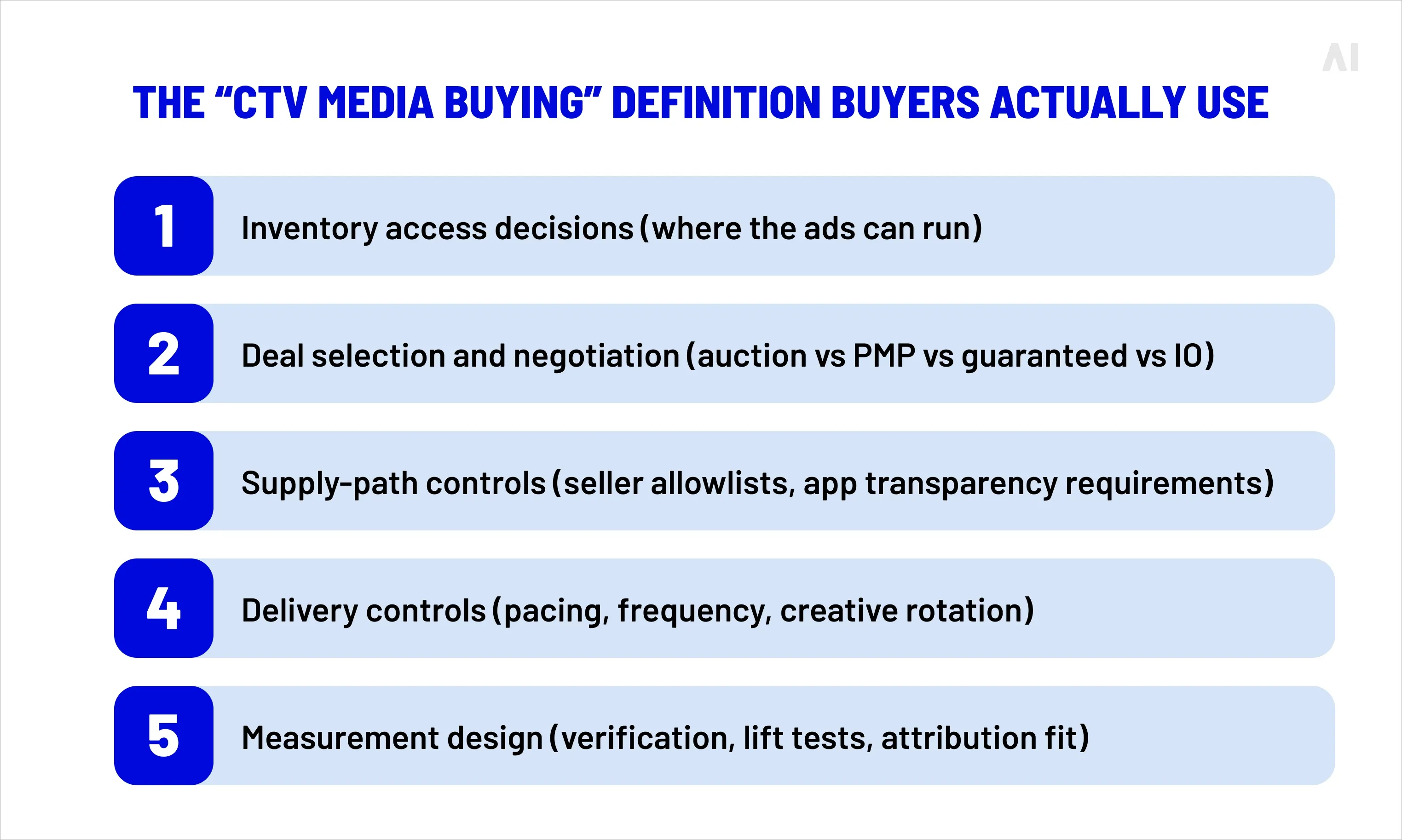
CTV media buying refers to the operational process of planning, purchasing, managing, and optimizing advertising inventory across connected TV environments. While "CTV advertising" describes the broader practice of serving video ads through internet-connected television platforms, CTV media buying zeroes in on the mechanics: which platforms you access, how you bid on inventory, what deal structures you negotiate, and how you control delivery.
⚡ Think of it this way: CTV advertising is the what and why. Media buying is the how and where.
The buying process involves selecting inventory sources (streaming services, smart TV apps, FAST channels), choosing between programmatic auctions and direct deals, configuring audience targeting parameters, setting frequency caps, and monitoring delivery against performance benchmarks.
- Traditional TV media buying relied on upfront negotiations for guaranteed rating points.
- CTV media buying introduces programmatic infrastructure, real-time bidding logic, and digital attribution methods into television advertising.
💡 Related reading: TV media buying
Media buyers in the CTV space work across multiple dimensions:
- They evaluate supply-side platforms to find quality inventory.
- They assess demand-side platform capabilities for targeting and reporting.
- They negotiate private marketplace deals when open exchanges fall short.
- They coordinate frequency management across fragmented apps and devices.
Each decision affects reach quality, cost efficiency, and measurement reliability.
⚡ CTV media buying is where strategy meets execution. You can have perfect creative and precise targeting, but if your supply path is inefficient or your frequency caps don't work across platforms, you're leaving performance on the table.
CTV media buying vs CTV advertising
Understanding the distinction between these two concepts helps clarify roles and responsibilities within marketing teams. CTV advertising encompasses the full spectrum: strategy development, creative production, campaign planning, and outcome analysis. CTV media buying sits within that spectrum as the execution layer focused on inventory access and campaign delivery.
The table below outlines key differences:
{{26-CTV-Media-Buying-SEO-1="/tables"}}
Advertisers who conflate the two often set inappropriate KPIs for media buyers or expect strategic outcomes from purely tactical roles. High-performing organizations separate strategic advertising decisions from operational buying mechanics while maintaining close coordination between teams.

How CTV media buying works
The CTV buying process involves multiple interconnected systems, each adding complexity to what appears on the surface as a simple transaction: showing an ad on someone's television. In reality, reaching that viewer requires decisions about supply sources, deal types, platform selection, and data activation.
Inventory sources and supply paths
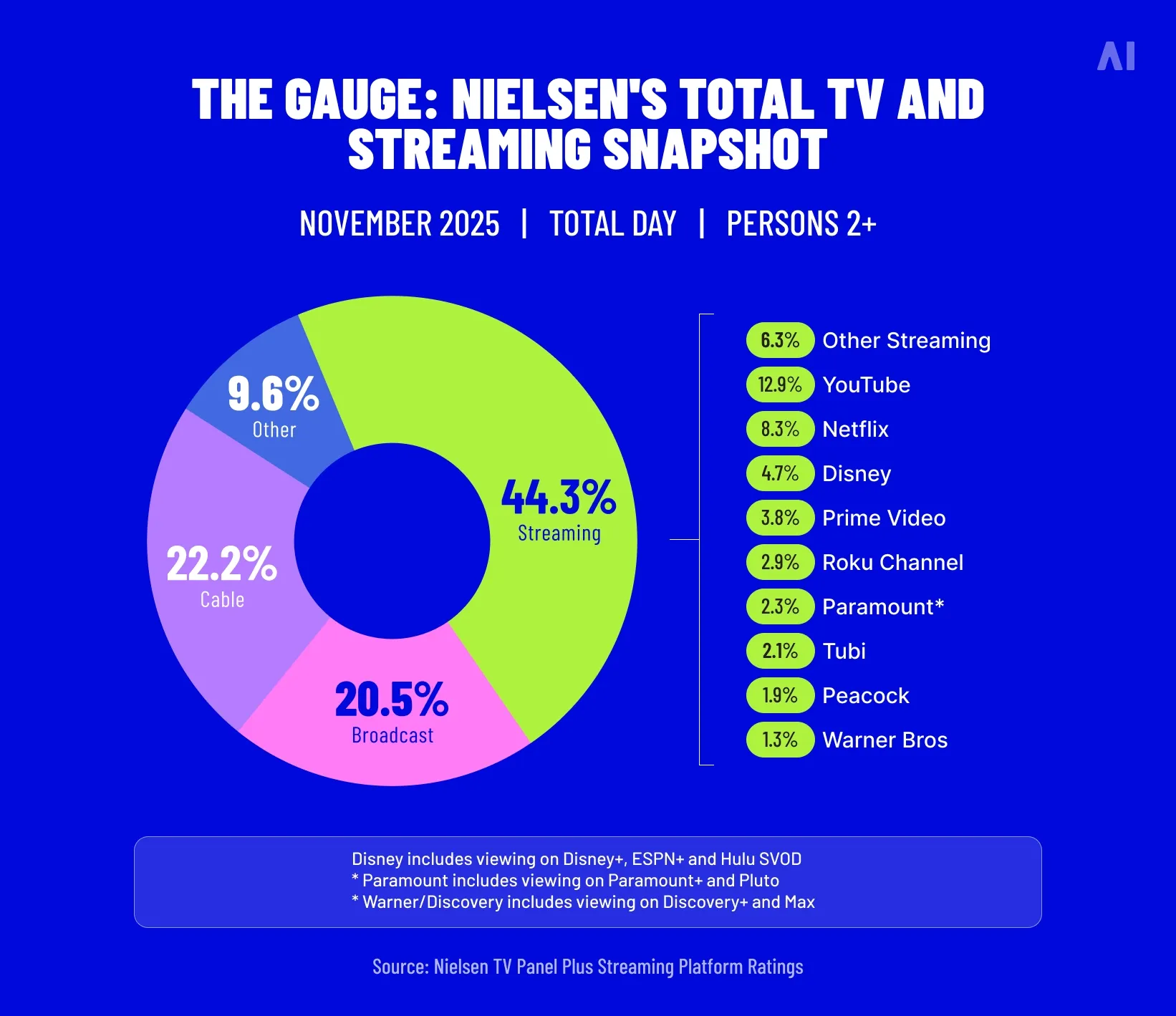
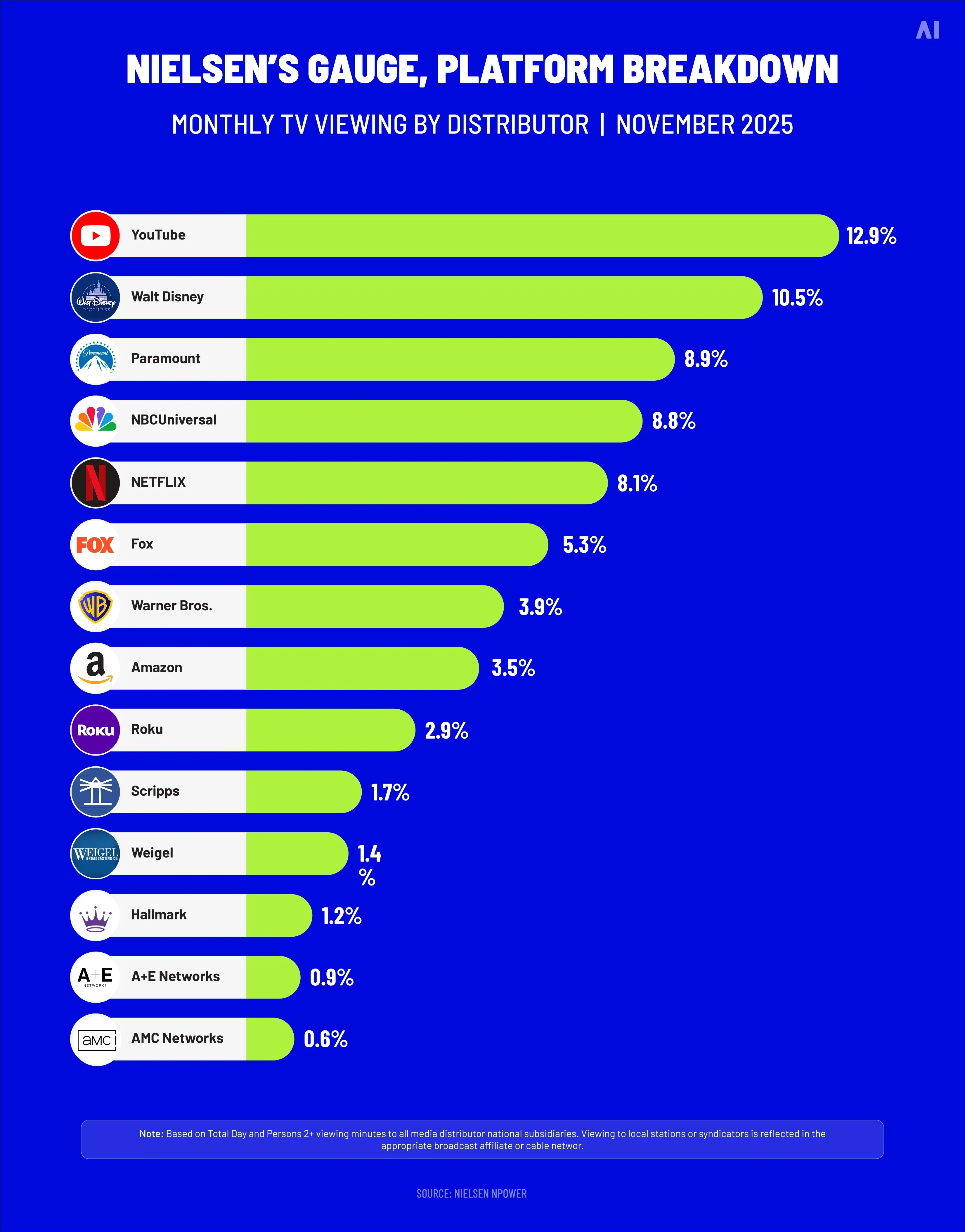
CTV inventory originates from streaming publishers: subscription services with ad-supported tiers, free ad-supported streaming TV (FAST) channels, and connected TV apps. Approximately 90% of all CTV impressions come from just 10 publishers, including YouTube, Hulu, Roku, Peacock, and Netflix. This concentration means that a handful of platforms control access to most available inventory.

However, the supply chain beneath these publishers creates complications. A single CTV app's inventory might be accessible through over 100 different supply paths, with multiple ad tech intermediaries (SSPs, exchanges) reselling the same placement. One study identified 114 distinct supply routes for a given CTV service's ads.
This convoluted structure increases inefficiency. Advertisers may bid on identical impressions through different routes, inflating costs and complicating frequency management. You can't control how many times someone sees your ad if you don't know you're buying the same inventory multiple times through different intermediaries.
Supply Path Optimization (SPO) has become critical in response. Buyers increasingly demand direct, transparent routes to inventory that eliminate unnecessary fees and redundant middlemen.
❝❞ The publishers that will get the most money from us are the ones that eliminate the most waste and unnecessary fees, notes one agency CEO, highlighting buyer pressure for cleaner supply chains.
Direct relationships with publishers or preferred SSP partnerships reduce supply path complexity. Media buyers benefit from understanding which routes deliver legitimate inventory at fair prices versus which paths introduce fraud risk or hidden fees.
{{26-CTV-Media-Buying-SEO-2="/tables"}}
Buying models and deal types
CTV inventory can be purchased through several models, each with distinct advantages and constraints.
Programmatic buying now dominates the channel. Over 90% of U.S. CTV ad spend in 2025 transacted through programmatic pipes. This includes open-auction buys (real-time bidding in public exchanges) and private programmatic deals like private marketplaces (PMPs) and programmatic guaranteed arrangements.
Programmatic channels enable audience-specific targeting and real-time optimization, bringing digital efficiency to television. Open exchanges offer scale and flexibility. Private marketplaces provide some inventory curation and priority access at negotiated floor prices. Programmatic guaranteed deals lock in specific impression volumes at fixed CPMs, combining programmatic technology with upfront commitment.

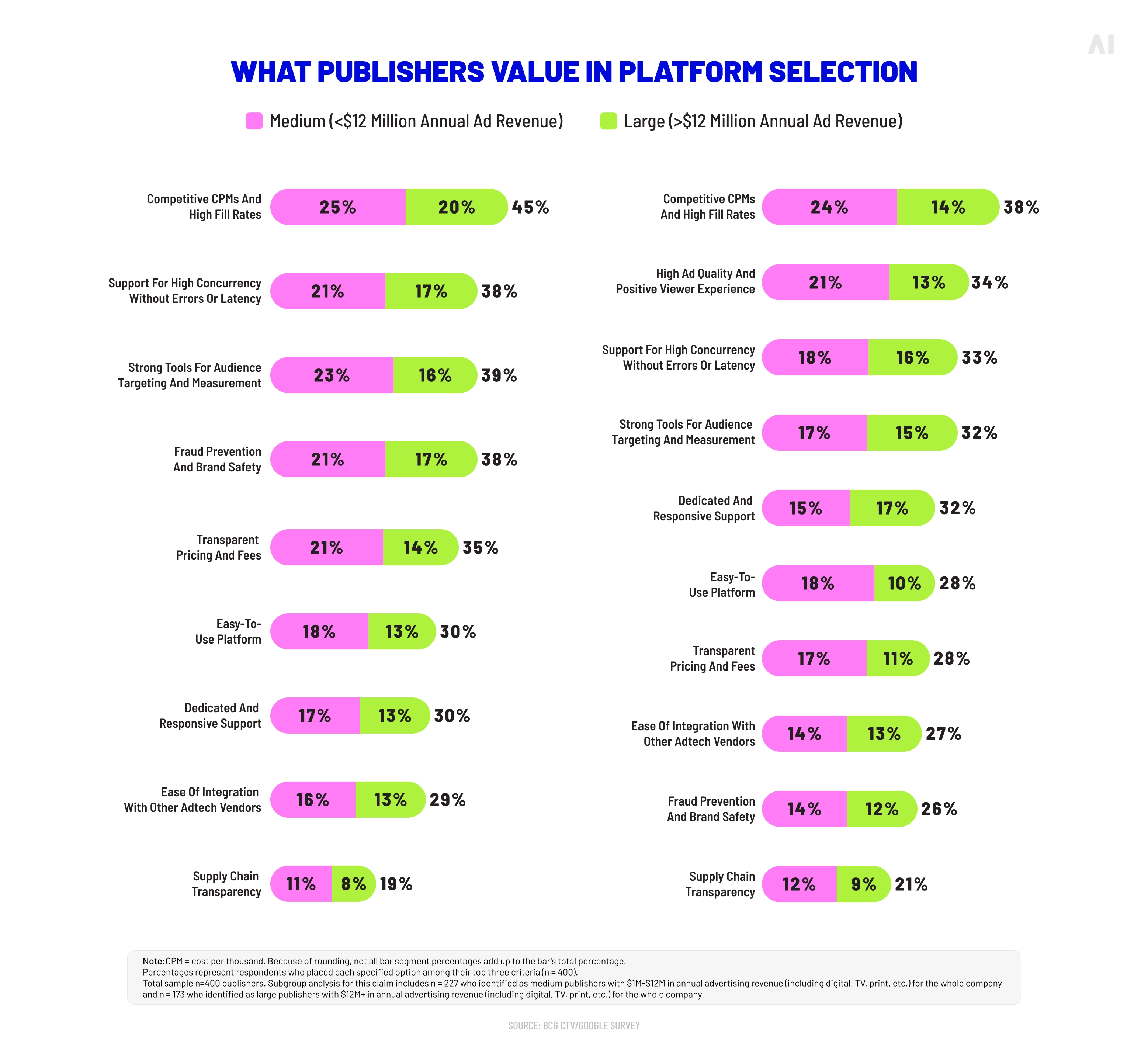
Yet programmatic alone doesn't capture all CTV opportunities. Many top-tier streaming platforms reserve premium inventory for direct deals. Through direct negotiations, brands secure guaranteed placements in high-profile content: a hit show's premiere, live sports events, or exclusive streaming windows. These placements ensure brand safety (you know the exact content context) but typically cost more.
Successful CTV strategies often blend both approaches.
"If anyone tells you you can programmatically do television forever, they're full of it, said one marketing VP. The winners "marry data, technology and relationships."
Brands frequently start with programmatic for quick reach and efficient testing, then layer in direct publisher deals to access premium inventory at scale and achieve more stable delivery. Programmatic provides flexibility and data-driven targeting. Direct deals provide guaranteed quality and consistent volume.
{{26-CTV-Media-Buying-SEO-3="/tables"}}
DSPs and buying platforms
On the buy side, advertisers rely on demand-side platforms specialized in CTV. Leading platforms include The Trade Desk, Google's Display & Video 360, Amazon's DSP, and publisher-specific solutions like Roku's OneView.
These platforms connect buyers to inventory across numerous streaming apps and networks while offering controls for targeting, frequency capping, budget pacing, and real-time reporting. Some advertisers also work with managed service partners or agency trading desks to execute CTV buys on their behalf.
On the sell side, major CTV publishers often work with supply-side platforms (Magnite, PubMatic, FreeWheel) to monetize their ad space programmatically. The ecosystem features increasing consolidation, with large media owners developing proprietary tech stacks or forming alliances to streamline buying across their portfolios.
Fragmentation persists despite consolidation efforts. Multiple apps, devices, and resellers create complexity that buyers want simplified.
"Platforms that "make CTV easier to buy, easier to understand and easier to trust" gain competitive advantage."
Audience targeting and data activation
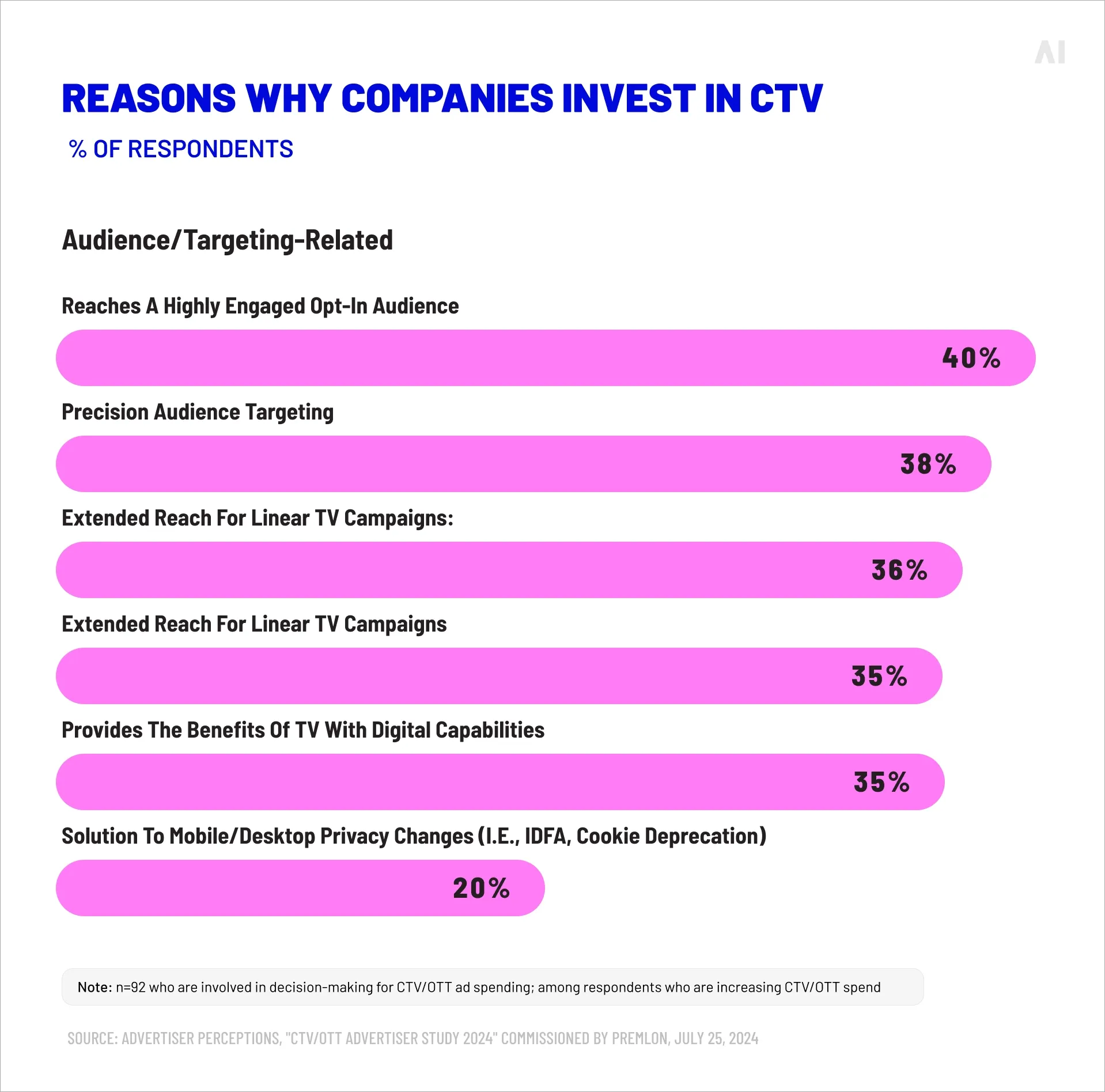
CTV's greatest advantage over traditional TV lies in advanced audience targeting. Instead of buying broad demographic ratings on a few networks, CTV buyers deploy granular targeting criteria similar to online advertising.
Targeting options include:
- Demographics: Age ranges, household income, homeownership status, education level
- Behavioral data: Purchase history, content viewing patterns, brand affinity
- Geographic targeting: City, ZIP code, or DMA-level precision
- Contextual signals: Content genre, program type, daypart
- First-party data: CRM integration for customer retargeting or lookalike modeling
Many brands integrate their own customer data to execute CTV retargeting on the big screen. This capability can dramatically improve spend efficiency. One analysis found a diaper brand wasted $60 million of a $75 million linear TV campaign on households that don't even buy diapers, the type of waste CTV targeting can avoid.
In practice, CTV advertisers combine third-party data segments, publisher-specific data (Roku or Amazon Fire device data), and proprietary first-party data to build targeting profiles. Audience-first CTV buys can deliver three times more efficient reach than broad linear buys by focusing on viewers most likely to be interested.
The shift represents a move from "spray and pray" broadcast thinking to data-driven, addressable TV where digital signals determine who sees which ad.
Pricing and budgeting in CTV media buying
Cost structures in CTV differ materially from both linear television and standard digital video, and understanding how pricing works—along with the budget management challenges that come with it—helps buyers set realistic expectations, plan for volatility, and avoid the most common pitfalls.
Typical CPM ranges and market dynamics
CTV advertising typically prices on a CPM (cost per thousand impressions) basis. Average CPMs for U.S. CTV campaigns range from $20 to $40, with many campaigns settling around $25 CPM. This positions CTV as more expensive than most digital display or social media ads but cheaper (per impression) than traditional prime-time TV spots, given CTV's more precise targeting.
Actual CPMs vary widely by platform and deal type. Premium inventory commands higher rates. Netflix's ad-supported tier prices at roughly $20-$30 CPM via programmatic buys but $45-$65 CPM for direct-sold deals, reflecting the platform's premium positioning. Free ad-supported TV services like Pluto or Tubi range around $10-$15 CPM. Hulu tends to range from $10-$30 CPM depending on targeting.
Targeting sophistication also drives cost. A broad untargeted CTV buy might hit $15 CPM, while layered first-party data or narrow demographic segments can push rates above $40-$50.
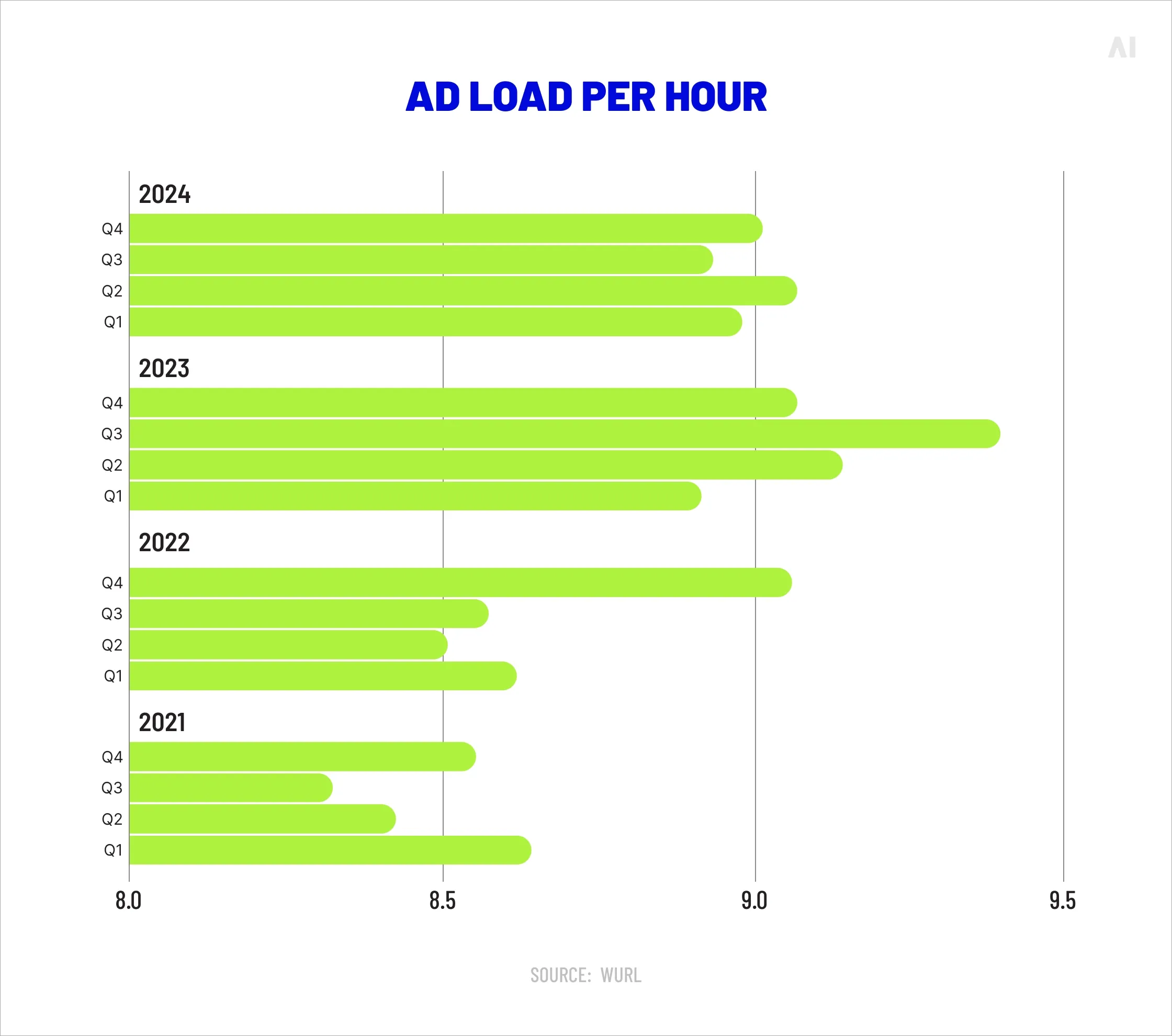
Market dynamics in 2024-2025 have actually applied downward pressure on CPMs. With nearly every major streaming service launching ad-supported tiers, inventory has surged. Amazon's Prime Video introduction of ads in early 2024 deliberately undercut rivals with approximately $35 CPM pricing, significantly lower than Netflix, Max, or Disney+. Amazon's entry dumped an estimated 50 billion additional ad impressions into the U.S. market, forcing other streamers to drop prices to remain competitive.
By mid-2025, all major streaming platforms except Netflix and Max maintained average CPMs below $30. For advertisers, this creates a buyer's market where plentiful supply keeps CPMs relatively stable even as demand increases.
Budget allocation and pacing challenges
A common question: how much budget should go to CTV? No universal answer exists, but industry guidance suggests dedicating 15-30% of digital ad budgets to CTV for statistically valid testing. Large brand advertisers shift millions from linear TV to CTV, while performance advertisers increase CTV as a portion of social and display spend.
Pacing—spending budget smoothly over time—presents challenges in CTV. Viewership isn't uniform. Primetime evenings and weekends see streaming spikes, so campaigns often start slow during daytime then ramp up impressions during peak hours.
Limited inventory for niche targets can cause pacing shortfalls. If you only want to reach "luxury car intenders" on specific apps, you might struggle to spend a large budget because that audience is small or quickly saturated. Advertisers frequently encounter either underspending (budget left unspent because targets or frequency caps limit delivery) or overspending in bursts (burning through budget too quickly when inventory becomes available).
Buyers use DSP tools to set daily or hourly spend limits, leverage budget pacing algorithms, and adjust targeting breadth to hit spend goals. Automated systems help distribute impressions evenly and avoid front-loading or back-loading campaigns.
Another budgeting consideration ties to frequency. High budgets paired with narrow audiences can bombard the same viewers repeatedly. Budget decisions inherently link to frequency management (discussed next): you may choose to expand targeting or shorten campaign duration if frequency climbs too high for allocated budget.
Frequency management and reach control
Controlling ad frequency—how many times the same viewer sees your ad—is critical in CTV for both effectiveness and waste prevention. Research shows approximately 3-7 exposures per viewer optimizes impact, but seeing an ad more than 10 times can reduce purchase intent due to wear-out. One study found viewers who see the same ad "too often" became 16% less likely to intend to purchase.
Unfortunately, frequency management is easier said than done in CTV. Because of the fragmented ecosystem (many apps with no universal user ID across them), the same household easily receives identical ads via multiple platforms in parallel. A family streaming Hulu, then Peacock, then Pluto might see the same ad in each because platforms don't coordinate.
Buyers can set frequency caps within each buying platform (limiting to 3 impressions per user per day on a given DSP), with recommendations to cap exposure at 3-5 impressions per week per household as baseline.
However, these caps often apply only within one DSP's scope. They don't stop another DSP or direct publisher buy from hitting the same user. Some advertisers use exclusion lists to prevent buying the same inventory via multiple routes. Still, a true universal frequency cap across all of CTV remains "a work in progress" in 2025.
Best practice involves monitoring frequency by pulling campaign reports from all sources and examining overlap where possible. Many advertisers adjust mid-flight if frequency creeps up, such as broadening targeting or shifting spend to media with unique reach.
Maximizing unique reach is often the main objective, and diversifying across multiple streaming platforms can expand the number of unique households you reach by increasing your presence across more content and viewing contexts. The practical budget challenge is balancing enough frequency to create impact—rather than relying on one-off exposures—with controls that prevent overexposure, which often means distributing spend across a deliberate mix of inventory sources instead of concentrating everything in a single pool.
⚡ Frequency management in CTV isn't just about preventing ad fatigue. It's about respecting viewer experience while maximizing your budget efficiency. When you hit the same household 15 times in a week, you're not building brand affinity—you're burning money.
Measurement and attribution in CTV media buying
One of CTV's key value propositions is digital-like measurability for television ads. While traditional TV struggled to answer "Did my ad work?" with precision, CTV measurement and attribution capabilities have advanced significantly, though challenges remain.
💡 For comprehensive coverage of this topic, see our guide: CTV measurement: The key metrics that will define successful campaigns.
{{26-CTV-Media-Buying-SEO-4="/tables"}}
Viewability, completion rate, and attention metrics
CTV campaigns are evaluated on metrics similar to digital video: impressions delivered, reach (unique households), frequency, and engagement metrics like video completion rate (VCR). Viewability is essentially a given since CTV ads play full-screen on televisions with little question of being "in view" (unlike banner ads).
Instead, attention is measured through completion rates and surveys. CTV video completion rates are extremely high, often exceeding 90% on average for 15-30 second ads. Viewers typically cannot skip most CTV ads (especially on premium ad-supported tiers), and they tend not to abandon content during short ad breaks.
High completion ties into strong ad recall. Studies find brand recall averages approximately 46% for CTV ads, far exceeding recall from typical web video ads (around 9%). These statistics underscore CTV's ability to hold viewer attention.
Beyond completion, CTV advertisers examine click-through or interaction rates if interactive ads are used (overlays, QR codes). However, direct clicks are less common on TV screens. More often, buyers measure "view-through" outcomes: actions users take after seeing the ad on another device or at a later time.
Incrementality and lift measurement
With device graphs and identity matching, marketers can attribute downstream outcomes (website visits, app installs, purchases) back to CTV ad exposure. Cross-device attribution links household smart TV impressions to subsequent actions on smartphones or PCs.
For example, someone sees a CTV ad on Roku Sunday night and searches the brand on their phone Monday. If devices are matched (via IP address, user login, or third-party graph), the brand can credit the TV ad for that website visit or eventual purchase. Modern ad tech allows fairly granular multi-touch attribution that includes CTV as a touchpoint.
View-through attribution (VTA) is commonly used: if a user was exposed to the CTV ad and later converts with no other referring click, the conversion is attributed to the ad impression.
Advertisers also use lift studies and incrementality tests for CTV. You can hold out a control group (who don't see CTV ads) and measure lift in conversions or brand metrics among the exposed group. Many vendors offer incremental reach metrics showing how many unique people CTV added on top of linear TV campaigns. This proves crucial in omnichannel planning, where CTV is often justified by extra reach beyond linear TV audiences.
However, challenges exist. Co-viewing (multiple people watching one TV) complicates measurement, with 70% of marketing professionals citing it as an issue in measuring CTV effectiveness. If three family members watch one ad, who actually paid attention or who ended up buying?
Likewise, second-screen multitasking is common. About 65-77% of viewers use another device while watching TV. A CTV ad might prompt immediate mobile action (good) or might be ignored due to distraction (bad). Isolating its effect requires sophisticated cross-device path measurement.
Interestingly, approximately 30% of viewers now regularly scan QR codes from TV ads when available, bridging the gap between the big screen and immediate digital action.
Cross-device and cross-channel attribution
A notable gap in CTV measurement has been lack of standardized, transparent reporting from some publishers. Many streaming platforms operate as "walled gardens" that share limited data. An IAB study in late 2025 found only 21% of CTV publishers always provide advertisers with access to log-level data or dashboards for campaign delivery; 36% never do.
This fragmentation makes it difficult for advertisers to "validate their performance and troubleshoot integrations," as the IAB report noted. When buying via DSPs, placement transparency can be limited. DSPs provide broad information (which app or genre your ad ran in) but often won't reveal the specific show or content where your ad appeared.
This opacity raises brand safety concerns. Without detailed program-level data, buyers sometimes feel in the dark. One analyst called CTV "essentially a black box you run blind" without proper insights. To gain more control, many balance DSP buys with direct buys where publishers confirm placements.
The industry recognizes these reporting gaps and is pushing for unified measurement standards. Efforts include Nielsen One (to unify linear and streaming metrics) and partnerships like Roku sharing viewership data with Nielsen for better cross-platform measurement.
Additionally, the IAB in 2025 published guidelines for a CTV "conversion API" (CAPI), a server-to-server data sharing framework to track conversions from CTV in a privacy-safe way. The IAB found that if advertisers and publishers adopt such frameworks, CTV has the potential to deliver accountability and performance on the same level as social and search.
Early evidence: nearly two-thirds of advertisers who implemented a CTV Conversion API reported improved return on ad spend (ROAS), thanks to more complete conversion data and stronger attribution.
Since CTV often runs alongside other channels, marketers want holistic views. This means examining unique reach across linear TV and CTV (to avoid double counting) and understanding how CTV exposures drive results in combination with other touches. Data clean rooms are increasingly used for this purpose: privacy-safe environments where publishers can match viewer exposure data with advertiser conversion data.
💡 For deeper understanding of attribution models, see our guide: What is MTA?
Common CTV media buying challenges (and how to avoid them)
Despite its advantages, CTV media buying presents several challenges that can undermine campaign performance if not addressed proactively.
{{26-CTV-Media-Buying-SEO-5="/tables"}}
Inventory quality and spoofing risks
With high CPMs and complex supply chains, CTV has become a target for ad fraud. Invalid traffic (IVT) and fraud in CTV can take forms like app spoofing (fake apps pretending to be legitimate streaming apps), server-side ad insertion (SSAI) fraud (fraudsters simulating ad server calls to fake streaming sessions), and device fraud (malware generating ads in the background).
According to Pixalate, roughly 19% of global programmatic CTV traffic was invalid in Q3 2025. In the U.S. specifically, the IVT rate was approximately 18% of open CTV impressions, meaning nearly one in five programmatic CTV ad opportunities could be fraudulent or non-viewable. More alarming: 38% of CTV app bundle IDs in programmatic supply were malformed or fraudulent in Q2 2025.

This indicates a significant portion of CTV ad inventory in open exchanges might be misrepresented (unknown low-quality apps posing as popular apps).
How to avoid it: First, buy from reputable sources. Lean toward well-known publishers and platforms with stringent ad quality controls. Make use of industry tools like app-ads.txt (a public list publishers post of authorized sellers) to ensure your buys only occur on authorized supply paths.
Most DSPs allow you to block unknown bundle IDs or flag suspicious traffic. Work with verification vendors (DoubleVerify, IAS, Pixalate) specializing in CTV. They can detect and filter fraudulent activity (blocking traffic from data centers or known bot signatures). As a result of such measures, CTV fraud rates can be kept under approximately 11% as measured by verification firms.
Advertisers should also scrutinize performance anomalies. If a CTV buy delivers unusually cheap CPMs or odd-hours impressions in bulk, that could be a red flag. Limit the number of intermediaries: more ad tech hops create more opportunities for unscrupulous players to insert themselves. By curating supply partners (using private marketplaces or deals directly with SSPs that have vetted publishers), you reduce exposure to the open market's risks.
💡 For comprehensive fraud prevention strategies, see our guide: CTV ad fraud.
Fragmentation across platforms and publishers
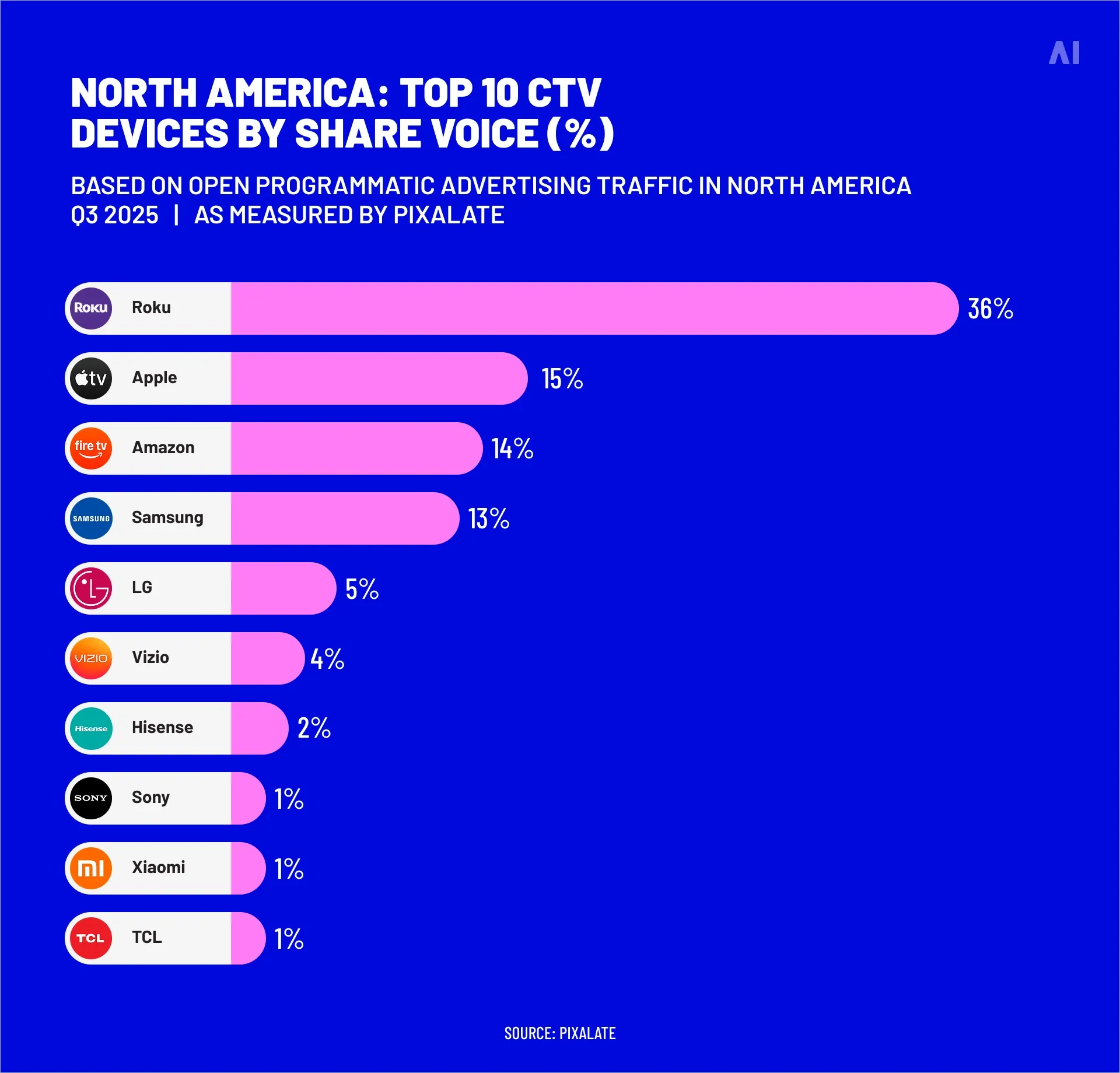
The CTV ecosystem is fragmented across countless apps, devices, and services, making holistic campaign management difficult. Audiences spread over many platforms and often overlap. In fact, over 60% of top streaming apps' audiences overlap with each other, meaning the same viewers use multiple services.
This leads to uncoordinated ad delivery and excessive frequency. An advertiser might unknowingly hit the same person on Hulu, Peacock, and Roku Channel in one week. Additionally, fragmentation in the supply chain makes it difficult to properly frequency cap a CTV campaign when bids come through for the same inventory across different sources.
How to avoid it: Embrace tools and planning strategies to consolidate buys and data. Working with platforms that aggregate multiple publishers (or using a single DSP for as much inventory as possible) helps centralize frequency management. Employ unified ID solutions or data partnerships that recognize viewers across apps. Use exclusion lists to prevent buying the same inventory via multiple routes.
Actively monitor frequency reports. It may also be useful to cap frequency at the household level (using IP address or device IDs) rather than by individual app. The industry also sees "smart curation" as a solution: curating a set of trusted, high-reach inventory sources rather than running everywhere. Until true omnichannel frequency capping exists, picking partners who can deliver scale with less fragmentation becomes critical.
Limited transparency and reporting gaps
Many CTV buyers struggle with "blind spots" in where and how their ads ran. When using programmatic pipes, you often receive high-level reports (X impressions on "Streaming Service A - Comedy category") but not exact context. This lack of content transparency raises brand safety concerns: you might not know if your ad appeared before controversial video or alongside sensitive content.
It also makes optimization harder since you can't always tell which specific shows or placements drove results. Additionally, every platform has its own reporting interface and metrics, making cross-platform analysis laborious. Gaps in conversion tracking data sharing exist because some CTV apps might not pass device IDs that help match exposures to outcomes, due to privacy or technical reasons.
In an IAB survey, 72% of CTV publishers admitted that technical complexity in integration was hindering adoption of better measurement like conversion APIs.
How to avoid it: Demand transparency in your deals. When negotiating direct deals or PMP deals, ask for site-level or content-level reporting wherever possible. Use third-party measurement and verification as a second source of truth. Nielsen DAR (Digital Ad Ratings) or Comscore can independently verify audiences and reach across platforms, while tools like MOAT or IAS can confirm ad delivery and viewability.
Push partners to adopt standards: encourage publishers to integrate with Open Measurement SDK for CTV or enable server-side signals that verification companies can use. If a platform offers a data clean room for advanced analysis (Disney's or Amazon's clean room solutions), consider using it to get more granular performance insight in a privacy-compliant way.
Internally, try to normalize data across platforms by creating a dashboard that ingests each platform's metrics so you can compare apples to apples. Ultimately, holding partners accountable for transparency drives improvement. Lack of transparency was cited as the second issue (after fragmentation) that CTV providers must address.
Unrealistic performance expectations
Some advertisers jump into CTV expecting it to behave exactly like paid search or Facebook campaigns: immediate and easily trackable ROI. This can lead to disappointment or misaligned KPIs. CTV straddles upper- and mid-funnel in many cases. It has the sight, sound, and motion impact of TV (great for branding) and the targeting and interactivity of digital (potential for direct response), but it's not always as instantly measurable as click-based channels.
Attribution windows and conversion paths can be longer (someone might see a CTV ad and convert weeks later), and attributing that properly requires sophisticated modeling.
❝❞ The IAB warned in late 2025 that "without a way to show clear, measurable ROI, CTV is likely to face reduced demand from advertisers seeking platforms that can demonstrate clear results."
How to avoid it: Set proper expectations and metrics for CTV from the outset. If your goal is direct response, ensure you have measurement infrastructure in place: robust multi-touch attribution models or conversion lift tests to prove incremental sales from CTV. If you treat CTV like a performance channel, follow IAB guidance and implement tools like conversion APIs and tighter integration with your data to get feedback loops on conversions.
On the flip side, if your goal is upper-funnel (awareness, reach), don't hold CTV to a last-click CPA metric. Instead, measure brand lift, unique reach, and frequency, then compare CTV's effectiveness in moving those needles versus other media.
Another tactic: align CTV with performance channels. Coordinate your CTV ads with paid search and social campaigns (CTV makes people search; search data can inform retargeting on CTV). Performance marketers should see CTV as driving prospecting and new demand that converts on other channels. Success metrics might be an increase in branded search volume or higher conversion rates among exposed audiences.
Be realistic that CTV may not generate abundant last-click conversions on its own, but it will drive incremental reach and lift that are extremely valuable. By planning for those outcomes and proving them (even if via advanced attribution), you avoid undervaluing CTV's true impact.
⚡ Perfect attribution will never exist in CTV. Accept that now. The goal isn't to track every impression to a conversion with surgical precision but to build directional confidence through multiple measurement approaches that triangulate toward truth. Incrementality testing beats last-click obsession every time.
CTV media buying in omnichannel strategies
Rather than treating connected TV in isolation, leading marketers fold CTV into omnichannel marketing strategies. This means leveraging CTV alongside linear TV, digital video, social, search, and other channels in a coordinated manner to maximize overall campaign impact and efficiency.
One significant trend is the shift from linear-first to digital-first video buying. More than 40% of CTV advertisers completely agree that CTV is accelerating the shift to "digital-first" media buying and becoming deeply integrated with omnichannel campaigns (not just a silo).
Advertisers increasingly plan TV holistically: considering both linear GRPs and CTV impressions together, aiming to reach unduplicated audiences across both. CTV then serves as a way to extend reach beyond linear, hitting cord-cutters and younger audiences that traditional TV misses, while also reinforcing messaging across screens.
Concretely, how is CTV used in omnichannel strategies? Some brands target audiences on CTV who have been primed by other channels (people who saw a social ad but didn't convert might get a CTV ad for bigger impact, or website visitors might receive a CTV ad as a retargeting touch). Conversely, they also retarget CTV-exposed audiences on other channels (showing a display ad to someone after they've seen the CTV ad to remind them to act).
This kind of cross-device orchestration is enabled by device graphs and unified IDs that link a household's TV to their other devices. Advertisers find that synchronized messaging (a CTV ad followed by a mobile ad with a coupon) can significantly improve conversion rates versus isolated channel efforts.
Another strategy uses CTV to complement live events and time-sensitive promotions in an omnichannel way. With more live sports streaming on CTV, even regional and local advertisers can now participate in big events that were once purely linear TV. A local retailer might run ads during a live sports stream (via CTV) and simultaneously run coordinated social media promotions or search ads capitalizing on the game.
Moreover, CTV offers data and insights that feed broader marketing strategy. Audience data from CTV campaigns (which genres or apps yielded best performance, what creative messaging resonated as measured by site visits) can inform targeting and creative in other channels.
❝❞ As one Premion executive noted, "advertisers no longer treat streaming TV as a silo; they expect it to enhance cross-channel efficiency" and "in 2026, CTV will power omnichannel campaigns, not just complement them."
Frequency capping and attribution are being addressed in an omnichannel manner too. Advertisers want unified views of reach and frequency across linear TV, CTV, and digital. They pressure the industry for unified metrics (like Nielsen's Total Ad Ratings). Until those fully arrive, many take a heuristic approach: assume some overlap and adjust cross-channel frequency targets accordingly, or use panel-based estimates to gauge how much incremental reach CTV delivered.
For attribution, brands look at "multi-touch" influence: recognizing that CTV drove someone to search on Google which led to a click, thus crediting both the CTV impression and the search ad for the conversion. This requires internal data integration: linking ad exposure data from various platforms into a single repository (or clean room) to query things like "how many people who saw our CTV ad also clicked our search ad?" and "which channel combination produces the best ROI?"
Advertisers are also ensuring CTV is included in media mix modeling and attribution models so its contribution is properly valued relative to other channels. Many have found CTV has strong complementary effects. For example, CTV can amplify social media impact by building initial awareness that makes someone more likely to engage with a social ad later. Or CTV can reach people unreachable by linear, thus increasing overall reach at an efficient incremental cost.
💡 For strategies on integrating CTV with other emerging channels, see our guide on DOOH advertising.
⚡ CTV doesn't exist in a vacuum. The brands winning with connected TV are the ones who've stopped thinking about it as 'that new TV thing' and started treating it as one component in an orchestrated media strategy where every channel reinforces the others.
Best practices for effective connected TV media buying
For advertisers and media buyers looking to excel in CTV, these key practices reflect industry research and expert insights.
When to use programmatic vs direct buying
Don't rely on a single buying path. Use programmatic buying (via DSPs) as a foundation for efficient, targeted reach, especially to test campaigns and quickly ramp up impressions. But also consider direct deals or programmatic guaranteed deals with top streaming publishers to access premium inventory that might not be available in auctions.
A hybrid strategy delivers the best of both worlds: programmatic for flexibility and cost-efficiency, and direct for guaranteed high-quality placements and broader reach. Case studies show brands that started with programmatic later layered in direct CTV buys on major publishers to achieve consistent volume and premium exposure that auctions alone couldn't guarantee.
The key insight: "direct buys unlock scale and clarity". Most CTV impressions sit with a few big publishers, and buying some inventory directly from them ensures you're present in must-have environments. Meanwhile, programmatic is a tool: use it selectively for retargeting, niche targeting, and filling gaps, but integrate it with direct relationships.
By combining both approaches, you also simplify supply paths (direct deals mean fewer middle fees) and gain full-funnel impact (using direct for upper-funnel reach and programmatic for lower-funnel retargeting).
How to test and scale CTV campaigns
Approach CTV as a continually optimizable channel. Start with test campaigns or pilots. Many experts suggest a small initial campaign (with sufficient budget, say a few tens of thousands of dollars) to gather performance data.
Use this to test hypotheses: which audience segments work best? Which creative yields the most site visits? What dayparts or contexts drive high completion or conversion rates? Reserve 10-15% of your CTV budget for experimentation: try a new platform, a new interactive ad format, or different frequency caps to see how they impact results.
Measure everything (you've set up your tracking, now use it) and identify winners and losers. Then scale up what works. If you find ads on a certain streaming app drive low CPA, allocate more budget there. If one creative outperforms another in brand lift, shift weight to it.
Treat CTV like digital: an iterative process of A/B testing and optimization. Also test programmatic versus direct performance. Maybe your direct buy on Platform X has higher completion and brand recall, while programmatic across many apps gave you more reach at lower CPM. Both insights are useful for future allocations.
Don't forget to test frequency levels and sequencing as well (does two-frequency exposure yield more lift than one, or three versus five?). The aim is to build a learning agenda and improve each campaign based on the last. Loop these learnings into all stakeholders. Share with your creative team which messages or visuals performed best so they can refine future TV creatives.
Optimizing frequency, reach, and creative rotation
Proactively control how often viewers see your ads. Set frequency caps in your DSPs (no more than 3 ads per user per day per platform) and monitor delivery. Given the cross-platform frequency problem, you might also coordinate with media partners to ensure you're not overlapping too much.
Importantly, have a strategy to mitigate creative fatigue if frequency gets high. Experts recommend refreshing CTV creatives every 3-4 weeks and rotating in 3-4 creative variations from the start. This way, even if someone sees your ad multiple times, they might see different versions or messages, reducing wear-out.
Multiple creatives also allow you to A/B test and see which resonates best. According to IAB, serving 3+ distinct creatives in rotation helps "avoid consumer burnout or fatigue." If one ad starts to show declining performance (CTR or completion), swap it out.
Use sequenced storytelling if possible. For example, make Creative A show the first few times and Creative B in later exposures to keep content fresh. Finally, respect viewer experience: too many repeats can not only hurt your campaign (lower ROI) but also risk negative brand perception. Guard your brand by capping frequency and rotating ads.
The future of CTV media buying
Looking ahead, CTV media buying will continue its rapid evolution. Several key developments are likely to define the next phase.

- Continued growth and consolidation: CTV ad spending will keep rising as audiences further shift from linear TV to streaming. Forecasts show U.S. CTV ad revenues reaching approximately $42.4 billion by 2027, outpacing growth in every other digital channel. This growth attracts more players into the CTV space (more streaming services, more device platforms with ad channels).
Ironically, while fragmentation may increase with new entrants, we'll also see consolidation in certain areas. Major media companies will acquire smaller streaming platforms or aggregate their streaming inventory into unified sales to offer advertisers bigger, easier buys.
- Advanced tech: AI and automation: Artificial intelligence will play a growing role in CTV media buying. Half of CTV advertisers say that AI-driven campaign optimization and better frequency control across platforms would be among the most valuable improvements.
We're already seeing DSPs deploy AI to auto-optimize CTV bids, budgets, and targeting. In the future, AI "agents" might handle tasks like selecting the best supply path, adjusting bids based on probability of conversion, or dynamically assembling audiences across platforms. Networks like NBCU are testing AI-powered systems to automatically allocate linear versus CTV buys based on data inputs.
- Unified measurement and attribution improvements: The future of CTV will likely bring more standardization in measurement. Industry bodies and coalitions (like OpenAP's XPm or Nielsen's cross-media measurement) are pushing for unified TV currencies that combine linear and CTV impressions with de-duplicated reach. In 2026, we might have de facto standards for basics like what constitutes a "view" or an "impression" across CTV platforms.
We'll likely see wider adoption of things like the IAB CTV conversion API framework introduced in 2025, enabling more advertisers and publishers to share conversion data server-to-server.
- Greater personalization and interactivity: Future CTV ads will be more personalized and immersive. We already see some dynamic creative optimization on CTV (different ad versions based on region or time of day). Going forward, with AI and data, we could see truly personalized TV ads. For example, two households watching the same show might see different product imagery in the same car ad, tailored to their preferences.
Hyper-personalization is likely to accelerate, with CTV ads becoming increasingly tailored at the household level using a mix of real-time signals and AI-driven predictions. In practice, that could look like creative that dynamically inserts the nearest store location, swaps in products the household is more likely to care about, or adjusts messaging based on context—all generated and served on the fly rather than locked in as a single, static version.
On the format side, CTV will further blur with e-commerce and gaming. Shoppable CTV will be more commonplace; in 2026, many streaming platforms will likely have native options for viewers to buy or get more info using their remote or linked mobile device. As streaming OS owners like Roku, Amazon, and Samsung continue innovating, we may see integration like voice commerce (ordering via voice command on a TV ad) or one-click purchasing linked to your TV's payment wallet.
💡 For a comprehensive look at what's coming, read our analysis of CTV advertising trends.
Conclusion: why connected TV media buying decisions matter in 2026
A strong media buying strategy is essential for CTV performance. Buying decisions impact reach quality, cost efficiency, measurement reliability, and long-term scalability. The difference between campaigns that drive business results and those that burn budget often traces back to upstream decisions: which inventory you access, how you structure deals, whether you control frequency effectively, and how you measure outcomes.
Key takeaways:
- When CTV media buying makes sense: CTV works best for advertisers who can commit sufficient budget for meaningful reach (typically starting at $50,000+ for initial tests), who have clear attribution infrastructure in place, and who can integrate CTV into broader omnichannel advertising strategies rather than treating it as a standalone experiment.
- How to approach budgeting realistically: Expect CPMs in the $20-$40 range depending on targeting and platform. Allocate 15-30% of digital video budgets to CTV for statistically valid testing. Build in flexibility for pacing challenges and frequency management costs.
- Why inventory quality matters more than scale: Buying the most impressions means nothing if 18% of them are fraudulent. Focus on curated supply paths, reputable publishers, and verification tools to ensure your budget reaches real viewers in safe environments.
- How to align CTV with omnichannel measurement: CTV rarely converts in isolation. Build attribution models that credit CTV for its role in the customer journey, whether that's initial awareness that drives search activity or mid-funnel consideration that improves conversion rates on other channels.
- Actionability matters more than perfect attribution: Don't wait for flawless measurement before investing in CTV. Start with directional metrics (brand lift, incremental reach, search volume increases), then refine your attribution as you scale. The brands that win are those who test, learn, and iterate rather than those who wait for perfect data.
If you need support executing sophisticated CTV campaigns with transparent supply paths and robust measurement, explore AI Digital's Smart Supply solutions designed for performance-focused advertisers. Smart Supply cuts through the complexity of CTV's fragmented supply chain by building custom deal IDs based on your specific KPIs rather than generic inventory pools.
Unlike platform-biased buying (where Google prioritizes YouTube or Yahoo pushes its own inventory), Smart Supply operates agnostically across all DSPs and SSPs, filtering out low-performing publishers, eliminating indirect traffic that inflates costs, and applying IVT protection to ensure clean inventory. Deal IDs activate within 24 hours, with no minimum spend requirements and no added costs—our revenue-share model with SSPs means the tool is completely free for advertisers.
Whether you’re looking for AI-optimized deal libraries built for broad reach or campaign-specific deals designed around aggressive performance targets, Smart Supply helps you secure clean, direct supply paths and the buying efficiency modern CTV demands. Get in touch to discuss how we can simplify your CTV supply strategy, improve transparency, and remove the inefficiencies that are dragging on performance.