DRM in OTT: Why Content Protection Is a Revenue and Advertising Strategy

The contemporary OTT ecosystem is a complex web of interdependencies. Content owners license premium IP under strict terms, platforms invest billions in acquisition and production, advertisers seek brand-safe, measurable environments, and viewers demand seamless access. The fragile currency binding these stakeholders is trust. Uncontrolled distribution through
- Piracy
- unauthorized sharing
- credential abuse
shatters this trust with direct financial consequences.
Industry losses to piracy are staggering, with estimates exceeding $29 billion annually in the US film and TV sector alone. For an OTT platform, this a direct attack on advertising potential. Unsecured content cannot command premium CPMs. Advertisers, wary of fraud and brand safety, hesitate to allocate significant OTT advertising budgets to environments where viewership is unverified and inventory can be illicitly replicated. A study found that 73% of major brand advertisers consider content security and fraud prevention "critical" or "very important" in selecting CTV/OTT partnerships.

This is where OTT DRM transitions from a technical safeguard to a commercial infrastructure layer. It is the system that enforces the business rules of your platform: who can watch, where, on what device, and with what ad experience. By guaranteeing content integrity and viewer accountability, DRM enables the trust required for high-value licensing deals, tiered subscription models, and, crucially, a robust and scalable advertising business. It assures content owners their assets are protected, advertisers that their messages appear in a pristine, measured setting, and platforms that their revenue streams are secure.
To build a comprehensive monetization strategy, understanding the broader landscape is key, which includes exploring the fundamentals of OTT advertising and the architecture of modern OTT platforms. The article will explain why OTT rights management underpins premium inventory, pricing power, and long-term sustainability.
What DRM actually does in OTT
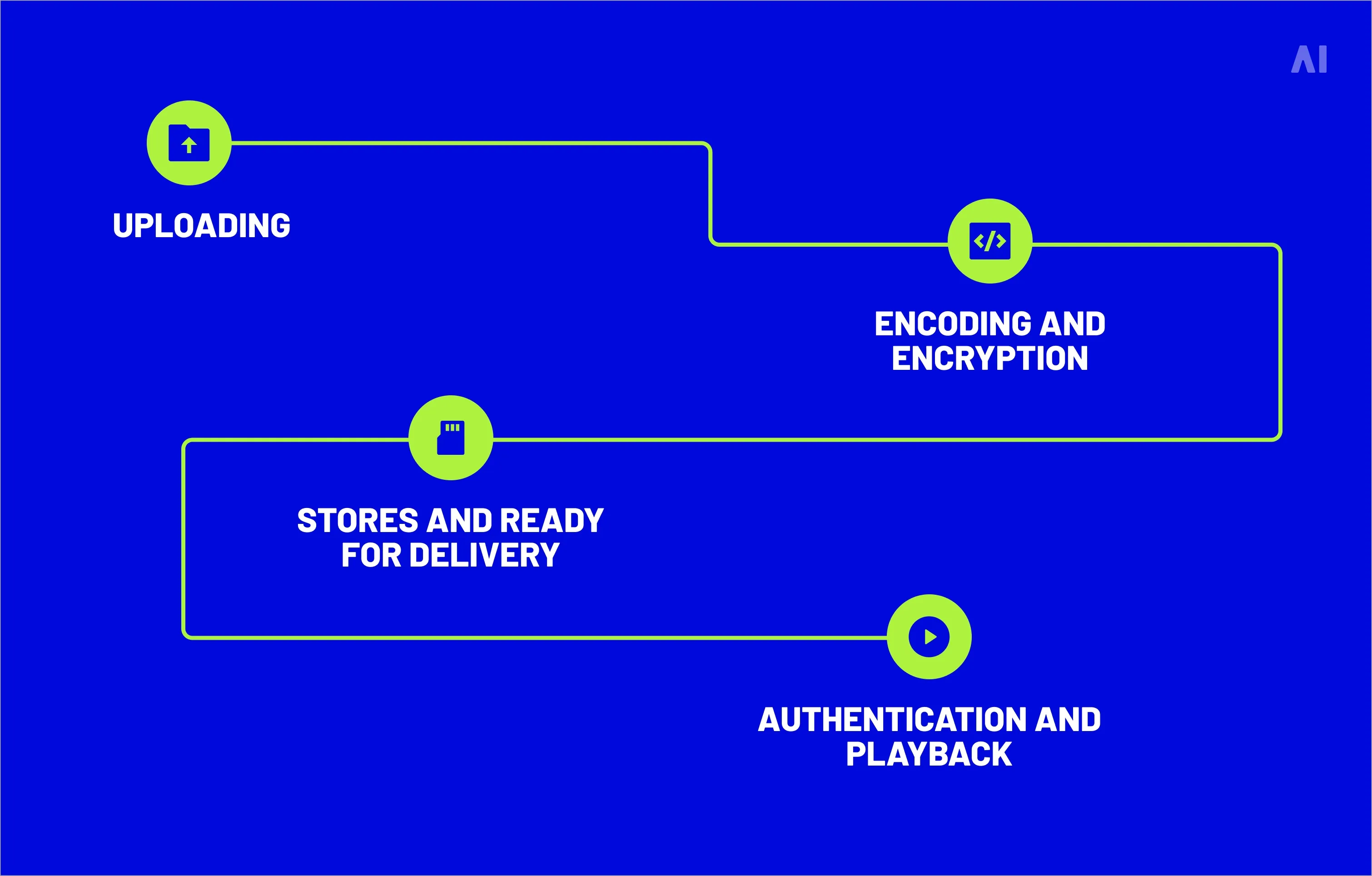
Digital Rights Management (DRM) in Over-The-Top (OTT) streaming is a commercially-oriented access and enforcement framework that enables platforms to deliver licensed video content with predictable control over who can watch, how they watch, and where they watch. At the business level, DRM’s value is measured by its ability to protect revenue and rights rather than by its underlying cryptographic mechanics.
- DRM ensures only authorized subscribers or viewers can play content, safeguarding revenue models such as subscription (SVOD), transactional (TVOD), and ad-supported (AVOD). This is essential for reliably enforcing licensing agreements with studios and rights holders.
- By integrating with licensing servers and device profiles (e.g., Google Widevine for Android, Apple FairPlay for iOS, Microsoft PlayReady for Windows ecosystems), DRM restricts playback to approved devices and geographies, aligning distribution with contractual rights.
- Business rules such as playback windows, offline viewing windows, concurrent stream limits, and regional blackouts are enforced via DRM-linked license checks at play time.
- The global OTT landscape faces significant piracy threats that can undermine monetization and audience trust. By encrypting content and requiring server-issued licenses, DRM reduces unauthorized distribution, which industry analysts cite as a major revenue drain if uncontrolled.
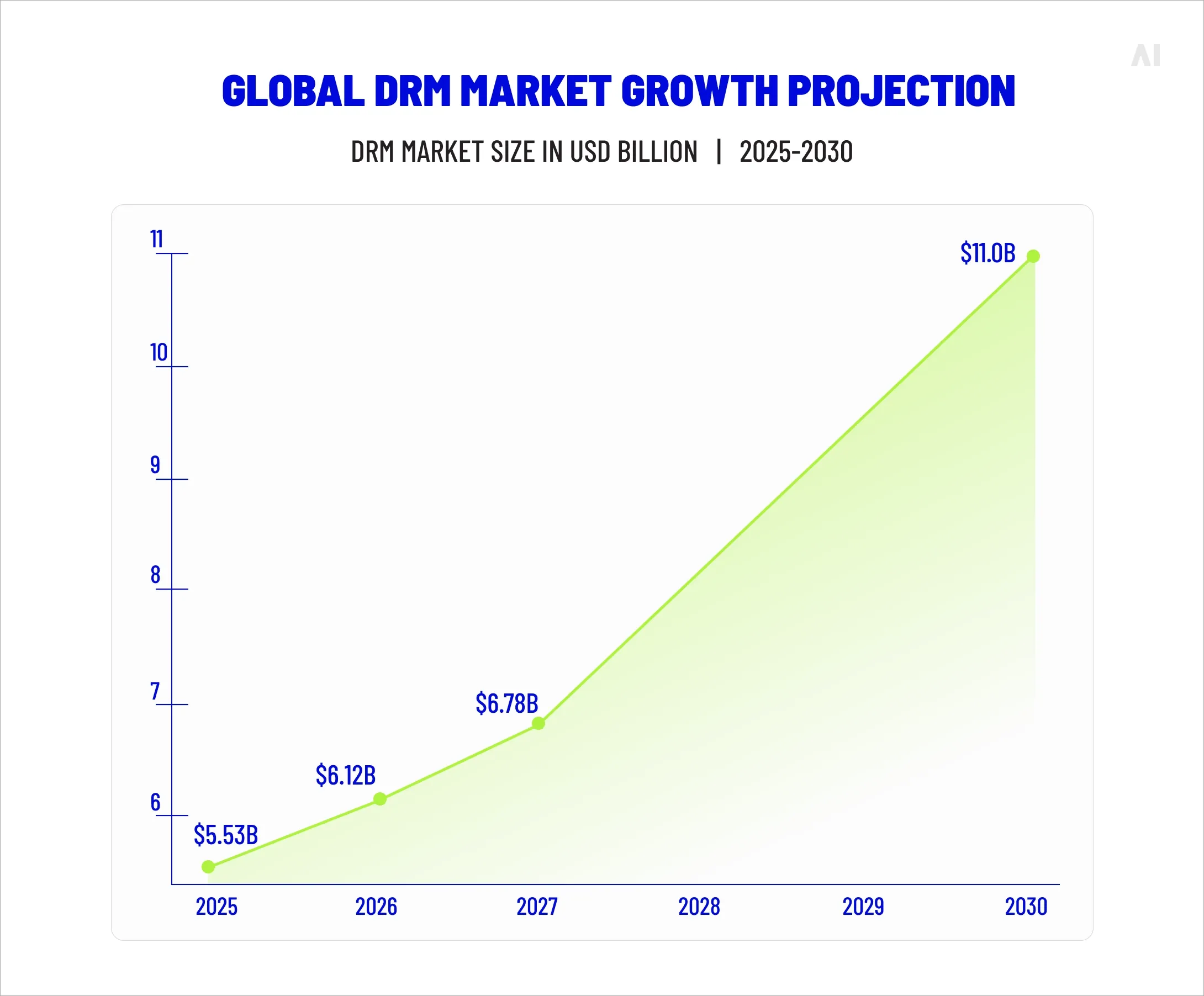
In 2025, the DRM market size is estimated at USD 5.53 billion with projections to nearly double by 2030 as OTT platforms prioritize secure monetization and compliance with increasingly stringent licensing and regulatory requirements.
DRM enables predictable, controlled distribution of OTT content. Its business purpose is to ensure licensed deliveries are enforced across users, devices, and regions so that platform owners and rights holders can justify and protect their revenue streams.
Why advertisers care about DRM (even if they don’t name it)
Advertisers pouring billions into streaming don’t buy "Digital Rights Management" software. They buy what it guarantees: uninterrupted access, verified audiences, and brand-safe environments. In the high-stakes world of premium streaming, DRM isn't a technical feature—it's the invisible foundation that makes the entire ad market trustworthy and scalable.
Why does this hidden layer matter now more than ever? As the global OTT market surges toward $317 billion, every stakeholder—from Hollywood studios to Fortune 500 brands—requires one non-negotiable condition: certainty. Certainty that their content and their commercials are seen by the right people, in the right context, without compromise. DRM delivers that certainty.
💡DRM is the reason a luxury car ad runs seamlessly before a hit series, not on a pirated copy on a third-party site. It’s the reason advertisers trust a streaming platform’s viewability metrics enough to pay a premium. In an ecosystem rife with fraud and fragmentation, DRM is the bedrock of accountability.
DRM as a foundation for premium OTT monetization
DRM doesn't create the advertising model, but it builds the secure vault where revenue is stored. You cannot have trusted, scalable monetization in OTT without it. Effective DRM solutions enforce licensing, manage complex rights, and protect video at a global scale—creating the essential, controlled conditions for legitimate ad monetization across FAST, AVOD, SVOD, and every hybrid model in between.
Why does this technical prerequisite matter to advertisers? Because in ad-supported models, your investment depends entirely on inventory integrity. Robust DRM ensures the ads you purchase remain intact and unaltered, preventing unauthorized tampering, ad stripping, or fraudulent replacement. Consider the risk: even in free, ad-supported streaming (FAST), piracy of unprotected streams silently erodes your reach and dilutes your investment.
For subscription services, DRM is equally critical as a compliance mandate. Major studios and licensors require ironclad DRM before releasing premium content. This isn't just about technology; it's about upholding exclusivity, territorial rights, and billion-dollar contractual obligations—the very agreements that bring the premium content, and its valuable audiences, to the platform in the first place.
⚡️Looking to build a comprehensive OTT advertising plan? Explore our foundational guide for a strategic overview: 10+ OTT Advertising Strategies That Drive Real Results
DRM + SSAI: why server-side ads dominate OTT
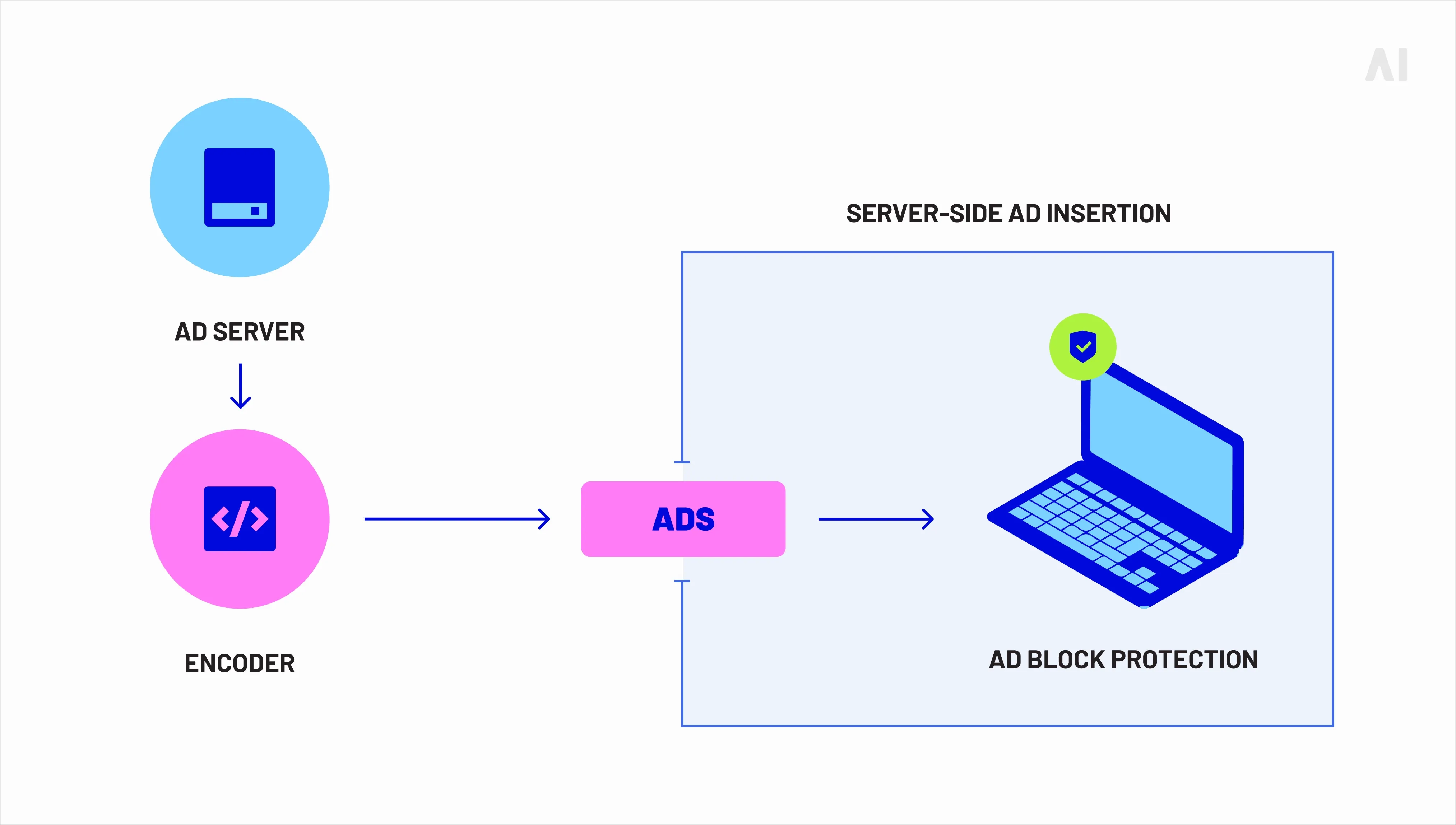
In the modern OTT stack, the combination of DRM with Server-Side Ad Insertion (SSAI) is what separates amateur delivery from premium performance. This powerful synergy fuses ads directly into the video content, creating a single, encrypted stream from server to screen.
- It neutralizes ad blockers by making ads indistinguishable from core content.
- It shields revenue by making it extraordinarily difficult for pirates to strip out or replace ads.
- It creates a broadcast-smooth viewing experience that boosts ad completion rates and protects brand sentiment.
For advertisers, the outcome of this DRM+SSAI synergy is what truly counts: predictable ad execution, flawless cross-device delivery, and stable, trustworthy measurement. It transforms technical infrastructure into commercial confidence.
DRM in ad-supported vs subscription OTT
The role of DRM adapts to the business model, but its foundational importance never wavers.
- In AVOD & FAST (The Ad-Funded Ecosystem): Here, DRM’s primary mission is to protect the ad inventory itself. It is the essential barrier against piracy that would otherwise hijack streams, remove your ads, and destroy measurement. No DRM means no guarantee your ad will be seen—a fundamental breach of trust for any media buy.
- In SVOD & TVOD (The Subscription & Transactional World): DRM shifts to being the gatekeeper of exclusivity. It prevents credential sharing, enforces geographic windows, and ensures content only plays on approved devices under strict licenses. This protects the high-value content that attracts the subscribers advertisers want to reach.
Across both paradigms, rights managing and security infrastructure are the critical linchpin. They connect raw technical delivery with lofty commercial expectations, enabling both advertisers and rights holders to invest in the OTT ecosystem with confidence.
⚡️For a deeper analysis of how monetization strategies pivot across these models—and how DRM supports each one—see our detailed breakdown: AVOD, AVOD and AVOD.
Measurement, attribution, and the real DRM trade-offs
In premium OTT environments, DRM and server-side ad insertion (SSAI) create controlled, secure streams that protect content and ad inventory but inherently constrain user-level tracking and attribution. Because OTT DRM solutions encrypt streams and limit client-side hooks, platforms cannot rely on traditional client-side tracking mechanisms (e.g., cookies or pixel-based scripts) to measure individual interactions such as ad pauses or completions. This makes deterministic, person-level attribution difficult, if not impossible, in many cases.
Instead, measurement in OTT and DRM-protected contexts typically relies on aggregated, cohort-based, or probabilistic methods. These approaches group signals across audiences or use statistical inference rather than tracking individual identifiers, allowing advertisers to assess campaign performance without undermining the security guarantees DRM provides.
Such aggregated measurement aligns with privacy regulations like GDPR, which restrict user-level tracking and mandate consent for personal data processing. Rather than viewing these trade-offs as flaws, advertisers and platforms treat them as standard practice for high-value media environments. Premium inventory — encompassing well-known studio content, live sports, and major entertainment titles — demands security and brand safety that only strong OTT rights management can provide. In these settings, the commercial value of secure, scalable ad delivery outweighs the loss of granular tracking, and marketers pivot to metrics that reflect overall campaign impact (e.g., reach, completion, lift) rather than individual user journeys. This compromise is accepted as part of operating in controlled, DRM-protected OTT ecosystems.
Where DRM decisions shape media and growth strategy
Decisions around OTT DRM and related enforcement layers ripple outward, shaping strategic choices in media planning, creative execution, and expansion pathways. For example:
{{26-DRM-in-OTT="/tables"}}
Platforms that treat DRM as both an enablement and constraint layer can calibrate their growth strategy accordingly. Far from being a planning tool itself, DRM influences what media strategies are feasible and credible — from creative diversification to demand-side targeting and cross-platform attribution.
⚡️For an in-depth look at how media planning practices work in these contexts, see the AI Digital article on Media Planning and Buying.
DRM is not optional for premium OTT advertising budgets
In commercial negotiations, DRM protection has become a baseline expectation for high-value OTT advertising. Premium advertisers — especially those from global brands and major entertainment studios — consistently allocate their largest budgets to inventory that meets strict security, compliance, and brand safety criteria. OTT DRM and OTT rights management technologies provide exactly those assurances by securing access, protecting ad delivery integrity, and demonstrating that content and ads cannot be tampered with or redistributed unlawfully.
Without DRM, platforms risk exclusion from premium demand pools because major buyers will not commit budgets to environments where ad blockers, piracy, or measurement gaps could erode performance or associate their messages with unsafe content. The absence of robust DRM often relegates inventory to long-tail, user-generated content (UGC) ecosystems or lower-tier open exchanges, where brand safety concerns and measurement uncertainty suppress CPMs and strategic spend.
For premium OTT — including SVOD, AVOD with high-quality content, and branded FAST channels — DRM is a commercial prerequisite. It unlocks access to studio-backed content licensing, substantiates brand safety claims required by creative and media agencies, and positions inventory within the portfolios of advertisers willing to invest in quality, secure, and measurable streaming campaigns.
Conclusion: DRM is part of your OTT advertising infrastructure
In modern OTT ecosystems, DRM is not an isolated security feature. It is a foundational layer of the advertising infrastructure that enables predictable monetization at scale. While OTT DRM solutions are often discussed in the context of content protection, their commercial role extends far beyond safeguarding video assets. DRM protects revenue by preserving inventory integrity, preventing unauthorized redistribution, and ensuring that ads are delivered exactly as bought. For advertisers, this translates into confidence: confidence that impressions are real, environments are brand-safe, and campaigns run within controlled, auditable systems.
As OTT advertising budgets continue to shift toward premium streaming environments, OTT and DRM have become a clear signal of operational maturity. Platforms that invest in robust OTT rights management demonstrate that they can support studio licensing requirements, enforce access controls across devices and regions, and execute advertising reliably through DRM-secured, server-side delivery. These capabilities are no longer differentiators; they are baseline expectations for participation in high-value OTT demand.
⚡️At AI Digital, OTT advertising is approached as a system — not a collection of tactics. Secure delivery, scalable monetization, and advertiser trust are treated as interconnected outcomes, with DRM positioned as a core enabler rather than an afterthought. By aligning OTT DRM with SSAI, media planning, and monetization frameworks, AI Digital helps platforms and advertisers operate in environments built for long-term growth.
In premium OTT, DRM does not simply protect content. It protects the business model behind it.