CTV Retargeting: The Modern Approach to Audience Re-Engagement

CTV retargeting sits at the intersection of two realities in U.S. media right now:
- People still spend serious time with TV-like content (lean-back, big-screen viewing).
- Marketers still need digital-style accountability (who did we reach, how often, and what happened next).
What’s changed is how you earn the second part. Cookies and browser IDs don’t power TV. Instead, CTV retargeting relies on household identity, first-party signals, and premium streaming supply paths to re-engage audiences who already raised their hand somewhere else.
💡 If you want a broader primer on the channel itself, this pairs well with Connected TV advertising & Connected TV statistics.
What is CTV retargeting?
CTV retargeting is the practice of re-engaging people on connected TV (smart TVs, streaming devices, and CTV apps) based on prior intent signals—usually from your site, your app, your CRM, or earlier ad exposure.
Instead of “follow this browser around the internet,” the logic is closer to:
- “This household visited the product page twice but didn’t convert.”
- “These customers are lapsed based on CRM recency.”
- “These viewers saw our upper-funnel CTV spot but haven’t taken the next step.”
Then you deliver the next-best message on premium streaming inventory—often with tighter frequency control, higher creative impact, and cleaner measurement options than classic open-web retargeting.
📍 Key takeaway: CTV retargeting is not just ‘retargeting on a TV screen.’ It’s retargeting built around households, identity graphs, and privacy-safe matching.
.webp)
How it differs from classic web retargeting
Before cookies started fading, web retargeting was typically:
- A browser cookie (or MAID in-app)
- A retargeting pool (site visitors, cart abandoners)
- An ad delivered across open-web inventory
- A click-centric feedback loop
CTV retargeting is different in a few foundational ways:
- Identity anchor: more household-centered than individual-browser centered (though person-level is possible in some ecosystems).
- Match method: identity graphs and onboarding workflows replace simple cookie pools.
- Inventory shape: you’re buying into streaming supply paths with stricter app controls and different fraud patterns than the open web.
- Response behavior: fewer clicks, more “view → later action,” which shifts attribution design.
⚡ If web retargeting is “follow the browser,” CTV retargeting is “reconnect with the household.” That difference changes both creative decisions and measurement logic.
{{26-CTV-Retargeting-SEO-1="/tables"}}
💡 If you’re working through the post-cookie implications across channels, it’s worth revisiting the larger cookieless world context.
How CTV retargeting actually works
CTV retargeting looks complex because it involves multiple systems, but the mechanics usually follow a predictable loop:
- Identify a qualified audience
- Resolve identity (match audience signals to CTV-reachable IDs/households)
- Deliver ads on premium CTV inventory with controlled frequency
- Measure outcomes and feed results back into targeting + creative decisions
⚡ Retargeting works best when the feedback loop is short. If you can’t connect exposure to outcome, you’re guessing, just on a bigger screen.
Audience identification
This is where intent is defined. Most CTV retargeting audiences come from:
- On-site behavior: browse depth, PDP views, category interest, cart events, checkout starts, pricing-page visits, demo requests
- In-app behavior: feature usage, subscription funnel stage, abandonment points
- CRM events: lapsed customers, high LTV segments, churn risk, win-back cohorts
- Ad exposure pools: people/households exposed to a prior CTV (or omnichannel) flight
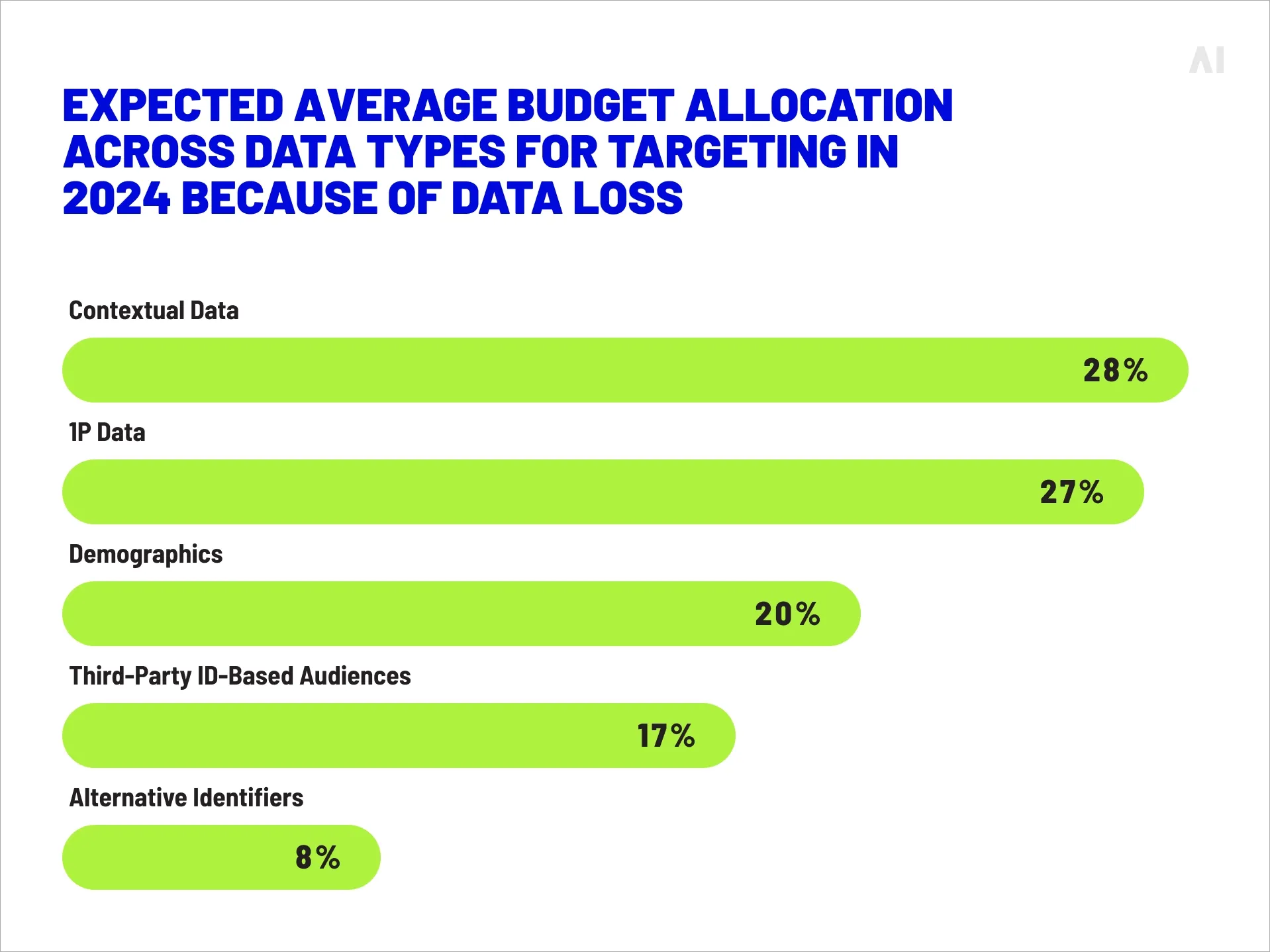
A practical rule: CTV retargeting should start with “what did they do that suggests intent?” not “who can we technically target?” The second question matters, but it comes after you’ve defined the behavior that earns a follow-up message.
⚡ The best segments are built from intent, not convenience. If you can’t explain why a user is in the audience in one sentence, it’s usually too broad.
{{26-CTV-Retargeting-SEO-2="/tables"}}
💡 For a primer on cross-device targeting, see: What is cross-device targeting in advertising?
Identity graph matching
Once the audience exists, you need to make it CTV-addressable. That’s where identity graphs come in.
At a high level, identity graphs connect signals like:
- hashed emails / phone numbers (from consented first-party data)
- device IDs (where available)
- household IP signals (context-dependent, increasingly handled with care)
- platform login signals (publisher or OEM ecosystems)
- clean-room matched segments (where partners support it)
The IAB Tech Lab’s identity guidance is a solid foundation for understanding how identity solutions are structured and evaluated (interoperability, privacy, governance).
This is also the stage where many campaigns quietly succeed or fail. If your match rate is weak (because your CRM is sparse, consent isn’t captured, data isn’t normalized, or onboarding is sloppy), your “retargeting strategy” becomes an “intended strategy” that never reaches scale.
💡 For context, see: Adtech explained: definition, ecosystem, benefits, and trends in 2026
Delivery on premium CTV inventory
Once the audience is resolved, delivery happens through premium streaming inventory, typically via:
- DSP activation (programmatic CTV buying)
- curated supply paths / PMPs / deal IDs
- direct publisher / platform buys in some cases
Unlike open-web display, CTV supply paths are more sensitive to:
- SSAI environments
- app-level transparency
- frequency distribution across devices in the household
- content adjacency and publisher controls
⚡ Premium inventory isn’t a luxury; it’s a control mechanism. When supply is transparent, optimization becomes practical instead of speculative.

💡 If you’re building this inside a broader programmatic stack, the brand-safety and supply-side quality discussion matters more than most teams expect.
Attribution loop
The final step is the part that separates “CTV that feels good” from “CTV that performs.”
Because CTV is not primarily click-based, attribution usually relies on combinations of:
- visit lift / site visitation analysis
- view-through conversions (with carefully defined windows)
- incrementality testing (holdouts/ghost bids where available)
- cross-device identity measurement (where partners support deterministic or modeled links)
The IAB’s work on attention and measurement is useful here, not because attention is the only metric, but because it forces teams to specify what “worked” actually means before the campaign launches.
⚡ CTV doesn’t need clicks to be measurable. It needs a measurement plan that reflects how people actually move from TV exposure to action on another device.
The tech behind CTV retargeting: identity, data, privacy
CTV retargeting isn’t one technology. It’s an operating system made of three layers:
- identity resolution
- data pipelines
- privacy and governance controls
Household-level identity
Household identity is the “default unit” in many CTV environments. That has benefits (scale, stability, shared viewing), but it also creates responsibilities:
- You’re often targeting a shared screen, not a single person.
- Your frequency decisions affect everyone in the household.
- Creative must be resilient to co-viewing (and not overly personal).
📍 Practical implication: If your message assumes a single viewer (“Hey Sarah, still thinking about that exact item?”), you’re setting yourself up for awkwardness and waste. Household-friendly personalization performs better and is safer.
CRM + first-party data pipelines
Most scalable CTV retargeting starts with first-party data. That means:
- capturing consented identifiers (email/phone)
- normalizing formats (hashing consistently, removing duplicates, validating)
- segmenting based on behavioral + lifecycle logic
- onboarding to activation partners
- updating cohorts on a schedule that matches the business cycle
Here’s where teams typically underestimate effort: retargeting audiences decay quickly. Browse intent has a short half-life. Cart intent can be hours or days. Lapsed-customer cohorts move weekly.
So your pipeline needs to answer:
- how often do audiences refresh?
- how do we suppress converters quickly?
- how do we prevent “forever retargeting”?
Privacy compliance (GDPR, CCPA)
CTV retargeting can be privacy-forward, but only if you build it that way.
In practice, privacy compliance means:
- collecting consent appropriately (especially for first-party identifiers)
- minimizing data movement (share segments, not raw PII)
- using clean-room or PET approaches when partners support them
- honoring opt-outs and consent changes across systems
- documenting purposes and retention windows
AdExchanger’s privacy coverage is blunt about a real risk: privacy-enhancing tools like clean rooms reduce some problems, but misconfiguration can create new ones (leakage risk, unauthorized sharing, governance gaps).
📍 Key takeaway: The “tech” isn’t just matching IDs. It’s matching IDs in a way you can defend—legally, operationally, and reputationally.
Why CTV retargeting delivers stronger re-engagement
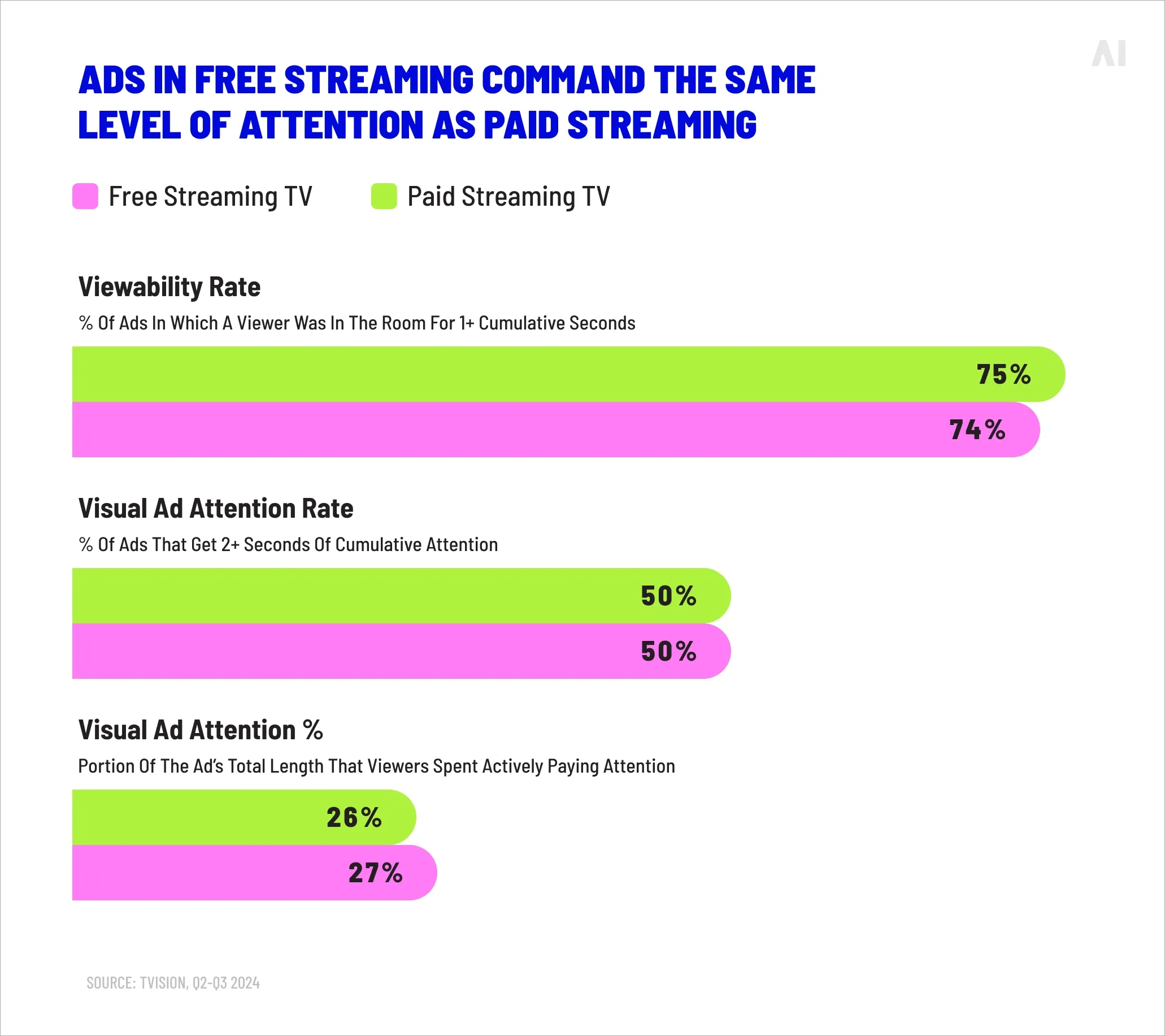
CTV retargeting tends to outperform “follow-them-around-the-web” retargeting when (and only when) the campaign is built around the strengths of TV-like environments: attention, impact, and controlled repetition.
💡 For the impact of AI on TV, see dedicated piece: The rise of AI in TV advertising: how agencies can win the next frontier & AI in digital marketing
Premium attention on TV screens
On a big screen, people engage differently. One concrete example: in an LG Ad Solutions study with MediaScience, LG smart TV users stayed on the home screen for 33 seconds on average, and 85% looked at the native ad for an average of 7 seconds.
That matters because retargeting isn’t just “show again.” It’s “show again with a message that resolves the hesitation.” If the viewer never truly processes the message, repetition doesn’t compound.
⚡ Retargeting is persuasion over time. CTV gives you a better canvas for the second chapter.
Reduced ad fatigue
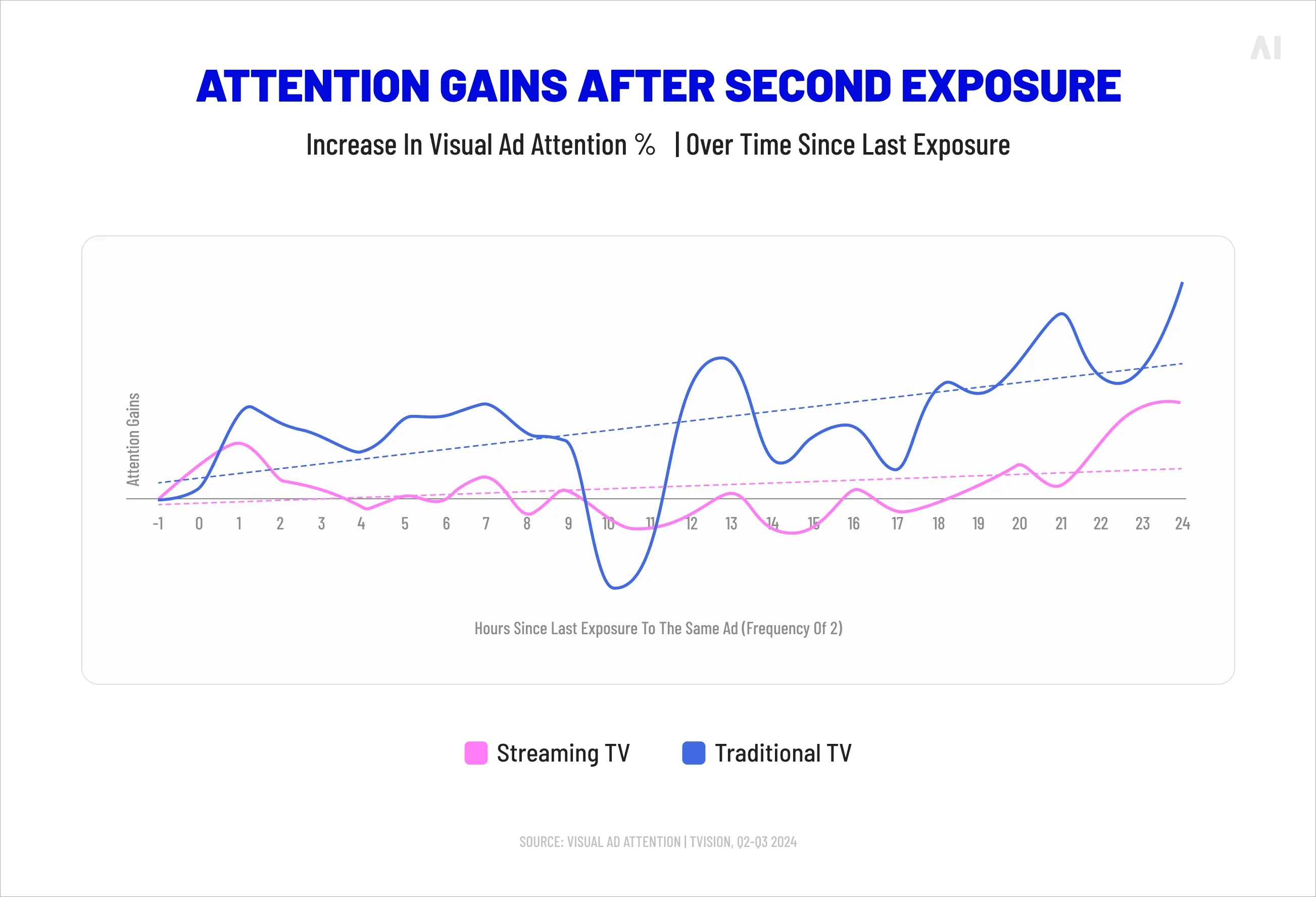
Classic retargeting fatigue usually happens for two reasons:
- the creative doesn’t change
- the frequency distribution is unmanaged (or managed in the wrong place)
CTV retargeting can reduce fatigue when you treat frequency as a strategy (sequencing, suppression, rotation), not a settings panel.
It’s also easier to make retargeting feel less like stalking when the creative is built for the living room. You can be specific without being creepy. You can be persuasive without being relentless.
⚡ Frequency is only a lever if you pull it deliberately. Otherwise, it becomes a slow leak—small waste per impression that adds up fast.
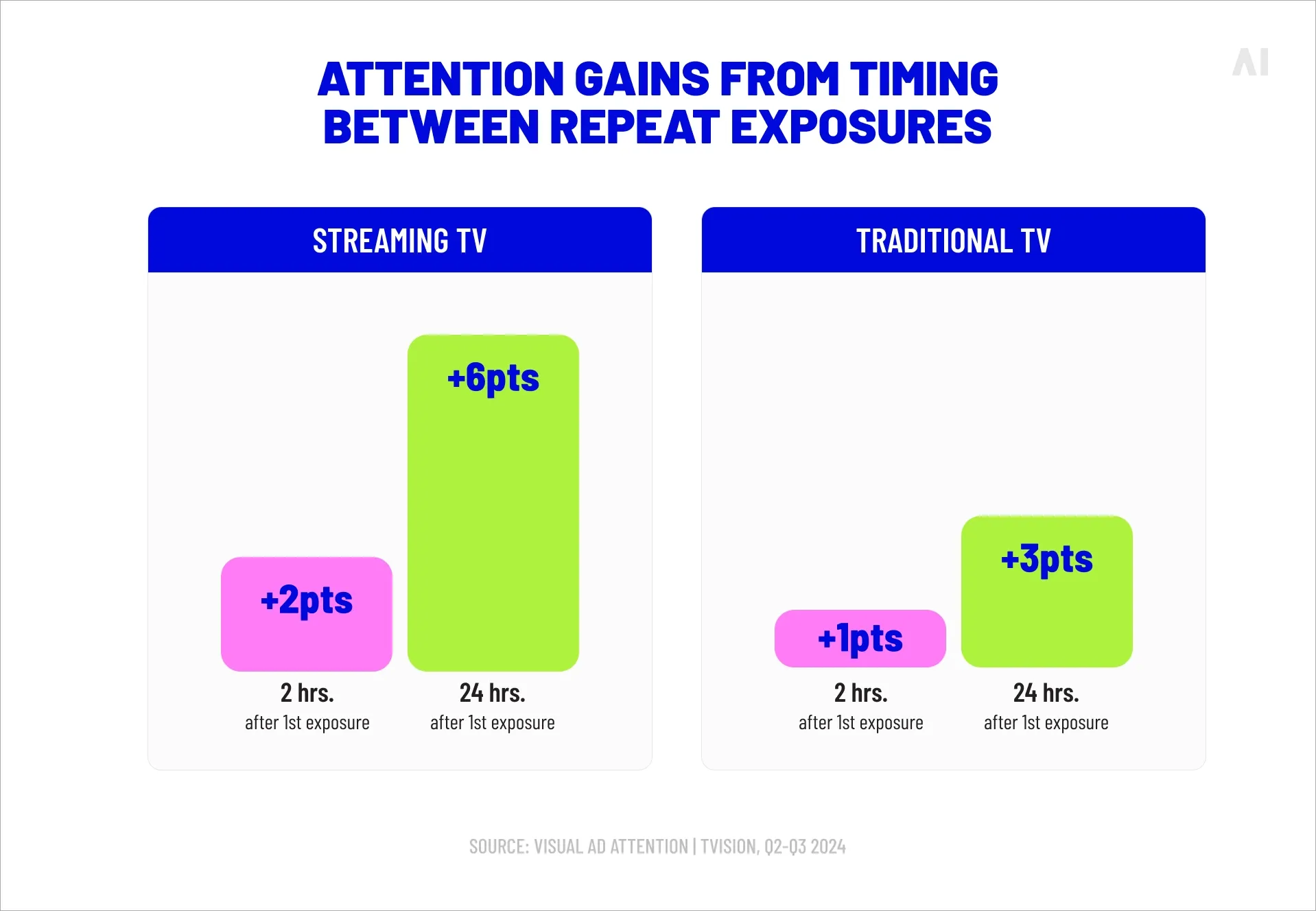
Precise frequency control
Frequency control is one of the most underrated reasons CTV retargeting works.
On the open web, frequency caps often operate inside fragmented environments:
- different browsers
- different devices
- different ad tech pipes
- mismatched identifiers
On CTV, the household anchor and platform controls often make frequency management more reliable—especially when you combine:
- platform-level frequency caps (hard stops)
- sequencing rules (what comes next)
- suppression logic (who should exit)
Higher completion rates
CTV completion rates tend to be structurally stronger than many web video environments for a simple reason: a lot of CTV inventory is non-skippable or functionally harder to skip without disrupting the viewing experience.
But the bigger point for retargeting is this: if your creative is designed for completion (front-loaded value, clear narrative, quick payoff), you get more “full-message delivery” per impression.
In other words, completion rate isn’t just a media characteristic—it’s a creative consequence.
Deterministic household match
CTV ad retargeting can be powerful when you can deterministically map first-party data to addressable CTV identifiers via privacy-safe matching.
When it works well, you get:
- fewer “wrong person” impressions
- better suppression (stop messaging converters)
- cleaner measurement cohorts (exposed vs control)
This is where identity strategy becomes a performance lever, not a technical footnote. The IAB Tech Lab identity guidance is a useful reference point when you’re evaluating identity options and interoperability.
Creative best practices for CTV retargeting
Most CTV retargeting underperforms for one reason: the creative is treated like a resized web asset.
If you want re-engagement, the creative has to do re-engagement work.
Here’s what reliably improves performance.
Short formats and front-loaded messaging
CTV viewers don’t need a slow build to understand what’s being offered—especially in retargeting, where they already know the brand.
Strong patterns:
- lead with the value proposition in the first 2–3 seconds
- show the product early (not at the end)
- make the CTA legible from a couch distance
- use audio as a primary channel, not a backup
⚡ Viewers decide whether an ad is worth attention almost immediately. Retargeting ads should earn the first three seconds before they ask for the next fifteen.
Sequential storytelling
Retargeting is naturally sequential. Use that.
Example flow:
- Reminder: “Still considering?” (benefit + proof)
- Resolver: address the likely hesitation (price, fit, shipping, trust)
- Closer: specific offer or urgency (without overdoing it)
This is where CTV shines because the viewer experience supports narrative better than most web placements.
{{26-CTV-Retargeting-SEO-3="/tables"}}
Dynamic creative variants
You don’t need hyper-personalization. You need useful variation.
Effective variants:
- category-level messaging (not SKU-level creepiness)
- benefit-based variants aligned to intent
- regional or store-based variants where it matters
- creative rotation tied to exposure count (first impression vs third impression)
Alignment with funnel intent
CTV ad retargeting works when the message matches the reason the viewer is in the audience.
- Browse abandonment: reassurance + differentiation
- Cart abandonment: friction removal + confidence (shipping, returns, support)
- Lapsed customers: novelty + loyalty logic + easy re-entry
- High-intent micro-segments: specificity and proof
Consistency across channels
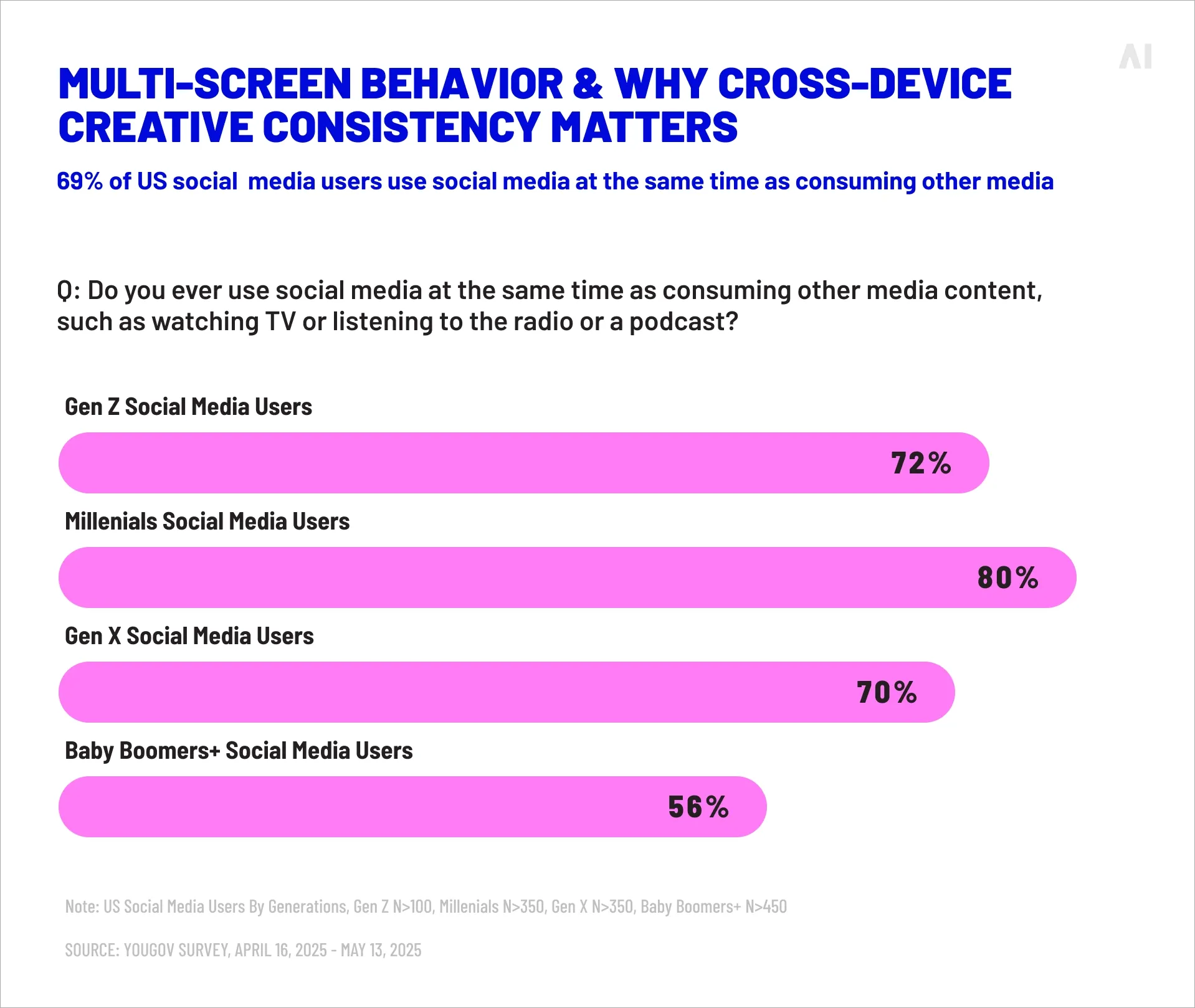
Retargeting rarely happens on one screen. In fact, a Business Insider piece citing YouGov reported that nearly 70% of U.S. social media users scroll their feeds while consuming other media like TV (a spring 2025 survey).
So your creative system should assume:
- the viewer may see you on TV and respond on mobile
- the offer should match across screens
- the message should feel like one campaign, not five disconnected ads
💡 If you want to explore interactive units (QR, overlays, lean-in formats), AI Digital’s work on interactive video and the transformative power of GenAI is relevant background.
Effective CTV retargeting strategies
Strategy is where CTV retargeting becomes practical. Below are the approaches that show up again and again in real performance plans.
Browse abandonment
Browse abandonment is your “still considering” audience. They’ve shown interest, but not enough conviction to act—yet. CTV is useful here because it gives you space to reframe the category choice, add proof, and make the next step feel obvious instead of forced.
- Who: visited PDP/category pages, high dwell time, repeat visits
- Message: “Here’s why this is worth it” (proof, differentiator, trust signals)
- Sequencing: reminder → resolver → soft offer
This is the sweet spot for CTV because you can reframe value in a way that small banners can’t.
Cart abandonment
Cart abandoners are closer to the line. The job isn’t to reintroduce the brand—it’s to remove friction and rebuild confidence. A good CTV retargeting message here sounds like a helpful reminder with a clear reason to come back, not a loud discount blast.
- Who: add-to-cart, checkout start, pricing-page visit
- Message: friction removal (shipping, returns, warranty, support)
- Sequencing: reassurance → urgency (carefully) → incentive (if needed)
Practical tip: don’t lead with discounts. Lead with confidence. Discounts are a lever, not an identity.
Product/category-level retargeting
CTV retargeting works best at:
- category level (running shoes, sectional sofas, meal kits)
- problem/need level (“back pain relief,” “faster meal prep”)
SKU-level specificity can backfire in a household setting. Keep it relevant, not invasive.
CRM reactivation
CRM reactivation is about re-opening a relationship you already earned. These people don’t need a first impression; they need a reason to return. The strongest CTV reactivation ads focus on what’s changed, what they’ve missed, and why it’s worth re-engaging now.
- Who: customers who haven’t purchased in X days, churn-risk cohorts
- Message: “What’s new + why come back” (new arrivals, improved experience, loyalty hooks)
- Sequencing: reintroduction → new value → easy re-entry
Lapsed customers
This is similar to CRM reactivation, but the creative should assume:
- familiarity has faded
- competitors may have won attention
- trust needs refreshing
Use proof and progress: what’s changed since they last bought.
Loyalty uplift
Loyalty uplift is where CTV stops being “retargeting” in the traditional sense and becomes retention marketing with more presence. You’re rewarding existing customers with messaging that feels intentional—member perks, early access, or curated recommendations—delivered in a format that makes the brand feel bigger and more valuable.
- Who: active customers with known preferences
- Message: member benefits, early access, perks that feel earned
- Sequencing: benefit reminder → exclusive offer → “next best product” prompt
High-intent micro-segments
Examples:
- repeated visits in 48 hours
- viewed shipping/returns page
- used site search for high-commercial terms
- watched product videos or reviews
This is where CTV ad retargeting can feel remarkably efficient because the audience definition is already “qualified.”
Sequential ad flows
A clean template:
- Problem framing (why this matters)
- Brand proof (why you)
- Offer/CTA (what to do now)
How to build a CTV retargeting campaign
Here’s a build process that works whether you’re running through a DSP, curated supply, or a hybrid plan.
Step 1: Define the re-engagement objective
Be specific:
- drive site visits from high-intent audiences
- lift conversion rate among cart abandoners
- reactivate lapsed customers
- increase incremental orders (not just attributed orders)
This decision controls everything else, especially measurement.
Step 2: Design the audience framework
Build audiences around intent and lifecycle, not demographic convenience.
Minimum viable set:
- browse abandoners (high intent)
- cart/checkout abandoners
- lapsed customers
- recent converters (for suppression)
Step 3: Prepare identity and onboarding
Checklist:
- consented first-party identifiers where possible
- clean normalization + hashing standards
- refresh cadence that matches the business cycle
- suppression rules that remove converters fast
Step 4: Build creative for sequencing
Don’t start with one ad. Start with a sequence.
- Ad 1: reminder + core value
- Ad 2: objection handling + proof
- Ad 3: CTA + offer (if appropriate)
⚡ Don’t launch with a single ad and hope repetition does the work. Launch with a sequence that has a purpose at each step—and a clear exit when the job is done.
Step 5: Choose inventory and quality controls
CTV retargeting benefits from premium supply paths, but only if you manage:
- app transparency
- brand suitability
- fraud controls
- frequency distribution
💡 This is also where a DSP-agnostic approach can help if you need flexibility across inventory and measurement partners.
Step 6: Launch with measurement baked in
Pick attribution logic before you spend:
- view-through windows (shorter for lower funnel, longer for consideration)
- incrementality design if you can support it
- cross-device measurement plan (what counts as “response”?)
Step 7: Optimize what actually moves outcomes
Optimize in this order:
- identity/match health (can you reach who you think you can?)
- frequency distribution (are you over-serving a small slice?)
- creative sequence performance (does message #2 beat message #1 for exposed cohorts?)
- inventory quality (are outcomes concentrated in certain supply paths?)
💡 If optimization cadence is a make-or-break constraint, Elevate is the relevant reference point: AI Digital’s DSP-agnostic intelligence platform that unifies cross-platform performance data, forecasts outcomes, and recommends bid and budget adjustments on a 15-minute cycle, with human strategists steering the final calls.
Measuring CTV retargeting: metrics that matter
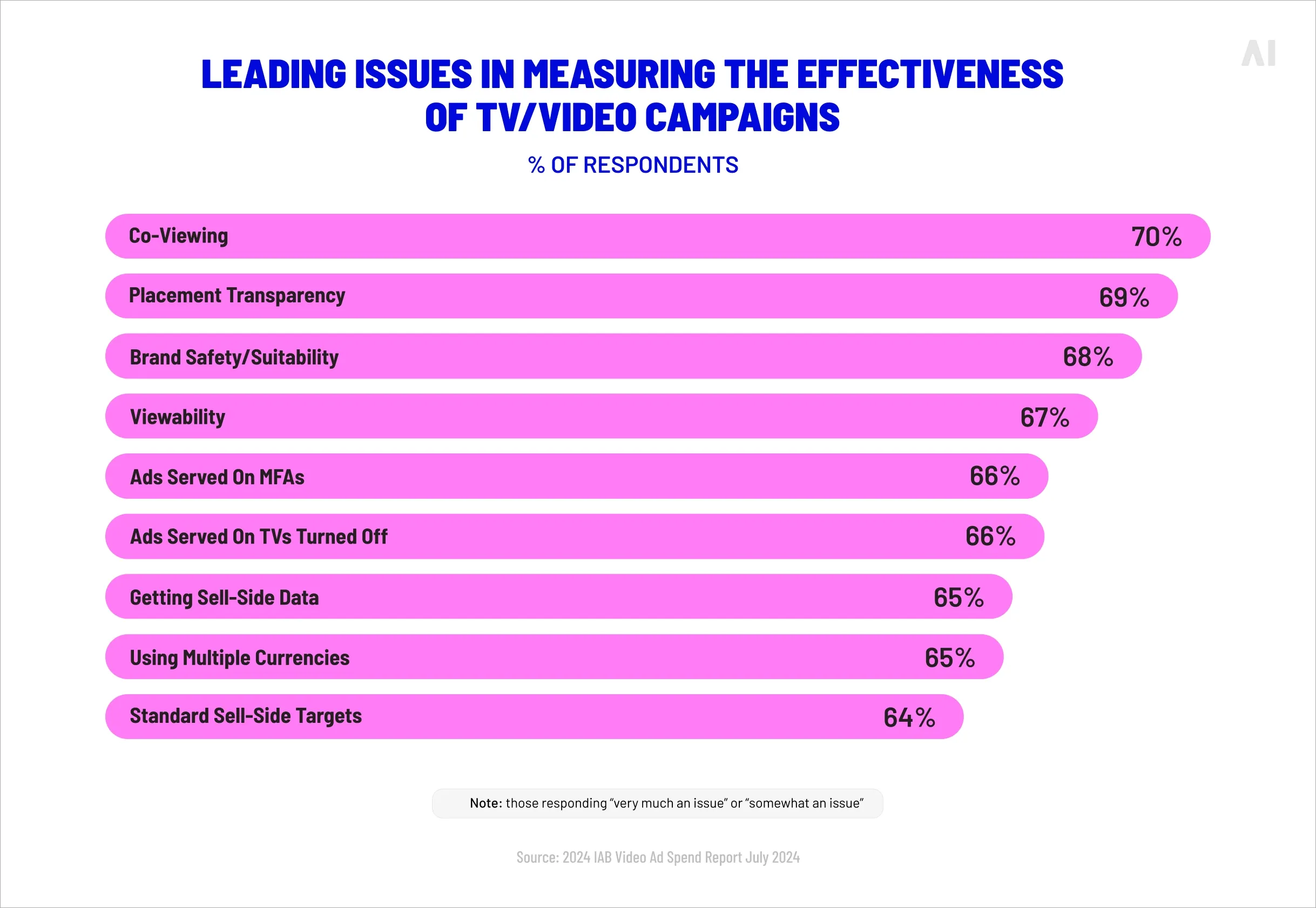
Measurement is where many teams either get serious—or get lost.
The goal is to choose metrics that reflect re-engagement, not just delivery.
Completion rate
Completion rate matters because it reflects full-message delivery, but it’s not enough alone. A completed ad that doesn’t move behavior is still a cost.
Use it to:
- compare creative variants
- validate that your length/structure works
- identify fatigue (completion drops over time)
Visit rate / site visitation
Visit-based metrics are often the first meaningful “response signal” in CTV retargeting.
Use when:
- you want re-engagement as the primary KPI
- your conversion cycle is longer than typical attribution windows
- you need a mid-funnel proof point before purchase data accrues
VTR (view-through rate) and view-through conversions
Be careful with definitions. “View-through” can mean:
- watched the ad to completion
- converted later without clicking
- attributed within a time window
Use when:
- your funnel is short enough for a reasonable window
- you have strong suppression (to avoid claiming conversions that would happen anyway)
- you can pair it with incrementality or lift
{{26-CTV-Retargeting-SEO-4="/tables"}}
Incremental lift
If you can do it, lift is often the cleanest answer to: “Did retargeting cause re-engagement?”
Use when:
- budgets are large enough to support control groups
- stakeholders are skeptical of view-through claims
- you’re optimizing toward incremental outcomes, not attributed ones
Cross-device attribution
Cross-device attribution is useful when you expect:
- TV exposure → mobile search → desktop purchase
- TV exposure → app install later
- TV exposure → store visit
A modern measurement view is that you’re not attributing a click. You’re attributing a sequence of behaviors that begins with exposure.
💡 For a broader measurement framework, AI Digital’s CTV measurement guide is a helpful complement.
ROAS
ROAS is attractive, but it’s not always honest in retargeting if:
- attribution windows are generous
- suppression is weak
- exposed audiences were already likely to convert
Use ROAS when:
- you can isolate incrementality (even partially)
- you have clean conversion events
- your frequency and suppression are disciplined
Common CTV retargeting pitfalls — and how to avoid them
This is the section that saves budgets—because most “CTV retargeting didn’t work” post-mortems come back to the same handful of mistakes. The good news is they’re all fixable if you catch them early and treat them as system issues, not one-off problems.
{{26-CTV-Retargeting-SEO-5="/tables"}}
Over-targeting
This usually starts with good intentions—more precision, better relevance—until the audience becomes so small the campaign has nowhere to go.
- Problem: Audiences get sliced so tightly that you end up serving too many impressions to too few households. Frequency spikes, reach stalls, and performance drops fast because you’re hammering the same people instead of expanding to adjacent intent.
- Fix: Build intent tiers instead of micro-slivers. Keep a high-intent tier (cart/checkout, repeat PDP views) and add a medium-intent tier (category views, dwell-time, multiple visits). Then sequence messaging by tier—high intent gets friction removal and urgency, medium intent gets differentiation and proof. This keeps scale healthy without sacrificing relevance.
Overly broad frequency caps
Frequency controls only help if they’re designed for real viewing behavior, not set and forgotten as a safety blanket.
- Problem: Caps are set “just in case,” but the real issue isn’t the cap number—it’s how frequency distributes. Averages hide pain. You can have an “average frequency of 4” while a meaningful slice of households sees 10+ impressions. That’s where fatigue, annoyance, and wasted spend come from.
- Fix: Manage frequency distribution, not only a single cap. Watch frequency at the household level, set guardrails for the tail (the overexposed group), and use creative rotation + sequencing to reduce repetition. Pair that with suppression (remove converters and “no longer relevant” users quickly) so frequency stays purposeful.
Poor identity match rates
- Even the best retargeting strategy falls apart if the audience can’t reliably resolve to reachable CTV households.
Problem: Your segment exists in theory (site visitors, CRM list), but it doesn’t resolve cleanly into addressable CTV IDs. The campaign under-delivers, or it delivers to a narrow subset that over-indexes on easy-to-match households—skewing both reach and results. - Fix: Treat match rate as a first-class KPI. Improve first-party capture (logins, consented emails), clean and normalize identifiers (formatting, hashing, dedupe), refresh cohorts on a sensible cadence, and test onboarding/identity partners if match remains weak. If you can’t reach the audience reliably, everything else is downstream guesswork.
Creative misalignment
When the message doesn’t match the viewer’s intent, CTV just turns into expensive noise.
- Problem: The segment is lower-funnel, but the creative is broad awareness. Or the segment is mid-funnel, but the ad is pushing hard discounts before the viewer has enough confidence. Either way, the message doesn’t answer the question that got them into the segment.
- Fix: Build creative from the segment backward. Start with: “What hesitation or intent signal does this audience represent?” Then write to that. Cart abandoners need reassurance and friction removal. Browse abandoners need clarity and proof. Lapsed customers need a reason to return that feels new, not recycled.
Lack of sequential messaging
If every exposure says the same thing, you’re paying for repetition instead of building momentum.
- Problem: One ad repeats until the audience either converts or tunes out. Even if the offer is good, repetition without progression turns your budget into “paid annoyance,” especially in a lean-back CTV environment.
- Fix: Plan a simple sequence and define exit logic. Example: Ad 1 = reminder, Ad 2 = objection handling, Ad 3 = CTA/offer. Then set exit rules (convert = suppress; no engagement after X exposures = downshift or pause). Retargeting should feel like a conversation, not a loop.
Weak attribution setup
Without a measurement plan that fits CTV’s reality, you end up optimizing for the wrong signals.
- Problem: Reporting focuses on what’s easy (impressions, completion, VTR) rather than what proves re-engagement (visit lift, incremental conversions, cross-device outcomes). This leads to false confidence or premature cancellation.
- Fix: Choose the measurement model during planning. Define which outcomes matter (visits, conversions, revenue), set appropriate view-through windows, and use lift/holdouts where feasible. At minimum, align the team on what “success” is before the first impression runs.
Using low-quality supply paths
Cheap inventory can look efficient in a dashboard while quietly draining real performance.
- Problem: Results look “cheap,” but they don’t hold up when you check business outcomes—or you discover spend concentrated in low-transparency apps and questionable paths. Cheap CPMs can mask low attention, poor suitability, or invalid traffic.
- Fix: Prioritize transparent supply paths (curated PMPs, verified inventory, clear app reporting), apply suitability controls, and use verification where possible. Then audit performance by supply source: if outcomes don’t track by publisher/app the way you’d expect, investigate before scaling. Brand safety and supply quality aren’t add-ons in programmatic CTV—they’re table stakes.
💡 For a deeper primer on CTV ad fraud, see our dedicated guide: What is CTV ad fraud & how advertisers can prevent it
Conclusion on retargeting with ctv ads
CTV retargeting works when you treat it as a system, not a tactic.
- Start with real intent signals.
- Resolve identity in a privacy-forward way.
- Buy premium supply paths with guardrails.
- Use sequencing so repetition becomes persuasion, not annoyance.
- Measure re-engagement with metrics that reflect how TV actually drives behavior.
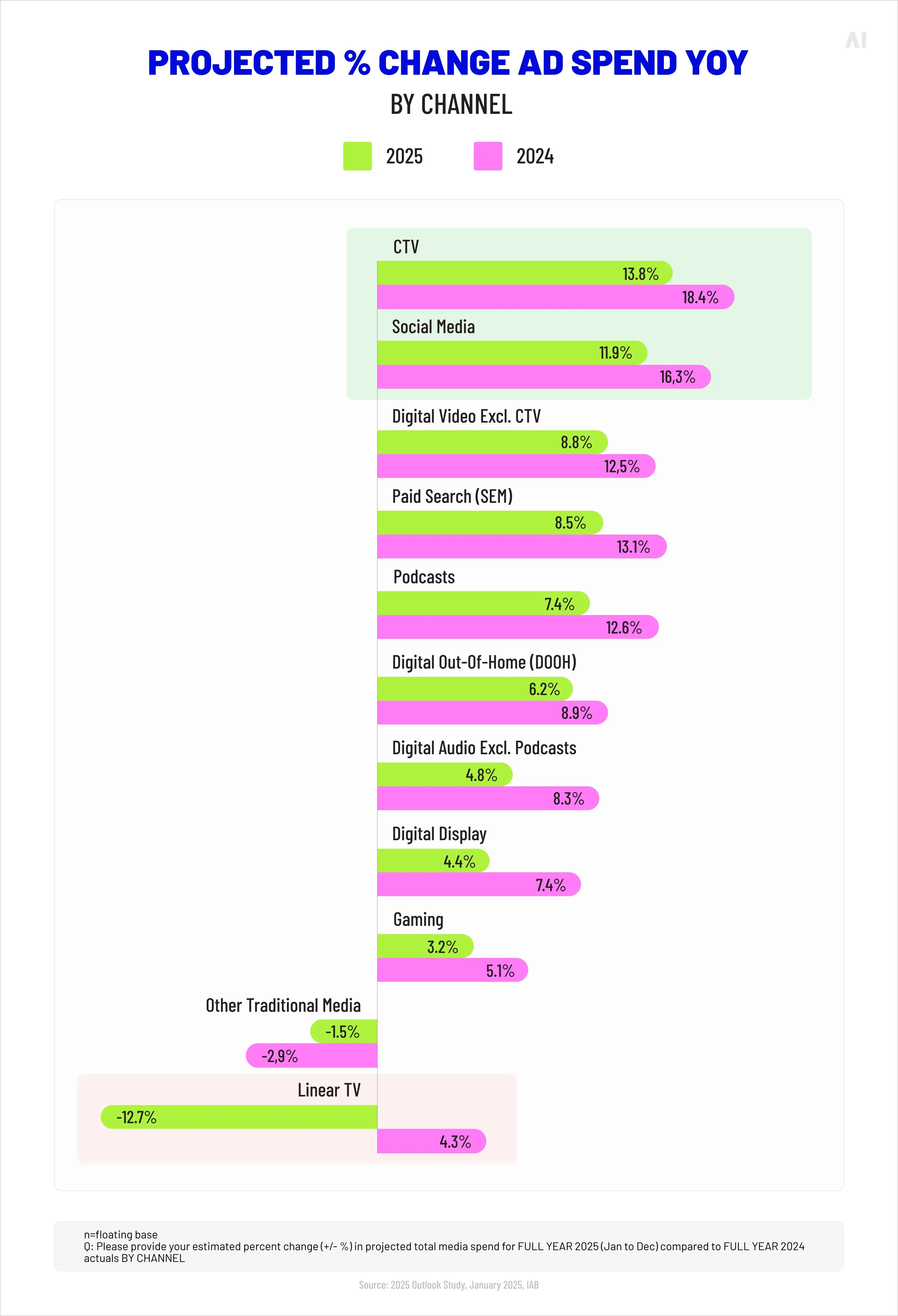
The future trajectory is clear: EMARKETER forecasting referenced by Insider Intelligence points to U.S. CTV ad spend surpassing $37 billion by 2026 (a 14% YoY jump in that forecast). That scale will attract more competition, more pressure on measurement, and more scrutiny on supply quality. Getting the fundamentals right now is how you avoid paying tuition later.
If you want to connect this to execution across planning, buying, and optimization, it’s worth exploring Elevate and AI Digital’s broader approach to modern media buying. Get in touch!