Cross-Device Ad Targeting: How Advertisers Reach Users Across Screens in a Cookieless World


People don’t move through the funnel on one screen anymore, and most buying journeys now look more like a relay than a straight line: a streaming show on a smart TV, a quick Google search on a phone, a deeper comparison on a laptop, and a purchase that happens in an app. In that context, the fact that U.S. internet ad revenue reached $259B in 2024 is more than a headline—it’s a signal of where budgets already live, and why connecting signals across devices has become a practical requirement rather than a “nice-to-have.”
At the same time, the mechanics that used to make cross-device tracking feel straightforward keep shifting under buyers’ feet. Safari and Firefox have limited cross-site tracking for years, which has steadily reduced the reliability of third-party identifiers in real-world measurement. Chrome’s third-party cookie story has also evolved into delays and course corrections, and Google’s current stance is effectively that third-party cookie control remains in user settings rather than being removed through a single “switch-off” moment—useful for user choice, but still a source of uncertainty for measurement planning.
So the question in 2026 isn’t whether cross-device targeting matters; it’s how to do it with realistic expectations, using privacy-safe inputs and clear consent signals, while measuring outcomes in a way that doesn’t automatically give the identity graph credit for everything that happens after an impression.
💡 If you want broader context on how targeting and measurement are evolving, AI Digital’s perspective on advertising intelligence is a helpful companion read.
What is cross-device ad targeting?
Cross-device ad targeting is the practice of recognizing the same person (or household) across multiple devices—and using that recognition to deliver, control, and measure advertising more effectively.
In plain language: if someone sees your CTV ad in the living room, you can (a) avoid bombarding them with the same ad on every other screen, (b) follow up with a complementary message on mobile or desktop, and (c) measure downstream actions with less duplication.
Cross-device targeting typically supports four jobs:
- Audience reach across screens (CTV + mobile + desktop + in-app).
- Frequency management and deduplication (counting unique people/households instead of device-level impressions).
- Sequencing (message A on CTV, then message B on mobile, then offer/retargeting on desktop).
- Measurement and attribution that accounts for multi-device journeys.
The hard part is not the concept. The hard part is identity resolution—linking identifiers in a way that is accurate enough to be useful, and compliant enough to be sustainable.
💡 Related read: Connected TV advertising.
How cross-device targeting works
Before we break down deterministic vs probabilistic, it helps to picture the system as three layers:
- Identity signals (logins, emails, MAIDs, IP, contextual patterns, etc.)
- A graph (rules/models that link signals into a person or household)
- Activation + measurement (DSPs, ad servers, clean rooms, measurement partners)
{{26-Cross-Device-Ad-Targeting-SEO-1="/tables"}}
Most modern programs rely on some combination of:
- Deterministic cross-device matching
- Probabilistic cross-device matching
- Household graphs and device graphs (often blended)
Deterministic cross-device targeting
Deterministic matching links devices using known, consented identifiers. Typical deterministic signals include:
- Logged-in IDs (publisher logins, app accounts, subscription accounts)
- Hashed emails and phone numbers (collected with consent)
- First-party customer IDs (CRM, loyalty IDs)
- Mobile ad IDs (MAIDs) in app environments (where available and permitted)
Deterministic matching is “strong” because it’s based on a direct relationship: this email/login belongs to this user. That yields higher confidence for:
- sequential messaging
- suppression (don’t show again)
- conversion measurement (especially when the conversion is also first-party)
But deterministic matching has a ceiling: not everyone is logged in. In ID5’s 2025 findings, publishing participants reported that fewer than 30% of users are logged in or registered—one reason the industry keeps layering solutions.
{{26-Cross-Device-Ad-Targeting-SEO-2="/tables"}}
Where deterministic works best: Deterministic targeting tends to perform best in environments where identity is naturally stable and consented:
- Subscription/registration environments (news, streaming, retail apps)
- Loyalty-heavy brands (retail, QSR, travel)
It also fits especially well in measurement frameworks where conversions are captured as first-party events, because the “proof” chain is clearer when outcomes live in your own systems rather than in fragmented third-party reporting.
Where it struggles: Deterministic approaches usually struggle when you’re chasing open-web reach that isn’t authenticated, because there simply aren’t enough durable identifiers to connect impressions to outcomes reliably at scale.
They can also hit a ceiling in privacy-restricted environments when consented IDs are limited, since addressability depends on the volume and quality of permissioned identity rather than on broad, anonymous traffic.
Probabilistic cross-device targeting
Probabilistic matching uses statistical modeling to infer that multiple devices belong to the same person or household. Inputs can include:
- IP address patterns (with caveats)
- device/browser attributes
- location patterns (especially in-app)
- behavioral overlaps (time of day, content affinity)
- contextual co-occurrence (devices appearing in the same environments)
Probabilistic matching can expand reach when deterministic signals aren’t present, but it introduces uncertainty:
- match confidence varies
- false positives/negatives happen
- precision depends heavily on data quality and modeling
This is why probabilistic methods are often used for reach extension and directional measurement, not for high-stakes decisions like strict suppression around sensitive categories.
⚡ A cross-device graph is only “accurate” for the decisions you use it to make. Treat probabilistic matches as directional unless you can validate them against stronger truth sets.
Household and device graphs
A device graph links devices to an individual or household. A household graph focuses on the household as the primary unit (common in CTV).
In practice, graphs tend to be “hybrid”:
- deterministic links where possible
- probabilistic links to fill gaps
- household-level clustering for shared environments (like TVs, tablets, smart speakers)
This matters because CTV often operates most naturally at the household level. Streaming continues to take a large share of TV viewing; Nielsen’s Gauge has shown streaming around the mid-40% range, including 46.7% in November 2025.
So if your biggest-screen impressions are household-based, it makes sense that your identity strategy shifts toward household resolution too.
Cross-device targeting in a cookieless environment
“Cookieless” is a bit of a simplification, because the real world is a patchwork of browser behaviors rather than a single on/off switch. Safari has enforced long-running tracking restrictions through Intelligent Tracking Prevention (ITP), Firefox has continued tightening cross-site tracking via Enhanced Tracking Protection, and Chrome has moved through partial restrictions, testing, and repeated course changes, with a continuing emphasis on user choice rather than a clean, universal sunset.
{{26-Cross-Device-Ad-Targeting-SEO-3="/tables"}}
The implication is straightforward: third-party cookies can’t be treated as the universal connector for identity across devices and domains, so any serious cross-device strategy has to be built around the signals that remain durable—first-party relationships, consented IDs, and privacy-safe methods that can keep working even when browser-level friction increases.
💡 Related reading: In a cookie-less world: New challenges and opportunities

First-party data and consented signals
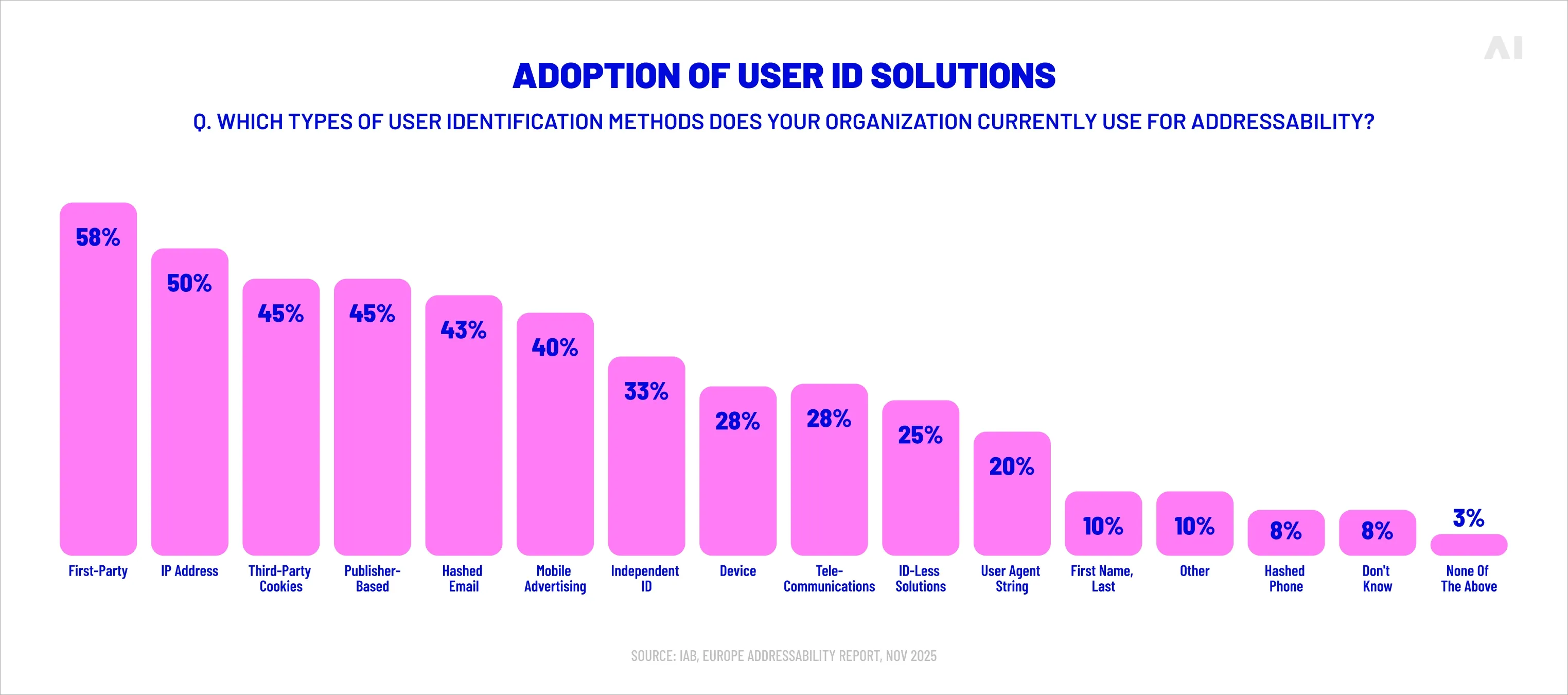
In 2025, the industry’s direction is visible in adoption numbers: ID5 reported that 91% of respondents have adopted or plan to adopt an alternative identity solution. That doesn’t mean every solution is good. It does mean teams are actively preparing for inconsistent signal availability.
Practical first-party inputs include:
- authenticated IDs (site/app logins)
- CRM + loyalty data (hashed)
- email engagement
- in-app events where consent permits
- server-side tagging and consented enrichment (where compliant)
Key point: first-party data is only “usable” for targeting when your consent model and policy language explicitly allow that use, and that isn’t just paperwork—it’s an operational constraint that determines what you can activate, where you can activate it, and how confidently you can measure outcomes.
Contextual and behavioral inputs
When identity is sparse, contextual targeting becomes more than a brand-safety layer. It becomes a performance tool.
On CTV specifically, contextual metadata can be surprisingly powerful when audience IDs are limited. Nielsen/Gracenote highlighted how deeper program metadata can improve confidence and targeting granularity in programmatic CTV, and it called out that many bidstream signals are still incomplete in practice.
Contextual inputs that often perform well:
- content genre and show-level signals
- daypart + device type
- geography at appropriate granularity
- creative context fit (sports vs lifestyle vs news)
- retail/commerce context (where permitted)
The smart pattern is context + identity, not context instead of identity.
Privacy regulations and compliance
In the U.S., you’re operating in a patchwork of state privacy laws plus sector rules and self-regulatory standards. Two practical realities matter for cross-device targeting:
- You need a defensible consent and opt-out framework for interest-based advertising.
- You must treat “sharing” signals across parties carefully (especially for offsite activation).
On the self-regulatory side, changes like the discontinuation of certain cookie-based/probabilistic opt-out tooling highlight how quickly legacy mechanisms can shift. This doesn’t mean “you can’t do cross-device targeting.” It means you should expect the compliance surface area to keep moving—so build with fewer brittle dependencies.
💡 Related reading: What Is hyper-personalization? How it works & best practices.
Key benefits of cross-device ad targeting
The benefits are real, but they’re not automatic. They show up when cross-device targeting is used to solve specific problems.
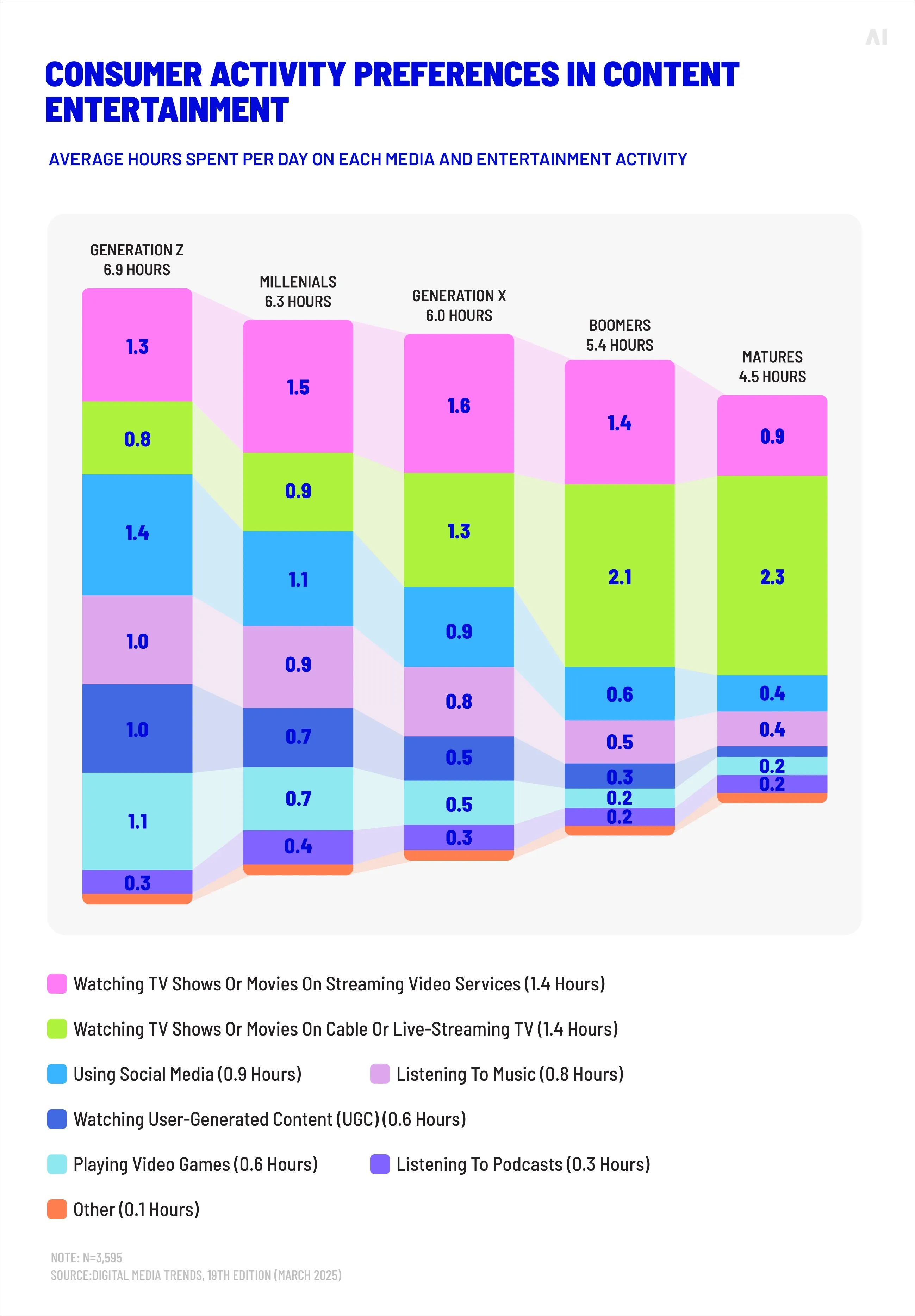
Consistent messaging across screens
Consistency isn’t about showing the same ad everywhere. It’s about matching message to stage.
A simple sequence might look like:
- CTV: broad value proposition (30s)
- mobile: shorter reminder (6–10s)
- desktop: comparison content + social proof
- retail media: conversion push (if applicable)
Without cross-device control, you tend to get accidental repetition and inconsistent creative.
Improved reach and frequency management
Cross-device frequency is one of the quickest “wins,” because device-level buying inflates frequency. You can easily hit the same household across:
- multiple streaming apps
- multiple devices
- multiple browsers
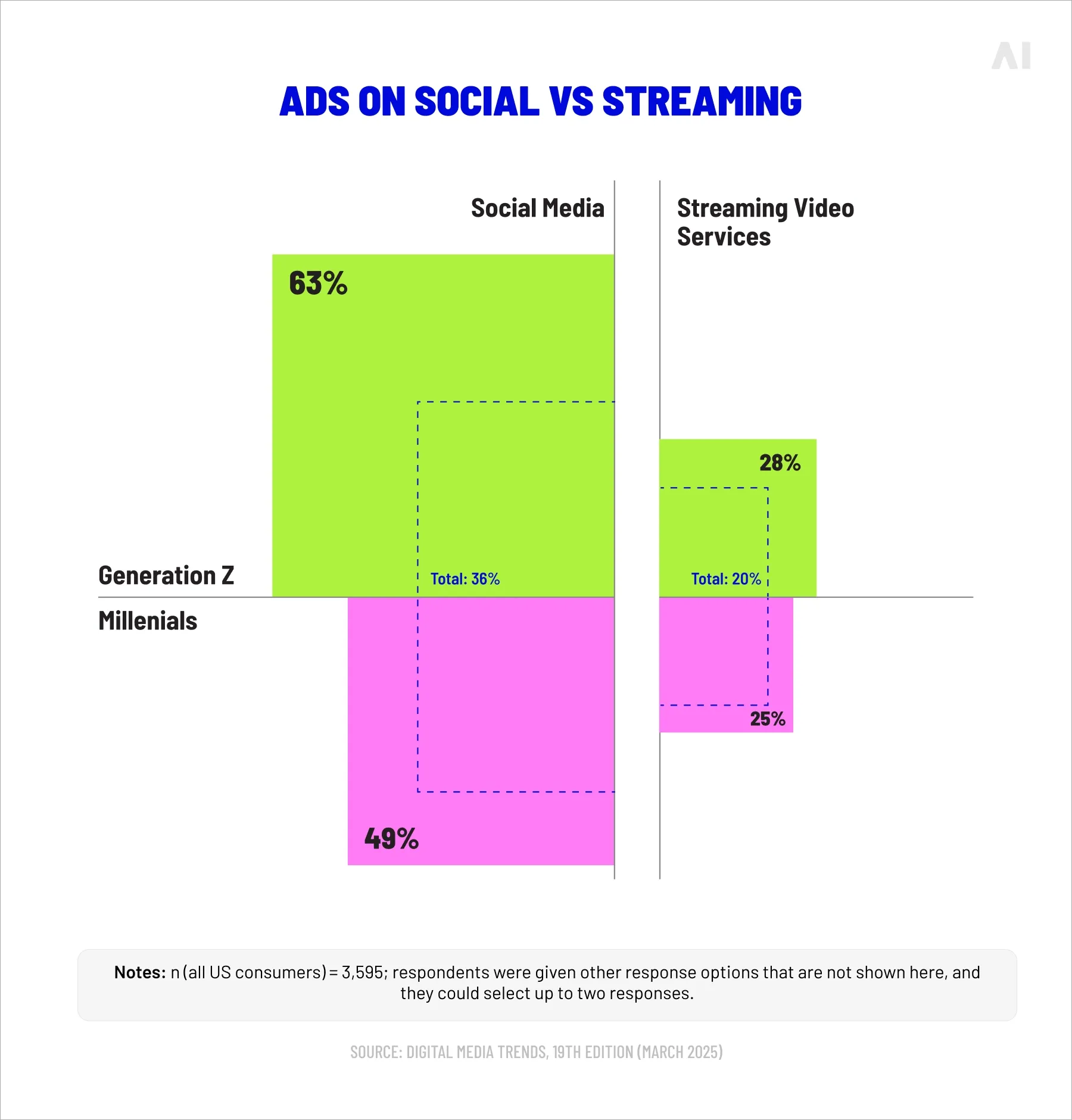
Deloitte’s 2025 Digital Media Trends research found viewers often complain about repetitive ads and poor ad experiences in streaming environments, which should make frequency management feel like a brand metric as much as a performance metric.
Better attribution and measurement
Cross-device doesn’t magically solve attribution, but it can reduce obvious measurement errors, like:
- counting one person as three “unique users”
- attributing a conversion to the last device touched, ignoring earlier exposure
- over-crediting retargeting that simply “shows up last”
The best measurement setups do two things:
- deduplicate exposure (person/household)
- use incrementality where possible (exposed vs control)
Stronger omnichannel performance
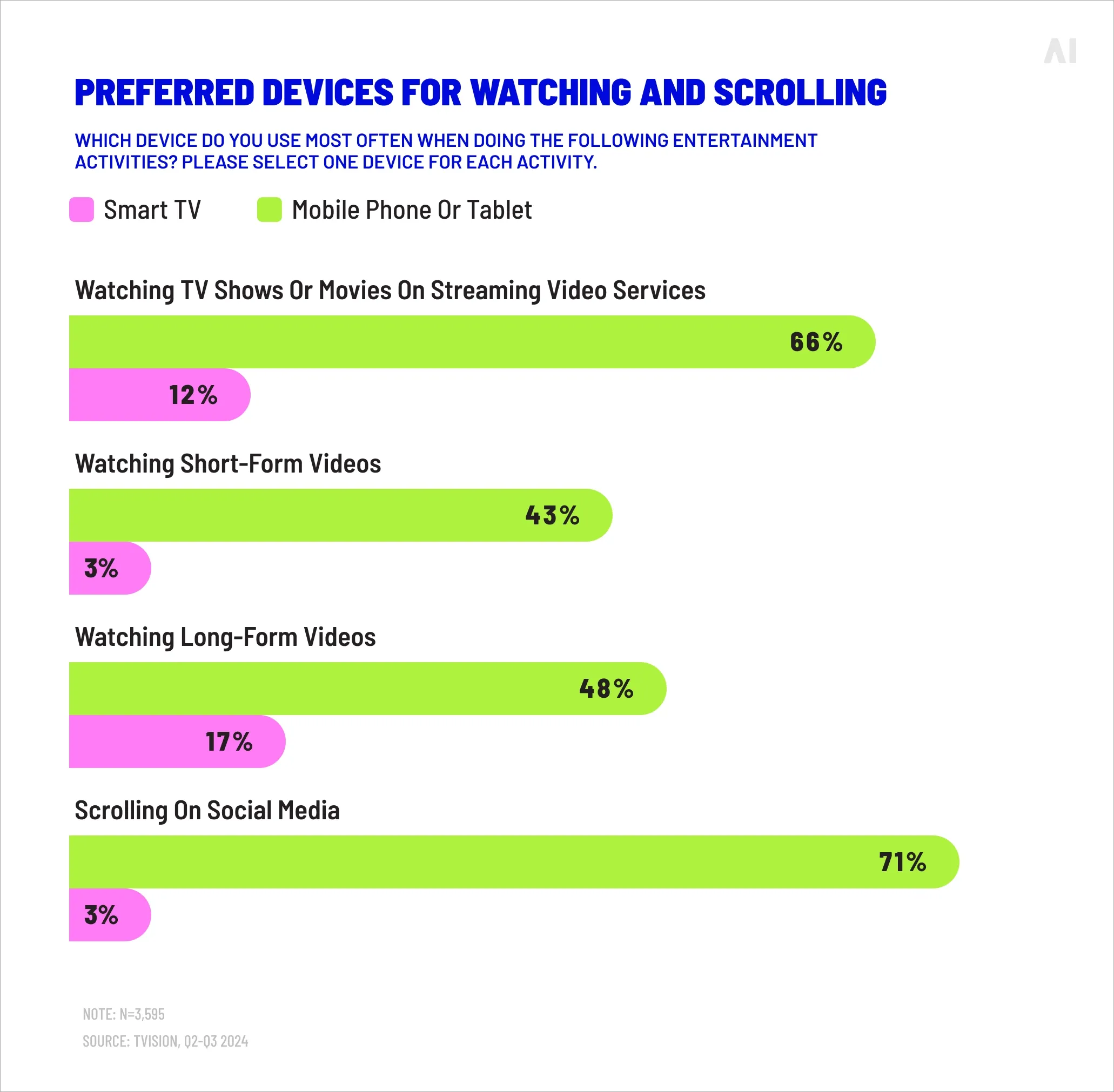
When CTV is a meaningful share of your mix, you need a way to coordinate CTV with digital channels. This is increasingly important because streaming is not a niche behavior anymore.
Comscore’s 2025 “State of Streaming” report noted 96.4M U.S. CTV streaming households.
That’s the environment where cross-device targeting stops being a “digital tactic” and becomes a core omnichannel capability.
⚡ Cross-device targeting isn’t a trick for following people around; it’s a practical way to manage reach and frequency at the household level, so you don’t keep buying the same impressions repeatedly while large parts of your intended audience never see the message at all.
💡 Related reading: Multi-touch attribution explained: How to measure what really drives conversions
Cross-device targeting vs single-device targeting
Single-device targeting is what happens when your unit of truth is “this cookie” or “this device ID.” Cross-device targeting tries to make the unit of truth closer to reality: a person or household.
Here’s the practical comparison.
{{26-Cross-Device-Ad-Targeting-SEO-4="/tables"}}
What this means in practice: if you’re still planning reach and frequency at device level, you’re often making your campaign look more “efficient” than it is.
💡 For a deeper look at measurement pitfalls, AI Digital’s perspective on why marketing metrics can mislead is a useful checkpoint before you design reporting.
Cross-device targeting and CTV
CTV is where cross-device strategy becomes unavoidable, because households, apps, and devices fragment reach.
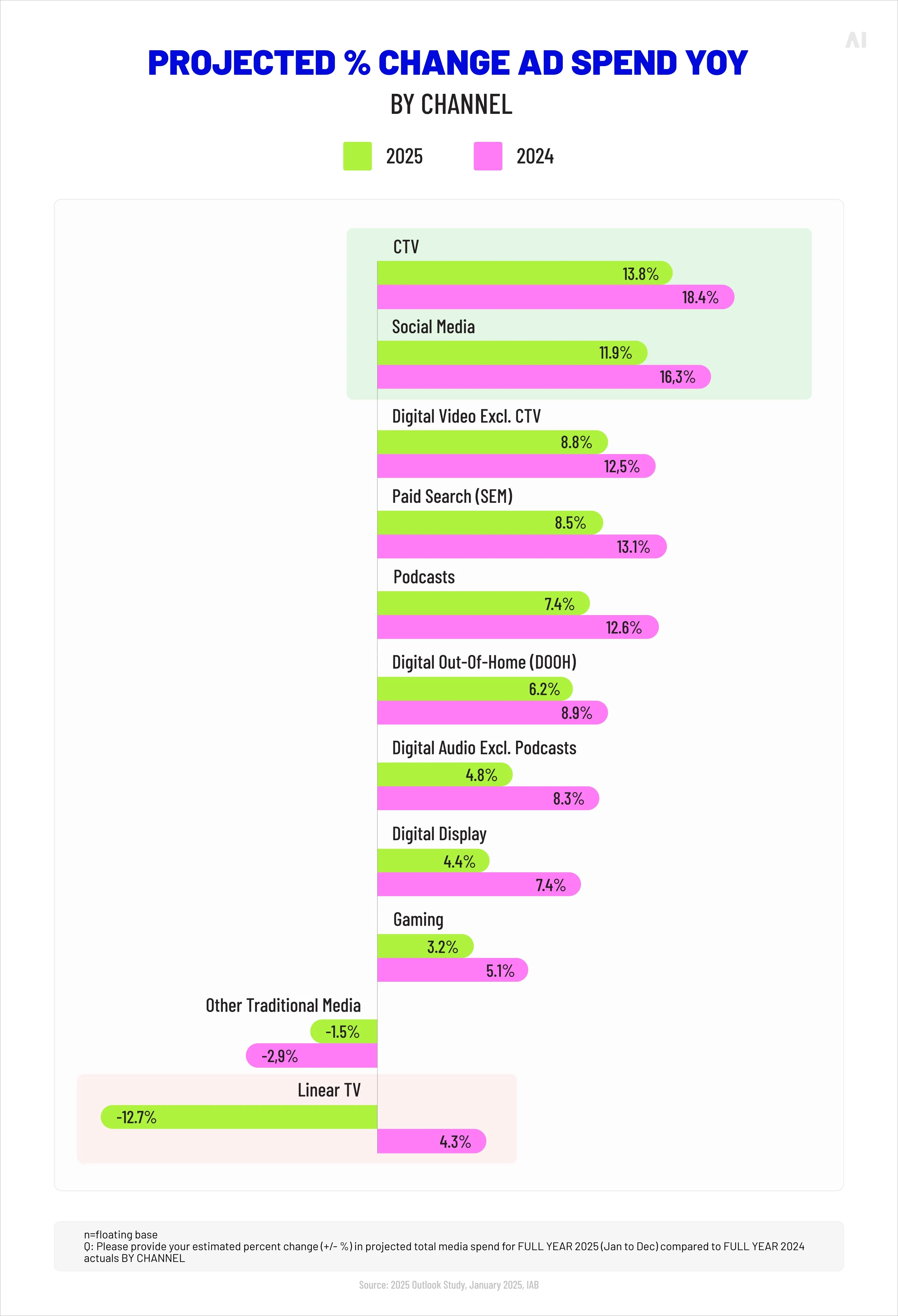
Unlike desktop or mobile, connected TV does not behave like a one-to-one environment. Multiple people may use the same screen, multiple streaming apps may exist on the same device, and identity signals vary widely depending on platform. As a result, advertisers rarely operate with a clean, person-level identifier when buying CTV inventory.
This makes cross-device coordination less about precision targeting and more about structure, control, and realistic measurement.
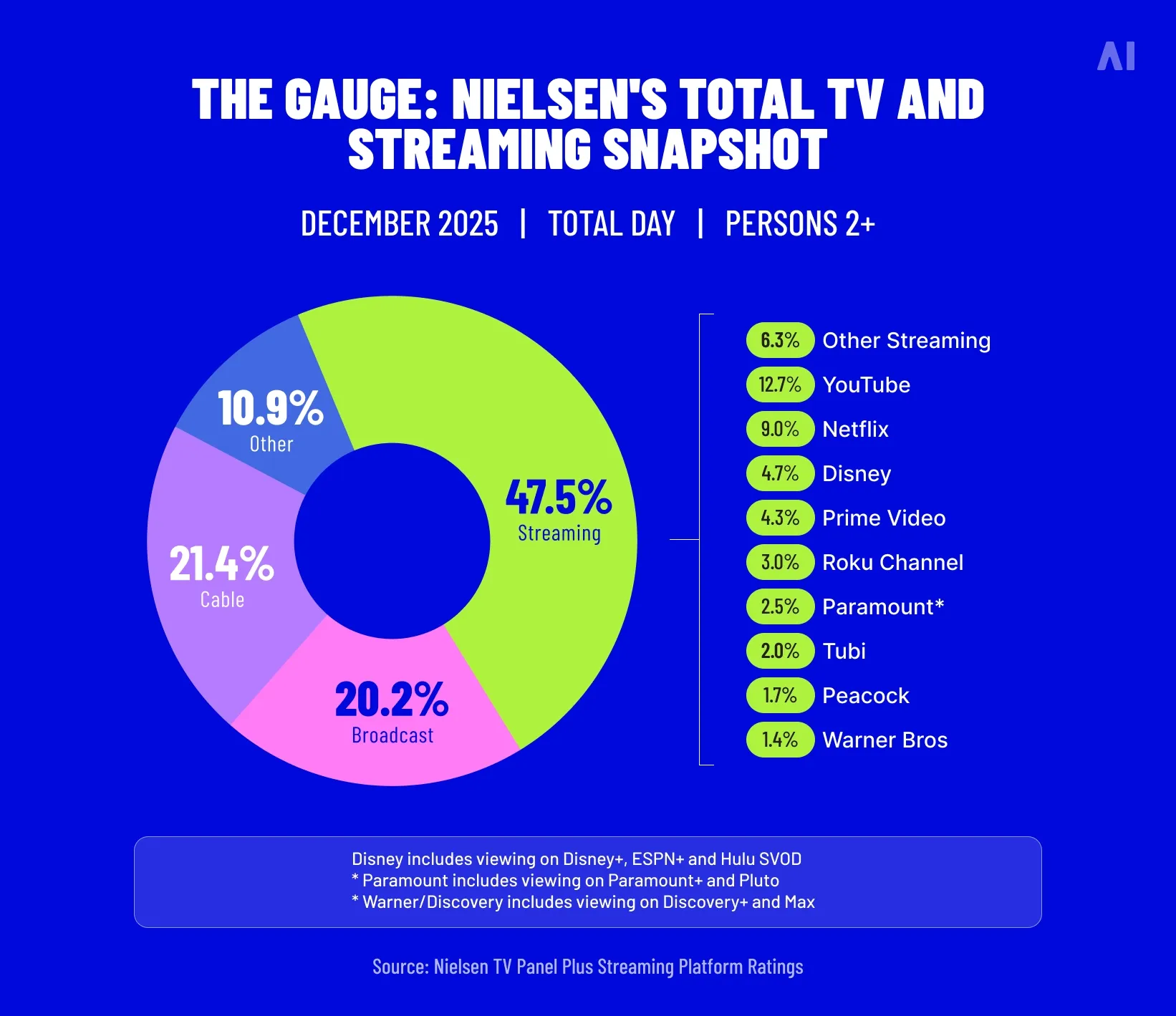
Household-based CTV targeting
CTV is commonly bought and evaluated at three different levels:
- Device level (a specific smart TV or streaming device)
- Household level (the group of people behind a shared router, IP, or platform account)
- Content or context level (show, genre, network, or viewing environment)
In practice, most CTV activation sits somewhere between device and household targeting.
Unlike web and app environments, many CTV platforms provide limited or inconsistent user-level identifiers. Some rely on logged-in platform accounts, others expose only device IDs, and some restrict identity sharing entirely. That variability pushes advertisers toward a hybrid approach built on:
- Household graphs, which associate multiple devices with a shared location or account
- Contextual intelligence, using program-level metadata to guide relevance
- Platform-level IDs, particularly within walled-garden ecosystems
This is why household-based planning remains central to CTV strategy. While it does not tell you exactly who in the home saw an ad, it does allow you to manage reach, frequency, and follow-up exposure across screens in a more controlled way than device-only buying.
Nielsen and Gracenote have repeatedly emphasized that bidstream metadata quality and transparency are critical for programmatic CTV, particularly as buyers attempt to understand reach, duplication, and exposure across fragmented streaming environments.
Cross-device attribution with CTV exposure
One of the main reasons advertisers invest in cross-device targeting alongside CTV is attribution.
A typical measurement flow looks like this:
- CTV exposure is logged at the household or device level
- Subsequent activity occurs on mobile, desktop, or within an app
- An identity graph links those devices to the original household
- An attribution model assigns credit to the CTV exposure
This framework helps connect upper-funnel viewing to lower-funnel action. However, it is also where over-crediting commonly occurs.
Because CTV impressions often happen early in the journey, and because downstream activity is easier to observe on personal devices, attribution models can unintentionally assign influence where true causality is unclear.
A more defensible approach is to treat CTV-to-digital measurement as:
- Directional unless validated, rather than absolute proof
- Stronger when paired with lift testing, such as exposed vs control households
- Strongest when anchored to first-party outcomes, including site activity, CRM events, or verified sales data
This framing doesn’t diminish the value of CTV. It simply acknowledges that identity resolution improves visibility, not certainty.
Coordinating CTV with mobile and desktop
When cross-device strategy is applied correctly, CTV rarely stands alone. Instead, it functions as the top of a coordinated system.
In practice, coordination tends to fall into three common patterns:
- Suppression: Avoid serving additional mobile or desktop ads to households that have already reached effective CTV frequency thresholds.
- Sequencing: Use CTV for broad narrative or brand storytelling, followed by shorter product proof or reminder messaging on mobile, and conversion-oriented messaging on desktop.
- Outcome assist: Treat mobile and desktop as the environments where actions occur, while recognizing that CTV often initiates interest rather than completes conversion.
{{26-Cross-Device-Ad-Targeting-SEO-5="/tables"}}
Each pattern relies on cross-device identity to prevent duplication and support logical progression through the funnel.
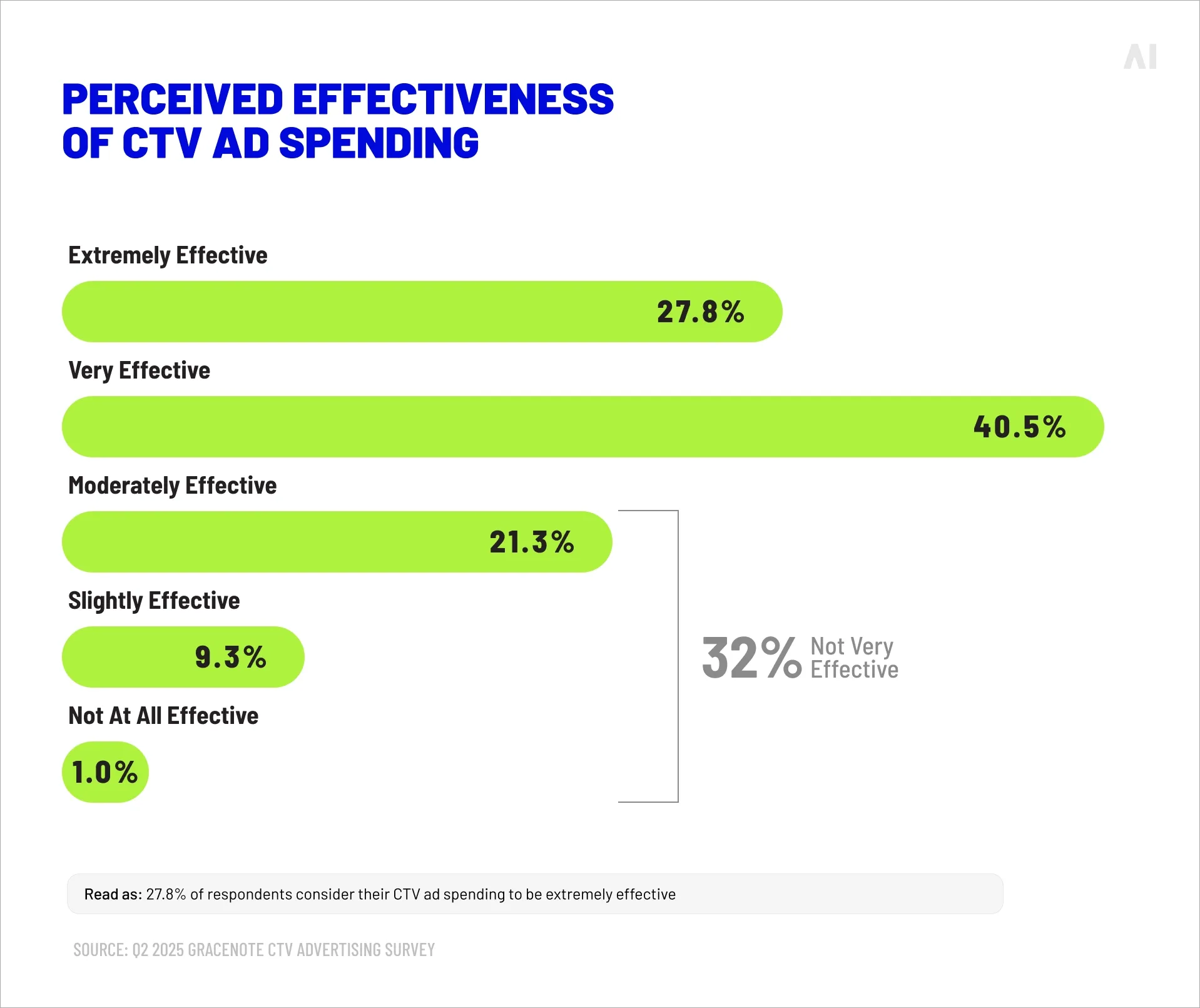
However, when activation occurs inside walled gardens, transparency can decline quickly. Reporting is often aggregated, identity logic is proprietary, and attribution rules may differ from open-web measurement. That’s why it’s important to understand not only what cross-device coordination enables—but also what data you will and will not receive back.
💡 Related reading: CTV advertising trends 2026.
Use cases for cross-device ad targeting
Use cases are where cross-device targeting stops being theoretical. Below are the most common patterns, plus a couple of examples from reputable sources.
Brand awareness and reach extension
The goal here is to add incremental reach without blowing up frequency.
Cross-device helps by:
- deduplicating households already reached on CTV (so you’re not paying to “re-reach” the same home through different apps/devices)
- extending to mobile/desktop for incremental reach (using follow-up placements to reach additional members of the household or capture attention in moments where TV isn’t the active screen)
- optimizing toward unique reach, not impressions, which is usually a better proxy for brand-building than raw delivery volume
Case example (cross-screen efficiency): Comscore published a case study showing a political campaign using privacy-centric targeting across TV environments and Comscore Campaign Ratings measurement, reporting that the campaign reached households on CTV 36% more efficiently than linear TV in that specific activation. Even if you’re not running political advertising, the transferable lesson is straightforward: household-based identity and deduplication can reduce waste when TV-like environments fragment, especially when linear + streaming buys overlap.
Performance and conversion campaigns
The goal here is to drive action while acknowledging cross-device journeys.
Cross-device helps by:
- linking upper-funnel exposure to lower-funnel behavior (CTV starts interest; mobile/desktop often captures the click, browse, or conversion)
- reducing duplicated retargeting, which can quietly inflate frequency and degrade efficiency
- enabling “assist” models where CTV primes demand and another device closes, which is often closer to how people actually behave
What to watch: last-touch models tend to over-credit the final device. If you can’t run lift testing, at least compare:
- exposed vs unexposed conversion rates
- time-to-convert distributions
- frequency-to-convert curves
If you can run incrementality, you’ll get a much more defensible read. IAB’s 2025 guidance on incremental measurement lays out core methodologies (experiments, counterfactual modeling, and hybrids) and when each approach is appropriate.
(If you want something more implementation-oriented, the IAB/MRC retail media measurement guidelines also walk through test/control lift logic and the kinds of pitfalls that can bias results. )
💡 Related reading: Key performance marketing strategies 2026: from targeting to optimization.
Retargeting and sequential messaging
The goal here is to move people from interest → evaluation → action with controlled messaging.
A simple sequential flow:
- CTV awareness (video)
- mobile retargeting (short reminder)
- desktop retargeting (comparison/offer)
- suppression once conversion happens (or once frequency cap hit)
This only works when your identity resolution is good enough to avoid “sequence collapse” (the user seeing message 3 first because device identity is disconnected). In practice, this is where frequency caps and suppression rules matter as much as the creative sequence itself, because fragmentation across streaming apps and devices can make repetition surprisingly easy.
Offline-to-online attribution
Now, the goal here is to connect media exposure to offline outcomes (store visits, calls, CRM events).
Cross-device can support this when you have:
- consented location or CRM linkages (and clear disclosure/permissions)
- clean-room style matching (where available) to connect exposure and outcomes without exporting raw user-level data
- controlled measurement windows aligned to purchase cycles
Clean rooms are increasingly used for privacy-preserving measurement workflows, including holdout or geo-split tests that compare exposed vs unexposed groups while limiting data leakage. There’s also growing industry discussion specific to CTV clean rooms as a way to improve targeting/measurement collaboration while preserving privacy boundaries.
Caution: offline lift is easy to overstate. Use holdouts if the budget allows, keep windows conservative, and treat results as directional unless your methodology can rule out obvious confounds.
Challenges and limitations of cross-device ad targeting
This is the section most vendors gloss over, but it’s where your plan either becomes durable or fragile.
Data accuracy and match rates
You will never get perfect match rates. And chasing “100% identity coverage” is usually a trap.
Common causes of match degradation:
- limited login penetration (as noted earlier, often under 30% in many publishing contexts)
- shared devices (especially TVs and tablets)
- IP churn and shared networks
- consent gaps
- platform-level blind spots (walled gardens)
Practical fix: define acceptable accuracy by use case. A probabilistic graph might be fine for reach modeling, but not for strict suppression in sensitive campaigns.
Walled gardens and limited transparency
Within major platforms, identity resolution often works—but reporting granularity may not.
Typical constraints:
- limited user-level data portability
- black-box conversion modeling
- restricted log-level access
If you plan cross-device programs across both open web and walled gardens, design reporting so you can:
- compare performance at the campaign objective level
- run incrementality tests where possible
- avoid forcing “apples-to-apples” when measurement rules differ
💡 Related reading: Walled gardens: The hidden cost for digital advertisers
Attribution gaps and over-crediting
Cross-device graphs make it easier to connect exposure to outcomes. They also make it easier to credit the graph for outcomes it did not cause.
Over-crediting happens when:
- your attribution window is too long
- you target high-intent audiences (who would convert anyway)
- you retarget aggressively and always “show up last”
- you lack holdouts or calibration panels
{{26-Cross-Device-Ad-Targeting-SEO-6="/tables"}}
This is why cross-platform measurement conversations keep coming back to identity plus standards. The MRC’s cross-media measurement work underscores the need for consistent methodologies when comparing across channels.
Privacy and consent management
Privacy risk isn’t theoretical. It shows up as:
- lost addressability when consent is not captured
- partner limitations on allowed use cases
- compliance rework when regulations or platform policies shift
Also note: industry opt-out mechanisms and frameworks evolve. If an opt-out tool or standard changes, your workflows must adapt quickly.
💡 Related reading: CTV ad fraud.
Best practices for effective cross-device ad targeting
This is the “do this on Monday” section. The best practices below are deliberately practical because cross-device targeting only pays off when it changes decisions you can defend.
Start with clear use cases, not technology
Before you pick a partner or an ID strategy, write down:
- what decision you want the graph to improve (frequency, sequencing, measurement, reach)
- what KPI should move if it works
- what could falsely inflate that KPI
Then select identity inputs that match the decision.
This matters more in 2026 because “identity” is no longer a single universal mechanism. The same audience can be addressable in one environment (logged-in CTV app) and effectively non-addressable in another (privacy-restricted browser session). Treat the graph like an input to a specific business decision, not a general-purpose asset.
A useful way to pressure-test your use case is to ask: “If I didn’t have cross-device IDs, what would I do instead?” If the answer is “I’d do contextual and broad reach buys anyway,” your identity plan should be minimal and focused.
Combine cross-device with contextual targeting
Identity is not always available. Context always exists.
A strong approach in 2026:
- use identity where consented signals exist
- use contextual intelligence to maintain scale and brand alignment
- measure both paths separately to understand tradeoffs
CTV is the clearest place to see why this is necessary. Even where identity is available, the quality and completeness of what flows through programmatic pipes can vary. Gracenote has published repeated guidance arguing that content metadata is a critical missing layer for CTV advertising transparency, and that missing or inconsistent metadata can make it harder for buyers to confidently align ads to the right content environments. As mentioned, Nielsen has also positioned Gracenote program metadata and TV schedule information as a standardized taxonomy that can support more transparent CTV transactions.
In practice, combining identity-based targeting with content/context signals is less about “extra sophistication” and more about keeping performance stable when ID coverage is uneven.
Set realistic measurement expectations
Cross-device attribution is not court evidence. It’s a directional model unless validated.
Good measurement hygiene includes:
- clear attribution windows tied to buying cycles
- deduplicated reach/frequency reporting
- incrementality tests where possible
- sensitivity checks (what happens if you shorten the window? exclude retargeting? cap frequency?)
If you want a concrete methodology anchor, the above-mentioned IAB’s Guidelines for Incremental Measurement in Commerce Media (Nov 2025) lays out the major approaches—controlled experiments, model-based counterfactuals, econometric models, and hybrids—and when each is appropriate. This is directly relevant to cross-device programs because identity resolution can increase apparent “influence” (more matches → more attributable outcomes), even when incremental lift is unchanged. Incrementality frameworks help prevent that from becoming a reporting trap.
Align targeting with privacy standards
Build for durability:
- prefer consented first-party signals
- document permitted uses by partner/platform
- design opt-out handling as a system requirement, not a legal afterthought
- keep data minimization in mind (don’t collect signals you can’t defend)
This is not just a “legal” best practice—it’s operational risk management. IAB Tech Lab’s ongoing privacy standards work (including updates to the Global Privacy Platform/Protocol (GPP) and the Data Deletion Request Framework) reflects how frequently compliance signaling and consumer rights handling evolve, especially across U.S. states.
The practical implication is simple: if your strategy depends on brittle identity pipes, you’ll spend more time rebuilding than optimizing.
The future of cross-device ad targeting
Cross-device targeting is not going away. It’s being refactored.
Here are the most likely “shape of the future” shifts you should plan for.
Identity will look more like reconciliation than tracking
Expect more systems that work like:
- publisher-to-advertiser reconciliation (clean rooms, privacy-preserving match)
- cohort and household approaches
- limited, purpose-built identifiers for specific workflows
Instead of “track everywhere,” the direction is “match where permitted, aggregate where needed, and document the logic.” This is why clean rooms keep coming up in measurement and collaboration conversations: they’re essentially structured reconciliation environments.
IAB Tech Lab’s work on privacy-enhancing technologies (PETs) and addressability standards shows where the industry is heading: maintain useful ad functions while making privacy expectations more predictable and enforceable.
Household will remain central because CTV remains central
Streaming’s share of TV time keeps household identity relevant for planning, dedupe, and sequencing.
Nielsen’s Gauge reporting shows streaming has been hitting record levels of total TV usage, including milestones where streaming approaches or exceeds combined broadcast+cable share (for example, 44.8% in May 2025)—a structural indicator that household-based planning isn’t a niche CTV tactic anymore.
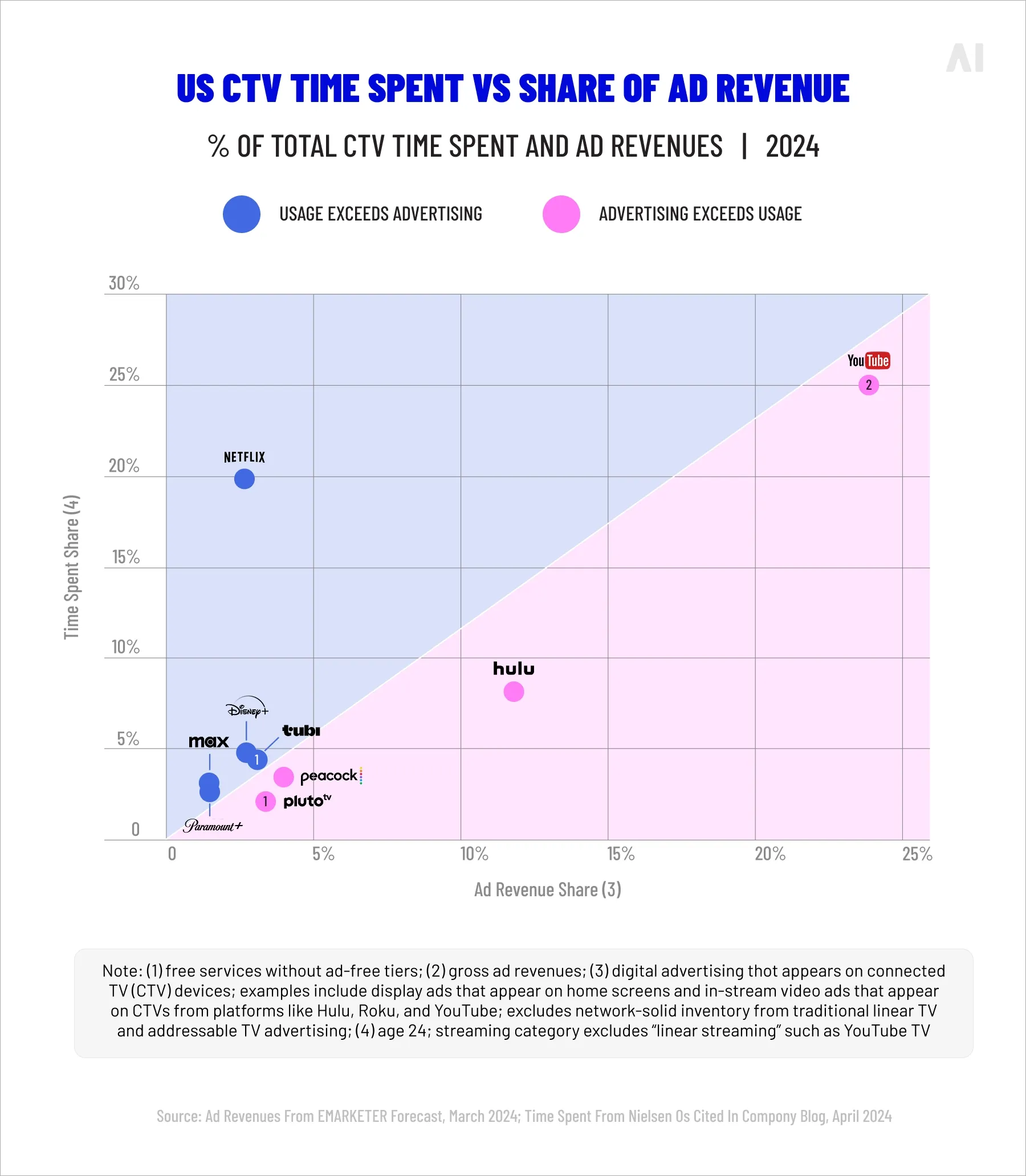
(And more recent updates show streaming continuing to climb, reinforcing the broader direction even as the exact percentage moves month-to-month.)
In other words: even if person-level identity becomes harder in some environments, household-level coordination will still deliver value.
Measurement will shift toward incrementality and calibration
As identity becomes less “complete,” measurement that relies on:
- calibration panels
- modeled outcomes with disclosed assumptions
- incrementality tests
…will become more important than obsessing over last-touch attribution.
This aligns with how major industry bodies describe measurement best practice: not one method, but a framework that clarifies when experiments vs counterfactual models vs econometrics are appropriate.
Expect more regulation pressure, not less
The U.S. remains fragmented, but the direction is consistent: more transparency, more opt-out control, and more scrutiny on sharing and profiling. If your cross-device strategy depends on opaque pipelines, you will keep rebuilding it.
The speed and cadence of privacy-signal standards updates (e.g., GPP updates tied to new state laws, and improvements to deletion-request handling frameworks) is a useful proxy for how dynamic this environment will remain.
⚡ The winners in cross-device targeting won’t be the teams with the biggest graph. They’ll be the teams with the clearest use cases and the most defensible measurement.
Conclusion: why cross-device ad targeting still matters
Cross-device targeting is best understood as a system of identity + activation + measurement. It creates real value when it helps you do at least one of these things better than single-device targeting:
- deduplicate reach and frequency (especially across CTV + mobile + desktop)
- coordinate messaging across screens so sequencing is intentional, not accidental
- measure outcomes without double-counting users (and without “last device wins” bias)
- reduce waste while improving incremental reach, rather than simply increasing impression volume
But it also creates new failure modes: over-crediting, false certainty, and privacy fragility. That’s why the most effective programs treat identity as a means to an end, not the end itself.
If you take one idea from this guide, take this: your identity approach should be proportional to your use case. Build the minimum cross-device capability that improves a real decision, verify it with holdouts or calibration where you can, and expand only when the lift is repeatable.
Where Smart Supply fits in this picture
Cross-device targeting often breaks down not because the strategy is wrong, but because the media environment is noisy: too many redundant paths to the same inventory, inflated costs through bidstream recycling, and platform bias that quietly nudges spend toward “preferred” inventory rather than what actually performs. Smart Supply is designed to fix that supply-side reality.
Smart Supply focuses on supply-side selection built around your desired outcome, not generic “curated” bundles. Deals are custom-built by inventory type and KPI, and then continuously optimized rather than treated as a static library. It’s also DSP-agnostic and inventory-agnostic, working across Display, Streaming Video, CTV, and Streaming Audio, with the goal of improving efficiency and effectiveness without forcing a particular platform’s priorities.
In other words: cross-device targeting helps you decide who to reach and how to measure it. Smart Supply helps ensure the where and how you buy doesn’t undermine those decisions through waste, duplication, or distorted auction dynamics.
And if you’re planning cross-device targeting across CTV, mobile, and desktop (or you’re already running it and you’re not sure what to trust), it’s usually worth an expert review of three things:
- Identity approach: what signals you’re using, where they break, and what’s realistic by channel
- Activation design: sequencing, suppression, frequency controls, and where fragmentation is causing waste
- Measurement setup: what’s directional vs validated, and how to reduce over-crediting
If you want a second set of eyes, get in touch with AI Digital. We can help you pressure-test the use case, choose an approach that’s privacy-aligned, and—where it makes sense—use Smart Supply to tighten supply paths and reduce the hidden inefficiencies that make cross-device performance look better (or worse) than it really is.