Addressable Geofencing Advertising: Precision Targeting Beyond Traditional Location Ads


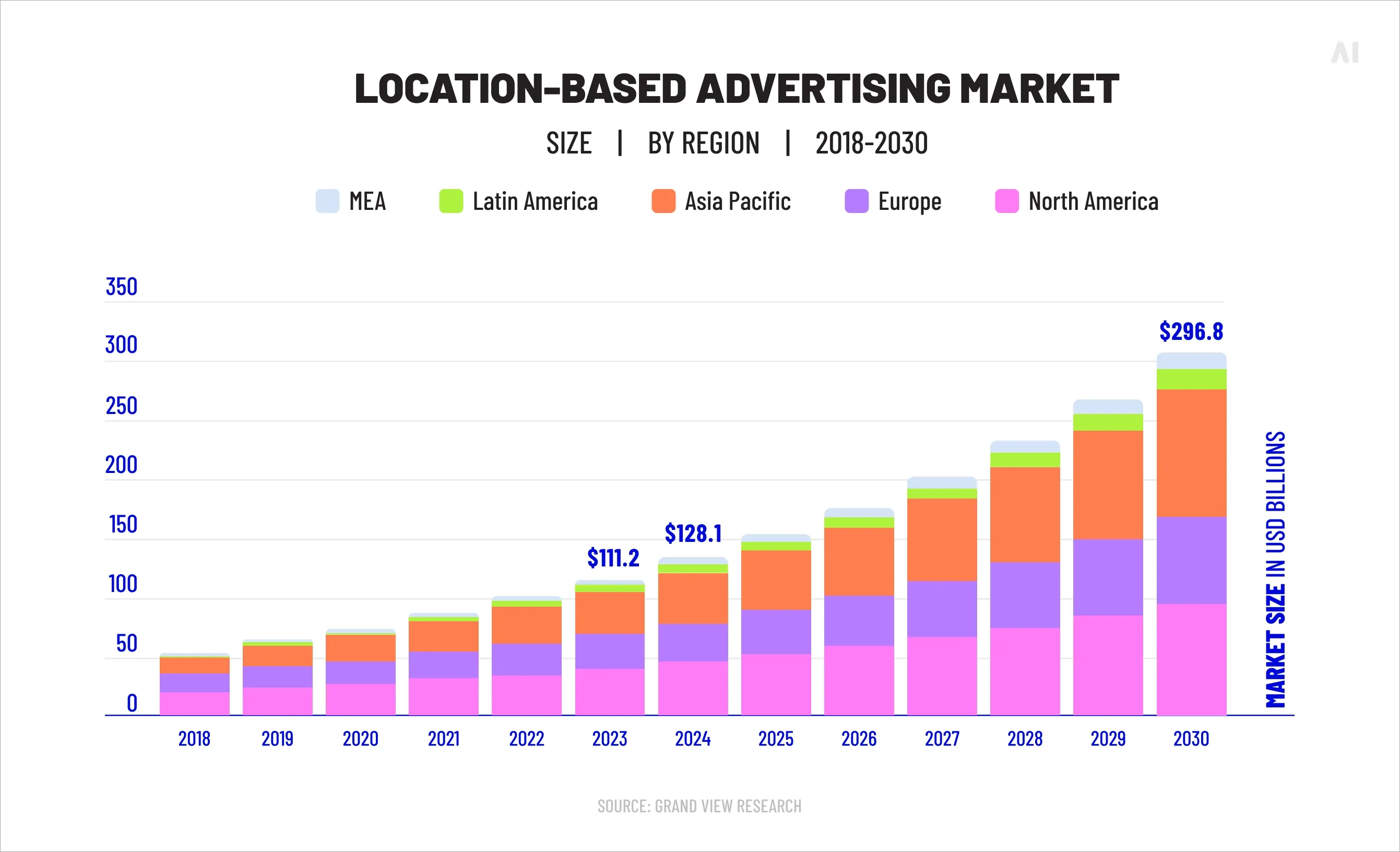
Location-based advertising used to be relatively straightforward: you drew a radius around a store, served mobile ads to people inside that area, and then hoped enough of them eventually walked in. That approach can still make sense for certain objectives, but it starts to fall apart when you need household-level precision, cross-device delivery, and measurement you can stand behind in a privacy-first environment.
Addressable geofencing is the next iteration of the idea. It keeps the core premise of reaching people near places, but replaces broad proximity targeting with deterministic, address-level audiences. Rather than buying “everyone who entered a circle,” you’re activating specific households—and the devices connected to them—using address matching and identity resolution, and then measuring outcomes through a tighter chain of evidence that’s designed to hold up under modern scrutiny.
In this article, we’ll break down what addressable geofencing is, how it works in practice, how it fits into omnichannel planning in 2026, and where it’s genuinely useful—without treating it like a magic trick.
What is addressable geofencing?
Addressable geofencing is a location-based advertising approach that targets audiences at the household/address level, rather than targeting anyone who happens to be physically present inside a broad geofence.
The key difference is in the “addressable” part:
- Traditional geofencing: targets devices that enter a defined area (often a radius around a point of interest).
- Addressable geofencing: targets households/addresses, then delivers ads to the devices associated with those households (CTV, mobile, tablet, desktop), using privacy-safe identity matching.
So the “fence” isn’t the main product. The product is the addressable audience.
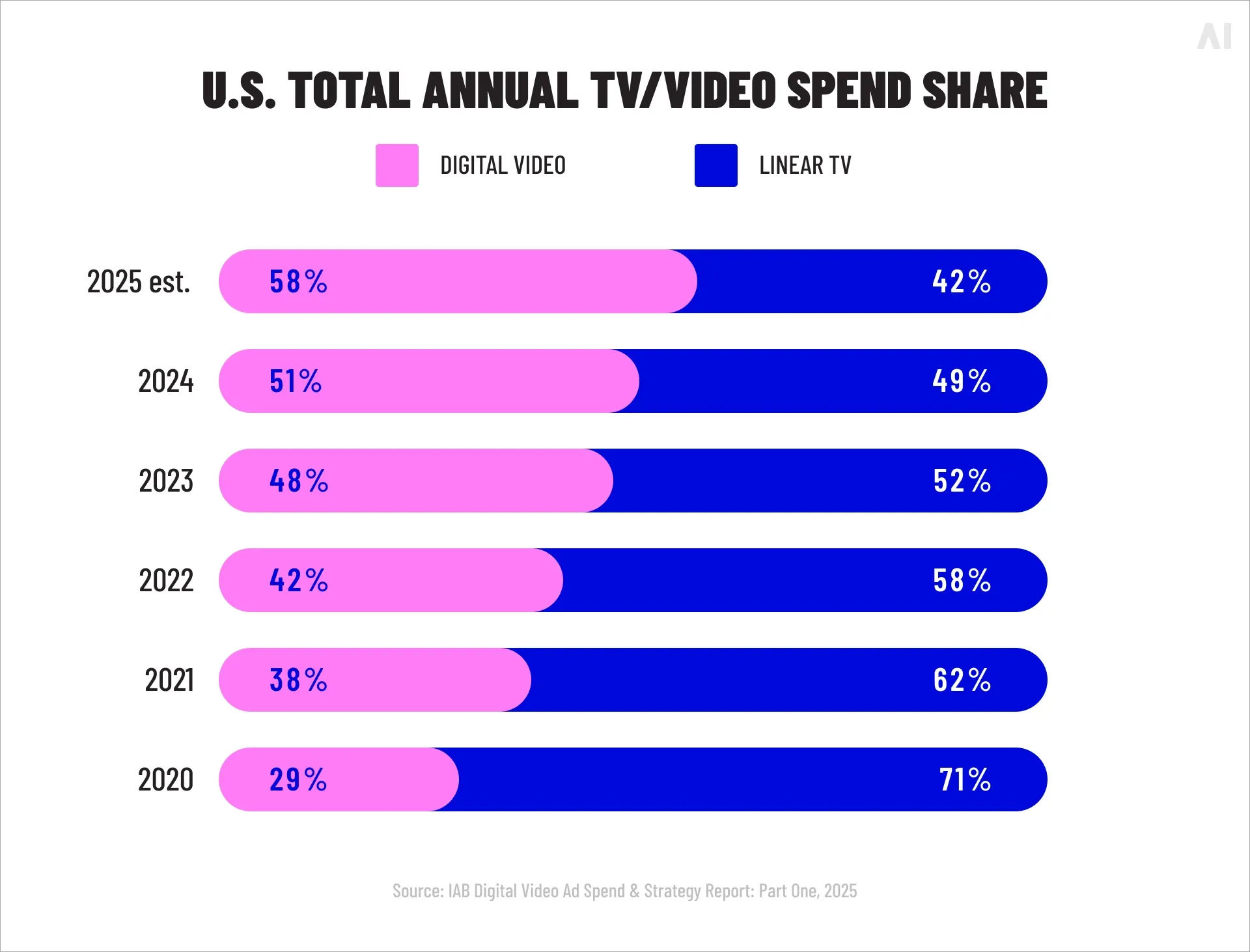
📌 Quick context: According to IAB, CTV (which increasingly includes addressable geofencing campaigns) rebounded with 16% growth in 2024 to $23.6B, while digital video overall now captures 58% of TV/video ad spend, signaling that household-level precision is becoming the new standard.
What makes it addressable (in practical terms)
Before we get tactical, it helps to separate the components:
- A deterministic anchor (often an address, sometimes consented first-party CRM data).
- A matching layer that connects that anchor to privacy-safe identifiers and devices.
- Activation across channels (especially CTV + mobile + display).
- Measurement that uses visit signals, conversion zones, incrementality, and offline/online linkage.
💡 If you want the broader foundation—how addressable targeting works across channels and why it matters as identifiers change—AI Digital’s overview is a useful companion. See: Addressable digital advertising.
⚡ A fence isn’t a strategy. The audience behind it is.
Addressable geofencing vs traditional geofencing
Both approaches use “place” as a signal. The difference is what you do with that signal.
Traditional geofencing is great when you need fast scale and you can tolerate noise. Addressable geofencing is built for precision, sequencing, and measurement discipline.
How they differ in practice
On paper, both tactics look similar because they both draw boundaries on a map. In execution, they behave very differently. Traditional geofencing collects whoever enters a defined area, which can work for broad local pushes but often pulls in noise. Addressable geofencing flips the logic: it defines the households first, then uses location and identity matching to deliver ads to the right devices and measure outcomes more cleanly. So, in other words—
Traditional geofencing tends to be:
- Device-first (who entered an area?)
- Proximity-based (often radius geofences)
- Heavily mobile-centric
- Easier to launch, harder to defend analytically
Addressable geofencing tends to be:
- Household-first (which addresses do we want?)
- Property-based (plat lines / polygons / address-to-structure)
- Cross-device by design (CTV + mobile + desktop)
- Better suited to controlled measurement (exposure vs control)
Comparison table
Here’s a quick side-by-side to make the differences easier to spot:
{{26-Addressable-Geofencing-Advertising-1="/tables"}}
📍 A useful rule: if your plan depends on “everyone near a place,” traditional geofencing can work. If your plan depends on “specific people who matter,” you usually want addressability.
💡 Related reading: Geofencing vs. geotargeting: What's the difference?
How addressable geofencing works
Addressable geofencing is best understood as an orchestration problem rather than a single tactic, because it only works when a full chain holds together end to end:
- you start by building an addressable audience, then
- resolve identity to map that audience to the devices you can actually reach, then
- deliver across channels with sequencing and frequency controls so the plan behaves like a coordinated program, and finally
- measure outcomes with realistic expectations about what can be proven versus what has to be modeled.
{{26-Addressable-Geofencing-Advertising-2="/tables"}}
Address and household data matching
This is where addressable geofencing earns its name.
At a high level, a campaign starts with one or more address-based inputs:
- A store trade area (addresses within X minutes)
- A first-party customer file (addresses from CRM, loyalty, POS)
- A modeled prospect list (lookalike households)
- A competitor set (addresses associated with competitor visitation patterns—where permitted and privacy-safe)
The matching layer then connects those addresses to:
- Household identifiers
- Devices associated with the household
- Eligible inventory supply paths (CTV/display/mobile)
Why this matters: a raw geofence doesn’t know whether a device belongs to a customer, an employee, a delivery driver, or a commuter. Address targeting reduces that ambiguity before you spend.
Audience activation and identity resolution
Once you have addresses, you still need to activate them. That requires identity resolution—connecting a household to privacy-safe identifiers used in ad delivery.
In a privacy-first environment, this is less about one universal ID and more about layered identity:
- deterministic matches where permitted
- probabilistic reinforcement where necessary
- strict governance on sensitive categories
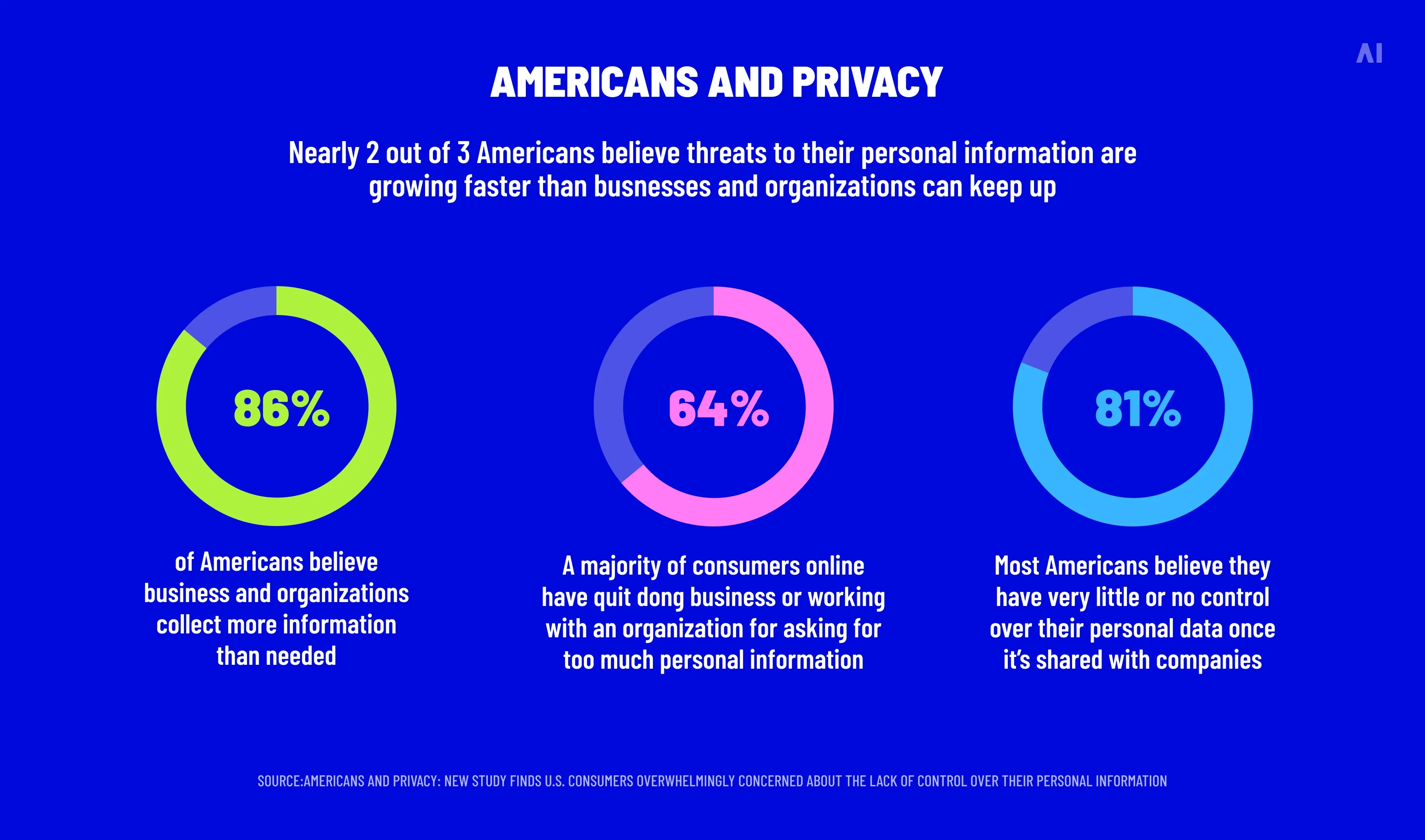
This is also where advertisers are feeling pressure. IAB’s State of Data 2024 report shows how widespread the expectation of continued signal loss and privacy regulation has become—95% of U.S. advertising/data decision-makers expect continued legislation and signal loss, and 66% expect reduced ability to personalize messaging in states with privacy laws.
So the best addressable geofencing strategies assume:
- match rates won’t be perfect
- measurement must be designed up front
- audience definitions need governance (especially around sensitive locations)
Omnichannel and cross-device delivery
Addressable geofencing is at its best when it’s not trapped in mobile banners.
Because the targeting unit is the household, it’s natural to deliver across:
- CTV (big screen reach inside the home)
- Mobile (mid-funnel reinforcement + location signals)
- Desktop/tablet (workday reach, research moments)
- Display/video (sequencing and retargeting)
A concrete example of how this is executed in the market: Simpli.fi’s case study describes using addressable geo-fencing to match each household address to the property’s exact physical boundaries (using GPS + plat line data), then serving CTV ads on large-screen devices within the household, with cross-device matching to extend delivery to desktop/tablet as well.
💡 If you’re planning around advanced TV specifically, AI Digital’s breakdown of how CTV and addressable TV differ (and where each fits) is a helpful reference point for channel roles and measurement expectations.
.webp)

💡 Furthermore, check out another related read: What is cross-device targeting in advertising?
Attribution and performance measurement
Measurement is where most location strategies either become credible or collapse into soft storytelling.
A defensible addressable geofencing measurement plan usually includes:
- Exposure definition: who saw an ad, where, and how often?
- Visit definition: what counts as a “real” visit? (dwell time, polygon boundaries, exclusion zones)
- Attribution window: how long after exposure can a visit reasonably count?
- Control groups or holdouts: to estimate incremental lift
- Offline linkage: when possible, connect exposure to sales (not just visits)
Industry guidance matters here. The Media Rating Council’s Location-Based Advertising Measurement Guidelines outline how location data should be handled and validated for advertising measurement use cases.
The mindset shift is that the goal is rarely to “prove” every visit was caused by the ad; it’s to estimate incremental lift using methods you can explain clearly, defend under scrutiny, and repeat consistently as conditions change.
⚡ If you can’t explain your visit definition in one breath, you don’t have a metric yet.
Who uses addressable geofencing
Addressable geofencing tends to show up wherever marketers need to reach high-intent audiences tied to the physical world and prove it worked.
{{26-Addressable-Geofencing-Advertising-3="/tables"}}
Retail and brick-and-mortar brands
Retail is the obvious fit because the success metric is real: visits, transactions, repeat behavior.
Addressable geofencing aligns with retail goals when you need:
- loyalty reactivation (known households)
- store trade area conquesting (competitor adjacency, where allowed)
- localized messaging at national scale (consistent playbook, local execution)
- measurement that links ad exposure to store outcomes
It’s especially strong when paired with closed-loop measurement (POS, loyalty IDs) or controlled lift testing.
Automotive and dealerships
Auto is a long-consideration category with heavy local dynamics: inventory differs by region, dealer groups compete in tight radiuses, and “in-market” intent is everything.
Addressable geofencing is useful here because you can:
- prioritize households likely to be in-market (modeled + behavioral signals)
- sequence CTV awareness with mobile reinforcement
- measure dealership visits as a mid-funnel outcome
In one Simpli.fi dealership example, the strategy combined addressable geo-fencing with geofencing, search retargeting, and site retargeting across CTV and display, then measured in-person visits using a conversion zone around the dealership.
Healthcare and pharma
Healthcare is both high-value and high-risk. The opportunity is clear (patients, caregivers, HCP ecosystems). The constraint is equally clear: privacy expectations are higher, regulations are stricter, and “location” can become sensitive fast.
Addressable geofencing can fit healthcare when:
- targeting is built on compliant, consented data
- sensitive locations are excluded or handled with extreme care
- measurement focuses on aggregated lift, not individual inference
Recent enforcement and regulatory attention around location data is a reminder that “we can target it” isn’t the same as “we should.” The FTC has pursued actions involving location data brokers and sensitive location data practices.
Financial services and real estate
These categories often need precision with restraint.
Addressable geofencing fits when you want to:
- promote branch-based services without blanketing an entire city
- reach households in relevant life stages (moving, refinancing, upgrading)
- support local market expansion with measurable footfall and lead signals
It’s also useful for suppressing waste—for example, excluding existing customers from acquisition messaging while focusing on high-propensity households.
QSRs and franchises
QSR is where you see the power of speed: short purchase cycles, immediate foot traffic, and strong creative responsiveness.
Addressable geofencing fits because you can:
- drive visits during specific dayparts
- conquest around competitor locations (where permitted)
- coordinate omnichannel bursts (CTV awareness + mobile reminder)
GroundTruth reports that campaigns running CTV and mobile together saw a 61% increase in store visits compared with mobile alone, and diners exposed across both channels were 2.5× more likely to visit than those served only one channel.
Key benefits of addressable geofencing
Advertisers are shifting toward addressable models because they want fewer guesses and more control—especially when budgets are scrutinized and measurement expectations are higher.
High-precision targeting
Precision comes from defining the audience first, not by catching devices that wander into a radius.
Addressable geofencing is built for:
- household-level targeting
- tighter exclusions (employees, commuters, irrelevant neighborhoods)
- segmentation by intent and recency
This is one reason many teams are building stronger “decision systems” around media—connecting audiences, creative, and outcomes so optimizations are grounded in evidence, not just platform metrics.
💡 Related reading: Advertising intelligence: turning data into smarter media decisions
Reduced media waste
Media waste in location-based campaigns usually comes from three places:
- The fence is too broad
- The audience is poorly defined
- Frequency piles up on the wrong people
Addressable geofencing tackles this by putting audience governance ahead of delivery mechanics.
It also fits the wider shift toward first-party and seller-direct strategies. IAB’s State of Data report notes major changes in media planning and buying tied to signal loss, including prioritization of first-party data and increased use of seller-direct deals.
Real-world attribution
Real-world attribution doesn’t mean perfect certainty. It means better evidence.
Addressable geofencing supports:
- visit lift measurement
- conversion zones with clear rules
- offline sales matching (when available and privacy-safe)
- incrementality through controls
A practical example: a national commercial retailer’s 2025 campaign combined site retargeting with addressable geo-fencing, then measured outcomes across online and in-store. The case study reports $37M+ in online sales from 85,000+ online conversions, plus 5,000+ foot traffic visits and $15M+ in offline cart value, with a reported $6.00 CPA by July 2025.
Privacy-friendly execution
Addressable geofencing can be privacy-friendly—but only if it’s designed that way.
That means:
- using consented first-party data where possible
- hashing and minimizing data exposure
- avoiding sensitive location targeting
- aggregating reporting and avoiding individual inference
Regulators are watching location data practices closely, particularly where sensitive locations or re-identification risks are involved.
Strong performance for local and national campaigns
Local is where addressable geofencing feels intuitive, but the real advantage is consistency at scale.
A strong playbook can be:
- standardized at the national level (audience definition, measurement rules)
- localized in execution (creative, offers, store lists, dayparts)
Local budget movement is also pushing more teams toward tactics that can be measured and repeated. Digiday’s research on local advertising indicates many marketers expect increased local spend, which raises the value of location strategies that can hold up under scrutiny.
Addressable geofencing in omnichannel campaigns
Addressable geofencing is most effective when it’s treated as an orchestration layer, not a standalone tactic.
The simplest omnichannel pattern looks like this:
- CTV establishes broad attention in the household
- Mobile/display reinforces and nudges action
- Measurement ties exposure to visits, leads, or sales
- Optimization shifts spend toward audiences and supply paths that show lift
How it fits with display and mobile
Display and mobile do the mid-funnel work:
- reinforce the CTV message
- capture “near term” intent moments (search, map use, store planning)
- support retargeting based on exposure rather than just clicks
How it fits with CTV
CTV is often the highest-leverage pairing because it delivers:
- household reach (aligned with addressable targeting)
- high attention formats
- sequencing opportunities
The digital video market context matters here. IAB projected U.S. digital video ad spend to reach $72.0B in 2025 (with 18% YoY growth), underscoring why video has become a default layer in performance-aware omnichannel plans.
💡 For channel planning clarity, see AI Digital’s related piece: Addressable vs CTV.
How it fits with DOOH
DOOH can act as an offline “primer” that makes the follow-up household messaging work harder:
- hit commuters near retail corridors
- reinforce launches and events
- hand off to mobile retargeting or household sequencing
On the supply side, DOOH continues to expand as a measurable channel. OAAA reports DOOH accounted for 35% of total OOH revenue year-to-date and grew 11.6% in Q3 2025.
💡 If you want a DOOH-specific breakdown of formats, buying models, and where measurement is heading, AI Digital’s guide on DOOH is a useful add-on.
How it fits with digital audio
Audio is often underestimated in location strategies. It’s valuable when you want:
- incremental reach during commute and errands
- frequency without visual fatigue
- sequencing (“heard it” + “saw it” + “acted on it”)
The practical use is usually supportive: audio adds repetition and recall, while addressable household targeting keeps the plan from drifting into broad waste.
Common challenges and how to overcome them
Addressable geofencing is powerful, but it has failure modes. Most are avoidable if you design the campaign like a measurement system, not just a targeting tactic.
Data accuracy and freshness
Location and household data decay. People move, devices change, permissions tighten, and the market shifts.
What helps:
- refresh household lists on a clear cadence
- use multiple signals (first-party + modeled + contextual)
- validate with holdouts and lift testing instead of assuming match accuracy
And remember: many teams expect tightening constraints to continue. As mentioned earlier, IAB reports broad expectations of continued legislation and signal loss impacting targeting and personalization.
Balancing scale and precision
If you over-tighten, you lose reach. If you over-broaden, you lose meaning.
A practical way to manage this:
- Start with a “core” high-intent household segment
- Add expansion rings (modeled lookalikes, trade-area households)
- Control frequency and monitor marginal performance (not just blended CPA)
Attribution complexity
The hardest part isn’t capturing visits. It’s proving they mean something.
Common traps:
- counting incidental pass-throughs as “visits”
- claiming causality without a control group
- using windows that are too long for the product cycle
What helps:
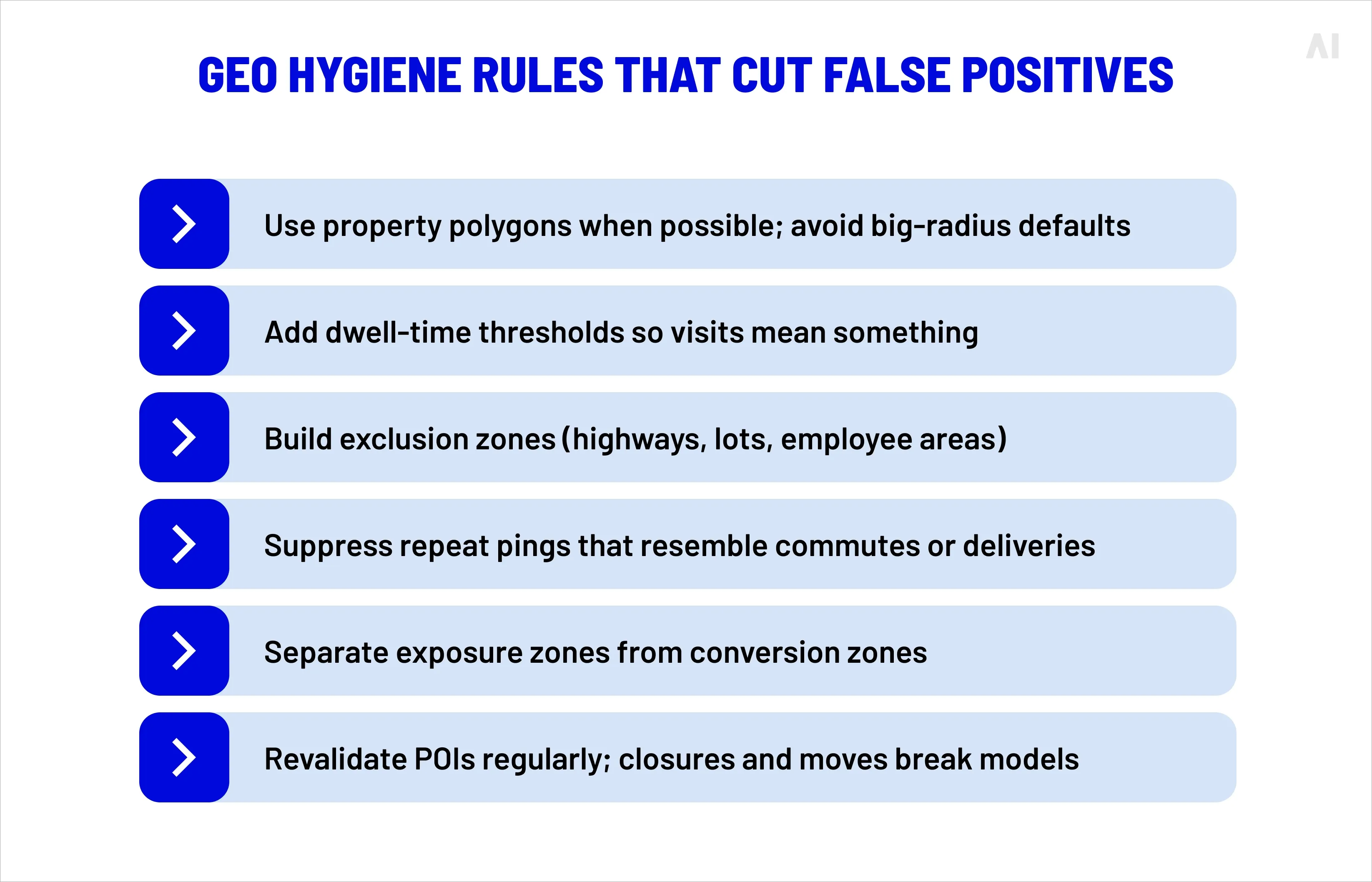
- strict visit definitions (polygon + dwell)
- exclusion zones (employees, highways, parking lots if needed)
- incrementality tests (even simple geo-holdouts)
- alignment with MRC guidance for how location measurement should be validated
Setting realistic measurement expectations
Addressable geofencing measurement is strongest when you’re honest about what it can and cannot prove.
A good internal standard is:
- directional metrics for early learning (visit lift, engagement)
- controlled tests for decision-making (incrementality, matched sales)
- clear “confidence tiers” for stakeholders (high/medium/experimental)
💡 Also, if CTV is part of your mix, plan for quality and fraud controls. See AI Digita’s related piece: CTV ad fraud
{{26-Addressable-Geofencing-Advertising-4="/tables"}}
Real-world use cases and campaign examples
Below are practical scenarios that show how addressable geofencing is actually used in real media plans. Think of these as repeatable patterns: a clear audience definition, a channel mix that matches the moment, and measurement that’s designed before the first impression runs. The creative, offer, and timing will change by brand. The underlying structure is what you can reuse.
Driving in-store foot traffic
This use case tends to work best when you have physical locations, a credible reason to believe advertising can actually change behavior—an offer, a time-sensitive need, or simple convenience—and a visit definition you can defend with discipline, including polygon-based boundaries, dwell-time thresholds, and sensible exclusions that reduce false positives.
A strong setup usually includes:
- Household audience design (trade area + high-propensity households, with clear suppression lists where possible)
- Video-led reach (often CTV/streaming) paired with mobile/display reinforcement for near-term nudges
- Conversion zones around store locations with a clear visit rule (not “anyone who passed by”)
- Lift thinking (holdout audiences or geo-holdouts when feasible)
👉 A concrete example comes from NBCU Local’s Spot On case study with a national chicken QSR, where the brand ran geo-targeted streaming across nearly 70 DMAs and paired it with a foot-traffic study using a 14-day conversion window. NBCU reports results including 186K total exposed store visits, a $3.52 campaign cost per attributed visit, $2.4M in sales revenue (4X ROAS), and a 15.4% behavioral lift when comparing exposed versus unexposed conversion rates.
💡 Related reading: Foot traffic attribution: Measuring real-world impact.
Competitor conquesting
This works best when your differentiation can be communicated in a single, unambiguous sentence—price, menu, convenience, selection—and when you can keep targeting tight enough that you’re reaching high-intent audiences rather than paying to annoy everyone who happened to walk past a competitor once.
Where teams go wrong is assuming competitor visitors are “free” prospects. A better approach:
- Define a conquesting window based on the category cycle (short for QSR, longer for durable goods)
- Use frequency caps aggressively
- Build exclusions (employees, delivery drivers, commuters, and obvious non-customers)
- Measure success with lift or visits, not just CTR
👉 One concrete example is a Jack in the Box campaign documented by Vistar Media and Foursquare, where the brand combined competitive-frequent-visitor targeting with proximity around Jack in the Box locations and then measured impact using foot-traffic attribution, reporting an 8.8% lift in foot traffic and 1.3M+ store visits as outcomes of the program.
Local market expansion
This use case tends to work best when you’re entering a new DMA, opening new locations, or scaling a franchise footprint, and you need a playbook that stays consistent across markets while still leaving room for local relevance in creative, offers, and targeting.
What addressable geofencing adds is repeatability:
- A consistent household/audience definition you can reuse market to market
- The ability to sequence messaging across screens in a controlled way
- Measurement that lets you compare markets without guessing what “good” looks like
A practical weekly operating rhythm:
- Review results by household segment (not just by channel)
- Rotate creative based on what’s actually happening in-market (opening week vs steady state)
- Shift budget toward segments that improve marginal performance (not just blended averages)
👉 A useful example of local market expansion comes from Holey Moley, which used hyper-local CTV campaigns timed around new venue openings and set targeting to a 15-mile radius around each location, then monitored performance against revenue outcomes rather than soft awareness metrics. In tvScientific’s case study, the program is described as improving ROAS over time—from a 2.5x target to a 3.1x average ROAS, with one Denver launch reaching 4.9x—which is a helpful illustration of how a repeatable launch playbook can travel across markets without becoming a one-off each time.
For categories like tourism or destinations, where the conversion path is less direct and a “sale” may happen through many downstream steps, AdExchanger points to geolocation-based attribution as a way to understand whether exposure correlates with people physically showing up in-market, using Visit Savannah as an example of a destination brand working with third-party vendors to get closer to real-world outcomes.
Event-based targeting
This tends to work best when there’s a defined moment—sports, festivals, conferences, seasonal spikes—and a clear post-event behavior you can realistically pursue, such as a store visit, a booking, or a sign-up. The key is designing the program for a short decision cycle, with tight timing, a relevant message, and measurement that focuses on the window when intent is actually elevated.
The winning pattern tends to look like this:
- Use real-time presence during the event (mobile and/or DOOH depending on the venue context)
- Follow with household sequencing afterward (CTV + display) so the message doesn’t vanish the moment the event ends
- Keep attribution windows aligned to event behavior, then evaluate response curves (what happens in the first 48 hours vs the full window)
👉 A concrete example comes from AB InBev’s Bon & Viv, which ran mobile ads to fans during games at 27 NFL stadiums and then used an in-app survey to evaluate brand impact, reporting lifts in metrics like brand recall, ad recall, and purchase intent. A second example underscores how compressed the timing can be when the setup is right: NBCU describes a geo-targeted streaming campaign in which 52% of attributed web visits happened within the first two days after exposure, and 51% of responses came from viewers who saw the ad on CTV, which is a useful reminder that event-driven programs often win or lose based on whether they capture that short window of elevated intent.
💡 Related reading: TV in pharma marketing: Why streaming and CTV are reshaping the prescription funnel.
Addressable geofencing vs other location-based targeting methods
Not all location targeting is the same. Here’s how addressable geofencing typically stacks up against common alternatives:
- Broader geo targeting (DMA/ZIP/city): good for reach, weak for intent
- Traditional geofencing (radius/POI): good for proximity, noisy
- Contextual/location context (weather, venue type, content adjacency): privacy-friendly, less deterministic
- Interest-based targeting: scalable, often detached from real-world behavior
- Addressable geofencing: strongest when you need household precision + cross-device + measurable outcomes
{{26-Addressable-Geofencing-Advertising-5="/tables"}}
Bottom line: addressable geofencing is rarely the cheapest way to buy impressions. It’s often the cheapest way to buy relevance.
The future of addressable geofencing
The direction is clear, because addressable geofencing is moving away from dependency on third-party identifiers and toward privacy-safe addressability that can hold up under consent and governance expectations. At the same time, it’s becoming more tightly coupled with automated optimization, so targeting isn’t a static “set it and forget it” decision but an iterative process where audiences, sequencing, creative, and supply choices can be adjusted based on measured outcomes while campaigns are still in market.
Identity resolution without cookies
The “cookie apocalypse” story has changed shape over the past two years, but the outcome is the same for marketers: you need durable identity strategies that don’t depend on one fragile signal.
Google’s updates to its Chrome approach reinforced that the market is moving toward user choice and privacy-first mechanics rather than a simple switch-off moment.
Addressable geofencing fits this direction because:
- it can lean on consented first-party data
- it activates households rather than anonymous web profiles
- it works naturally across channels where cookies were never central (CTV, DOOH)
📊 By the numbers: Only 30% of online impressions can be deterministically matched to identity in privacy-compliant ways, according to Yahoo's addressable advertising research, with the remainder requiring probabilistic modeling or contextual approaches—which is why clean first-party data is becoming the most valuable currency in addressable advertising.
Integration with AI-driven optimization
The “next step” isn’t just targeting households—it’s using automation to decide:
- which household segments deserve incremental spend
- which creative variants drive lift (not just clicks)
- which supply paths preserve working media quality
This is where advertising intelligence platforms become operationally important: they connect audience decisions to outcomes fast enough to matter while campaigns are live.
Offline-to-online attribution
Expect more pressure to prove how offline exposure drives online behavior:
- store visits → site searches
- footfall → app installs
- branch visits → lead submissions
The strongest future-proof stance is to treat attribution as multi-evidence, not a single model:
- lift studies
- matched sales
- time-series analysis
- incrementality frameworks
Expansion across CTV and DOOH
CTV and DOOH are becoming the natural “outer layers” of household-based strategies:
- CTV for household attention
- DOOH for public-world presence
- mobile/display for reinforcement and action
On the DOOH side, consolidation and platform investment continue. Reuters reported T-Mobile’s planned acquisition of Vistar Media as a sign of growing focus on DOOH infrastructure and market expansion.
💡 Related reading: The future of location-based marketing
Conclusion: why addressable geofencing is the next step in location-based advertising
Addressable geofencing is not “geofencing, but better.” It’s a different philosophy: define the audience first, then use location as a precision tool—not a blunt instrument. That shift matters because the old model (draw a circle, chase devices) often produces results that are hard to trust. You might see a lift in clicks or “visits,” but you can’t always explain who you reached, why they were relevant, or whether the media changed behavior.
Addressable geofencing flips the accountability. When you start with households and clean identity activation, you can control waste, sequence messaging across screens, and build measurement that makes sense to anyone who’s ever asked, “Okay—but how do we know this worked?”
When it’s done well, it gives marketers what they’ve been asking for in 2026:
- Household-level relevance that aligns targeting with real buying units (families, households, shared decision-making)
- Omnichannel consistency so CTV, mobile, display, and (in some cases) DOOH support the same audience plan instead of competing for credit
- Measurement that can survive internal scrutiny, because visit rules, control groups, and attribution windows are defined up front
- Privacy-aware execution that respects sensitive contexts and relies on aggregated, consent-forward approaches
Key takeaways:
- When to use addressable geofencing: use it when you need household precision, cross-device delivery, and defensible measurement—not just local reach.
- How to measure success: define visits tightly, use lift or holdouts when possible, and prioritize incremental outcomes over raw counts.
- How it fits privacy-first marketing: lean on consented first-party data, minimize sensitive targeting, and use aggregated reporting with clear governance.
- Why precision beats scale alone: because impressions don’t pay you back—outcomes do.
- Where it fits best: retail, auto, QSR, finance/real estate, and carefully designed healthcare/pharma strategies.
Want to put this into practice? Connect with AI Digital to build an addressable geofencing plan inside its Open Garden approach, so you can activate audiences across channels without being boxed into a single walled-garden playbook. If you need hands-on execution, AI Digital’s managed service team can plan, launch, and optimize cross-channel campaigns (CTV/OTT, display, social, search, native, and audio).
For supply-side efficiency, ask about Smart Supply—AI Digital’s supply tool that issues custom deal IDs across Display, Streaming Video, CTV, and Streaming Audio, with optional audience refinement and quick activation (deal IDs within 24 hours).