Geotargeting vs. Geofencing: How to Choose the Right Location Strategy for Your Ads

Location-based advertising has become indispensable in modern marketing because it directly strengthens relevance, timing, and contextual alignment—the three most critical drivers of performance across digital advertising, CTV, and mobile-first omnichannel campaigns. As brands face increasing media fragmentation and rising acquisition costs, location intelligence provides a scalable way to connect digital exposure with real-world consumer behavior.
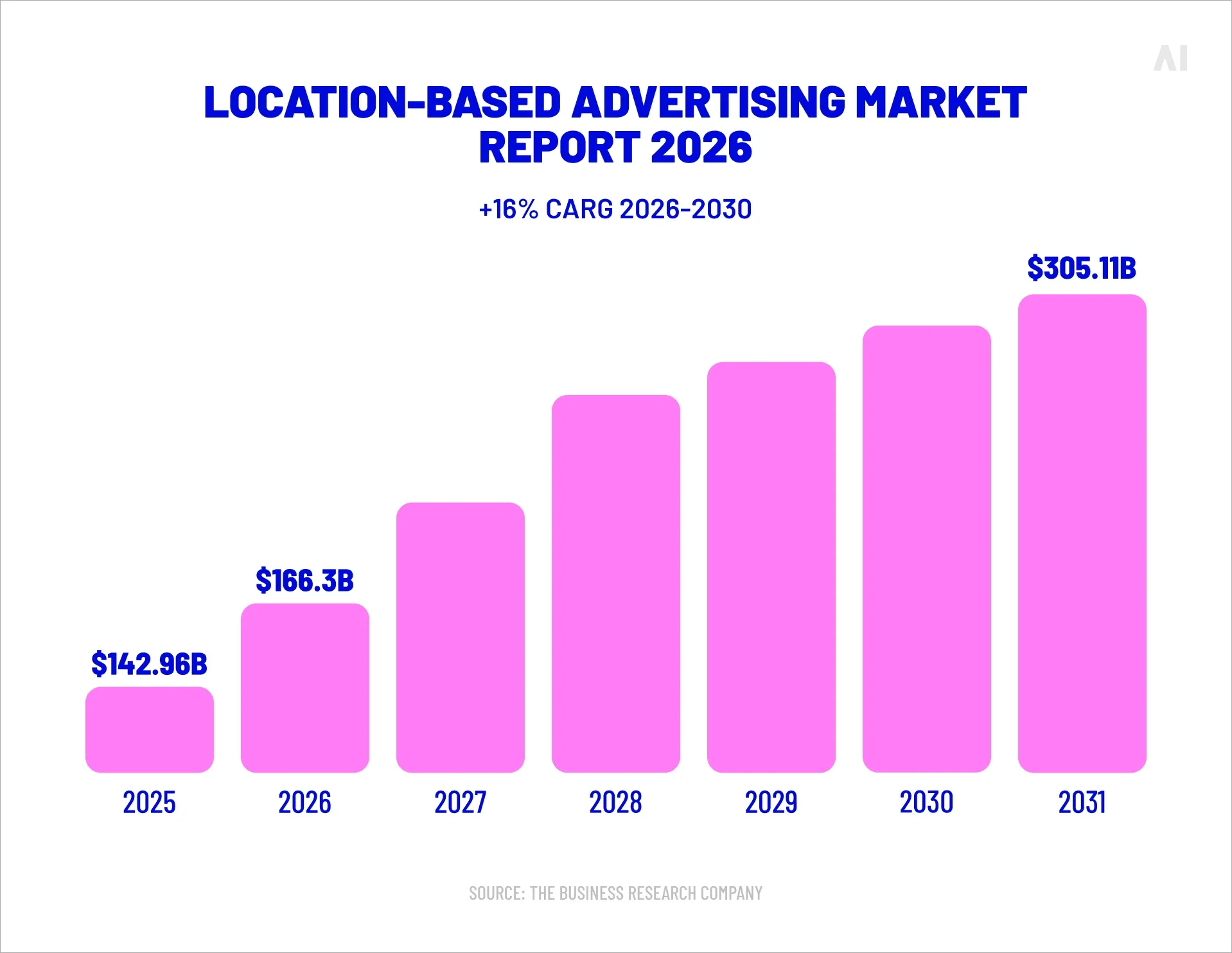
According to the latest industry estimates, the global location-based advertising market is expected to grow at a 16 % CAGR through 2029, reflecting sustained advertiser demand for more precise geolocation strategies.
Performance data consistently confirms the value of location-driven approaches. Campaigns that integrate location signals into targeting and creative delivery can drive up to 27 % higher conversion rates compared with non-location-aware placements, while also delivering stronger engagement and downstream sales lift. Marketers applying geotargeting frequently report measurable gains in efficiency and responserates, with industry surveys indicating that a majority of advertisers achieve higher engagement and revenuewhen adopting location-based marketing over broad, non-contextual targeting.
This shift reflects fundamental changes in consumer behavior. Audiences are increasingly mobile, always connected, and highly responsive to contextual relevance. Brands that align ads with real-world location, movement, and intent are better positioned to deliver timely, meaningful interactions rather than generic impressions. In this environment, geotargeting and geofencing should not be framed as competing tactics. Instead, they function as complementary location-based strategies—with one defining scalable market-level reach and the other enabling precision around high-intent physical locations.
💡Used together, these approaches enhance performance across CTV, mobile, display, and video, allowing marketers to balance scale with accuracy while improving attribution and ROI.
⚡️For deeper strategic context on aligning targeting tactics with performance-driven execution, see AI Digital’s perspective on modern Performance Marketing Strategy.
What is geotargeting?
Geotargeting is a location-based advertising strategy that delivers ads to users based on broad geographic signals rather than real-time physical movement. In business and media-planning terms, it defines where advertising is eligible to run using criteria such as country, state or region, city, ZIP or postal code, DMA, and IP-based household location. This makes geotargeting a core mechanism for running scalable, location-relevant campaigns across digital advertising, mobile, video, and Connected TV (CTV).
From a performance standpoint, geotargeting has become foundational as marketers shift from broad reach to efficiency-driven execution. Industry benchmarks indicate that campaigns using geographic targeting outperform non-location-aware campaigns by 20–35% in engagement and response metrics, largely because messaging aligns with regional demand, availability, and contextual relevance. In CTV specifically, IP-based geotargeting enables household-level relevance without over-restricting reach—an increasingly important advantage as global CTV ad spend is projected to exceed USD 38 billion in 2026.
From AI Digital’s programmatic perspective, geotargeting is not a tactical add-on but a structural decision layer within modern location-based advertising. In large-scale omnichannel strategies that combine CTV, display, video, and mobile, geotargeting establishes the geographic logic that governs reach, frequency, and budget allocation. Across multi-market campaigns, AI Digital consistently observes that defining geographic boundaries early can improve delivery efficiency by 20% or more, reduce wasted impressions, and stabilize CPMs —particularly in CTV environments where household relevance directly influences incremental lift.
⚡️A deeper technical and strategic examination of how geotargeting is evolving, including data sources, programmatic execution models, cross-channel measurement, and its role in 2026-ready media strategies are covered in our guide, Geotargeting 2026: What Is It? How Does It Work?
Where geotargeting is used
Geotargeting is applied across the full digital media mix to enable consistent, location-aware messaging across channels, rather than fragmented or siloed executions. As omnichannel strategies mature, this consistency has become a measurable performance lever—especially when campaigns must coordinate delivery across display, search, video, mobile, and Connected TV (CTV).
From an execution standpoint, geotargeting is used in:
- Display advertising, where city-, region-, or ZIP-level targeting aligns creative, pricing, and offers with regional demand. Industry benchmarks show that geo-aligned display campaigns can improve click-through rates by 15–25% compared to non-targeted placements, while reducing impression waste across non-relevant markets.
- Search advertising, where location parameters ensure ads appear only in serviceable or high-intent regions. Location-aligned search campaigns consistently deliver stronger efficiency, with studies indicating 20%+ higher conversion rates when geographic relevance is applied to intent-driven queries.
- Video advertising, where regional relevance improves attention and completion rates. Video ads tailored by market or DMA have been shown to drive meaningful lifts in brand recall and engagement, particularly when coordinated with CTV exposure.
- Mobile advertising, using IP-based or inferred location to deliver contextual relevance at scale without requiring proximity-based triggers. This approach supports reach while maintaining flexibility across privacy-safe environments.
- Connected TV (CTV), where IP- and DMA-level geotargeting enables household-level relevance across premium inventory. As CTV continues to absorb larger brand and performance budgets, geotargeting has become essential for controlling reach, frequency, and regional exposure—especially as global CTV ad spend moves beyond USD 38 billion annually.
⚡️This cross-channel consistency is particularly important in performance-driven environments, where upper-funnel awareness on CTV must reinforce mid- and lower-funnel engagement across digital formats. For a deeper look at how scalable reach and efficiency are achieved in programmatic environments, see our Digital Display Advertising.
Key benefits of geotargeting
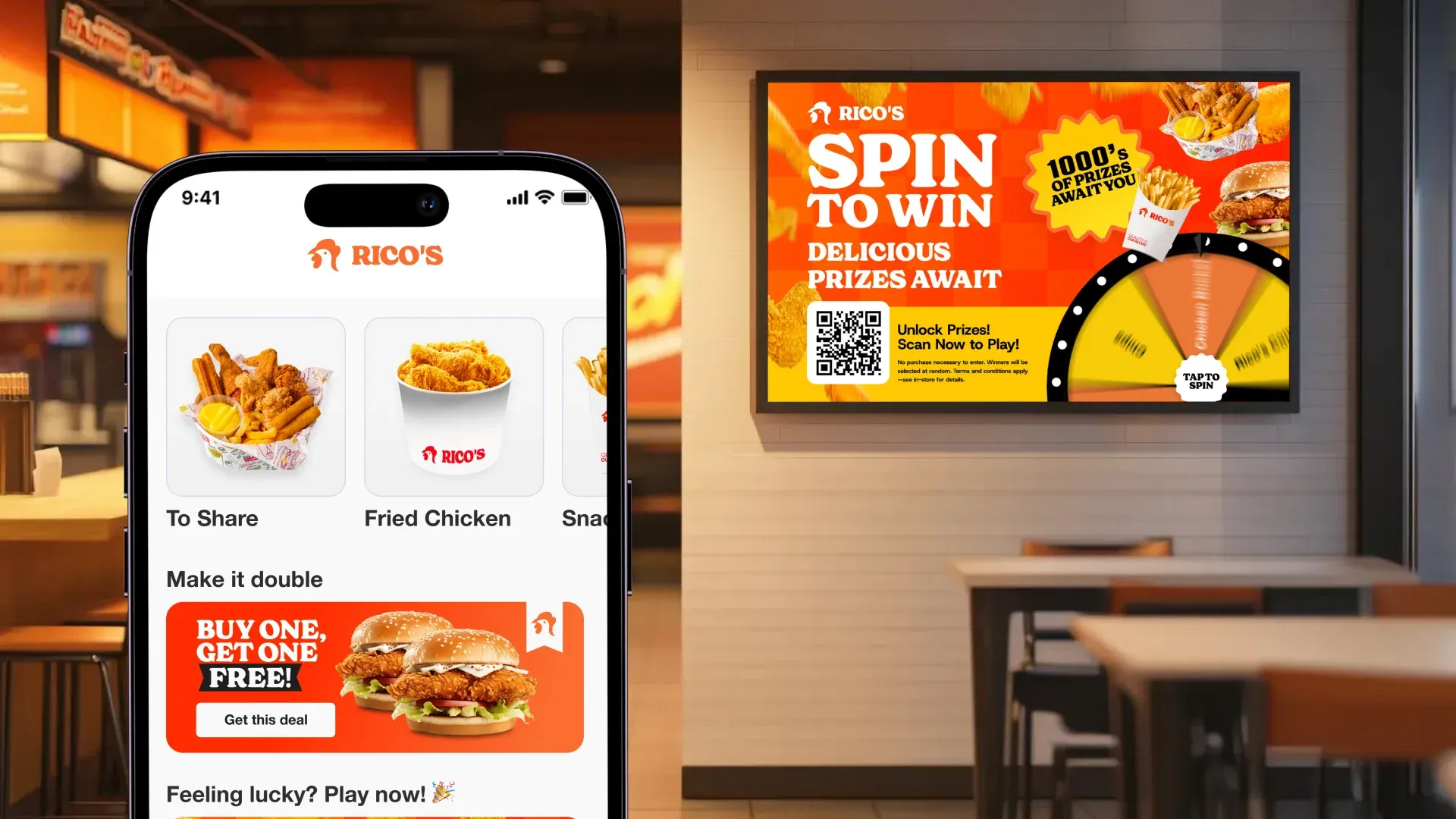
Geotargeting delivers value by balancing scale, efficiency, and relevance. By limiting ad delivery to defined geographic areas, advertisers ensure that budgets are concentrated only where business outcomes are realistically achievable.
From a performance perspective, the key benefits include:
- Scalability across markets, which is particularly critical for brands operating across multiple cities or regions, where consistent exposure and frequency control drive awareness and consideration.
- Cost efficiency, as geographic alignment reduces wasted impressions outside serviceable or high-priority markets. Industry benchmarks show that campaigns using geotargeting can reduce inefficient spend by up to 25–30%, while maintaining or improving reach within core regions.
- Regional relevance, allowing advertisers to tailor messaging, offers, and creative based on local demand patterns, seasonality, or market-specific conditions.
- Predictable performance at scale, especially across CTV and omnichannel campaigns, where stable reach and frequency are essential for measuring incremental lift and ROI.
By establishing geographic boundaries early, advertisers gain tighter control over delivery efficiency and ensure that additional precision tactics are applied only after scalable market coverage is secured.
When geotargeting works best
Geotargeting performs best when scale and market coverage matter more than real-time physical proximity or moment-based intent. It is most effective in scenarios where advertisers need predictable delivery, broad regional relevance, and efficient budget allocation rather than hyper-local activation.
Typical use cases include:
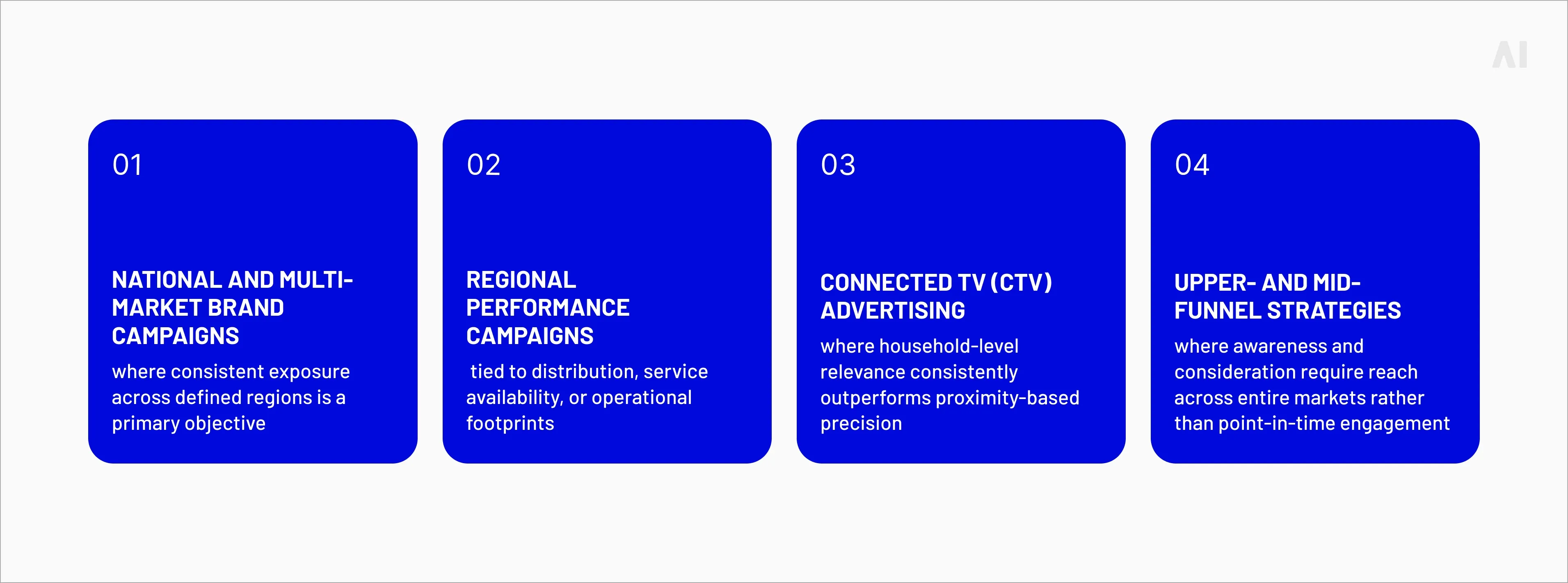
💡In these contexts, geotargeting provides the structural foundation of location-based advertising. It ensures efficient market coverage first allowing more granular tactics, such as geofencing, to be layered in later when real-time proximity and high-intent signals become performance drivers.
What is geofencing?
Geofencing is a hyper-local form of location-based advertising that uses virtual boundaries around real-world places (for example, a store, venue, campus, or competitor location). When a device enters, exits, or dwells within that boundary, it can be eligible for advertising activation. This approach is built for proximity, real-time intent, and behavioral relevance, not broad market scale.
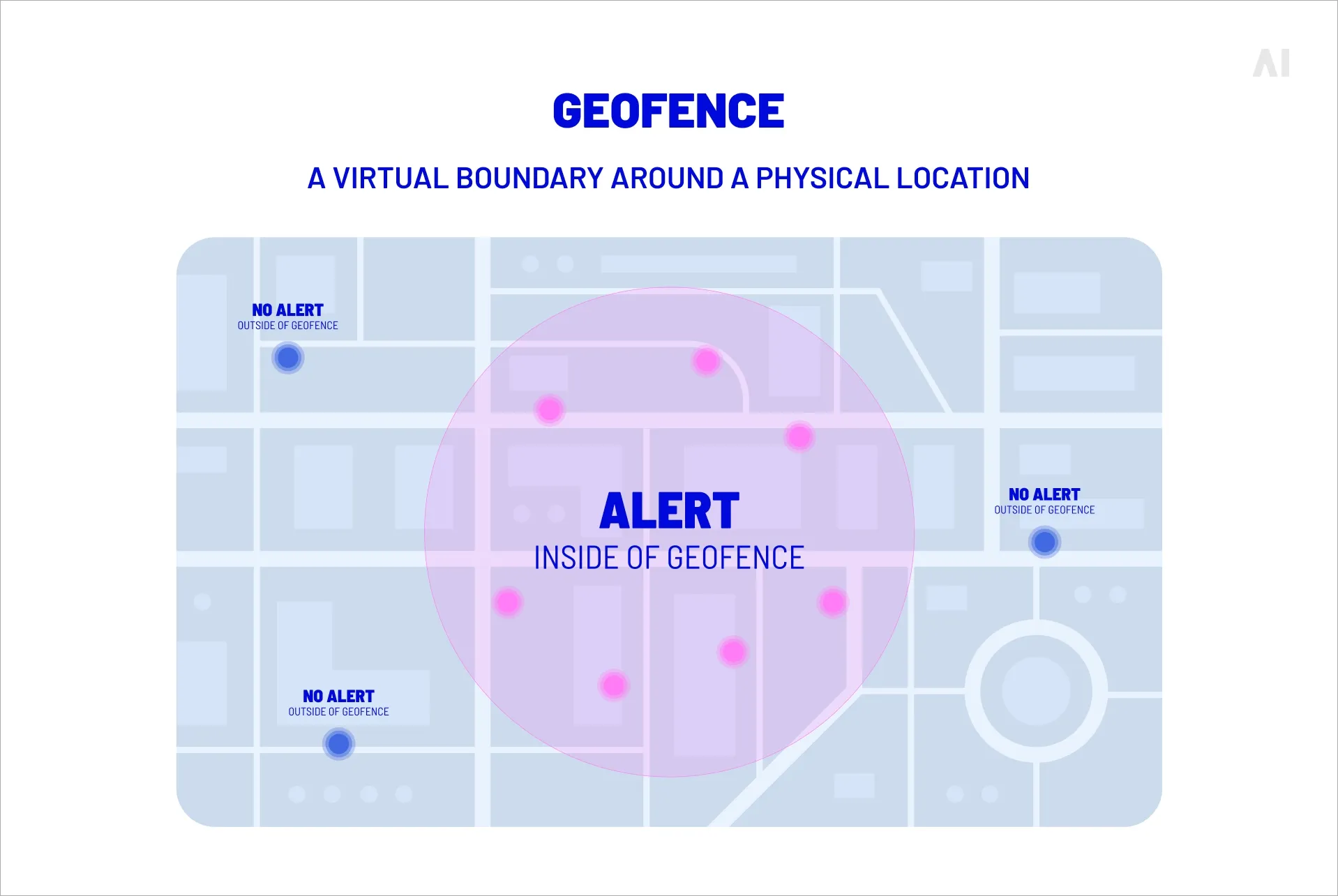
In measurement terms, geofencing is commonly discussed as part of location-based advertising where physical visitation (foot traffic) is inferred from device-location signals intersecting with a defined geographic boundary. The Media Rating Council (MRC) guidelines explicitly reference geofencing/user assignment methodologies and require disclosure of how visitation and dwell time are determined—because the how matters for validity.
Mobile is not simply another activation channel. it is the primary signal source that makes geofencing possible in the first place. The majority of actionable location intelligence originates from mobile devices, where GPS, Wi-Fi, and app-level signals allow advertisers to identify physical presence with sufficient accuracy for programmatic activation and measurement. This is why geofencing strategies are fundamentally mobile-first, even when their impact is later extended across display, video, and Connected TV through audience matching and cross-device frameworks.
Understanding how mobile data feeds into programmatic systems—how location signals are collected, qualified, activated, and measured—is essential for marketers who want to use geofencing responsibly and effectively. This includes knowing the limitations of mobile location data, the role of consent and privacy frameworks, and how mobile-derived audiences are sequenced across channels to support attribution rather than inflate reach.
⚡️These executional and strategic considerations are explored in depth in our guide, What is Addressable Geofencing? How It Works + Benefits , which will provide a foundational view of mobile’s role within modern programmatic advertising.
Where geofencing is used
For CTV and digital advertising decision-makers, understanding the distinct applications of geofencing vs geotargeting is crucial for executing precise, multi-channel campaigns. While both are cornerstone strategies for location-based advertising, they operate differently. Geotargeting vs geofencing essentially contrasts broad regional targeting with hyper-specific virtual boundaries. Geofencing targeting uses mobile data to create these digital perimeters, which are then activated across mobile, display, video, and Connected TV (CTV) through advanced audience matching and cross-device technology.
The operational model is powerful: a geolocation-based fence is established around a physical site, such as a competitor’s location or a high-value event. Mobile devices within this zone are identified, and their users become part of a targetable audience. This audience is then extended and matched across devices, allowing for precision brand advertising on CTV screens, online video, and display ads. This ensures your marketing message reaches the same user at home after they’ve visited a key location, bridging the gap between physical movement and digital advertising.
{{26-Geotargeting-vs-Geofencing-1="/tables"}}
⚡️For a deeper dive into activating these audiences on mobile devices, explore our detailed guide: Mobile Programmatic Advertising: How Brands Buy, Optimize, and Scale Mobile Ads in 2026
Key benefits of geofencing
Using geofencing in marketing and operations delivers precise, context-aware engagement that connects digital outreach with real-world behavior. The following benefits reflect the technology’s value across foot-traffic attribution, intent-driven outreach, event engagement, and competitive conquesting.
{{26-Geotargeting-vs-Geofencing-2="/tables"}}
💡Geofencing’s chief strengths lie in its precision, contextual relevance, and measurable real-world impact. By triggering tailored content based on live location, organizations can convert proximity into action — boosting foot traffic, increasing engagement, strengthening competitive positioning, and linking digital outreach directly with measurable visit and conversion outcomes.
When geofencing delivers the most impact
When geofencing delivers the most impact, it is typically in moments where physical presence and proximity act as a strong signal of intent—when being near a location meaningfully increases the likelihood of action.
- Retail and QSR campaigns see the strongest geofencing impact because proximity clearly signals immediate purchase intent. When users enter shopping districts or restaurant zones, decision-making is already actively underway. Geofencing delivers timely offers that influence impulse behavior and convert intent into foot traffic.

- Live events and conferences benefit from geofencing because physical presence indicates focused engagement and attention. Attendees inside venues are highly receptive to contextual, location-triggered messaging. Geofencing supports session reminders, sponsor activations, and navigational prompts during peak moments.

- Near key locations, geofencing performs best when proximity reflects active comparison or purchase consideration. Users near competitor stores or commercial hubs are evaluating options in real time. Geofencing enables competitive conquesting by delivering alternative offers at decisive moments.
⚡️Across all of these high-intent scenarios, AI Digital’s Smart Supply and Elevate work as a unifying performance layer that adapts geofencing execution to the specific context of each use case.
- Smart Supply ensures that location-triggered impressions are delivered through premium, transparent programmatic inventory, reducing wasted spend and prioritizing environments where physical presence is most likely to translate into action—whether that action is a store visit, event engagement, or competitive conversion.
- At the same time, Elevate applies predictive intelligence and real-time optimization to continuously adjust geofence parameters, timing, and budget allocation based on live performance signals.
Together, these capabilities allow geofencing campaigns to be tailored dynamically to retail urgency, event-based engagement, or competitive pressure, ensuring that proximity data is not just activated but systematically optimized to drive measurable real-world outcomes.
Geofencing vs. geotargeting: Key differences
When comparing geofencing and geotargeting, the goal is not to determine which is inherently better, but rather which approach aligns with a specific campaign objective. Geofencing triggers actions based on real-time presence within a defined boundary, while geotargeting uses location data (often scaled with user profiles or IP-based regions) to serve contextualized ads over broader areas.
⚡️For foundational differences between traditional and emerging media buying approaches, see our article on TV media buying. Both fall under the broader practice of location-based marketing but differ markedly in precision, scale, data signals, and optimal use cases.
1. Targeting precision
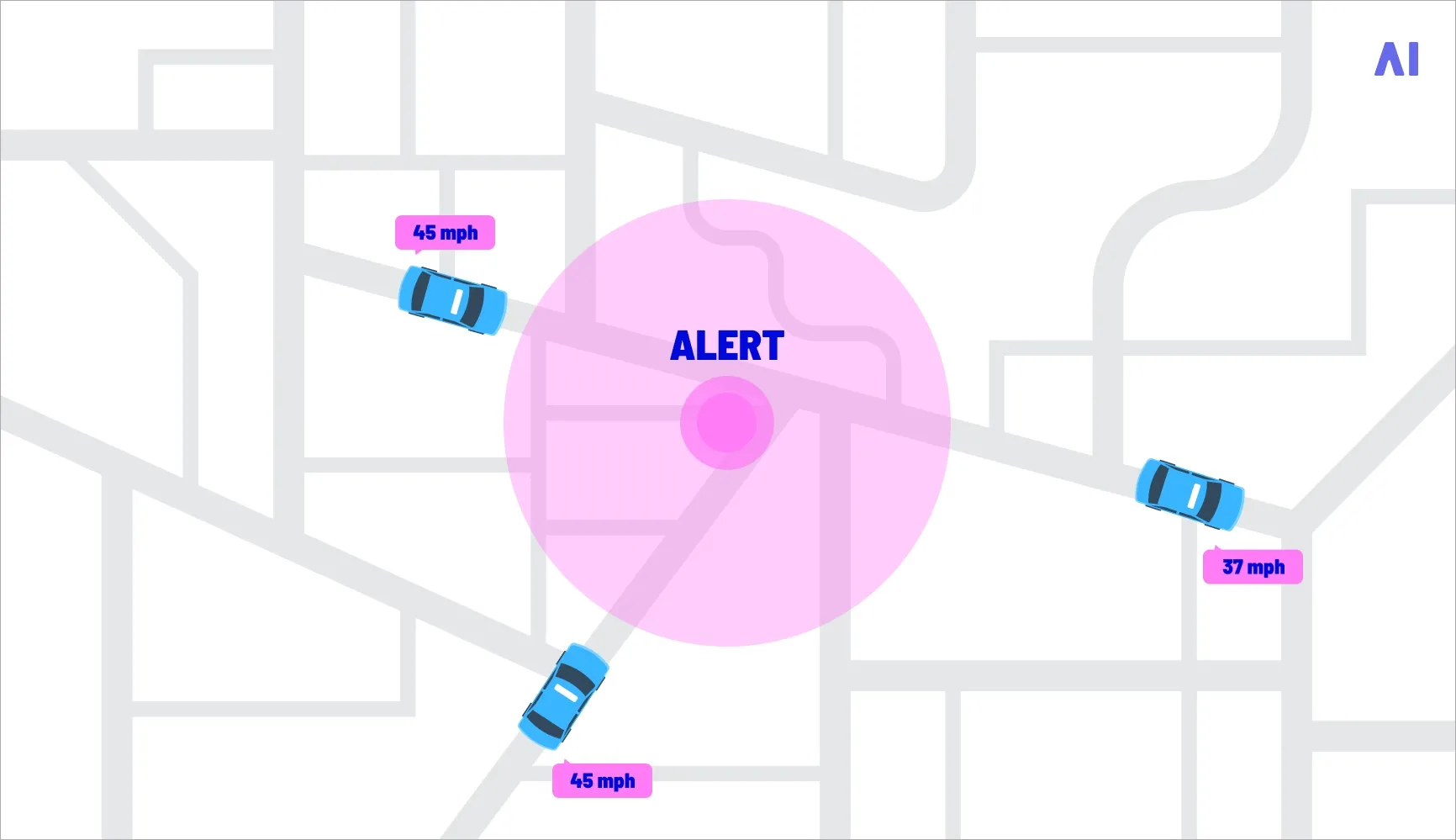
Geofencing operates by creating a virtual perimeter around specific real-world locations, such as store entrances, stadiums, or transit hubs, enabling marketers to trigger messaging the moment a device enters or exits that zone—often within a few dozen meters of accuracy. Geotargeting, in contrast, leverages broader geographic criteria (city, region, postal code) and can integrate demographic or behavioral filters to build targeted segments, yielding broad precision that depends on the granularity of data used.
2. Audience size and scalability
By definition, geofencing targets local populations or in-market visitors within confined geographic boundaries, making it ideal for campaigns where real-world presence signals intent. Geotargeting operates at scale—reaching large populations across metropolitan areas or regions—and scales easily across markets, making it better suited for brand awareness and multi-region engagement.
3. Data sources and signals
Geofencing depends on live positioning technologies such as GPS, Bluetooth beacons, Wi-Fi, or A-GPS to identify device entries into defined geofences. Geotargeting primarily relies on network-derived location data (IP geolocation) and may augment it with user affinity, demographic, or behavioral signals to refine audience segments.
⚡️For broader context on how modern advertising intelligence uses layered signals—like location, browsing behavior, and purchase intent—to unlock these powerful audience insights, see our guide on Advertising Intelligence.
4. Primary campaign objectives
Geofencing is often deployed when the objective is conversion or real-world action linked to presence, such as driving foot traffic, enhancing onsite engagement at live events, or executing competitive conquesting. Geotargeting aligns with objectives focused on awareness, personalization, and user segmentation, particularly when campaign impact does not depend on immediate proximity.
5. Cost efficiency and scale control
Because geofencing is more technical and hyper-local, the cost per localized impression may be higher, but the efficiency stems from relevance tied to physical presence and intent. Conversely, geotargeting’s ability to scale across larger populations typically results in lower media cost per reach, with performance driven by how deeply targeting layers (demographics and behaviors) are applied.
6. Privacy and compliance considerations
Both approaches must comply with data protection standards. Geofencing’s reliance on real-time location signals means opt-in consent and transparent privacy practices are especially critical to avoid regulatory issues. Geotargeting generally uses coarser location data, lowering sensitivity but still requiring clear user consent and privacy adherence, especially where enriched audience profiles are applied.
In practice, successful programs may combine both tools: geotargeting to build broad, relevant audiences and geofencing to activate high-intent proximity engagement within defined physical zones, maximizing both scale and precision.
Location-based targeting in CTV advertising
Location data is becoming increasingly valuable in Connected TV (CTV) advertising because it enables advertisers to move beyond broad demographic reach and deliver household-level relevance, prioritized market focus, and measurable offline impact—all within the premium, lean-back viewing environment. CTV combines the scale and attention of traditional television with the precision of digital targeting, making it possible to align ads with real-world behaviors and outcomes such as store visits or market-specific engagement.
⚡️For a deeper look at how Connected TV (CTV) fits into modern advertising ecosystems—covering what it is, how it works, and why it’s a game-changer for targeting and measurement in 2025—check out our guide, Connected TV Advertising.
Geotargeting in CTV
In CTV, geotargeting refers to delivering ads to viewers based on geographic attributes at various levels: Designated Market Areas (DMAs), ZIP codes, and household IP or regional identifiers.
Geofencing-powered CTV activation
Geofencing-powered CTV activation extends traditional location strategies by translating real-world location visits into addressable audiences on CTV. Through cross-device identity resolution and address matching, mobile location signals tied to geofences (such as store visits or event attendance) can be mapped to individual households that stream on CTV devices.
When a device enters a predefined geofence, that visit signal is matched with a household identifier; advertisers can then deliver tailored CTV ads to those households, effectively linking physical behavior with the living-room screen. This approach enhances attribution by connecting real-world actions with CTV exposure and enables measurement of offline impacts such as foot traffic lift, store visits, or service inquiries. Cross-device matching ensures that ads reach the right household across screens, even if the original signal came from a mobile device.
💡By using this capability, marketers can optimize campaigns toward audiences that demonstrated real-world intent, making CTV not just a reach medium but a performance-driven channel tied directly to location-based engagement.
How AI Digital enables smarter location-based advertising
AI Digital functions as the orchestration layer that turns location data into measurable business outcomes across channels, combining real-world signals with AI-driven intelligence and outcome-oriented media activation. In modern advertising, AI transforms raw location inputs —including geofencing hits, visit signals, and regional behaviors — into actionable strategies that drive value beyond simple exposure.
This capability aligns with broader industry trends showing that AI enhances targeting accuracy, personalization, and real-time optimization in location-based campaigns. For example, AI-driven systems have been shown to improve campaign performance by using real-time data to refine delivery and reduce waste, with some implementations reporting significant lifts in engagement when AI corrects errors like GPS drifting or optimizes timing and context.
At AI Digital, Smart Supply and Elevate work together to translate physical proximity and location signals into measurable outcomes across screens and channels:
- Smart Supply ensures that location-triggered impressions—whether tied to store visits, event attendance, or regional demand—are bid into premium, transparent programmatic inventory that prioritizes environments most likely to convert, reducing waste and improving the connection between ad exposure and downstream outcomes. This orchestration moves campaigns beyond generic reach to audience and context relevance anchored in real behavior.
- Elevate acts as a predictive and optimization engine that unifies planning, real-time performance analysis, and outcome measurement. Using cross-platform signals, Elevate forecasts likely performance with high confidence, continuously refines geolocation and audience parameters during flight, and surfaces transparent insights so marketers understand not just where media was served but why it worked.
By integrating physical-world data with AI intelligence, AI Digital helps marketers:
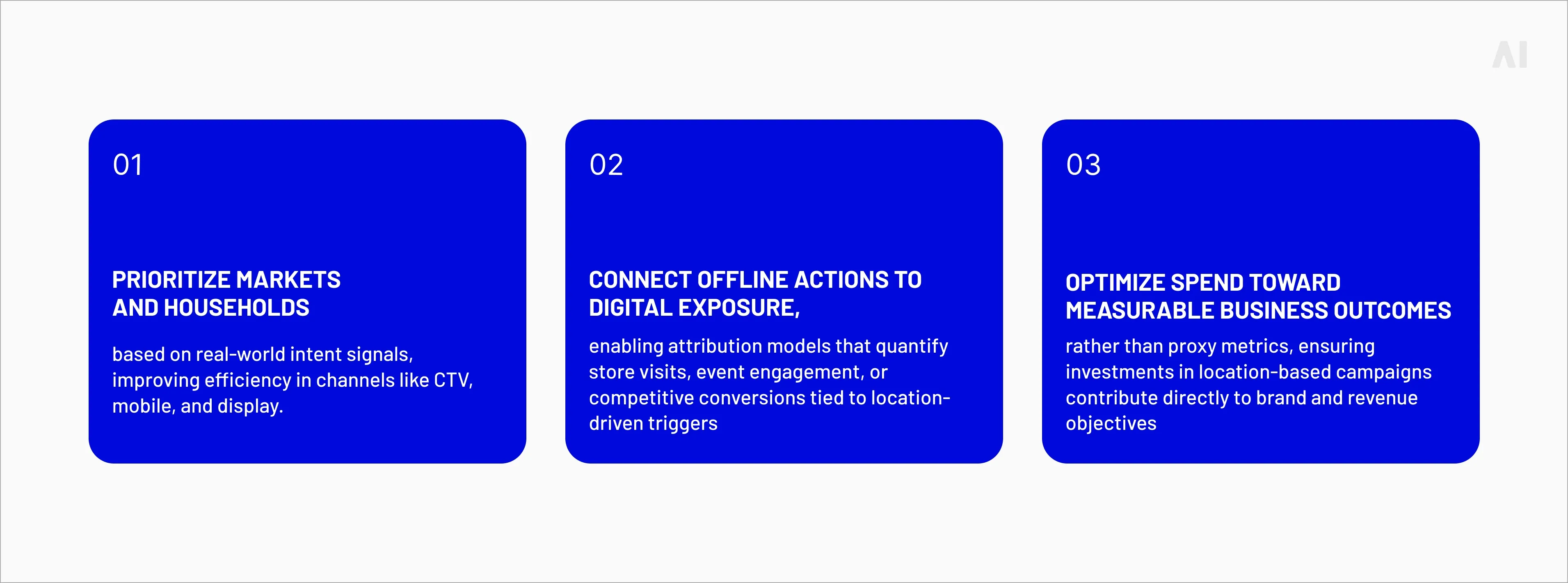
This approach reflects the broader shift in digital marketing toward AI-empowered optimization—where predictive analytics, real-time data processing, and outcome accountability replace guesswork in media delivery and strategy.
⚡️For a deeper exploration of how AI is transforming digital marketing across channels and at scale—from strategy formulation to execution and measurement—read the full analysis, AI in Digital Marketing.
Conclusion: Turning location data into real performance
Geotargeting and geofencing deliver the greatest value when they are used together as complementary tools, not treated as isolated tactics. Geotargeting provides the scale needed to prioritize markets and households across digital and CTV, while geofencing adds precision by activating audiences when real-world presence signals intent. When combined, they create a location strategy that is relevant, efficient, and directly tied to measurable outcomes—from household-level CTV engagement to in-store visits and competitive conversion.
With AI Digital, location data is not simply activated; it is orchestrated across channels to drive performance. Through its integrated services, AI Digital enables advertisers to move from fragmented location signals to a unified, outcome-driven approach across mobile, display, CTV, and offline measurement.
- Align location strategy with business objectives
Define whether the goal is market expansion, foot traffic lift, event engagement, or competitive conquesting, then apply geotargeting and geofencing accordingly.
- Activate smarter cross-channel delivery
Use AI Digital to connect location signals across mobile, CTV, and programmatic environments, ensuring consistent messaging and frequency at the household level.
- Prioritize quality and efficiency with Smart Supply
Leverage premium, transparent inventory optimized for real-world outcomes, reducing waste while focusing spend on high-intent environments.
- Optimize continuously with Elevate
Apply predictive planning and real-time optimization to refine location radius, timing, and budget allocation as performance data emerges.
- Measure what matters
Move beyond proxy metrics by linking location exposure to tangible results such as store visits, event attendance, and market-level lift.
By combining scale and precision, and pairing location data with AI-driven intelligence, AI Digital helps transform location-based advertising into a performance engine—one that delivers relevance for consumers, efficiency for marketers, and measurable ROI across digital, CTV, and real-world outcomes.