What Are Walled Gardens in Digital Advertising: Definition, Examples & Why They Matter in 2026


Digital advertising did not become platform-dominated overnight. It moved there gradually, as marketers followed audiences into search engines, social feeds, retail platforms, video environments, and logged-in apps that could offer better targeting, easier buying, and clearer short-term performance signals than much of the open web. At the same time, privacy changes, signal loss, and measurement fragmentation increased the value of first-party platform data. IAB described that shift plainly in 2025, noting that signal deprecation had already pushed the market toward first-party data, alternative IDs, and clean rooms.
That helps explain why walled gardens became one of the defining structures of digital advertising rather than a niche concern for ad tech specialists. They promise reach, automation, and strong optimization. They also limit what advertisers can see, export, compare, and verify outside the platform’s own system. In other words, they solve some problems while creating others.
⚡ A walled garden is powerful precisely because it closes the loop, but that same loop can keep advertisers from seeing the whole picture.
What is a walled garden in digital advertising?
A walled garden is a closed digital ecosystem in which the platform controls the three things advertisers care about most:
- User data
- Advertising inventory
- Measurement and optimization rules
Inside that environment, marketers can usually buy media, target audiences, optimize delivery, and read performance reports efficiently. What they usually cannot do—at least not fully—is extract the same depth of user-level data, compare all channels on truly equal terms, or independently inspect the mechanics behind auction dynamics, attribution logic, and delivery decisions.
So when people refer to walled gardens advertising, they are talking about campaigns that run inside systems where the platform sets the operating conditions. That does not make the platform ineffective. Quite the opposite. It makes it powerful. But it also means the advertiser is working on someone else’s terms.
{{26-What-Are-Walled-Gardens-in-Digital-Advertising-1="/tables"}}
The practical signs of a walled garden usually look like this:
- Platform-owned user data
- Closed reporting systems
- Limited data portability
- Platform-controlled optimization algorithms
💡 For a broader primer on how automated media buying fits around these environments, see AI Digital’s article on programmatic advertising.

💡 For a deeper analysis of how walled gardens impact transparency, measurement, and advertiser control, read our full perspective: The Silent Tax of Walled Gardens.
Major examples of walled gardens in advertising
Several major technology companies operate large-scale platform advertising ecosystems, but three examples still define most discussions: Google, Meta, and Amazon.
Google’s advertising ecosystem
Google is the classic example because it combines intent, scale, media, and infrastructure in one system. It owns high-intent search demand, YouTube video inventory, large display reach, shopping surfaces, app distribution, mapping, and major ad tech plumbing.
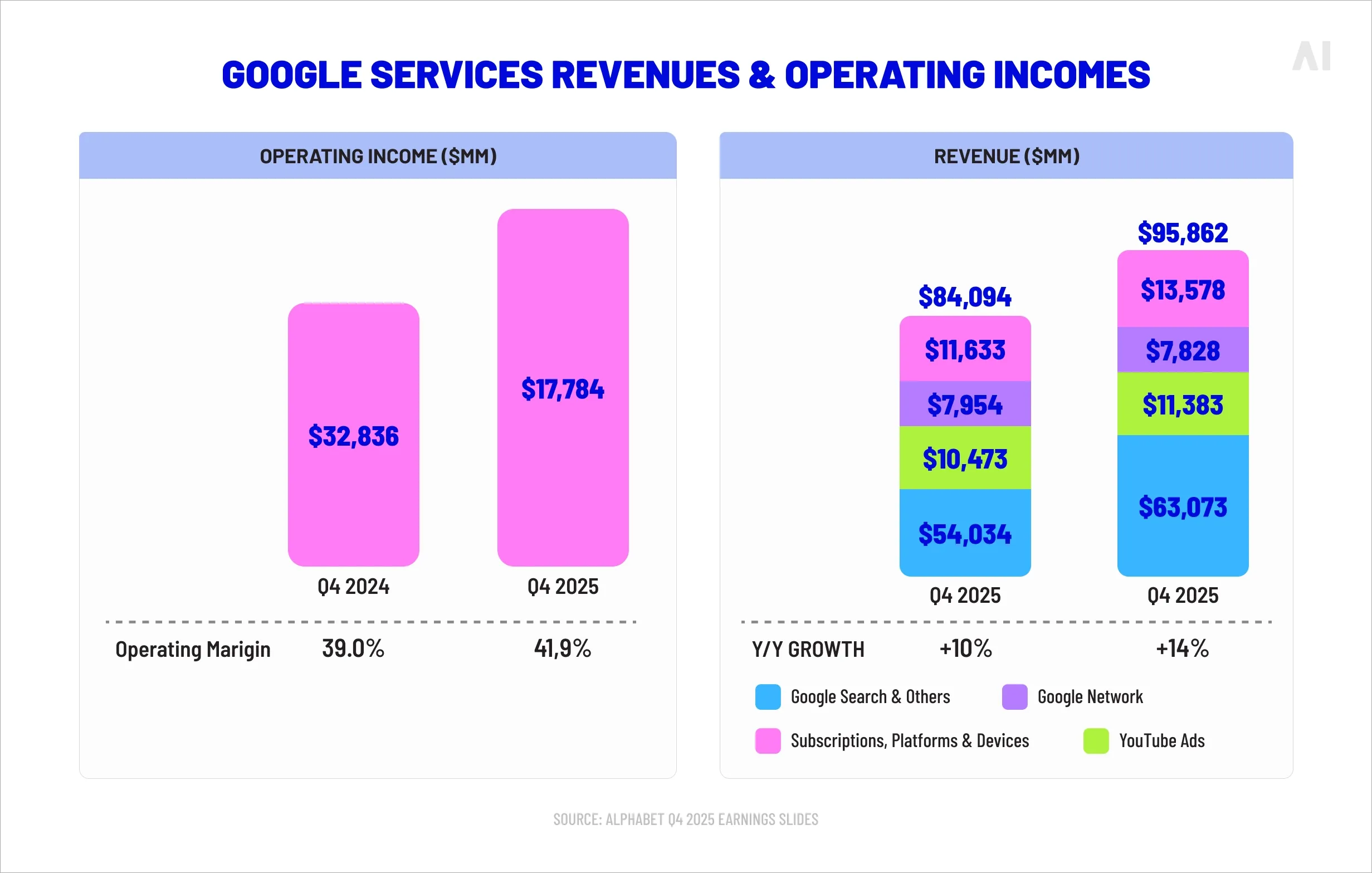
ℹ️ Alphabet said Google Search and Other advertising revenue rose 17% to $63.1 billion in Q4 2025, while YouTube advertising revenue rose 9% to $11.4 billion in the same quarter; for full-year 2025, YouTube generated more than $60 billion across ads and subscriptions.
That combination matters because Google does not just sell ad space. It also shapes discovery, shopping research, video consumption, app behavior, and measurement workflows. An advertiser can access massive demand and sophisticated automation inside the system, but much of the audience intelligence, auction detail, and campaign interpretation stays inside Google’s own framework. Google’s investor materials describe Google Search & Other and YouTube Ads as core components of Google Services revenue, which tells you how tightly these surfaces are woven together.
Meta (Facebook and Instagram)
Meta’s advertising system is built around identity, engagement, and behavioral signals. It uses logged-in social data, content interaction, inferred interests, and platform-native conversion signals to target and optimize campaigns across Facebook, Instagram, and related surfaces.
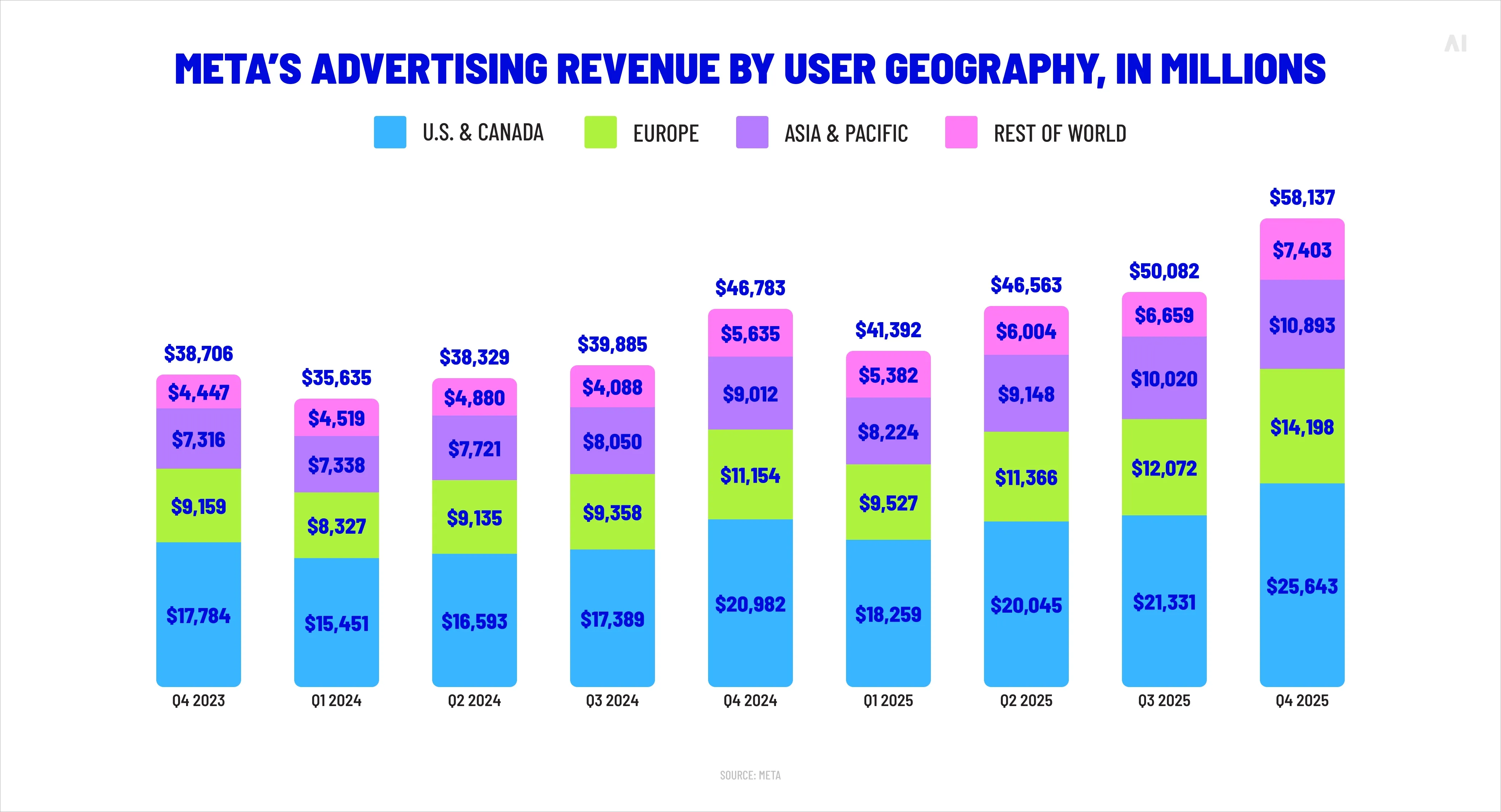
ℹ️ In its full-year 2025 results, Meta reported 3.58 billion Family Daily Active People in December 2025, with ad impressions up 12% year over year and average price per ad up 9%. Full-year 2025 revenue reached $200.97 billion.
That helps explain why Meta remains so attractive to performance marketers and brand advertisers alike. Few systems combine reach, frequency, creative testing, social context, and conversion optimization as efficiently. But Meta also illustrates the limits of closed advertising ecosystems. The reporting is deep inside the platform, the optimization logic is proprietary, and campaign success is often interpreted through metrics and attribution windows defined by Meta itself rather than by an independent cross-platform standard.
Amazon advertising
Amazon’s position is different from Google’s or Meta’s because its edge comes from commerce data. It knows what people browse, compare, buy, rebuy, and search for in an environment already close to transaction. That makes Amazon advertising unusually valuable for performance-oriented marketers, especially in retail and consumer packaged goods.
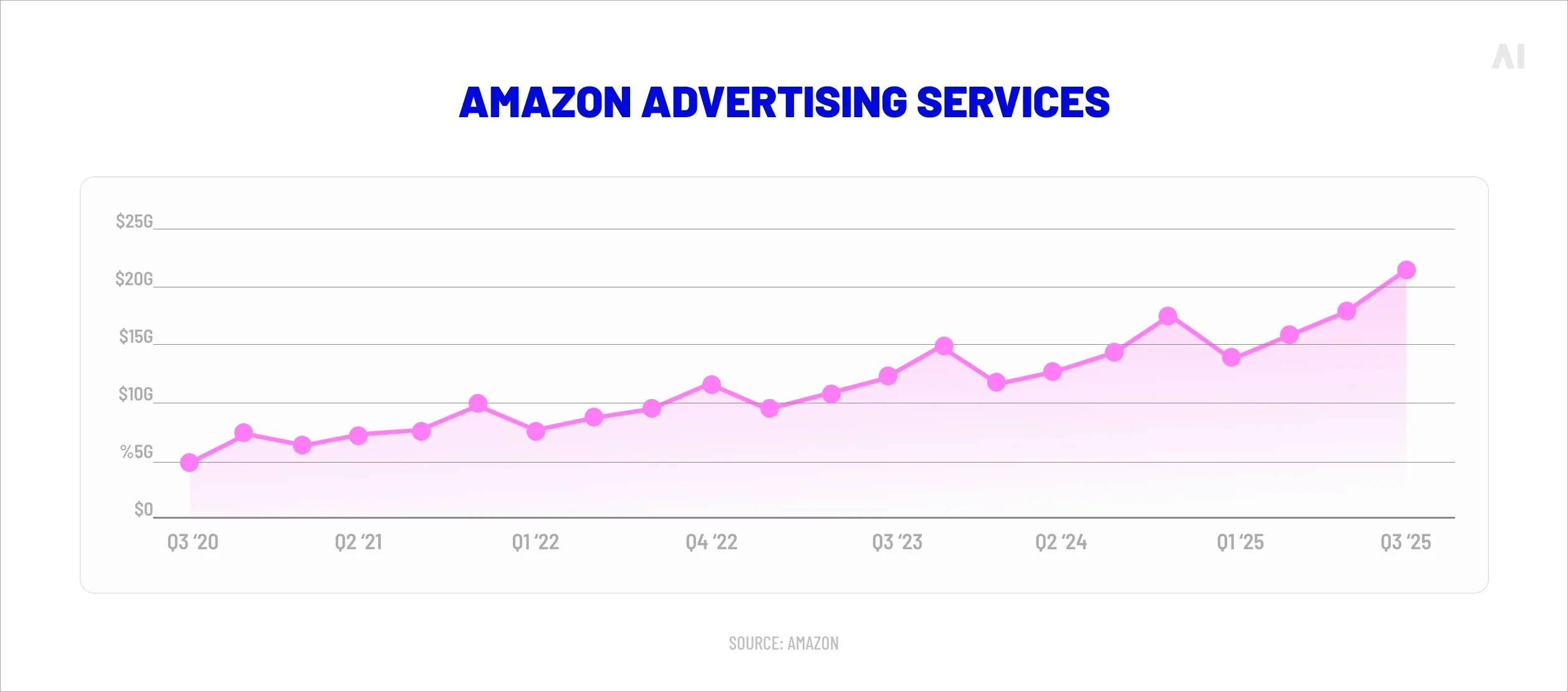
ℹ️ Amazon reported advertising services revenue of $21.317 billion in Q4 2025, up 23% year over year.
Amazon is a strong reminder that not all walled garden platforms are built the same way. Google’s advantage is intent plus infrastructure. Meta’s is identity plus engagement. Amazon’s is commerce plus purchase proximity. In every case, though, the pattern is similar: the platform’s advantage comes from owning the environment where user behavior happens and where measurement is interpreted.
{{26-What-Are-Walled-Gardens-in-Digital-Advertising-2="/tables"}}
Key structural characteristics of walled gardens
The term “walled garden” can sound abstract until you break it into its operating parts. In practice, these environments are defined less by branding and more by structure.
Data silos
A walled garden stores, enriches, and activates its own user data inside its own environment. That data may be first-party, observed, modeled, or inferred, but the platform controls access to it. This is one reason first-party data became even more valuable as the market moved deeper into signal loss. As mentioned earlier, IAB reported that signal deprecation had already pushed the industry toward first-party data, alternative IDs, and clean rooms.
Google’s cookie decisions are part of this broader backdrop. In April 2025, Google said it would maintain the current approach to third-party cookies in Chrome and would not roll out a new standalone prompt for third-party cookies, while continuing to enhance tracking protections in Incognito, where third-party cookies are already blocked by default. That did not restore the old open-web certainty marketers once relied on. It reinforced a more complicated reality in which logged-in environments and privacy-safe data collaboration matter more.
Closed reporting systems
The second structural feature is the reporting layer. Advertisers often get rich dashboards, but those dashboards are still the platform’s interpretation of what happened. You can usually see enough to manage campaigns. You cannot always see enough to compare that performance fairly against every other channel in your mix.

IAB’s 2025 Outlook captured this pressure well: buyers were already responding to ad ecosystem fragmentation and measurement challenges by prioritizing cross-platform solutions, marketing mix modeling, and better reach/frequency management.
⚡ Pay attention to the language. Buyers gravitating toward cross-platform tools are signalling that the platform-by-platform view has stopped being enough on its own.
Platform-controlled measurement
This may be the most important trait of all. In a walled garden, the platform typically influences or defines attribution windows, conversion logic, view-through rules, optimization signals, and reporting frameworks. That does not mean the data is useless. It means the platform is both participant and scorekeeper.
By 2026, the market had made its position clear. IAB found advertiser focus on cross-platform measurement climbing to 72% in 2026 from 64% the year before. ANA ranked cross-media measurement as the number one priority among CMOs and chief media and measurement officers. Together, the data points tell the same story: marketers are looking beyond what any single platform says about itself.
💡 For a supporting explainer on the broader mechanics around buying and selling media, see AI Digital’s article on DSP vs. SSP vs. ad exchange.
⚡ A platform can optimize brilliantly for its own objective and still leave an advertiser with an incomplete view of total performance.
Benefits of walled gardens for advertisers
It is easy to criticize walled gardens in theory. It is harder to ignore why they keep winning budget.
- The first reason is reach. These platforms gather enormous audiences in environments people use constantly.
- The second is data quality. Logged-in, persistent, first-party-rich systems can support targeting and optimization that many open-web environments still struggle to match consistently.
- The third is operational simplicity. Buying, creative deployment, audience selection, conversion setup, and reporting often happen in one interface or closely connected set of tools.
- There is also the machine-learning factor. Platforms like Google and Meta are not just selling static targeting segments. They are using large volumes of interaction data to improve bidding, delivery, audience expansion, creative matching, and conversion prediction. That can produce very strong outcomes, especially for advertisers with clear performance goals and enough conversion volume to train the system effectively.
{{26-What-Are-Walled-Gardens-in-Digital-Advertising-3="/tables"}}
ℹ️ Google highlighted AI-enabled ad products such as Demand Gen, Performance Max, and Product Studio in its 2025 annual report, while Meta’s 2025 results showed simultaneous growth in ad impressions and average price per ad—often a sign that advertisers still see value in the platform’s optimization engine.
- Another benefit is proximity to growing channels. IAB expects digital channels to continue outpacing the broader market, with social media projected up 14.6%, CTV up 13.8%, and commerce media up 12.1% in 2026. Many of the biggest beneficiaries of those flows are platform-centered ecosystems or platform-like media environments with strong owned data advantages.

So yes, there are real benefits here:
- Massive audience reach
- Strong targeting and optimization
- Integrated buying infrastructure
- Fast feedback loops
- Access to high-growth ad environments
Use these systems—absolutely. Just resist the assumption that their convenience delivers complete clarity by default.
Limitations and challenges of walled garden advertising
The strengths of walled gardens are real. So are the limits.
Limited transparency
The platform knows more about the auction than the advertiser. It knows more about how ranking, delivery, and optimization interact. It controls which data is exposed in the interface, which data is modeled, and which data is withheld or aggregated.
That matters because advertisers do not just buy outcomes. They buy confidence. When a marketer cannot fully inspect auction mechanics, supply path detail, or the exact basis for optimization decisions, decision-making becomes more dependent on trust in the platform. Sometimes that trust is justified. Sometimes it leads to overconfidence.
Fragmented measurement
The frustration tends to crystallize at this exact point. Platform-level performance reporting works. Cross-platform comparison—free of double-counting, contradictory attribution rules, and misaligned success definitions—remains the unsolved problem.
Cross-platform measurement is increasingly being treated as a practical requirement rather than a nice-to-have. As campaigns stretch across search, social, video, retail media, and other digital environments, marketers are finding it harder to rely on any one platform’s dashboard as the final version of truth. Each system can show part of the picture, but not the whole one. That is why the industry is moving toward a broader, more comparative view of performance—one that looks beyond isolated platform reporting to understand how channels work together.
💡 To understand what cross-platform measurement actually involves, and why it has become such a pressing issue for advertisers, see our guide to cross-platform measurement.
Data ownership challenges
The advertiser may fund the campaign, generate demand, and create the conversion event that matters most to the business. Even so, much of the most useful operational data still sits inside the platform. That creates a basic tension: the marketer is investing in growth, but the platform often retains a disproportionate share of the learnings generated by that investment.
That is one reason privacy-safe collaboration tools and clean rooms matter more now. IAB Tech Lab’s data clean room guidance focuses on secure data collaboration, measurement, and interoperability in environments where raw data cannot simply move everywhere anymore. The rise of those frameworks is not accidental. It is a response to a market where data access has become both more restricted and more valuable.
💡 Understanding who owns the data is only part of the picture. The next question is how to assign value across the full customer journey, which is exactly what our article on multi-touch attribution addresses.
⚡ The advertiser pays for the signal. The platform often keeps the leverage.
{{26-What-Are-Walled-Gardens-in-Digital-Advertising-4="/tables"}}
Why walled gardens dominate digital advertising today
Walled gardens dominate because they align with the market’s incentives.
- First, they have scale.
- Second, they have first-party data.
- Third, they have integrated systems that make activation relatively easy.
- Fourth, they sit close to outcomes advertisers care about—search intent, social engagement, product discovery, video consumption, and commerce.
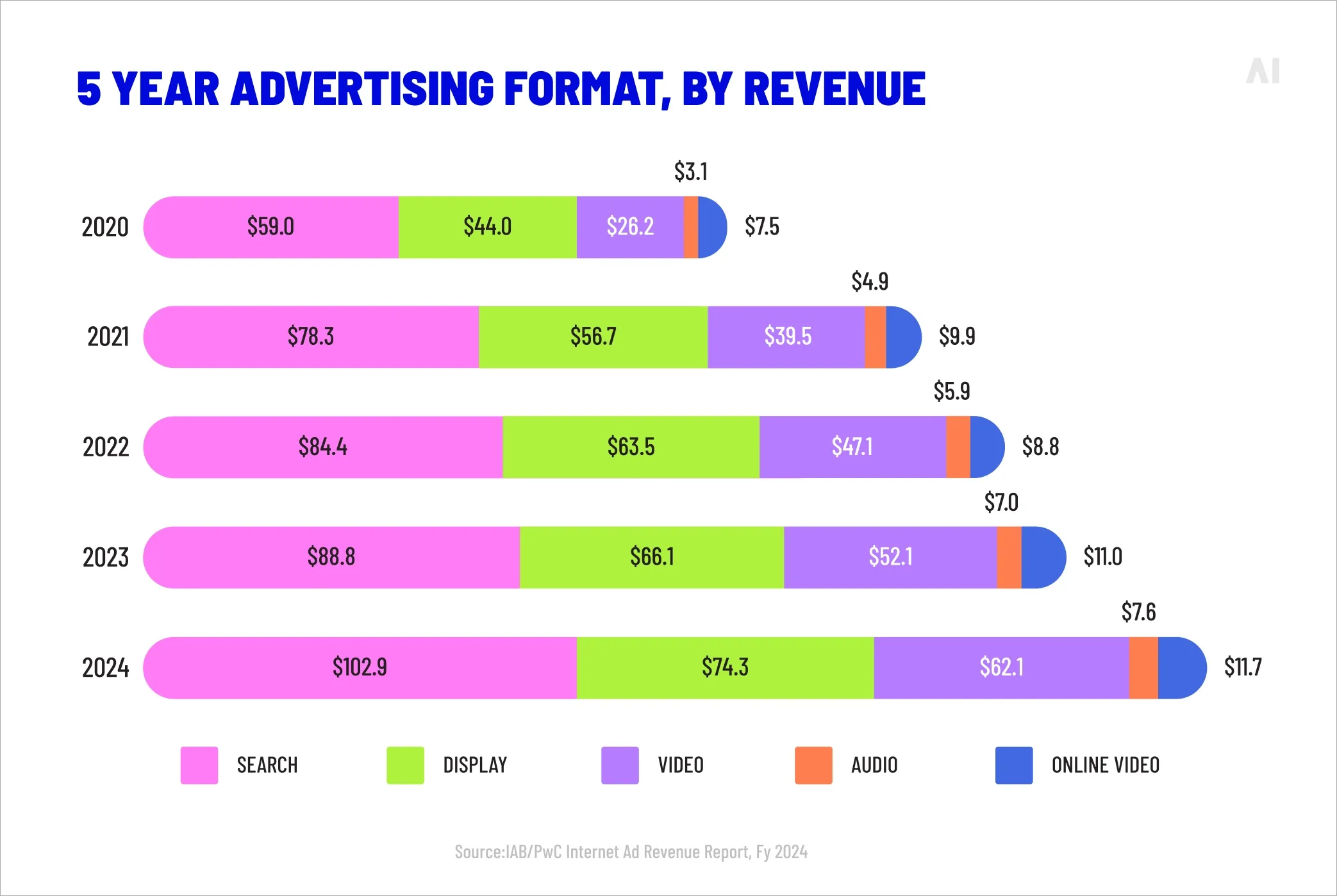
The market data supports that direction. IAB reported $258.6 billion in U.S. internet ad revenue for 2024, while large platform and platform-like environments continued posting major growth. Google Search, YouTube, Meta’s Family of Apps, Amazon advertising services, and commerce media all remained central to the mix. Retail media network ad revenue alone rose 23.0% year over year to $53.7 billion in 2024, and IAB’s 2025 Outlook projected retail media to grow another 15.6% in 2025.
The cookie story also helped reinforce platform power, even if it played out differently from what many predicted a few years ago. The market spent years preparing for a more restricted signal environment. Google’s decision not to introduce a new standalone third-party-cookie prompt did not reverse that broader direction. The industry had already shifted toward first-party data strategies, clean rooms, and durable platform signals, especially in logged-in ecosystems.
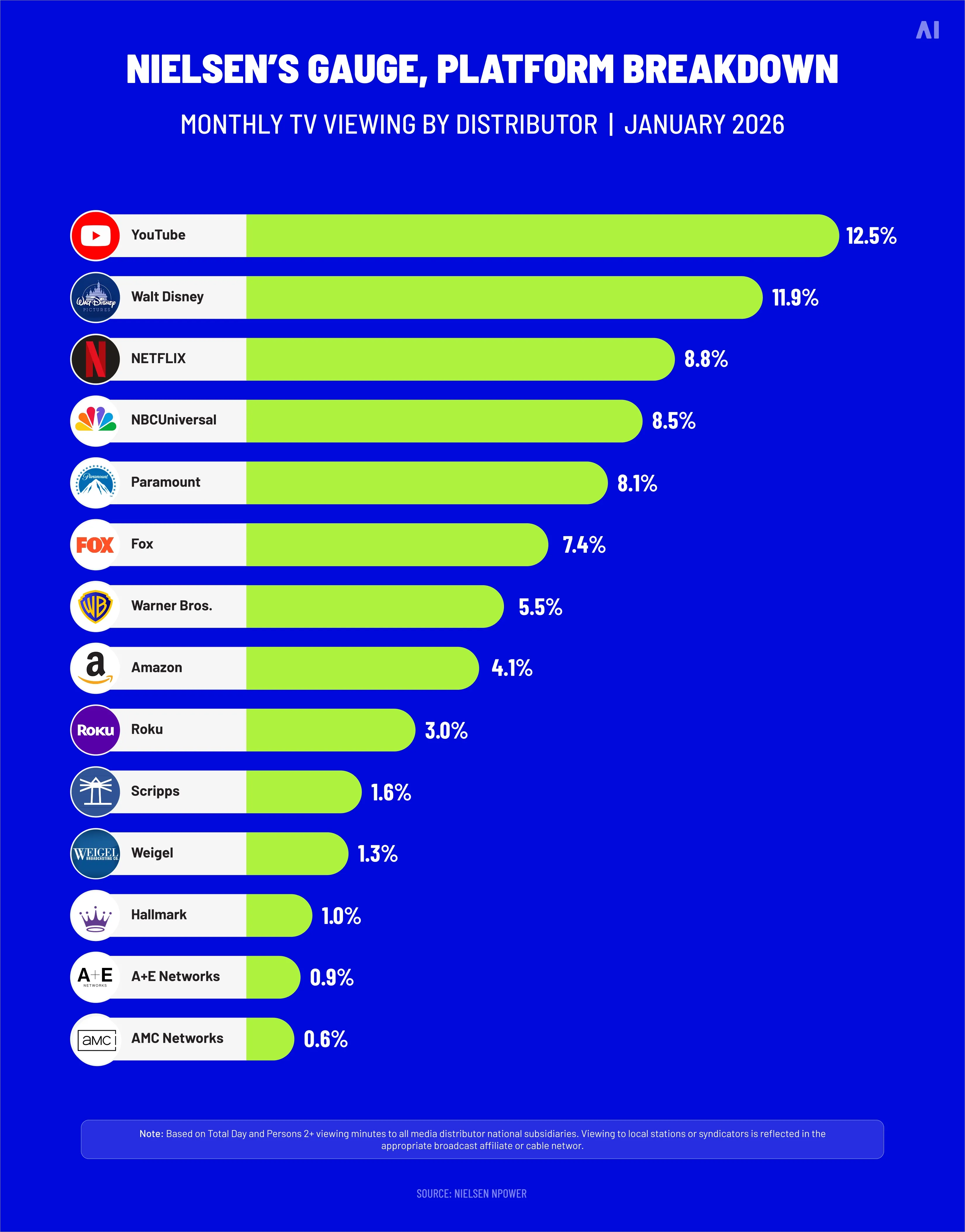
Another reason is simple: advertisers like buying where consumers already spend time and where outcomes can be observed quickly. IAB said digital video ad spend grew 18% in 2024 to $64 billion and was projected to reach $72 billion in 2025, with digital video expected to capture nearly 60% of all TV/video ad spend in 2025. Large platforms are deeply embedded in that shift.
💡 For a companion explainer, see The digital advertising supply chain explained.
The future of walled gardens in a privacy-first ecosystem
Walled gardens are not about to disappear. The more likely future is a market in which they remain dominant but are forced to coexist with stronger demands for interoperability, cleaner measurement, and clearer advertiser accountability.
First-party data strategies will stay central
This is no longer a theoretical discussion. Salesforce's 2026 State of Marketing research paints a clear picture: 84% of marketers use first-party data, while only 31% feel fully confident in their ability to unify it. Trust in AI runs high—81% would let it respond to customers—but fragmented data stands in the way. The market's response has been pragmatic rather than patient. Instead of holding out for a universal identity solution that restores previous targeting models, marketers are investing in owned data, cleaner profiles, and stronger unification as the foundation for everything from activation to measurement.
The evidence for what good unification unlocks makes the case even more compelling. Salesforce reports that teams satisfied with their data unification engage regularly with customers at a 42% higher rate and are 60% more likely to use AI agents to scale interactions. First-party data has shed its identity as a compliance-driven defensive asset. It now operates as the core layer that makes modern marketing technology functional.
Retail and commerce media will keep extending the walled garden model
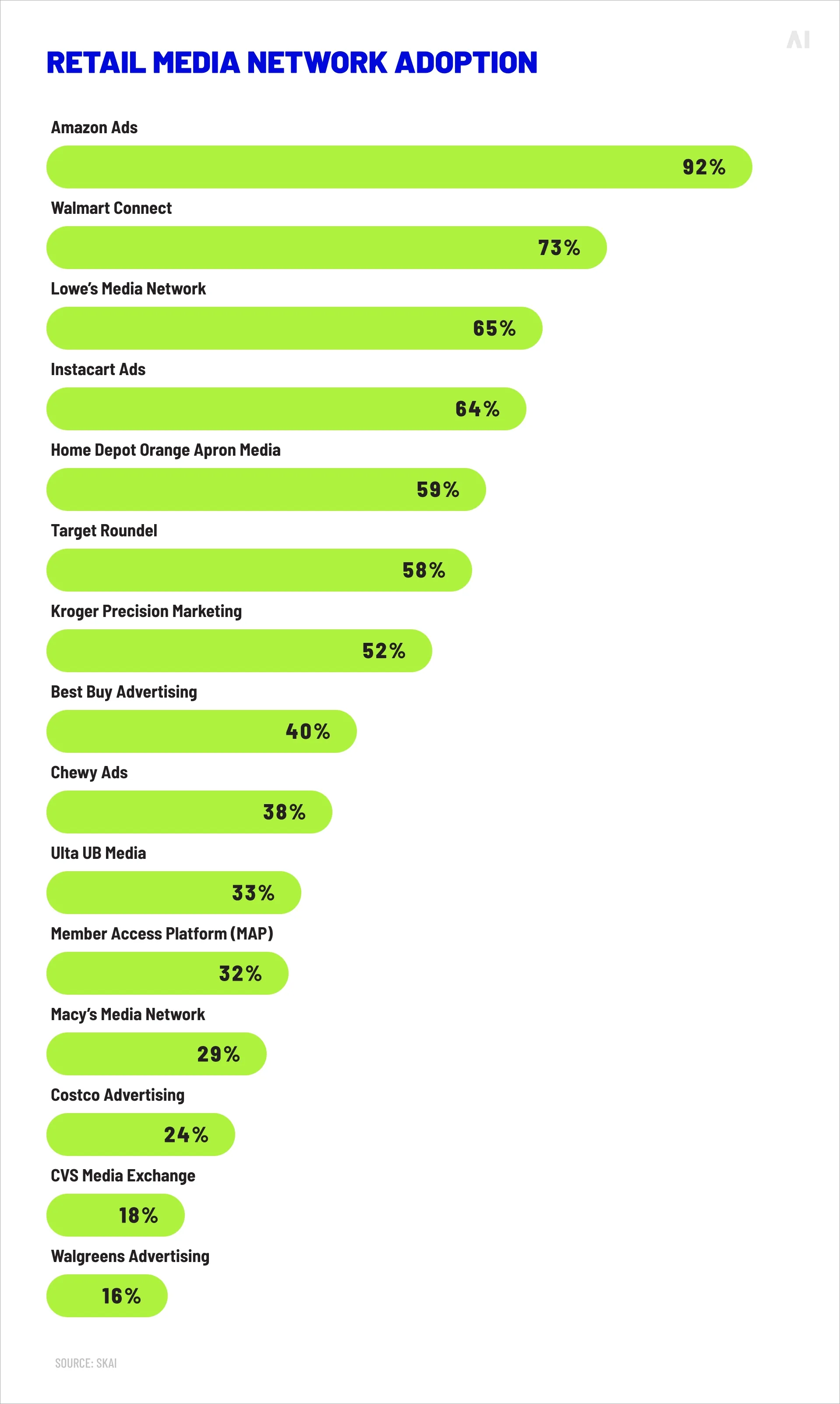
Retail media offers some of the strongest evidence that walled garden dynamics are spreading rather than receding. In Nielsen's 2025 Annual Marketing Report, 65% of marketers said retail media networks would play a growing role in their media strategies. Among North American marketers, that number reached 74%, up ten points year over year. These are not experimental budget allocations—they reflect a channel earning a more permanent place in the plan.
The growth story, however, only tells half of it. Skai and Stratably's 2026 State of Retail Media reports that advertisers currently operate across an average of six retail media networks, with expectations of reaching 11 by end of 2026. Meanwhile, just 15% say they strongly trust their measurement. The gap between adoption and confidence captures the structural challenge: retail media is multiplying the walled garden model across a growing set of retailer-owned ecosystems, each built on proprietary data, unique metrics, independent reporting frameworks, and distinct definitions of success.
Privacy regulation will keep raising the stakes
The U.S. privacy landscape is growing more complex. According to White & Case's January 2026 U.S. Data Privacy Guide, 20 states now have comprehensive privacy laws in place. MultiState's February 2026 update adds further detail: new comprehensive privacy laws took effect in Indiana, Kentucky, and Rhode Island on January 1, 2026, with additional state-level changes scheduled throughout the year—including July 1 effective dates in Connecticut, Arkansas, and Utah, plus new California data-broker requirements arriving in August.
For advertisers, privacy has moved from background legal concern to an active operational constraint. It shapes consent practices, data sharing, profiling, rules around minors' data, geolocation handling, and deletion workflows. Platforms with robust first-party relationships may retain certain advantages in this environment, but the broader reality is unavoidable: marketers must now plan around an increasingly fragmented and demanding compliance landscape across the U.S.
Cross-platform measurement will become harder to avoid
This may be the pressure point with the greatest power to reshape the market. Nielsen's 2025 Annual Marketing Report found just 32% of marketers measuring media spending holistically across digital and traditional channels—a remarkably low figure for an industry simultaneously running campaigns across search, social, CTV, retail media, video, and commerce platforms. Nielsen also identified weak tools, vendor sprawl, data quality issues, and limited transparency in newer channels as persistent barriers to calculating cross-media ROI.
The 2026 data reinforces the direction. Comscore's 2026 State of Programmatic Report found 87% of media buyers rating cross-channel performance metrics inside programmatic platforms as critical or valuable to their decision-making, while 71% expect to lean on AI for measurement and attribution. The signal is less about allegiance to any single dashboard and more about momentum toward broader measurement systems capable of comparing outcomes across screens, formats, and buying environments with greater consistency.

💡 To see why many advertisers still value environments outside closed platforms, read our guide to Open internet: What it is and why it matters in digital advertising.
Conclusion: why understanding walled gardens matters for advertisers
Walled gardens are no longer a topic reserved for specialists. They shape the daily operating reality of digital advertising.
Advertisers continue spending inside them for good reason: scale, data richness, speed of optimisation, and direct routes into high-growth environments. Those are genuine strengths. They also come with genuine costs—less transparency, harder cross-platform comparison, reduced data portability, and reliance on measurement that the platforms themselves define.
The marketers best positioned for 2026 will approach this with discipline rather than ideology. They will understand where these ecosystems excel, where their line of sight ends, and how to layer independent measurement and planning practices over platform-level performance to maintain a complete view.
{{26-What-Are-Walled-Gardens-in-Digital-Advertising-5="/tables"}}
Three takeaways matter most:
- Walled gardens still command huge influence over digital ad spending and campaign design.
- They can deliver strong targeting and performance, but they do not automatically provide full transparency or comparable measurement across channels.
- The smarter approach is balance: use the platforms, but do not let any single one define your entire picture of performance.
Striking that balance starts with accepting walled gardens for what they offer while refusing to let any single platform define the full performance picture. AI Digital's Open Garden approach is built around that principle: broader visibility, flexible inventory access, and clearer cross-platform comparison in a market increasingly dominated by closed ecosystems. If your team is reassessing how to work within walled gardens without sacrificing transparency, independence, or control, a conversation with AI Digital may be a useful next step.