What Is OEM Advertising? How Growth Brands Win on Devices in a Privacy-First Era

OEM advertising — often referred to as OEM marketing or OEM digital marketing — represents the next evolution of mobile user acquisition within device ecosystems. Originally associated with simple pre-installed apps on smartphones, OEM advertising has expanded into a sophisticated channel where brands promote mobile apps and services directly through device manufacturers’ platforms, app stores, and system-level placements.
Today, OEM channels enable advertisers to reach users earlier in the discovery journey, often at the moment a new device is activated. These placements can appear as preloads, app store recommendations, device setup suggestions, and system-level promotional surfaces controlled by manufacturers such as smartphone brands and operating system partners.
The scale of this opportunity is significant. According to IDC, global smartphone shipments reached over 1.17 billion units, representing a massive surface for device-level discovery and app distribution. At the same time, alternative app stores and OEM channels can drive significantly lower acquisition costs compared with traditional paid media, particularly in emerging markets where Google Play and Apple App Store competition is intense.
This shift is also occurring alongside broader changes in the digital advertising ecosystem. Research from McKinsey notes that privacy regulations and signal loss are forcing marketers to diversify acquisition strategies and prioritize first-party environments that provide stable measurement and sustainable growth. OEM ecosystems naturally align with this shift because they operate within device-native environments rather than relying heavily on third-party tracking infrastructure.For marketers, the strategic implication is clear: OEM advertising is becoming a core component of modern growth strategies. By combining premium inventory, device-level targeting, and AI-driven media planning, OEM platforms now enable brands to scale acquisition while maintaining measurable outcomes such as retention, lifetime value (LTV), and market expansion.
Understanding how this ecosystem works—and how to integrate it into a broader growth framework—is becoming increasingly important for performance teams, app marketers, and programmatic specialists navigating today’s privacy-first digital landscape.
Why OEM advertising is gaining strategic importance

Over the past few years, the economics and infrastructure of digital acquisition have changed dramatically. Marketers are operating in an environment defined by rising costs, signal fragmentation, and growing dependency on a small number of dominant platforms.
One of the clearest indicators of this shift is rapidly increasing mobile acquisition costs. According to AppsFlyer’s Performance Index and mobile market reports, average cost-per-install (CPI) for mobile apps increased significantly across competitive verticals, particularly in markets such as fintech, gaming, and subscription services where user competition is intense.
At the same time, privacy regulation and platform policy changes have reshaped how targeting and measurement work. Frameworks such as Apple’s App Tracking Transparency (ATT), alongside global privacy regulations including GDPR in Europe, have reduced the availability of third-party identifiers that historically powered mobile performance advertising.
💡As a result, marketers are increasingly prioritizing first-party ecosystems and premium supply paths where inventory quality, data signals, and measurement frameworks are more stable. This broader shift is visible across several advertising sectors—from retail media networks to curated programmatic supply paths.
Within this context, OEM advertising has become strategically valuable. By enabling brands to promote OEM apps and mobile apps directly within device ecosystems, advertisers gain access to high-intent discovery moments inside manufacturer-controlled environments.
Unlike open exchanges where inventory quality varies widely, OEM media operates within curated device platforms such as manufacturer app stores, device setup flows, and recommendation systems. For growth teams seeking more predictable performance, this creates a channel where supply quality, user intent, and measurement transparency are easier to manage.
Early access to discovery-stage users
Timing is one of the most underestimated advantages of OEM advertising.
Most OEM placements appear during device setup, onboarding flows, or early device exploration, when users are actively deciding which apps and services to install. These moments include surfaces such as:
- Device activation recommendations
- Manufacturer app store discovery feeds
- System-level suggestion modules
- Preloaded or recommended OEM apps
From a behavioral standpoint, this timing matters. Google and Ipsos mobile usage research shows that users install a large share of their “core apps” within the first days after activating a new device. During this window, discovery intent is high and brand loyalty is still forming.

For marketers, this creates a structural advantage. OEM ads reach users before many traditional performance channels even enter the decision process.
Lower competition at this stage often translates into:
- Higher engagement rates
- Lower bidding pressure
- Stronger long-term retention signals
💡When an app becomes part of a user’s initial device setup ecosystem, it is more likely to remain installed and used over time. That early presence can influence lifetime value (LTV) and downstream engagement metrics, which is why OEM discovery is increasingly treated as a strategic acquisition moment rather than simply another install channel.
Privacy-first, premium inventory
Another reason OEM marketing is gaining strategic attention is its alignment with privacy-first advertising infrastructure.
Unlike many open programmatic environments where inventory passes through multiple intermediaries, OEM ecosystems operate within manufacturer-controlled platforms. These environments typically include:
- Manufacturer app stores
- Device-native discovery modules
- System-level promotional surfaces
- Curated app recommendation engines
Because these environments are controlled directly by device manufacturers, they operate primarily on first-party infrastructure rather than third-party tracking networks.
This structure provides several operational advantages:
- More stable data signals originating from the device ecosystem
- Reduced exposure to invalid traffic and spoofed inventory
- Clearer supply transparency compared to open exchanges
As digital advertising supply chains become more complex, supply quality itself is becoming a strategic media lever. Marketers increasingly evaluate not just targeting or bidding logic, but also where inventory originates and how predictable that supply path is.
💡OEM ecosystems align with this shift toward curated media environments, which is why many growth teams evaluate OEM placements alongside modern mobile programmatic strategies that prioritize high-quality supply.
⚡️For a deeper breakdown of how curated supply paths and automation influence mobile advertising today, see this guide on mobile programmatic advertising.
Improved CAC efficiency and stronger retention signals
Beyond discovery timing and privacy advantages, OEM advertising can directly influence core growth metrics, particularly customer acquisition cost (CAC), retention, and lifetime value (LTV).
The underlying mechanism is straightforward: early exposure inside curated environments tends to produce more efficient acquisition economics than late-stage competitive bidding environments.
Several factors contribute to this effect:
- Lower competition during device onboarding stages
- High-intent discovery behavior
- Curated inventory environments with less low-quality traffic
According to AppsFlyer’s mobile acquisition analyses, channels that reach users earlier in the app discovery lifecycle can often produce stronger retention signals compared to channels that rely heavily on retargeting or late-stage install incentives.
For growth teams focused on long-term value rather than just install volume, this matters. Acquisition efficiency should be evaluated not only through initial CPI or CPA, but through cohort retention and lifetime value performance.
OEM campaigns integrated into broader KPI frameworks can therefore support:
- More efficient CAC
- Higher-quality user cohorts
- Improved retention and engagement patterns
💡This is one reason OEM channels are increasingly included in performance-driven media strategies rather than treated solely as distribution partnerships.
Media diversification and scalable growth
Modern marketing strategies increasingly emphasize channel diversification.
Overreliance on a single platform—whether paid social, search, or a dominant app store ecosystem—creates exposure to cost volatility, algorithm changes, and measurement limitations. Many growth teams experienced this firsthand when platform privacy changes rapidly altered performance assumptions across the industry.
OEM advertising helps address this risk by introducing device-native discovery environments into the media mix.
Instead of competing entirely inside existing ad platforms, brands gain access to additional acquisition surfaces embedded within the device ecosystem itself.
OEM channels are particularly relevant for industries where mobile engagement drives revenue, including:
- Retail and commerce apps
- Fintech and digital banking
- Mobile gaming
- Subscription platforms
- Travel and mobility services
When integrated with programmatic advertising, retail media networks, and paid social strategies, OEM media allows brands to spread acquisition risk across multiple ecosystems while unlocking additional growth surfaces.
In a digital landscape increasingly defined by privacy constraints and platform consolidation, this diversification is becoming a core strategic principle for scalable growth.
For many organizations, the takeaway is simple: OEM advertising is no longer just an app distribution tactic—it is an emerging component of modern, privacy-first media strategies designed for predictable long-term growth.
How OEM advertising works in practice
At a practical level, OEM advertising gives brands access to placements inside device manufacturers’ ecosystems—not just inside traditional ad platforms. Instead of relying only on paid social, search, or open exchange inventory, advertisers can place apps and services directly in front of users on the device itself, often during high-attention discovery moments.
Brands typically access this inventory through OEM media partners, app distribution platforms, or programmatic partners with direct manufacturer relationships. The execution model varies by OEM, but the principle is consistent: the brand secures visibility inside a controlled device environment where users discover, install, or engage with apps.
That visibility usually comes through a few main placement types: preloads, on-device recommendations, widgets, OEM app store placements, and launcher surfaces. Each format serves a slightly different role, but all of them are designed to place the brand closer to the device-level discovery journey.
The advantage is straightforward. OEM placements appear where user attention is native, contextual, and less saturated than traditional acquisition channels. That makes OEM advertising especially useful for brands that want more predictable visibility, stronger supply quality, and a scalable alternative to platform-heavy growth strategies.
Pre-loaded apps (Preloads)
Preloads are one of the most direct forms of OEM advertising.
In this model, an app is installed on the device before the user buys or activates it. When the device is turned on for the first time, the app is already present—either fully installed or set up for immediate activation.
The main strategic benefit is guaranteed visibility from day one.
Instead of competing for attention after the user has already chosen their preferred apps, the brand enters the device ecosystem at the earliest possible stage. This can be especially valuable for categories where early habit formation matters, such as:
- fintech
- retail
- streaming
- utilities
- subscription apps
For growth teams, preloads offer three clear advantages:
- Immediate scale across device shipments
- Early user exposure before app preference is fixed
- High visibility without relying on crowded auction environments
Preloads do not automatically guarantee engagement, so performance should still be measured against activation, retention, and downstream value. But from a distribution standpoint, they remain one of the strongest OEM formats for broad reach and early discovery.
On-device recommendations and widgets
Another common OEM format is on-device recommendations delivered through native feeds, suggestion surfaces, or widgets.
These placements are built directly into the device experience. Rather than appearing as traditional ads, they function more like contextual recommendations inside the interface—for example during setup, inside a content panel, or within a device widget that highlights relevant apps or services.
This matters because the discovery experience feels native to the operating environment, not interruptive.
For advertisers, that creates a different kind of value than a standard install campaign. These placements can drive:
- contextual discovery
- higher-quality engagement
- more natural user interaction with the brand
Because the recommendation appears inside a manufacturer-controlled surface, it often benefits from stronger visibility and cleaner supply conditions than broader open-market inventory.
In practice, this format works well for brands that want to influence consideration and discovery, especially when the goal is not just raw installs, but qualified user acquisition inside premium device environments.
OEM app store and launcher placements
OEM advertising also includes placements inside manufacturer app stores and device launchers.
These are valuable because they reach users during high-intent browsing or search moments. If a user is actively exploring apps, searching for utilities, or browsing categories inside an OEM app store, the brand can appear at exactly the point where installation intent is already present.
Launcher placements serve a similar role. Since the launcher is part of the device’s everyday navigation layer, sponsored or featured visibility there can place an app directly within recurring user attention zones.
The key advantage of these formats is intent.
Unlike awareness-only environments, OEM app store and launcher placements often capture users who are already open to discovery or installation.
That makes them especially relevant for performance strategies focused on:
- high-intent visibility
- efficient app discovery
- stronger conversion probability
For app marketers, this is one of the clearest ways OEM media supports growth: it inserts the brand into moments where users are already looking for something to install, try, or use.
Measurement and attribution considerations
OEM campaigns should be measured with the same discipline as any other acquisition channel, but the attribution logic needs to reflect how device-level discovery actually works.
In practice, OEM measurement usually relies on a combination of:
- MMP integrations
- cohort analysis
- retention tracking
- incrementality testing
The reason is simple: OEM influence often begins earlier in the user journey than a standard click-based install campaign.
A preload, an app store placement, or an on-device recommendation may shape user behavior before the final install or open event is recorded. That means marketers need to evaluate performance beyond last-click reporting.
A strong OEM measurement framework usually includes:
- Install and activation tracking through an MMP
- Retention analysis by source and cohort
- Incrementality testing to isolate true lift
- LTV comparison against other acquisition channels
Time-window design also matters. OEM placements can influence installs over a longer decision cycle than direct-response ads, so attribution windows should be set carefully and interpreted in context. Short windows may undercount the value of early discovery exposure, while overly broad windows can inflate performance claims.
The most useful approach is to treat OEM as a measurable growth channel, not just a visibility tactic. That means evaluating success through retention, cohort quality, CAC efficiency, and incrementality—not installs alone.
OEM vs traditional user acquisition channels
Most mobile acquisition strategies rely on paid social, search advertising, and DSP-driven programmatic buying. These channels remain effective, but they operate in highly competitive auction environments where costs rise as more advertisers compete for the same users. Signal loss from privacy frameworks and increasing platform concentration have also made performance less predictable for many growth teams.
OEM advertising works at a different layer of the ecosystem. Instead of competing only within advertising platforms, OEM campaigns place apps and services directly inside device environments—such as manufacturer app stores, device setup flows, recommendation panels, and launcher placements. This means discovery can happen within the device experience itself, often earlier in the user journey.

⚡️One key difference is how inventory is sourced. Traditional performance channels rely on complex programmatic infrastructure where impressions pass through exchanges, SSPs, and DSPs before reaching the advertiser. This multi-step pathway can introduce transparency and quality challenges. A deeper breakdown of how these systems operate is covered in Digital advertising supply chain explained.
OEM ecosystems are typically manufacturer-controlled environments, where placements originate from the device platform itself. This can create more structured supply paths and less fragmented inventory access compared with open exchange buying.
Competition dynamics also differ. Paid social and search concentrate global advertising demand, which drives intense bidding pressure and rising acquisition costs. OEM environments distribute competition differently by placing brands inside curated discovery surfaces where users are exploring apps and services directly on the device.
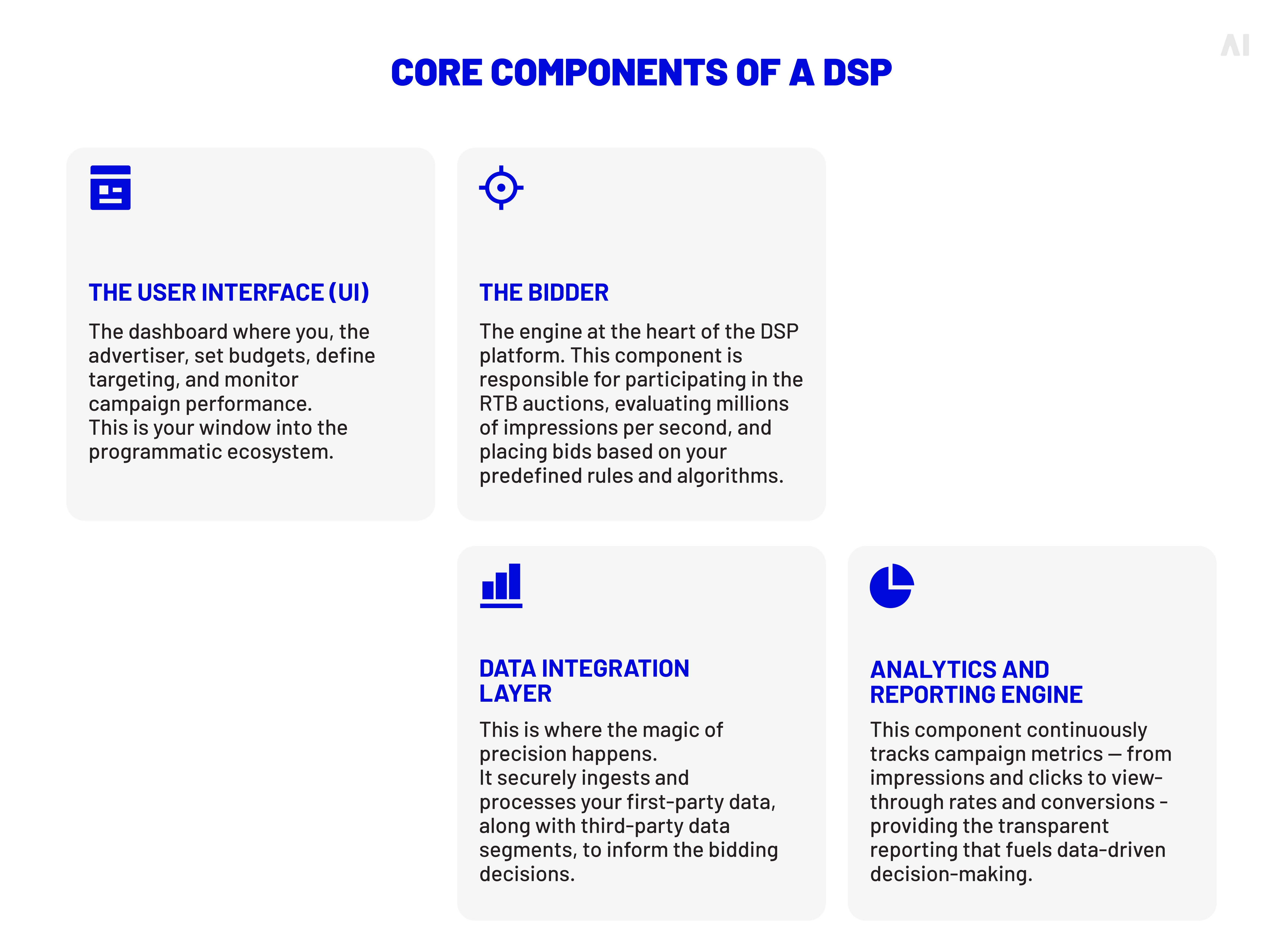
⚡️Traditional programmatic buying still plays a critical role in scaling reach and targeting. Platforms such as DSPs allow marketers to automate buying and optimize campaigns across multiple publishers. For a detailed overview of how these platforms operate, see Demand-side platform (DSP).
💡The practical takeaway is simple: OEM advertising is not a replacement for paid social, search, or programmatic media. Instead, it acts as a complementary growth channel, expanding where brands can reach users while helping diversify acquisition risk across the modern mobile media landscape.
When OEM advertising makes strategic sense
OEM advertising is most effective when brands need new discovery surfaces beyond saturated performance channels. As competition intensifies across paid social, search, and traditional programmatic buying, many growth teams face rising customer acquisition costs and diminishing incremental reach.
In these conditions, OEM advertising becomes strategically valuable because it expands where user discovery happens. Instead of relying only on platform-driven auctions, brands gain visibility inside device ecosystems, including manufacturer app stores, onboarding flows, and system-level recommendation surfaces.
This approach is particularly useful for organizations that want to:
- Diversify acquisition beyond a few dominant platforms
- Reach users earlier in the app discovery lifecycle
- Improve acquisition efficiency in high-competition markets
- Scale user growth across new regions and device ecosystems
OEM channels are also effective when long-term value matters more than short-term install volume. Because placements often appear during device onboarding or early exploration, they can influence initial app selection and long-term usage habits.
💡As mobile ecosystems evolve toward privacy-first infrastructure and device-native discovery, OEM media is increasingly positioned alongside programmatic and app store marketing as part of modern mobile growth strategies.
⚡️A broader perspective on how mobile acquisition channels are evolving can be found in The future of mobile advertising.
Retail and commerce growth
Retail and commerce apps are among the categories where OEM advertising can deliver strong growth impact.
These businesses depend heavily on consistent user acquisition and product discovery, yet traditional performance channels in retail are among the most competitive in digital advertising. Paid social and search campaigns frequently involve high bidding pressure from multiple retailers competing for the same audiences.
OEM placements provide an alternative discovery layer.
By surfacing retail apps directly on new devices or within device-level recommendation environments, OEM campaigns introduce shopping platforms at the moment when users are setting up their digital ecosystem. This early visibility can influence which commerce apps become part of a user’s routine.
For retail platforms, OEM advertising can support:
- Scalable user acquisition across device markets
- Increased visibility during device onboarding
- Expanded product discovery through app adoption
⚡️This approach becomes even more valuable when paired with broader growth planning and demand forecasting strategies. For businesses planning long-term expansion in digital commerce, frameworks such as Retail forecasting: What it is and how to do it help align acquisition investments with projected consumer demand and market growth.
💡When integrated into a diversified media mix, OEM advertising can help retail and commerce brands expand their customer base while reducing dependence on increasingly saturated advertising channels.
Fintech and subscription models
Fintech platforms and subscription-based services benefit from OEM advertising because it captures users during device upgrade and onboarding moments, when openness to trying new digital services is typically higher. When consumers activate a new smartphone, they often evaluate which apps they will use for payments, banking, streaming, productivity, or financial management.
OEM placements allow these brands to appear during that early decision window, through device recommendations, app store promotions, or pre-installed app partnerships. This timing can be valuable for financial and subscription services where early adoption often leads to long-term usage and recurring revenue.
For fintech and subscription products, OEM campaigns can support:
- Early user acquisition during device onboarding
- High-visibility discovery within trusted device environments
- Long-term retention potential from early app adoption
Because these placements occur inside manufacturer-controlled ecosystems, they also align well with the privacy-sensitive nature of financial services marketing.
Gaming and app-based businesses
For mobile gaming and app-based platforms, OEM advertising offers a way to generate cost-efficient installs and incremental audience reach beyond traditional paid social environments.
Gaming advertisers typically operate in extremely competitive acquisition markets, where install campaigns on major platforms can quickly become expensive due to bidding competition. OEM placements introduce an additional distribution layer where games can be discovered directly within device ecosystems, often through recommendation panels, app stores, or launcher placements.
This can create several advantages for gaming and app-based businesses:
- Access to new audiences outside crowded advertising platforms
- Lower competition during early discovery moments
- Incremental installs that complement social and programmatic campaigns
When used alongside other acquisition channels, OEM can help gaming companies scale user growth without relying exclusively on auction-driven install campaigns.
Performance teams facing rising CPIs
Many performance teams are currently dealing with rising cost-per-install (CPI) benchmarks and increasingly fragmented measurement environments. Platform privacy changes, auction competition, and signal loss have made it harder to scale acquisition efficiently through a single channel.
In this environment, OEM advertising functions as a diversification strategy.
Rather than concentrating budgets entirely within a few major platforms, OEM campaigns introduce additional discovery surfaces embedded directly into device ecosystems. These placements can provide incremental reach while reducing exposure to the cost volatility that often affects platform-based advertising.
For growth teams managing CPI pressure, OEM can contribute to:
- more diversified acquisition portfolios
- additional install volume outside saturated channels
- more stable discovery opportunities within device environments
When integrated into a broader media mix, OEM helps performance teams balance scale, efficiency, and supply diversity in increasingly competitive mobile acquisition markets.
Operationalizing OEM for predictable growth
OEM advertising delivers the most value when it is treated not as a one-off distribution tactic, but as part of a structured growth strategy. The difference between opportunistic installs and predictable performance usually comes down to planning, supply quality, and measurement discipline.
- The first step is AI-driven media planning. Instead of treating OEM placements as isolated buys, growth teams increasingly evaluate them within broader performance models that consider market demand, device penetration, audience behavior, and historical campaign performance. AI-based planning tools can analyze these signals to identify where OEM placements are most likely to generate high-quality installs and long-term engagement.
- The second layer is curated supply access. Not all device environments offer the same performance potential. High-performing OEM strategies focus on manufacturer ecosystems and inventory paths that deliver transparent, high-quality discovery surfaces—such as trusted app stores, onboarding recommendations, and system-level placements. Curated supply reduces exposure to low-quality traffic and improves the predictability of acquisition outcomes.
- Measurement is the third critical layer. To operationalize OEM effectively, teams typically integrate mobile measurement partners (MMPs), cohort analysis, and incrementality testing. This allows marketers to evaluate performance through retention, lifetime value (LTV), and customer acquisition cost (CAC) rather than relying solely on install volume.
When measured correctly, OEM campaigns can contribute to higher-quality user cohorts that support long-term growth objectives.
Finally, OEM works best when integrated with other acquisition channels rather than operating in isolation. When coordinated with programmatic buying, paid social, and app store marketing, OEM helps create a more diversified and resilient media mix, where discovery happens across multiple environments instead of a single platform.
Conclusion: Make OEM a strategic growth lever
OEM advertising has evolved from a niche app distribution tactic into a meaningful component of modern mobile growth strategies. By placing brands directly inside device ecosystems, it allows advertisers to reach users earlier in the discovery process, often before competition intensifies inside traditional advertising platforms.
The channel tends to deliver the strongest impact for industries where mobile engagement and user acquisition drive revenue, including:
- retail and commerce apps
- fintech and digital banking platforms
- subscription services
- gaming and app-based businesses
For these sectors, OEM provides an additional discovery layer that complements paid social, search, and programmatic buying, helping brands reach new audiences while diversifying acquisition risk.
💡However, the true advantage of OEM does not come from access alone. Its long-term value emerges when it is combined with AI-driven planning, curated supply strategies, and rigorous performance measurement. When these elements work together, OEM becomes more than a traffic source—it becomes a scalable channel for predictable growth within privacy-first digital ecosystems.
As mobile advertising continues to evolve toward device-native discovery and privacy-aware infrastructure, OEM environments are likely to play an increasingly important role in how brands reach and retain users.
⚡️If you want to explore how curated supply and AI-driven media planning can support your OEM strategy, you can get in touch with AI Digital to discuss how device-level discovery can fit into your broader growth roadmap.