The Future of Mobile Advertising: Trends, Technology, and What Marketers Need to Prepare for in 2026

Most teams are still carrying strategies built for an earlier phase of mobile marketing: deterministic device IDs, generous attribution, and channel-by-channel optimization. That playbook is breaking down.
In 2026, mobile advertisers are dealing with:
- Less deterministic identity (opt-outs, platform limits, state privacy laws, and shrinking addressability)
- More automation (AI-led bidding and creative selection that can outpace human operations)
- More cross-channel dependency (mobile performance increasingly depends on what happens in CTV, retail media, DOOH, and social)
- More measurement pressure (incrementality, lift, and blended models replacing last-click comfort)
This article explains what’s structurally changing in the mobile advertising landscape, which mobile advertising trends are durable versus hype, and how to build a mobile advertising strategy that holds up through 2026 and beyond.
Why mobile advertising still dominates digital growth
Mobile isn’t “winning” because it’s trendy; it’s winning because it’s where digital life actually happens, and it’s the place where most other channels ultimately cash out—searches, comparisons, clicks, and conversions all tend to land there.
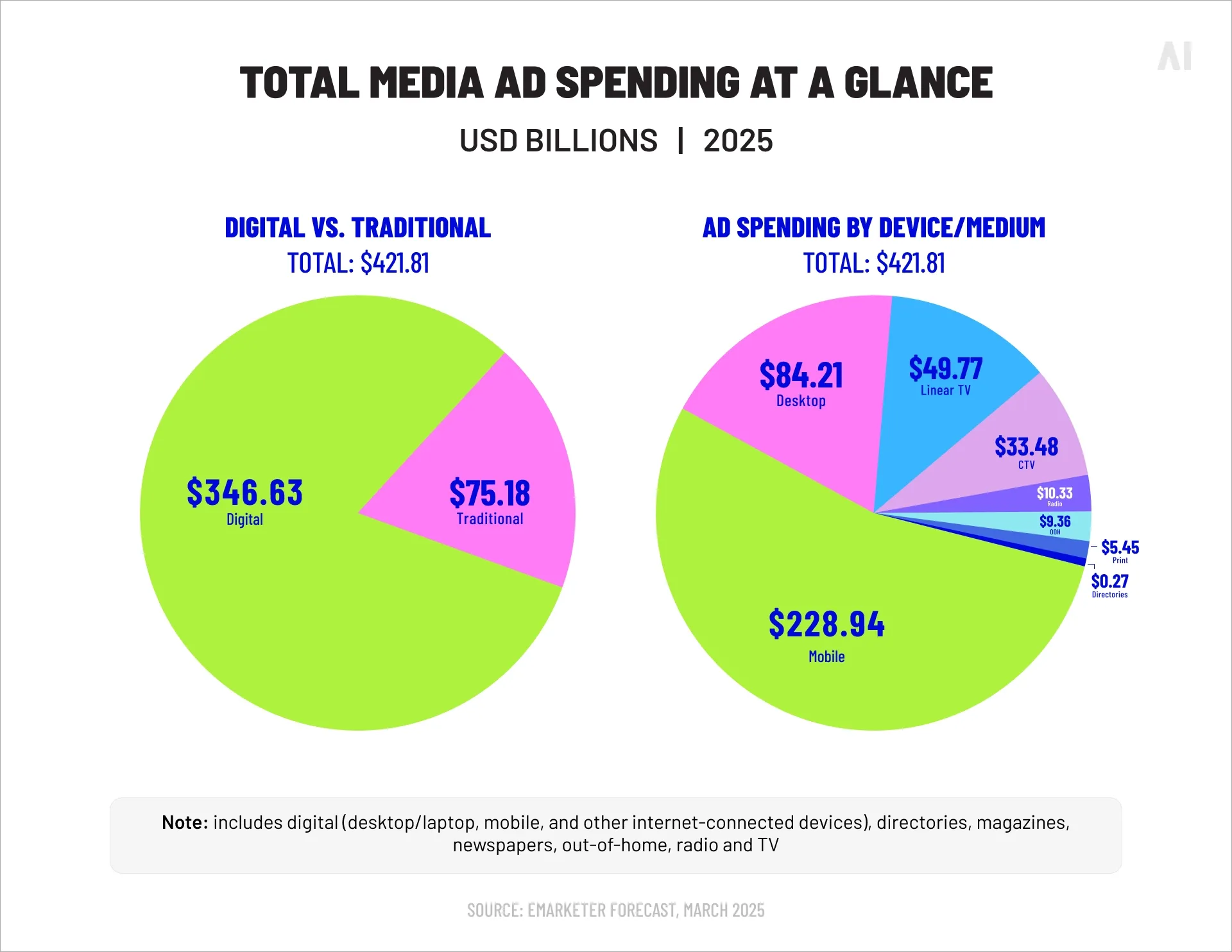
In the US, mobile ad spending was projected to reach $228.94B in 2025, accounting for nearly two-thirds of total digital ad spending.
That scale isn’t just an ad budget story. It’s a behavior story.
- Mobile is the default screen: the device that’s always present during research, shopping, navigation, streaming second-screening, and post-exposure follow-ups.
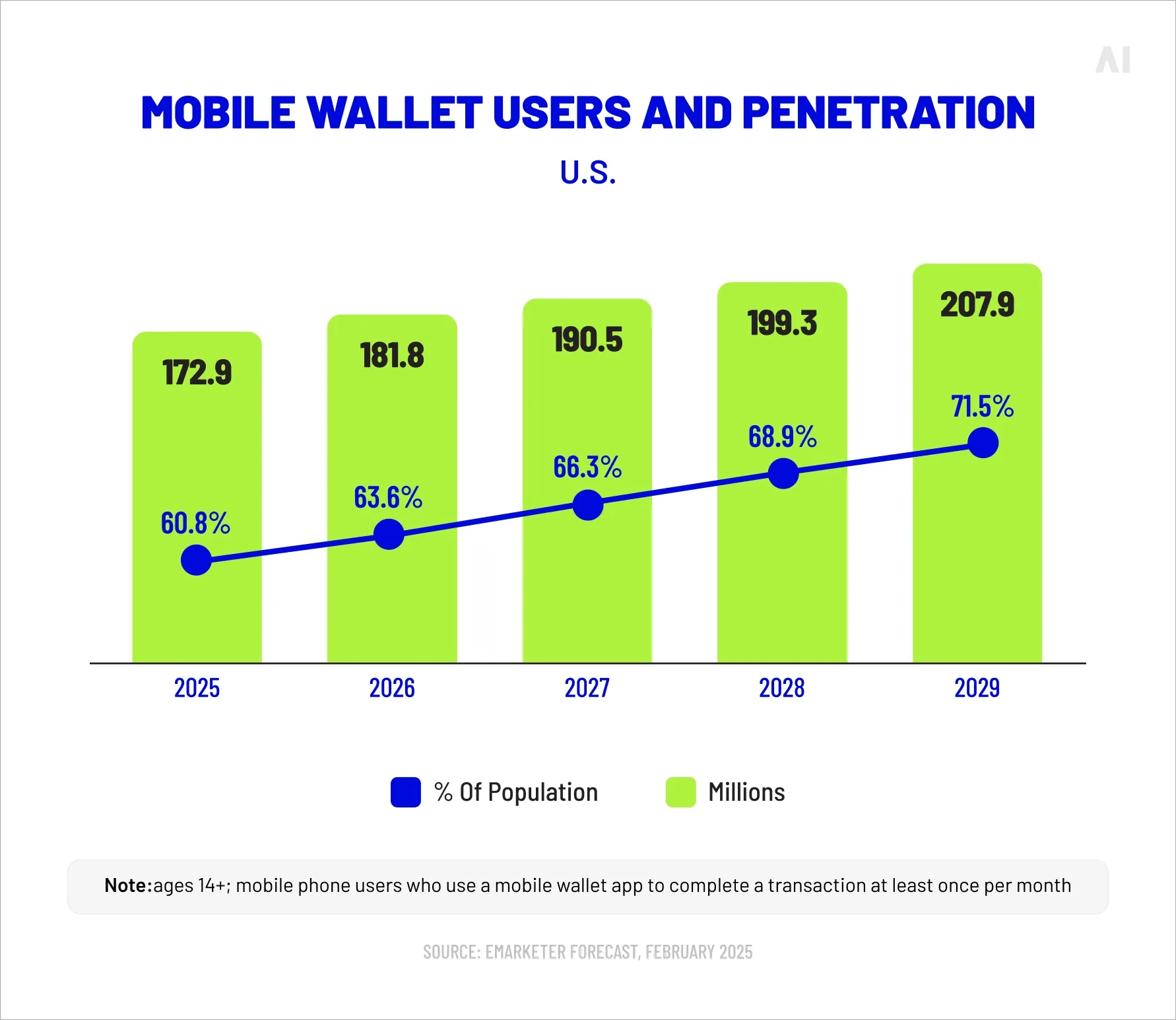
- Mobile is the default identity container: phones carry login states, app ecosystems, wallet activity, and device-level signals that other channels often lack.
- Mobile is the default conversion assistant: even when the final purchase happens elsewhere, the path to purchase usually runs through a phone (search, maps, price checks, reviews, promo codes, QR scans, “save for later,” and cart recovery).
From a media execution standpoint, mobile also gives you something that’s hard to replicate elsewhere: dense feedback loops. In-app events, landing page interactions, and conversion telemetry make optimization faster—especially in mobile programmatic environments where bid decisions happen impression by impression.
💡 Related reading: Programmatic mobile advertising explained: What, why & how
Key forces shaping the future of mobile advertising
The next phase of mobile marketing isn’t being driven by a single platform change; it’s being shaped by four structural forces that stack on top of each other and compound the impact as they build.
- Privacy-first advertising and signal loss
- AI-driven optimization and automation
- Mobile as the bridge between online and offline
- Creative evolution built for mobile-native consumption
Each force changes how mobile ad targeting works, how measurement behaves, and what “good” looks like in campaign operations.
Privacy-first targeting and signal loss
If you only remember one thing about 2026: mobile targeting isn’t dying, but it is becoming more conditional.
The core shift is that addressability is increasingly dependent on:
- Consent (explicit and implicit)
- Authentication (logged-in environments)
- Modeled inference (probabilistic and cohort-based approaches)
- Clean-room collaboration (privacy-safe matching instead of raw user-level sharing)
{{26-The-Future-of-Mobile-Advertising-SEO-1="/tables"}}
A clear example is iOS consent dynamics. Adjust’s 2025 report shows AppTrackingTransparency (ATT) opt-in rates around 25% globally (meaning roughly 1 in 4 users allow tracking prompts). You shouldn’t treat that as a universal planning constant in the US, but it’s directionally useful: opt-in is not the default, so deterministic user-level tracking can’t be the foundation of your strategy.
.webp)
⚡ Privacy-first targeting doesn’t remove addressability, it raises the price of sloppy strategy. The teams that win are the ones who can perform with partial identity and still prove lift.
At the same time, regulation is tightening in ways that influence how mobile data can be collected, shared, and activated. As 2026 begins, legal analysis notes 19 US states have enacted comprehensive consumer privacy laws, with more coming online in 2026. That matters for mobile advertisers because state-level coverage complicates “one rule” data governance, especially for brands running national campaigns with mixed consent and disclosure requirements.
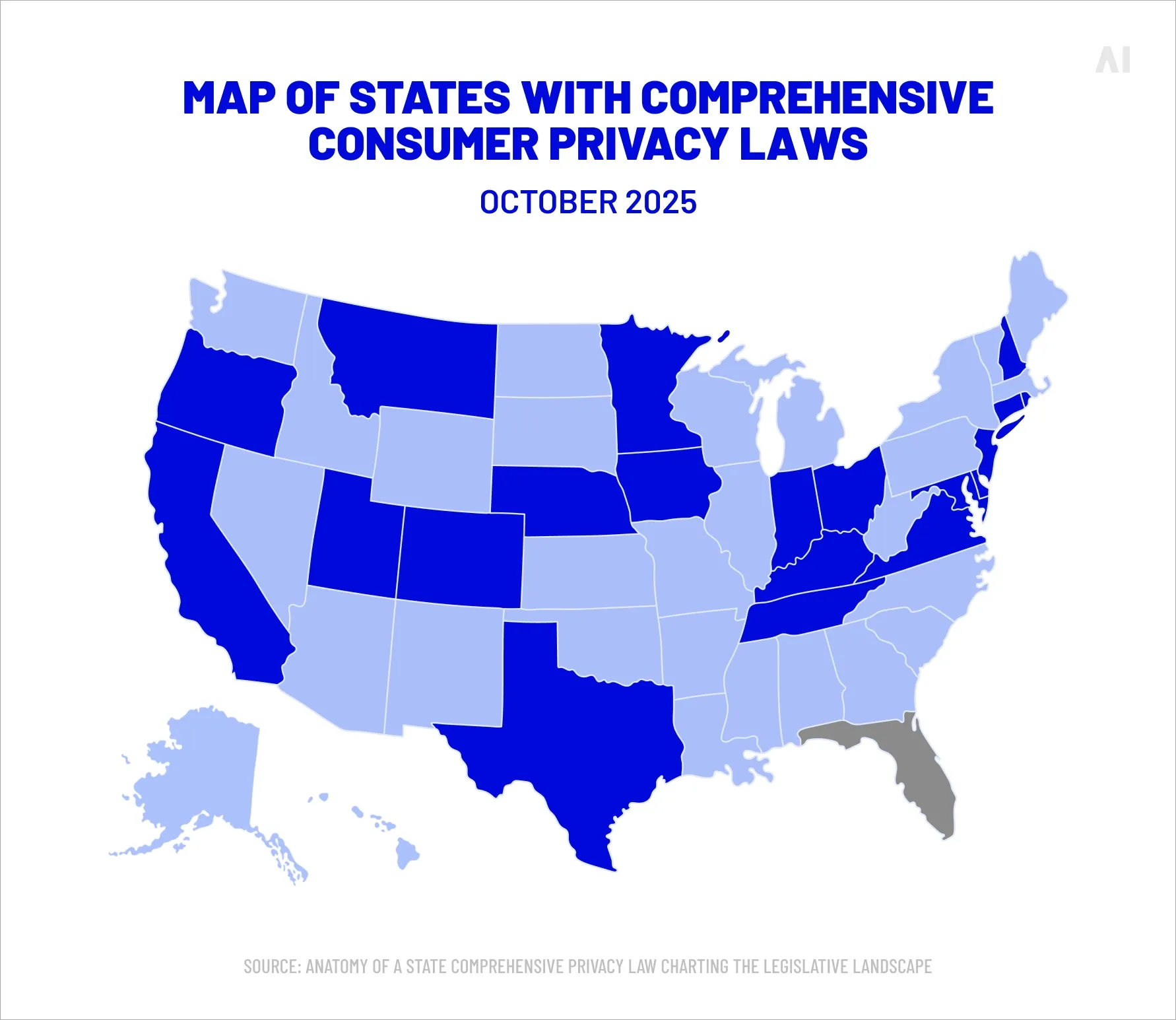
⚡ 2025 didn’t add new state comprehensive privacy laws, but it did add complexity: nine states amended their existing laws in a single year. That’s a governance problem, not a legal trivia fact.
Signal loss isn’t just mobile identifiers either. The broader ecosystem is unstable, including the web signals that many mobile strategies still rely on (mobile web retargeting, cross-site frequency management, and web-based conversion paths). In April 2025, Google announced it would maintain its current approach to third-party cookies in Chrome rather than rolling out a new standalone prompt, while continuing Privacy Sandbox work. Whether you see that as “cookies staying” or “cookies getting messier,” the operational truth is the same: identity and measurement are becoming less consistent across environments, and your mobile advertising strategy has to assume fragmentation.
What this means in practice:
- Mobile ad targeting shifts toward durable identifiers (hashed emails, publisher IDs, first-party events, authenticated audiences)
- Contextual and intent signals matter more (app context, session intent, content adjacency, on-device behavior)
- Measurement becomes more blended (lift, incrementality, MMM, and platform-level modeled conversions)
💡 If you want a clean definition of addressability in this environment, AI Digital’s breakdown of addressable digital advertising is a useful reference point.
AI-driven optimization and automation
AI isn’t a “future feature” of mobile advertising; it’s the operating system, because mobile campaigns generate too many micro-decisions for humans to manage well. Every ad group, creative variant, placement, audience segment, time window, and bid adjustment compounds into an optimization problem that teams can’t realistically solve at speed without automation.
{{26-The-Future-of-Mobile-Advertising-SEO-2="/tables"}}
But there’s a second reason AI is accelerating: signal loss forces advertisers to optimize with incomplete information. When attribution becomes fuzzier and audiences become less deterministic, models are used to:
- predict conversion probability with fewer identifiers
- allocate budget across placements with partial feedback
- stabilize performance using broader outcome signals (not just clicks)
A useful reality check comes from IAB’s State of Data 2025: 70% of respondents said they have not fully integrated AI into their core marketing workflows, and the report frames this as an execution gap—not a lack of interest. So the advantage in 2026 won’t go to the teams “using AI.” It will go to the teams whose processes are structured to let AI work (clean inputs, clear KPIs, controlled testing, and governance).
⚡ AI is only “set-and-forget” if you’re comfortable paying for invisible mistakes. Treat it like a junior trader: powerful, fast, and in constant need of guardrails.
Mobile as a bridge between online and offline
Mobile’s unique power is not reach. It’s continuity.
Mobile follows the user across:
- physical locations (with consented location signals)
- shopping moments (price checks, promo codes, retailer apps)
- media exposure (second-screen behavior during TV/streaming)
- post-exposure actions (maps, calls, forms, store locator)
This is why mobile is increasingly used as the linking layer between channels that can generate attention (CTV, DOOH, audio) and outcomes that matter (store visits, purchases, qualified leads).
The play here isn’t “do more location targeting.” It’s treat mobile as the verification layer:
- Did exposed audiences show higher store visitation?
- Did they return more often?
- Did their purchase mix change?
- Did high-intent behaviors increase after exposure?
That’s the future of mobile marketing in omnichannel: mobile doesn’t just deliver ads; it validates whether other channels worked.
Creative evolution in mobile advertising
Mobile creative is under pressure from two sides:
- Attention is harder to earn (feeds are saturated, formats are standardized, users scroll fast)
- Production needs to scale (more variants, more placements, more personalization)
In 2026, mobile creative evolution is less about “making a better ad” and more about building a creative system:
- modular assets (hooks, offers, proof points, CTAs)
- rapid iteration cycles
- placement-native design (vertical-first, sound-off, thumb-stopping)
- dynamic creative optimization (DCO) with real governance
A concrete illustration of how production is changing: Reuters reported that Zalando used generative AI to speed campaign creation dramatically, including 70% of editorial campaign images in a recent quarter being AI-generated, and substantial cost/time reductions. That’s not a “mobile-only” story, but it is a mobile reality: the volume of creative required for mobile placements is pushing teams toward faster production workflows.

💡 Related reading: Mobile native advertising: Definitions & examples
Mobile advertising as the connective layer in omnichannel strategies
Most omnichannel strategies fail for a predictable reason: the channels involved don’t share a common identity and measurement language, so planning becomes fragmented and attribution turns into argument.
Mobile helps close that gap—not perfectly, but often better than the alternatives—because it can connect the chain from exposure to outcome across the journey, including:
- Exposure (CTV, DOOH, audio, social)
- Intent (search, maps, app sessions, product views)
- Action (forms, purchases, store visits, calls)
- Retention (app re-engagement, CRM syncing, loyalty behavior)
{{26-The-Future-of-Mobile-Advertising-SEO-3="/tables"}}
Here’s what that looks like in real planning.
- Where mobile connects to CTV: CTV builds reach and attention. Mobile captures follow-through:
- QR scans and second-screen searches
- app downloads after exposure
- post-view site visits
- conversion lift by exposed vs control cohorts
- Where mobile connects to DOOH: DOOH creates high-context exposure in the real world. Mobile provides:
- proximity and dwell-based validation (privacy-safe)
- post-exposure navigation actions
- store visit lift
- incremental conversions in nearby trade areas
- Where mobile connects to commerce media: Retail media and commerce media create purchase intent close to checkout. Mobile:
- carries retailer apps and wallets
- supports deep links into PDPs
- enables “off-site → on-site” conversion paths
- provides loyalty and repeat purchase signals
- Where mobile connects to digital audio: Audio builds frequency during commutes, workouts, and daily routines. Mobile closes:
- taps and site actions post-ad
- sequential messaging (audio → display → native)
- lift measurement using geo or audience splits
The point isn’t that mobile replaces these channels; it’s that mobile stitches them into a measurable sequence, so omnichannel becomes an operating model rather than a collection of disconnected placements.
⚡ In 2026, mobile isn’t a channel you bolt on at the end; it’s the connective layer that makes the rest of the mix measurable and accountable.
💡 Related reading: What is cross-device targeting in advertising?
Top mobile advertising trends to watch in 2026
The forces above show up as specific, observable shifts in buying, targeting, and reporting. These are the mobile ad trends that tend to be structural (not “flashy but temporary”).
Contextual and intent-based targeting
As identity becomes less deterministic, contextual targeting gets a real promotion.
But “contextual” in 2026 is broader than page keywords. In mobile environments it includes:
- app category and app-level behavior patterns
- session context (what the user is doing right now)
- content adjacency (video genre, audio context, article themes)
- intent signals (search and browse behaviors, without needing personal identifiers)
{{26-The-Future-of-Mobile-Advertising-SEO-4="/tables"}}
Teams who do this well treat contextual as a hypothesis engine rather than a static targeting mode: they identify the contexts that consistently perform, align creative to what those moments imply about mindset, and validate impact through incrementality, not just CTR.
💡 Related reading: Contextual advertising: How to reach high-intent buyers without personal data

⚡ Contextual isn’t a fallback; it’s a planning discipline. When you match creative to context, you often get cleaner lift than you do from overly specific audience slicing.
Commerce-driven mobile advertising
Commerce-driven mobile advertising is expanding beyond retail media networks into a broader “commerce layer” across the open web, apps, and paid social.
Two things are happening at once:
- More media placements are becoming shoppable (product feeds, deep links, in-app checkout flows)
- More advertisers are demanding proof that spend moves revenue, not just clicks
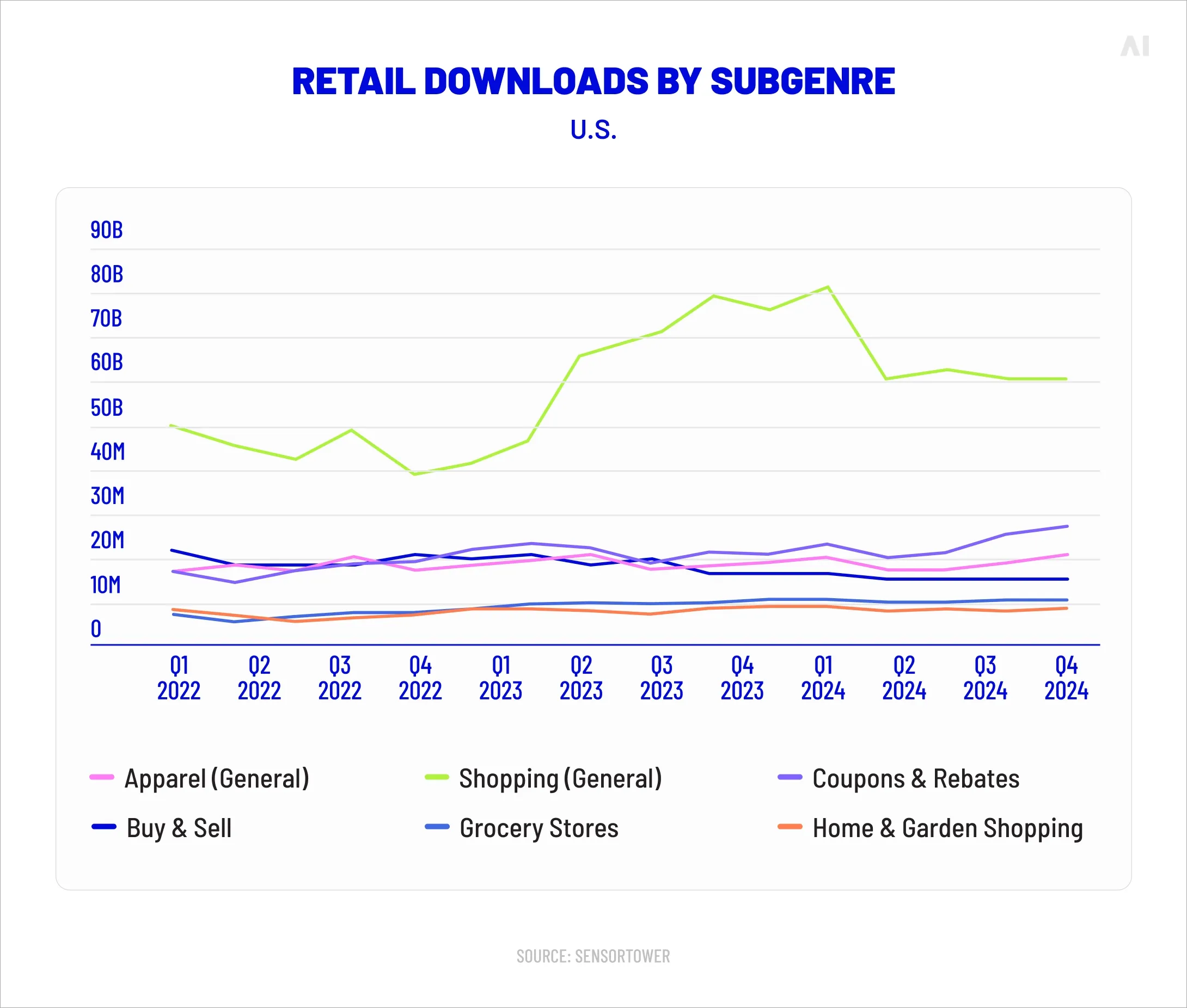
A useful datapoint that highlights how mobile is behaving during major commerce moments: Reuters reported that during a July 2025 online sales surge tied to major discount events, 53.2% of transactions happened on mobile devices. That’s not “mobile commerce is coming.” That’s “mobile is already the default transaction surface in high-intent windows.”
In parallel, EMARKETER forecasts US commerce media spending will hit $83B in 2026, reaching 21.6% of total digital ad spending. If you’re planning mobile marketing for ecommerce, this matters because the “commerce layer” will increasingly influence where budgets go—and what performance proof is required.
Location-based and proximity targeting
Location-based mobile advertising is evolving away from “geofence blasts” and toward proximity intelligence with measurement discipline.
What changes in 2026:
- More emphasis on quality of visits (dwell time, repeat visits, visit patterns)
- More use of polygons (real-world shapes) instead of crude radius circles
- More reliance on aggregated lift instead of user-level “this person visited”
- More governance around consent and disclosure
In that world, the best use case isn’t simply “target people near a store.” It’s building a defensible measurement loop that can prove incremental lift in a trade area, compare store-visit rates between exposed and control groups, and connect mobile exposure to downstream retail behavior without overclaiming precision.
💡 Related reading: Geotargeting vs. geofencing
AI-led media planning and optimization
In 2026, AI-led optimization won’t stop at bidding, because the real value shows up when automation can steer the parts of a campaign that teams can’t realistically micromanage at speed, including:
- budget allocation across channels and tactics
- creative rotation based on predicted outcomes
- frequency management and suppression
- anomaly detection (performance drift, fraud spikes, inventory changes)
This becomes an operational dividing line: teams that scale AI can iterate faster than teams relying on manual workflows, simply because there are too many moving parts to “keep up” by hand. IAB’s State of Data 2025 puts a timeline on that shift—only 30% report fully integrating AI across the media campaign lifecycle today, and among those who haven’t fully scaled, 35% expect to reach full-scale by 2026, which implies a majority could be there if those plans hold.
That’s the competitive clock. If your workflow still depends on humans making hundreds of micro-adjustments every day, you’ll feel slow in 2026—not because your team isn’t working hard, but because the operating model can’t match the pace.
⚡ AI doesn’t win because it’s inherently smarter; it wins because it can run far more iterations than your team realistically can, learning faster through volume and adjusting continuously while humans are still deciding what to test next.
Incrementality-focused measurement
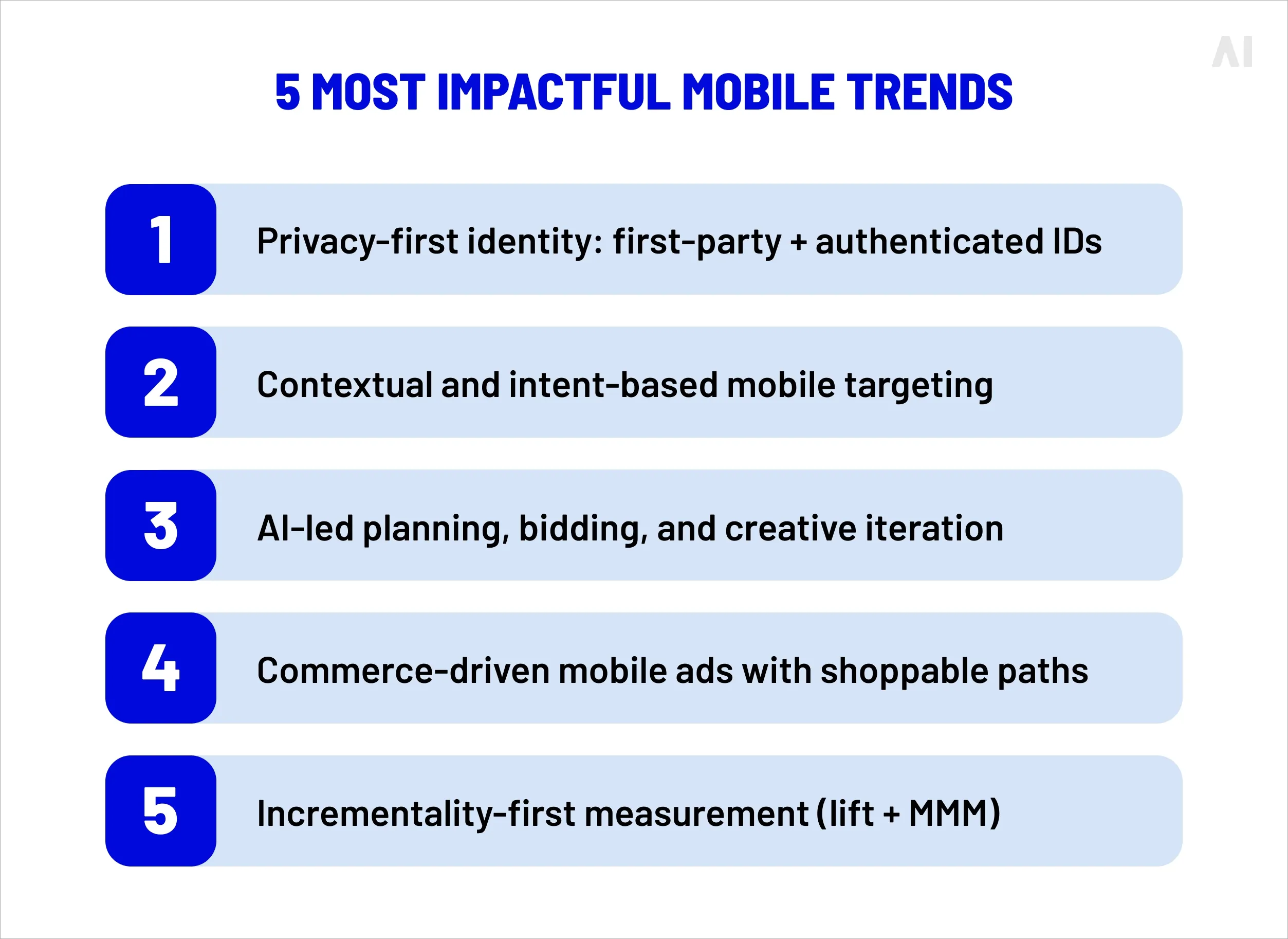
Incrementality is moving from “advanced teams do it” to “everyone needs it.”
That’s because last-click attribution breaks down in:
- multi-device journeys
- walled garden reporting
- modeled conversions
- omnichannel flows where the phone is a bridge, not the final step
In 2026, the practical shift is:
- more lift studies (geo, audience split, conversion lift)
- more holdout testing
- more blended measurement (incrementality + MMM + platform reporting)
- more focus on directional truth over false precision
The teams that win treat incrementality as a habit, not a one-off project.
Measurement challenges in the future of mobile advertising
Mobile measurement is getting harder for a simple reason: mobile now sits inside everyone else’s measurement problem, so it inherits the complexity of cross-device journeys, privacy constraints, and platform-specific reporting.
Here are the challenges that matter most in 2026:
Last-click is less representative
Last-click often over-credits the final touch (frequently mobile retargeting or branded search) and under-credits:
- CTV awareness
- DOOH exposure
- upper-funnel mobile video
- commerce media assists
{{26-The-Future-of-Mobile-Advertising-SEO-5="/tables"}}
Attribution windows are inconsistent
Between iOS privacy constraints, platform modeling, and cross-channel journeys, a single “default window” is rarely honest. Mobile advertisers need:
- multiple windows (short and long)
- segmented windows by objective (install vs purchase vs visit)
- testing to validate what’s realistic
The supply chain itself distorts reporting
Even if your attribution model is good, poor inventory quality will corrupt your inputs.
ANA’s 2025 Programmatic Transparency Benchmark reported that only 41% of programmatic ad spend reached the end publishers as “effective impressions” in its Q1 2025 findings. That’s a measurement challenge because you can’t optimize outcomes reliably if a large portion of spend is lost to fees, inefficiency, or low-value paths before it becomes real media.
Walled gardens create “parallel truths”
Platform-reported conversions can be useful, but they’re often:
- hard to reconcile across ecosystems
- difficult to audit
- inconsistent with independent measurement
Incrementality is essential but operationally demanding
Lift studies take planning discipline:
- clean test design
- stable budgets
- controlled geos or cohorts
- time to read results without overreacting
💡 Related reading: Multi-touch attribution explained: How to measure what really drives conversions
⚡ The ANA’s Q1 2025 benchmark introduced a TrueCPM “optimization gap” of 37.8%, implying that over a third of open web programmatic spend still misses standard quality bars. Measurement gets messy fast when media quality is unstable.
How marketers should prepare for the future of mobile advertising
Preparation isn’t a checklist of tactics; it’s a set of capability upgrades that make mobile advertising resilient when identity, measurement, and supply conditions keep shifting. Here’s a practical plan built for CMOs and operators.
1) Rebuild targeting around durable signals
Start by ranking what you can realistically rely on in 2026, then design around a mix rather than a single identity lever:
- First-party data (CRM, site/app behavior, loyalty)
- Authenticated publisher IDs (where available)
- Contextual and intent signals
- Modeled audiences (used carefully and validated through lift)
The goal is simple: make sure your mobile ad targeting strategy doesn’t collapse if one identifier class weakens or becomes unavailable in a key environment.
2) Standardize an incrementality cadence
Incrementality should be routine, not an occasional “advanced” project, because last-click is already too distorted to be your decision engine.
A workable cadence looks like:
- keep always-on mobile campaigns running with stable budgets, so tests have a consistent base
- schedule lift tests monthly or quarterly (geo tests or audience splits)
- compare lift results to platform-reported outcomes rather than treating either as “truth”
- use the gaps to adjust creative, audience strategy, and channel mix
3) Treat creative as a system, not a file
In mobile marketing in 2026, creative volume is unavoidable, which means the only sustainable way to manage it is with structure:
- build a modular asset library (hooks, proof points, offers, CTAs)
- run fast iteration cycles with weekly learning loops
- develop placement-native variants (feed, stories, native, display)
- set clear “kill rules” for underperforming creatives so you don’t drag losers forward
4) Upgrade media quality controls
Wasted spend often shows up as “bad performance,” so supply-side discipline becomes a performance requirement:
- verify inventory sources and prioritize higher-signal environments
- reduce long, leaky supply paths where fees and quality decay compound
- protect against MFA and low-attention placements
- align partners on transparency standards that make placement, pricing, and quality inspectable
5) Align KPIs to business reality
If your KPI set is still mostly proxy metrics, you’ll misread performance in 2026, especially as modeled conversions and platform reporting diverge.
A useful framework is to separate:
- quality metrics (viewability, credible attention proxies, fraud filtration)
- outcome metrics (incremental conversions, incremental visits, revenue lift)
- efficiency metrics (CAC, MER, contribution margin where possible)
💡 AI Digital’s breakdown of digital marketing KPI selection is a useful reference for building this hierarchy.
⚡ The fastest way to lose in 2026 is to optimize what’s easy to measure instead of what’s worth measuring.
Mobile advertising vs emerging digital channels
Mobile doesn’t lose budget to CTV, retail media, or walled gardens in a clean “winner vs loser” way.
In most real plans, mobile enhances them by doing what those channels struggle with: closing loops and validating outcomes
💡 Realted reading: CTV advertising trends 2026.
Mobile vs CTV-only strategies
CTV is powerful for reach and storytelling. But “CTV-only” strategies often hit a wall:
- limited direct response immediacy
- weaker click-based response paths
- harder frequency calibration across devices
Mobile complements CTV by capturing the action layer: second-screen behaviors, app engagement, and conversion lift validation.
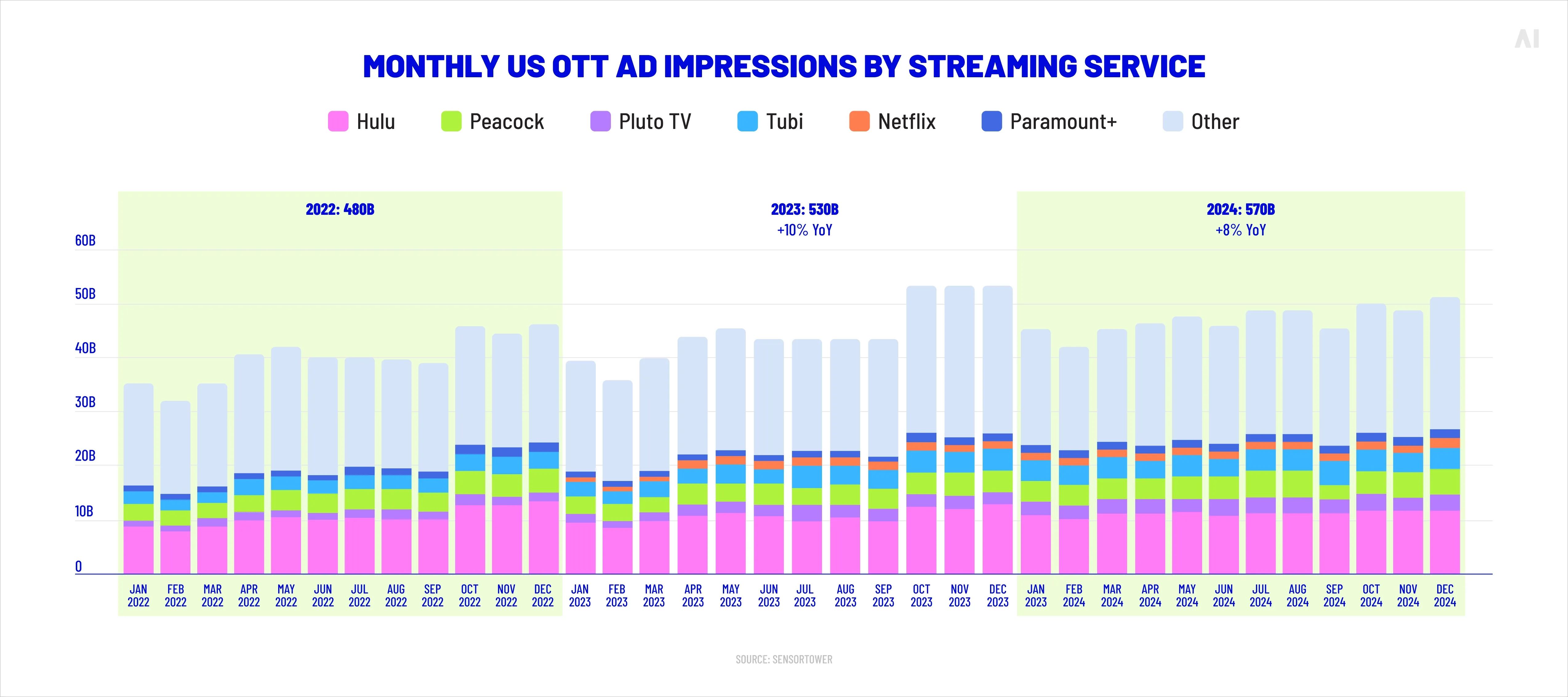
EMARKETER projected US CTV ad spending at $33.35B in 2025. CTV is growing, but it’s not replacing mobile. It’s creating more demand for a mobile bridge.
Mobile vs retail media
Retail media is where conversion proof is strongest. Mobile is where:
- retail intent often begins (apps, search, comparisons)
- shopping decisions are reinforced (reviews, creator content, retargeting)
- loyalty behaviors happen (wallets, rewards apps)
EMARKETER forecast US retail media ad spending at $69.33B in 2025. If you treat retail media as a standalone silo, you’ll miss the role mobile plays in feeding and extending that demand.
Mobile vs walled gardens
Walled gardens remain central for scale and performance. Mobile advertising doesn’t compete with them so much as it:
- provides cross-channel continuity when you buy beyond one platform
- supports measurement triangulation (lift + business outcomes)
- enables sequencing and suppression across environment
Also, new surfaces are emerging that could reshape the “walled garden” map. For example, Digiday cited Forrester analysis suggesting advertisers may cut open web display investment as AI search changes publisher reach. Whether that plays out exactly or not, it reinforces the planning need: mobile helps you stay flexible when reach and addressability shift.
The long-term outlook for mobile advertising
Beyond 2026, mobile advertising is heading toward three big realities. None of them are “new” ideas, but the center of gravity shifts: from deterministic tracking to durable signals, from manual optimization to AI-run operating loops, and from “mobile drives clicks” to mobile connects media to commerce and real-world outcomes.
1) Identity resolution becomes more privacy-safe and more hybrid
The long-term direction is not a return to universal IDs. It’s multiple identity modes running in parallel, chosen based on context, consent, and what you’re trying to measure.
Expect more reliance on:
- First-party identity (hashed emails, authenticated IDs): This becomes the backbone for your measurement and lifecycle marketing. The practical implication: if your first-party data is messy, your targeting and measurement will be messy too. The winners treat identity as an input quality problem, not a media trick.
- Privacy-safe collaboration (clean rooms, aggregation): More brands will treat partners (publishers, retailers, platforms, data providers) as “measurement collaborators” rather than raw-data vendors. Aggregation becomes a feature, not a compromise: it reduces compliance risk and forces better discipline around what you actually need to know.
- Modeled audiences with stricter validation: Modeling doesn’t disappear. It becomes more controlled. Teams will increasingly ask: “What portion of performance is directly observed vs modeled?” and “Does the model hold up under incrementality testing?” Models that can’t be challenged will be discounted. Models that can be validated will become standard operating equipment.
What changes for marketers: You’ll plan identity like a portfolio. Some activation sits on first-party and authenticated ecosystems, some sits on contextual/intent, and some sits on modeled reach. Your job is to make those modes compatible so reporting does not collapse into platform silos.
2) AI-assisted decision-making becomes the default operating mode
This is bigger than “automated bidding.” Over time, AI becomes the system that runs the planning-to-learning loop, especially as signal loss makes optimization less intuitive.
Not just automation, but AI that participates in planning:
- Budget scenario modeling: AI systems will increasingly propose budget allocations based on constraints you set (margin targets, growth goals, seasonality, inventory limits). Humans still define the guardrails. AI explores the option space faster than any team can.
- Creative generation plus controlled testing: Creative will scale through modular production and assisted generation, but the key word is controlled. The advantage won’t come from making 1,000 variants. It will come from having a tight testing system that can tell you why something worked and when it stops working.
- Anomaly detection across channels: As mobile becomes the connective layer, drift in one channel will show up as symptoms elsewhere (CVR drops, CAC spikes, weird geo patterns). AI helps spot those patterns early, but only if you’ve standardized inputs and naming, and you’re logging clean event data.
- Outcome forecasting tied to business KPIs: You’ll see more forecasting framed around business outcomes (incremental revenue, contribution margin, retention), not just media metrics. That matters because it changes the internal conversation: “performance” becomes something finance can recognize.
What changes for marketers: Your edge becomes operational. Teams that build clean data pipelines, stable experimentation cadence, and clear KPI hierarchies will get more value from AI than teams that treat AI as a feature toggle.
3) Mobile becomes even more integrated with commerce and offline data
Mobile keeps moving closer to the parts of the business that actually count: transactions, loyalty, service, and physical-world behavior. That’s why mobile doesn’t get displaced by other channels. It gets more central as the bridge.
Mobile will increasingly be:
- The wallet layer: Payments, offers, stored value, and digital receipts create new moments where marketing and transaction data touch. This is less about “tracking people” and more about making conversion paths shorter and easier to measure.
- The loyalty layer: Loyalty apps and logged-in experiences turn mobile into a retention engine. Over time, brands will push more measurement into: repeat purchase rate, churn prevention, category expansion, and lifetime value signals that sit inside mobile-driven ecosystems.
- The store-visit validation layer: Location is becoming more privacy-safe and more statistical. The direction is toward aggregated lift and trade-area measurement, not user-level certainty. Mobile’s role here is to help omnichannel teams answer: “Did exposure change real-world behavior?”
- The customer-service and retention layer: Messaging, support, order tracking, and post-purchase engagement happen on phones. That means mobile advertising will increasingly be evaluated not just on acquisition, but on how it feeds downstream efficiency (fewer returns, better onboarding, higher repeat).
What changes for marketers: Mobile strategy becomes inseparable from your commerce and customer systems. If mobile media teams can’t connect to CRM, loyalty, retail, and service signals, they’ll be stuck optimizing proxies while competitors optimize outcomes.
💡 For a broader view of how AI changes marketing operations and decision systems, AI Digital’s guide to AI in digital marketing is a helpful reference.
Conclusion: why mobile advertising remains critical in 2026
Mobile advertising remains critical in 2026 for a simple reason: it’s the most consistent layer connecting media exposure to real outcomes. As identity fragments and reporting becomes more modeled, most channels struggle to prove impact without leaning on proxies. Mobile is where intent shows up, where conversion paths get shorter, and where omnichannel performance can be validated without pretending we have perfect user-level certainty.
What changes from here is how mobile delivers value. The next phase isn’t built on one identifier, one attribution model, or one DSP setting. It’s built on durable inputs (first-party and contextual), disciplined testing (incrementality as a habit), and operating systems that can keep up (AI in the workflow, not just in bidding).
Here are the takeaways to carry into planning:
- Mobile still dominates because it sits closest to decision-making. People research, compare, navigate, and act on phones even when the final conversion happens elsewhere.
- Privacy-first doesn’t remove targeting—it changes the inputs. The best strategies shift toward first-party identity, authenticated environments, contextual and intent signals, and privacy-safe collaboration.
- Measurement becomes a triangulation problem. Platform reporting still matters, but it needs to be checked against incrementality tests and business outcomes so you can separate correlation from lift.
- Creative becomes a system. Mobile performance will increasingly depend on structured iteration: modular assets, fast testing cycles, and placement-native variants.
- Mobile doesn’t compete with CTV, retail media, or walled gardens. It strengthens them by capturing follow-through and making cross-channel sequences measurable.
If you want a practical way to reduce waste while strengthening mobile’s role in omnichannel measurement, this is where Smart Supply fits.
Smart Supply is AI Digital’s supply-side solution. It’s designed to give buyers unbiased, outcome-based access to premium supply through curated deal IDs that are built around your KPIs, not a platform’s incentives.
If you want to pressure-test your 2026 mobile plan—or see what a cleaner supply path and KPI-driven selection would look like for your mix—get in touch with AI Digital and share your goals, channels, and current constraints.


.webp)