CTV started life as a bolt-on to digital video plans: a way to pick up streaming audiences while most budgets stayed in linear. That balance has flipped. As streaming’s share of viewing hits new records and platforms introduce ad-supported tiers, CTV trends are now shaping how marketers think about TV as a whole.
Digital video is on track to capture nearly 70% of all U.S. TV/video ad spend in 2025, with CTV, social video, and online video all posting double-digit growth, according to IAB’s 2025 Outlook report. In the same study, linear TV is one of the few channels expected to decline.
That shift brings both opportunity and complexity:
- Viewers are scattered across dozens of apps and devices.
- Measurement currencies are still in flux.
- New buying tools, especially self-serve and AI-powered workflows, are lowering barriers to entry.
In the sections that follow, we’ll unpack the CTV advertising trends reshaping 2026, then translate them into clear implications and next steps.
⚡ CTV is no longer a special line item on the plan, it is the context in which TV planning happens. Teams that still bolt CTV on at the end will struggle to keep up with audiences who have already moved.

💡 For a data-led look at CTV’s rise, you may also want to bookmark AI Digital’s Connected TV Advertising: How CTV Ads Work & Connected TV Statistics

Key CTV advertising trends for 2026
Before we dive into individual trends, it helps to zoom out. The biggest CTV advertising trends for 2026 sit at the crossroads of three forces: shifting connected TV viewership, the rise of data-driven buying, and pressure to prove performance. The sections below break down how those forces show up in practice—from planning and retail media to creative, clean rooms, and measurement—so you can decide where to focus your next round of testing and investment.
{{CTV-Advertising-Trends-2026-1="/tables"}}
The rise of converged TV planning
Marketers are finally treating “TV” as one converged channel that includes linear, CTV, and other digital video, instead of three separate silos.
In IAB’s 2025 outlook, buyers indicated that CTV would see double-digit spend growth, while linear TV would decline, reflecting a clear rebalancing within the broader TV bucket. At the same time, digital video overall (CTV + social + online) is projected to command nearly 70% of total TV/video spend in 2025, as mentioned previously.
What this means in practice:
- Unified reach planning: Teams are moving away from separate “TV” and “digital” teams and tools. They are planning total video reach and frequency across linear and CTV together, using audience-based planning rather than pure GRPs.
- Cross-screen frequency control: Advertisers want to avoid hitting the same household with the same message on linear, then again on three different CTV apps. Converged planning tools and identity solutions help cap frequency across screens.
- Holistic reporting: Instead of isolated reports for linear and streaming, marketers are asking, “What did TV as a whole deliver?” That requires deduplicated reach across platforms, not just channel-level numbers.
💡 For a deeper grounding in how this fits with broader TV strategy, see AI Digital’s guide to TV advertising.
⚡ In 2026, the real competitive advantage is not choosing TV vs CTV—it’s controlling reach and frequency across both.
Retail media meets CTV
Retail media is no longer confined to search results and on-site banners. In 2026, retailers are extending their first-party commerce data into CTV environments, turning streaming into a measurable mid- and lower-funnel channel.
{{CTV-Advertising-Trends-2026-2="/tables"}}
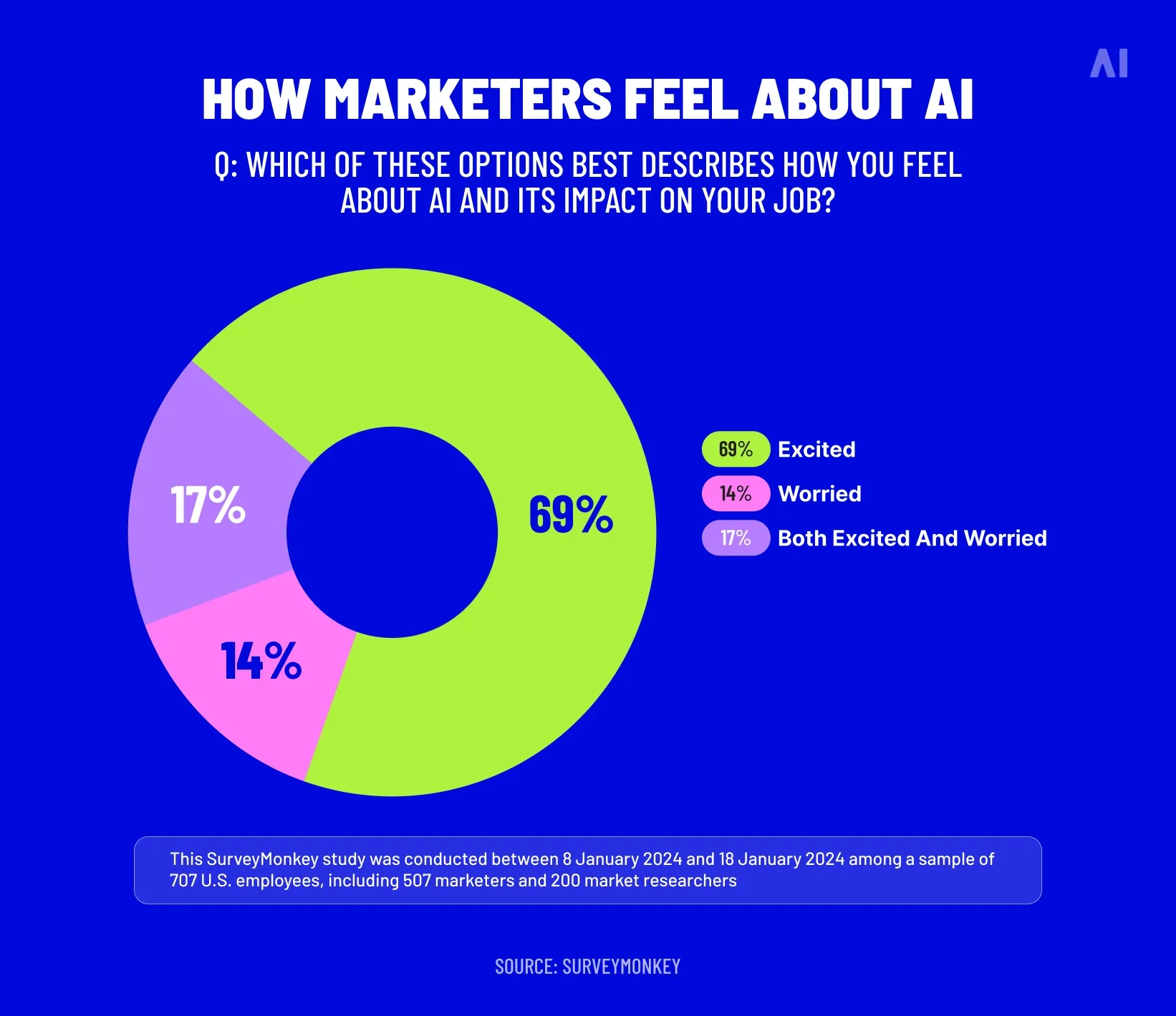
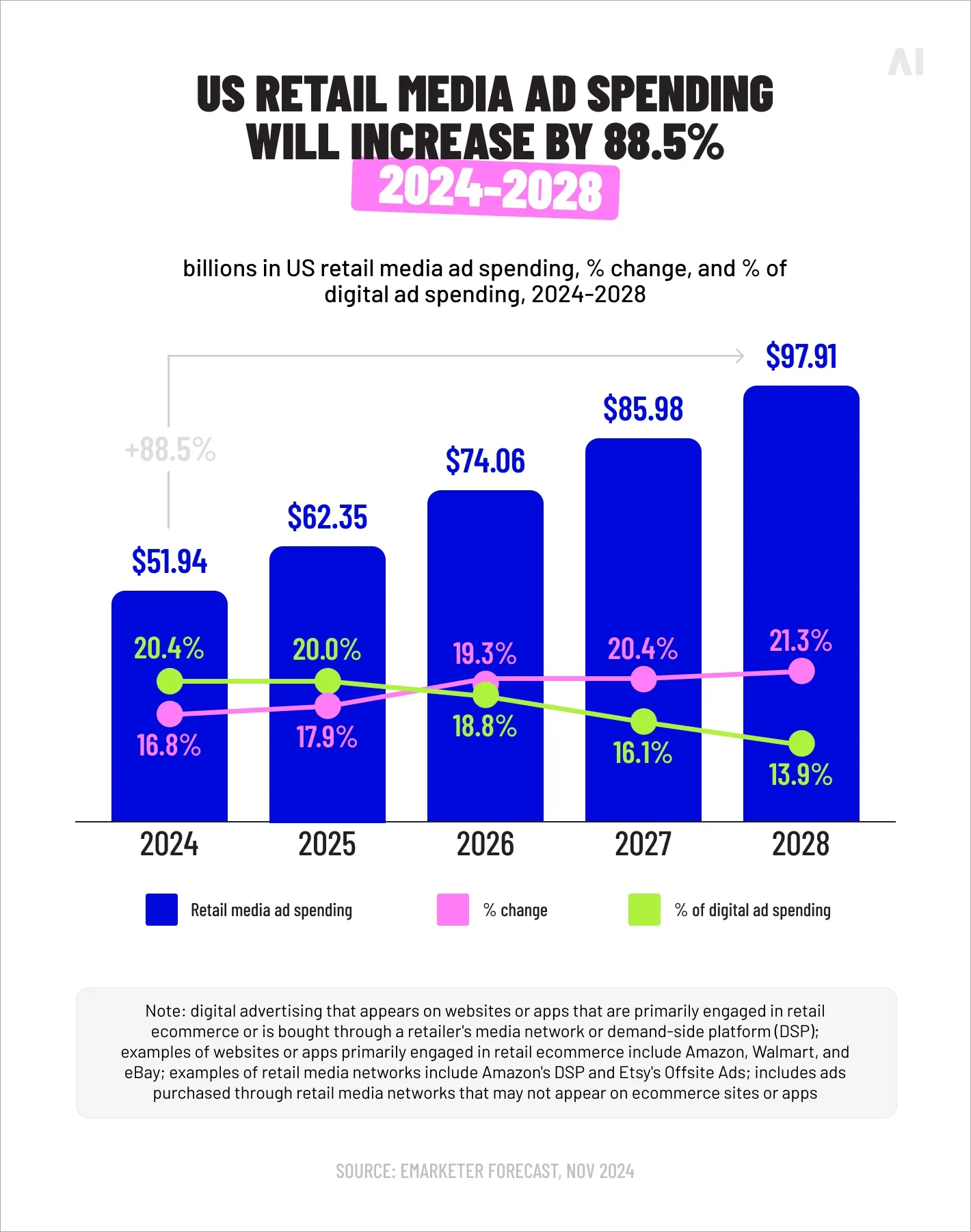
eMarketer’s latest forecast expects U.S. retail media ad spend to reach $58.79 billion in 2025 and $69.33 billion in 2026, with much of the incremental spend flowing to Amazon Ads and Walmart Connect. Separate eMarketer analysis shows that retail media CTV ad spending will grow 45.5% in 2025, with one in five CTV ad dollars projected to go to retail media by 2027.
That combination—CTV’s storytelling power plus retail media’s closed-loop measurement—is changing how marketers think about CTV advertising growth:
- Retailers can build CTV segments around past purchases, category interest, or loyalty behaviors.
- Brands can run CTV ads against those segments and measure in-store or e-commerce sales.
- Performance teams can treat CTV more like paid search or social, optimising toward ROAS and incremental sales rather than only reach.
For example, a packaged-goods brand can target “recent category buyers” from a major retailer’s data and then attribute CTV exposure to basket uplift, rather than relying on broad demographic proxies.

⚡ When retailer data powers CTV, your TV ads are talking to people based on what they actually buy. That makes CTV just as capable of closing a sale as it is at opening the conversation.
💡 For more background on how retail media networks operate, see AI Digital’s guide to retail media networks.
AI reshapes CTV creative
AI has moved from experimentation to everyday tool in marketing workflows, and CTV creative is one of the major beneficiaries.
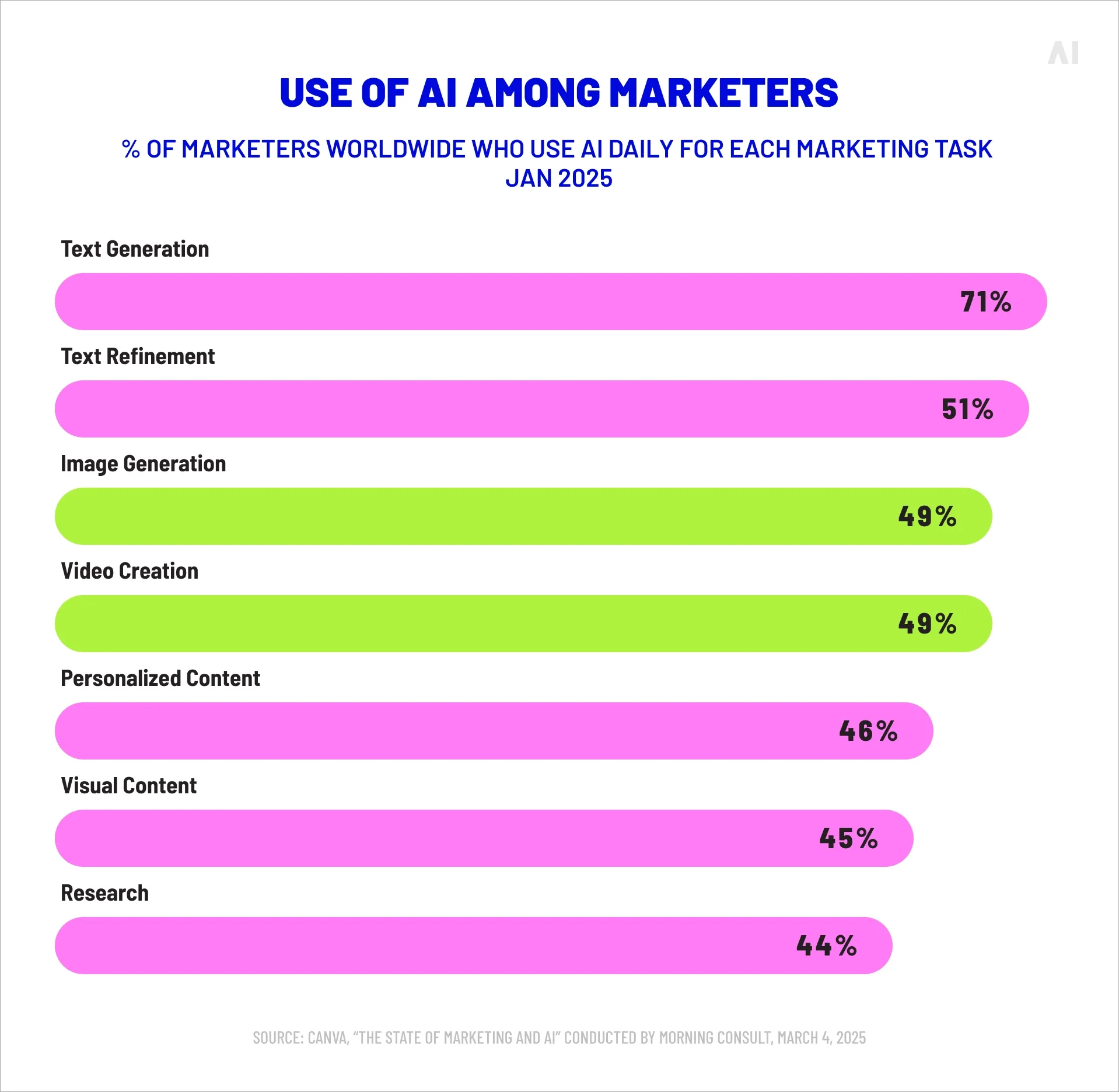
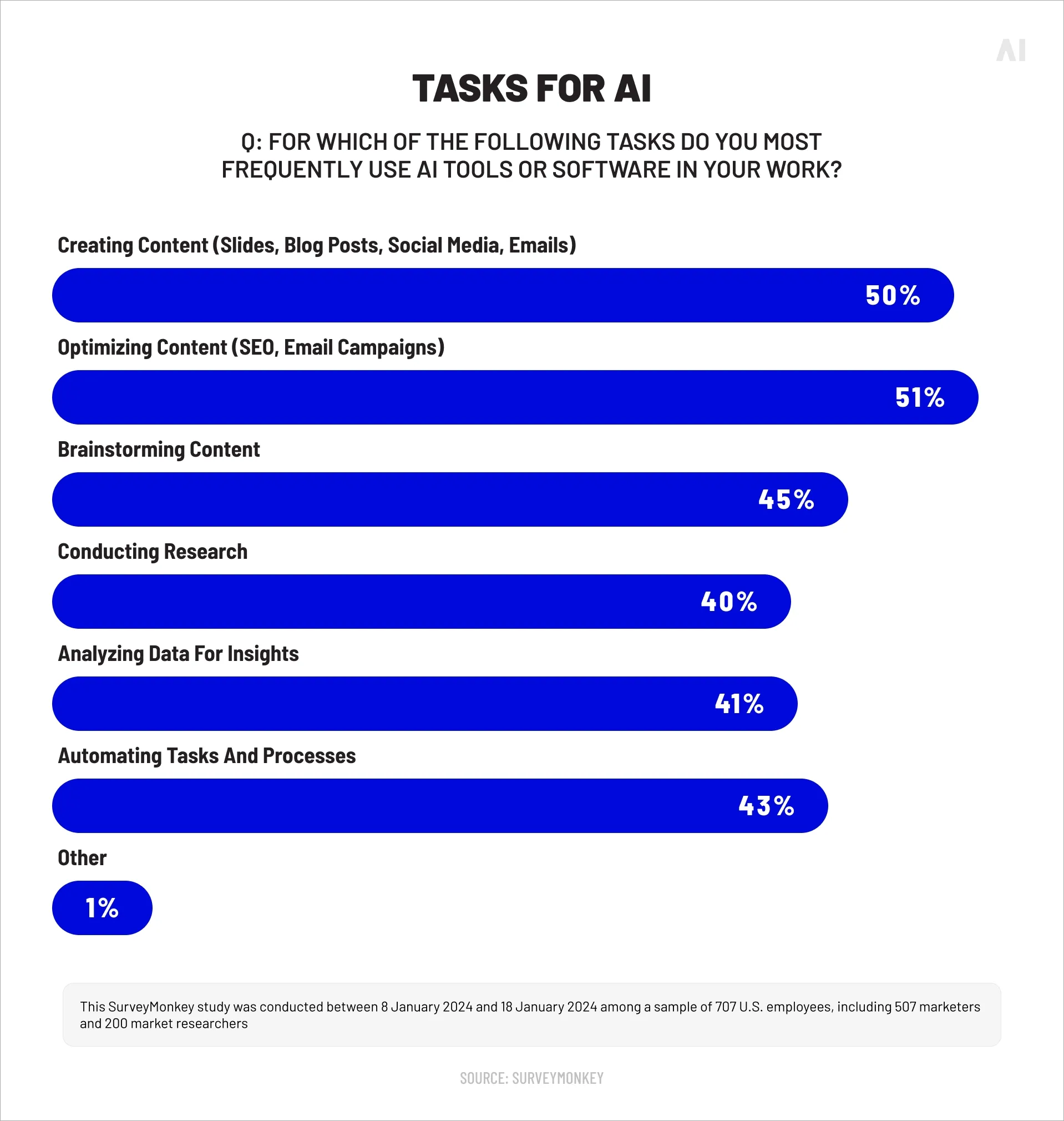
According to an Insider Intelligence analysis of January 2025 data from Canva and Morning Consult, 49% of marketers worldwide use AI daily to generate images and videos. Marketing Week reports that 44.7% of marketers are using AI to produce multiple variants of campaign assets, showing that creative diversification is now a standard use case rather than a niche test. SurveyMonkey’s AI in marketing research further suggests that 88% of marketers use AI in their day-to-day roles, even if only for parts of the workflow.
For CTV, that shift shows up in three big ways:
- Faster production of video assets
Generative tools now help teams:- Draft scripts and storyboards.
- Create or edit video sequences.
- Localize or personalize assets for different markets or audience cohorts.
- That makes it affordable to test more CTV ads per campaign—different offers, CTAs, or hooks—without tripling production budgets.
- Dynamic creative optimization (DCO) for CTV: DCO engines can automatically swap elements (offers, imagery, product tiles, even voiceover lines) based on:
- Audience segment (e.g. loyalty vs prospecting).
- Context (time of day, device, content genre).
- Real-time performance data.
- In other words, the ad the viewer sees on their TV can adapt to who they are and how previous impressions have performed, not just a one-size-fits-all spot.
- Interactive and personalized experiences: As platforms expand interactive formats (QR codes, overlays, shoppable units), AI helps map the right variant to the right household: which product to show, which promotion to feature, which landing page to route to.
{{CTV-Advertising-Trends-2026-3="/tables"}}
⚡ AI won’t write your brand strategy, but it can give your CTV creative the scale your media plan already has.
💡 To connect this trend back to your broader marketing stack, you can read AI Digital’s piece on AI in digital marketing.
💡 And because DCO is only getting more important for connected TV trends, see the AI Digital article Dynamic Creative Optimization (DCO): How It Works & How to Drive Real Performance, where this topic is unpacked in detail.
Clean rooms become essential
As privacy rules tighten and third-party identifiers fade, data clean rooms have moved from “experimental” to critical infrastructure for CTV trends.
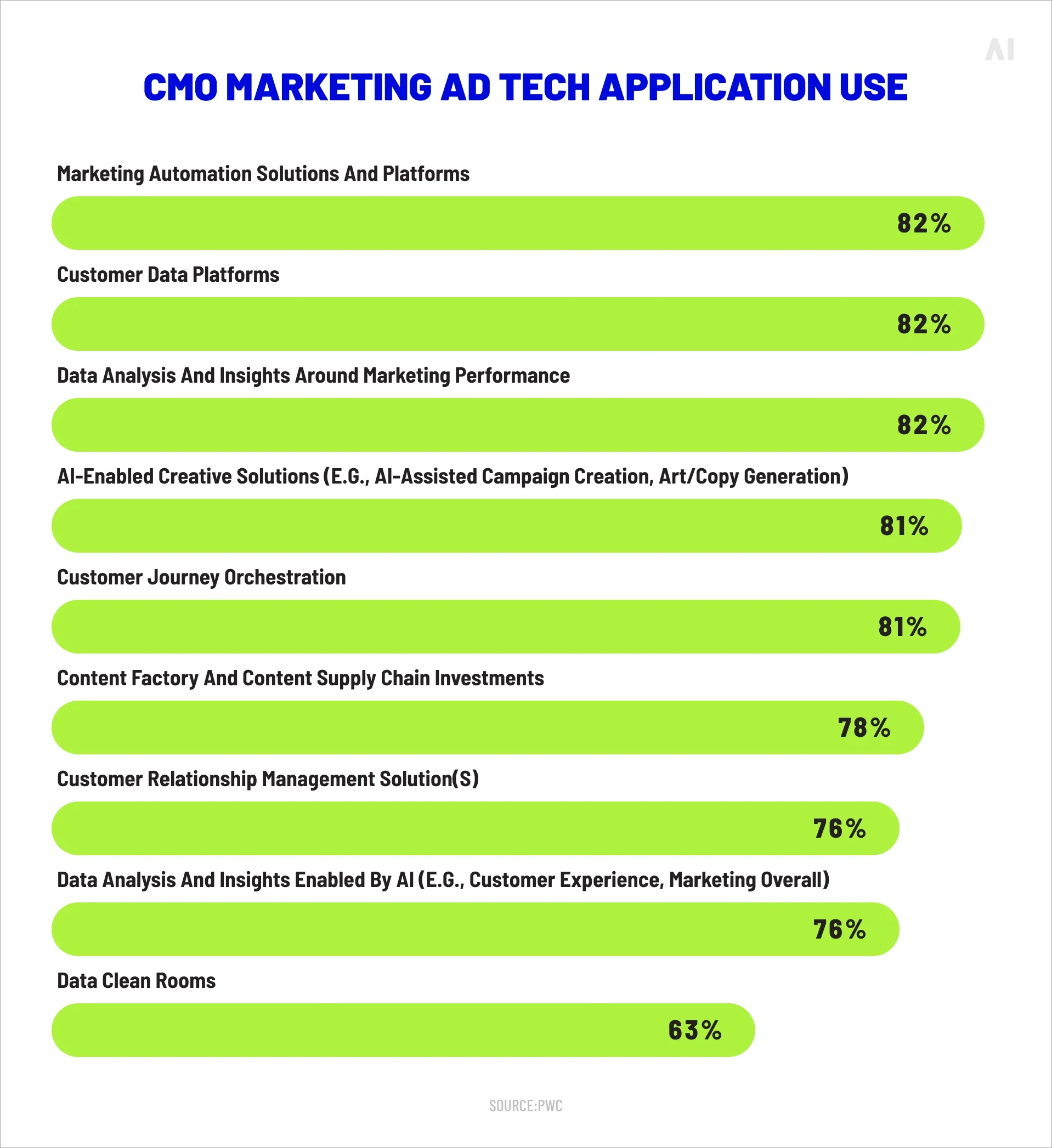
Forrester’s Q4 2024 CMO Pulse survey found that about 90% of B2C marketers now use data clean rooms for marketing use cases, indicating widespread adoption well beyond early adopters. Market researchers estimate that the global data clean room market reached $1.42 billion in 2024 and is expected to grow at a 22.1% CAGR through 2033, driven partly by advertising and media use cases.
For CTV, clean rooms solve three pressing problems:
- Privacy-safe activation: Brands can match their first-party data with publisher or retailer data without directly sharing raw customer information. That allows:
- “Bring your own audience” targeting in CTV.
- High-value segment creation (e.g. lapsed buyers) with strong privacy safeguards.
- Attribution and outcome measurement: Clean rooms let partners securely join exposure logs (from CTV publishers) with conversion data (e.g. transactions, CRM events). That supports:
- Sales lift and incrementality measurement.
- Cross-publisher performance comparisons.
- Frequency and overlap management: By analysing exposure across multiple publishers inside a clean room, brands can:
- See how many households they hit via more than one CTV partner.
- Adjust buys to reduce duplication and wasted impressions.
⚡ Clean rooms are quickly shifting from “nice to experiment with” to “necessary to compete.” Without them, it becomes much harder to use first-party data or prove the sales impact of CTV at scale.
Industry analysts and vendors like LiveRamp and Snowflake now describe clean rooms as a “must-have technology” for brands and media owners, not a niche experiment.
Marketplace consolidation reshapes CTV supply
The CTV ecosystem is still fragmented, but 2026 is shaping up as a year of gradual consolidation and concentration.
Insider Intelligence’s H2 2025 CTV forecast highlights that big media mergers and streaming services combining forces are likely to make CTV budgets more concentrated across fewer large platforms. We are already seeing:
- Major streamers bundling services and content libraries.
- Media conglomerates consolidating their various apps under unified ad sales teams.
- AVOD/FAST services expanding libraries and distribution deals to compete for share.
At the same time, supply-path quality is under scrutiny. The IAB Tech Lab recently added device attestation to its Open Measurement SDK to combat device spoofing in CTV and mobile, improving trust in inventory authenticity and measurement reliability.
The net effect for advertisers:
- Fewer but more powerful sellers: It may become easier to get scale from a smaller set of CTV partners, but those partners will have more leverage in rate negotiations.
- Still-complex fragmentation: Even as major platforms consolidate, you will still deal with a mix of premium AVOD, FAST channels, vMVPDs, and OEM inventory.
- Greater focus on supply quality: With higher budgets flowing into fewer pipes, advertisers are pressing for transparent supply paths, fraud safeguards, and consistent measurement.
For performance-driven marketers, that means being picky: prioritising partners that offer both high-quality inventory and robust measurement, while using programmatic controls (like supply-path optimization) to cut out low-value intermediaries.
Self-serve CTV platforms open the market to SMBs
For years, TV was a big-budget game. In 2026, that barrier has eroded. Self-serve CTV ad platforms and low minimum spends are opening connected TV to small and mid-sized businesses.
Hulu’s self-service platform, Hulu Ad Manager, explicitly markets itself as a way for “businesses of all sizes” to run streaming TV ads, with minimum campaign spends of $500. Roku’s Ads Manager similarly advertises budgets starting from $500 for TV streaming campaigns. Roku’s 2025 streaming predictions go further, stating that inventory pricing combined with low minimums on self-serve platforms will continue to lower the barrier for advertisers.
IAB’s digital video spend analysis reinforces this, calling out that programmatic self-serve tools are reshaping the CTV ad landscape for SMBs by making it as easy to launch a CTV campaign as a social ad set.
This trend is being amplified by AI:
- SMBs can use AI tools to generate video creative quickly (as mentioned previously, nearly half of marketers are using AI for images and video). EMARKETER
- Lightweight planning tools and templates help non-specialist marketers set up targeting, budgets, and measurement.
⚡ CTV in 2026 looks less like a walled garden for global brands and more like a marketplace open to ambitious local businesses.
💡 AI Digital’s Elevate platform is designed for this reality, combining AI-powered planning, cross-DSP optimization, and outcome-based insights so teams can run more efficient CTV and multi-channel programmatic campaigns.
Measurement standards begin to stabilize—slowly
Measurement has been one of CTV’s biggest headaches. The good news: in 2026, the industry is taking concrete steps towards more consistent, cross-screen metrics. The less good news: progress is gradual.
The IAB Tech Lab’s 2025 roadmap focuses heavily on evolving global technical standards for identity, attribution, and measurement to support converged TV. The IAB has also urged adoption of server-side conversion APIs for better, more privacy-safe outcome measurement, particularly for CTV and other environments where client-side tracking is constrained.
At the same time, industry forums like CIMM East highlight that currency fragmentation, clean room use, and data transparency are still major pain points for buyers and sellers. Many campaigns are still evaluated against multiple metrics and providers in parallel.
From a marketer’s perspective, 2026 measurement is defined by:
- Multiple currencies, one set of goals: You may still deal with more than one audience “currency” (Nielsen, VideoAmp, etc.), but your internal KPIs—incremental reach, cost per outcome, sales lift—remain the anchor.
- Greater transparency from platforms: Publishers are under pressure to provide more granular reporting and to support independent measurement and verification.
- CTV integrated into MMM and attribution: As CTV’s share of spend grows, it is being pulled into media mix models and multi-touch attribution frameworks, rather than sitting in a separate “TV” bucket.
⚡CTV measurement will stay imperfect for a while, but that shouldn’t stop you from acting. Brands that pick a sensible framework and keep learning from each flight will move faster than those waiting for a final standard.
{{CTV-Advertising-Trends-2026-4="/tables"}}
What these trends mean for marketers
Taken together, these CTV advertising trends reshape how marketers plan, buy, and optimize video in 2026. Here is what changes in practical terms.

Planning shifts from channels to outcomes
You can no longer treat linear TV, CTV, and digital video as separate investments with separate goals. The reality of viewing behaviour (streaming surpassing broadcast + cable, as mentioned previously) means that TV planning needs to be converged.
That implies:
- Budget discussions framed around total video reach and frequency.
- Scenarios that show how different mixes of linear and CTV achieve the same reach goals at different costs.
- A more outcome-oriented view of TV, where brand lift, traffic, and sales are standard metrics—not nice-to-haves.
Audience strategy becomes data-first, not demo-first
The collision of retail media and CTV, plus the rise of clean rooms, makes it possible to target on actual behaviours rather than broad demographics:
- Use first-party data (CRM, app, site) to identify high-value segments and activate them in CTV via clean rooms.
- Partner with retailers or other data providers to reach category buyers and measure sales, not just impressions.
- Build “always-on” CTV programs that update audiences as new data flows in.
In practice, that moves TV targeting away from “Adults 25–54 watching primetime” toward “high-value customers who haven’t purchased in 90 days” or “new category buyers in the last 30 days.”
Creative becomes a performance lever, not just an asset
Because AI makes it easier to produce and test multiple video variants, creative now deserves the same optimization discipline you apply to search or paid social:
- Plan for systematic creative testing in your CTV campaigns: multiple openings, offers, or CTAs.
- Use DCO where available to tailor creative to segments, inventory types, or contexts.
- Build feedback loops so performance data from CTV informs future creative briefs.
The teams that win are those who view creative not as a one-off production cost, but as a variable they can continuously improve.
SMBs and challengers become real TV competitors
Self-serve platforms and low minimums mean local and mid-market brands can now afford CTV advertising growth in their own right, instead of relying solely on search and social.
For larger brands, this brings both competition and opportunity:
- Competition, because local players can now tell their story on the same living-room screen as national brands.
- Opportunity, because franchisees, dealers, and local partners can co-fund and run their own CTV campaigns, adding local relevance on top of national work.
If you operate a distributed brand (franchises, dealer networks), 2026 is the year to formalize how you want those partners to use CTV.
Measurement demands a “good enough plus learning” mindset
Even as standards slowly improve, you will likely not get perfect cross-platform numbers in 2026. Instead, you should aim for:
- A core measurement spine (e.g. brand lift + web/app conversions + sales where possible).
- A limited set of currencies/providers you align on internally.
- A culture of experimentation where CTV test results are fed back into your planning models (including MMM).
The organizations that move fastest are not the ones with perfect data, but the ones that make consistent decisions with the data they have.
Actionable recommendations
Here are practical steps you can take now to prepare for—and capitalize on—the 2026 connected TV trends.
1. Build a converged video plan
To make converged planning real rather than theoretical, start by tightening up the basics of how you structure and document your TV and CTV investment.
- Combine your linear and CTV planning into a single process and document.
- Ask your agencies or platforms for unified reach and frequency reports across all TV environments.
- Run at least one scenario where you reallocate a portion of linear budget into CTV and estimate the impact on incremental reach and cost per outcome.
2. Treat CTV as part of your performance stack
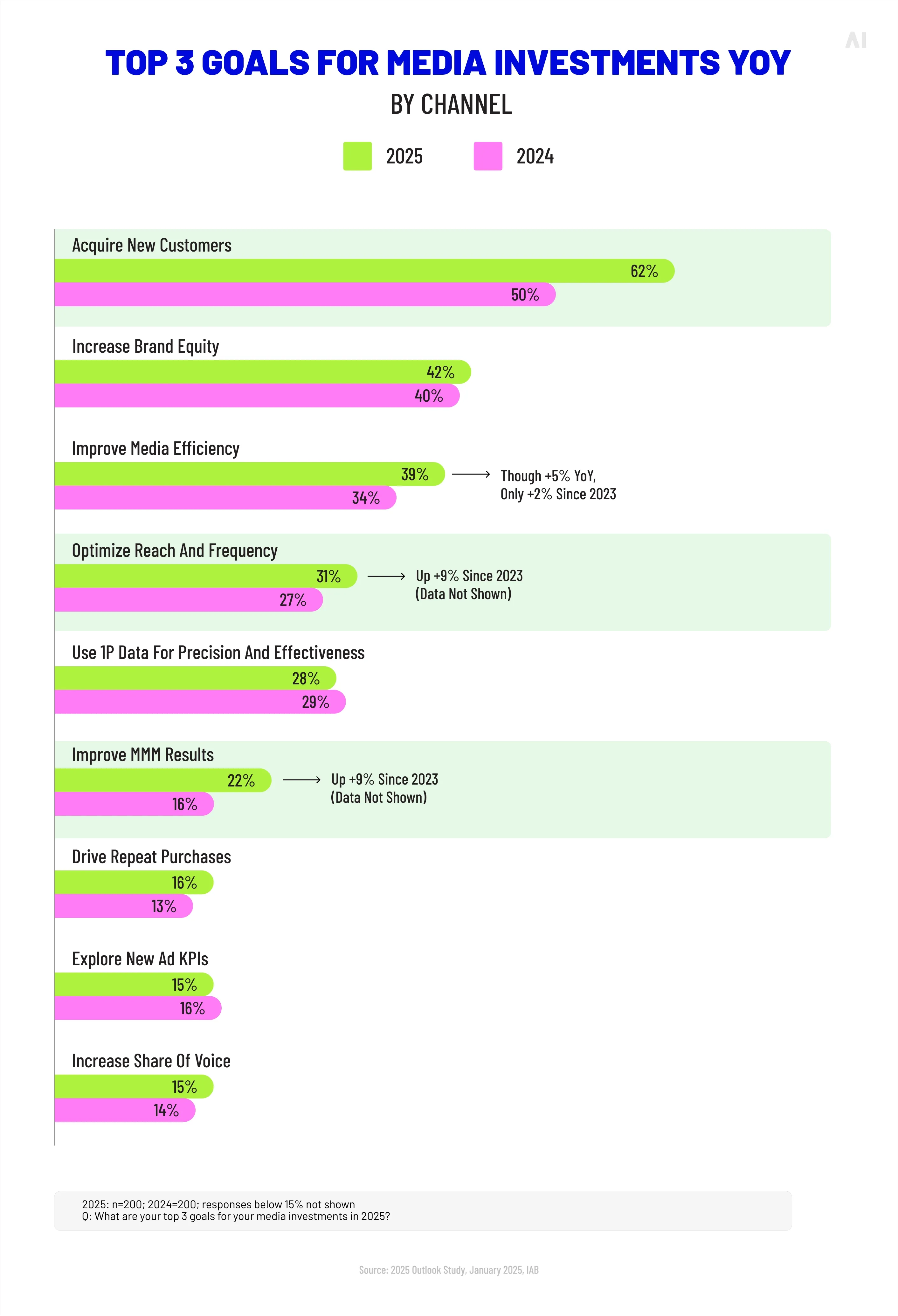
IAB analysis of digital video buyers shows that the top reason advertisers reduce spend with a streaming partner is poor business outcome delivery, not weak brand metrics. That tells you how buyers are thinking.
- Define performance KPIs for CTV: site visits, app installs, lead volume, or sales lift.
- Ensure CTV campaigns are tagged and tracked in the same way as other performance channels where technically possible.
- Use lift studies, conversion APIs, and clean rooms with key partners to quantify effect.
3. Put your first-party data to work in CTV
Use these steps to turn the customer data you already own into smarter targeting and more accountable CTV campaigns.
- Audit what customer data you can legally and ethically use (emails, loyalty IDs, app IDs, CRM segments).
- Map which CTV partners offer clean room integrations or other privacy-safe data matching options.
- Start with one or two high-value use cases, such as:
- Reactivating lapsed customers.
- Upselling existing customers to higher-margin products.
The goal is to move from generic CTV audiences to segments grounded in your own data.
4. Lean into AI-assisted creative, with guardrails
These actions will help you tap AI for scale and speed in CTV creative without losing control of quality or brand voice.
- Identify 1–2 AI tools to support video ideation and editing for CTV.
- Set clear guidelines for your team: which parts of the process can AI handle, and where human review is required (e.g. brand tone, factual accuracy).
- Design a creative testing plan for each major CTV flight:
- At least two different openings or hooks.
- At least two offers/CTAs if you have a performance objective.
- A clear way of reading results (per-creative performance reports from your ad platform or DSP).
Complement this with AI Digital’s article AI in digital marketing, which explores broader governance and workflow considerations.
5. Pilot or expand use of self-serve CTV tools
Use the checklist below to test self-serve CTV in a controlled way, whether you are new to it or ready to open it up to more teams.
- If you are a smaller brand or region, test self-serve platforms like Hulu Ad Manager or Roku Ads Manager for campaigns where a $500–$2,000 test is feasible.
- If you are a larger brand, consider how these tools can be safely used by:
- Local teams or franchisees.
- Specific product lines that need agility.
💡 AI Digital’s Elevate platform can complement these tools by centralising planning and optimization while still allowing local experimentation.
6. Invest in clean room and measurement foundations
The points that follow focus on putting the plumbing in place so CTV can be measured, compared, and optimized alongside the rest of your media.
- Choose a clean room partner (or work with publisher/retailer clean rooms) and run a pilot that connects CTV exposures with sales or CRM outcomes.
- Align internally on a small set of core CTV metrics and providers to avoid “metric sprawl”.
- Explore how CTV can be incorporated into your MMM and attribution frameworks, so its contribution is recognized fairly when budgets are set.
💡 For a broader view of how AI Digital approaches data and measurement across channels, see The future is now: how AI Digital embraces AI technologies to change the programmatic game
{{CTV-Advertising-Trends-2026-5="/tables"}}
Conclusion
CTV in 2026 is defined by three words: measurability, data integration, and creative innovation.
- Measurability, because buyers are increasingly judging CTV on business outcomes, not just GRPs.
- Data integration, because first-party data, retail media, and clean rooms are changing how we target and attribute TV.
- Creative innovation, because AI and new formats let brands tailor video to audiences with a level of agility that used to be reserved for social.
⚡ The brands that win CTV in 2026 will not be the biggest spenders—they’ll be the ones that treat TV as a test-and-learn engine.
If you want help applying these CTV advertising trends to your own roadmap, or you are exploring how AI Digital’s Open Garden model and Elevate platform can support your CTV strategy, you can get in touch with the AI Digital team.

.webp)