Best OTT Platform Providers in 2026: Top 20 Solutions for Live Streaming


In 2026, selecting the right OTT platform provider is no longer a technical decision—it is a strategic infrastructure investment. The global video streaming market continues to expand structurally, not cyclically. According to recent industry forecasts, the global OTT market is projected to surpass $500 billion before 2030, growing at a CAGR above 15%. At the same time, live streaming now represents a significant share of total internet traffic, with video accounting for more than 65% of global consumer internet traffic.
As demand for high-quality live streaming, on-demand video, FAST channels, and hybrid monetization models accelerates, businesses increasingly rely on specialized OTT service providers and end-to-end OTT solution providers to ensure scalability, monetization efficiency, content protection, and long-term ROI.
Choosing the right OTT providers directly impacts:
- Streaming quality and latency
- Monetization flexibility (AVOD, SVOD, TVOD, FAST)
- Content management and distribution control
- Advertising and revenue optimization
- Data ownership and analytics transparency
If you’re evaluating OTT platform providers for 2026, this guide covers the essential features to prioritize, the latest OTT industry trends, and the top 20 OTT solution providers globally. It also includes a practical framework to help you choose the right OTT solution provider based on your business model and growth goals, along with insights on how advertising supports OTT monetization strategies. (see our guide on What is OTT Advertising).
What is an OTT solution provider?
An OTT solution provider is a B2B technology vendor that enables businesses to build, manage, and scale their own OTT platform for live streaming and on-demand video distribution. These OTT platform providers deliver the full infrastructure layer behind video streaming operations, including cloud hosting, encoding and transcoding, CDN distribution, video player and app development, monetization systems (AVOD, SVOD, TVOD), analytics, content management, and security features such as DRM and geo-blocking. In practice, OTT service providers function as end-to-end streaming solution providers for media companies, broadcasters, sports organizations, and enterprises launching OTT streaming services across web, mobile, and connected TV.
💡It is important to distinguish OTT providers from platforms like Netflix or Disney+. These are consumer-facing OTT streaming services that distribute content, not infrastructure vendors. An OTT solution provider operates behind the scenes, supplying the technology stack that powers branded OTT services rather than owning the content itself.
⚡️For a broader overview of OTT platforms and how they operate within the digital ecosystem, see our guide, OTT Platforms.
Benefits of OTT platform providers
OTT platform providers enable media companies, sports leagues, broadcasters, and brands to launch and scale professional OTT streaming services without building complex infrastructure in-house. Instead of investing heavily in engineering, CDN contracts, encoding workflows, and app development, organizations can rely on specialized OTT solution providers to deploy secure, multi-device streaming solutions across web, mobile, and connected TV environments. This significantly reduces technical overhead while accelerating time to market.
A major advantage of working with OTT service providers is scalability. Whether distributing live streaming for major sports events or managing large libraries of on-demand video, OTT providers ensure adaptive bitrate delivery, global CDN distribution, and low-latency performance. This allows organizations to expand audience reach globally without compromising streaming quality or reliability.
Monetization flexibility is another core benefit. Modern OTT solution providers support AVOD, SVOD, TVOD, hybrid models, and FAST channel distribution, enabling businesses to diversify revenue streams based on audience behavior. Integrated ad-tech, subscription management systems, and payment gateways simplify revenue operations while improving lifetime value and churn management.
💡Equally important is access to first-party data and analytics. OTT platform providers offer dashboards that track engagement, retention, device usage, and conversion metrics. These insights enable data-driven programming, pricing, and advertising decisions—improving long-term ROI and strategic growth.
⚡️For deeper insight into sports-specific streaming strategies, see our guide, The Ultimate Guide to Sports OTT Streaming in 2026.
Key features to evaluate in an OTT provider
Selecting the right OTT platform provider requires a structured evaluation of technical, operational, and commercial capabilities. Each feature directly impacts streaming performance, service reliability, monetization efficiency, and long-term scalability. Below are the core criteria to assess when comparing OTT solution providers in 2026.
Streaming Quality and CDN Performance
Streaming performance directly determines user retention and monetization. Industry research consistently shows that playback interruptions materially impact engagement: Conviva’s latest State of Streaming reports indicate that viewers are significantly more likely to abandon streams when buffering exceeds a few seconds, and latency directly affects live sports engagement.
When evaluating OTT platform providers, assess the following measurable criteria:
- Global CDN partnerships
Enterprise OTT providers typically integrate with tier-1 CDNs such as Akamai, Cloudflare, Fastly, or Amazon Web Services CloudFront. Leading CDNs operate 300+ edge locations globally, reducing last-mile latency and improving regional redundancy. Multi-CDN architecture is increasingly standard for high-scale live streaming events to mitigate regional outages and congestion.
- Latency benchmarks
Traditional OTT live streaming latency ranges between 15–45 seconds (HLS/DASH standard delivery). However, modern low-latency streaming configurations (LL-HLS, CMAF-based workflows) can reduce delay to 3–8 seconds, which is now considered competitive for live sports and betting-integrated streaming environments. Providers unable to deliver sub-10-second latency may limit real-time engagement use cases.
- Uptime guarantees (SLA)
Enterprise-grade OTT service providers typically commit to 99.9% to 99.99% uptime SLAs.
- 99.9% uptime ≈ ~8.76 hours downtime annually
- 99.99% uptime ≈ ~52 minutes downtime annually
- For premium live event streaming, 99.99% or higher redundancy architecture is increasingly expected.
- Peak traffic handling capacity
Major live streaming events routinely generate millions of concurrent viewers globally. For example, large-scale sports finals and global events often exceed 2–5 million concurrent streams on a single platform. OTT solution providers must demonstrate elastic cloud scaling, auto-load balancing, and stress-tested concurrency thresholds. Ask vendors for documented concurrency case studies rather than theoretical limits.
In 2026, streaming quality is not a differentiator—it is a baseline expectation. The real evaluation question is whether an OTT solution provider can maintain performance under unpredictable, high-concurrency, monetized live streaming conditions without degradation.
Security Features (DRM, Encryption, User Authentication)
Premium video content—especially sports, film, and pay-per-view—requires enterprise-grade protection. According to the Global Innovation Policy Center (U.S. Chamber of Commerce), digital piracy costs the U.S. economy alone $29–$71 billion annually, with streaming piracy representing a growing share of losses. For OTT service providers, security directly protects revenue and licensing relationships.
- Multi-DRM support
Enterprise OTT platform providers should integrate industry-standard DRM systems such as Google Widevine, Microsoft PlayReady, and Apple FairPlay. Multi-DRM ensures coverage across Android, iOS, Smart TVs, and connected TV ecosystems.
- Encryption standards
Look for AES-128 or AES-256 encryption and HTTPS delivery. AES-128 remains the streaming industry baseline, while AES-256 is often required for high-value content and enterprise environments.
- User authentication and access control
Tokenized streaming URLs, OAuth-based login systems, two-factor authentication (2FA), and device management controls reduce credential sharing. Credential abuse has been estimated to affect 10–20% of subscription accounts in some OTT ecosystems.
Robust security frameworks reduce revenue leakage and ensure compliance with GDPR and regional data regulations.
Monetization Tools
Revenue flexibility defines long-term platform viability. Industry data shows ad-supported streaming is one of the fastest-growing segments of OTT, with global AVOD revenues projected to exceed $70 billion before 2030 (multiple market research forecasts, 2025 updates).
Assess:
- Support for AVOD, SVOD, TVOD, and FAST
Hybrid monetization is increasingly standard. FAST channel revenues alone are projected to surpass $12 billion globally by 2027.
- Dynamic Ad Insertion (DAI)
Server-side ad insertion improves ad completion rates and reduces blockers. Industry benchmarks show server-side ad insertion can improve ad viewability compared to client-side delivery.
- Subscription and billing infrastructure
Integrated payment gateways, recurring billing automation, churn analytics, and tax compliance support are critical. Subscription churn rates in OTT commonly range between 30–40% annually, making retention analytics essential.
💡Monetization architecture should support geographic expansion and multiple revenue models simultaneously.
CMS and Content Workflow
Operational efficiency impacts scaling cost. OTT providers should offer enterprise-grade CMS systems that streamline ingestion, tagging, scheduling, and rights management.
Evaluate:
{{Best-OTT-Platform-Providers-in-2026-Top-20-Solutions-1="/tables"}}
As content libraries expand into thousands of assets, manual workflows become operational bottlenecks without automation.
API/SDK and Integration Flexibility
Future-proof OTT streaming depends on extensibility. OTT solution providers should provide well-documented REST APIs and SDKs for iOS, Android, Roku, Fire TV, Samsung TV, and web environments.
Assess:
- Device coverage
Connected TV penetration continues to rise globally, with CTV households exceeding 80% in the U.S. market.
- Ad server and CRM integration
Compatibility with programmatic ad platforms and marketing automation systems enables performance-based monetization.
- Third-party ecosystem readiness
Integration with analytics, personalization engines, and customer data platforms supports scalable growth.
Analytics and Reporting
Data transparency enables ROI optimization. OTT platform providers should deliver real-time and historical analytics dashboards.
{{Best-OTT-Platform-Providers-in-2026-Top-20-Solutions-2="/tables"}}
Technical Support and SLA
Streaming infrastructure requires reliability.
{{Best-OTT-Platform-Providers-in-2026-Top-20-Solutions-3="/tables"}}
For revenue-generating OTT platforms, downtime directly translates into financial loss.
Pricing Models and Scalability
Pricing structures vary significantly among OTT solution providers. Common models include bandwidth-based pricing, flat SaaS subscriptions, revenue sharing, or hybrid structures.
Evaluate:
- Bandwidth economics
High-definition streaming can consume 3–6 Mbps per user; 4K streaming can exceed 15 Mbps. Large-scale live events dramatically increase delivery costs.
- Revenue share structures
Some OTT service providers charge a percentage of subscription or ad revenue instead of fixed infrastructure fees.
- Elastic scaling capability
Cloud-based OTT platforms should scale automatically during concurrency spikes without requiring manual provisioning.
The ideal OTT platform provider balances predictable pricing with elastic scalability, ensuring that growth does not erode margins.
Current OTT trends in 2026
In 2026 the OTT market continues to expand significantly, with the global video streaming sector projected to grow from around USD 811 billion in 2025 to nearly USD 970 billion in 2026 and beyond, maintaining a strong long-term CAGR above 15 % through the next decade. Broadly, these structural trends are shaping how OTT platform providers and streaming services evolve:
- Live streaming innovation and low-latency delivery: The growth of sports, esports, and live event OTT experiences requires advanced low-latency workflows such as LL-HLS and CMAF, with multi-CDN strategies and cloud-native scaling to support millions of concurrent viewers without quality degradation. Live content remains a key engagement driver as audiences seek real-time interaction and event coverage.
- AI-driven personalization: AI and machine learning are increasingly embedded in content recommendation engines, dynamic UI experiences, and churn forecasting tools. These systems help platforms boost engagement and retention by tailoring content to individual behavior, a capability that is becoming baseline for competitive OTT streaming.
- Hybrid VOD/live and FAST models: Free ad-supported streaming TV (FAST) channels and hybrid consumption models combining on-demand libraries with scheduled live programming are gaining traction. This diversification supports flexible monetization and fills viewing gaps that pure SVOD models often miss.
- Multi-platform distribution: With connected TV (CTV) and mobile viewing continuing to expand, OTT providers are optimizing delivery across devices and form factors, including dedicated CTV apps, mobile UIs, and web players to meet fragmented audience demand.
- Cloud-based deployments and faster time-to-market: OTT infrastructure increasingly leverages cloud orchestration, microservices, and edge computing to reduce deployment timelines, automate scaling, and improve reliability for both live and on-demand workflows.
⚡️Together, these trends reflect a streaming ecosystem that is more data-driven, monetization-focused, and technologically sophisticated than ever before. For broader media industry context and ecosystem forecasts, read our 2026 Media Trends Report.
Top 20 OTT solution providers in 2026
The following list highlights leading OTT solution providers that enable businesses to launch and scale live streaming and VOD platforms. These companies are technology vendors and OTT platform providers, not consumer streaming services. They provide the infrastructure, monetization tools, CMS systems, security frameworks, and analytics required to operate professional OTT streaming services across web, mobile, and connected TV environments.
💡The goal is to help you quickly identify which OTT provider aligns with your technical requirements, monetization strategy, and scale objectives.
1. Brightcove
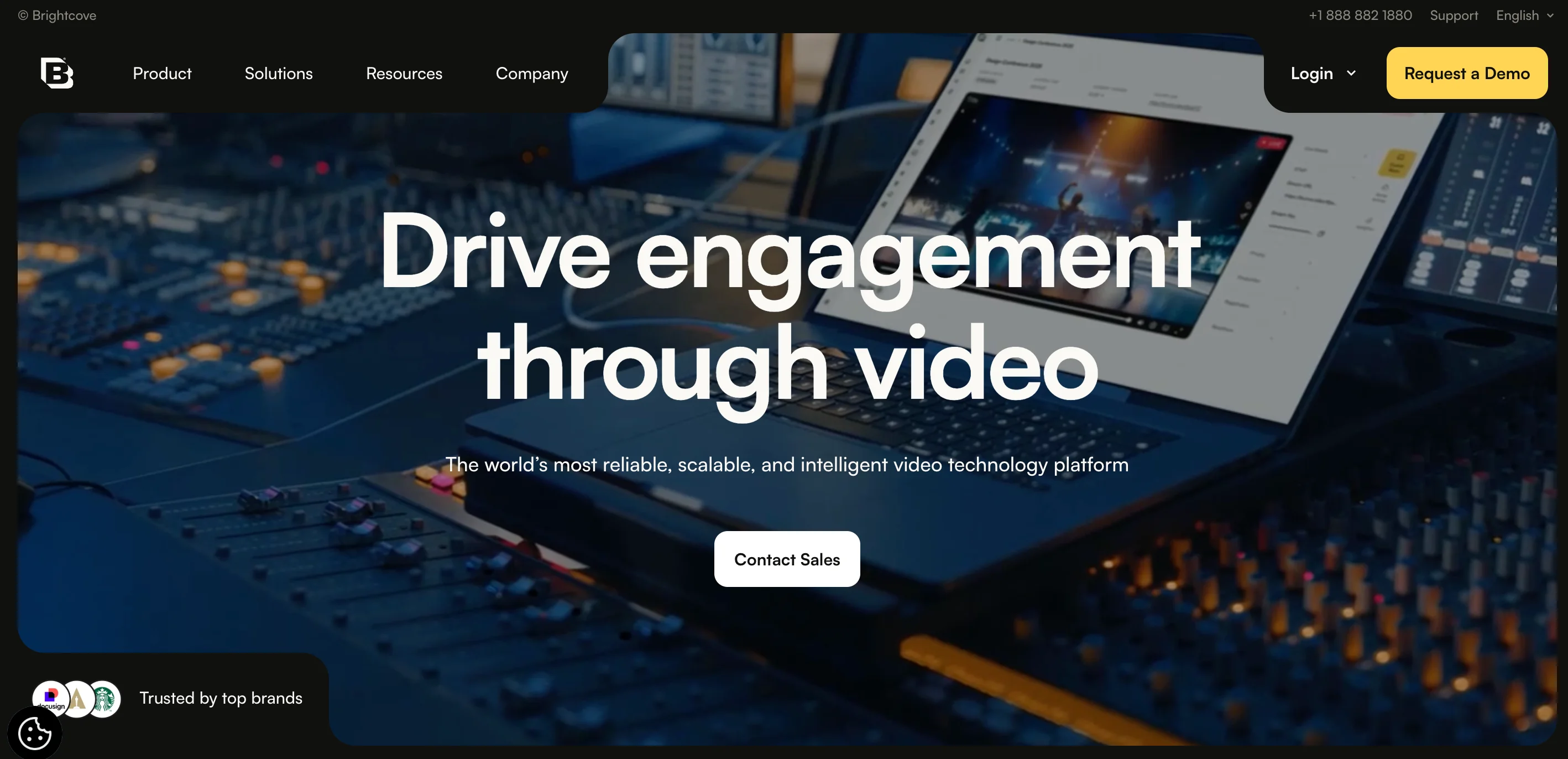
Best for: Enterprise media companies, broadcasters, and global brands
Brightcove is one of the most established OTT platform providers in the enterprise video market. Founded in 2004, the company serves customers in more than 60 countries and supports large-scale live streaming and on-demand video distribution for media organizations and corporate enterprises.
Core strengths:
- Enterprise-grade live streaming and VOD infrastructure with global CDN integrations
- Multi-device OTT app frameworks (CTV, mobile, web)
- Built-in monetization tools supporting AVOD, SVOD, and TVOD models
- Advanced analytics and audience insights
- Multi-DRM content protection
Brightcove’s platform is designed for scalability and reliability, typically offering uptime SLAs aligned with enterprise standards (99.9%+). The company integrates with major CDNs and advertising systems, making it suitable for broadcasters transitioning from traditional TV to OTT streaming ecosystems.
From a monetization perspective, Brightcove supports server-side ad insertion (SSAI), subscription management, and programmatic integrations—making it a strong OTT solution provider for hybrid revenue models.
For organizations prioritizing brand control, security, and enterprise workflow integration, Brightcove remains one of the most mature OTT service providers in 2026.
2. Kaltura

Best for: Broadcasters, telecom operators, and large-scale media enterprises
Kaltura is a cloud-based OTT solution provider specializing in TV-grade streaming infrastructure. Its Cloud TV platform is designed for operators launching subscription, hybrid, and FAST-based OTT services with enterprise-level scalability.
Core strengths:
- Cloud-native OTT architecture with microservices framework
- Claimed 99.995% platform availability (enterprise SLA positioning)
- Multi-DRM support (Widevine, PlayReady, FairPlay)
- Advanced personalization and recommendation engines
- End-to-end monetization flexibility (AVOD, SVOD, TVOD)
Kaltura is particularly suited for organizations requiring high customization, large subscriber bases, and long-term platform extensibility.
3. Vimeo (Vimeo OTT / Vimeo Streaming)
.webp)
Best for: Brands and creators launching subscription-based OTT platforms quickly
Vimeo OTT enables businesses to launch branded streaming services across web, mobile, and connected TV with relatively fast deployment timelines.
Core strengths:
- Native app distribution (iOS, Android, Roku, Apple TV)
- Built-in subscription management and billing tools
- Live streaming + VOD integration
- Simple backend CMS optimized for non-technical teams
Vimeo OTT is ideal for mid-sized brands and content creators prioritizing speed-to-market over deep infrastructure customization.
4. Wowza
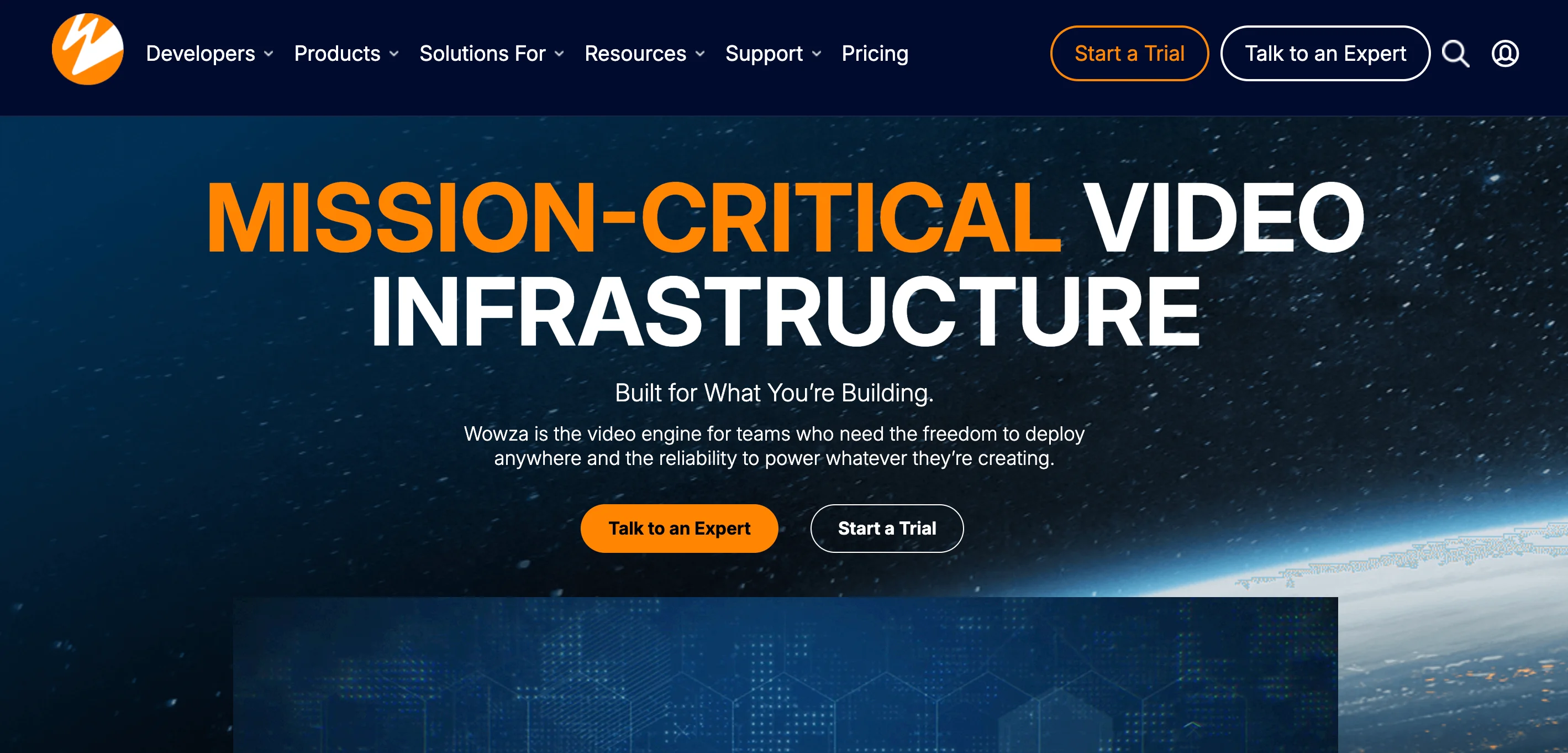
Best for: Engineering-driven teams requiring infrastructure control across on-prem, hybrid, and cloud environments
Wowza operates as a configurable streaming engine rather than a fully packaged OTT SaaS platform. It provides deep protocol-level flexibility for organizations building custom live streaming and VOD workflows.
Core strengths:
- Broad protocol support including SRT, WebRTC, and RTMP ingest
- Delivery formats such as HLS, Low-Latency HLS (LL-HLS), and MPEG-DASH
- Low-latency streaming architecture suited for real-time applications
- Deployment flexibility across on-premises, private cloud, and public cloud environments
Wowza is particularly suitable for teams seeking to avoid vendor lock-in and retain granular control over streaming pipelines and infrastructure orchestration.
5. Dacast
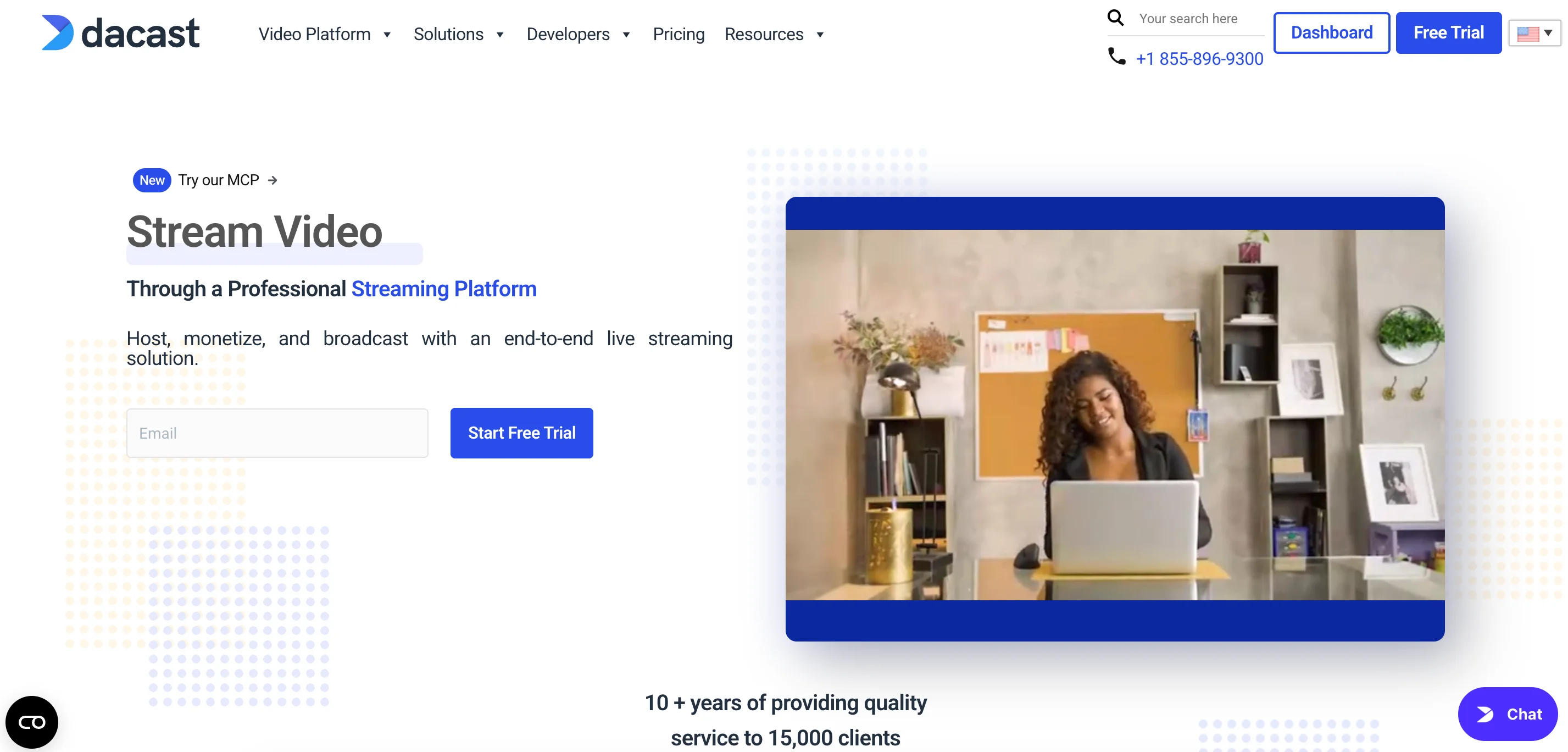
Best for: SMB to mid-market businesses seeking bundled live streaming and VOD with integrated CDN delivery
Dacast positions itself as a turnkey OTT platform provider combining video hosting, monetization tools, and enterprise-grade CDN access.
Core strengths:
- CDN delivery partnership positioning with Akamai
- Planned multi-CDN infrastructure for improved redundancy
- Integrated paywall and subscription monetization features
- Published storage overage pricing example of $0.15 per GB on select plans
Dacast is well suited for teams that prefer a packaged “online video platform + CDN” model rather than negotiating and managing CDN contracts independently.
6. JWP Connatix (JW Player / JWX)
.webp)
Best for: Digital publishers and broadcasters optimizing advertising-driven video monetization
JWP Connatix combines video delivery infrastructure with advanced advertising technology tailored to media organizations.
Core strengths:
- Claimed support for 7,000+ clients globally
- Used by approximately 80% of the top 25 comScore U.S. publishers (company-reported statistic)
- Full monetization stack including SSAI, CSAI, header bidding, and demand activation
- Player technology paired with encoding and delivery workflows
JWP Connatix is particularly strong for organizations prioritizing ad yield optimization within OTT and digital publishing ecosystems.
7. Muvi
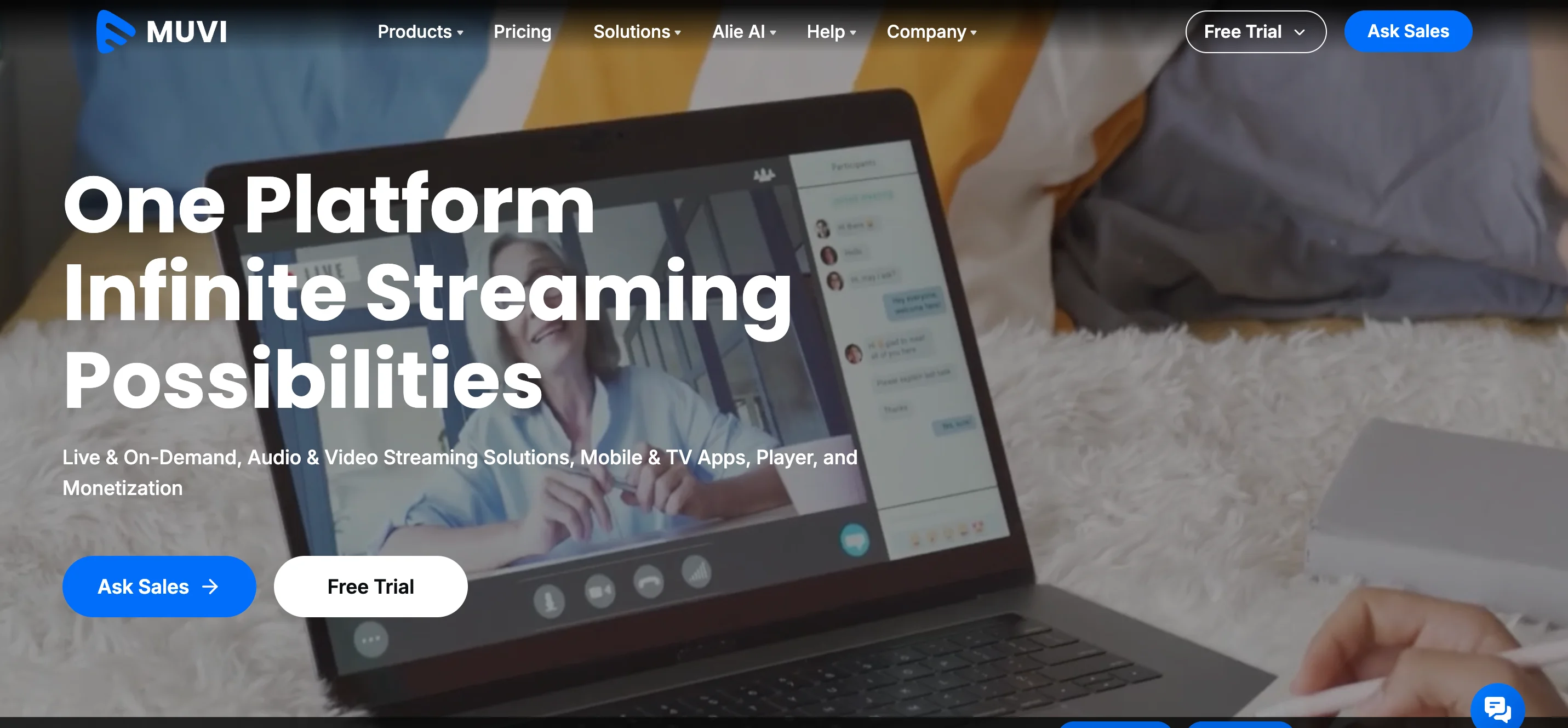
Best for: No-code or low-code OTT launches requiring end-to-end streaming infrastructure
Muvi offers a fully managed OTT solution provider model designed for rapid deployment without extensive internal engineering resources.
Core strengths:
- Product suite including Muvi One, Muvi Live, and Muvi Playout
- Support for live streaming, VOD, and 24/7 linear-style channel workflows
- White-label app deployment across multiple devices
- Market positioning focused on “end-to-end streaming without coding”
Muvi is a practical option for businesses aiming to launch subscription or hybrid OTT platforms quickly while maintaining branded control and monetization flexibility.
8. Backlight (Zype)
.webp)
Best for: Media companies integrating OTT into broader content and workflow ecosystems
Backlight is a media technology company that includes Zype within its portfolio of video infrastructure products. The company launched with a reported $200 million investment and expanded through acquisitions, positioning Zype as its dedicated OTT streaming infrastructure solution.
Core strengths:
- OTT platform infrastructure for live streaming and VOD delivery
- App distribution and subscription management tools
- Integration within a larger media workflow stack (creation → management → distribution → monetization)
- Enterprise-ready video operations support
Backlight Zype is particularly suitable when OTT streaming is not a standalone initiative but part of a broader digital media transformation strategy.
9. Uscreen
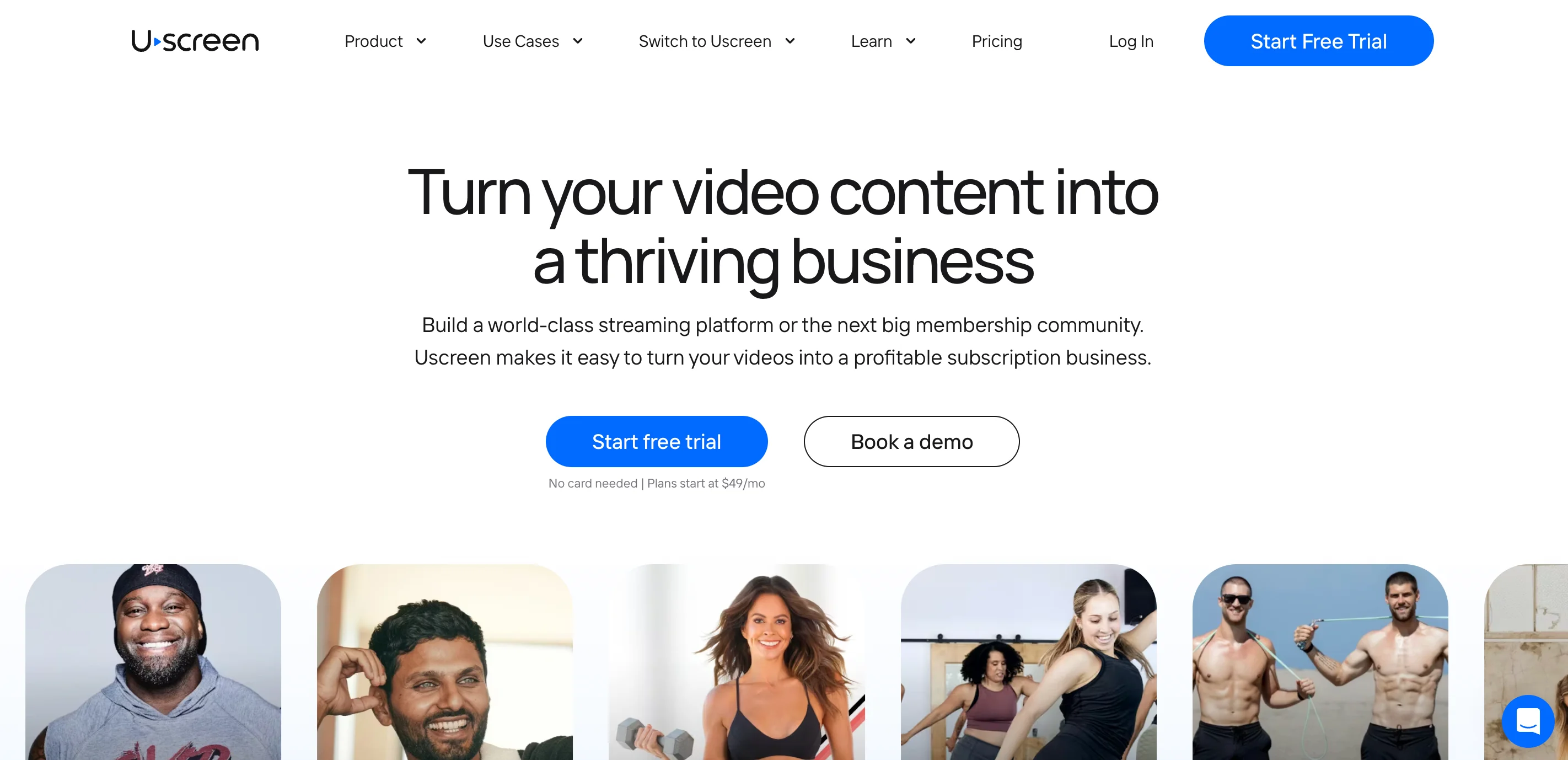
Best for: Membership-driven OTT businesses and creator-led subscription platforms
Uscreen is positioned as an all-in-one video membership platform enabling brands and creators to launch subscription-based OTT services with integrated community features.
Core strengths:
- Branded mobile and connected TV apps
- Native live streaming and on-demand video hosting
- Subscription billing and membership management tools
- Reported 4.7/5 rating on G2 (company-cited performance metric)
Pricing structures publicly referenced in third-party breakdowns indicate plans typically range between $149–$599 per month, plus per-subscriber fees—making cost forecasting critical as audience scale increases.
Uscreen is best suited for businesses prioritizing recurring revenue models, community engagement, and direct-to-consumer OTT services.
10. VPlayed (Contus VPlayed)
.webp)
Best for: Enterprises and content owners requiring highly customizable OTT ecosystems
VPlayed is positioned as a fully customizable OTT platform provider enabling organizations to launch, manage, and monetize live streaming and VOD services across devices.
Core strengths:
- Multi-device OTT app deployment (mobile, web, CTV)
- Hybrid monetization support (AVOD, SVOD, TVOD)
- White-label branding and customization flexibility
- Marketplace listings referencing 1,000+ streaming features and 200+ integrations (vendor-claimed capabilities)
VPlayed is designed primarily for broadcasters, distributors, and enterprise content owners seeking configurable infrastructure rather than turnkey creator-focused tools.
11. IBM Video Streaming

Best for: Enterprise live streaming, internal communications, and secure video libraries
IBM Video Streaming is a cloud-based OTT solution tailored for corporate environments and large organizations managing live and on-demand content securely.
Core strengths:
- Live hosting, transcoding, and multi-platform video delivery
- Integrated analytics and recorded content management
- Enterprise-grade security including SSO and directory integrations
- AI-driven deep video search powered by automated transcription
Its searchable video archives and access-control capabilities make it particularly effective for enterprises handling large internal content repositories.
12. Simplestream
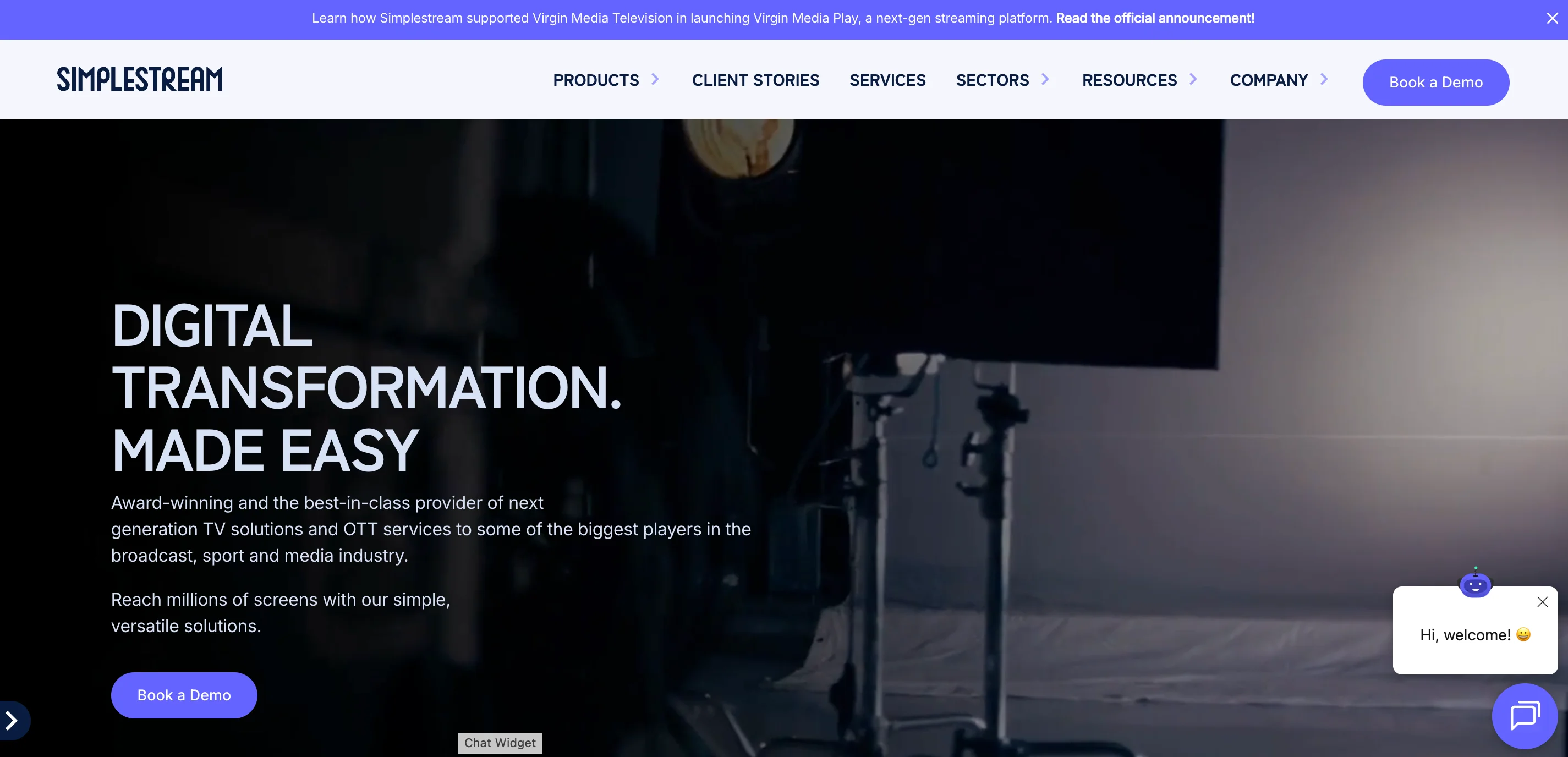
Best for: Broadcasters and sports/media brands launching OTT apps quickly
Simplestream focuses on rapid OTT deployment for media organizations transitioning from linear to digital streaming.
Core strengths:
- Reported ability to launch a branded OTT service in 6–12 weeks
- Multi-device app distribution across mobile, tablet, and connected TV
- Built-in monetization tools (AVOD/SVOD)
- Broadcast-grade service positioning
Simplestream has demonstrated involvement in established broadcast ecosystems, making it suitable for media companies seeking structured OTT transformation with defined deployment timelines.
13. SproutVideo
Best for: Secure business video hosting with live streaming support
SproutVideo positions itself as a business-focused video platform emphasizing controlled distribution and security.
Core strengths:
- Live and on-demand hosting with customizable players
- Domain, IP, and geo restrictions
- SSO, two-factor authentication (2FA), and signed embed controls
- Watermarking and granular access permissions
The platform highlights usage among Fortune 500 organizations, reinforcing its appeal for enterprises prioritizing governance and content security over large-scale consumer OTT distribution.
14. Vidyard

Best for: Revenue teams leveraging video for sales enablement and pipeline growth
Vidyard is built around business video workflows, connecting hosting infrastructure with CRM systems and revenue operations.
Core strengths:
- CRM and marketing automation integrations
- Viewer-level engagement analytics
- Personalized video creation and tracking tools
- Performance-focused reporting dashboards
Industry analyst reviews emphasize Vidyard’s analytics and personalization capabilities, making it best suited for B2B organizations where video streaming supports lead generation and conversion rather than subscription OTT.
15. Wistia
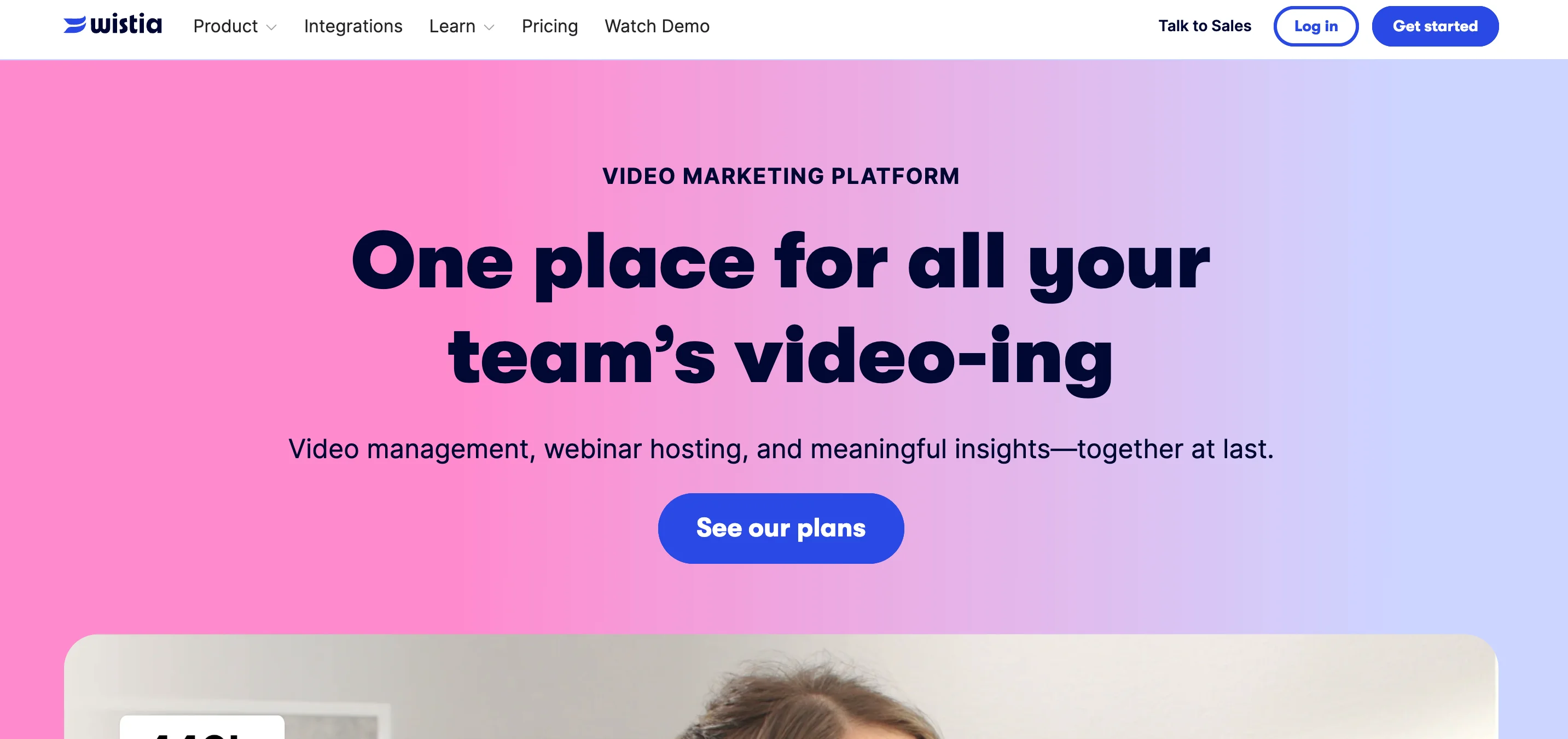
Best for: Brand-owned video hubs optimized for marketing performance
Wistia provides video hosting infrastructure tailored for engagement measurement and performance optimization rather than subscription-based OTT services.
Core strengths:
- SOC 2 certification supporting enterprise procurement requirements
- Engagement heatmaps for granular viewer behavior insights
- A/B testing and experimentation tools
- Webinar and live video capabilities
Wistia is particularly effective for content marketing, product education, and demand-generation strategies where measurable engagement directly influences ROI.
16. Cincopa
Best for: SMBs needing an all-in-one media library with analytics
Cincopa positions itself as an all-in-one video and image hosting platform that combines media storage, content management, and performance tracking within a single dashboard.
Core strengths:
- Unified media library supporting video, images, and podcasts
- Built-in analytics and customizable players
- Entry-level pricing reportedly starting around $25/month (third-party marketplace listing)
- Integrations with tools such as Zoom, HubSpot, and WordPress
Cincopa is well suited for small to mid-sized organizations looking to centralize media management without investing in complex OTT infrastructure.
17. Quickplay

Best for: Sports and media enterprises executing cloud-native OTT transformations
Quickplay positions itself as an OTT cloud transformation specialist for Sports, Media, and Entertainment organizations requiring large-scale distribution and personalization.
Core strengths:
- Cloud-native, open architecture platform design
- Multi-device OTT app deployment at scale
- Personalization capabilities integrated with AI-based workflows
- Recent enterprise deployment examples, including selection by Gray Media for a streaming service launch in January 2026
Quickplay is a strong shortlist candidate when personalization, multi-device reach, and large-scale concurrency are strategic priorities.
18. Streann
Best for: Community-driven OTT platforms combining streaming and engagement
Streann positions itself as an AI-powered OTT and social streaming platform integrating live video, monetization, and community interaction.
Core strengths:
- Live streaming and VOD hosting
- Mobile and connected TV app distribution
- Subscription and pay-per-view monetization models
- Engagement tools supporting social-style interaction
Streann is suitable when OTT streaming is paired with interactive community mechanics such as comments, engagement features, and user participation.
19. Vodlix
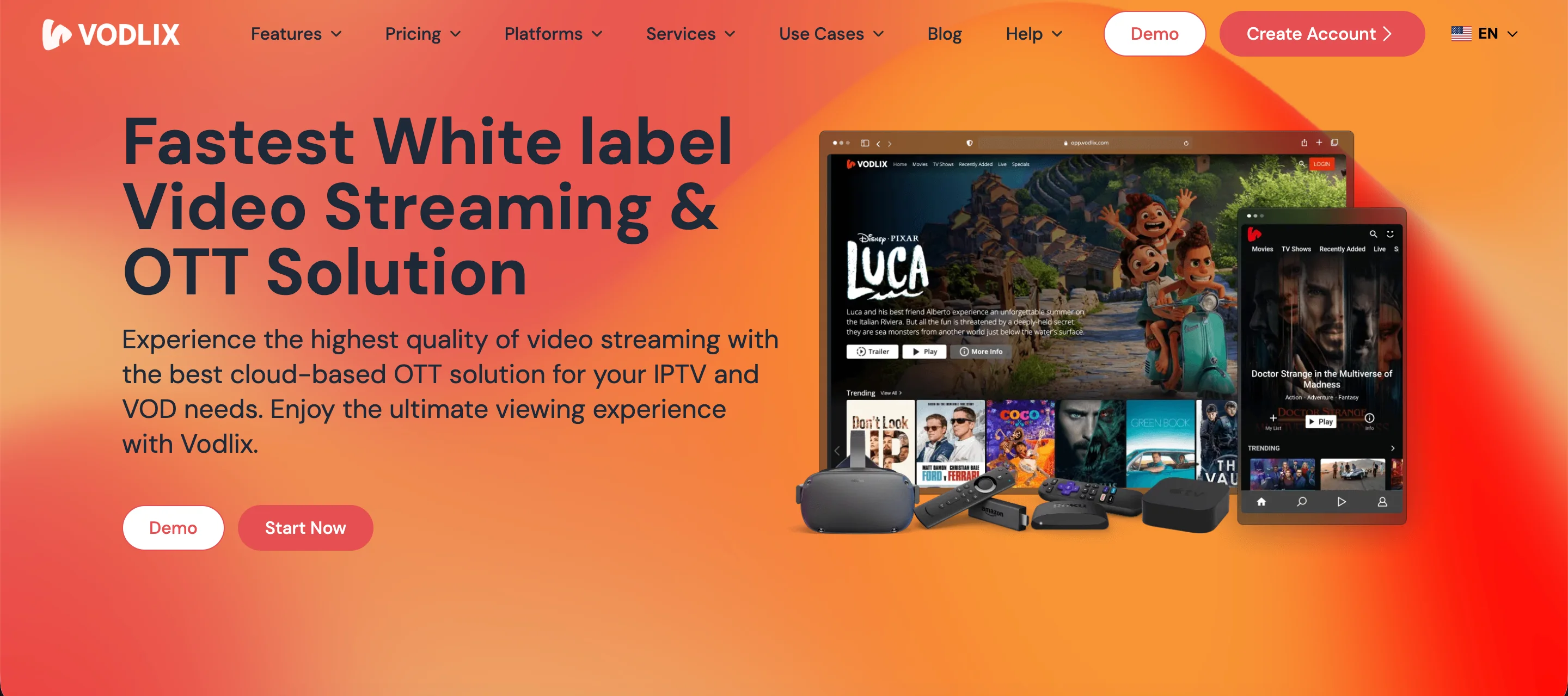
Best for: White-label OTT launches requiring broad device coverage
Vodlix provides a white-label OTT video streaming system designed to reduce time-to-market while offering monetization and analytics capabilities.
Core strengths:
- Multi-device app deployment across Android, iOS, Apple TV, Android TV, LG webOS, Samsung Tizen, Fire TV, and Roku
- Built-in monetization tools and analytics
- Marketplace listings referencing 50+ CDN locations (vendor-reported data)
- Focus on rapid branded OTT deployment
Vodlix is appropriate for businesses prioritizing cross-device distribution and white-label branding without building infrastructure from scratch.
20. Resi
Best for: Mission-critical live streaming and multi-campus distribution
Resi specializes in high-reliability live streaming infrastructure, particularly in environments where broadcast stability is essential.
Core strengths:
- Proprietary Resilient Streaming Protocol (RSP) positioned to prevent buffering and stream failure
- Support for streaming up to 4K resolution
- Multi-destination broadcasting workflows
- Capability to transmit up to 2 video channels and 16 audio channels to remote locations
Resi is particularly suited for organizations requiring dependable live streaming performance across distributed locations, such as multi-campus institutions or event-driven environments.
How to choose the right OTT platform provider
Selecting the right OTT platform provider is a strategic decision that impacts performance, monetization, operational efficiency, and long-term scalability. Rather than comparing feature checklists in isolation, businesses should evaluate OTT solution providers through a structured decision framework that connects technology capabilities with measurable business outcomes.
Align provider capabilities with your goals
Start with clarity on your primary objective: subscription growth, ad revenue expansion, sports live streaming scale, internal enterprise communication, or hybrid monetization. Different OTT providers optimize for different outcomes.
For example:
- If your model depends on ad revenue, prioritize advanced SSAI, ad yield optimization, and first-party data integration.
- If subscriptions drive growth, focus on churn analytics, flexible billing logic, and retention optimization tools.
- If live events are core, low-latency infrastructure and peak concurrency stability become non-negotiable.
💡The right OTT solution provider is not the one with the most features, but the one aligned with your monetization and growth strategy. From a strategic perspective, OTT infrastructure should support where your business is heading—not only where it is today.
Define your audience and technical requirements
Audience scale and viewing behavior directly influence your OTT platform selection.
Clarify:
- Expected concurrency levels (hundreds vs millions of viewers)
- Geographic distribution (single-region vs global CDN needs)
- Device mix (CTV-heavy vs mobile-first audiences)
- Live-to-VOD ratio in your content strategy
Connected TV penetration exceeds 80% in mature markets such as the U.S., while mobile streaming dominates in emerging markets. Your OTT platform provider must reflect those consumption realities.
Infrastructure decisions should be based on projected peak load and device distribution—not average daily traffic. Failure to plan for concurrency spikes can lead to service disruption and brand damage.
Evaluate cost vs ROI (not cost vs budget)
Comparing OTT service providers solely on monthly platform fees is a common mistake. Instead, evaluate total cost of ownership (TCO) relative to projected revenue impact.
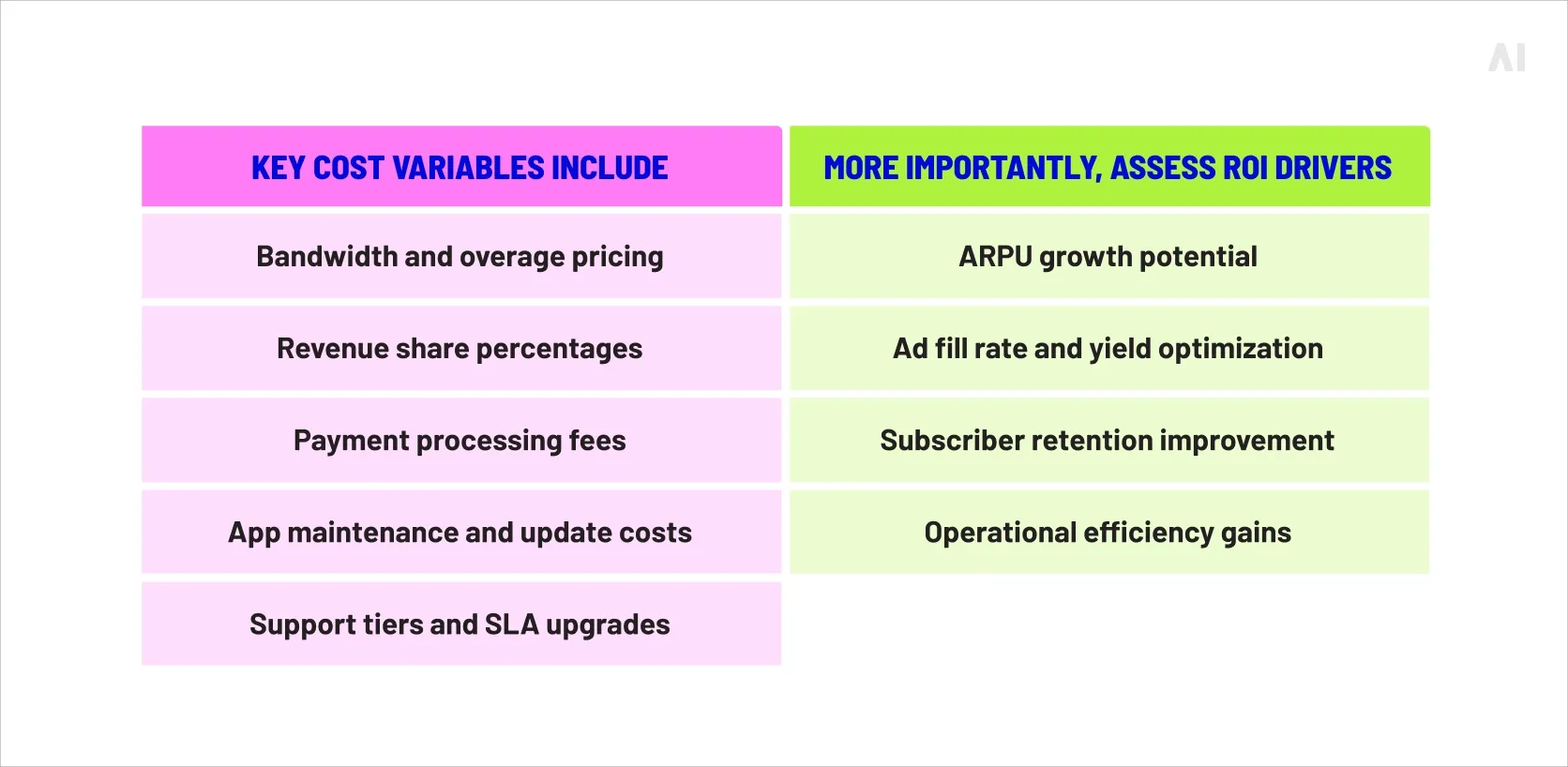
⚡️To structure this analysis, define clear KPIs before vendor selection, read our framework on measuring digital performance in the Digital Marketing KPI guide. An OTT platform provider that costs 20% more but increases retention or ad yield by 30% generates stronger long-term ROI.
Assess Vendor Support, Roadmap, and Reliability
OTT streaming is not static. Regulatory requirements, monetization models, device ecosystems, and advertising frameworks evolve rapidly.
Evaluate:
- SLA commitments (99.9% vs 99.99% uptime guarantees)
- 24/7 technical monitoring availability
- Dedicated account management
- Published product roadmap transparency
- Frequency of feature releases
Vendor stability and roadmap clarity reduce platform migration risk. Infrastructure providers that continuously iterate are better positioned to adapt to FAST expansion, AI-driven personalization, and hybrid monetization trends.
Key Questions to Ask OTT Vendors
Before finalizing your OTT solution provider, ask structured, performance-oriented questions:
- What is your documented peak concurrency capacity?
- What uptime SLA do you contractually guarantee?
- How do you support hybrid monetization (AVOD + SVOD + FAST)?
- What analytics are included without third-party add-ons?
- How does pricing scale as bandwidth or subscribers grow?
- What is the typical implementation timeline?
- What is your disaster recovery and redundancy architecture?
💡The selection process should prioritize scalability, monetization performance, and long-term strategic alignment—not short-term cost savings. In 2026, OTT platform providers function as growth infrastructure partners. Choosing correctly determines whether your streaming strategy becomes a scalable revenue engine or a constrained operational burden.
Common OTT implementation challenges
Deploying an OTT platform is not simply a technical rollout—it is a cross-functional transformation affecting infrastructure, monetization, data strategy, and audience engagement. Even experienced media companies encounter operational friction when scaling live streaming and on-demand video ecosystems.
One of the most frequent issues in OTT streaming deployments is performance instability during traffic spikes. Live sports, product launches, or major events can generate traffic volumes several times higher than baseline forecasts. Without multi-CDN redundancy, elastic cloud scaling, and concurrency stress testing, buffering and service interruptions can occur.
⚡️Even minor increases in startup time or buffering ratio can reduce viewer retention. Streaming quality is not just a UX metric—it directly impacts revenue through churn and ad completion rates. To mitigate this risk, OTT infrastructures must integrate real-time traffic monitoring and predictive scaling models. AI-driven supply optimization frameworks such as Smart Supply help maximize inventory efficiency and distribution control across connected TV and OTT environments:
Modern OTT monetization depends on seamless integration between the OTT platform, ad servers, programmatic demand sources, analytics platforms, and CRM systems. Fragmented integration often leads to data silos, inconsistent reporting, and suboptimal ad yield.

⚡️AI-driven demand optimization layers such as Elevate enhance monetization efficiency by connecting supply to premium programmatic demand environments: Without unified data and monetization orchestration, OTT revenue performance remains constrained regardless of streaming quality.
The most successful OTT deployments treat streaming infrastructure and revenue optimization as a unified system—not separate functions.
At AI Digital, this principle is reflected in our Open Garden strategy: a controlled, premium ecosystem where supply, demand, data, and monetization logic operate within a transparent and optimized environment. Rather than relying on fragmented marketplaces, disconnected SSPs, or opaque reselling layers, Open Garden enables direct supply-path optimization, curated demand access, and measurable performance control across OTT and CTV environments.
Conclusion: build scalable OTT growth with the right platform provider
The OTT ecosystem in 2026 is defined by scale, intelligence, and monetization precision. As live streaming demand accelerates and hybrid revenue models become standard, selecting the right OTT platform provider is no longer a technical procurement decision—it is a strategic growth decision. Performance stability, low-latency delivery, secure infrastructure, integrated monetization tools, and actionable analytics must operate as a unified system.
Throughout this guide, we outlined how leading OTT solution providers differentiate across scalability, CDN architecture, DRM protection, monetization flexibility (AVOD, SVOD, FAST), CMS workflows, API extensibility, and enterprise-grade support.
💡The core insight is clear: the most effective OTT providers align infrastructure capabilities with measurable business KPIs — retention, ARPU, ad yield, and lifetime value — not just feature availability.
To maximize ROI, businesses must evaluate OTT service providers based on long-term scalability, monetization efficiency, and data ownership. In a market where acquisition costs continue to rise and competition intensifies, streaming success depends on integrating performance engineering with AI-driven revenue optimization.
⚡️If you’re planning to launch or scale your OTT streaming strategy in 2026, choosing the right platform partner is the foundation for sustainable growth. For strategic guidance and performance-driven OTT infrastructure planning, connect with our team.