OTT Sports Streaming in 2026: Platforms, Monetization & Growth

Sports is still the most dependable source of real-time attention in video. That’s the simple reason OTT keeps chasing it—and why leagues keep experimenting with direct-to-consumer (DTC) offers, new distribution partners, and new ad models.
Two shifts explain why this moment feels different from the early “streaming sports” era:
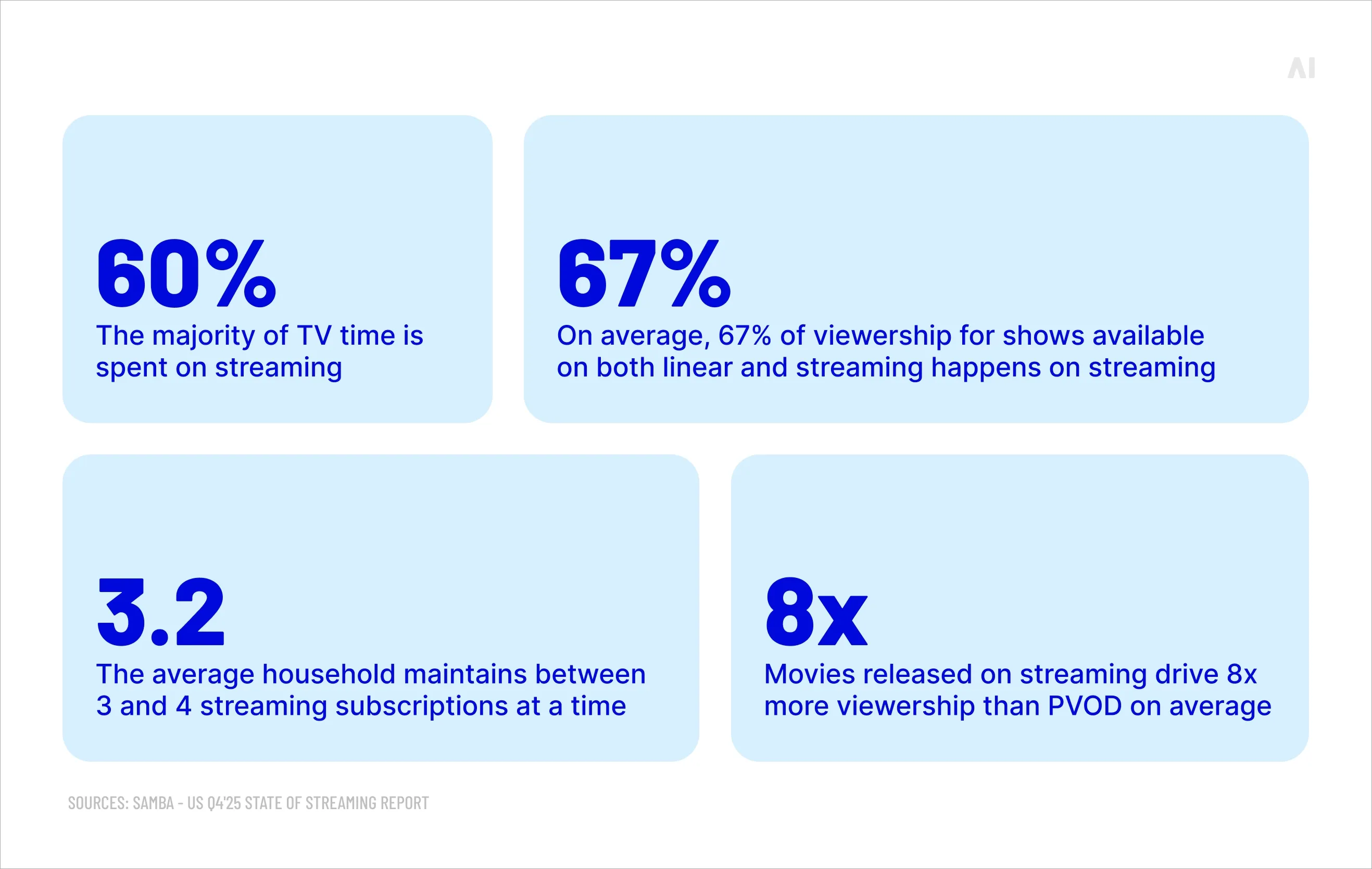
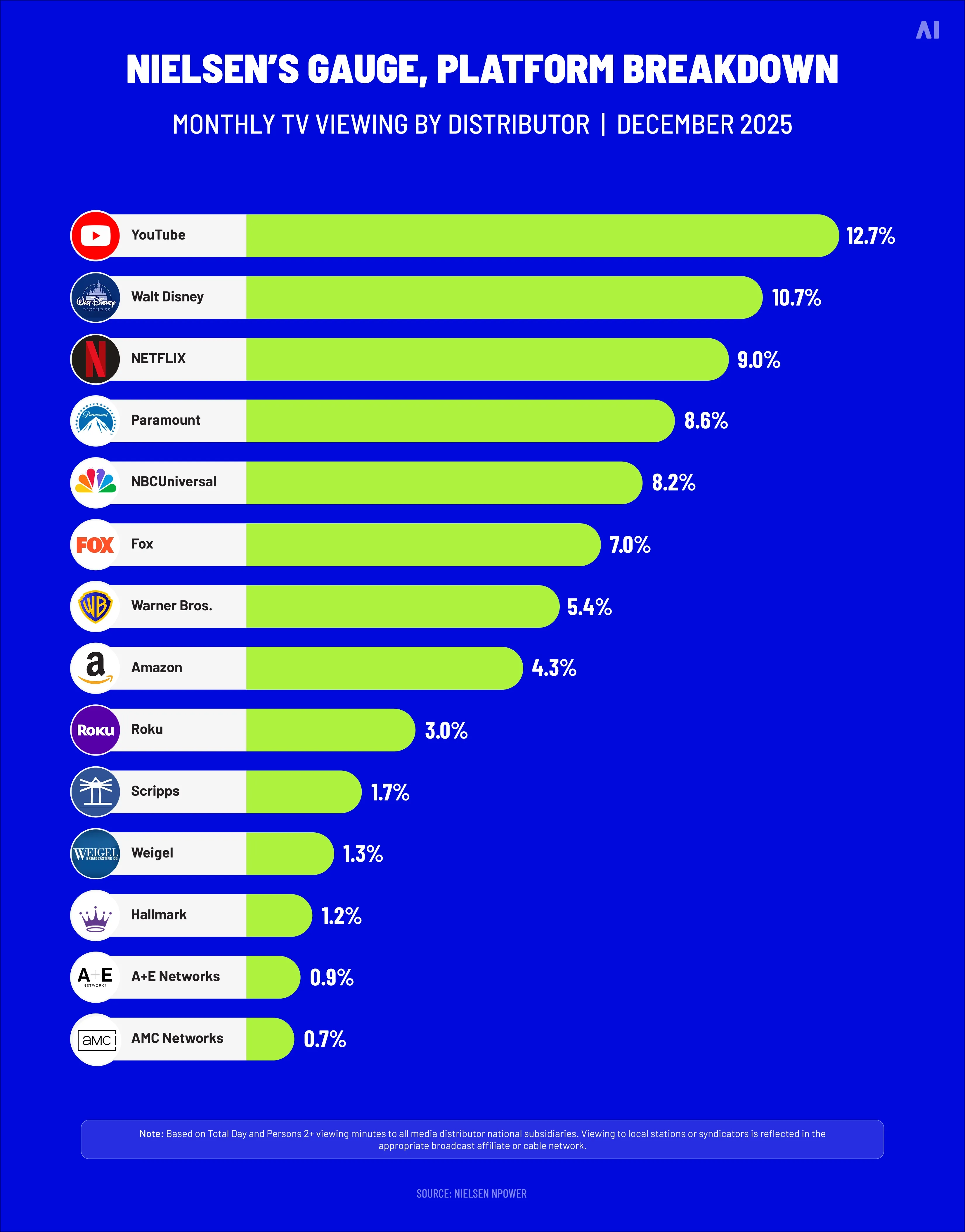
- Streaming is now a majority of TV time, which changes what “reach” and “availability” mean for sports planning. Samba TV reported that streaming reached 60% of all TV time in the U.S. (Q4 2025), with viewers choosing streaming when content is available both places.
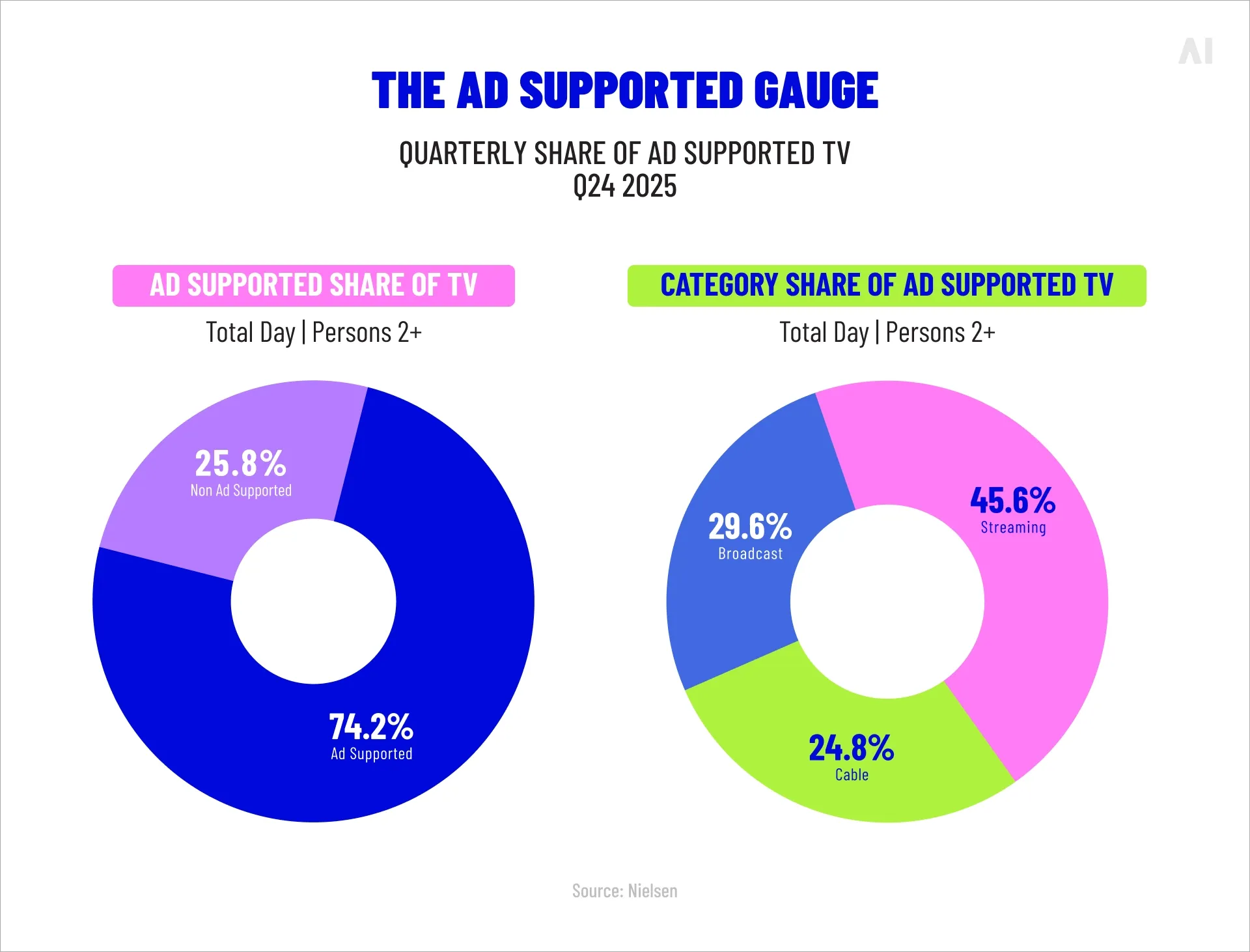
- Ad-supported TV is the norm, not the compromise. Nielsen’s Ad Supported Gauge shows ad-supported viewing rising to 74.2% of total TV in Q4 2025.
Those two realities turn “sports on OTT” into a broader question: how do you design an experience (and an ad product) that works when live sports sits inside a fragmented, multi-app, multi-model environment?
💡 Related read: What is OTT advertising & Cable TV advertising.
What is sports OTT streaming?
Before you can plan or buy it, you need to define it clearly—because “sports streaming” gets used to mean several different things.
Sports OTT (over-the-top) streaming is the delivery of sports video (live games, shoulder programming, highlights, archives, or interactive experiences) over the public internet, not through traditional cable/satellite infrastructure. It can be offered by:
- Leagues (e.g., a league-owned service or app)
- Broadcasters and networks (streaming simulcasts and digital exclusives)
- Streaming platforms (SVOD/AVOD/FAST)
- vMVPDs (virtual multichannel bundles delivered via streaming)
- Technology providers that power the service end-to-end (video hosting, DRM, ad insertion, analytics)

Sports OTT is a delivery method, not a single business model
A common planning mistake is assuming OTT automatically means “subscription streaming.” In practice, sports OTT spans the full monetization mix:
- SVOD (subscription video on demand)
- AVOD (ad-supported video on demand)
- TVOD (transactional / pay-per-view)
- FAST (free ad-supported streaming television)
💡 If you want a clean explainer of those models (and where hybrids fit), AI Digital’s SVOD/AVOD/TVOD guide is a useful shared vocabulary for stakeholders.

Three layers to keep separate
To stay sane in 2026, treat sports OTT as three layers:
{{26-OTT-Sports-Streaming-in-1="/tables"}}
That framing becomes critical when you compare sports OTT with “regular” streaming.

Sports OTT vs traditional streaming platforms
This is where many articles stay too abstract, so let’s make the differences practical.
Traditional “general entertainment” streaming is built for on-demand consistency
Most SVOD platforms are optimized around:
- Deep libraries
- Binge behavior
- Recommendation loops
- Predictable playback (buffering is bad, but a slight delay is rarely catastrophic)
- Measurement that’s often acceptable as aggregated “campaign results”
Sports OTT breaks several of those assumptions.
Sports OTT is built around urgency, spikes, and shared moments
Live sports has requirements that are fundamentally different:
- Low latency matters (the group chat and betting markets expose delays instantly)
- Concurrency spikes are severe (kickoff, halftime, final minutes)
- Regional rules are messy (blackouts, local rights, market definitions)
- Discoverability is unforgiving (fans will not “browse” for a game the way they browse for a series)
- Ad tolerance changes (fans accept interruptions differently in live sports than in dramas)
This is why sports OTT is often delivered through multiple distribution types at once (a DTC service and a vMVPD and a platform partner). It’s not indecision—it’s risk management.
Where vMVPDs fit in this comparison
vMVPDs (like YouTube TV, Hulu + Live TV, Sling, Fubo, DirecTV Stream) behave more like “streaming cable.” They can be powerful for sports because they:
- bundle channels (reducing “where do I watch?” friction)
- preserve familiar viewing behavior
- support live channel surfing and program guides
But they also inherit some of the traditional bundle’s issues: complex carriage, less direct customer ownership, and limited control over the end-to-end product.
Why sports are moving to OTT
The shift isn’t driven by a single factor; it’s a stack of incentives that finally lined up.
1) Leagues want more control over the customer relationship
Owning distribution (even partially) lets leagues capture:
- first-party fan data
- direct subscription revenue (where applicable)
- the ability to market tickets, merch, betting, fantasy, and partner offers inside the experience
It’s also a hedge. When distribution is diversified, leagues aren’t dependent on one linear partner’s economics.
2) Rights economics are pushing more content into streaming
Streaming platforms have moved from “sports experiments” to serious rights budgets. Ampere Analysis projected U.S. streaming services would spend $14.2B on sports rights in 2026, with that spend continuing to climb year-on-year.
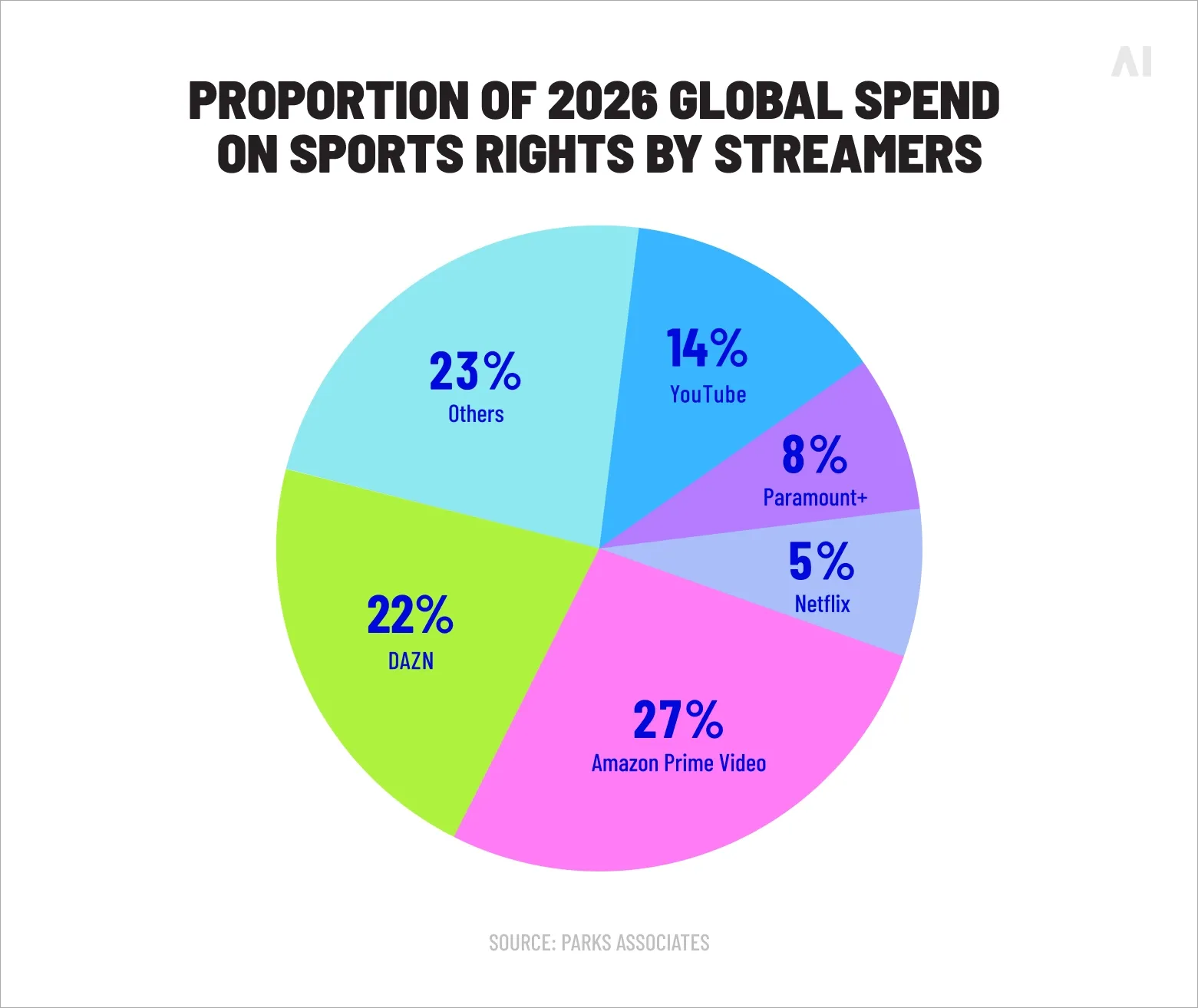
That type of investment inevitably changes packaging: more streaming exclusives, more digital add-ons, more fragmented schedules.
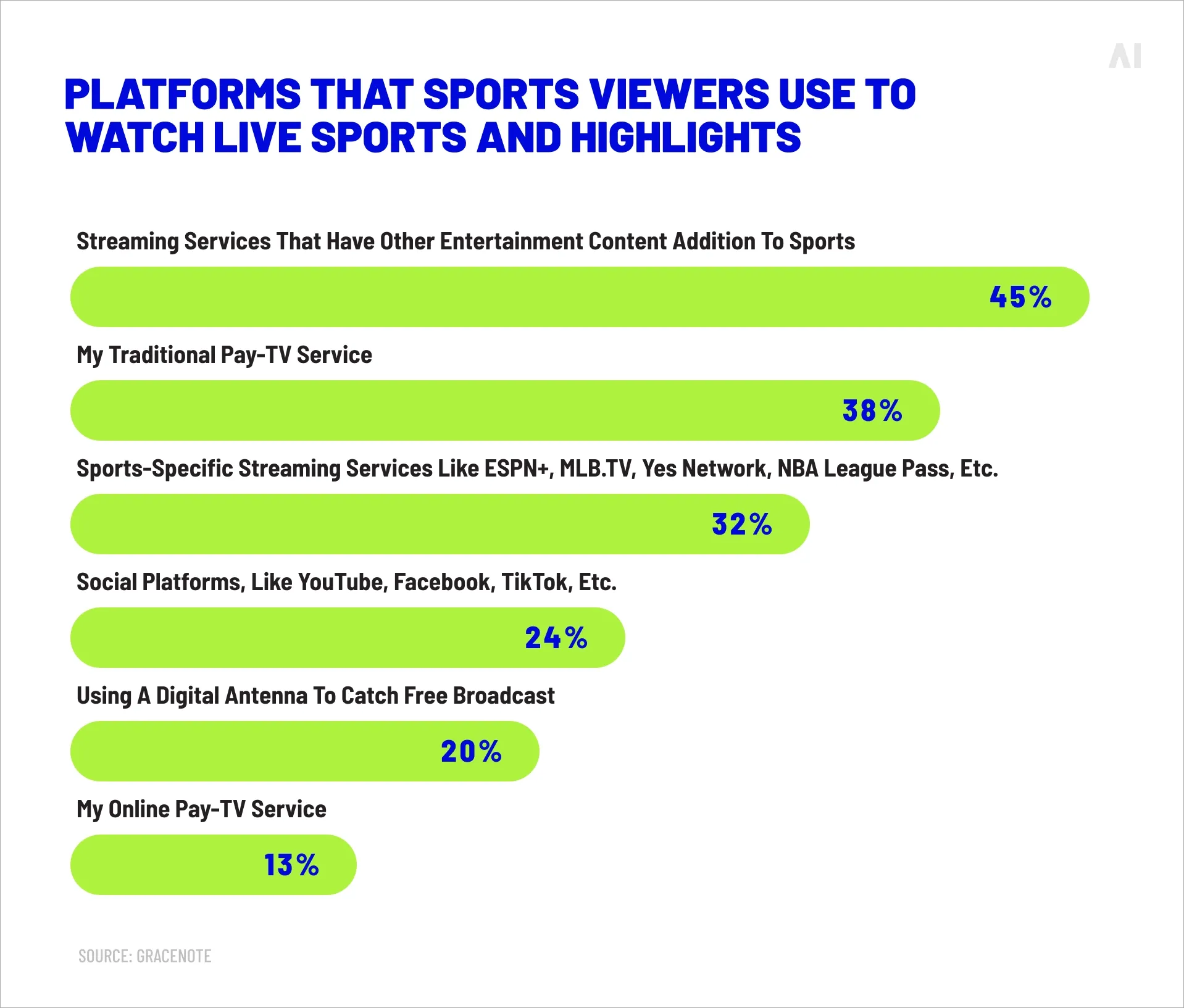
3) Viewers keep hitting access and quality pain points—so products have to improve
Parks Associates and InterDigital’s 2025 study highlights two problems that keep showing up:
- 57% of sports viewers reported challenges when viewing live streamed sports
- 30% said they didn’t subscribe to the streaming service airing a sporting event they wanted to watch
OTT isn’t winning because it’s frictionless. It’s winning because it’s where the industry is investing to reduce friction—and because fans increasingly accept that the “sports bundle” has splintered.

4) Advertising demand is following premium live attention
Live sports is one of the few environments where advertisers can still buy:
- scale
- cultural relevance
- predictable appointment viewing
And now they can increasingly buy it with streaming-style capabilities (targeting, creative versioning, experimentation, and improved attribution).
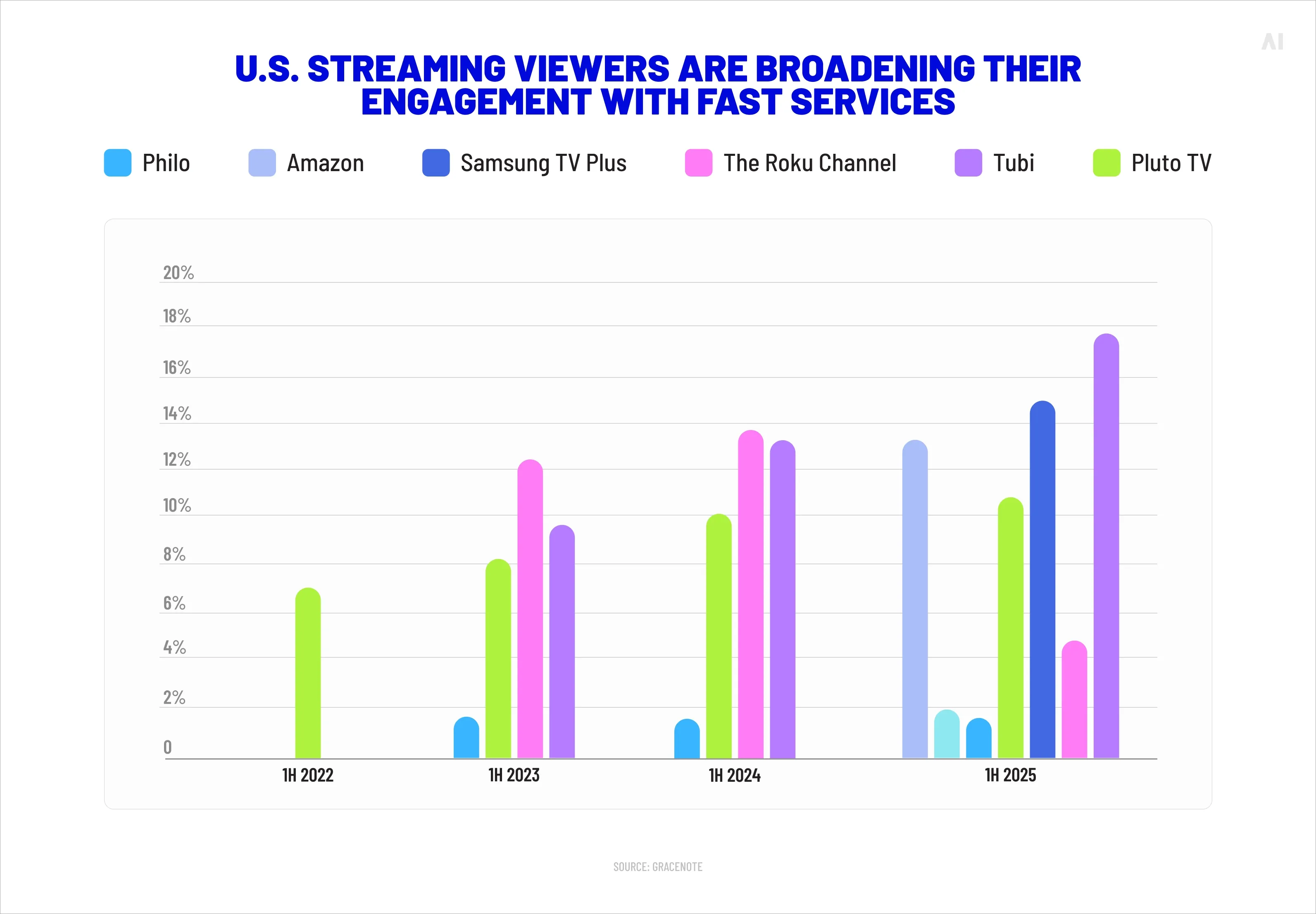
5) FAST is expanding the definition of “sports viewing”
A growing share of “sports consumption” is not full games—it’s shoulder content, recaps, analysis, documentary programming, and niche sports.
Gracenote’s analysis shows sports FAST channels grew 34% (from Q2 2024 to Q2 2025), alongside broader FAST expansion.
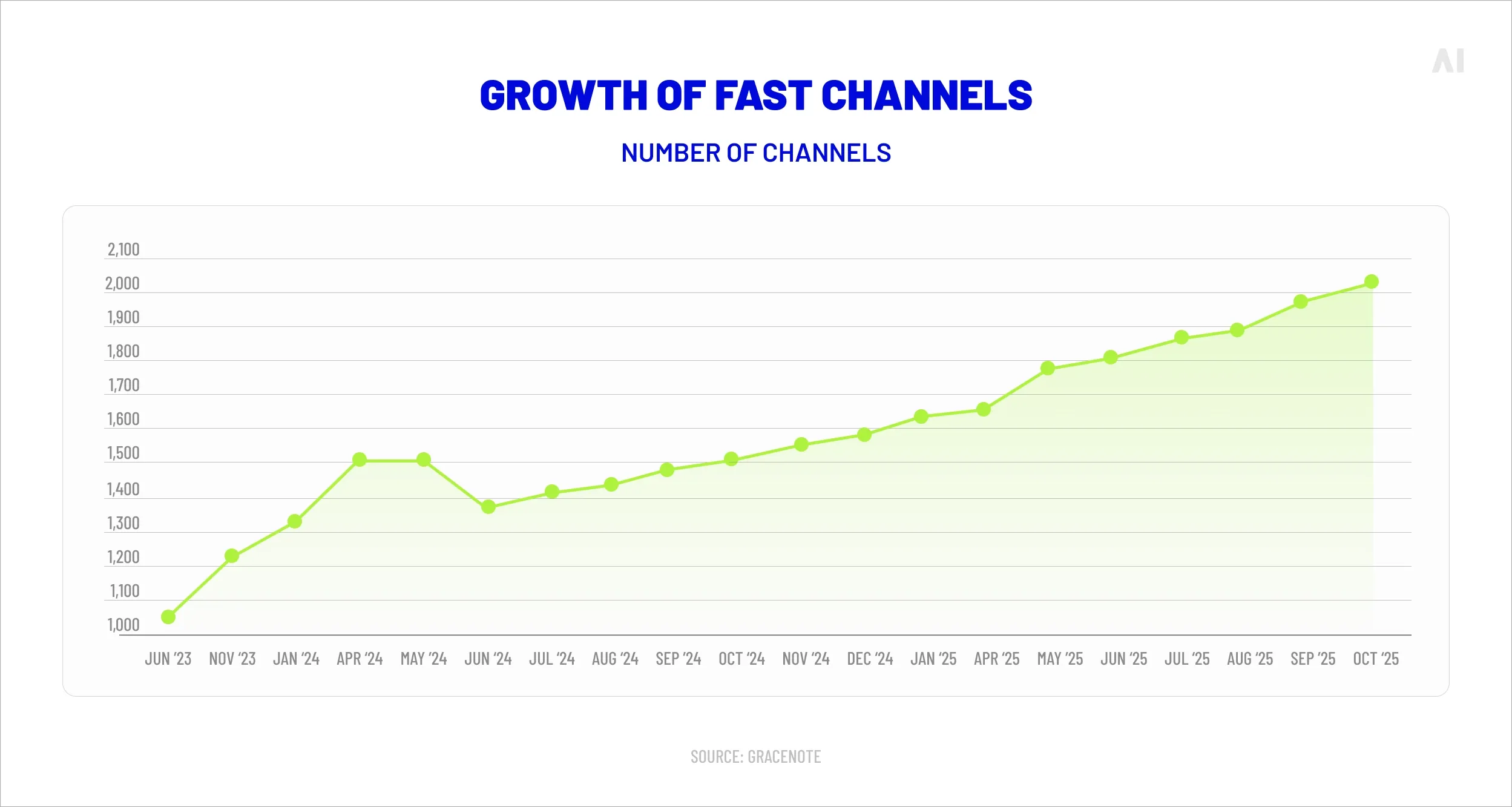
That matters because FAST changes the entry point: fans can discover sports content without committing to yet another subscription.
💡 Related reading: Best OTT platforms.
TOP 10 sports OTT platforms in 2026
In 2026, “sports OTT platforms” splits into two practical buckets:
- Consumer destinations: where fans actually watch (league apps, major streamers, FAST hubs).
- Infrastructure platforms: the tooling that lets leagues, RSNs, federations, and broadcasters run an OTT service (video delivery, entitlement, apps, ads, analytics).
Both matter. If you’re planning a sports OTT strategy, you usually end up choosing at least one destination (to reach audiences) and one infrastructure path (to control UX, data, and monetization).
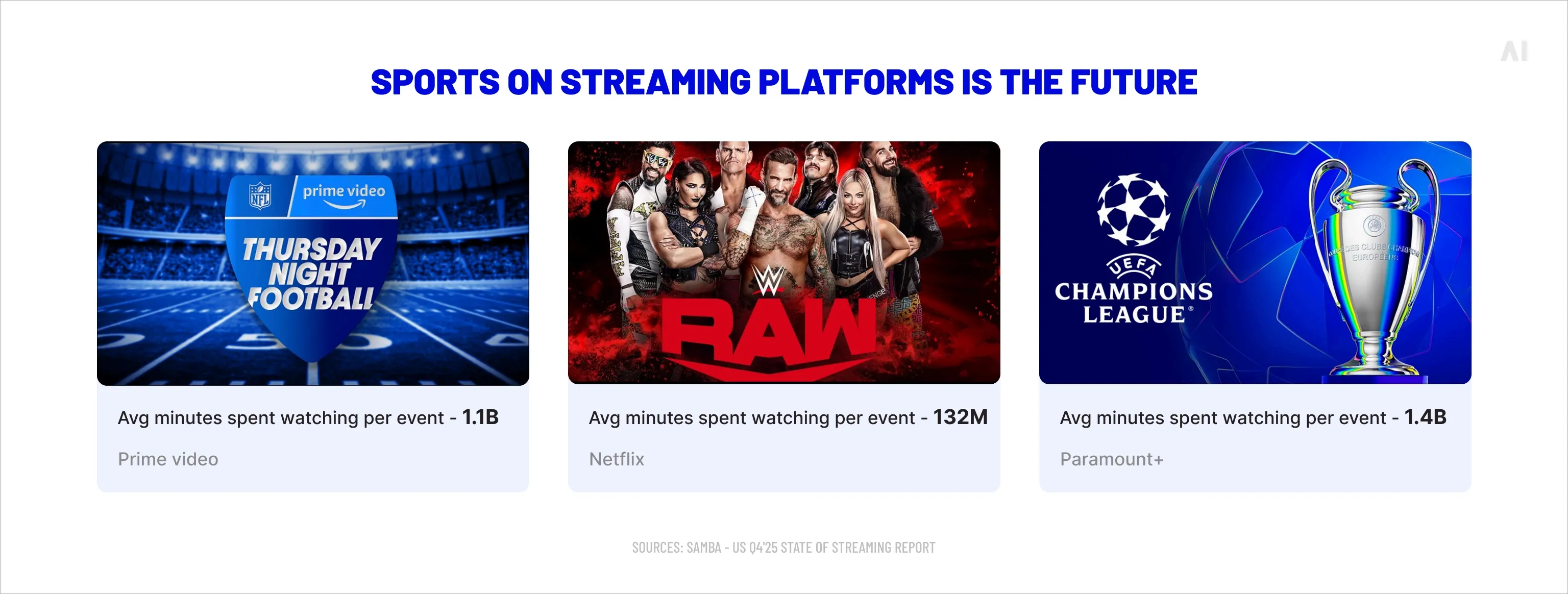
💡 Related reads: Best OTT platforms & 20 best OTT solution providers for live streaming.
NFL+
NFL+ is the National Football League’s direct-to-consumer streaming product.
It’s is one of the clearer examples of a major league using OTT to own a slice of distribution and first-party fan relationships—without trying to replace its biggest rights partners. In other words, it’s not “OTT instead of TV.” It’s OTT as a controlled layer in the overall media stack.
What to watch (the stuff that changes outcomes):
- Entitlements and device rules. NFL+ has historically put certain live viewing benefits on mobile/tablet, with other value delivered via replays, NFL Network, and RedZone depending on tier. Those constraints shape perceived value and churn.
- Bundling logic. NFL+ Premium has been positioned as a bundle component alongside ESPN’s newer DTC offerings, which is a strong signal about where sports OTT packaging is headed: fewer single apps, more “sports bundles.”
- Role clarity vs Sunday Ticket. NFL+ is not the same thing as out-of-market Sunday Ticket. When fans buy the “wrong” product, you pay in support costs and cancellation rates, not just bad reviews. (This is a UX and comms problem as much as a rights problem.)
Best-fit use case: Fans who want a league-native experience and are willing to trade some flexibility (device rules, packaging) for proximity to the sport, replays, and companion content.
NBA League Pass
NBA League Pass is the National Basketball Association’s out-of-market subscription product, built for high-frequency viewing.
League Pass is “mature OTT” in sports terms. It shows what happens when a product has had time to evolve around superfan behavior: multi-game viewing, replays, highlights, and feature depth that actually supports retention (not just acquisition).
What to watch:
- Blackouts and local rights constraints. Out-of-market products live and die by the gap between what fans think they’re buying and what they can actually watch in their ZIP code. Even great UX can’t fully hide licensing realities.
- Feature innovation that reduces churn. The NBA has leaned into experiences like multi-game viewing and overlays (stats, scores, custom streams). Those features turn “I’ll watch later” into “I’ll keep paying.”
- Distribution partnerships (without losing the league product). For example, the NBA has described Prime Video + League Pass experiences that include multi-view and integrated stats. That’s a good template for “league product meets mainstream distributor UX.”
Best-fit use case: High-intent fans who want breadth (lots of games), control (how they watch), and on-demand flexibility.
WWE Network
WWE Network is historically WWE’s DTC streaming brand—now best understood as a distribution strategy spread across partners rather than one standalone “network app.”
It’s also the cleanest mainstream example of “OTT doesn’t always mean running your own app.” It can also mean re-platforming your audience onto a global distributor while still serving OTT consumption patterns.
Concrete shifts worth noting:
- Netflix announced it would become the new home of Raw beginning January 2025 (with territory specifics in the announcement).
- WWE later announced Netflix as the U.S. home for parts of its library of Premium Live Events (for events prior to a stated cutoff), plus docs and originals.
- Separately, Associated Press reported an ESPN partnership that includes WWE Premium Live Events streaming starting in 2026 as part of ESPN’s DTC strategy.
What to watch:
- Discoverability vs control. Netflix distribution can reduce friction and expand casual reach, but it also changes what first-party data you own and how you market.
- Rights fragmentation. If different parts of the product (weekly show, library, live events) sit in different places, fans need help understanding where to go. Confusion is churn.
- Advertising strategy. Partner distribution can improve scale and simplify ad sales, but it can also limit experimentation if the partner controls ad formats and pacing.
Best-fit use case: Rights holders who want global scale fast, and are comfortable trading some direct control for reach and platform marketing.
Amazon Prime Video
Amazon Prime Video is a major SVOD destination with a serious live sports footprint and a growing interactive layer.
Prime Video helped prove that a mainstream entertainment service can carry marquee live sports at scale. Its Thursday Night Football positioning is explicit: Prime Video is the exclusive home of TNF, and Amazon frames TNF as a flagship property with continued expansion into playoffs in season windows.
What to watch:
- Interactive formats as an actual product lever. Amazon has promoted interactive feature suites for Prime Sports, which matters because sports OTT isn’t only a rights game—it’s also a UX game.
- Ad-tech integration for premium live inventory. Amazon’s own advertising materials position TNF with “innovative ad tech” and live sports packages. That’s a signal about where premium sports monetization is headed: more sophisticated packages, not just standard pods.
- How sports sits inside the broader browsing experience. Discovery on a mass-market streamer is different: you’re competing with entertainment, not only other sports.
Best-fit use case: Brands that want premium live sports environments with modern ad tooling, and rights holders seeking scale without building a standalone destination.
ESPN+ (Disney/Hulu ecosystem)
ESPN+ is ESPN’s streaming sports programming brand inside a larger Disney streaming ecosystem. ESPN describes ESPN+ as featuring a large library of live events and originals, and notes access can come via ESPN subscriptions and bundles.
ESPN’s DTC direction is one of the major “center of gravity” moves in U.S. sports OTT. The Walt Disney Company announced ESPN’s enhanced direct-to-consumer service launch date (August 21, 2025), positioning it as a fuller suite of ESPN networks/services in a DTC form. The ESPN pressroom announcement also outlines packaging and bundle options (including sports-bundle concepts).
What to watch:
- Bundle mechanics and churn protection. Disney’s bundle pages make the strategy clear: ESPN is being packaged with other subscription value to reduce churn pressure and raise lifetime value.
- Ad load vs pricing tension. Premium sports pricing only works if the viewing experience stays credible. Heavy ad loads can backfire; too-light ad loads leave money on the table.
- What “premium sports inventory” really means. ESPN’s move is not only about streaming distribution. It affects how premium sports audiences get aggregated, sold, and measured.
Best-fit use case: Sports fans who want breadth across leagues and ESPN programming, and advertisers who value premium environments plus scaled reach through a major sports seller.
Vimeo OTT
Vimeo OTT is an OTT platform provider that helps organizations launch subscription or ad-supported streaming services without building the whole stack from scratch.
Vimeo OTT sits in the “infrastructure layer” that’s increasingly important for sports because not all sports OTT is NFL/NBA scale. For niche leagues, federations, tournaments, gyms, collegiate properties, and emerging sports, the goal is often: get to market quickly, control the customer relationship, and monetize predictably.
What to watch:
- Business model flexibility. Vimeo’s materials emphasize subscription channel setup and monetization, plus broader streaming capabilities that support tiering and billing workflows.
- Discovery is still on you. White-label OTT solves product and payments. It does not magically solve acquisition. If you don’t have a marketing engine, churn will expose that quickly.
- Live reliability expectations. Sports fans tolerate fewer technical failures than almost any other content category.
Best-fit use case: Rights holders who want direct distribution and monetization for a defined audience, especially where speed and ownership matter more than mass-market scale.
Pluto TV Sports
Pluto TV is a FAST platform (free ad-supported streaming TV) with sports programming and sports-adjacent channels.
FAST is a major “top-of-funnel” layer for sports. Not every viewer wants to pay for full games all the time, but many will watch highlights, analysis, shoulder programming, and niche channels—and FAST makes that behavior easy.
Pluto TV positions itself around hundreds of free channels, explicitly including live sports. Paramount’s own Pluto TV sports hub shows how sports on FAST often looks in practice: always-on sports news and themed channels, alongside broader entertainment.
What to watch:
- How you use FAST in the funnel. FAST can be a feeder into paid products (SVOD, vMVPD, league DTC) if you design the conversion path.
- Ad experience and frequency. FAST works when ad loads feel “TV-like” rather than punishing.
- Rights suitability. FAST is often better for highlights, studio, docs, niche inventory, and replays than it is for top-tier exclusive live games.
Best-fit use case: Brands that want scalable, contextual sports environments, and rights holders who want incremental distribution and discovery without forcing a subscription decision.
Xumo Sports
Xumo Sports is a FAST platform with a broad channel lineup, including many sports networks and sports-adjacent programming.
Xumo is a good reminder that FAST isn’t one service, it’s a distribution layer spreading across device ecosystems. Xumo Play’s networks page shows sports-specific channels (and the mix is often broader than people expect: niche sports, combat, international feeds, and betting-adjacent channels). Xumo’s own 2025/2026 momentum messaging emphasizes channel growth and lineup scale.
What to watch:
- Channel context and adjacency. Sports inventory here is often “always-on” and interest-based, which can be useful for efficient reach.
- The device layer effect. FAST consumption is heavily influenced by where the service is surfaced (smart TV home screens, preinstalled apps, OEM placements).
- Measurement realism. FAST measurement is improving, but it can be less deterministic than logged-in subscription ecosystems.
Best-fit use case: Efficient reach, incremental frequency, and discovery—especially for sports content that thrives in channel form.
Brightcove
Brightcove is an enterprise video infrastructure used by broadcasters, publishers, and brands to deliver and monetize video at scale.
Brightcove represents the “build and monetize your own OTT service” path for serious operators. In 2025, Brightcove emphasized OTT capabilities like DRM, universal playback, and monetization options including server-side ad insertion (SSAI).
What to watch:
- Sports-grade needs are non-negotiable. DRM, entitlement, reliability, and quality-of-experience monitoring matter more in sports than in most VOD categories.
- SSAI as default for live. For many sports OTT services, SSAI is the baseline because it reduces ad blocking and supports smoother playback on TVs.
- Your stack is bigger than one vendor. Even with an enterprise platform, you still need ad decisioning, measurement, identity, customer support workflows, and rights enforcement.
Best-fit use case: Leagues, broadcasters, and media companies that want direct control over streaming UX and monetization at enterprise reliability levels.
Kaltura
Kaltura is a cloud TV / OTT platform provider designed to support multiple business models across devices, with monetization and ad tooling.
Kaltura’s Cloud TV positioning is explicit about the modern requirement: deliver content on any device, under any business model, with flexibility in how you assemble the stack.
What to watch:
- Advertising integration mechanics. Kaltura’s documentation describes ad targeting as passing relevant metadata from Kaltura to an ad server, where the targeting logic is actually applied. That’s an important reality check for teams expecting “magic targeting” without a broader ad stack.
- Business model hybridity. Sports OTT is increasingly a mix: subscription tiers, ad-supported tiers, and event-based monetization depending on rights and audience willingness to pay.
- Platform openness vs complexity. Flexibility is a feature, but integration work is still work. If your organization cannot support ongoing platform operations, you’ll feel that gap quickly.
Best-fit use case: Operators building a multi-model OTT service where ads, subscriptions, and device reach all matter—and where “open architecture” is a strategic requirement.
Honoroble mentions
Even with a “top 10,” most U.S. sports viewing routes through mainstream aggregators and bundles:
- YouTube TV, Sling TV, Fubo, and Hulu + Live TV for reach and simplicity (especially when viewers just want “one bill, one app”).
- Peacock, Paramount+, Max, and Apple TV+ because a meaningful slice of sports rights is tied to network families and exclusive streamer deals.
Monetization and advertising in sports OTT
This is the section where strategy either becomes realistic—or stays aspirational. Sports OTT monetization is constrained by fan tolerance, rights rules, and live-stream mechanics.
Subscription vs ad-supported models
Hybrid is the default. Two data points explain why:
- Samba TV found over half of SVOD subscribers across leading platforms use ad-supported plans (Q4 2025), and adoption can be very high on major services.
- Nielsen’s Ad Supported Gauge shows ad-supported viewing dominating total TV time (as mentioned in the introduction).
So in 2026, the practical question becomes: what sits behind the paywall, and what sits behind the ad load?
The sports OTT monetization menu
Most sports OTT businesses combine multiple revenue lines:
- Core subscription (seasonal or annual)
- Event-based purchase (pay-per-view, fight nights, special access)
- Ads (live + VOD + shoulder programming)
- Sponsorships (integrations, branded segments, presenting partners)
- Commerce (merch drops, ticketing, membership perks)
- Betting and fantasy integrations (where legal and appropriate)
A useful way to align monetization with product reality is to decide what the service is for:
{{26-OTT-Sports-Streaming-in-2="/tables"}}
Premium live sports inventory
For advertisers, live sports inventory on OTT can be premium for straightforward reasons:
- live audiences are harder to skip
- attention is concentrated around real moments
- creative can be aligned to context (teams, matchups, events, and tentpoles)
In 2026, the inventory discussion is less about “OTT vs linear” and more about:
- Where is incremental reach coming from?
- What is the quality and reliability of the stream?
- What targeting is allowed and privacy-safe?
- Can we measure outcomes without black boxes?
Rights, licensing, and distribution realities
Rights are the invisible architecture of sports OTT. They decide what’s possible before product teams touch a roadmap.
The key reality: rights are often split by more than one dimension
A single league may have different deals by:
- territory (U.S. vs international)
- platform type (linear, streaming, mobile)
- game type (regular season, playoffs, shoulder content)
- language
- package timing (exclusive windows, simulcasts, delayed replays)
This creates a 2026 consumer experience that can feel inconsistent—even when every company involved is acting rationally.
{{26-OTT-Sports-Streaming-in-3="/tables"}}
Exclusivity is valuable, but it increases churn risk
Exclusive streaming rights can drive sign-ups fast, but the same exclusivity increases “subscription hopping” unless the service provides:
- other year-round value (archives, analysis, documentaries)
- personalization that makes return visits feel obvious
- bundles that reduce cancellation pressure
Distribution is becoming portfolio-based
Leagues and networks increasingly spread exposure across multiple partners. That’s partly economics and partly risk control: if one partner underperforms, the league isn’t trapped.
This is also where vMVPDs remain relevant—they reduce “where is it?” confusion for mainstream viewers, even if super-fans still want DTC products.
Sports OTT in 2026: Trends to watch
This is where it’s worth being specific. Trends only matter if they change what you build, buy, or measure.
Ad-supported and FAST growth is reshaping the top of the funnel
FAST isn’t just “free TV.” It’s turning into a discovery layer for sports, especially for fans who won’t pay for another subscription unless they already feel invested. That matters because discovery is one of the hardest problems in OTT sports streaming: if people can’t find the content quickly, they don’t build the habit.

As mentioned previously, Gracenote reported that the number of sports FAST channels it tracks increased by 34% in 2025, with thousands of sports programs across live events, commentary, highlights, and related formats.
What that changes in practice:
- For rights holders and leagues: FAST becomes a way to keep fans warm between tentpoles. Highlights, shoulder content, and studio formats are often a better match for FAST than top-tier exclusive live games (which tend to be tied up in high-value rights packages).
- For marketers: FAST is increasingly useful for upper-funnel reach in sports contexts, then pushing interested viewers into higher-intent actions (subscribe, download the league app, buy a PPV, opt in to alerts, etc.).
- For product teams: You need a clear conversion path. If FAST is “top of funnel,” the next step has to be obvious inside the experience (and not buried in a generic promo tile).

A helpful broader signal: Nielsen (via its Gracenote analysis) reported nearly 1,850 active FAST channels globally in Q3 2025, up 14% from Q1 2025 and 76% since 2023. Even though that’s global, it shows the scale of FAST as a distribution layer that U.S. platforms and device home screens increasingly surface by default.
AI-driven personalization is becoming a fan expectation—if it’s done responsibly
Personalization can’t be hand-wavy in sports. The best version is practical and time-sensitive:
- the right highlights (not a 9-minute recap when the user wants key plays)
- the right teams and players (including “rivals” and storylines)
- the right replay formats (condensed, all-possessions, all-drives, etc.)
- the right alerts (score changes, late-game moments, lineup news)
For instance, IBM found that sports fans’ top priorities for AI-enhanced engagement included real-time game updates (35%) and personalized content (30%).
But “more personalization” is not automatically “better personalization.” Gartner warned that personalization can create negative experiences for some customers; in its survey, customers exposed to personalization were 3.2x more likely to regret a purchase and 44% less likely to purchase again.
What this means for sports OTT in 2026:
- Make personalization predictable. Users should understand why they are seeing something (“Because you follow Team X” beats opaque algorithmic choices).
- Avoid “creepy” signals. Sports fans will accept relevance, but they react badly when targeting feels invasive or too obviously stitched together.
- Use AI for utility first. Highlights, navigation, alerts, and search improvements tend to feel helpful. Overly aggressive cross-selling often doesn’t.
💡 Related read: AI-driven personalization
Advanced measurement is moving from “nice-to-have” to deal requirement
In live sports, the measurement pressure is higher because budgets are higher, and because stakeholders expect premium experiences to come with premium accountability.
Three developments to track (with a fourth that’s increasingly important in performance conversations):
- Standardization of CTV formats. IAB Tech Lab published the CTV Ad Portfolio (Dec 2025), aiming to create alignment around core CTV formats and how they’re transacted. The practical value is operational: fewer one-off creative builds, fewer rendering surprises, and more consistent buying.
- Attention measurement maturing. IAB and Media Rating Council released Attention Measurement Guidelines (Version 1.0, Nov 2025). This helps buyers ask better questions about methodology, bias/error disclosure, and auditing expectations, instead of accepting vague “attention” claims.
- Cross-screen thinking becoming explicit. Nielsen’s cross-screen work in live sports highlights the planning reality: the same event behaves differently across Linear TV, CTV, and mobile, so deduplication and incremental reach framing matter more if you’re trying to defend performance outcomes.
- Outcome measurement moving toward privacy-safe infrastructure. IAB’s Conversion API (CAPI) guide for CTV (Oct 2025) is a useful marker of where the market is heading: server-to-server approaches designed to close the “outcome gap” in CTV without leaning on cookies or fragile device identifiers. For sports OTT, this is especially relevant because premium budgets attract tougher questions about what the campaign caused.
💡 Related read: 15 essential digital marketing KPIs to track
How to build winning sports OTT experiences
If you’re building (or rebuilding) a sports OTT product in 2026, the fastest way to fail is to focus on surface features before you’ve aligned platform strategy, distribution, ads, and measurement.
Below is a practical framework that works whether you’re a league, rights holder, broadcaster, or platform partner.
💡 Related read: OTT marketing strategy.
1) Align platform strategy to a single primary job
Pick the primary job your product must do, because everything else flows from that:
- “Let fans reliably watch live games.”
- “Turn casual viewers into return visitors.”
- “Monetize shoulder content at scale.”
- “Be the subscription fans keep year-round.”
When the job is unclear, you’ll get the classic symptoms: messy navigation, confusing tiers, and a churn curve that spikes the moment the season ends.
2) Design the experience around “finding the game” as the core flow
For live sports, discovery is not a nice UX flourish—it’s the product.
Treat these as first-order requirements:
- a single “Watch live now” entry point
- time-zone aware schedules
- clear entitlement messaging (“included with your plan” vs “upgrade required”)
- fast fallback options (replay, condensed game, highlights) when live access isn’t available
Remember the 2025 data point: a meaningful portion of fans miss games simply because they don’t have the right subscription at the right time.
3) Integrate with broader media and ads, not as an afterthought
Sports OTT works best when it’s not isolated from your broader media plan.
That means:
- coordinating OTT buys with linear and social coverage
- aligning frequency management across screens
- planning creative variants for live moments (kickoff, halftime, final minutes, post-game)
💡 AI Digital’s OTT advertising strategies and Connected TV advertising resources are relevant here, because they treat OTT as part of a total video plan rather than a silo.
4) Engage fans effectively by making “return visits” effortless
Retention in sports OTT isn’t only about more content. It’s about reducing effort:
- personalized highlight reels
- smart alerts that don’t spam
- “continue watching” that works across devices
- short-form shoulder content that fills the gaps between games
5) Align ads with live and tentpole moments
Live sports ad value increases when the ad experience respects the moment:
- keep mid-play interruptions rare and predictable
- use break structures fans already understand
- reserve heavier ad loads for shoulder content and replays
- sell sponsorship and contextual integrations where it makes sense
This is also where new CTV ad formats (pause/menu overlays, in-scene units, etc.) can add value—if they are used sparingly and measured honestly.
6) Track real impact with a measurement plan you can defend
In 2026, “we ran on streaming” is not a result. A defensible sports OTT measurement plan should include:
- incremental reach vs linear (deduped where possible)
- completion and viewability signals appropriate to the format
- brand lift or search lift for upper-funnel objectives
- downstream outcomes where allowed (site visits, sign-ups, app installs, ticketing, store visits)
Measurement and performance in sports OTT
This section is deliberately practical. If you can’t explain measurement in plain language, you can’t defend spend in budget conversations.
Start with the three questions buyers actually ask:
- Did we reach people we wouldn’t have reached otherwise? (incremental reach)
- Was the exposure high-quality? (attention, completion, fraud avoidance, stream quality)
- Did it change anything meaningful? (brand and/or performance outcomes)
{{26-OTT-Sports-Streaming-in-4="/tables"}}
Attention and trust: don’t accept vague claims. Attention metrics are becoming more standardized, but you still need to ask how they’re built. As mentioned, the IAB/MRC Attention Measurement Guidelines (Nov 2025) are a helpful reference when evaluating vendor methodologies and audit posture.
Fraud and supply quality still matter in CTV sports. Sports inventory can be premium, which also makes it a target. Industry work like IAB Tech Lab’s device attestation initiatives is part of improving trust signals in CTV.
When sports OTT makes sense (and when it doesn’t)
This is the part many teams skip, and it’s where budget mistakes tend to happen, because “OTT” sounds like a default modern upgrade even when the operating requirements don’t match what the business needs.
Sports OTT makes sense when…
- you need incremental reach beyond linear-heavy sports viewers, especially among younger or streaming-first segments
- you have a clear tentpole strategy for big moments, plus a plan to keep fans engaged in the gaps between them
- you can package inventory cleanly, with clarity on context, formats, frequency, and measurement expectations
- your product experience is reliable under peak load, with latency and stream stability that won’t erode trust
- you can measure outcomes credibly, even if some signals are directional rather than perfectly attributable
Sports OTT often doesn’t make sense when…
- your objective is purely mass reach at the lowest cost, and you don’t actually need targeting depth or richer measurement
- rights fragmentation breaks the viewing promise, so fans can’t reliably watch what they think they’re paying for
- live operations aren’t strong enough to meet the reality of streaming (latency, buffering, support, platform stability)
- you don’t have a retention plan beyond a short season spike, so growth becomes churn management
- you’re forced into black-box measurement that won’t survive scrutiny from finance, leadership, or partners
OTT isn’t automatically “better”; it’s better when it solves a business problem you actually have, and when you can run it with the operational and measurement discipline live sports demands.
Conclusion: Turning OTT in sports streaming into a growth engine
Sports OTT in 2026 is no longer a question of “can streaming handle live sports?” The more important question is whether your plan can survive real conditions: fragmented rights, mixed monetization models, live concurrency spikes, and measurement scrutiny that gets sharper as budgets get bigger.
If your team is building or buying into sports OTT, the smartest next step is to treat it as an operating system, not a channel. That means making deliberate choices about distribution (DTC, partners, FAST, vMVPD), monetization (SVOD, AVOD, hybrid), and measurement (incremental reach, attention signals you can explain, and outcomes you can defend).
If you want a partner to pressure-test that system, AI Digital can help in the places that usually determine whether sports OTT works commercially:
- Planning and strategy that’s tied to business outcomes, not just impressions and CPMs.
- DSP-agnostic execution across the open internet, so you can choose inventory and activation based on performance rather than platform bias.
- Supply curation and quality control (Smart Supply), designed to reduce waste and improve transparency around where ads actually run.
- Cross-channel measurement and visibility that helps you connect premium live attention to real impact, while staying realistic about privacy constraints and data silos.
- AI-assisted insights with human oversight (including Elevate as the intelligence layer), so optimization stays accountable and explainable.
If anything in this article resonated and you’d like to talk through your sports OTT approach (platform mix, monetization, ad packaging, or measurement), take a look at what AI Digital does here: AI Digital services.
And when you’re ready, reach out here: Get in touch with AI Digital.