What Is Cross-Platform Advertising? Strategy, Challenges, and Measurement


In today’s digital environment, cross platform advertising and multi platform advertising are not strategic add-ons—they are the baseline for how campaigns are built. Most brands are no longer asking whether to use multiple platforms, but how to make them work together.
Campaigns now span search, social media, streaming platforms, retail media networks, and programmatic ecosystems, forming increasingly complex cross-media ad strategies.
This shift mirrors how people actually consume media. Research from Nielsen consistently shows that users move across multiple platforms within the same day, often jumping between devices and environments without a fixed path. A product might be discovered on social, validated through search, reinforced via video, and purchased through a retail platform.
For marketers, this means visibility can’t be concentrated in one place—it has to be distributed. But distribution creates its own problems.
Each platform operates as an independent system. Platforms like Google and Meta optimize campaigns using different signals, define conversions differently, and report results through their own measurement frameworks. As campaigns scale across platforms, performance data becomes fragmented, and comparisons become less reliable.
💡Cross-platform growth increases reach but reduces clarity.
This is the core tension of cross platform marketing: the more platforms you use, the harder it becomes to understand what is actually driving results.
⚡To fully understand why this fragmentation occurs, it is important to look at the underlying structure of the ecosystem itself. Each platform is part of a broader network of technologies, intermediaries, and data flows that shape how advertising is delivered and measured. This complexity is explored in more detail in Digital Advertising Ecosystem: How It Actually Works, where we break down how platforms, programmatic infrastructure, and data environments interact to form the foundation of modern digital advertising.
What is cross-platform advertising?
Cross-platform advertising is a marketing strategy where brands run coordinated campaigns across multiple digital platforms simultaneously, rather than relying on a single channel. In practice, this means distributing advertising efforts across search, social media, streaming (CTV), retail media, and programmatic environments—while aligning them under one unified objective.
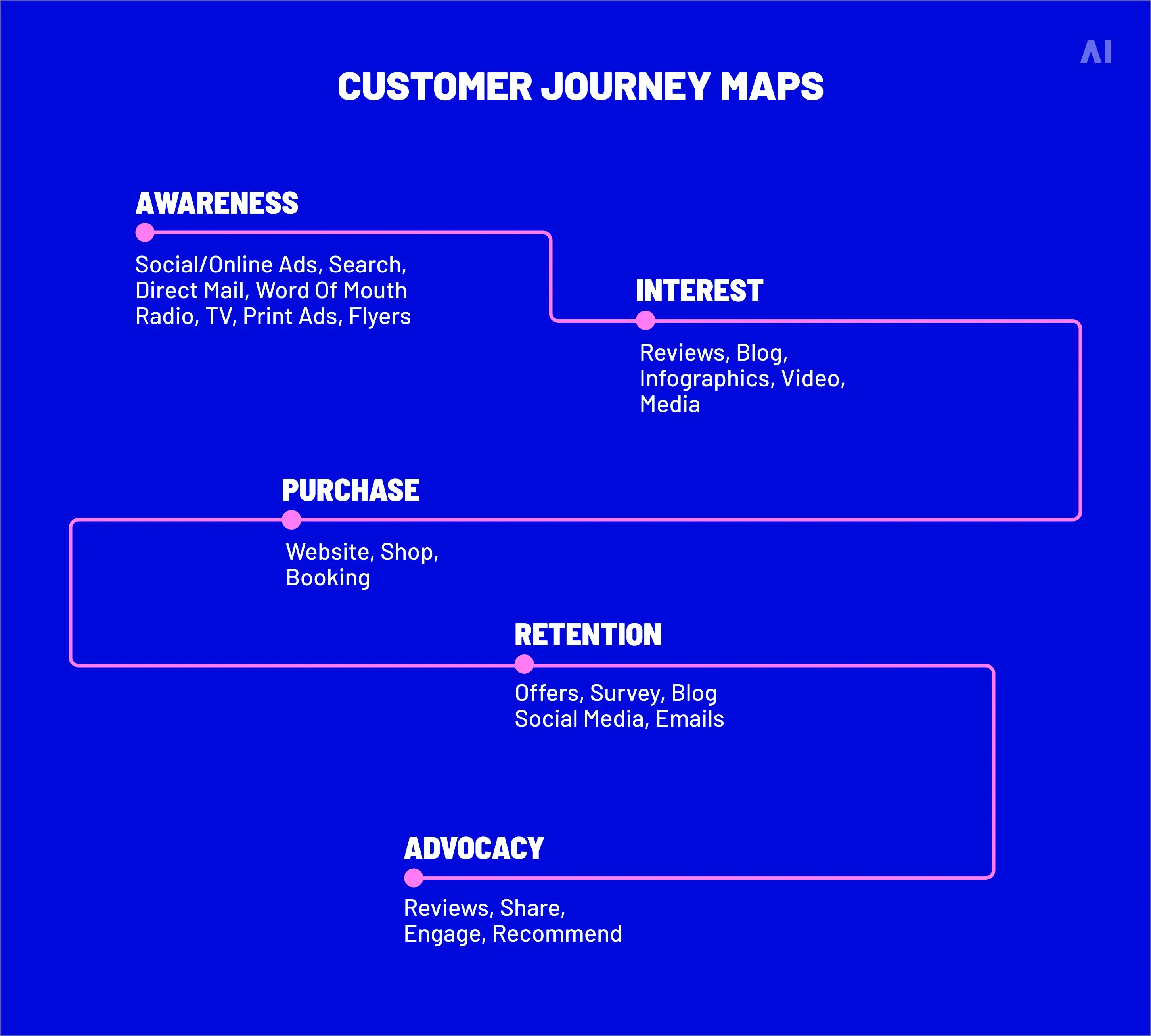
At its core, cross platform advertising is about coordination, not just presence. Campaigns are designed so that:
- Messaging is consistent but adapted to each platform’s format and user behavior
- Audiences are reached across multiple touchpoints, not just one interaction
- Platforms are optimized individually, but within a broader strategic framework
For example, a user might first see a brand on social media, later search for it on Google, and finally convert through a retail media ad. Each platform plays a different role—but together, they form a connected system.
This approach reflects how fragmented media consumption has become. According to Nielsen, the average consumer interacts with multiple media channels daily, while Google reports that users typically engage with 6–8 touchpoints before making a purchase decision.
💡Cross-platform advertising is not about being everywhere—it’s about being connected everywhere.
Ultimately, the goal is to increase reach, manage frequency more effectively, and improve overall campaign impact by ensuring that platforms work together rather than operate in isolation.
Cross-platform vs Omnichannel vs Cross-device advertising
In digital marketing, terms like cross platform advertising, omnichannel marketing, and cross-device advertising are often used interchangeably. However, they address different layers of strategy and execution. Understanding the distinction is critical, especially when designing cross-media ad strategies that scale across multiple platforms without losing clarity or control.
Cross-platform advertising
Cross-platform advertising refers to running coordinated campaigns across multiple advertising platforms to reach audiences at different stages of the customer journey. These platforms typically include search, social media, streaming services (CTV), retail media networks, and open web programmatic environments.
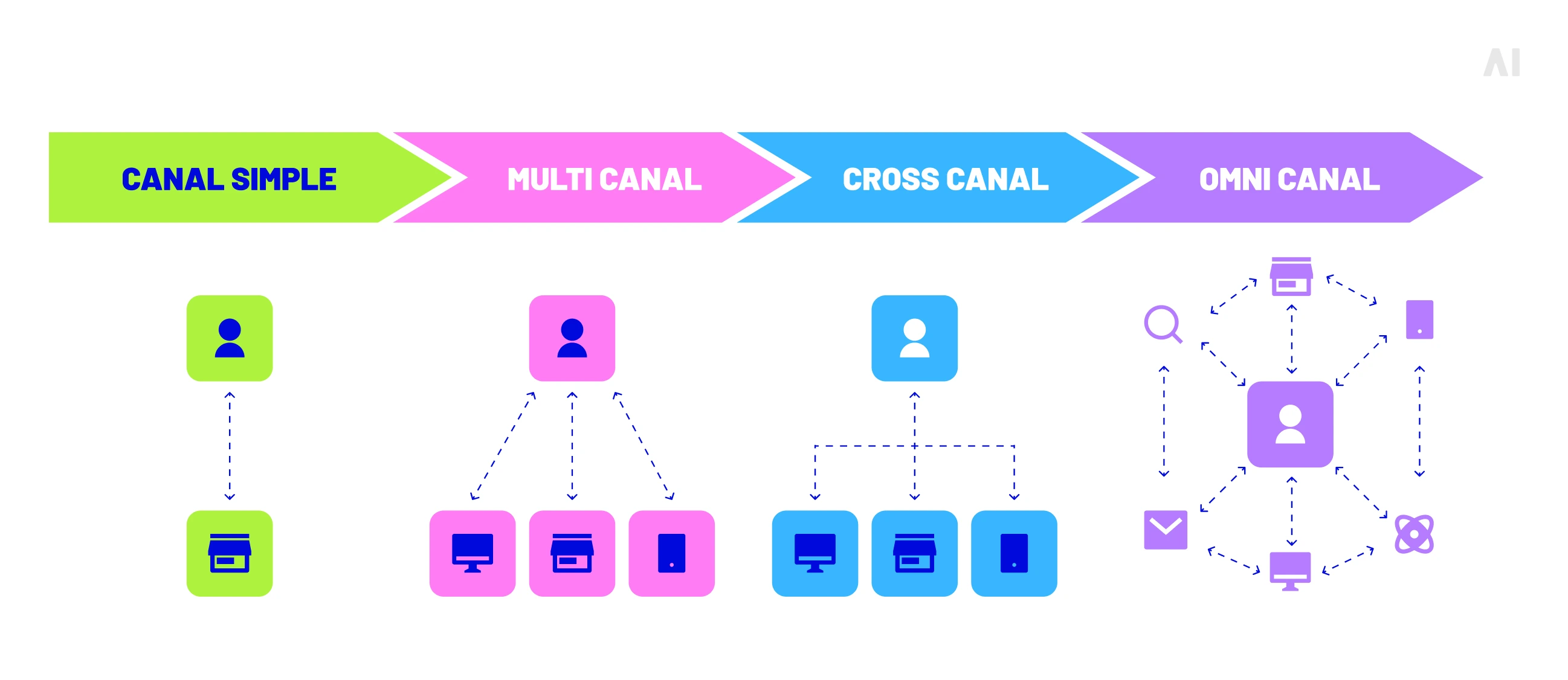
The emphasis here is on media orchestration. Campaigns are structured so that:
- Messaging is aligned across platforms
- Users encounter the brand at multiple touchpoints
- Each platform is optimized individually but contributes to a shared objective
For example, a campaign may use Google for intent capture, Meta for discovery, and CTV for awareness—working together as part of one system.
Omnichannel marketing
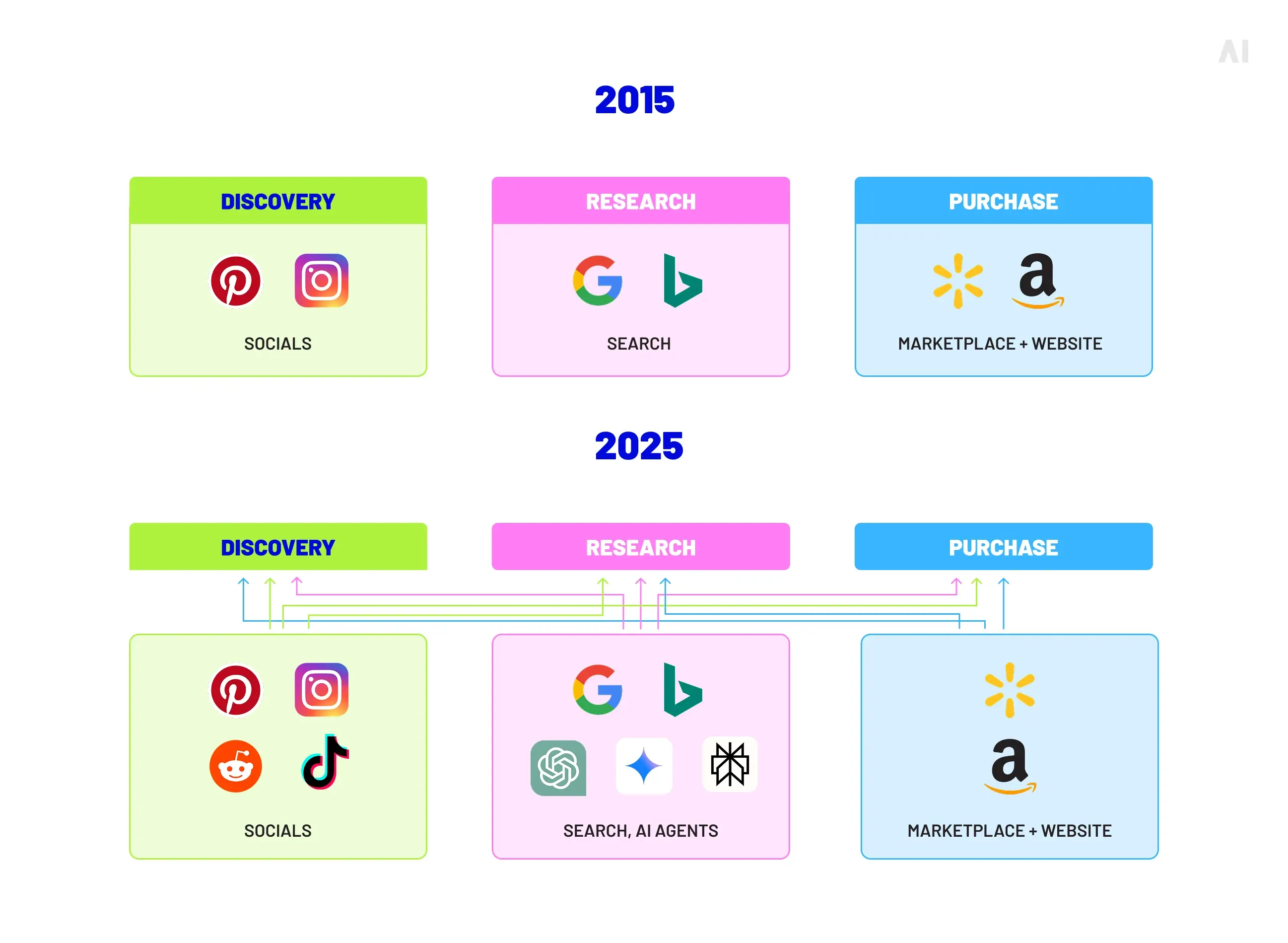
Omnichannel marketing operates at a broader level. It focuses on creating a consistent and unified customer experience across all brand interactions, not just paid media. This includes:
- Paid advertising
- Owned channels (website, email, app)
- Offline touchpoints (stores, customer service)
The goal is not just to coordinate campaigns, but to ensure that the entire brand experience feels seamless, regardless of where or how a user interacts.
⚡For a deeper breakdown, see Integrated Marketing vs. Omnichannel Marketing, where this distinction is explored in detail.
💡Cross-platform connects media. Omnichannel connects the entire experience.
Cross-device advertising
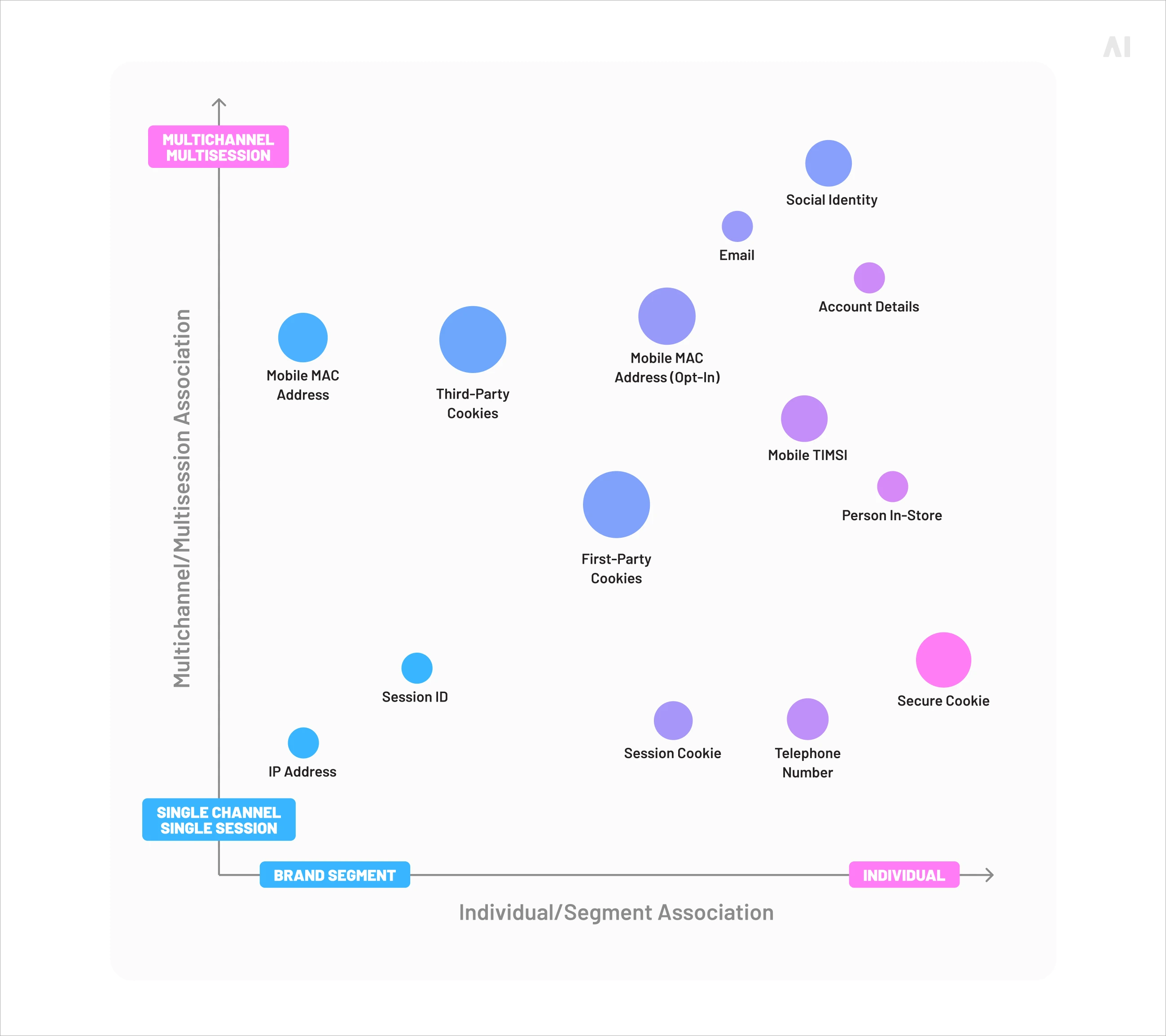
Cross-device advertising focuses on identifying and reaching the same user across multiple devices, such as smartphones, desktops, tablets, and connected TVs.
This approach relies on identity resolution techniques, including:
- Deterministic matching (logged-in users)
- Probabilistic modeling (behavioral signals)
⚡The goal is to maintain continuity in targeting and measurement as users switch devices. For a detailed explanation, see Cross-Device Targeting.
While these concepts overlap, they solve different problems:
- Cross-platform advertising = coordinating campaigns across platforms
- Omnichannel marketing = unifying the entire customer experience
- Cross-device advertising = tracking users across devices
In practice, cross platform marketing sits at the center of modern advertising execution, but it does not inherently solve identity or experience fragmentation—it operates within those constraints.
Why brands adopt cross-platform advertising strategies
Modern consumer behavior is inherently fragmented. People move continuously between search engines, social media platforms, streaming services, news websites, and e-commerce environments—often within the same session.
This is the core reason why cross platform advertising has become a strategic necessity rather than an optional tactic. Brands are not expanding across platforms for the sake of presence—they are responding to a structural shift in how attention is distributed.
{{26-Cross-Platform-Advertising="/tables"}}
At a strategic level, cross platform marketing is not just about expansion—it is about control within fragmentation. As campaigns scale across platforms, the challenge shifts from accessing inventory to structuring how platforms interact, how budgets are allocated, and how performance is interpreted across the system.
⚡This is where AI Digital’s Open Garden approach becomes relevant. Instead of treating platforms as isolated channels or forcing full consolidation into a single ecosystem, the Open Garden perspective recognizes that the advertising landscape is inherently hybrid—split between walled environments and the open internet.
From this perspective, effective cross-platform strategies require:
- Selective integration, not full centralization
- Platform-specific optimization combined with system-level coordination
- Independent measurement layers to evaluate performance beyond platform-reported metrics
- Flexible budget allocation based on cross-platform contribution, not siloed KPIs
💡Rather than trying to eliminate fragmentation, the Open Garden approach focuses on navigating it deliberately—leveraging the strengths of each platform while maintaining strategic oversight across the entire media ecosystem.
In this context, cross-platform advertising becomes less about “being everywhere” and more about building a controlled, interoperable system across multiple platforms, where each channel contributes to a measurable and coordinated outcome.
Key channels in cross-platform campaigns
Cross-platform campaigns are built by combining multiple advertising environments, each contributing a different function within the broader strategy. Rather than duplicating effort across channels, effective cross platform advertising assigns specific roles to each environment, aligning them with stages of the customer journey and performance objectives.
⚡This channel mix is central to performance-oriented execution. For a deeper strategic framework, see Performance Marketing Strategy.
Search advertising
Search advertising captures high-intent demand. Users actively express interest through queries, making this channel critical for conversion-focused campaigns.
Key characteristics:
- Intent-driven targeting based on keywords
- Strong alignment with lower-funnel objectives
- Measurable performance through clicks and conversions
Search plays a decisive role in capturing users who are already moving toward a decision, making it a foundational layer in multi platform advertising strategies.
Social media advertising
Social media platforms enable interest-based targeting and scalable reach, allowing brands to engage users before intent is explicitly expressed.
Key characteristics:
- Advanced audience segmentation (demographics, interests, behaviors)
- Native ad formats integrated into content feeds
- Strong performance in awareness and consideration stages
Social is particularly effective for demand generation, helping brands introduce products and build familiarity across large audiences.
Connected TV (CTV) and streaming platforms
Connected TV and streaming environments provide access to high-attention, premium video inventory delivered on large screens.
Key characteristics:
- High-impact storytelling through video formats
- Strong engagement in lean-back viewing environments
- Expanding reach as streaming consumption grows
⚡CTV is primarily used for upper-funnel awareness, but increasingly integrated into performance strategies. Learn more in OTT Platforms.
Retail media networks
Retail media networks allow brands to advertise within e-commerce environments, positioning ads close to the point of purchase.
Key characteristics:
- Access to first-party shopping and transaction data
- Placement within product listings and search results
- Direct connection to conversion outcomes
⚡This channel is particularly valuable for lower-funnel activation, where users are already evaluating products. More details are available in Retail Media Networks.
Open web programmatic advertising
Open web programmatic enables advertisers to reach audiences across independent publishers, websites, and digital media properties outside closed platforms.
Key characteristics:
- Scalable reach across diverse inventory sources
- Flexible targeting using contextual and audience signals
- Access to supply beyond walled garden environments
⚡Programmatic plays a critical role in extending reach and maintaining flexibility within cross-media strategies. Learn more in Programmatic Advertising.
In practice, these channels operate simultaneously within cross-platform campaigns, each contributing to a different part of the system. The effectiveness of cross platform marketing depends not on any single channel, but on how these environments are coordinated to deliver a unified outcome.
Measurement challenges in cross-platform advertising
Measurement is one of the most complex aspects of cross platform advertising. While campaigns may be strategically aligned across multiple platforms, the way performance is tracked, attributed, and reported remains fragmented. Each platform operates with its own logic, making it difficult to build a unified view of results across multi platform advertising environments.
At a structural level, the issue is not just data availability—it is data inconsistency. Even when platforms provide detailed reporting, those insights are generated within isolated systems that do not share a common measurement standard.
Platform-specific attribution models
Each platform measures conversions using its own attribution framework, including:
- Different attribution windows (e.g., 7-day click, 1-day view)
- Different definitions of conversions
- Platform-specific tracking technologies
For example, a single conversion may be credited to multiple platforms simultaneously, depending on how each system assigns value.
This creates a common issue in cross media advertising:
- Overlapping conversion reporting
- Inflated performance metrics
- Difficulty identifying true incremental impact
When every platform claims the conversion, the real contribution becomes unclear.
As a result, platform-reported performance often reflects internal optimization logic rather than objective cross-platform impact.
Fragmented reporting environments
Beyond attribution, campaign data is typically distributed across multiple dashboards, including:
- Platform-native reporting interfaces
- Analytics tools
- Data warehouses or BI systems
This fragmentation makes it difficult to:
- Consolidate performance data
- Compare results across platforms
- Identify cross-channel interactions
In practice, marketers spend significant time reconciling data rather than interpreting it, which slows down decision-making and reduces optimization efficiency.
⚡To address these challenges, advertisers are increasingly adopting independent measurement and analytics layers that sit above individual platforms. This is where solutions like Elevate become relevant.
Elevate is designed to help advertisers:
- Aggregate data across multiple platforms into a unified environment
- Standardize performance metrics for cross-platform comparison
- Provide predictive insights for budget allocation and campaign planning
- Move beyond platform-reported metrics toward system-level analysis
Rather than replacing platform data, this type of approach reinterprets it within a broader analytical framework, enabling more accurate evaluation of cross platform marketing performance.
Ultimately, measurement challenges in cross-platform advertising are not temporary—they are structural. As campaigns expand across platforms, the ability to interpret performance beyond individual dashboards becomes a critical competitive advantage.
Difficulty comparing performance across platforms
One of the most persistent challenges in cross platform advertising is the inability to directly compare performance across platforms. While each platform provides detailed reporting, the underlying metrics, definitions, and attribution logic are not standardized.
In practice, this creates several issues:
- The same KPI (e.g., “conversion”) may be defined differently across platforms
- Attribution windows vary, affecting how performance is credited
- Optimization algorithms prioritize different signals (clicks, views, engagement)
As a result, performance comparisons often become directional rather than precise. A campaign may appear to perform better on one platform simply because of how results are measured—not necessarily because it is driving more real impact.
Cross-platform reporting doesn’t fail due to lack of data—it fails due to lack of consistency.
This makes it difficult for marketers to answer fundamental questions such as:
- Which platform is truly driving incremental value?
- How should budgets be reallocated across channels?
- Are performance gains real or just measurement artifacts?
Overlapping audience exposure
Another structural issue in multi platform advertising is overlapping audience exposure. The same user may encounter ads across multiple platforms—on social media, streaming services, and the open web—within a short time frame.
While this repetition can reinforce messaging, it complicates measurement:
- Multiple platforms may claim credit for the same conversion
- Frequency becomes difficult to control across environments
- Incremental impact is harder to isolate
To address this, marketers increasingly turn to multi-touch attribution (MTA) models, which attempt to assign value across multiple touchpoints rather than relying on a single interaction.
These models aim to:
- Distribute credit across the user journey
- Reflect the contribution of each platform
- Provide a more realistic view of campaign performance
However, MTA is not a perfect solution—it still depends on data availability and modeling assumptions.
⚡For a deeper explanation of how these models work, see Multi-Touch Attribution.
Ultimately, overlapping exposure highlights a key reality of cross media strategies: performance is rarely driven by a single interaction, but by the combined effect of multiple coordinated touchpoints.
Operational complexity of cross-platform campaigns
Running cross platform advertising at scale introduces significant operational complexity. As campaigns expand across more platforms, marketing teams are required to manage not just strategy, but a growing layer of executional fragmentation—each platform adding its own requirements, systems, and constraints.
Platform-specific campaign management
Each advertising platform requires its own campaign setup, including distinct creative formats, targeting structures, and optimization workflows. What works in one environment often cannot be directly transferred to another.
For example:
- Creative specifications vary (video length, aspect ratios, interactive formats)
- Targeting parameters differ (keywords vs. audience segments vs. contextual signals)
- Campaign structures and naming conventions are platform-specific
According to IAB, marketers now manage campaigns across an average of 6–8 digital channels simultaneously, each requiring tailored setup and execution. This increases production overhead and slows down campaign deployment cycles.
Multiple optimization systems
Every platform operates with its own algorithmic optimization system, controlling bidding, targeting, and ad delivery independently.
These systems:
- Use different signals (e.g., engagement, intent, conversion likelihood)
- Optimize toward platform-specific goals
- Do not share learning across environments
Research from McKinsey & Company shows that lack of coordination between platform algorithms can reduce marketing efficiency by 15–30%, as optimization occurs in silos rather than at a system level.
💡Each platform optimizes for itself—not for your overall strategy.
This creates a structural limitation: even well-planned cross media strategies may produce suboptimal outcomes if platforms are not aligned at a higher level.
Fragmented campaign data
Campaign data is typically distributed across multiple dashboards, analytics tools, and reporting environments. This fragmentation makes unified performance analysis difficult and time-consuming.
In practice, marketers must:
- Extract data from platform-native dashboards
- Normalize metrics across systems
- Reconcile discrepancies in reported performance
According to Deloitte, over 60% of marketers cite data fragmentation as a primary barrier to effective cross-channel measurement and optimization.
These operational challenges scale with complexity. As advertisers expand across more platforms, they are not just increasing reach—they are also increasing the number of systems, data sources, and optimization layers that must be managed simultaneously.
Partial solutions for cross-platform measurement
As cross platform advertising has become more complex, advertisers have developed several approaches to improve how performance is analyzed across multiple platforms. These methods aim to reduce fragmentation and provide a more accurate view of campaign impact.
However, none fully solve the problem—each comes with its own limitations related to data access, modeling assumptions, and platform constraints.
Multi-touch attribution models
Multi-touch attribution (MTA) models attempt to assign value across multiple interactions in the customer journey, rather than crediting a single touchpoint.
Instead of relying on last-click attribution, MTA distributes conversion value across:
- First interaction (awareness)
- Mid-funnel engagements (consideration)
- Final interaction (conversion)
According to Google, users often interact with multiple touchpoints before converting, making single-touch models increasingly insufficient for modern cross media advertising.
MTA helps marketers:
- Understand how channels contribute collectively
- Identify supporting touchpoints, not just final drivers
- Improve budget allocation across platforms
However, MTA depends heavily on user-level tracking, which is increasingly restricted due to privacy regulations and platform limitations.
Marketing mix modeling
Marketing mix modeling (MMM) uses statistical analysis of historical data to estimate how different channels contribute to overall business outcomes.
Unlike attribution models, MMM does not rely on user-level tracking. Instead, it analyzes aggregated data such as:
- Media spend
- Sales performance
- External factors (seasonality, pricing, promotions)
According to Deloitte, MMM has regained importance as privacy restrictions limit granular tracking, offering a privacy-safe approach to cross-platform measurement.
MMM is particularly useful for:
- Long-term planning
- Budget allocation across channels
- Understanding macro-level performance trends
However, it lacks real-time insights and cannot capture granular user-level interactions within campaigns.
Data clean rooms
Data clean rooms allow advertisers and platforms to analyze aggregated, privacy-safe datasets without exposing individual user data.
These environments enable:
- Secure data collaboration between advertisers and platforms
- Cross-platform audience analysis at an aggregated level
- Measurement of campaign overlap and reach
⚡Learn more in What Is a Data Clean Room.
While clean rooms improve transparency, they remain constrained by:
- Limited data accessibility
- Platform-specific boundaries
- Restricted interoperability between ecosystems
💡Every solution improves visibility—but none fully unify it.
In practice, advertisers often combine these approaches to approximate a clearer view of performance. Still, the underlying challenge remains: cross platform marketing operates across systems that were not designed to be measured together.
Why cross-platform performance requires structural coordination
The core challenge of cross platform advertising is not only measurement—it is coordination. While reporting inconsistencies are visible symptoms, the underlying issue is that each platform operates as an independent ecosystem with its own internal logic.
In practice, platforms differ across several critical dimensions:
- Reporting systems: Each platform structures and visualizes performance data differently
- Data availability: Access to user-level and aggregated data varies significantly
- Attribution models: Conversions are defined and credited using platform-specific rules
- Optimization algorithms: Bidding, targeting, and delivery are driven by separate machine learning systems
These differences mean that even when campaigns are aligned strategically, they are executed and evaluated in isolation.
As advertisers expand across more multiple platforms, this fragmentation compounds. More channels introduce more datasets, more attribution frameworks, and more optimization layers—making it increasingly difficult to align insights or make consistent decisions across campaigns.
💡Scale increases reach—but it also multiplies inconsistency.
As a result, organizations are moving beyond platform-level optimization toward structural coordination models. This includes governance frameworks, unified measurement layers, and cross-platform performance alignment approaches designed to interpret results at a system level.
Ultimately, effective cross platform marketing requires not just activation across channels, but coordination across systems that were never designed to work together.
The growing need for cross-platform measurement governance
As cross platform advertising becomes more complex, many organizations are moving beyond platform-level reporting toward more structured approaches to measurement and performance alignment. Relying solely on individual platform dashboards is no longer sufficient when campaigns operate across multiple platforms, each with its own metrics, attribution logic, and optimization systems.
Instead, advertisers are increasingly exploring governance frameworks—internal or external structures designed to create consistency across fragmented environments. The goal is not to replace platform data, but to interpret it within a unified system of evaluation.
These frameworks typically aim to:
- Standardize measurement approaches across channels, reducing discrepancies in how performance is defined
- Align campaign reporting, enabling more consistent cross-platform comparisons
- Improve decision-making, allowing marketing teams to allocate budgets based on system-level insights rather than siloed results
Without governance, cross-platform performance becomes a collection of disconnected signals.
💡In practice, this shift reflects a broader evolution in cross platform marketing—from execution-focused strategies to coordination-focused systems.
⚡For a deeper exploration of how these frameworks are structured, see Cross-Platform Measurement Governance in Digital Advertising, where the concept is examined in detail.
Conclusion: Managing advertising performance across platforms
Cross platform advertising has become a fundamental component of modern marketing. As audiences interact with brands across search engines, social media, streaming platforms, retail environments, and the open web, campaigns must operate across multiple platforms to remain effective. This shift enables broader reach and more consistent engagement across the customer journey—but it also introduces structural complexity.
Running multi platform advertising campaigns requires more than distribution. It demands the ability to interpret fragmented data, manage overlapping attribution models, and coordinate execution across independent systems. As campaigns scale, challenges in measurement, reporting, and optimization become increasingly pronounced.
Key takeaways for marketers
- Cross-platform advertising enables broader audience reach across diverse digital environments
- Combining channels reinforces messaging and strengthens impact across multiple touchpoints
- Measurement becomes more complex as campaigns span platforms with different attribution models
- Operational coordination is essential to manage platform-specific systems and workflows
- Governance frameworks are increasingly critical for aligning performance insights across channels
The challenge is no longer access to platforms—it is alignment across them.
⚡In this context, approaches like AI Digital’s Open Garden perspective reflect a broader industry shift. Rather than attempting to centralize everything into a single system, the focus is on coordinating performance across a hybrid ecosystem—balancing platform strengths while maintaining strategic oversight.
💡Ultimately, the future of cross platform marketing will depend on how effectively advertisers move from isolated platform optimization to system-level coordination and measurement alignment.