AI Influencer Marketing: How Synthetic Creators Are Changing the Game


AI influencer marketing is developing along two connected but distinct paths. Behind the scenes, brands are using AI to identify creators, analyze audiences, prepare briefs, manage campaigns, evaluate content, and accelerate production.
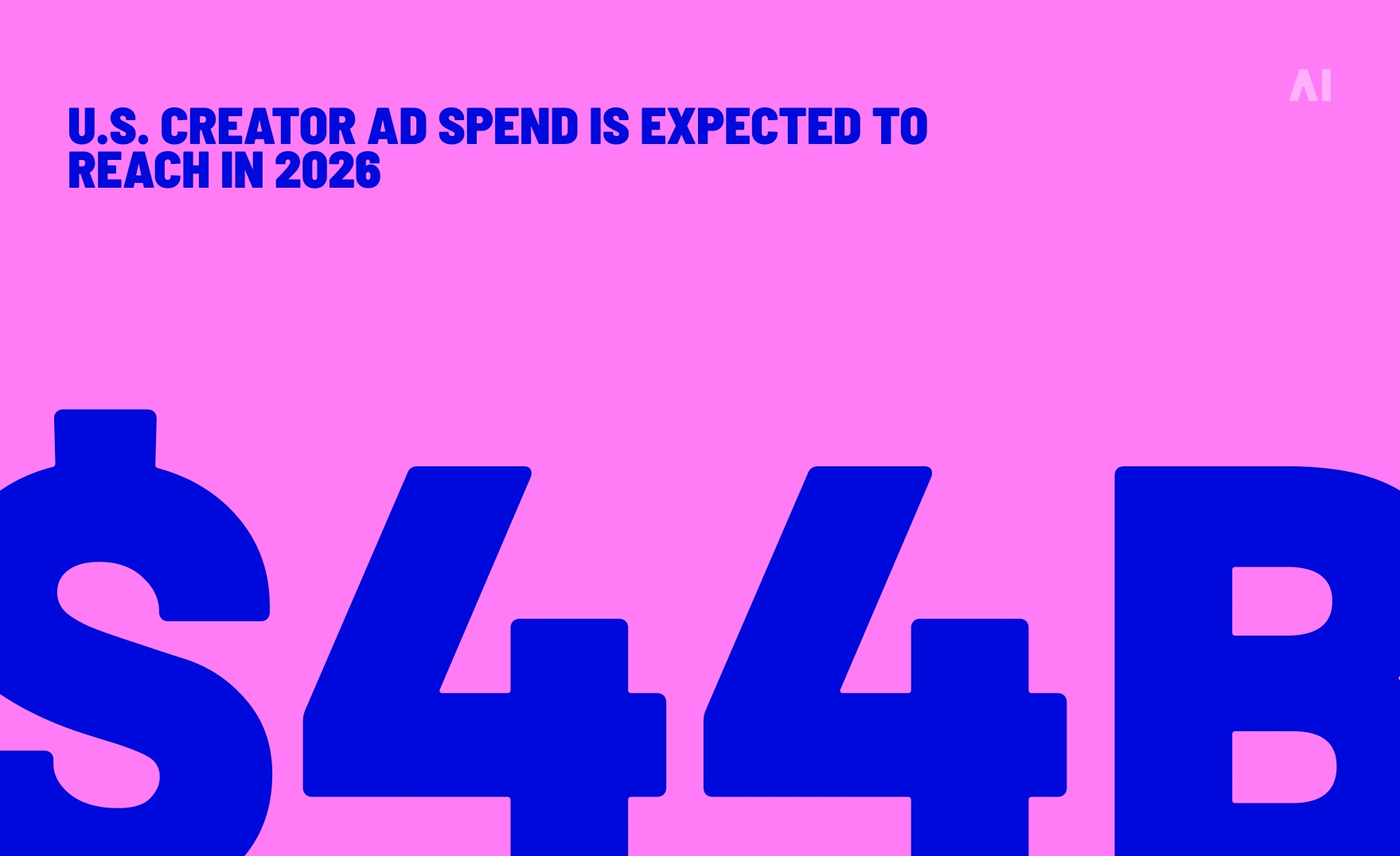
At the same time, AI is enabling a different model: digitally created personalities that can publish content, represent brands, and build recognizable identities without being traditional human creators. As U.S. creator advertising spend is projected to reach $44 billion in 2026, understanding where AI adds value—and where it introduces new risks—is becoming increasingly important.
This article focuses primarily on the second development: AI-generated, virtual, and synthetic creators. It explains how these personas differ from virtual influencers, AI avatars, digital spokespeople, and human talent; where they can provide greater creative control and production flexibility; and where authenticity, ownership, disclosure, and audience trust can become concerns. It also examines current campaign examples, appropriate performance metrics, and the practical questions brands should answer before deciding whether a synthetic creator fits their strategy.
TL;DR: Key Takeaways
- AI influencer marketing is broader than synthetic creators. It also includes AI used for creator discovery, campaign operations, analysis, and content production.
- Virtual influencers and AI influencers are not automatically the same. A virtual creator may be produced through CGI or animation without significant AI involvement, while many AI influencers remain heavily directed by people.
- Synthetic creators can expand creative control and production flexibility. They can support consistent fictional identities, localization, reusable assets, and experiences that would be difficult to produce conventionally.
- Human creators retain distinct strengths. Lived experience, personal expertise, cultural participation, and established community relationships cannot simply be generated.
- Effective use requires more than compelling technology. Brands need clear ownership, usage rights, disclosure, moderation, governance, and objective-based measurement before deploying synthetic talent.
What Is AI Influencer Marketing?
AI influencer marketing is the use of artificial intelligence to support or deliver influencer marketing activities. The term covers two related but different applications:
- AI-assisted influencer marketing uses AI for creator discovery, audience analysis, campaign planning, content evaluation, reporting, workflow automation, and production support.
- AI-powered creator marketing uses digitally created personas as the recognizable talent appearing in social content, advertising, live commerce, or interactive experiences.
The distinction matters because adoption of AI tools does not necessarily indicate adoption of AI influencers. IAB found that nearly three in four creator ad buyers were using or planning to use AI, but the most common applications involved editing, briefs, and content personalization—not replacing human creators with synthetic personalities.
This article concentrates on the second model: brands working with AI-generated, virtual, or synthetic creators. For the operational side, AI influencer marketing tools can support creator discovery, campaign management, content analysis, reporting, and workflow automation.
What Are AI Influencers and Synthetic Creators?
AI influencers and synthetic creators are digitally produced personas designed to operate as recognizable creator identities. They may maintain social profiles, publish recurring content, appear in advertisements, collaborate with brands, or interact with audiences through live or conversational experiences.
“Synthetic creator” is a useful umbrella term, but it is not a standardized technical or legal classification. Different companies may use AI influencer, virtual influencer, digital influencer, or virtual creator to describe significantly different production models. Marketers should therefore examine how the character is made, who controls it, how content is approved, and whether its interactions are automated rather than relying on the label alone.
Virtual Influencers vs. AI Influencers
A virtual influencer is defined primarily by being a digitally created character. Its appearance and content may be produced through traditional CGI, 3D animation, motion capture, generative AI, or a combination of these methods. Some well-known virtual influencers were created before today’s generative AI systems and continue to be operated by human creative teams.
An AI influencer generally involves a material role for AI in the character’s creation or operation. AI might generate its appearance, voice, scripts, movements, content variations, translations, or audience responses. However, the presence of AI does not reveal how independently the persona operates.
The clearest distinction is that “virtual” describes the creator’s digital form, while “AI” describes part of the technology or operating process behind it. The terms overlap, but they should not be treated as exact synonyms.
AI Influencers vs. AI Avatars and Digital Spokespeople
The main difference is identity continuity. A synthetic creator normally has a persistent name, appearance, personality, content history, and public-facing presence. Like a human creator, the character may appear repeatedly across campaigns and build an identifiable relationship with an audience over time.
An AI avatar or digital spokesperson is usually created for a narrower purpose, such as presenting an advertisement, explaining a product, delivering training material, or localizing a video. It may appear in multiple assets without developing an independent creator identity or community.
A brand that needs several presenter-led videos may only require an avatar, while a brand seeking a recurring fictional personality with its own narrative and audience role is closer to creating a synthetic influencer. Understanding this distinction helps marketers choose between using AI avatar ads to produce spokesperson videos at scale and investing in a persistent digital identity.
How Synthetic Creators Are Produced and Operated
Developing a synthetic creator involves more than generating a photorealistic face. A sustainable operating model normally includes:
- Character development: Defining the persona’s appearance, background, values, tone, interests, and behavioral boundaries.
- Visual and audio production: Using CGI, generative imagery, animation, motion capture, voice synthesis, or recorded human performance.
- Content operations: Planning narratives, writing scripts, producing assets, adapting formats, and managing publication schedules.
- Human direction and approval: Reviewing accuracy, brand alignment, disclosures, rights, safety, and potential audience reactions.
- Interaction and moderation: Managing comments, live experiences, or AI-generated responses while preventing inappropriate or misleading outputs.
Synthetic creators operate across a spectrum. Some publish fully scripted, human-produced content. Others use AI to accelerate production while people retain editorial control. A smaller group may use conversational systems to respond in real time, but even these models require technical supervision, moderation rules, and accountability.
For that reason, AI-generated does not automatically mean autonomous. Brands should confirm which decisions are automated, which require human approval, and who remains responsible for the resulting content. The same principle applies when using AI ad creative to automate production and scale effective variations.
Why Brands Are Experimenting With Synthetic Creators
Brands are exploring synthetic creators because they offer a different production and storytelling model, not because they are guaranteed to outperform human talent. A reusable digital identity can appear across settings, formats, languages, and campaign stages without requiring a new shoot for every asset. It can also support fictional stories or interactive experiences that would be difficult to produce through a conventional influencer partnership.
The potential value comes from flexibility, continuity, and control. Whether those capabilities improve campaign performance still depends on the strength of the idea, its relevance to the audience, production quality, distribution, and measurement.
Creative Control and Brand Consistency
A synthetic creator can be built around a defined character system covering appearance, voice, personality, behavior, visual style, and messaging boundaries. This gives the brand or production studio more control over how the character appears in different campaigns and reduces its dependence on locations, schedules, wardrobe, or repeated talent availability.
A persistent design can also make campaign continuity easier. The same character can return across product launches, seasonal campaigns, or markets while remaining visually recognizable. However, greater production control does not guarantee stronger creative work. Generated assets can still drift from the approved character, communicate the wrong tone, or create an unexpected reputational issue.
Brands therefore need a character guide, approval process, content standards, and clear responsibility for every published asset. Human judgment remains essential for evaluating cultural context, audience expectations, factual claims, and brand safety.
Scalable Content and Localization
Once a synthetic creator’s visual and narrative system is established, teams can adapt content across languages, aspect ratios, channels, products, and campaign variations without rebuilding the character each time. AI can support translation, voice generation, lip synchronization, background changes, editing, and format adaptation while preserving a consistent identity.
This can be particularly useful for international or multi-platform campaigns, but localization involves more than translating the same script. Humor, gestures, claims, social conventions, and audience expectations may change between markets. Local reviewers should confirm that every variation remains culturally appropriate and legally compliant.
The same production approach can help brands create AI video ads at scale without repeating a traditional film shoot. However, the number of generated assets is only an operational output. Success should be evaluated through creative quality, audience response, incremental performance, and production efficiency—not content volume alone.
New Characters and Interactive Experiences
Synthetic creators can give brands the freedom to develop characters and narratives that do not need to follow the limits of physical production. A persona might move through fictional environments, maintain an evolving storyline, demonstrate products in imagined settings, host live-commerce content, or become part of an interactive brand experience.
These applications can extend beyond recreating a conventional influencer endorsement. For example, a synthetic character could act as a recurring guide through a product ecosystem or use a conversational system to answer defined questions during a live experience. The value lies in designing an experience that makes purposeful use of the character—not simply replacing a human face with a generated one.
Brands should also distinguish among scripted, interactive, and autonomous operation:
- Scripted content is planned and approved before publication.
- Interactive content may generate responses within predefined information sources and behavioral rules.
- Autonomous operation involves the system making and executing certain decisions without real-time human direction.
A creator should only be described as autonomous when its actual operating model supports that claim. Even then, automation does not remove the need for monitoring, moderation, escalation procedures, and human accountability.
AI Influencers vs. Human Influencers: Where Each Model Fits
The choice between human and synthetic creators should begin with the campaign objective, not the technology. Human creators contribute personal history, subject-matter expertise, cultural participation, and relationships developed with real communities. Synthetic creators offer a different set of capabilities, including repeatable fictional identities, greater production control, and the ability to appear in environments or stories that would be difficult to create physically.
Neither model is automatically more effective. A human creator is not guaranteed to be authentic or suitable for every brand, while a synthetic creator is not automatically more scalable, economical, or brand-safe.
The most appropriate strategy may combine both models. A human creator could provide expertise, personal experience, or community credibility, while a synthetic character supports fictional storytelling, localized explainers, or repeatable campaign assets.
Synthetic creators are strongest when their digital nature adds meaningful creative or operational value. If a campaign depends on real testimony, personal transformation, professional experience, or an established community relationship, a human creator will usually provide something a designed persona cannot replicate.
Real-World AI Influencer Marketing Examples
Synthetic creators do not follow one operating model. Some act as interactive commerce interfaces, while others function as virtual talent in produced campaigns or as persistent fictional identities managed by a studio. The following examples demonstrate those differences; they should not be treated as proof that AI creators are inherently more effective than human influencers.
MIRAI and Amazon Japan: AI Influencer Live Commerce

In April 2026, Aww announced that Amazon Japan had used its AI influencer MIRAI during a New Life sales campaign. According to Aww, a product-trained language model enabled MIRAI to introduce products, respond to viewers in real time, and direct audiences to an Amazon storefront through livestreams described as fully autonomous and operating without human intervention.
This operating model differs from a conventional virtual-influencer campaign built entirely from pre-produced images or scripted videos. MIRAI’s role combined a digital identity, real-time interaction, product information, and a direct commerce path. However, the autonomy description comes from Aww, the company behind MIRAI, and the announcement does not provide independently verified sales, conversion, or audience results. The example demonstrates a new live-commerce format—not proof that an AI influencer caused stronger performance.
imma and Nomura: Virtual Talent in Brand Storytelling

Nomura used virtual influencer imma in its second centenary advertisement, “Changing world. Enduring passion.”, released on December 25, 2025. Nomura confirms that the campaign appeared on television across Japan and in national newspapers. Within the commercial, imma moves between locations representing the company’s history and future.
Here, imma functions as recognizable virtual talent inside a controlled brand narrative. The campaign does not position her as an autonomous agent responding to viewers or making commerce decisions. This makes the example closer to casting a recurring fictional personality in advertising than deploying an interactive AI system.
Aitana López: An AI-Native Creator Model

Aitana López represents another model: a persistent AI-generated persona developed and operated by The Clueless. The agency presents Aitana López as an AI influencer with a consistent appearance, personality, interests, social presence, and capacity to participate in brand collaborations.
Unlike a human creator managing their own likeness and public identity, Aitana’s fictional identity and production are controlled through an agency-led operating model. This can give the operator greater control over visual continuity, narratives, and commercial use, but it also makes ownership, approvals, and accountability central to the brand relationship.
The agency publishes a general client list, but that list alone does not verify that Aitana participated in a specific campaign for every named company. Individual collaborations and performance claims should therefore be supported by campaign-specific evidence.
The Risks Brands Need to Manage
Synthetic creators introduce operational, reputational, ethical, and legal risks that differ from—but do not necessarily replace—the risks associated with human talent. The appropriate controls depend on how the character is produced, who operates it, whether it interacts with audiences, where the campaign runs, and what claims it communicates.
Authenticity, Trust, and Audience Reaction
A synthetic creator can maintain a consistent personality, but it cannot provide genuine human experience. It should not imply that it personally used a product, experienced a health condition, visited a location, or achieved a result unless the fictional nature of that claim is unmistakably clear.
Audience reaction is not universally positive or negative. It may depend on whether the character is transparently fictional, whether the creative idea suits the brand, and whether viewers feel the format is entertaining rather than deceptive. In Sprout Social’s 2026 survey of 2,250 consumers across the U.S., UK, and Australia, 44% said they were uncomfortable with brands using AI influencers. The finding signals a meaningful trust risk, but it does not prove that every audience or campaign will respond in the same way.
AI Disclosure and Sponsored-Content Disclosure Are Different
Brands need to address two separate disclosure questions:
- Does the audience need to know that the person, voice, image, or interaction is AI-generated or synthetically altered?
- Does the audience need to know that the content has a commercial relationship with a brand?
One disclosure does not automatically satisfy the other. In the United States, the FTC’s revised Endorsement Guides explicitly include virtual influencers and require material brand relationships to be disclosed clearly. The FTC also warns that a platform’s built-in disclosure tool may not always provide adequate disclosure by itself.
Platforms apply additional content rules. YouTube requires creators to disclose photorealistic content that has been meaningfully generated or altered with AI, while TikTok requires labels on AI-generated content containing realistic images, audio, or video.
For campaigns reaching the EU, Article 50 of the EU AI Act has applied since August 2, 2026. It establishes transparency requirements for certain direct AI interactions, machine-readable marking, deepfakes, and other covered content. The exact obligation depends on the system, content, operating role, and context, so brands should verify current platform and jurisdiction-specific requirements before launch.
Likeness, IP, Ownership, and Brand Safety
Generating a character with AI does not automatically give a brand complete or exclusive rights to its identity or content. Contracts and production records should establish control over:
- The character: its name, visual identity, voice, personality, source assets, and trademarks.
- Production inputs: models, datasets, reference images, music, fonts, backgrounds, and other licensed material.
- Human likenesses: consent for any face, body, voice, performance, or digital replica based on a real person.
- Campaign outputs: approval rights, permitted markets, duration, formats, derivative uses, and post-campaign reuse.
- Operations: account access, publishing authority, audience data, moderation, security, and incident response.
Copyright protection also varies by jurisdiction and the extent of human creative contribution. In the United States, the Copyright Office has stated that generative-AI output may receive protection when a human determines sufficient expressive elements, while prompts alone do not necessarily establish authorship.
Brand-safety controls should also cover misleading claims, fabricated experiences, biased representations, inappropriate generated responses, and unexpected outputs during live interactions. Synthetic talent may offer greater production control, but it is not risk-free. Clear rights, documented approvals, human oversight, and escalation procedures remain necessary throughout the character’s lifecycle.
Who Actually Controls an AI Influencer?
Control of an AI influencer is rarely determined by one simple ownership claim. The organization that owns the character may not operate its social accounts, create every asset, control the underlying technology, or approve real-time interactions. Brands should therefore distinguish legal ownership, creative control, technical operation, and publishing authority.
Synthetic creators generally follow one of four structures:
- Brand-owned characters: A company develops the persona as its own intellectual property and contracts studios or technology providers to produce and operate it. This can provide greater continuity and control, but the brand also assumes more responsibility for governance, moderation, rights management, and long-term maintenance.
- Agency- or studio-owned virtual talent: A specialist company develops and manages the character, while brands license or hire it for individual campaigns. The studio may retain control over the character’s identity, appearance, accounts, audience data, and future partnerships. Campaign agreements should clarify what the brand can approve, modify, distribute, and reuse.
- Creator-controlled AI personas: A human creator may develop an avatar, digital twin, synthetic voice, or AI-assisted extension of their public identity. In this model, the creator should retain meaningful control over how their likeness and voice are used. Agreements need to address consent, editing, approval, derivative content, campaign duration, and whether the AI version can continue operating after the partnership ends.
- Partially automated or conversational characters: A character may generate responses, host interactive experiences, or adapt content using an AI system. Control is then distributed across the character owner, model provider, developers, data sources, platform, and moderation team. The system may automate certain actions, but an identifiable person or organization must remain accountable for its behavior.
These structures affect several practical decisions:
- Creative approvals: Who can change the character, approve scripts, or reject generated content?
- Intellectual-property rights: Who owns the name, design, voice, source assets, outputs, and derivative versions?
- Continuity: Can the character continue if the brand changes agencies, tools, or production partners?
- Data and platform access: Who controls the accounts, audience data, conversation records, and performance history?
- Moderation and accountability: Who monitors interactions, corrects errors, responds to complaints, and pauses the character during an incident?
- Portability: Can the persona move to another platform or technology provider without losing its identity, assets, or audience?
A brand may own the final campaign assets without owning the underlying character, production model, social account, or future usage rights. Every layer of control should therefore be documented before the character goes live.
Clear roles are also essential for effective human and AI collaboration within advertising creative teams. AI may generate, adapt, or deliver content, but people still need defined authority over strategy, approvals, moderation, and final accountability.
How to Measure AI Influencer Marketing Performance
AI influencer campaigns should be measured against the outcome they are designed to produce—not the novelty of the character. Follower count, generated-asset volume, and production speed do not show whether the campaign reached the right audience or influenced meaningful behavior.
Brands should define the objective, measurement method, and comparison point before launch.
Production efficiency and advertising effectiveness should be reported separately. A synthetic creator may reduce the time needed to produce localized assets while delivering no improvement in engagement or sales. Conversely, a more resource-intensive campaign may still create stronger brand or business outcomes.
Campaign-level tracking can include tagged links, dedicated landing pages, promotional codes, conversion pixels, platform reporting, and brand-lift research. Where budget and scale allow, holdout groups, matched-market tests, or controlled experiments can provide stronger evidence of incremental impact.
A rise in traffic or sales during an AI influencer campaign does not prove that the synthetic creator caused the result. Media spend, promotions, seasonality, other channels, and existing demand may also contribute. Measurement should therefore distinguish observed correlation from demonstrated incrementality.
When Should a Brand Use a Synthetic Creator?
A synthetic creator is most useful when its digital identity creates value that a conventional spokesperson or human partnership would not provide. Before investing, brands should consider the following questions:
- Does the brand need a persistent fictional identity?
If the campaign only requires several presenter-led videos, an AI avatar may be sufficient. A full synthetic creator is more appropriate when the character needs an ongoing personality, narrative, content history, and audience role.
- Does the concept benefit from strong visual and narrative control?
Synthetic creators can suit recurring stories, imagined environments, stylized product demonstrations, and campaigns requiring consistent character presentation.
- Is lived human experience essential?
Categories built around personal testimony, professional expertise, health experiences, transformation stories, or community credibility may be better served by human creators.
- Will the character support meaningful production needs?
Localization, recurring content, format adaptation, or interactive experiences may justify the model. Producing more assets without a clear distribution and testing strategy does not.
- Are ownership and usage rights clear?
The brand should know who controls the character, voice, source assets, accounts, campaign outputs, audience data, derivative versions, and future use.
- Are disclosure and moderation processes established?
Teams need rules for identifying synthetic content, disclosing commercial relationships, reviewing claims, moderating interactions, escalating errors, and pausing publication when necessary.
- Does the expected value justify the operating requirements?
Character development, technical production, quality assurance, legal review, moderation, and long-term maintenance can introduce costs that are easy to overlook.
A synthetic creator may be a poor fit when its only purpose is to follow an AI trend, imitate a human influencer, or generate content more quickly. The strongest use cases make the character’s fictional or interactive nature part of the creative idea.
Brands also do not have to choose one model exclusively. Human creators can provide expertise, lived experience, and established community relationships, while synthetic creators support fictional storytelling, localization, repeatable campaign assets, or interactive formats. A complementary approach can use each model where it contributes the most value.
How AI Digital Supports AI-Powered Creative Production
Brands do not need to build an influencer platform or autonomous character system to benefit from AI-powered production. AI Digital’s AI Creative Studio combines AI-native workflows with experienced human creative direction to develop, adapt, and prepare advertising assets for different media environments.
Its capabilities include:
- Original AI creative production: TV-grade AI video, motion graphics, AI-generated UGC-style content, platform-native social video, voiceovers, and audio production.
- Creative adaptation: Multi-platform versioning, aspect-ratio resizing, video downcuts, asset adjustments, and localized variant tagging.
- Multi-format execution: Static, social, video, HTML5, rich media, CTV, and interactive creative formats.
- Creative intelligence: AI-supported ideation, storyboarding, prototyping, asset tagging, and content repurposing.
This production model can help teams develop one core concept and adapt it for different platforms, audiences, markets, and campaign requirements. AI accelerates creation and iteration, while human specialists guide strategy, brand alignment, visual quality, and media suitability.
AI Creative Studio should be understood as a creative production partner. It is not positioned as an influencer-discovery platform, talent marketplace, virtual-influencer management system, or autonomous creator network. AI Digital does not claim to own synthetic influencers, manage their communities, or automatically select creator talent. Its role is to help advertisers produce and adapt creative assets at the scale modern campaigns require.
Use Synthetic Creators Without Losing Human Judgment
Synthetic creators can expand what brands are able to produce. They can support recurring fictional identities, imaginative settings, localized content, interactive experiences, and scalable campaign variations. Their value, however, depends on more than the technology used to create them.
Before launching a synthetic-creator campaign, brands should:
- Define the character’s role: Establish why a synthetic identity is more appropriate than a human creator, spokesperson, or standard advertising asset.
- Set transparent audience expectations: Make the fictional or AI-generated nature of the content clear and address commercial disclosures separately.
- Confirm rights and control: Document ownership, approvals, permitted uses, platform access, moderation responsibilities, and continuity between partners.
- Protect brand consistency: Apply human creative direction, cultural review, quality assurance, and clear behavioral boundaries.
- Measure meaningful outcomes: Evaluate relevant reach, attention, engagement, traffic, conversions, brand impact, and production efficiency instead of focusing on novelty or output volume.
AI changes how creator identities and campaign assets can be produced, but it does not remove the need for human responsibility. Strategy, judgment, approvals, disclosure, and accountability remain essential whether the final content features a human creator, a synthetic persona, or both.
Brands considering how synthetic characters or AI-powered production could fit their campaigns can talk with AI Digital’s team about building scalable creative without losing the human judgment behind effective advertising.