Why DOOH Inventory Quality — Not Screen Volume — Drives Campaign Performance

DOOH inventory has never been easier to buy at scale. What’s harder is buying it well—in a way that protects brand outcomes, pacing, and measurement integrity.
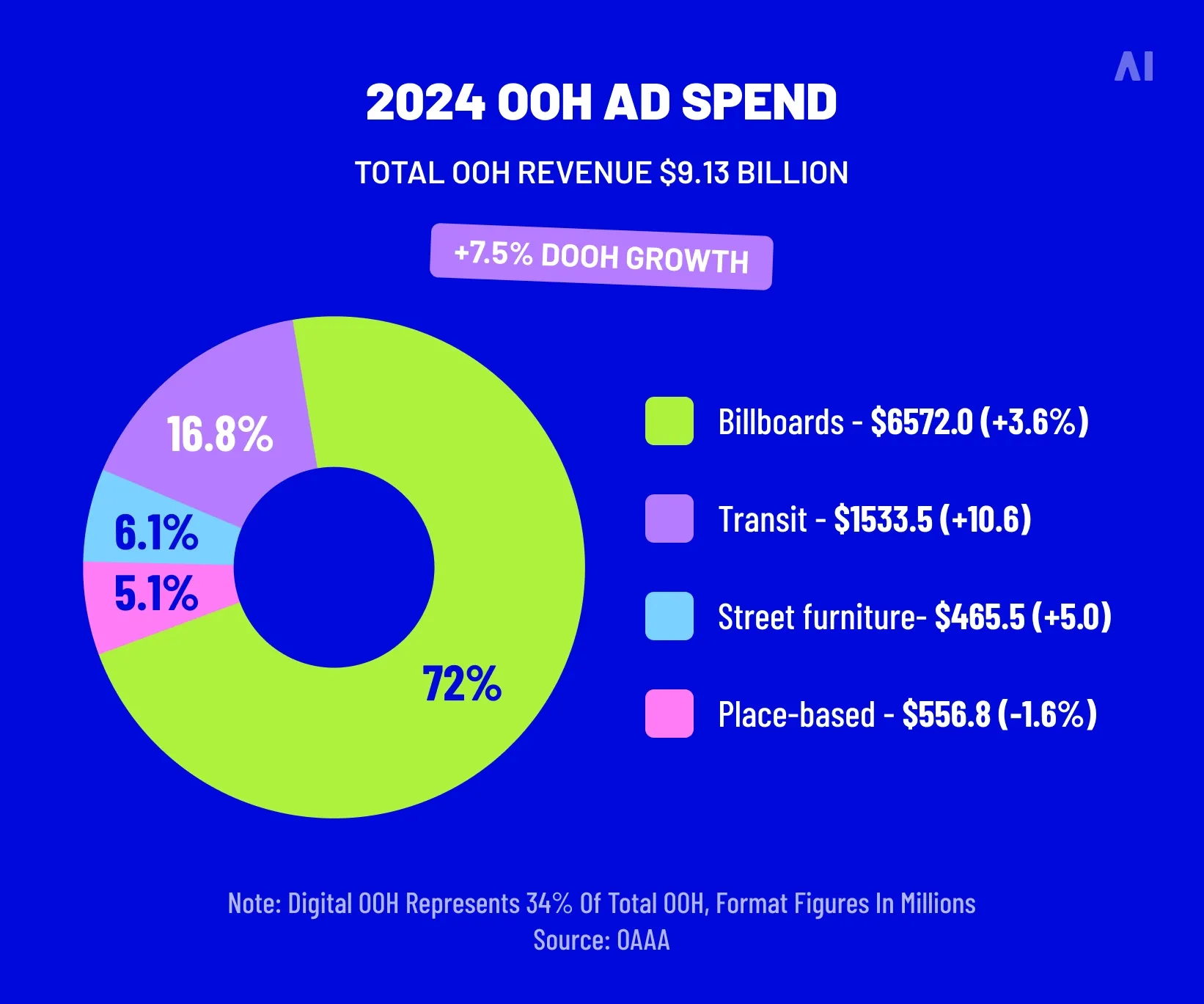
In the U.S., out-of-home revenue reached $9.1B in 2024, and digital made up roughly 34% of that total. Those numbers are a reminder that DOOH is no longer a niche line item. But they also hint at the trap: when “more screens” becomes the strategy, quality standards quietly slip then performance (and reporting confidence) slips right after.
⚡ In DOOH, screen count is a vanity metric unless the placement is right and the delivery proof is solid enough to trust.
This article breaks down what DOOH inventory quality actually means, the three dimensions that define it, and why access models (fragmented vs. consolidated) are a hidden performance variable. We’ll also cover how quality affects agency margins, and what standards decision-makers should demand before they call a DOOH plan “premium.”
💡 For a refresher on DOOH basics and where it fits in the mix, see AI Digital’s primer on DOOH advertising.
What DOOH inventory quality really means
“Inventory quality” in DOOH isn’t a single attribute like resolution or venue category. It’s a system.
At a practical level, DOOH inventory quality is the likelihood that an impression is:
- Delivered where you intended (right venue, right screen, right context)
- Shown as you intended (correct playback, correct creative rendering, correct loop behavior)
- Counted and reported in a way that stands up to scrutiny (transparent methodology, consistent measurement, auditable logs)
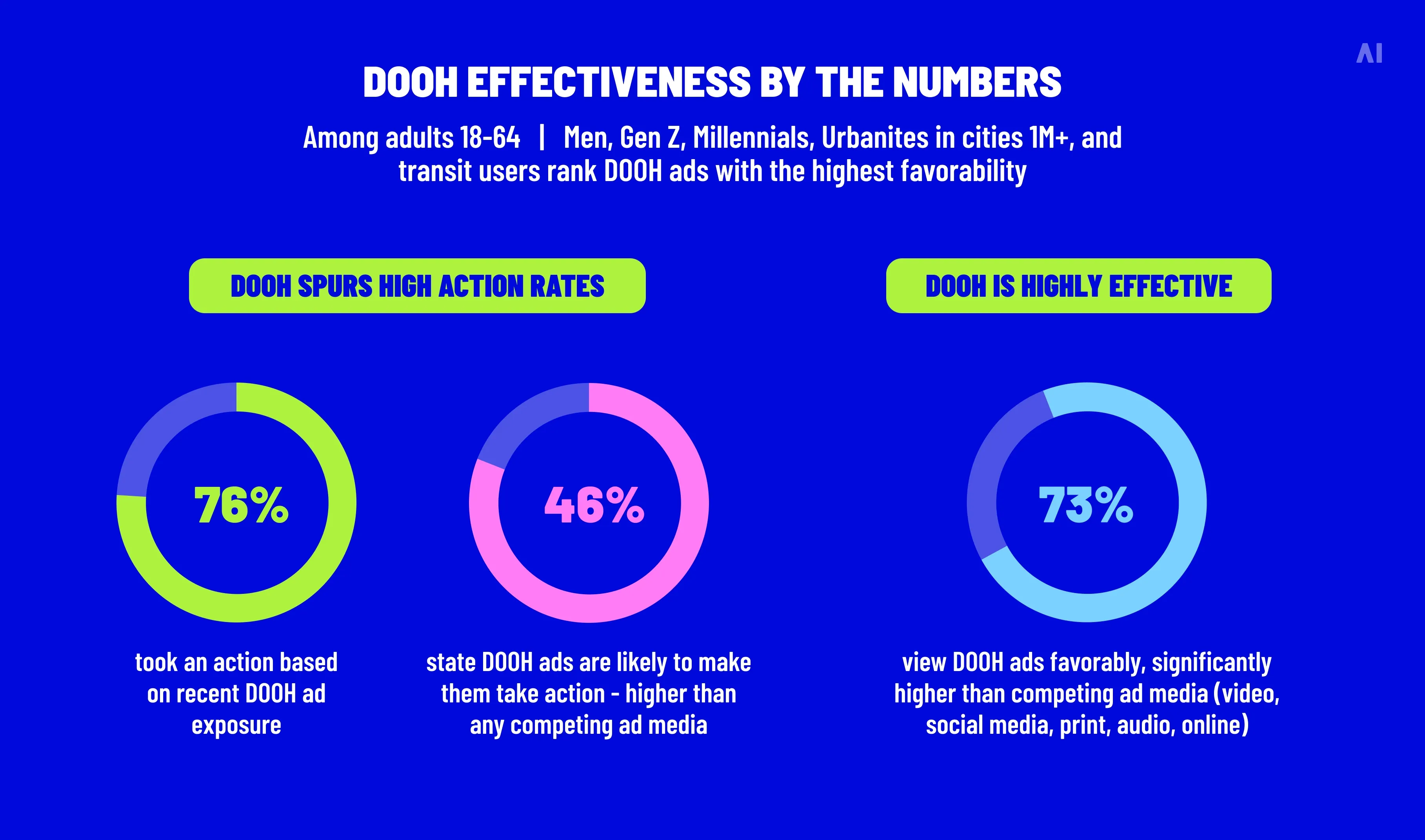
That last point matters because DOOH is increasingly asked to prove outcomes, not just presence. In a 2024 OAAA/Harris Poll study, 76% of adults reported taking action after seeing a DOOH ad, and among those actions were store visits and mobile behaviors. DOOH can move people—but the industry only benefits when buyers can separate high-performing supply from “available” supply.
The simplest way to think about it:
⚡ Quality is the difference between “ads ran” and “campaign performed.”
{{26-why-DOOH-Inventory-Quality-1="/tables"}}
Related reading: What is programmatic DOOH?
The three dimensions that define DOOH inventory quality
Inventory quality is best evaluated through three dimensions:
- Environment and context
- Screen and presentation standards
- Data, signals and accountability
Each dimension has its own failure modes, and each one can quietly turn “premium DOOH” into an average (or misleading) performance story.
1. Environment and context
Environment is more than a venue label like “retail” or “transit.” In DOOH, context shapes:
- Attention conditions (dwell time, speed, crowding, competing stimuli)
- Brand safety (adjacency, content environment, venue norms)
- Message relevance (why someone is there, what they’re doing, what comes next)
- Outcome likelihood (store visit potential, on-premise purchase, app usage, footfall patterns)
{{26-why-DOOH-Inventory-Quality-2="/tables"}}
Even broad category movement can hint at where attention is concentrating. OAAA reported transit revenues grew 10.6% in 2024, one of the stronger category gains. But “transit” still covers everything from high-dwell commuter rail platforms to fast-moving roadside assets near highways. Treating them as interchangeable is how performance gets diluted.
⚡ Directional creative is where location becomes a lever. 51% of people who noticed directional DOOH ads visited the business.
What quality looks like in environment/context
A quality-first DOOH plan doesn’t just ask, “Is it a screen in retail?” It asks:
- Is the environment aligned to the job-to-be-done? (awareness, intent, store visit, event attendance)
- Does the context support the creative format? (short copy vs. rich visual vs. directional CTA)
- Do we have verification at the venue/screen level? (not just a venue list or network name)
This is also where DOOH starts to overlap with in-store retail media. The IAB’s In-Store Retail Media Definitions & Standards (Dec 2024) show where the market is heading: tighter definitions for store zones, ad formats, and measurement expectations. DOOH inventory quality in retail environments increasingly depends on whether supply can meet standards that look more like “measured media,” not “unmeasured placement.”
💡 Related reading: Digital transit advertising & The future of location-based marketing
Quick checklist—environment/context quality questions:
- Can the seller provide screen-level location details (not only network-level)?
- Is there clear category taxonomy (and consistency across partners)?
- Can you confirm brand safety controls (venue content policies, adjacency exclusions)?
- Is the inventory aligned to dwell time realities (not wishful thinking)?
⚡ If context doesn’t match the message, the impression is technically delivered and strategically wasted.
2. Screen and presentation standards
Screen quality is not only about “HD vs. not HD.” It’s about whether a screen behaves like a reliable media product:
- Playback consistency
- Brightness/visibility in the environment
- Creative rendering accuracy
- Loop length reality vs. what’s assumed in planning
- Downtime and outage handling
- Makegoods and reconciliation discipline
When those variables aren’t controlled, your plan may be “large,” but your effective reach and frequency can be much smaller than reported.
{{26-why-DOOH-Inventory-Quality-3="/tables"}}
A useful way to frame this is to treat screens like retail shelves: if the product isn’t actually on the shelf, the sales forecast doesn’t matter.
There’s also a creative-performance connection. A 2024 multi-year study from Clear Channel Outdoor and Kantar found OOH drives measurable brand effects—including +13.3% lift in ad awareness, +9.8% lift in purchase intent, and +7.8% lift in brand favorability (results varied by mix and context). Those outcomes depend on ads being seen as designed, not clipped, poorly rendered, or lost in unpredictable loops.
What quality looks like in screen/presentation:
- Defined standards for playback (what counts as a valid play, how it’s logged)
- Creative QA (proof your file renders correctly on the actual screen spec)
- Operational transparency (downtime reporting, makegoods rules, reconciliation)
- Network discipline (screen lists that are current, with accurate specs)
💡 Related reading: Digital signage advertising networks explained & AI Digital’s roundup of best rich media ads (useful for thinking about format discipline).
3. Data, signals and accountability
This is where DOOH either becomes a performance channel or stays a planning-channel with performance storytelling layered on top.
In 2025, eMarketer noted programmatic DOOH as a growth driver and forecast programmatic DOOH reaching about $1.23B by 2026. Growth like that attracts more buyers, more intermediaries, and more measurement vendors. Without standards, “more” quickly becomes “messier.”
So what counts as quality in data and accountability?
At minimum, you want:
- Proof of play / proof of performance (ad ran, when, where, how often)
- Transparent impression methodology (how impressions are derived, what’s modeled)
- Auditable supply (screen classification database accuracy, periodic validation)
- Outcome measurement options (footfall lift, site visits, app actions), with privacy-safe methods
⚡ DOOH doesn’t end at the screen. In a Harris Poll study for OAAA, 74% of mobile device users (18–64) took a device action after recent DOOH ad exposure.
%2520Ad.webp)
The MRC’s Out-of-Home Measurement Standards emphasize transparency around methods and encourage independent audit under confidentiality for proprietary elements, plus ongoing validation of underlying inputs. That’s not an abstract governance point, it’s a practical quality gate.
And buyers are explicitly pushing for independent validation. A 2024 Place Exchange announcement (re: a DPPA survey) stated that independent verification was considered the #1 measurement/attribution capability expected to drive future DOOH growth among U.S. omnichannel advertisers.
Where quality breaks down
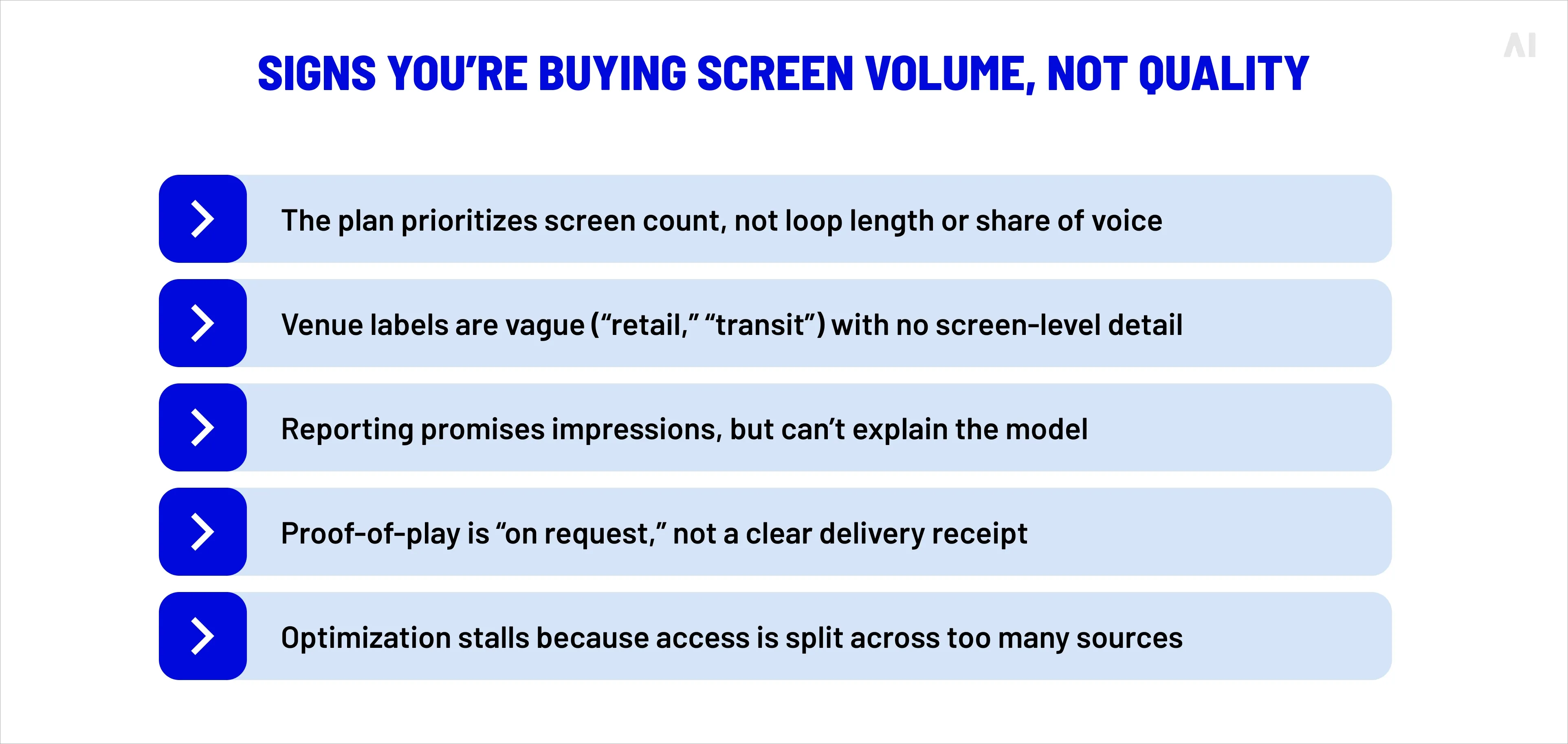
- “Proof of play” exists, but it’s not buyer-accessible
- Impression numbers are provided, but methodology is vague
- Outcome measurement exists, but inputs and match logic are opaque
- Reporting is “available,” but not reconcilable across partners
💡 Related reading: Foot traffic attribution: Measuring real-world impact.
Fragmented vs. consolidated DOOH inventory access
Most buyers think performance is driven by which screens they select. That’s only half the story.
In DOOH buying, how you access inventory can be just as important as which screens you choose—because access models determine:
- Fee layers and hidden costs
- Duplicate supply exposure (the same screen appearing through multiple paths)
- Reporting consistency
- Verification availability
- Optimization speed (how fast you can move budget to what’s working)
This is why access models are a hidden performance variable in DOOH.
{{26-why-DOOH-Inventory-Quality-4="/tables"}}
⚡ Budgets are moving, and expectations are rising with them. A DPAA study found 96% of marketers and agencies plan to increase or maintain DOOH spending over the next 12 months.
Before we get tactical, it helps to name the reality: measurement and workflows across DOOH are still inconsistent. The IAB’s 2025 DOOH Measurement Guide notes that, despite DOOH’s growth and integration into digital planning, measurement practices remain fragmented and often misunderstood.
That fragmentation shows up in access patterns too.
Related reading: The digital advertising supply chain explained.
The cost of fragmented supply
Fragmented access usually looks like some mix of:
- Multiple SSP connections
- Multiple DOOH exchanges/marketplaces
- Direct publisher deals layered on top
- Multiple reporting surfaces that don’t reconcile cleanly
The costs aren’t always visible in CPM alone. They show up as:
- Slower optimization (and slower learning): Every new supply path adds another set of quirks: reporting cadence, creative handling, approval steps, and targeting constraints. That friction delays the only thing that matters mid-flight: moving budget toward what’s working.
- Inconsistent standards across the same plan: One subset of screens may have strong proof-of-play logs. Another subset may provide basic delivery summaries. When the campaign ends, “performance” becomes an argument about what should count, not a clear result.
- Fee stacking and path inefficiency: Programmatic advertising has spent years trying to reduce waste and redundancy. Digiday, citing ANA’s transparency benchmark work, reported $26.8B in global programmatic media value lost annually to issues including redundant supply paths, measurement gaps, and low-quality inventory. DOOH isn’t identical to open-web programmatic, but the lesson transfers: redundant paths and unclear standards create avoidable leakage.
- A bigger reconciliation problem: Fragmentation increases the chance of duplicated supply, mismatched logs, and makegoods disputes. The campaign might “deliver,” but trust erodes, and that’s how DOOH budgets get questioned in QBRs.
💡 For the strategic cost perspective, see AI Digital’s piece on the hidden cost of walled gardens.
⚡ Fragmentation doesn’t just add complexity. It adds delay, disagreement, and performance dilution.
Why consolidated inventory performs better
Consolidated access doesn’t mean “one vendor forever.” It means fewer hops, clearer standards, and faster control.
A consolidated access model tends to outperform because it enables:
- Clean supply paths: Fewer intermediaries means fewer places for fees to accumulate and fewer surfaces where quality controls can break.
- Standardized verification and reporting: When inventory is governed under one consistent set of standards (or certifications), “proof” becomes easier to audit and compare.
- Faster optimization loops: Budget can move toward better environments, better screens, and better outcomes without negotiating a maze of mismatched constraints.
- Better accountability: When delivery, playback, and measurement are unified, it’s harder for underperformance to hide inside reporting noise.
Simple comparison table:
{{26-why-DOOH-Inventory-Quality-5="/tables"}}
How inventory quality impacts agency margins
DOOH inventory quality is usually discussed as a brand performance issue. It’s also an agency economics issue.
Here’s why: modern agencies aren’t paid only for “planning.” They’re paid for execution, measurement, optimization, and proof.
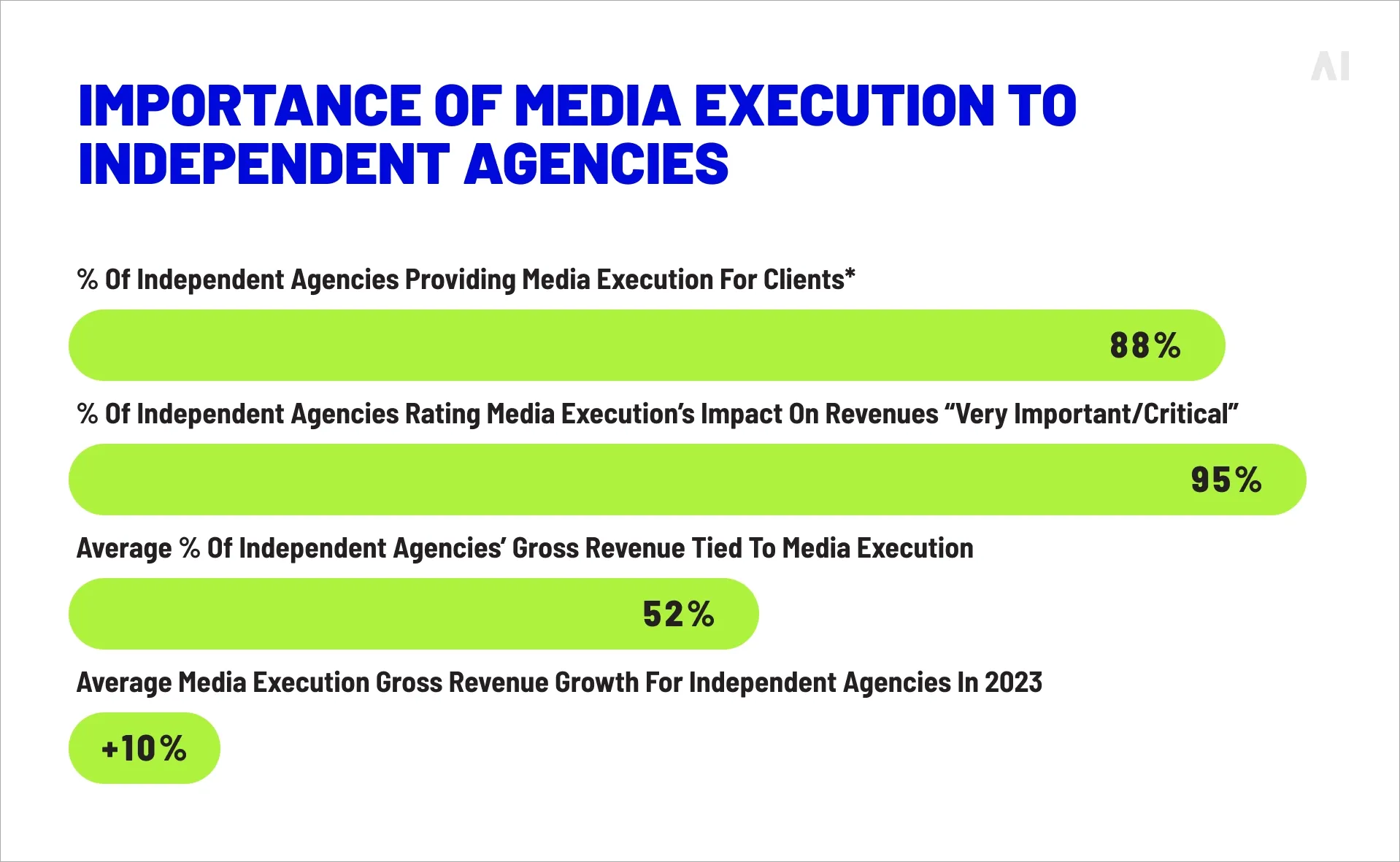
In a 2024 AdExchanger/Pathlabs report, 88% of surveyed independent agencies said they provide media execution services, and agencies reported an average of 52% of gross revenue tied to media execution. When execution is that central, anything that increases operational drag hits margin directly.
Inventory quality affects margins through:
- Labor cost and workflow sprawl: Fragmented DOOH supply means more trafficking steps, more reporting reconciliation, more exceptions, more screenshots, more “can you confirm this ran?” emails.
- Makegoods and dispute overhead: Low-quality inventory tends to create more reconciliation work, which is rarely billable at full value.
- Fee pressure and performance skepticism: When performance is unclear, clients push harder on fees. When performance is clear and defensible, it’s easier to hold the line on scope and pricing.
- Tooling duplication: More supply paths often means more dashboards, tags, verification layers, and custom reporting. That adds tech cost and time cost.
💡 If you want a practical viewpoint on why DSP-agnostic, consolidated buying approaches can reduce fragmentation in media buying, see AI Digital’s take on a DSP-agnostic approach.
⚡ Inventory quality protects performance, and it protects the time it takes to prove performance.
A performance-first approach to DOOH inventory quality
A performance-first approach treats inventory quality like a measurable system with gates, not a subjective preference.
The goal is straightforward:
⚡ Validate environments. Validate playback. Validate audience logic. Monitor continuously. Optimize with accountability.
Below is a practical framework decision-makers can use.
Environment verification
This is where you confirm that “retail” means the retail environment you paid for and that the context supports the campaign objective.
Environment verification should include:
- Screen-level location verification (address or precise venue identifier)
- Environment taxonomy (consistent definitions across partners)
- Brand safety rules tailored to venue types
- Dwell-time expectations aligned to creative length and CTA complexity
In in-store contexts, the IAB’s work on in-store definitions and measurement standards signals the direction of travel: clearer zone definitions, clearer format definitions, and higher expectations for comparable measurement.
Practical tip: If a partner can’t describe the environment beyond a broad label, treat the inventory as unverified until proven otherwise.
Screen and playback validation
Playback validation is the difference between scheduled delivery and actual delivery.
At minimum, you want:
- Proof-of-play / proof-of-performance logs
- Clear rules for what counts as a valid play
- Downtime disclosure and makegood policy clarity
- Creative rendering QA (especially across mixed specs)
MRC measurement standards emphasize transparency and periodic validation of underlying information used for measurement. That philosophy fits playback too: if the underlying delivery record can’t be validated, the impression story is fragile.
Audience data accuracy
Audience accuracy in DOOH is always a mix of direct inputs and modeling. The question is whether the methodology is consistent, transparent, and aligned to standards.
A quality-first audience approach includes:
- Clear definitions (impressions vs. reach vs. frequency vs. “opportunities to see”)
- Consistent methodology across inventory sources
- Transparent modeling assumptions and versioning
- Lift-based measurement options when outcomes matter
The MRC standards explicitly promote transparency around methods and encourage independent audit under confidentiality. That’s the posture you want from any partner claiming “premium audience data.”
Smart Supply integration
Inventory quality and access models meet here.
AI Digital’s Smart Supply is designed to reduce fragmentation and bias by selecting clean supply paths and structuring access so that “premium” means verifiable, not just labeled.
At a concept level, programmatic media buying software integration in DOOH should do five things:
- Curate supply paths around performance KPIs (not around platform incentives)
- Reduce bid hops and avoid redundant paths that inflate cost and muddle reporting
- Apply quality filters (brand safety, IVT protection where relevant, inventory standards)
- Use deal structures intentionally (so access is predictable, not opportunistic)
- Continuously optimize based on real delivery and outcome signals
💡 If you want the ecosystem view behind this approach, AI Digital explains the shift from managed services to Smart Supply here: AI Digital’s ecosystem: From managed services to Smart Supply
⚡ Curation matters most when it filters out low-quality or unsuitable options, rather than simply repackaging the same supply under a different label.
Platform-level monitoring and optimization
A performance-first model requires monitoring that’s built for real-time execution:
- Delivery anomalies (under-delivery, sudden drops, irregular pacing)
- Playback inconsistencies by screen or network
- Geo/context performance differences
- Outcome deltas by environment type
- Supply path performance comparisons
💡AI Digital’s Elevate positions platform-level intelligence as a way to maintain transparency and optimize cross-channel performance.
The key is not the dashboard itself. It’s what the dashboard enables: faster, defensible decisions about what to keep, what to fix, and what to remove.
DOOH inventory standards decision-makers should demand
Quality improves fastest when buyers demand consistent standards. Here are practical standards to require before scaling spend.
{{26-why-DOOH-Inventory-Quality-6="/tables"}}
Transparent inventory
Demand clarity on:
- Exactly which screens are eligible (screen-level, not vague network labels)
- Where those screens are (venue and environment details)
- How often the screen list is updated
- Whether screens are resold through multiple paths
If transparency is weak, you’re not buying premium inventory, you’re buying uncertainty.
Verified playback and reporting
Playback verification should be treated as non-negotiable.
Look for:
- Proof-of-play logs accessible to buyers
- Clear reconciliation rules (what counts, what doesn’t)
- Makegood policies stated up front
- Consistency across partners (so you’re not mixing incompatible reporting standards)
Independent verification demand is rising, and industry infrastructure is responding. The Place Exchange/Veridooh partnership announcement points directly to that buyer pressure.
Reliable audience data
Reliable audience data means:
- Transparent methodology (what’s modeled, what’s observed)
- Definitions aligned to standards
- Version control and documentation
- Ability to validate inputs periodically
MRC’s standards are explicit about transparency and validation expectations.
Scalable access
Scalable access is not “more screens.” It’s scalable quality.
Demand:
- A clear access model (direct, PMP, curated, guaranteed
- Supply-path discipline (avoid unnecessary hops)
- Consistent measurement across scaled inventory
- A governance model for adding new supply (what gates must be met)
Proven business outcomes
Finally, the only reason to care about inventory quality is business impact.
Outcome proof should include:
- Lift-based measurement when possible (not only correlation)
- Clear attribution logic and privacy posture
- A defined KPI framework before launch
💡 For a helpful KPI framework lens, see AI Digital’s guide on digital marketing KPIs.
Conclusion: Quality is the real scale in DOOH
DOOH works best when “scale” is defined as repeatable performance rather than the longest possible screen list, because once you pressure-test inventory using the same criteria you apply to other performance channels—context, presentation reliability, and accountable reporting—you stop paying for impressions that look strong in a spreadsheet but don’t hold up in the real world.
The shift is straightforward and operational: verify the environments you’re buying into, validate that playback actually happens as planned, and treat audience data as a measurement product that needs scrutiny, not a guess you accept by default. From there, choose access models that keep supply paths clean so you can optimize quickly and report with confidence, and when those pieces are in place, DOOH inventory becomes a lever you can pull with control instead of a variable you’re hoping behaves.
If you want to operationalize the “quality-first” approach in this article, AI Digital can support you in a few ways:
- DSP-agnostic execution under the Open Garden framework — so inventory decisions are driven by outcomes and transparency, not platform bias.
- Managed Service support for planning, execution, and ongoing optimization across channels, with KPI alignment as the foundation.
- Smart Supply to filter out low-value or risky supply, optimize supply paths, and give you clearer visibility into where ads run and what you’re paying for.
- Supply path cleanup that reduces wasted hops—including removing indirect traffic that can inflate costs and muddy performance signals.
- Platform-level intelligence with Elevate to unify cross-platform insight and support faster decisions with ongoing optimization workflows.
If you’re planning a DOOH campaign and want to audit inventory quality before you commit budget, get in touch with AI Digital. We’ll help you validate your DOOH inventory strategy, tighten access, and build a plan you can optimize and defend.

.webp)