DMP vs DSP: What’s the Difference (and Do You Still Need a DMP in 2026?)

“DMP vs DSP” sounds like a tidy, two-letter debate. In practice, it’s where a lot of ad stacks get messy—because the two systems sit in different places in the workflow, solve different problems, and are judged by different success metrics.
Here’s the clean mental model you can keep in your head:
- A DMP (data management platform) organizes audience data into usable segments.
- A DSP (demand-side platform) uses audiences (and lots of other signals) to buy media and deliver ads.
If your goal is to drive outcomes—sales, leads, qualified site traffic, app installs—a DSP is the tool that actually executes against that goal. Meanwhile, a DMP is about shaping the audience inputs that make activation smarter across channels.
Why does this matter now? Because budgets are still climbing, but the tolerance for waste is shrinking. S&P Global Ratings forecast digital advertising spending would grow in 2025, and that growth puts more pressure on measurement, governance, and media efficiency.
DMP vs DSP: quick comparison table
Before we go deep, here’s the simplest way to hold the difference in your head: a DMP is for organizing and packaging audiences; a DSP is for buying and optimizing media delivery. They can integrate, but they are not interchangeable.
The table below is intentionally short so you can sanity-check your understanding quickly, then come back to it later when you’re making a tooling decision.
{{26-DMP-vs-DSP-1="/tables"}}
💡 If you want a broader view of platforms in a modern programmatic stack (DSPs, ad exchanges, measurement layers, and more), AI Digital’s overview of programmatic advertising platforms is a helpful companion read.
What is a data management platform (DMP)?
A data management platform (DMP) is a system designed to collect, organize, and segment audience data—traditionally across multiple sources—so marketers can activate those audiences in advertising and personalization workflows.
Think of a DMP as an “audience workspace.” It doesn’t buy media by itself. Instead, it tries to answer questions like:
- Who are our highest-value customer groups?
- Which audiences should we target, exclude, or suppress?
- What behaviors and attributes define each segment?
- How do we pass those segments into activation systems?
💡 Related read: Data management platform (DMP)
What a DMP actually does (core functions)
At a functional level, a DMP does four core things:
- Ingests data from multiple sources: This can include web events, CRM exports, app activity, email engagement, commerce data, and (historically) third-party data feeds.
- Normalizes and unifies data: Different sources describe the same person or household in different ways. A DMP attempts to reconcile that into a usable profile or segment membership model.
- Builds audiences (segmentation and modeling): You define rules (“visited product pages twice in 7 days,” “lapsed customer,” “high-LTV lookalike seed”), then the DMP produces segments you can activate.
- Activates audiences to downstream tools: The “activation” step typically means syncing segment membership to a DSP, ad server, social platform, or measurement partner.
Key takeaway: a DMP’s value is in the audience definitions, not in the media buying itself.
Types of data a DMP works with
A DMP usually touches three categories of data:
- First-party data: Data you collect directly: website/app behavior, email engagement, CRM records, purchase history, loyalty activity, and consented identifiers.
- Second-party data: First-party data shared via a direct partnership (for example, a publisher or retail partner sharing audience insights under agreed terms).
Third-party data (historical DMP “fuel”): Aggregated audience data purchased from data providers. This is the area that has shrunk the most as privacy rules and platform policies changed what can be collected and shared at scale.
{{26-DMP-vs-DSP-2="/tables"}}
In 2026, most teams that still say “DMP” are actually trying to solve a first-party audience problem: organizing their own data into segments they can test and measure.
Benefits of using a DMP
A DMP is helpful when you genuinely need an audience layer that sits above your channels. The biggest benefits tend to show up as operational clarity:
- More consistent audience definitions: Instead of rebuilding “high intent” separately inside every platform, you maintain one definition and reuse it.
- Cleaner suppression and exclusion logic: You can reduce wasted impressions by suppressing existing customers, recent converters, or ineligible audiences across campaigns.
- Audience portability (within limits): Even when platforms restrict IDs, a DMP can still support structured audience creation and governance, then pass approved segments into activation systems.
- Better governance: It’s easier to audit who created what audience, why it exists, and where it’s being used, especially when privacy and consent rules matter.
{{26-DMP-vs-DSP-3="/tables"}}
⚡ The real benefit of a DMP isn’t ‘more data.’ It’s fewer arguments about what an audience actually is—and fewer places for messy definitions to hide.
Limitations and challenges of DMPs in 2026
This is where the “do we still need a DMP?” question becomes real.
- Classic third-party DMP models have weakened: Many enterprise DMP products and third-party data ecosystems have either been retired or materially reduced. Salesforce formally retired its Audience Studio products in 2024, and Oracle announced it would exit its advertising business with Oracle Advertising products reaching end of life in 2024. Even if your organization didn’t use those vendors, the broader point matters: the market has shifted away from “buy third-party segments and push them everywhere.”
- Identity is harder, and measurement expectations are higher: With cross-site identity less reliable, a DMP can struggle to maintain consistent reach and frequency control across environments. That doesn’t make DMPs useless, but it changes what “activation” looks like.
- Some DMP use cases moved to CDPs and clean rooms: Teams often want two things: (a) an owned, persistent customer record, and (b) privacy-safe partner activation. CDPs and data clean rooms are often a better fit for those jobs than a traditional DMP.
- Implementation effort can be underestimated: A DMP can become a dumping ground if there’s no governance. Without strict inputs, naming conventions, and lifecycle rules, “audience sprawl” becomes its own tax.
When a DMP is worth it
A DMP is still worth considering when your organization has real multi-channel audience complexity, such as:
- You run large-scale awareness + performance together and need consistent audience strategy across both.
- You have multiple brands, regions, or business units and want shared audience governance.
- You have enough first-party data volume and consent coverage to build meaningful segments.
- You need systematic suppression (for example, excluding recent converters across many campaigns).
If your main goal is simply “buy ads efficiently,” you’re usually looking for a DSP first.
What is a demand-side platform (DSP)?
A demand-side platform (DSP) is the system used to buy and optimize digital advertising inventory programmatically. It connects to exchanges and supply sources, lets you define targeting and bidding logic, and then continuously optimizes delivery based on performance signals.
If a DMP helps define who you want, the DSP controls how you reach them—what you pay, where you show up, how often, and how performance improves over time.
💡 AI Digital has a dedicated explainer on what a DSP is and how it works.
What a DSP actually does (core functions)
A DSP is an execution engine. Its core functions typically include:
- Inventory access and deal management: Open exchange buying, private marketplace deals (PMPs), programmatic guaranteed, curated packages.
- Targeting and bidding: You apply audience inputs (first-party segments, contextual, geo, device, etc.), then set bidding logic based on goals (CPA, ROAS, reach, viewability, completion rate).
- Budget pacing and frequency control: The DSP balances spend over time and tries to avoid over-serving the same user or household.
- Optimization and experimentation: Creative rotation, placement learning, bid adjustments, supply exclusions, and ongoing tuning based on results.
💡 Real-time bidding (RTB) is a core mechanism behind many DSP transactions, and AI Digital’s RTB overview is a helpful refresher if your last deep dive was a while ago.
{{26-DMP-vs-DSP-4="/tables"}}
⚡ A DSP is where strategy becomes math: bids, pacing, frequency, and tradeoffs—measured against outcomes, not opinions.
DSP advertising channels
Modern DSPs don’t just buy banner ads. They commonly support:
- Display (standard IAB formats)
- Online video (in-stream and out-stream)
- Connected TV (CTV) and OTT inventory
- Audio (podcasts and streaming music)
- Digital out-of-home (DOOH) (programmatic screen networks)
- Mobile in-app inventory
- Native placements (publisher-integrated units)
.webp)
This breadth is part of why the DSP remains central in 2026: it’s one of the few places you can manage omnichannel programmatic execution with a single set of controls.
Benefits of using a DSP
A DSP tends to pay off when you need scale plus control. Key benefits include:
- Centralized buying across channels: One interface for inventory access, bidding logic, pacing, and reporting.
- Faster learning loops: You can test creative, audiences, and supply patterns continuously, then shift spend based on performance.
- More explicit control over supply quality: Pre-bid filters, allowlists, blocklists, viewability and fraud controls, and deal curation.
- Optimization that’s built for live environments: Unlike static campaign setups, DSPs are designed around constant change: auctions, delivery variance, and shifting inventory.
⚡ If your frequency control is loose, your efficiency will collapse even with great targeting. Most “performance drops” start as an exposure-management problem, not a bidding problem.

💡 AI is increasingly part of that optimization layer, especially for bid decisioning, forecasting, and cross-signal pattern detection. AI Digital’s overview of AI in DSPs is a good place to see how that trend is being operationalized.
When a DSP is the right tool
A DSP is usually the right tool when your campaign looks like at least one of these:
- Performance-focused (you have measurable conversion events and want optimization against them)
- Multi-channel programmatic (CTV + video + display, or DOOH + mobile, etc.)
- Large-scale reach with frequency control requirements
- Experimentation-heavy (you need rapid testing and learning, not fixed plans)
If your main pain is “we can’t keep audience definitions straight,” the DSP won’t solve that by itself. That’s where DMP/CDP thinking enters.
DSP vs DMP: Key differences
Here’s the cleanest way to separate DSP vs DMP without jargon:
- A DMP is a data and audience layer. It organizes people into segments.
- A DSP is a media buying and optimization layer. It buys impressions and tries to improve outcomes.
➡️ A DMP asks: Who is this audience, and how do we define it consistently?
➡️ A DSP asks: Where can I buy attention, at what price, and how do I optimize delivery?
If you want a second quick reference beyond the earlier table, this framing tends to help during internal alignment:
{{26-DMP-vs-DSP-5="/tables"}}
.webp)
How DMP and DSP work together in programmatic advertising
A DMP and DSP can integrate into a workflow that looks like: collect → segment → activate → buy → measure → improve. That loop is still valid, but what flows through it has changed. In 2026, it’s often more first-party and more privacy-restricted than it was in the “third-party DMP” era.
💡 For a broader definition of programmatic mechanics and buying models, AI Digital’s programmatic advertising overview is a useful reference point.
Step 1: Data collection and unification (DMP)
The DMP ingests the inputs you decide are legitimate and useful: site behavior, CRM exports, app events, and any permitted partner data. The hard part is not collecting everything. It’s collecting the right things with clear consent rules.
At this stage, the most important decision is governance:
- What identifiers are allowed?
- What data is consented for advertising use?
- How long do we retain it?
- Who owns the definitions?
If you can’t answer those, segmentation becomes a liability.
Step 2: Audience segmentation and modeling (DMP)
Once inputs are clean enough, the DMP turns them into segments.
This is where you define audiences that map to real campaign intent, for example:
- “High intent”: repeated product engagement in a short window
- “Lapsed”: customers whose purchase cycle has exceeded a threshold
- “Value tiers”: LTV-based groupings
- “Exclusions”: recent converters or customer suppression lists
Modeling can also occur here (lookalikes, propensity scoring), but in 2026 many teams run modeling in adjacent systems (CDPs, warehouses, or specialized ML pipelines) and use the DMP mainly as the segment distribution layer.
Step 3: Audience activation and syncing to DSP
Activation is the handoff. The DMP syncs audiences to the DSP using the identity mechanisms available (which might be cookies in some contexts, publisher IDs in others, or privacy-safe cohorting approaches).
{{26-DMP-vs-DSP-6="/tables"}}
Two practical points matter here:
- Audience fidelity drops when identity is weak. You may “activate” a segment but reach a fuzzier representation of it.
⚡ “We activated the segment” is not the same as “we reached the segment.” Treat activation as a measurable step with match-rate expectations, not a checkbox.
- You need a fallback. Contextual and supply-based targeting often becomes the safety net when deterministic identity isn’t available.
This is also where teams frequently decide to skip the DMP entirely and use direct first-party onboarding into the DSP, especially for narrow, performance-driven use cases.
Step 4: Real-time bidding and campaign execution (DSP)
Now the DSP takes over: it enters auctions, applies targeting constraints, bids, and delivers ads.
💡 If you want to separate the concepts cleanly: RTB is the auction mechanism; programmatic is the broader buying category (including PMPs and guaranteed deals). AI Digital’s explanation of programmatic vs RTB lays out that difference clearly.
In execution, the DSP manages:
- Bidding strategy (aggressive vs efficient)
- Budget pacing
- Frequency caps
- Creative rotation
- Supply selection (open exchange vs curated deals)
⚡ Auctions don’t make a plan smart; they just make pricing dynamic. Your plan gets smarter from what you restrict (quality, frequency, placement) and what you measure (incrementality, outcomes).
Step 5: Measurement and optimization loop (DSP + DMP)
This is where the system earns its keep. The DSP reports results (impressions, viewability, completion rates, conversions, lift, and cost metrics). The DMP can incorporate performance signals to refine audience definitions, suppress waste, and improve future targeting.
💡 The key is choosing KPIs that reflect your real goal. AI Digital’s guide to digital marketing KPIs is a practical checklist for aligning measurement to outcomes.
One 2026 trend worth calling out: buyers are putting increased emphasis on cross-platform measurement, because it’s hard to optimize what you can’t compare. In IAB’s 2026 Outlook, 72% of buyers said cross-platform measurement is a focus, up from 64% the year before.

⚡ Cross-platform measurement fails when nobody owns reconciliation. Decide who adjudicates disagreements between platform reporting, attribution, and incrementality before you scale spend.
DMP vs DSP: Which one do you need?
This section is where most teams want a direct answer, so here it is:
- If you need programmatic buying at scale, you need a DSP.
- If you need audience governance across multiple activation points, you might need a DMP (or, increasingly, a CDP + clean room approach).
- If you’re trying to do both, you need a clear operating model, or you’ll pay twice for overlapping functions.
To make this concrete, here are three common scenarios.
Scenario 1: You’re performance-first and resource constrained
If your goal is measurable outcomes (leads, sales, subscriptions) and your team wants speed, start with the DSP.
In this scenario, prioritize:
- Strong optimization controls
- Clean conversion measurement
- Supply quality tooling (fraud/viewability filters, curated deals)
- Direct first-party onboarding (if available)
A DMP may be overkill unless your segmentation needs are genuinely complex.
Scenario 2: You run brand + performance and keep arguing about audiences
If different teams keep rebuilding “the same audience” in different platforms, you have an audience definition problem. That’s where a DMP-style layer can help.
In this scenario, a DMP is useful when it provides:
- Shared audience taxonomy
- Central suppression logic
- Reusable segments with governance (who created, why, where used)
You’ll still execute through a DSP, but you reduce fragmentation.
Scenario 3: You have significant first-party data and strict privacy requirements
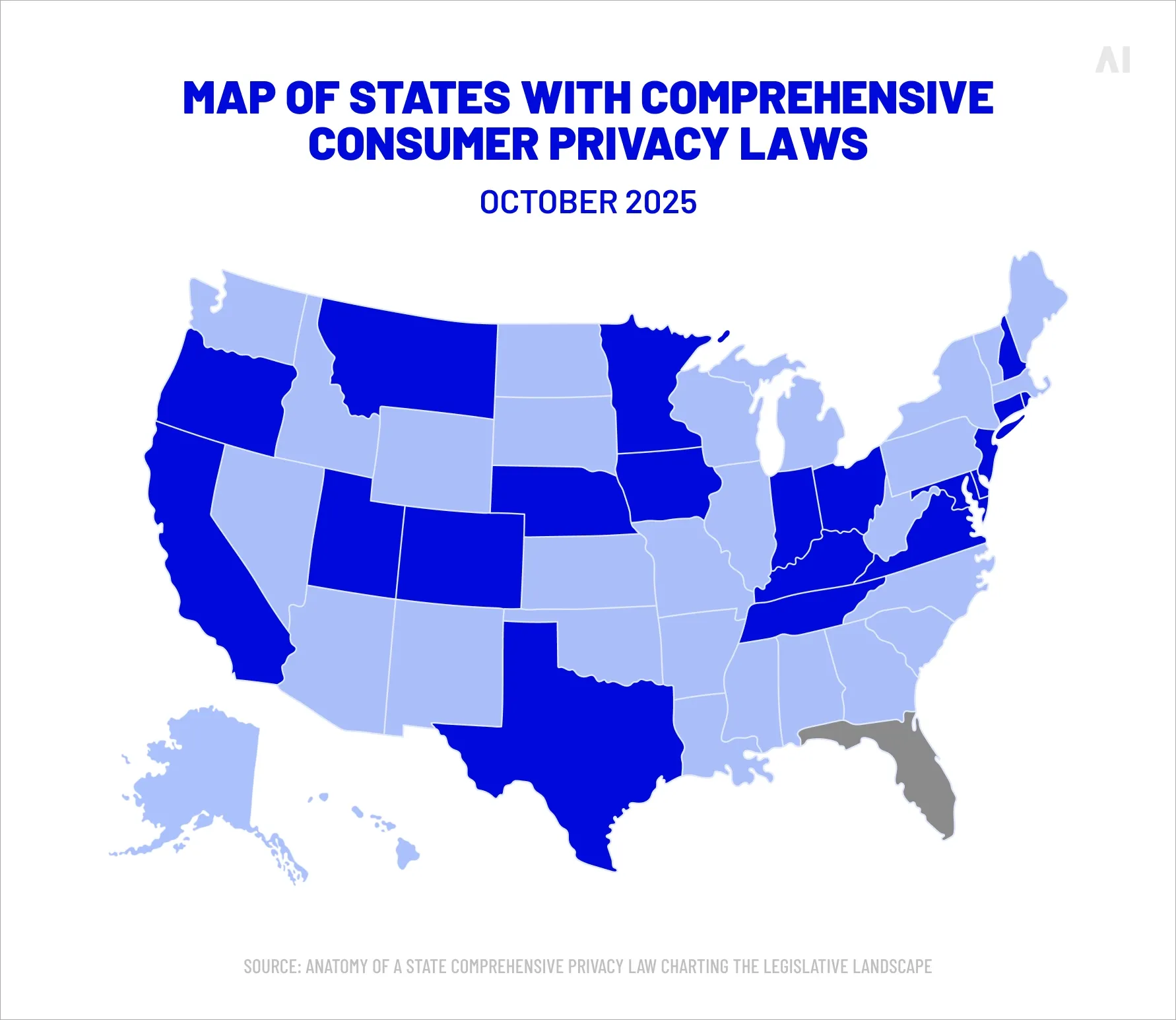
If privacy constraints are a first-order concern (regulated categories, multi-state compliance, strict consent rules), you may need a more privacy-safe architecture than a classic DMP.
In that case, many teams lean toward:
- A CDP or warehouse-centric customer record
- A clean room for partner activation
- A DSP for buying and optimization
- A lightweight audience management layer for governance
{{26-DMP-vs-DSP-7="/tables"}}
DMP vs CDP vs DSP (don’t confuse these platforms)
It’s easy to mix these up because they all touch “data” and “audiences,” but their job boundaries are different.
DMP:
- Historically optimized for advertising audiences and broad reach
- Often worked heavily with third-party data and anonymous identifiers
- Outputs segments for activation
CDP:
- Optimized for first-party customer records and lifecycle marketing
- Built around known users, consent, identity resolution, and messaging use cases
- Often feeds both advertising and owned-channel personalization
DSP:
- Executes media buying and optimization
- Uses audiences as inputs, but its primary function is bidding, delivery, and performance improvement
A practical shortcut:
- If you’re trying to improve customer understanding and lifecycle: CDP thinking.
- If you’re trying to improve audience portability and governance for advertising: DMP thinking (or modern alternatives).
- If you’re trying to improve campaign outcomes in paid media: DSP.
Conclusion on DSP DMP: Choosing the right platform strategy
The simplest answer to DMP vs DSP is not “pick one.” It’s: match the tool to the job you’re actually doing.
- A DSP is your programmatic execution engine. If you buy across exchanges and need optimization, it’s hard to avoid.
- A DMP can still help when you have real audience complexity and you need consistency across campaigns and teams, but its classic third-party model has narrowed.
- In many 2026 stacks, the “DMP job” is split across first-party data systems (CDP/warehouse), clean rooms, and tighter governance—with the DSP still doing what it has always done: buying and optimizing.
If you want to pressure-test which architecture fits your situation (DSP-only, DSP + audience layer, or a more privacy-forward CDP/clean room approach), AI Digital’s team can help you map the option that matches your KPIs and resources.
⚡ In 2026, the platform question is less about features and more about fit: what can you measure, what can you govern, and what can you actually execute well?