Geotargeting in 2026: How Location Intelligence Drives Measurable Business Growth


In 2026, geo targeted advertising — and the way geotargeting ads are planned, activated, and measured—has become a practical lever for lowering waste, improving relevance, and proving business impact across channels.
Location-based strategy matters because the market is expensive, crowded, and harder to measure cleanly than it used to be. U.S. digital ad revenue reached $259B in 2024, up 15% year over year, which is great news—until you remember that rising spend usually comes with rising pressure to explain what worked and why. At the same time, the privacy bar keeps moving, and audiences live across screens and places, not inside a single platform. That’s why geo targeting advertising is shifting from “where should we run ads?” to which locations signal intent, which locations drive lift, and which locations deserve budget.
You’ll see this most clearly in omnichannel execution. A single geo strategy can coordinate CTV reach in priority DMAs, mobile retargeting near points of interest, programmatic display in high-conversion ZIP codes, DOOH around commuting corridors, and retail media activation tied to real purchase environments. The outcome is not prettier dashboards. The outcome is lower CAC, higher ROAS, and more reliable incremental lift—when the program is built with the right data discipline and measurement design.
What is geotargeting advertising?
Geotargeting advertising is an approach to targeting that uses real-time and historical location signals to reach people based on geography (country, region, city, DMA, ZIP), proximity (radius), and behavioral patterns (where they go, when they go, how often they visit certain places). In plain terms: it’s using location to increase the odds that an impression lands in a market moment that matters.
That’s what separates geotargeting from broad demographic targeting. Demographics tell you who someone might be. Location helps you understand what’s happening around them: local demand, store density, commuting routines, event attendance, seasonality, and competitive context. When done well, geotargeting ads support objectives like:
- Market expansion (prove product-market fit in new regions before scaling nationally)
- Local demand generation (shift budget toward the cities and ZIPs that convert)
- Retail traffic growth (support store teams with measurable visit lift)
- Regional performance scaling (build repeatable geo playbooks by vertical)
💡 If you want a broader foundation before we go deeper, see AI Digital’s guide to location-based marketing.
How geotargeting works: technology and data infrastructure
Geotargeting works when three things line up: signal quality, identity resolution, and controllable media supply. You can have excellent data and still underperform if the inventory is poor, the supply path is opaque, or the measurement design is weak.
The signal layer: how location is inferred
Different signals provide different levels of precision and reliability:
- IP-based location is useful for broad regional routing (state, city, sometimes ZIP), especially on desktop and connected home networks. It’s also the most fragile if you need precision: corporate networks, mobile carrier routing, and VPN usage can distort it.
- GPS is the classic mobile location signal. It can be highly precise outdoors, but it’s permission-based and not always available. In many cases you’re working with modeled, privacy-safe approximations rather than raw GPS coordinates.
- Wi-Fi triangulation helps with indoor accuracy, especially in dense environments. It can be valuable around malls, airports, stadiums, and retail clusters.
- Bluetooth beacons can be accurate at store-level range, but they require an enabling app ecosystem and user permission. They’re most realistic in owned environments and loyalty-driven programs.
- Place and polygon datasets translate raw signals into meaningful entities: “this specific grocery store,” “this dealership corridor,” “this venue footprint.” This is how location becomes actionable for marketers.
{{26-Geotargeting-in-2026-1="/tables"}}
The identity layer: connecting signals to people (carefully)
Most location-based systems rely on an identity mechanism to coordinate across devices and channels. That may include:
- Deterministic identity (direct, consented links such as authenticated users, hashed emails, or first-party IDs)
- Probabilistic identity (modeled links based on patterns and device attributes)
Here’s the key constraint in 2026: don’t assume identity graphs are perfect. Treat them as helpful—but imperfect—mapping systems. Your campaign design should survive some mismatch without collapsing performance.
The media layer: why supply path matters more than people expect
Geotargeting is often discussed like a data trick. In practice, it’s an execution discipline. Advanced geo targeting advertising depends on:
- Premium inventory access (especially in CTV, where placement quality and duplication issues can eat performance)
- Supply path optimization (SPO) to reduce hidden fees, avoid low-quality bundles, and stabilize delivery
- Transparent reporting so you can separate “we reached the right area” from “we reached the right area in the right environments”
💡 If you’re building geo programs inside programmatic activation, it helps to ground this in how programmatic buying actually works.
⚡ Location data isn’t a magic dot on a map. It’s a signal—useful, directional, and only as trustworthy as the system around it.
Geotargeting vs. Geofencing
Geotargeting and geofencing are related, but they answer different questions.
- Geotargeting is the broader strategy: which markets and location behaviors matter for performance, and how should we allocate budget accordingly? It can be as large as a region, as specific as a ZIP cluster, or as behavioral as “people who frequently visit premium gyms.”
- Geofencing is a trigger-based tactic: when a device enters (or exits) a defined boundary, what do we want to do? A geofence is a virtual perimeter around a place (a store, a stadium, a competitor location). It’s often used for proximity messaging, conquesting, and event-based activation.
A simple decision rule helps:
- Use geotargeting when you need market-level control (where to invest, where to expand, where to optimize).
- Use geofencing when you need moment-level triggers (near a store now, at a venue today, in a competitive zone this week).
{{26-Geotargeting-in-2026-2="/tables"}}
💡 For a deeper comparison and selection guidance, see Geotargeting vs. geofencing: How to choose the right location strategy for your ads.
Core geotargeting strategy types
Most high-performing geotargeting ads fall into a handful of repeatable patterns. The point is not to pick one forever. The point is to choose the strategy type that matches your objective, your data reality, and your measurement plan.
{{26-Geotargeting-in-2026-3="/tables"}}
Country and regional targeting
This is your “expansion and efficiency” layer. Regional geo advertising works well when you’re validating demand (or profitability) across large markets—think multi-state rollouts, climate-driven needs, or regionally distinct pricing and distribution.
A strong approach is to define regional hypotheses before you spend: where should conversion rates be higher, where should CAC be lower, and where should creative messaging shift (language, local context, availability, shipping windows). Then you confirm with structured testing rather than instinct.
City, DMA, and postal code targeting
This is where geotargeting becomes operational. DMAs and ZIP clusters allow you to align budgets with realities like retail coverage, competitor density, local events, and regional brand strength.
In practice, this strategy type works best when you can answer two questions cleanly:
- Is there enough audience scale in this geo to deliver efficiently?
- Do we have a measurement method that can compare geos fairly?
If you can’t compare fairly—because of different seasonality, different baseline demand, or different distribution—you’ll optimize noise.
Radius targeting and hyperlocal campaigns
Radius targeting is the classic “within X miles” approach. It’s powerful for foot traffic programs, but it’s easy to overuse.
The quality move is not “make the radius smaller.” The quality move is to make the radius smarter:
- radius around stores plus time-of-day rules
- radius around corridors plus commuting patterns
- radius around venues plus event calendars
Hyperlocal geo targeted advertising works when the message is truly local: store inventory, limited-time offers, appointment windows, same-day service, local urgency.
Location-based audience segmentation
This is where location shifts from a boundary to a behavior. Instead of targeting “Chicago,” you target patterns: frequent airport visitors, weekend mall shoppers, people who visit DIY stores twice a month, or audiences that consistently appear in high-value retail clusters.
The important nuance: segmentation must be tied to a business reason. It’s tempting to build a complex location taxonomy because it feels sophisticated. You’ll win more often by building fewer segments and making each one measurable.
Weather-triggered and event-based targeting
Weather and events are natural geo signals because they change what people need and how they move.
To keep this from becoming gimmicky, anchor it to operational truth:
- If weather changes demand, does your inventory and fulfillment support the surge?
- If an event changes foot traffic, do you have the creative and landing experience ready?
One useful pattern is a simple trigger stack: geo + time + context (for example, specific ZIPs, a relevant time window, and a real-world condition like weather or a major local event).
Business benefits of geotargeting
Geotargeting exists because it solves practical business problems—especially when budgets are scrutinized.
First, it improves relevance. People don’t live in generic audience buckets. They live in markets with constraints: commutes, store access, local prices, local weather, and local competition. Geo targeting advertising helps you meet them where those constraints are real.
Second, it improves media efficiency. When you limit waste (wrong market, wrong proximity, wrong context), you can often redirect spend into markets that actually have the operational capacity to convert.
Third, it supports measurement that business stakeholders recognize. Instead of arguing about clicks, you can evaluate:
- regional ROAS and CAC
- incremental store visits
- incremental sales lift by market
- new-customer growth in priority geos
A useful mental model is this:
Geotargeting is budget allocation discipline disguised as targeting.
⚡ The best geo programs don’t ‘target harder.’ They budget smarter—then prove it with lift.
How to launch a high-performance geotargeting campaign
This framework is designed for decision-makers who want scalable performance without getting trapped in platform mechanics. Think of it as a planning sequence that reduces wasted tests and makes results easier to defend.
Step 1: Set clear location-based objectives
Start by defining what “winning” means in geo terms. A clean geo objective includes:
- the market unit (DMA, ZIP cluster, radius around stores, region)
- the business outcome (sales lift, qualified leads, store visits, bookings)
- the time window (campaign flight and attribution window)
- the measurement approach (what you will treat as directional vs decisive)
Before you choose tactics, write one sentence you can show your CFO: “We are investing in these geos to produce this outcome, measured this way.”
Step 2: Identify high-value geographic segments
This step is where many teams either rush or overcomplicate.
A practical segmentation approach uses three layers:
- Where you can win (distribution coverage, store density, serviceability)
- Where demand is likely (historical performance, category signals, regional seasonality)
- Where you can measure (enough scale and clean comparison logic)
If you’re using location-based audience segments, keep the first version simple. You can always refine after you see what actually correlates with lift.
Step 3: Select the right media channels
Channel choice should match your objective, not your habit.
A helpful mapping looks like this:
- If you need broad reach in priority markets, lean into CTV and premium video.
- If you need near-location action, mobile and search become more influential.
- If you need real-world presence, DOOH and retail environments matter.
💡 And if your geo plan is running through programmatic pipes, revisit the fundamentals of how inventory is sourced and controlled.
Step 4: Develop location-relevant creative
Geo creative is not just “swap the city name.”
Location relevance can be built through:
- local offers (availability, store inventory, delivery windows)
- local proof (nearby reviews, local partners, recognizable landmarks used sparingly)
- local intent alignment (commute messaging in commute corridors, weekend messaging near weekend hotspots)
- local landing experiences (store locator, local pricing, nearest service center)
If the creative doesn’t change meaningfully by location, your geo strategy becomes a delivery filter—not a performance lever.
Step 5: Launch, test, and optimize continuously
Geo testing works best when it’s structured. Instead of changing ten variables at once, treat your program like an experiment:
- Start with a small set of priority geos.
- Define a control approach (even if it’s imperfect).
- Run long enough to see signal, not just volatility.
- Optimize budget allocation first, then refine creative and segmentation.
The goal is not constant tinkering. The goal is repeatable geo learnings you can scale.
Advanced geotargeting techniques for 2026
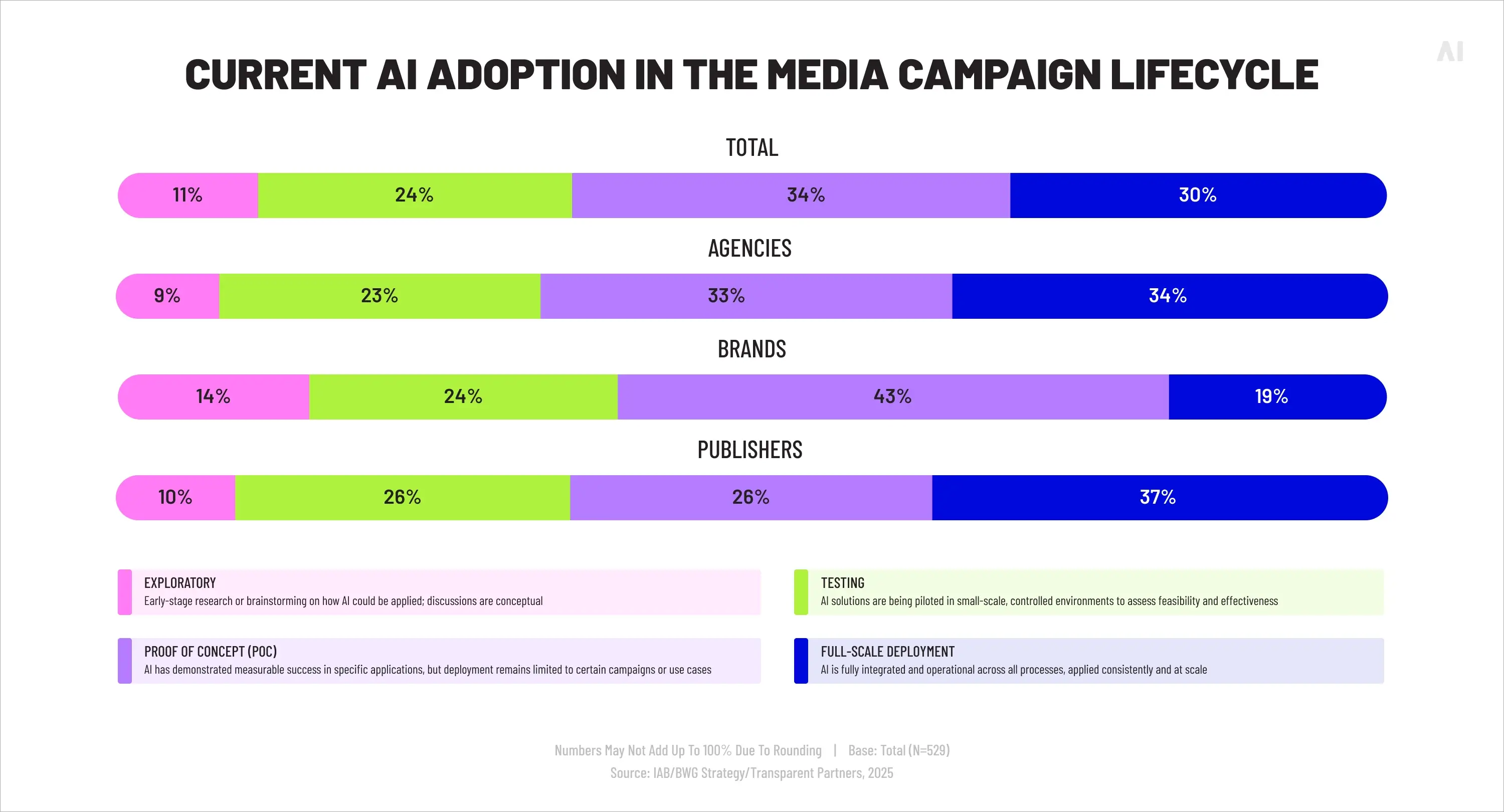
Advanced geo targeting advertising is mostly about orchestration: making multiple signals work together without creating a black box you can’t explain (or audit). That emphasis on transparency is timely—industry research suggests AI is still unevenly implemented across the campaign lifecycle, with many teams not yet operating at “fully integrated” maturity.
AI-powered bid optimization
Modern bidding systems can adjust bids based on predicted performance by geo, time, device, and context, but the real upgrade in 2026 is constraint-aware optimization: models that can move fast inside rules you set.
This matters because adoption is rising faster than readiness. One 2025 study found 72% of marketers plan to apply AI in more ways over the next 12 months, but only 45% feel confident in their ability to apply it successfully. In other words, the market is moving—yet governance and clarity often lag.
A practical way to ground “AI bidding” in something measurable is to treat it as an exploration engine. For example, Google notes that campaigns using Smart Bidding Exploration see, on average, a 19% increase in conversions (and an 18% increase in unique converting query categories). You’re not copying that exact tactic into every channel, but the principle carries: use AI to find incremental pockets of demand—then validate them.
Guardrails that keep bid optimization defensible:
- Geo floors and ceilings: minimum delivery in priority markets, and caps where you know conversion capacity is limited.
- Quality inventory definitions: allowlists/PMPs where possible, plus clear exclusions for low-value placements.
- Frequency caps by geo tier: small geos saturate faster; pacing needs to reflect that.
- “Why did spend move?” reporting: if you can’t explain the driver (geo, hour, supply, creative), you can’t confidently scale it.
IAB’s State of Data 2025 report also flags that 70% of agencies, brands, and publishers are not fully integrating AI across media planning, activation, and analysis—which is exactly why bid automation needs human-readable rules and documentation, not just “trust the model.”

Omnichannel geo activation
Omnichannel geo activation means the same geographic strategy shows up consistently across channels—CTV reach in priority DMAs, mobile reinforcement near high-intent areas, DOOH presence in movement corridors, and retail media conversion close to the shelf.
There’s a simple reason this works: people expect continuity. Adobe reports 78% of customers want consistent brand experiences, and that 87% of organizations leveraging AI-driven personalization have already seen boosts in customer engagement. Consistency isn’t just a brand preference—it’s a conversion condition.

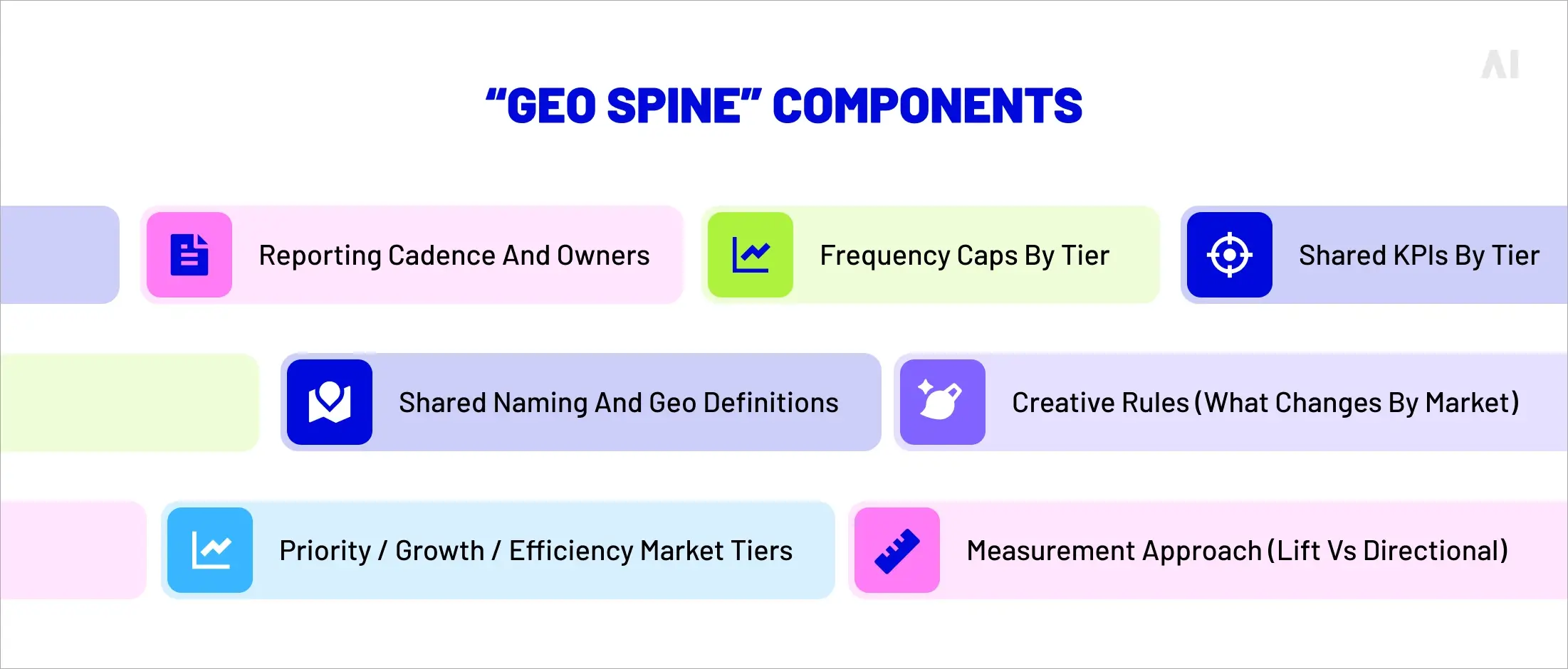
From a planning perspective, omnichannel geo activation is easier when you build a “geo spine”:
- One shared market taxonomy (priority, growth, efficiency geos)
- One set of geo KPIs (what defines success in each tier)
- One creative logic (what changes by geo and why)
- One measurement design (how you’ll test lift vs correlation)
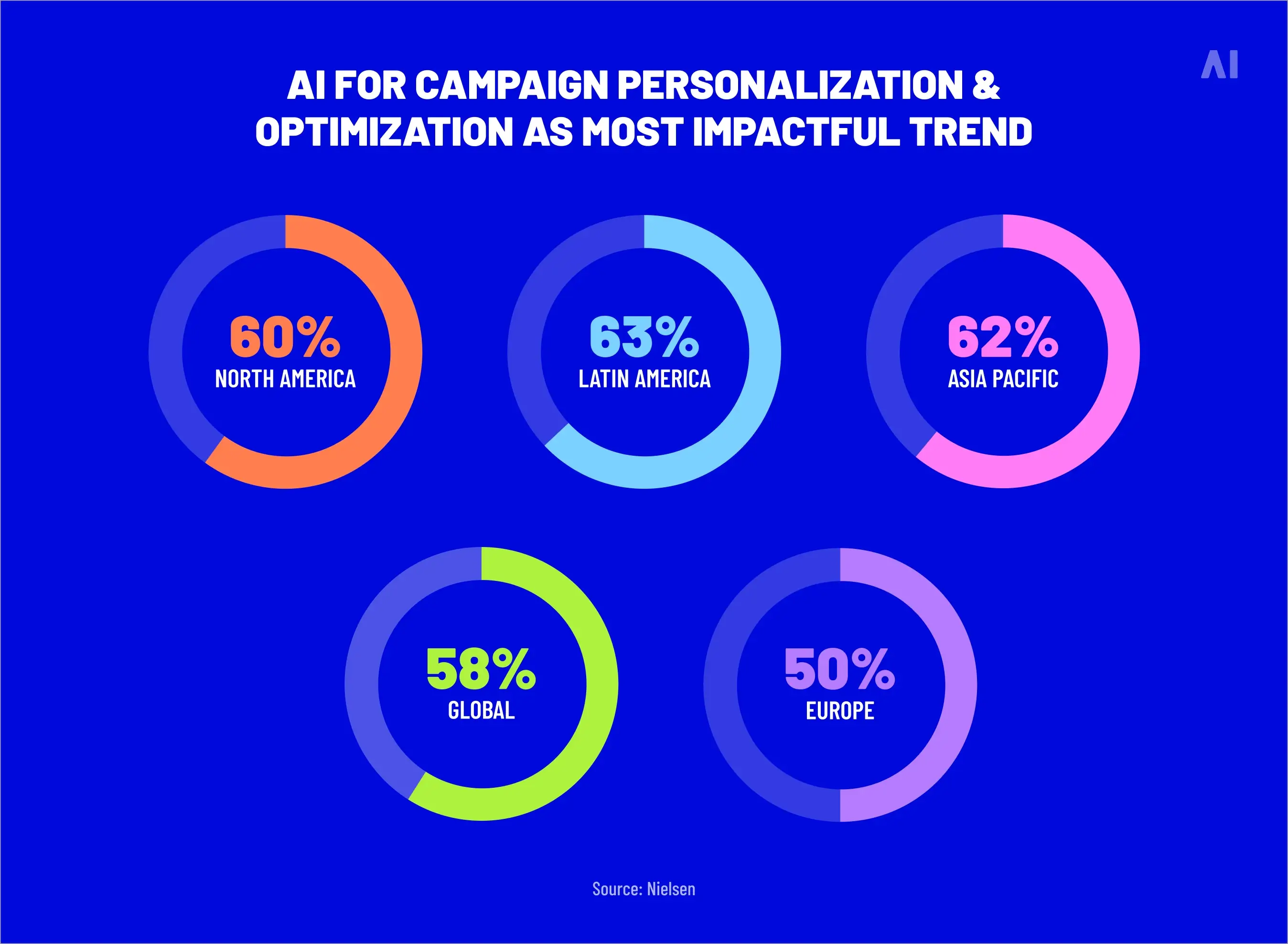
Nielsen’s 2025 research adds another useful layer: in North America, 60% of marketers see AI for campaign personalization and optimization as a top trend. That’s a signal that omnichannel coordination will increasingly depend on data and automation—but it still needs a clearly defined geo strategy to coordinate around.
💡 Related reading: Integrated marketing vs. Omnichannel marketing
Dayparting combined with location signals
Location behaves differently by hour. A commuter corridor in the morning is not the same audience as that corridor at 10 p.m., and a retail cluster on Saturday doesn’t behave like that same cluster on Tuesday.
The case for dayparting is straightforward: performance fluctuates by time and day, and without time-based controls you can overspend in low-performing windows or miss peaks. Marin Software’s 2025 update (built on Amazon Marketing Stream API data) summarizes the operational goal well—identify hours/days that drive higher conversion volume or rate, then adjust schedules and bids to reduce waste.
A pragmatic way to do this without overfitting:
- Start with 3–4 dayparts, not 24 hourly rules.
- Apply dayparting first to efficiency markets (where you’re managing CPA/ROAS tightly).
- Re-check patterns monthly; time-of-day dynamics drift with seasonality, promos, and competitive auctions.
Dynamic geo landing pages
If you’re running geo targeted advertising but sending everyone to the same generic page, you’re leaving performance behind—because geo relevance often collapses after the click.
Dynamic geo pages work when they adapt the meaningful parts of the experience:
- nearest location and store hours
- service coverage and fulfillment promises (what you can actually deliver)
- local proof points (used carefully and truthfully)
- creative-to-page continuity (the offer users clicked is the offer they land on)
The operational advantage is scale. Search Engine Land’s 2025 guidance frames it as a manageability problem: instead of maintaining dozens of static pages, dynamic content can adapt headlines/offers based on campaign signals—when the implementation is disciplined.
This also aligns with broader experience trends. Adobe reports 61% of senior executives believe personalized experiences are critical for growth, and among advanced gen AI users, 54% use it to personalize the web experience. The takeaway isn’t “make everything personalized.” It’s: make the post-click experience match the geo promise you made in the ad.
Behavioral and movement pattern prediction
This is the most tempting—and the most dangerous—advanced tactic.
Use movement modeling to create directional prioritization, not surveillance-level precision. The win is predicting that a market cluster is more likely to convert this week, not pretending you can reliably identify an individual’s next stop.
What’s changing in 2026 is that “prediction” is becoming standard infrastructure inside marketing stacks. Twilio Segment’s CDP Report 2025 notes:
- businesses synced nearly 10 trillion rows of data to cloud data warehouses in the prior year
- “Predictive Traits” usage grew 57% year over year
That’s a strong signal that teams are operationalizing prediction for segmentation and activation. In geo terms, the safe applications usually look like:
- propensity by geo tier (which markets are warming up vs cooling down)
- movement-based segments at an aggregated level (habitual mall visitors, frequent airport travelers), with strict exclusions for sensitive-location inference
- scenario planning (what happens if we shift budget from saturated geos into adjacent growth corridors)
On the research side, there’s also active work on privacy-preserving mobility prediction (for example, federated learning approaches that keep user data local), which hints at where the space is going technically—even if most marketers will consume it via platforms rather than build it themselves.
Media channels that enable geotargeting at scale
Geo works best when channels are selected for what they actually contribute to the journey, not for what they’re famous for.
Programmatic display and video
Programmatic is the operational backbone for many geotargeting ads because it supports impression-level decisioning, private marketplace access, and fast testing cycles.
💡 If you need a refresher on the mechanics and why supply quality matters, start here. And for a deeper playbook, see Programmatic ad targeting: Best strategies, tools, and tactics in 2026.
Connected TV and streaming
CTV is where geo strategy often meets real scale. It’s also where waste can hide if you don’t control frequency, duplication, and supply paths.
IAB projected U.S. digital video ad spend to reach $72B in 2025. That scale is exactly why geo discipline matters: it helps you avoid “nationwide spend, regional results.”
💡 If you want the CTV basics and buying context, see AI Digital’s guide to connected TV advertising.
Mobile and in-app advertising
Mobile is the most natural home for location signals, but it’s also the most permission-dependent and privacy-sensitive.
Use mobile geo targeting advertising when the user action is plausibly near-term: store visits, bookings, appointments, quick commerce, local services.
💡 For a deeper dive, see Mobile programmatic advertising: How brands buy, optimize, and scale mobile ads in 2026.
Search and social location targeting
Search and social geo tools can be deceptively powerful because they combine location with intent and platform-native behavior.
Search geo targeting often works best with:
- location-based query patterns
- store extensions and local landing experiences
- regional budget controls that reflect actual service coverage
Social location targeting becomes more effective when creative is genuinely local and when you avoid saturating small geos with high frequency.
Digital Out-of-Home and retail media networks
DOOH brings location to life in physical space, and programmatic activation makes it more measurable and responsive.
💡 AI Digital’s overview of programmatic DOOH is a good starting point.
In the U.S., OOH revenue hit $2.13B in Q3 2025, up 4.5% year over year, setting a record for that quarter. That momentum matters for geo planning because DOOH is inherently geographic—and increasingly addressable.
Retail media networks are another geo accelerant because they connect advertising to real commerce environments and first-party shopper signals.
💡 For fundamentals, see AI Digital’s guide to retail media networks.
Measuring geotargeting performance and ROI
Geo measurement is where serious programs separate from “nice charts.”
A simple rule helps: decide what you will treat as proof, and what you will treat as a diagnostic. Clicks and view-through rates can be diagnostics. Lift and outcomes are closer to proof.
{{26-Geotargeting-in-2026-4="/tables"}}
Here are the measurement approaches that matter most in 2026:
- Store visit attribution: Useful when designed carefully—clear visit definitions, dwell-time logic, exclusion zones (for employees), and a reasonable attribution window. It’s directional unless you add a control design.
- Regional ROAS and CAC: Compare geos, but normalize for baseline demand. A high-performing DMA might simply have higher category penetration.
- Incrementality / lift studies: The gold standard when feasible. This can include geo-holdouts (test vs control markets) or controlled exposure designs.
- Multi-touch attribution (MTA): Helpful for understanding path patterns, but sensitive to identity gaps and platform fragmentation.
- Cross-device reporting: Useful for diagnosing duplication and reach efficiency, especially in CTV-heavy programs.
💡If you need a broader KPI foundation and definitions, AI Digital’s KPI guide is a helpful reference point.
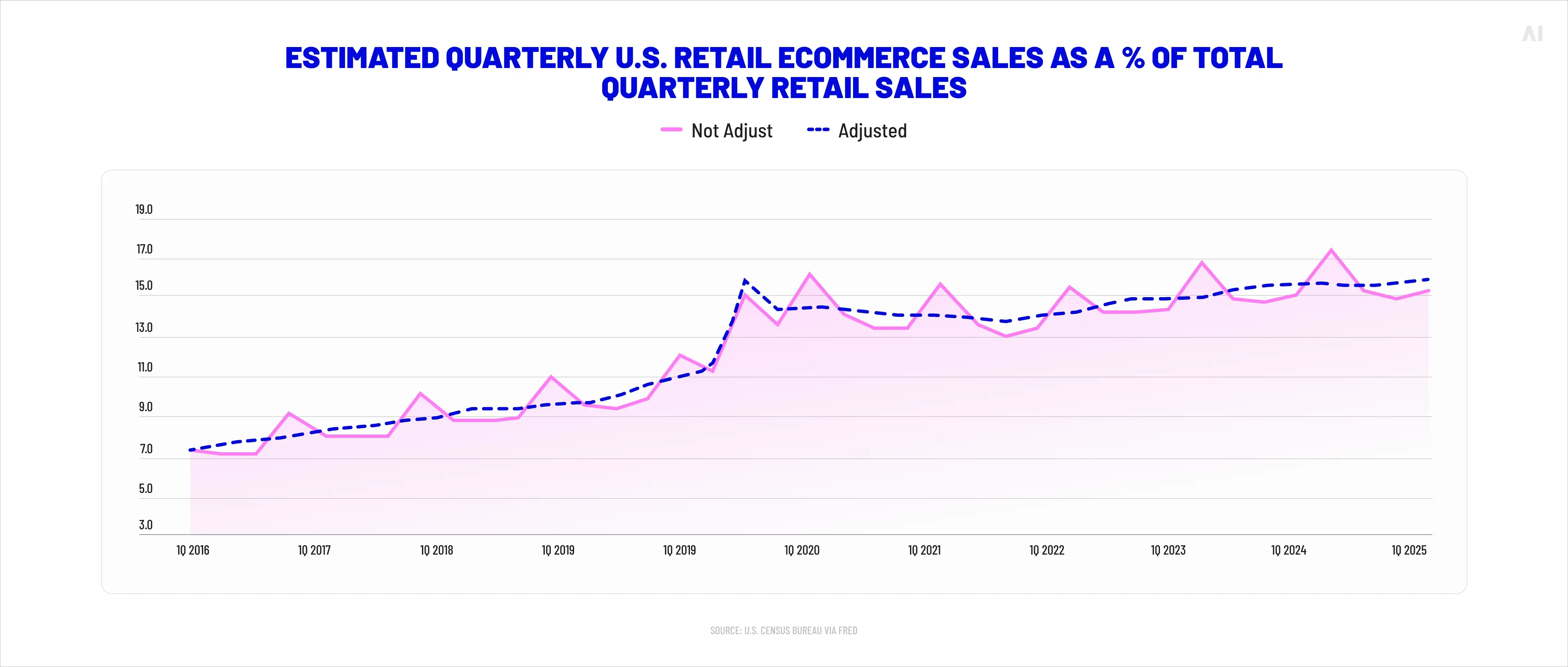
One grounding reality is worth stating plainly: most retail revenue is still offline, which is why geo measurement remains valuable. In Q3 2025, U.S. e-commerce accounted for 16.4% of total retail sales. If your marketing only measures online conversions, you’re missing a large part of the story.
⚡ Geo measurement isn’t about certainty. It’s about reducing guesswork enough to move budget with confidence.
Industries where geotargeting delivers the highest impact
Geotargeting delivers the most value when location is tightly tied to purchase behavior or when operational reality differs meaningfully by market.
- Retail and QSR: Proximity, store density, and timing drive visits. Geo helps budget toward the stores and corridors that actually convert.
- Automotive: Dealer territories, service radiuses, and regional inventory make geo discipline essential. Geo also helps separate “brand demand” markets from “deal-driven” markets.
- Real estate and home services: Service coverage is geographic by definition. Geo prevents wasted impressions in unserviceable areas and improves lead quality.
- Healthcare: Local availability and compliance sensitivity shape what you can do. Geo can improve relevance, but the privacy and consent bar is higher.
- Political advertising: Geography is the strategy. The measurement challenge is attribution and persuasion, not just delivery.
The common thread is simple: when the business operates by market, advertising should too.
Geotargeting challenges and how to solve them
Geotargeting is powerful, but it’s not immune to modern constraints. The best programs treat these constraints as design inputs, not as excuses.
Data accuracy and signal loss
Location signals vary by environment, device settings, and permissions. Solve this by:
- using location as one signal among several, not the only truth
- validating with multiple indicators (store sales patterns, regional conversion rates, lift tests)
- avoiding over-precise claims in reporting
IP volatility and misleading precision
IP-based geo can be useful, but it can also mislead. Solve this by:
- using IP primarily for broad routing, not store-level decisions
- leaning on higher-quality signals when the outcome depends on proximity
Privacy compliance and sensitive data handling
Location data can be sensitive, and regulators are paying attention. In January 2025, the FTC finalized an order banning Mobilewalla from selling sensitive location data, citing failures to verify consumer consent.
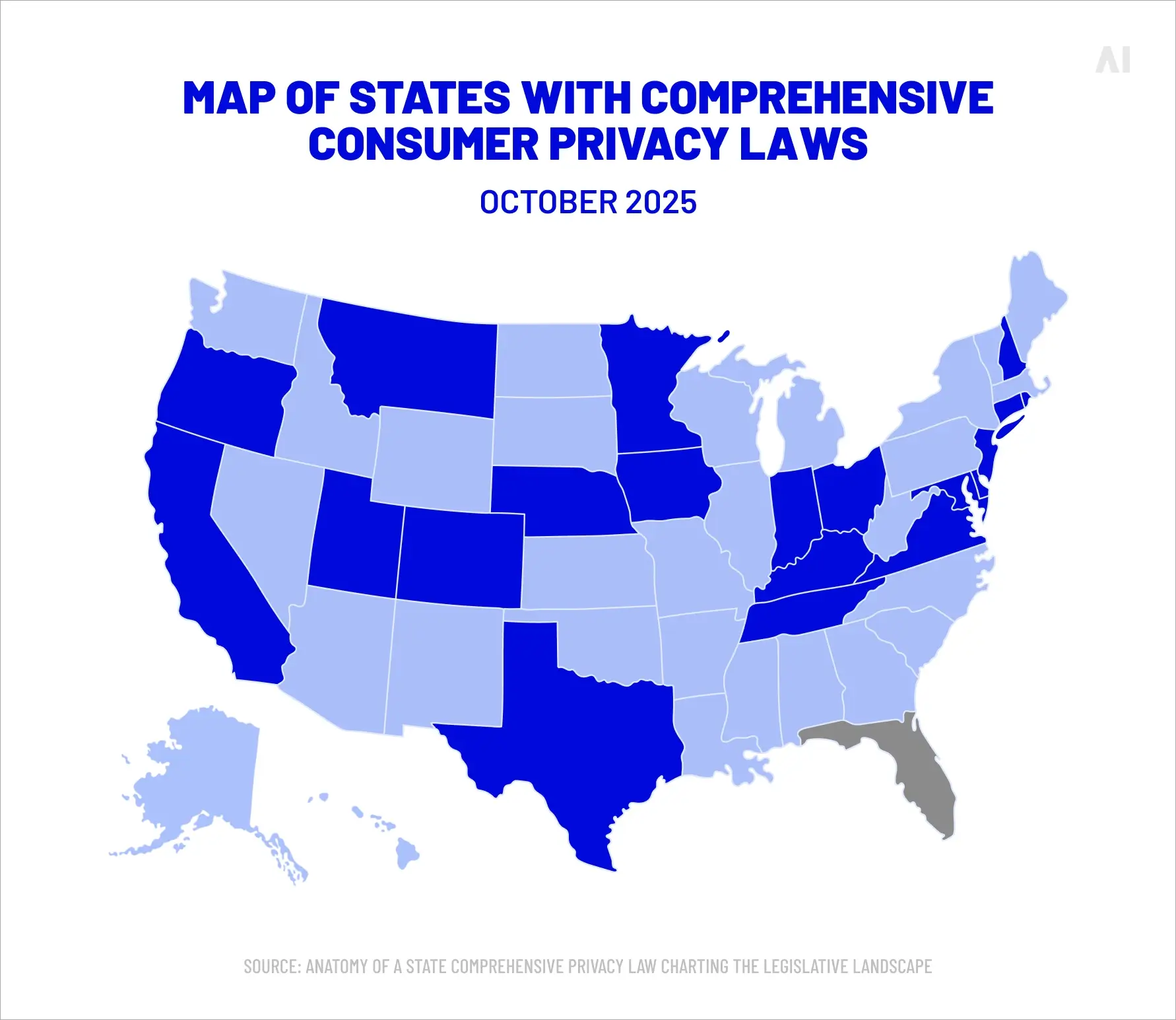
At the same time, state-level requirements keep shifting. In 2025, 49 states and D.C. introduced or considered 800+ consumer privacy bills, and 30+ states enacted 100+ new privacy laws. That environment pushes geo programs toward consented, privacy-safe approaches.
Practical fixes include:
- clear consent and opt-out workflows
- data minimization (collect what you need, not what you can)
- aggregation and thresholding where appropriate
- clean-room collaboration for privacy-safe matching
Regional budget fragmentation and audience saturation
Small geos saturate quickly. Solve this by:
- frequency caps and creative rotation
- expanding thoughtfully from ZIP to DMA when needed
- building geo tiers (primary markets, growth markets, efficiency markets)
The future of geotargeting advertising
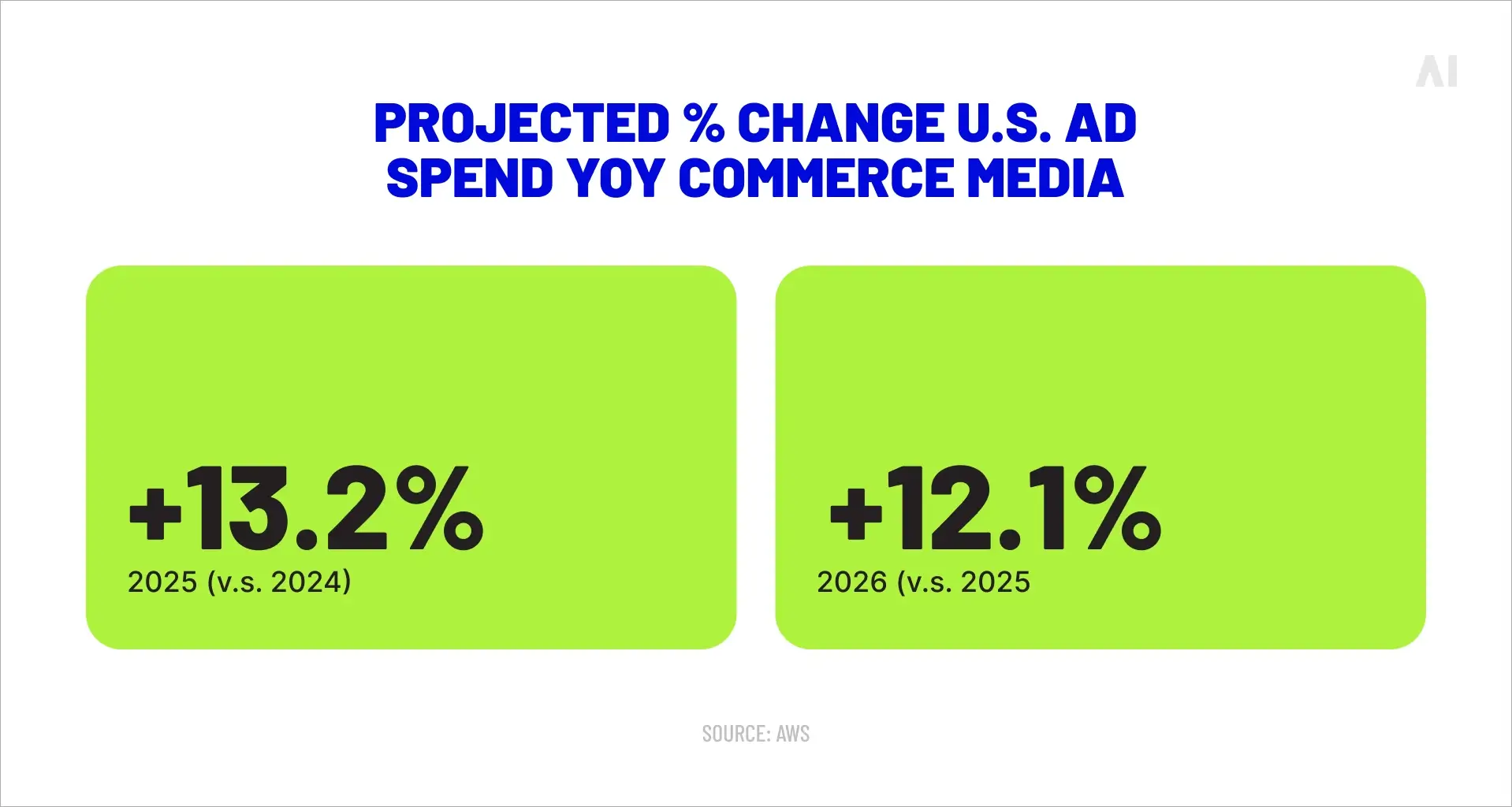
In 2026, the future of geotargeting is less about “more data” and more about better constraints: privacy-safe activation, clearer measurement, and tighter cross-channel coordination. The industry direction backs that up. IAB’s 2026 Outlook expects U.S. ad spend growth to be led by channels that depend on addressability and measurement improvements—social (+14.6%), connected TV (+13.8%), and commerce media (+12.1%).
{{26-Geotargeting-in-2026-5="/tables"}}
Cookieless and privacy-first geo targeting
As third-party identity signals weaken, geo becomes more valuable as a contextual and market signal, not a personal profile. That changes how “precision” is pursued. The next generation of geo targeting advertising is built around:
- Aggregated location insights (market-level lift, geo cohorts, propensity by region) rather than person-level trails
- Consent-first signals (where you can prove collection and usage rights)
- Environmental context (where the ad appears, what the location represents, what the moment implies)
This is why the industry conversation is increasingly framed around privacy, addressability, and sustainable identity approaches rather than “more tracking.” IAB Tech Lab’s work in Identity, Addressability & Privacy is a good lens here.
💡 For broader context, see AI Digital’s cookie-less advertising overview.
First-party data and clean room collaboration
First-party data doesn’t replace geo. It makes geo safer and more useful, because it lets you combine “known truth” (authenticated relationships, transaction history, loyalty signals) with “location direction” (market patterns, store coverage, proximity signals) in a controlled way.
Clean rooms are becoming a practical bridge for this. IAB Tech Lab’s Data Clean Rooms guidance frames them as a key privacy-enhancing mechanism for sharing and analyzing first-party data across parties.
And the PAIR protocol (Publisher Advertiser Identity Reconciliation) explicitly positions itself as a privacy-centric way to reconcile advertiser and publisher first-party data without relying on third-party cookies, using cryptographic methods that avoid exposing raw identifiers.
The strategic question becomes less “can we match?” and more: How do we match just enough to measure lift, manage frequency, and coordinate markets—without turning geo into a data liability or an opaque black box?
Retail media and commerce geo expansion
Retail media will keep pushing geo forward because it ties advertising to real shopping environments—online and in-store—and because retailers sit on rich first-party shopper signals.
In the U.S., EMARKETER forecasts retail media ad spend rising from $58.79B in 2025 to $69.33B in 2026. Another EMARKETER view puts U.S. omnichannel retail media at $71.67B in 2026, reflecting how quickly “onsite/offsite/in-store” planning is converging.
What changes for geotargeting ads is the center of gravity. “Geo” stops meaning only DMAs and ZIPs. It increasingly means:
- retailer-defined trade areas and store catchments
- in-store and near-store surfaces where intent is closer to purchase
- closed-loop measurement that can validate whether geo shifts drove incremental sales
Smart cities, IoT and Connected location signals
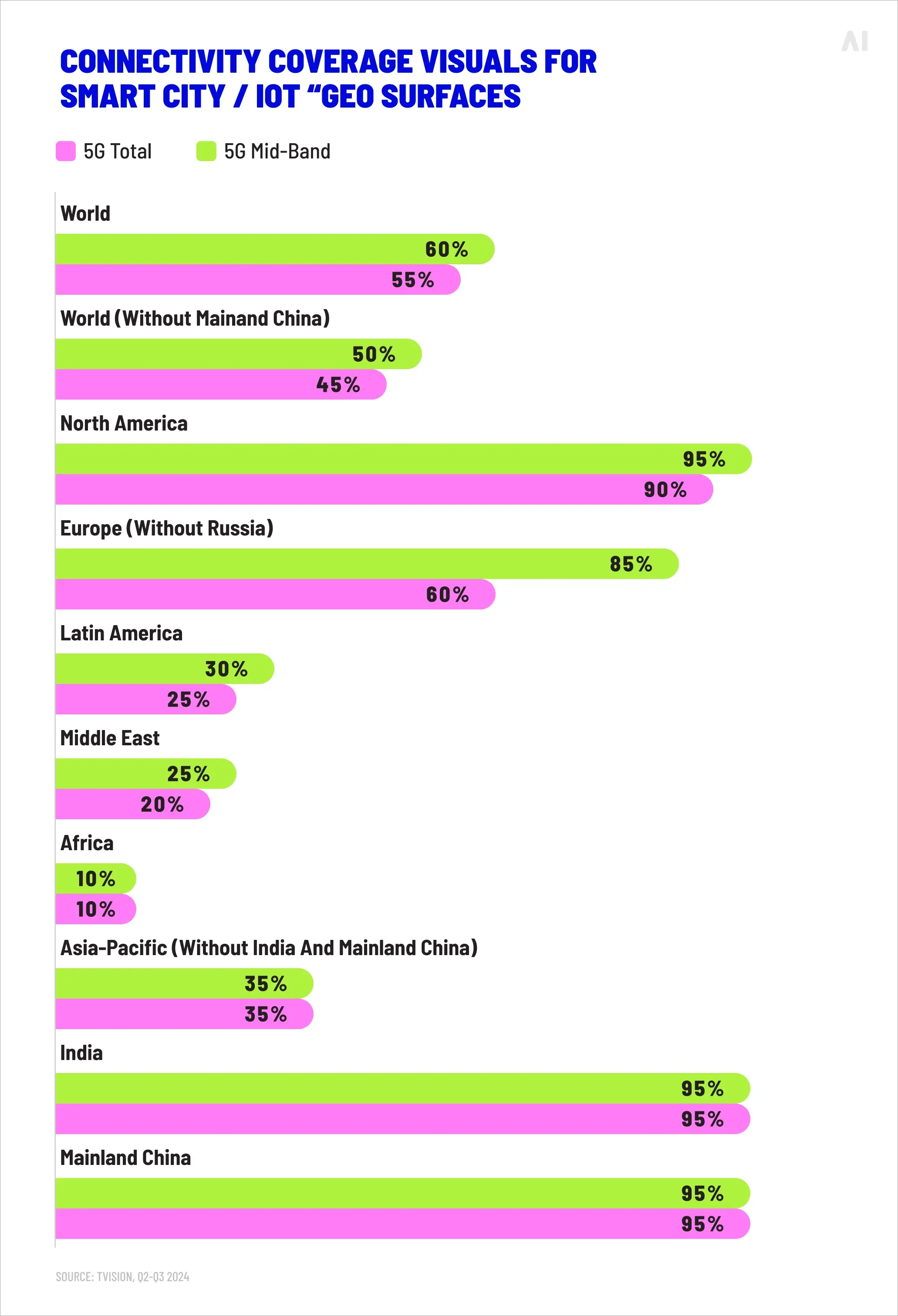
Connected environments (transit, venues, retail networks, smart buildings) create new geo surfaces—especially for DOOH and place-based media. The opportunity is not surveillance. The opportunity is better context: where attention exists, how audiences move through shared spaces, and what moments can be bought responsibly.
One signal of where this is heading is the growth of connected infrastructure itself. Ericsson forecasts 4.5 billion cellular IoT connections by the end of 2025, with continued growth through 2031. More connected endpoints doesn’t automatically mean better advertising—but it does mean more environments can support privacy-safe, aggregated “where/when” context.
This is also where standards start to matter more than raw data. As DOOH becomes more automated, inventory classification and reporting consistency become prerequisites for cross-channel planning.
Growth of CTV and DOOH geo advertising
CTV and DOOH are two of the clearest places where geo strategy becomes decisive: CTV at the household-market layer, DOOH at the real-world moment layer.
- CTV: IAB’s 2026 Outlook projects +13.8% YoY growth for U.S. connected TV ad spend in 2026. As budgets expand, the “default national buy” becomes harder to justify. Geo planning becomes the control knob: which DMAs deserve reach, which markets need frequency caps, which regions need different creative or offers, and where lift is actually showing up.
- DOOH: Measurement and standardization are accelerating. IAB has noted that programmatic DOOH is expected to top $1.25B by 2026, alongside rising demand for cross-channel comparability. On the supply side, OAAA reports that Digital OOH accounted for 36% of total OOH revenue in Q2 2025, and cites a MAGNA forecast projecting programmatic’s share of DOOH spend rising from 24% in 2024 to ~65% by 2029. OAAA’s updated OpenOOH taxonomy is part of that same push—making DOOH easier to plan, transact, and evaluate at scale.
💡 If you’re thinking about transit and city-scale DOOH specifically, AI Digital’s guide to digital transit advertising is a useful starting point.
Conclusion: Turning location intelligence into growth
In 2026, geotargeting evolves from a tactical targeting feature into a business intelligence discipline. The brands that win with geo advertising don’t chase precision for its own sake. They build systems that connect location signals to outcomes, control supply quality, and measure lift with enough rigor to move budget confidently.
The practical shift is this: location stops being “where ads ran” and becomes why performance changed. Which markets are actually scalable? Where is frequency becoming waste? Which local messages and landing experiences convert—and which ones only look good in reports? When you treat geo as an operating model (not a one-off tactic), you get repeatable playbooks: market tiers, channel roles, creative rules, and measurement standards that hold up quarter after quarter.
If you want to pressure-test your geo strategy within the context of everything discussed in this article—data inputs, channel mix, supply quality, and measurement design—AI Digital can help as a DSP-agnostic partner, using its Open Garden approach to keep buying and reporting transparent across channels, with supply-side selection and supply path optimization to reduce low-value delivery, plus an AI-enhanced layer for planning and optimization where it genuinely adds value.