Which Targeting Option Is Best for Achieving Brand Awareness: Programmatic vs Google Ads
In 2026, the question which targeting option is best for achieving brand awareness is no longer theoretical—it is a budget allocation decision that directly impacts reach efficiency, cost per thousand (CPM), and long-term brand lift. Global digital ad spend surpassed $600 billion in 2025, with more than 85% of display advertising transacted programmatically in mature markets. At the same time, Google’s advertising ecosystem continues to command the largest share of digital ad revenues globally, making Google Ads and programmatic advertising the two dominant infrastructures for scaling targeting for brand awareness.
At AI Digital, campaign audits across CTV, display, and omnichannel programmatic platforms show a consistent pattern: brands that treat awareness as a measurable performance layer—rather than just top-of-funnel reach—achieve stronger assisted conversions and lower blended acquisition costs over time. The real strategic question is not “Google Ads or programmatic?” but rather which targeting option aligns with your growth stage, audience strategy, and media buying maturity.
This article examines:
- The strategic role of brand awareness in sustainable growth
- How targeting works in Google Ads (Google Display Network & YouTube) vs. independent programmatic advertising platforms
- Strengths and structural limitations of each model
- When each targeting option performs best
- How to combine both for maximum reach and incremental lift
⚡️For a deep dive into targeting mechanics, signals, and data layers, see our guide: Programmatic Ad Targeting: Best Strategies, Tools, and Tactics in 2026.
What brand awareness really means
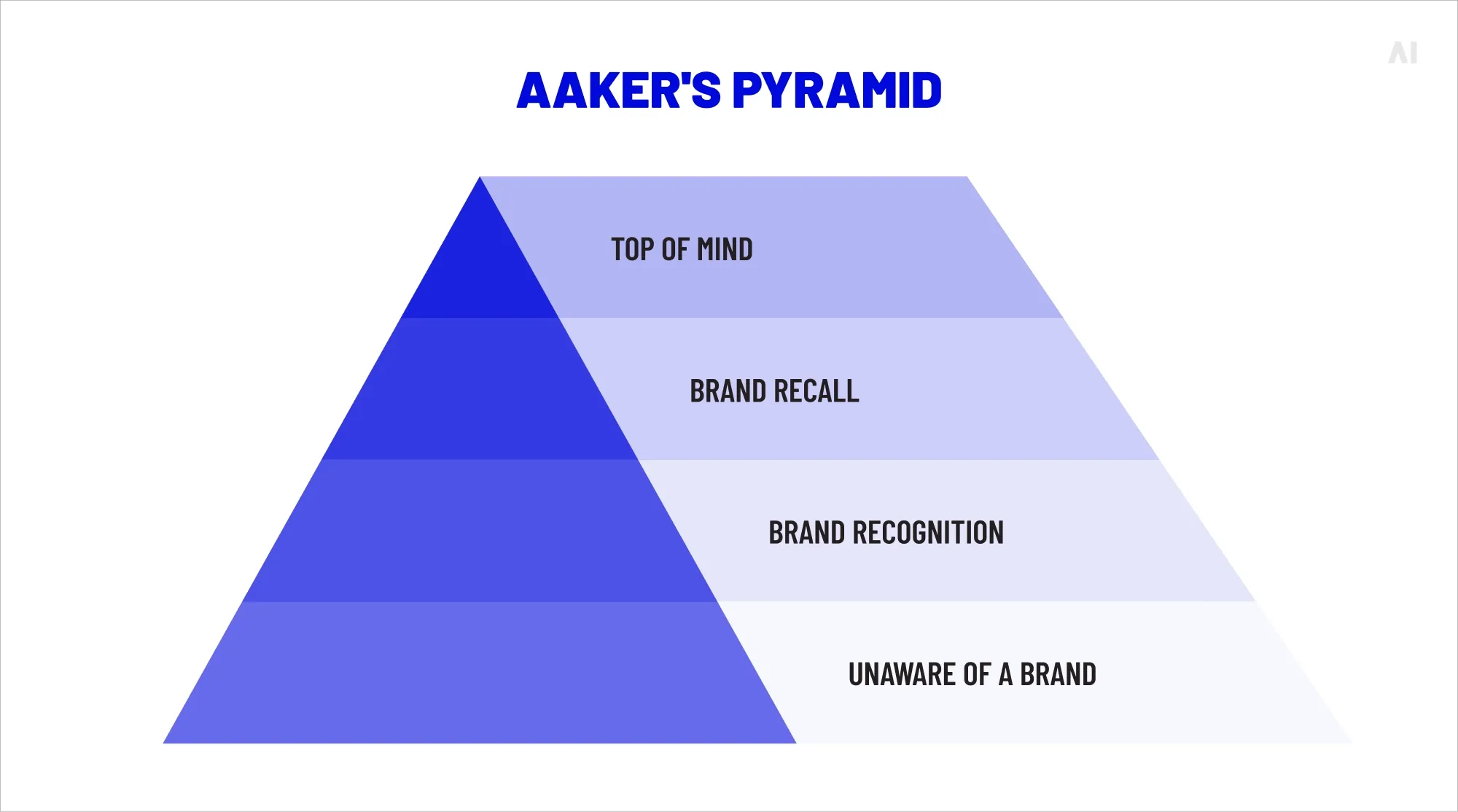
Brand awareness is fundamentally about recognition, memory structures, and future purchase preference—not merely accumulating impressions. At its core, awareness measures how well a target audience can recognize your brand and retrieve it from memory when a need arises. In marketing theory, brand awareness consists of two cognitive components: brand recall (the ability to spontaneously retrieve your brand from memory) and brand recognition (the ability to confirm familiarity when exposed to a brand cue such as a logo or message). Both components play distinct roles in the purchase decision process and in shaping brand equity over time.
Defining what brand awareness is helps clarify what it is not. Awareness is not “impressions for the sake of impressions.” It is about creating durable mental availability such that your brand surfaces in the consumer’s mind early in the journey—long before a performance or conversion campaign kicks in. True brand awareness embeds the brand into a consumer’s cognitive associative network, increasing the likelihood your brand enters their consideration set when they evaluate solutions.
To understand awareness in context, contrast it with other campaign types:
- Brand Awareness Campaigns: Designed to build top-of-mind visibility and familiarity across broad or strategically segmented audiences. Typical metrics include ad recall lift, brand search lift, reach and frequency, and unaided recall. These campaigns set the foundation for all future demand generation.
- Consideration Campaigns: Sit in the middle of the funnel, targeting users who know of the brand but have not yet formed a preference. They prioritize engagement metrics—clicks, video completions, content interactions—and begin transitioning attention into interest.
- Performance Campaigns: Aim for measurable actions like conversions, form fills, or purchases. They rely on audiences that have already passed through awareness and often consideration phases. Their success is heavily contingent on brand salience and prior memory structures formed by awareness efforts.
💡In practical terms, awareness increases mental availability and trust—which subsequently lowers barriers as audiences move into consideration and performance stages. Without strong awareness on the front end, later funnel activity may deliver short-term transactions but at higher acquisition cost and lower incremental lift.
Why brand awareness matters more in 2026
As privacy regulations and platform changes erode third-party identifiers, marketers face diminishing addressable audiences. Modern digital advertising increasingly relies on privacy-safe identifiers and consent-based data models, forcing a pivot from hyper-targeted performance tactics toward broad, identity-safe exposure strategies that fuel awareness at scale.
This shift means that fewer signals are available to target individual intent deep in the funnel, making mental availability and familiarity established through awareness campaigns more critical for later performance metrics.
{{26-Which-Targeting-Option-Is-Best-for-Achieving-Brand-Awareness-1="/tables"}}
In 2026, the marketplace demands strategic brand awareness as both a defensive and offensive growth engine:
- It counterbalances reduced addressability due to privacy constraints.
- It mitigates rising acquisition costs across digital platforms.
- It amplifies long-term customer loyalty and repeat purchase probability.
- It enhances the efficiency and ROI of downstream performance activities.
Brand awareness is no longer a soft metric—it is a measured driver of competitive advantage and a prerequisite for scalable performance outcomes in a complex media landscape.
What makes a targeting option “best” for brand awareness?
When evaluating the best targeting option for achieving brand awareness, it’s essential to move beyond granular audience filters toward outcomes that deliver scalable, high-quality reach with measurable impact. Effective targeting for awareness balances scale, precision, and accountability—not just segment specificity. Modern media buyers define “best” targeting by how well it drives real mental availability and brand memory encoding across a defined population at efficient cost, while offering visibility into campaign impact beyond surface metrics like clicks or raw impressions.
Here are the key measurement signals that differentiate strong targeting for awareness from noise:
{{26-Which-Targeting-Option-Is-Best-for-Achieving-Brand-Awareness-2="/tables"}}
Marketers who optimize across these signals—rather than chasing increasingly fine audience filters—tend to select options that deliver meaningful exposure plus measurable learning about campaign impact, which is critical for scaling awareness attribution and optimizing future spend.
Why choosing the right targeting option isn’t simple
Selecting the optimal targeting option for brand awareness involves navigating trade-offs rather than simply identifying the most precise segment or cheapest CPM. Every targeting ecosystem and algorithm prioritizes different subtleties of reach, control, automation, and transparency, which can pull performance in competing directions.
Scale vs. Control
- Scale: Programmatic platforms access expansive open web inventory and cross-channel environments, enabling broad audience coverage and diverse contextual placements at scale.
- Control: Walled gardens like Google Ads simplify setup and guarantee access to owned properties (YouTube, GDN) but impose constraints on where and how precisely you can control frequency, placement, and supply path transparency compared to a fully configured programmatic stack.
Balancing reach with the level of control needed to protect brand safety, avoid ad fatigue, and manage exposure pacing remains a core trade-off.
Automation vs. Transparency
Automated bidding and audience matching—whether algorithmic decisions inside Google’s systems or real-time bidding through a DSP—drive efficiencies by optimizing for predicted engagement. However, increased automation can come at the expense of visibility into which audience segments and specific placements are truly driving impact. Black-box approaches (e.g., automated placements in some Google Ads campaign types) boost scale and simplicity but reduce contextual insights and granular audience breakdowns.
In contrast, programmatic platforms offer higher transparency into supply paths, publisher domains, and line-item performance, enabling sophisticated frequency and quality controls but adding operational complexity.
Audience Targeting vs. Inventory Quality
Highly refined audience segments can shrink your effective reach and limit brand exposure to only a subset of potential buyers, potentially reducing incremental reach. Conversely, buying for broad contextual reach may increase gross impressions but dilute relevance if not aligned with strategic audience signals. The optimal solution often integrates both—broad reach for memory encoding and refined layers for strategic exclusion or prioritization—while controlling for inventory quality, viewability, and brand safety.
Platform Optimization Differences
Different ecosystems optimize for different objectives:
- Google’s algorithms prioritize outcomes within its own properties, often weighting existing search and video signals heavily, which can benefit brands in awareness and consideration domains.
- Open programmatic auctions dynamically weigh cost, audience signals, contextual data layers, and real-time supply changes across disparate publisher domains, delivering a different balance of reach diversity and contextual relevance.
Understanding these architectural differences—and how they affect delivery, measurement, and optimization—is central to making the right targeting decision.
{{26-Which-Targeting-Option-Is-Best-for-Achieving-Brand-Awareness-3="/tables"}}
The right targeting option is context-dependent: it must align with your strategic emphasis on reach, measurement sophistication, data transparency, and operational resources. Rather than defaulting to the most granular audience filter or cheapest inventory, modern marketers evaluate targeting through the lens of incremental exposure quality and measurable brand impact.
Google Ads targeting for brand awareness: how it works

Google Ads is one of the most powerful ecosystems for targeting for brand awareness, built primarily around YouTube and the Google Display Network (GDN). Its structural advantage lies in two elements:
- Massive scale across owned and partner inventory
- Proprietary first-party user data from search, YouTube consumption, browsing behavior, Android, and logged-in environments
Globally, YouTube reaches over 2.5 billion logged-in monthly users (Alphabet earnings reports), and the Google Display Network extends across millions of websites and apps. For marketers evaluating which targeting option is best for achieving brand awareness, Google’s ecosystem offers immediate access to large, addressable audiences with algorithmic optimization layered on top.
💡However, Google remains a closed environment. While its internal scale is enormous, omnichannel expansion (CTV beyond YouTube, premium publisher supply outside GDN, retail media, audio) is less flexible compared to open programmatic platforms. This structural characteristic shapes both its strengths and its limitations.
Google Display Network (GDN)
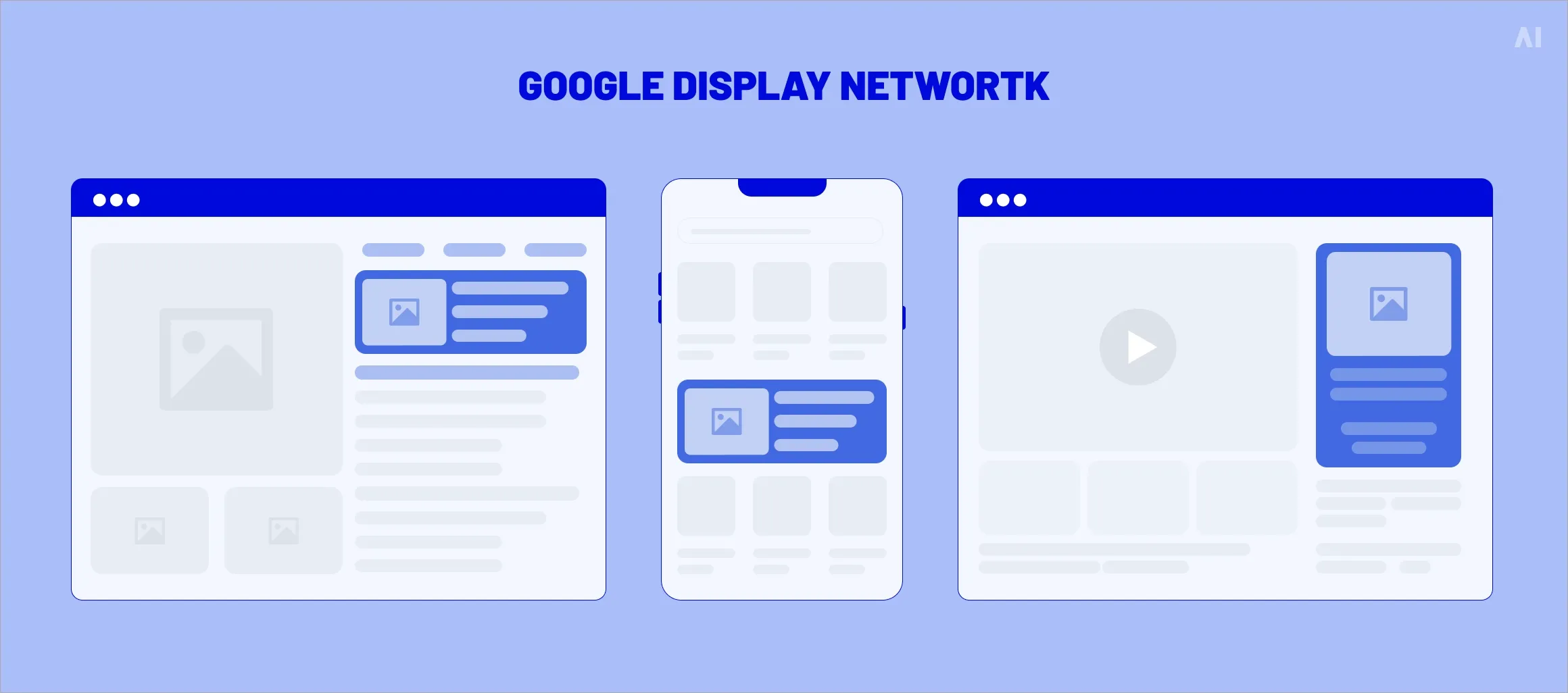
The Google Display Network (GDN) functions as Google’s large-scale display layer, distributing banner and rich media ads across websites, apps, and placements connected to Google’s inventory partnerships.
Targeting capabilities include:
- Affinity audiences (long-term interests)
- In-market audiences (purchase intent signals)
- Custom segments
- Contextual targeting (keyword/page-level relevance)
- Demographic targeting
- Topic targeting
For brand awareness, GDN is typically optimized toward maximum reach with frequency controls, rather than click-driven performance

GDN works particularly well for early-stage awareness campaigns seeking fast reach expansion within controlled budgets.
YouTube Ads

YouTube is the most impactful component of Google’s awareness infrastructure.
YouTube Ads deliver high-impact brand awareness through video storytelling, combining reach, sound, motion, and attention. Video remains one of the strongest formats for memory encoding and brand recall, particularly in upper-funnel strategies.
Available formats include:
- Skippable in-stream ads
- Non-skippable in-stream ads
- In-feed video ads
- Shorts ads
- YouTube TV placements
Skippable ads allow cost-efficient scale, while non-skippable formats maximize guaranteed exposure duration—useful for message retention. YouTube also provides brand lift studies, measuring ad recall, brand consideration, and purchase intent shifts post-exposure.
⚡️For marketers expanding into connected TV environments, YouTube TV placements extend awareness beyond desktop and mobile into living room screens. For deeper insight into this channel, see Youtube TV Ads.
Strengths for brand awareness:
- Emotional storytelling via video
- High average watch time relative to display
- Strong reach across demographic cohorts
- Measurable brand lift options
- Integration with Google’s audience signals
YouTube is often the strongest single-channel answer to the question of which targeting option is best for achieving brand awareness when video is central to the strategy.
Google Search: why it’s a support layer, not the core awareness channel
Google Search is fundamentally a demand-capture channel, not a demand-creation engine. Users on Search are already expressing intent through queries. That makes it one of the most efficient performance channels in digital advertising—but structurally less suitable for large-scale brand awareness generation.
Brand awareness campaigns aim to reach users before they demonstrate active intent. Search, by contrast, activates only when intent already exists.
From a strategic standpoint, Google Search plays three supporting roles in awareness strategies:
{{26-Which-Targeting-Option-Is-Best-for-Achieving-Brand-Awareness-4="/tables"}}
From a strategic standpoint, Google Search plays three supporting roles in awareness strategies
However, Search does not provide scalable passive reach across broad audiences. It cannot introduce a brand to users who are not actively searching. For that reason, when evaluating which targeting option is best for achieving brand awareness, Google Search should be viewed as a complementary validation and capture layer—not the primary awareness driver.
Key Advantages of Google Ads for Awareness
Google Ads offers structural advantages that make it one of the strongest ecosystems for targeting for brand awareness:
- Massive Scale Within a Unified Ecosystem: YouTube and Google Display together provide access to billions of users globally, enabling rapid reach expansion.
- Proprietary First-Party Data Signals: Google leverages logged-in behavioral signals across Search, YouTube, Android, and browsing environments. This improves audience modeling accuracy compared to purely contextual buys.
- Integrated Video Dominance via YouTube: Video remains one of the most effective formats for memory encoding and brand recall. YouTube combines visual storytelling with measurable brand lift studies.
- Native Brand Lift Measurement Tools: Advertisers can run Google Brand Lift studies to measure ad recall, consideration, and purchase intent shifts.
- Operational Simplicity: Campaign setup, reporting, and optimization occur inside one platform interface, making it accessible for mid-market advertisers without complex programmatic infrastructure.
- Algorithmic Optimization for Efficient Reach: Machine learning systems optimize delivery toward predicted engagement and viewable impressions, helping improve effective CPM efficiency.
For brands seeking fast deployment, measurable exposure, and simplified management, Google Ads is often considered the best targeting option for achieving brand awareness at mid-scale budgets.
Key Limitations of Google Ads for Awareness
Despite its scale and infrastructure strength, Google Ads operates within structural constraints:
{{26-Which-Targeting-Option-Is-Best-for-Achieving-Brand-Awareness-5="/tables"}}
For marketers evaluating which targeting option is best for achieving brand awareness, Google Ads delivers scale and simplicity but may require complementary programmatic activation to achieve diversified omnichannel reach and advanced transparency.
Programmatic advertising targeting for brand awareness: how it works
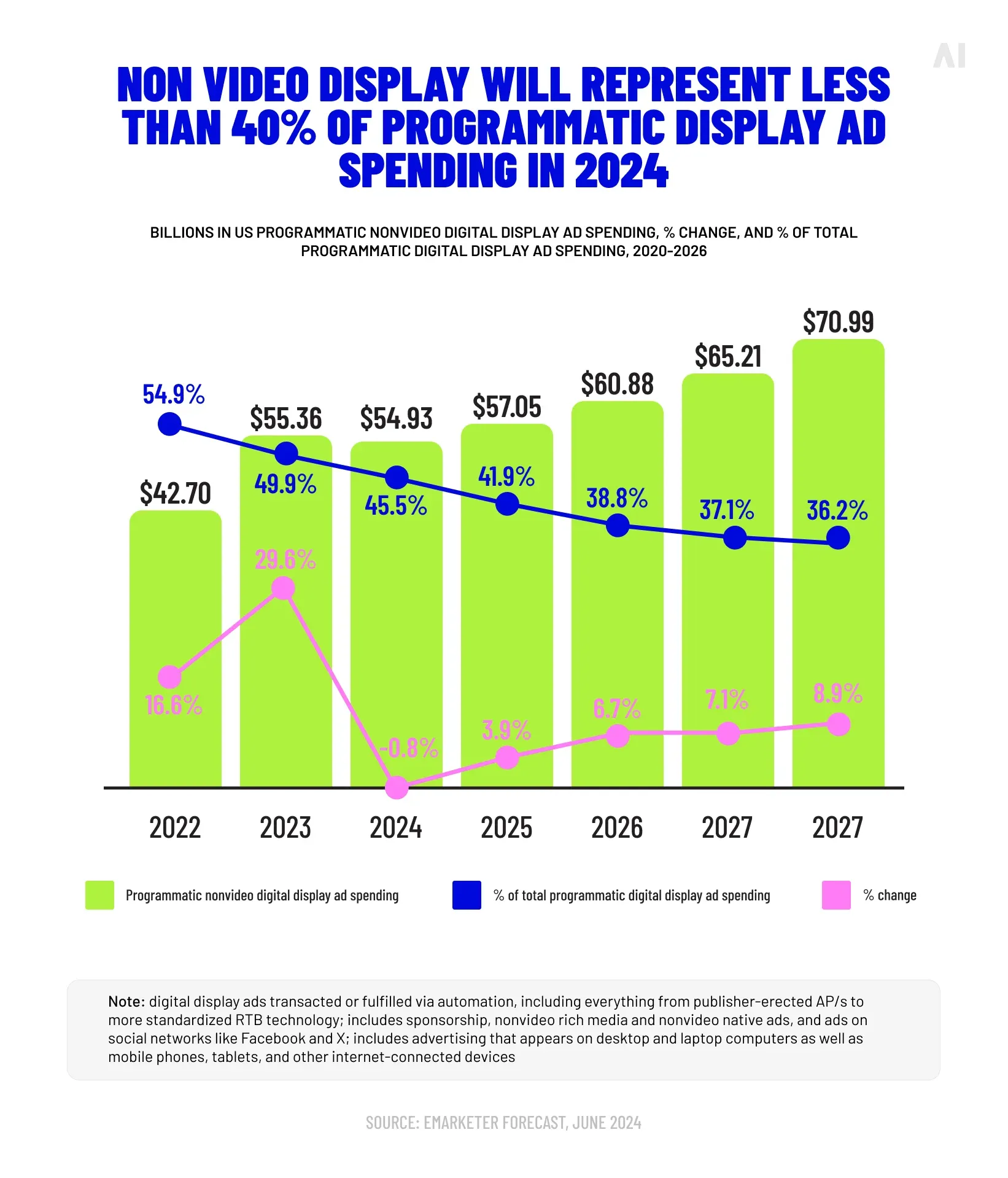
Programmatic advertising refers to the automated process of buying and selling digital ad inventory using software, real-time data, and algorithmic decision-making rather than manual negotiations and insertion orders. It has become the dominant method for media buying across most digital formats because it increases speed, precision, and scale while reducing manual workload.
At the core of programmatic media buying is Real-Time Bidding (RTB)—an instantaneous auction process where each available ad impression is evaluated and competed for by demand-side platforms (DSPs) in milliseconds as a user’s page, app, or video loads. The highest bidder wins the opportunity to show their ad based on predefined audience, contextual, or placement criteria.
Programmatic’s automation and data-driven decision framework allow brands to execute highly scalable awareness campaigns that reach audiences beyond a single ecosystem:
- Open web inventory: Display and video placements across millions of sites and apps
- Premium publishers: Curated environments of authoritative brands and content properties
- Connected TV (CTV): Addressable video inventory on streaming platforms and smart TVs
- Digital Out-Of-Home (DOOH): Dynamic screens in public spaces with programmatic activation
- Audio & emerging formats: Streaming audio and interactive placements through programmatic channels
This breadth contrasts with walled garden environments by enabling unified delivery across multiple screens, formats, and contexts, making programmatic a powerful option for targeting for brand awareness at scale.
💡Programmatic’s flexibility is anchored in the way it processes data inputs—from first-party audiences to contextual signals and device behaviors—to optimize bids and placements in real time. For brands seeking to deepen reach and frequency across environments and mediums, this orchestration across channels drives measurable awareness outcomes and can be tuned toward incremental reach, frequency pacing, and quality inventory engagement.
⚡️For an expert primer on the fundamentals of this ecosystem, including deeper discussion of
programmatic methods and market implications, see AI Digital’s overview, Programmatic Advertising. For a detailed look at real-time auction dynamics and how RTB functions within programmatic infrastructure, see Real-Time Bidding.
The main targeting options in programmatic advertising
In programmatic advertising, targeting is not a single switch—it is a layered control system combining audience signals, contextual relevance, inventory selection, and delivery optimization. This multi-layer architecture is what makes programmatic particularly strong for targeting for brand awareness at scale while maintaining measurable control.
{{26-Which-Targeting-Option-Is-Best-for-Achieving-Brand-Awareness-6="/tables"}}
⚡️ If you want to explore how contextual targeting builds relevance and intent without personal data, see our guide Contextual Advertising: How to Reach High-Intent Buyers Without Personal Data.
⚡️ For a strategic comparison of location-based approaches and when to use each, review Geotargeting vs. Geofencing: How to Choose the Right Location Strategy for Your Ads.
{{26-Which-Targeting-Option-Is-Best-for-Achieving-Brand-Awareness-7="/tables"}}
Benefits of programmatic advertising for awareness
Programmatic advertising offers several structural advantages when evaluating which targeting option is best for achieving brand awareness:
- Omnichannel Reach: Access to open web, premium publishers, CTV, digital audio, mobile apps, and DOOH from one buying infrastructure.
- Cross-Environment Frequency Control: More advanced reach management compared to walled gardens.
- Incremental Reach Beyond Closed Ecosystems: Programmatic extends awareness beyond Google, Meta, and other proprietary platforms.
- Inventory Transparency: Advertisers can analyze domains, placements, supply paths, and viewability metrics.
- Flexible Data Integration: First-party CRM data, contextual AI signals, retail data partnerships, and clean-room integrations can be layered into awareness strategies.
- Advanced Measurement Capabilities: Brand lift studies, incremental reach modeling, viewability thresholds, attention metrics, and supply path optimization.
For mid-to-enterprise brands, programmatic often becomes the best targeting option for achieving brand awareness when omnichannel expansion and data transparency are priorities.
Risks and limitations of programmatic targeting
Despite its flexibility, programmatic is not without trade-offs:
{{26-Which-Targeting-Option-Is-Best-for-Achieving-Brand-Awareness-8="/tables"}}
Programmatic targeting for brand awareness provides unmatched structural flexibility and cross-channel reach. However, its effectiveness depends on strategic orchestration, disciplined frequency management, and strong measurement frameworks.
💡For brands asking which targeting option is best for achieving brand awareness, programmatic delivers scale plus control—but only when executed with expertise and clearly defined awareness KPIs.
Google Ads vs Programmatic

Selecting the right targeting option for achieving brand awareness is foundational to effective media planning. While both Google Ads and programmatic advertising can drive awareness, they differ strategically in reach, control, transparency, and contextual delivery. Understanding where each excels—and where they complement each other—helps marketers maximize reach, engagement, and measurable impact across digital platforms.
When Google Ads is the best awareness option
Google Ads is often the most efficient awareness option when you need rapid scale within a unified ecosystem and access to proprietary user intent data. Its strengths include:
- Broad built-in reach across YouTube and the Google Display Network, giving you exposure within a familiar, trusted environment.
- Proprietary first-party behavioral signals and demographic data that improve audience modeling and contextual relevance.
- Integrated brand lift measurement tools that allow direct insights into recall, consideration, and interest shifts after exposure on video and display.
- Simplified activation and optimization workflows ideal for mid-market teams or campaigns with limited operational resources.
This combination makes Google Ads particularly effective when your awareness strategy prioritizes quick deployment, video storytelling (via YouTube), and accessible measurement tools. It tends to be strongest when audiences are already within Google’s behavioral footprint or when awareness is tightly tied to search-related memory cues that feed into later performance layers.
When programmatic is the best awareness option
Programmatic advertising becomes the preferred choice when marketers need true omnichannel reach, deeper transparency, and flexible audience orchestration beyond a single ecosystem. It is especially valuable for brand awareness strategies that require:
- Cross-platform reach across the open web—including premium publisher sites, connected TV (CTV), digital audio, and other streaming environments.
- Advanced targeting and data layer integration, combining first-party, contextual, and third-party signals for broader and more nuanced audience coverage.
- Inventory transparency and supply-path control, enabling placement decisions that align with brand safety and quality standards.
- Unified frequency and reach management across channels, reducing audience overlap and optimizing incremental exposure.
Because programmatic platforms (like DV360, The Trade Desk, and others) tap into rich data environments and expansive inventory, they excel when awareness needs wide net reach, access to premium screens (CTV/DOOH), and finely tuned exposure pacing that extends beyond what a closed ecosystem can offer.
Combining Google Ads + programmatic
In practice, the most effective targeting strategy for brand awareness often blends both Google Ads and programmatic advertising to leverage their complementary strengths across the marketing funnel:
- YouTube (Google Ads) for Broad Awareness Storytelling
Use YouTube and GDN for impactful storytelling and broad, emotionally resonant reach within Google’s vast audience pool. Its video formats and integrated brand lift tools make it strong for establishing cognitive salience early.
- Programmatic for Incremental Reach Across Premium Inventory and CTV/DOOH
Deploy programmatic buys across the open web to capture audiences beyond Google’s ecosystem. This includes premium display, contextual environments, CTV placements, audio, and digital out-of-home, expanding reach and reinforcing brand narratives across screens.
- Search and Retargeting to Capture Demand Later
Once awareness begins to drive branded and category search volume, integrate Google Search and retargeting layers to capture that interest as intent—closing the loop from broad exposure to actionable engagement.
This hybrid design ensures that brand awareness campaigns achieve both scale and strategic depth, improving incremental reach metrics and building a durable memory structure that supports downstream performance campaigns.
How to choose the right targeting strategy
Choosing which targeting option is best for achieving brand awareness requires more than platform comparison. It requires strategic alignment between business maturity, budget scale, industry dynamics, and measurement infrastructure.
At AI Digital, awareness strategy is treated as a growth lever—not a visibility exercise. Based on cross-channel campaign audits across CTV, display, and omnichannel programmatic environments, one pattern consistently emerges: brands that align targeting logic with structural business realities outperform those that select platforms based on habit or trend.
Below is a structured framework used in advanced media planning.
By business stage
Targeting strategies must evolve with business maturity.
{{26-Which-Targeting-Option-Is-Best-for-Achieving-Brand-Awareness-9="/tables"}}
By budget and campaign scale
Budget determines architectural complexity.
{{26-Which-Targeting-Option-Is-Best-for-Achieving-Brand-Awareness-10="/tables"}}
By Industry and Sales Cycle
Industry structure directly influences targeting logic.{{26-Which-Targeting-Option-Is-Best-for-Achieving-Brand-Awareness-11="/tables"}}
Conclusion: Drive lasting brand awareness with the right targeting
Determining which targeting option is best for achieving brand awareness is not about choosing a single platform—it is about architecting a strategy that balances scale, control, transparency, and measurable impact.
Google Ads delivers powerful reach within a unified ecosystem, particularly through YouTube and Google Display, supported by proprietary data and integrated brand lift measurement. Programmatic advertising, by contrast, expands awareness beyond closed
environments—unlocking omnichannel inventory across premium publishers, CTV, digital audio, and DOOH with deeper frequency management and incremental reach control.
For most growth-oriented brands, the strongest answer to which targeting option is best for achieving brand awareness is a strategic combination:
- Use YouTube for high-impact storytelling and broad cognitive reach.
- Deploy programmatic to extend incremental reach across premium and cross-screen environments.
- Integrate Search and retargeting to capture demand generated by awareness activity.
💡When structured correctly, targeting for brand awareness becomes measurable and compounding. It increases branded search volume, improves performance campaign efficiency, lowers long-term acquisition costs, and strengthens category positioning.
At AI Digital, awareness is treated as a performance multiplier—not a vanity metric. The right targeting architecture transforms exposure into sustained mental availability and tangible business growth.
If you’re evaluating the best targeting option for achieving brand awareness for your brand, our team can help you design a scalable, omnichannel strategy aligned with your growth stage and market dynamics.
⚡ ️Learn more or speak with our experts, get in touch.