Why Attention Measurement Is Changing Traditional Advertising Metrics


The problem with traditional advertising metrics is not that they have stopped working. It is that they are often expected to explain more than they were designed to measure. Impressions and reach show whether a campaign was delivered at scale; viewability indicates whether an ad had an opportunity to be seen; and clicks and conversions capture specific forms of response. None of these signals, however, establishes whether someone actually focused on the advertising—or for how long.
Dentsu’s 2024 Attention Economy research illustrates the gap: on one measured platform, ads remained technically viewable for an average of 15.1 seconds but were actually viewed for only 5.3 seconds—approximately one-third of the available time. Two placements can therefore produce similar delivery and viewability results while creating very different opportunities to communicate.
Attention measurement in advertising is emerging to fill this missing layer, not eliminate established KPIs. The shift gained institutional weight in November 2025, when the IAB and MRC finalized their Attention Measurement Guidelines with input from more than 200 industry experts. An accompanying marketer playbook, informed by more than 40 industry interviews, reinforces an important principle: attention is a probabilistic and complementary signal—not a business outcome, a binary measure, or a universal media currency. For marketing leaders, this changes the conversation from simply asking how much media was delivered to examining the quality of the exposure that investment created.
Attention is not the endpoint of measurement, either. Dentsu’s 2026 Brand Reset study associated greater attention with stronger brand-building effects but also found diminishing returns beyond approximately 20 seconds of active viewing. More attention, in other words, is not automatically more valuable attention. A modern measurement framework must retain delivery metrics to establish scale, outcome metrics to track response, and controlled or incrementality-based methods to estimate causality. Attention sits between these layers, helping marketers evaluate media and creative quality while identifying where stronger business validation is still required.
TL;DR: Key Takeaways
- Traditional metrics remain essential: impressions, reach, and frequency measure delivery and scale, while clicks, conversions, and revenue track audience or business response.
- Viewability confirms that an ad had an opportunity to be seen; it does not prove that someone noticed, watched, or processed the message.
- Attention adds a media- and creative-quality signal between exposure and outcome, helping marketers evaluate differences that delivery and interaction metrics may not reveal.
- Higher attention does not automatically produce stronger brand lift, conversions, or revenue. Its relationship with business performance must be tested and validated.
- The strongest measurement frameworks combine delivery, viewability, attention, outcomes, efficiency, and causal evidence. Attention should improve established measurement systems—not replace them.
What Is Attention Measurement in Advertising?
Attention measurement in advertising uses observed or modeled signals to estimate whether—and to what extent—an advertisement captures a person’s visual or audio attention. It moves analysis beyond an ad’s technical presence toward the quality of the human exposure. Some approaches observe attention within research panels; others use validated models to predict attention at scale.
Attention is not evidence that someone understood, remembered, or acted on a message. It is a diagnostic layer between delivery and outcome: stronger than assuming an available impression was noticed, but narrower than claiming advertising effectiveness.
⚡️Attention shows whether an ad had a meaningful chance to work; business and causal metrics show whether it did.
Because different signals answer different questions, choosing the right attention metrics should begin with the media, creative, or business decision marketers need to improve—not with whichever score is most readily available.
What Traditional Advertising Metrics Do—and What They Miss
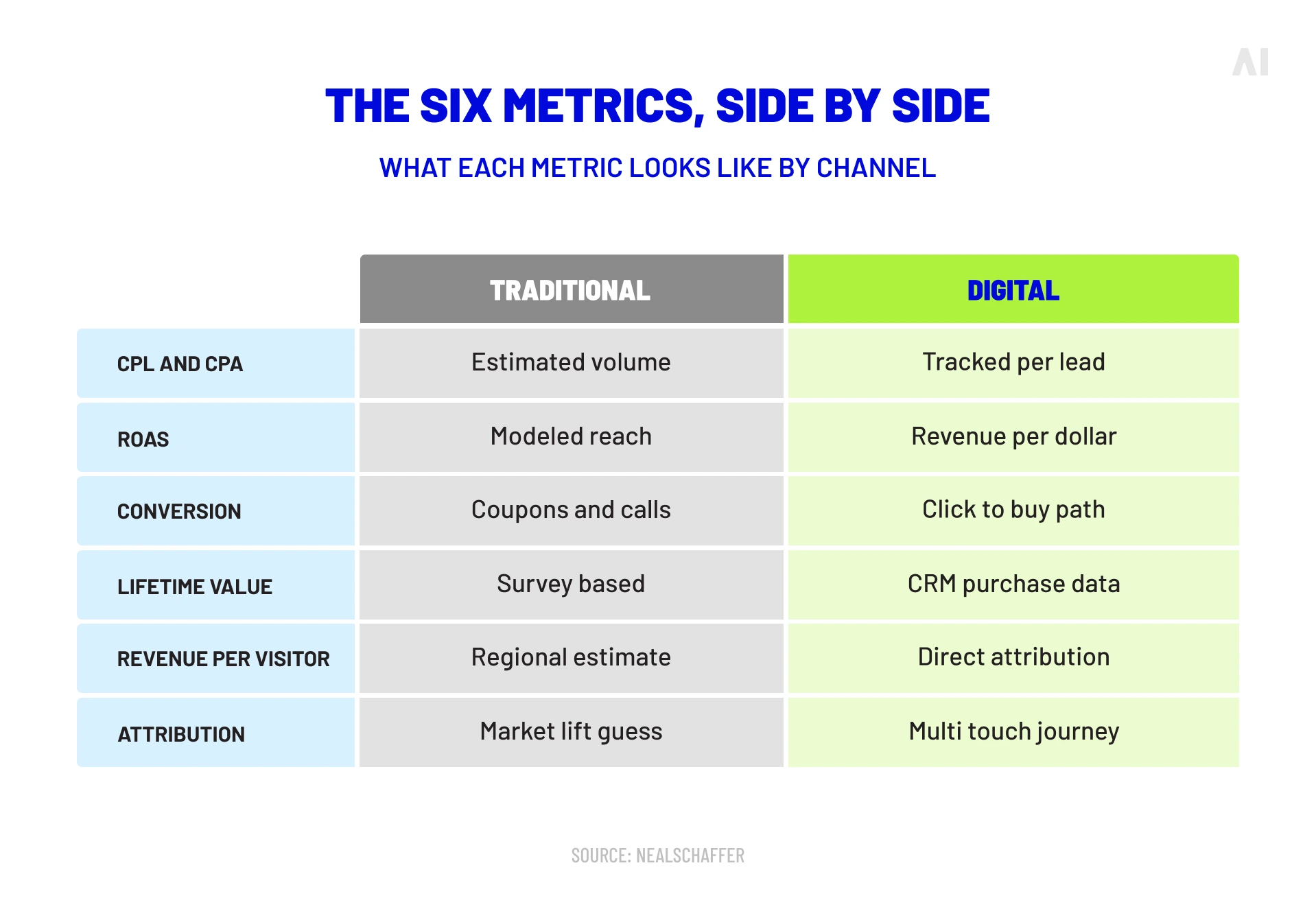
The modern measurement problem is not a shortage of metrics. It is the tendency to ask one metric to answer a question that belongs to another measurement layer. Impressions, reach, viewability, clicks, and completion remain essential, but none was designed to provide a complete account of human attention.
Attention does not repair “bad” traditional metrics. It supplies information they were never intended to capture. A useful reporting framework therefore combines attention with the delivery, response, efficiency, and outcome measures covered in this guide to display advertising metrics and KPIs.
Impressions and Reach Measure Delivery, Not Attention
Impressions show how much advertising was delivered; reach estimates how many distinct people or households were exposed; and frequency indicates repetition. These metrics remain indispensable for pacing, scale, audience distribution, and cost analysis. Their limit is equally clear: delivery is a record of media activity, not proof that communication occurred. Attention adds exposure quality without removing the need to measure scale.
Viewability Measures Opportunity to See, Not Actual Focus
Viewability establishes whether an ad met technical in-view conditions. Under commonly applied Media Rating Council guidelines, standard display generally requires at least 50% of an ad’s pixels to remain in view for one continuous second; video generally requires two seconds. Those thresholds indicate opportunity, not human focus. Viewability filters for potentially observable impressions; attention helps distinguish the quality of those opportunities.
Clicks and CTR Capture Action From Only Part of the Audience
Clicks and CTR provide useful evidence of direct interaction, especially when the objective is traffic or another immediate response. But they describe only the people who clicked. Advertising can be noticed or remembered without producing an immediate interaction, while a click does not guarantee conversion or commercial value. Low CTR is not automatically evidence of ineffective advertising, particularly when the campaign objective is brand building.
Completion and Engagement Metrics Depend on Format and Context
Completion and engagement can reveal audience behaviour, but they are shaped by autoplay, skippability, ad length, placement, platform design, and user intent. A completed video does not prove continuous attention, just as a reaction or share does not prove comprehension or persuasion. Attention adds context about the quality of focus; outcome metrics determine whether that exposure produced value.
What Attention Measurement Adds

Most advertising measurement stacks move quickly from whether media was delivered to whether an outcome followed. What often remains hidden is the quality of the exposure between those points. Attention measurement makes part of that middle ground observable or estimable: whether an ad was likely to be noticed, how long it held focus, and how attention differed across placements or creative executions.
That does not turn attention into a complete measure of effectiveness. The IAB and MRC attention measurement framework positions it as a complementary signal that should be connected to delivery and outcome metrics. Its strategic value is diagnostic: attention can show that two technically valid exposures were not necessarily equivalent.
⚡️Attention is not the verdict on advertising effectiveness; it is evidence about the quality of the opportunity advertising created.
These dimensions are complementary, not stages in a linear funnel. A campaign can earn attention without a click, generate conversions from lower-attention exposures, or show strong observed performance without proving incrementality. A sound measurement system preserves these distinctions instead of asking one metric to represent the entire campaign.
A Quality Signal Between Exposure and Outcome
Attention adds information after an ad becomes technically available to see or hear but before—or sometimes without—a measurable audience response. It therefore helps distinguish an eligible impression from an exposure more likely to receive human focus.
That distinction improves interpretation, but it does not replace impressions, reach, conversions, sales, brand lift, or incrementality testing. Delivery metrics establish scale; attention describes exposure quality; outcome metrics show what followed; and causal methods estimate what advertising changed. The value comes from connecting these layers, not selecting one winner among them.
Better Insight Into Media Quality
Placements with similar delivery and viewability can still create different attention opportunities. Page clutter, screen coverage, position, content environment, competing stimuli, sound, and user control can all affect whether an ad receives focus.
Attention can therefore strengthen inventory and placement evaluation when conventional metrics make two environments appear equivalent. But it should not become a universal media-quality score. High-attention inventory may cost more, reach fewer people, or create a more intrusive experience. Media quality still depends on audience fit, reach, frequency, context, brand safety, cost, and business performance.
A New Lens on Creative Effectiveness
Delivery metrics show where creative appeared; attention data can help show whether and when it gained or lost audience focus. Marketers may be able to compare executions or examine how focus changes during a video, revealing where branding appears too late, an opening fails to hold interest, or one execution earns more attention than another.
These observations support diagnosis, but they do not identify causation on their own. An attention drop does not prove which creative element caused it, and higher attention does not establish comprehension or business impact. Controlled creative tests, brand-lift research, conversion data, and incrementality evidence are still needed to determine what changed and whether it mattered.
Why Attention Measurement Is Gaining Ground Now
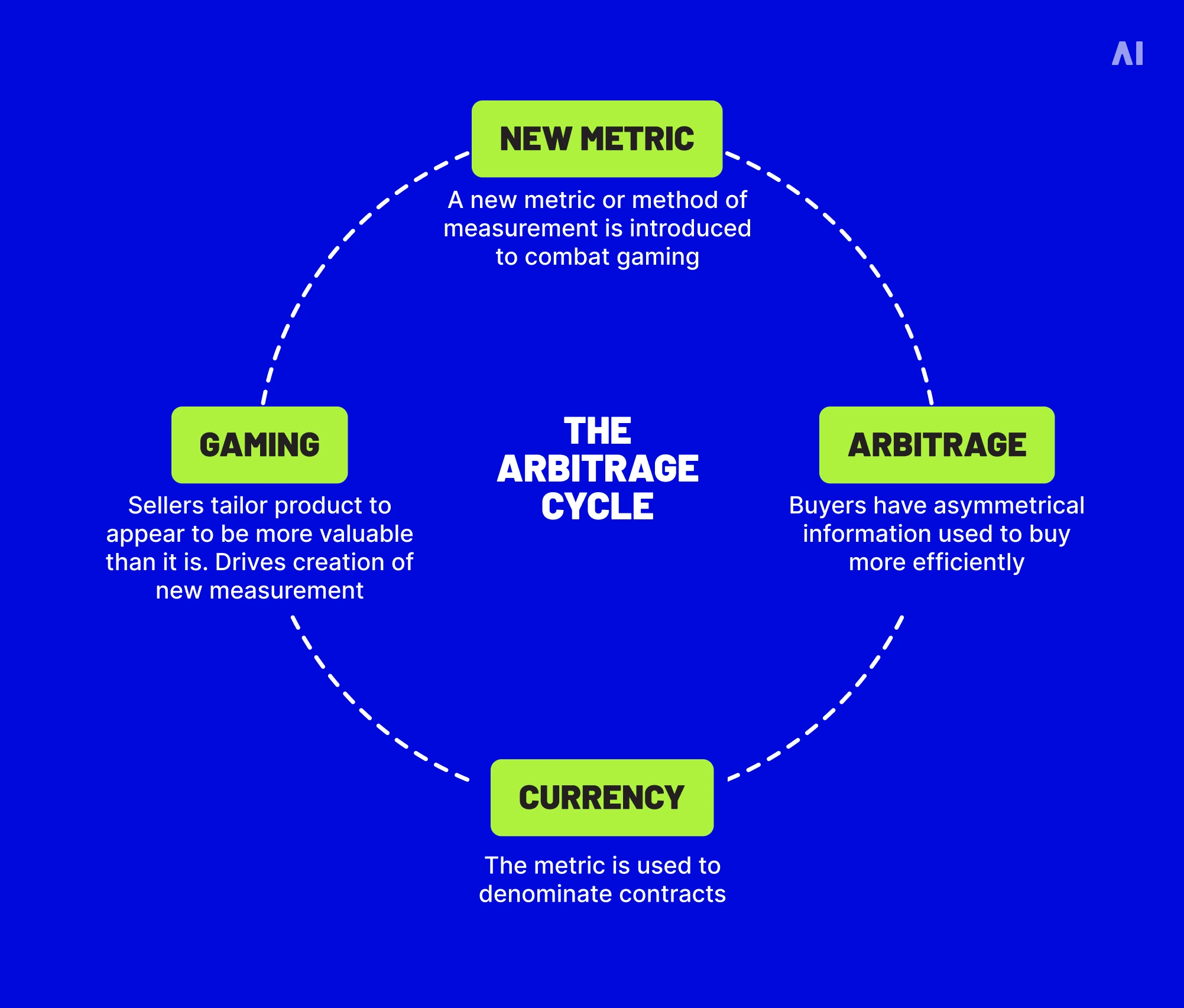
Attention measurement is gaining ground because media has changed faster than the metrics used to compare it. Impressions, reach, viewability, clicks, and conversions remain essential. But they do not provide a consistent view of exposure quality across channels with very different viewing, listening, and interaction patterns.
⚡️Traditional metrics have not failed. The space between delivery and outcome has simply become harder to interpret.
Fragmented Media Creates Different Ways to See, Hear, and Interact With Ads
A CTV impression, an autoplay social video, a display placement, and an audio ad do not create the same opportunity for attention. They also invite different kinds of response. A click can be useful in mobile or display campaigns, but it is often unavailable—or unsuitable as a primary KPI—in CTV, audio, and brand-focused environments.
Platform-defined views and engagements also follow different rules. Comparing them at face value can create a false sense of consistency. This is one of the central problems with relying on platform-reported marketing data.
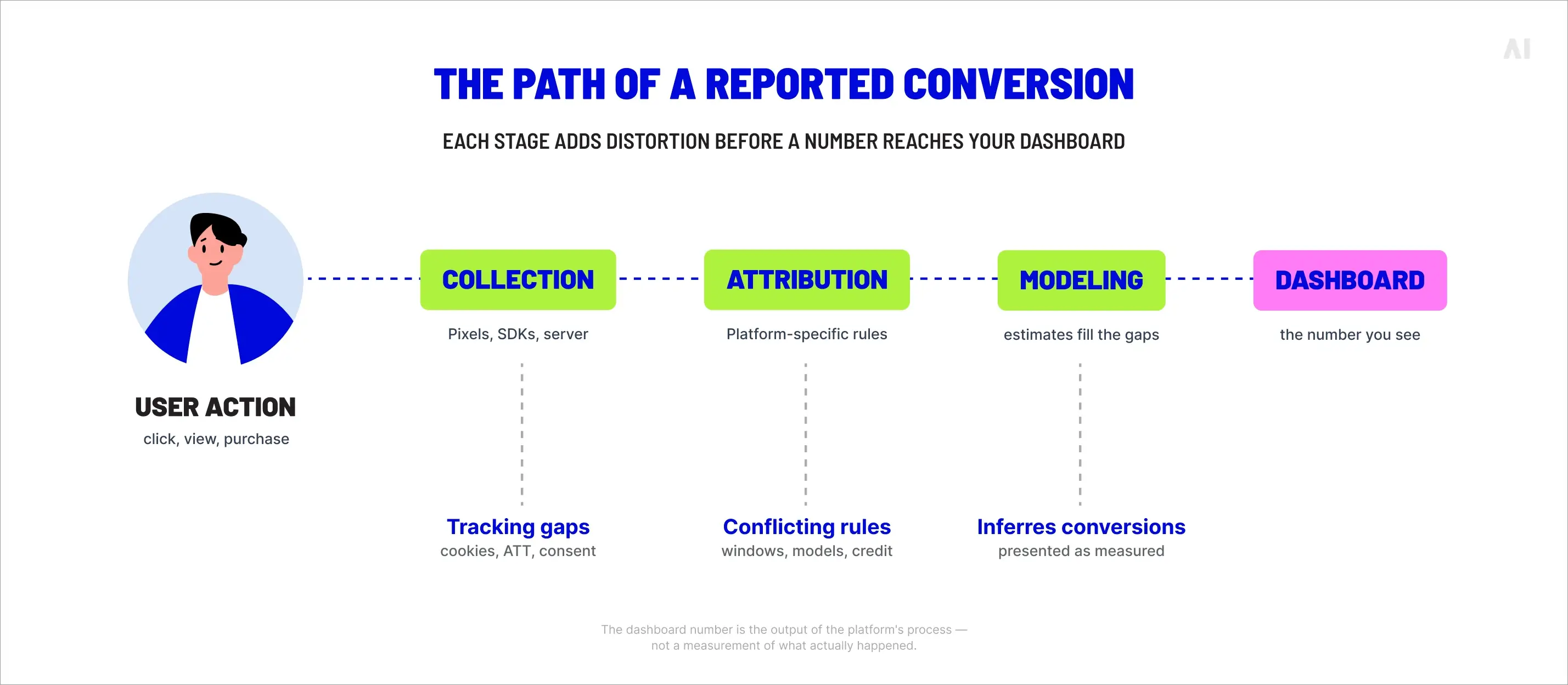
Attention gives advertisers another question to ask across channels: did the exposure create a genuine opportunity to earn human focus? The signals used to answer that question may differ by channel, but the measurement need is shared.
Advertisers Face More Pressure to Connect Media Quality With Outcomes
Marketers must increasingly explain not only how much media they bought, but why that media deserved investment. Delivery and viewability can confirm scale and technical quality. They cannot show whether one environment created a better opportunity to influence awareness, consideration, or action.
Attention can help marketers examine the relationship between media quality and subsequent outcomes. However, a relationship is not proof of causation. If higher-attention placements also produce stronger brand lift or conversion rates, the result supports a hypothesis worth testing. It does not prove that attention caused the improvement.
⚡️When causal evidence is required, marketers still need controlled experiments, holdouts, or incrementality testing.
Industry Standards Are Making Attention Easier to Evaluate
The final IAB and MRC Attention Measurement Guidelines, issued in November 2025, give the industry shared terminology and clearer expectations for data collection, methodology disclosure, model validation, reporting, and auditing. Related marketer guidance also explains how attention can support planning, creative evaluation, campaign optimization, and business objectives.
These resources give advertisers a stronger basis for evaluating provider claims. They do not make every attention score identical or directly comparable. Providers may still use different data inputs, models, calibration methods, scoring scales, and channel coverage.
⚡️Standards make those differences easier to evaluate; they do not make them disappear.
Where Attention Changes Marketing Decisions
Attention becomes strategically useful when it changes the assessment of media or creative—not when it simply adds another dashboard number. Its value lies in exposing false equivalence: placements or assets can look similar through delivery, viewability, clicks, or completion yet offer different conditions for communication.
Reassessing Media Quality Beyond Viewability
Viewability establishes that an ad had an opportunity to be seen. Attention helps marketers ask what that opportunity was worth. Two placements may deliver comparable impressions and viewability while differing in screen coverage, clutter, dwell time, sound, user state, or the likelihood of sustained focus.
A five-month Toyota Spain campaign illustrates the point. IAS reported an attention score of 90 for in-app inventory versus 73 for browser inventory, informing a shift toward the stronger environment. These figures are specific to IAS’s proprietary methodology, so they are not universal benchmarks or directly comparable with another provider’s scores. The broader lesson is that delivery parity does not guarantee equal communication value.
The highest-attention placement is not automatically the best buy. Marketers must still consider incremental reach, frequency, audience quality, cost, suitability, and campaign objectives. Attention improves the media-quality decision; it does not make the decision alone.
Evaluating Creative Beyond Clicks and Completion
Clicks reveal response, while completion shows that content remained on screen or played to a defined point. Neither identifies when audience focus strengthened, faded, or failed to connect the message with the brand.
In a Realeyes study involving more than 150 viewers, an AI-enhanced O-I Glass ad generated 16% more attentive seconds and a 22% higher attentive-view-through rate than the base creative. Yet both versions produced weak brand recognition because the small brand mark did not appear until after five seconds. An asset can hold more focus without using that focus effectively.
Attention data can help teams locate a problem worth testing, such as branding timing, message sequencing, or an early loss of focus. It cannot prove which creative element caused a sale, conversion, or brand lift. That requires controlled testing and outcome measurement.
Adding Attention to Programmatic Decisioning
At programmatic scale, attention is generally a prediction rather than a live observation of every viewer. Models trained on panel, eye-tracking, interaction, placement, and contextual data can contribute to inventory scoring, custom bidding, private marketplaces, and optimization. The IAB and CIMM marketer playbook identifies pre-bid filtering and campaign optimization as applications of predicted attention.
Scale is already substantial. IAS says Stellantis applied its framework across 13 billion measured impressions in 19 countries and more than 20 brands and services. Crucially, the strategy did not assume every impression should maximize attention: higher-attention environments supported richer storytelling, while lower-attention inventory could still serve repetition or efficiency goals.
That is the more mature use of attention in programmatic media: treat it as one weighted signal alongside audience fit, price, reach, frequency, and verified business performance, then test whether the model improves the outcome the campaign was designed to produce.
Why Attention Still Needs Business Outcome Validation
Attention estimates whether advertising received audience focus. Conversions, revenue, brand lift, and incremental impact measure different consequences. These dimensions may be related, but they are not interchangeable. A strong attention score suggests that an impression had greater communication potential; it does not establish that the impression produced a business result.
Historical benchmarks can show that high-attention placements are associated with stronger recall, conversion rates, or sales. Yet those placements may also differ in audience, format, creative, context, price, or frequency. Until an analysis addresses these competing explanations, the relationship remains observational. Benchmarks provide useful context—not causal proof.
The IAB and CIMM Attention Measurement Playbook recommends starting with a control and calibrating attention models against the advertiser’s own outcomes. Its example framework reserves 10–20% of the budget or audience for an ongoing holdout, with randomization at the user, household, placement, or geographic level. The exact design will vary, but the principle is consistent: compare attention-led decisioning with what would have happened without it.
.webp)
This is where incrementality testing in marketing measurement becomes essential. Controlled experiments, holdouts, matched markets, and other causal methods can determine whether attention-based optimization creates additional conversions, revenue, or brand lift—not simply whether attentive impressions accompany better outcomes. Attention identifies a potentially valuable condition; causal measurement tests whether acting on it creates additional value.
Why Attention Should Not Become the Only KPI
Replacing an exposure-centric model with an attention-centric one would reproduce the same problem in a new form. Attention strengthens the measurement system, but it becomes reductive when every campaign is expected to maximize it.
Provider definitions, inputs, model training, and scoring scales also vary. A high score from one provider may not represent the same behavior or probability as a high score from another. Understanding those differences is central to choosing the right attention metrics and determining how much influence each signal should have.
High Attention Does Not Automatically Mean High Business Impact
An ad can attract attention because it is entertaining, surprising, intrusive, or confusing without improving brand memory or motivating action. Attention is evidence of focus, not proof of persuasion.
A vendor-reported Kimberly-Clark study demonstrates the limitation. In a browser-display test, IAS found no significant difference in sales lift between low- and high-attention segments. When video and in-app formats were included in a second test, the average attention score increased 36% and its association with sales strengthened. This is not a universal benchmark, but it shows why attention must be validated within the relevant format, audience, creative, and objective.
Optimizing Only for Attention Can Distort Media Decisions
Maximizing attention without constraints may favor large, interruptive, premium-priced, or limited-scale inventory. A campaign could gain attention while losing affordable reach, audience coverage, cost efficiency, or a positive user experience. It may also undervalue brief exposures that reinforce a familiar brand or prompt action among high-intent audiences.
A stronger approach is objective-constrained optimization. Define the business or communication goal first, then assess attention alongside audience fit, incremental reach, frequency, cost, brand safety, and outcome performance. The weighting will vary by campaign; the final test is whether the revised media decision improves the outcome that matters.
How to Build Attention Into a Modern Measurement Framework
A modern framework should not force every signal to compete for the role of “primary KPI.” Each layer should answer a distinct question: Was the campaign delivered at the intended scale? Did people have an opportunity to notice it? Was attention captured? Did business performance change? Was the investment efficient? Would the outcome have occurred without the advertising?
This layered logic is central to unified marketing measurement, which combines different forms of evidence rather than expecting one methodology to explain the entire customer journey.
Keep Delivery, Reach, and Frequency Metrics
Impressions, reach, and frequency remain essential for understanding campaign scale and distribution. They show whether media was delivered, how broadly exposure was distributed, and whether the same audience encountered the message too often or too rarely.
Attention cannot answer those questions. A placement may generate strong attention among a small audience but contribute little incremental reach. Another may deliver briefer attention at a lower cost across a strategically important audience. Without delivery metrics, marketers cannot judge whether an attention result is scalable, representative, or economically useful.
Add Attention as a Media and Creative Quality Layer
Attention belongs alongside delivery and opportunity-to-see signals, but before conclusions about outcomes. It helps distinguish between impressions that appear equivalent in reporting but create different conditions for communication.
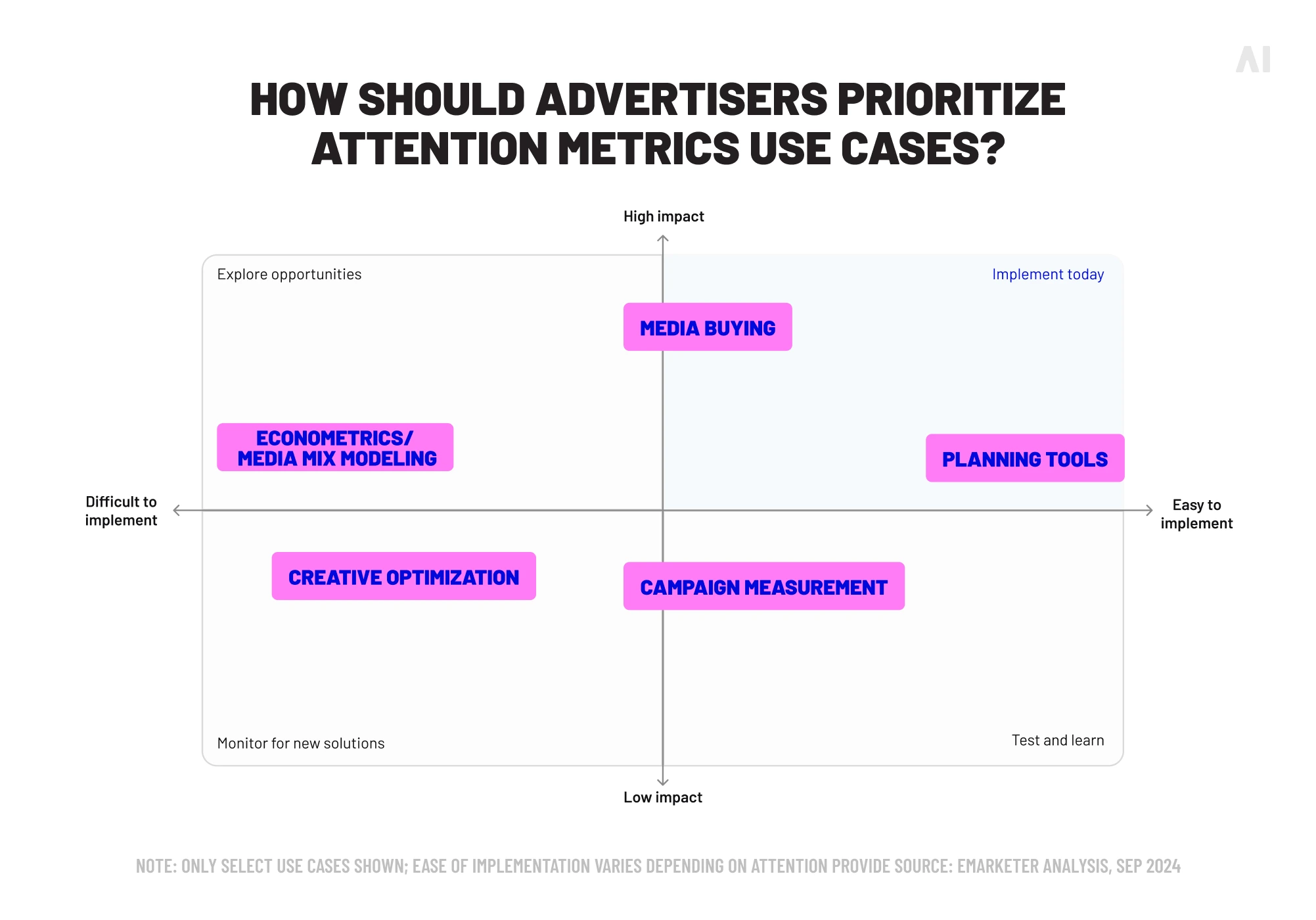
Implementation should begin with a decision problem, not a desire to add a newer metric. A media team may need to compare placement quality, while a creative team may need to identify where audience focus declines. Those use cases require different signals and levels of granularity.
The IAB and CIMM marketer playbook identifies four principal applications: inventory assessment, campaign optimization and media strategy, creative testing, and media mix modeling. The breadth reinforces an important selection principle: evaluate providers according to the channel, format, methodology, transparency, and decision they must support—not according to which provider produces the highest score.
Connect Attention to Conversion and Business KPIs
Attention becomes strategically valuable when it is analyzed against the outcome a campaign was designed to influence. For brand campaigns, that may be awareness, recall, consideration, or preference. For performance campaigns, it may be qualified visits, conversions, acquisition cost, revenue, or lifetime value.
The analysis should determine whether attention adds predictive or diagnostic information beyond existing metrics. Does it explain performance differences between similarly viewable placements? Does it identify creative weaknesses later confirmed through brand-lift or conversion testing? Results should be examined by audience, format, channel, and creative because aggregate relationships can conceal important variation.
Use Incrementality When You Need Causal Evidence
Attention measurement asks whether an ad captured focus and how exposure quality varied. Incrementality asks what happened because the advertising ran—or because the campaign adopted attention-led decisioning.
Controlled holdouts, randomized experiments, matched-market studies, and other causal methods estimate that counterfactual. They can show whether an attention-informed strategy generated outcomes beyond those expected under the existing approach.
The two disciplines are complementary. Attention can reveal where media has greater communication potential; causal measurement tests whether acting on that insight creates additional business value. Together with delivery, outcome, and efficiency metrics, they produce a framework that is both more explanatory and more accountable.
How AI Digital Connects Media Quality Signals to Business Performance
Fragmented media creates more than a data-volume problem. It creates an interpretation problem: marketers must determine which signals describe delivery, which indicate media quality, and which demonstrate business performance across platforms that report success differently.
AI Digital approaches this challenge as a broader intelligence system. Elevate by AI Digital supports research and intelligence, strategic planning, optimization, reporting, and AI-assisted analysis within a KPI-led framework. According to AI Digital, the platform processes 150 billion monthly data points and centralizes core campaign metrics across more than 12 integrated DSPs, as well as search and social environments. Its role is to help teams turn fragmented cross-channel information into decisions connected to campaign goals.
That process begins before optimization. Research helps clarify the audience, competitive environment, and available opportunities. Planning translates that intelligence into budgets, channels, timelines, and measurable objectives. Optimization evaluates campaign performance against those objectives, while consolidated reporting helps teams interpret results across platforms rather than relying on each platform’s preferred definition of success. Elevate’s marketing mix modeling capability adds another perspective by examining cross-channel influence and budget allocation.
Attention can contribute to this wider measurement strategy, but its role should be described precisely. Elevate is not presented as a proprietary attention-measurement system, an eye-tracking solution, or a platform with a standard native attention-provider integration. When compatible external attention data is available, it can instead be considered as an additional media-quality signal alongside delivery, audience, cost, conversion, and revenue data.
The strategic question is not whether attention can be added to a dashboard. It is whether the signal helps explain performance differences, improves a planning or optimization decision, and remains connected to the KPI the campaign is expected to influence. That is how media-quality evidence becomes business intelligence rather than another isolated score.
Move Beyond Traditional Metrics Without Abandoning What Still Works
Attention measurement fills an important gap between an ad being delivered and an audience producing a measurable response. It gives marketers a clearer view of exposure quality, but it does not make established advertising metrics obsolete.
A stronger framework keeps each measurement layer in its proper role. Impressions, reach, and frequency establish scale and distribution. Viewability or audibility indicates whether an opportunity for exposure existed. Attention adds evidence about the quality of that exposure. Brand and performance metrics track audience and business response. Cost metrics show whether results were achieved efficiently, while controlled experiments and incrementality methods test whether advertising caused additional impact.
The future of measurement is therefore not a choice between traditional metrics and attention. It is a better combination of evidence. Marketers that preserve delivery discipline, add more meaningful quality signals, and validate those signals against business outcomes can make more informed decisions without mistaking any single KPI for the complete story.
To explore how a layered measurement strategy can support your media planning and performance goals, get in touch with AI Digital.


