The digital advertising landscape has moved from relative simplicity to a complex, layered ecosystem spanning platforms, data environments, and optimization engines. That evolution has given rise to advertising governance—a discipline that brings strategic alignment, data visibility, and performance accountability into a single framework across an increasingly fragmented environment. For organizations that need to spend intelligently at scale, it has moved from useful to essential.
What follows explains what advertising governance involves, why the current moment demands it, what it includes in practice, and why it operates as a foundational model rather than a bolt-on.
💡 Related reads:
- What are walled gardens in digital advertising—definition, examples & why they matter
- Walled gardens vs open internet
What is advertising governance?
Advertising governance refers to the strategic framework that aligns decision-making, measurement standards, data visibility, and optimization processes across all advertising platforms and partners an organization works with. It is not a single tool, dashboard, or compliance checklist. It is the connective tissue that ensures everyone involved in media planning, buying, and evaluation is operating from the same set of definitions, objectives, and accountability structures.
The distinction deserves emphasis. Governance is not about regulatory compliance—though compliance may be one of its outputs. It is about creating shared definitions of performance, ensuring consistent evaluation of results regardless of channel, and enabling coordinated campaign management even when campaigns span dozens of systems with incompatible reporting standards.
Structural forces drive the need. The martech landscape now contains over 15,000 commercial solutions. Yet according to Gartner, marketers are using just 33% of their stack's capabilities—down from 58% in 2020. Shortage of tools is not the problem any organization faces today. Shortage of the frameworks to align those tools is.
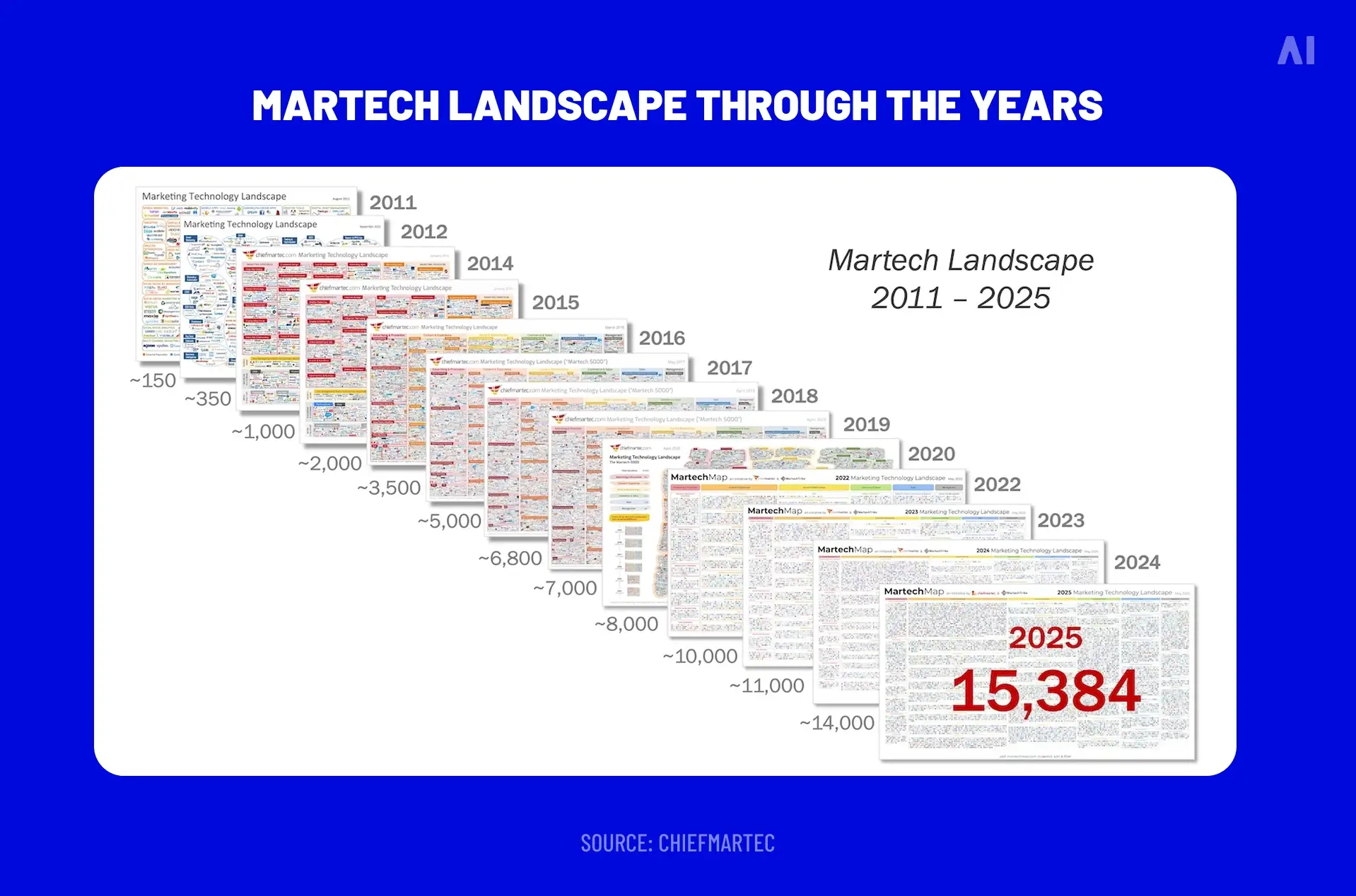
That gap is precisely where governance operates. It defines how data is interpreted, how success is measured, and how strategic decisions are coordinated across platforms, establishing the ground rules before a single dashboard is opened.
💡 Related read: Programmatic advertising
Advertising governance vs advertising tools
There is a persistent tendency in digital advertising to respond to complexity by adding more technology. A new dashboard. Another analytics layer. A different attribution platform. The assumption is that if the right tool exists, coordination will follow.
It rarely does.
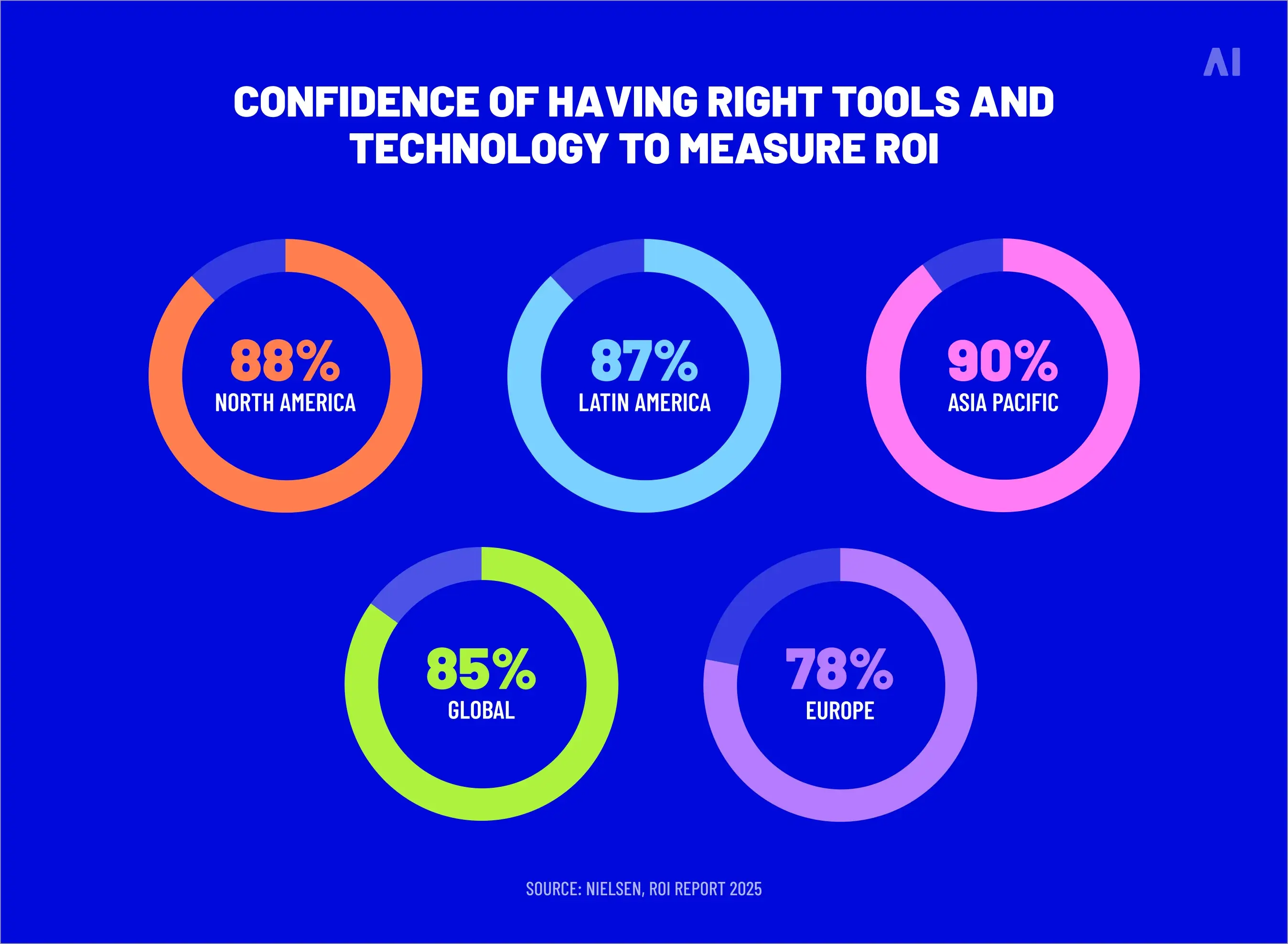
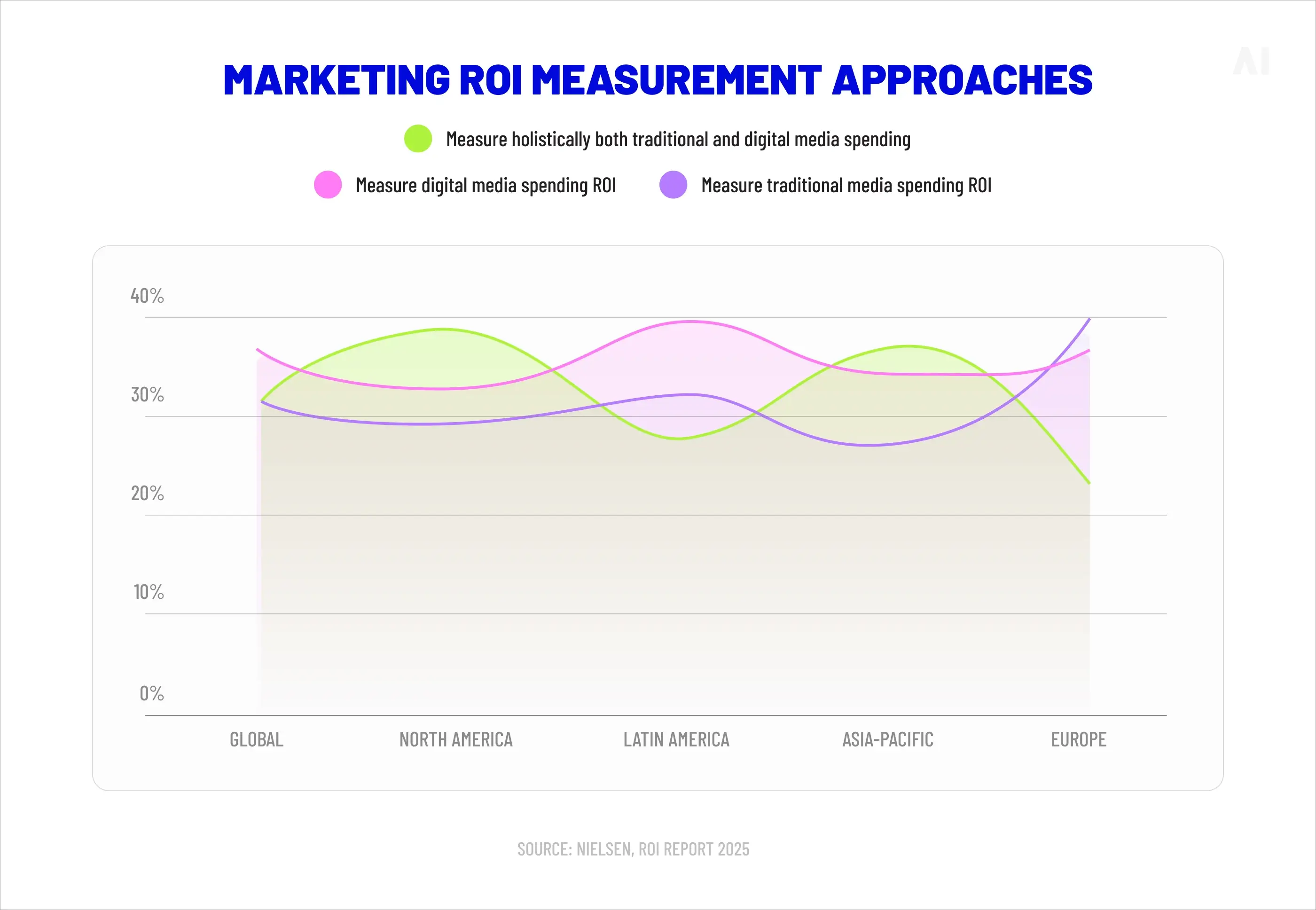
Tools execute. Governance defines what those tools should be executing toward. A cross-platform reporting dashboard, for instance, can aggregate data from multiple sources—but it cannot tell a team whether a CTV impression and a paid social impression should be weighted equally against a shared KPI. It cannot resolve the fact that one platform attributes conversions on a seven-day click window while another uses a one-day view-through model. Mistaking these for technical problems leads to technical solutions that miss the point. The issues are definitional, and governance is how they get resolved.
According to industry analysis, 70% of marketers say that identifying audiences across touchpoints has become harder than ever. Adding another tool to a fragmented stack does not address this. Establishing a governance framework that standardizes identity resolution approaches, defines how audience overlap is measured, and aligns teams on a common methodology — that does.
{{26-What-Is-Advertising-Governance-in-a-Fragmented-Ecosystem-1="/tables"}}
The distinction has practical teeth. When organizations substitute tooling for governance, technology accumulates without coordination improving alongside it. The pattern repeats: higher costs, lower utilisation, and a persistent blind spot at the ecosystem level.
💡 Related read: Fragmentation accelerates
Why governance is emerging in fragmented digital ecosystems
Media investment today is distributed across programmatic display, CTV, retail media networks, paid social, audio, digital out-of-home, and a growing number of identity and data solutions. Each of these environments operates with its own measurement framework, its own optimization signals, and its own reporting standards. They do not share data easily, and in many cases, they are designed not to.
The scale of this fragmentation is significant. Walled gardens—led by Alphabet, Meta, and Amazon—generated approximately $422 billion in advertising revenue in 2024. By 2027, walled garden platforms are projected to capture 83% of global digital advertising revenue, leaving just 17% for the open internet. These platforms restrict cross-platform audience data, enforce proprietary attribution models, and limit how performance information can be exported or compared.
For brands and agencies operating across both walled and open environments, this creates an acute coordination problem. Each platform tells a version of the story that flatters its own role. Without governance, there is no mechanism to reconcile those versions—no shared framework for deciding which signals to trust, how to allocate budget based on genuine incremental value, or how to evaluate whether the overall media investment is performing as intended.
{{26-What-Is-Advertising-Governance-in-a-Fragmented-Ecosystem-2="/tables"}}
Digital advertising governance provides that mechanism. It does not eliminate fragmentation. It creates the structure required to operate within it: consistent measurement protocols, aligned definitions of success, and coordinated decision-making across environments that would otherwise remain siloed.
💡 Related reads:
Why platform-level optimization often fails
Every major advertising platform optimizes toward its own internal signals. Google maximizes outcomes within Google's ecosystem. Meta does the same within its family of apps. Amazon optimizes for its own retail and streaming environments. Individually, each platform's optimization logic is often quite effective. The problem arises when these isolated optimization efforts are treated as components of a single strategy.
They are not. They are parallel strategies, each pursuing channel-specific objectives that may or may not align with the advertiser's broader business goals.
This dynamic produces several well-documented inefficiencies:
- Duplicated reach. The same user may be targeted across multiple platforms with no frequency management between them, inflating costs without proportionally increasing impact.
- Inconsistent attribution. Each platform claims credit for conversions using its own model, often resulting in total attributed conversions that exceed actual sales—sometimes substantially.
- Frequency overlap. Without cross-platform visibility, advertisers cannot control how many times a single user sees the same message across different environments.
- Inefficient budget allocation. Platforms that report the strongest results within their own measurement framework attract more spend, regardless of whether that spend is generating genuine incremental value.
The financial cost of this misalignment is not trivial. The ANA's Q2 2025 Programmatic Transparency Benchmark found that $26.8 billion in global programmatic media value is lost annually to inefficiencies—a 34% increase from $20 billion just two years earlier. While not all of that waste stems from platform-level optimization gaps, a significant portion reflects the absence of ecosystem-level coordination: redundant supply paths, conflicting measurement, and budget flowing toward proxy metrics rather than genuine business outcomes.
Governance addresses this by aligning optimization decisions with broader campaign objectives. Rather than allowing each platform to optimize independently toward its own metrics, a governance framework establishes how performance is evaluated across the full media ecosystem—and ensures that budget allocation reflects that cross-platform view.
💡 Related read: Multi-touch attribution
What advertising governance actually includes
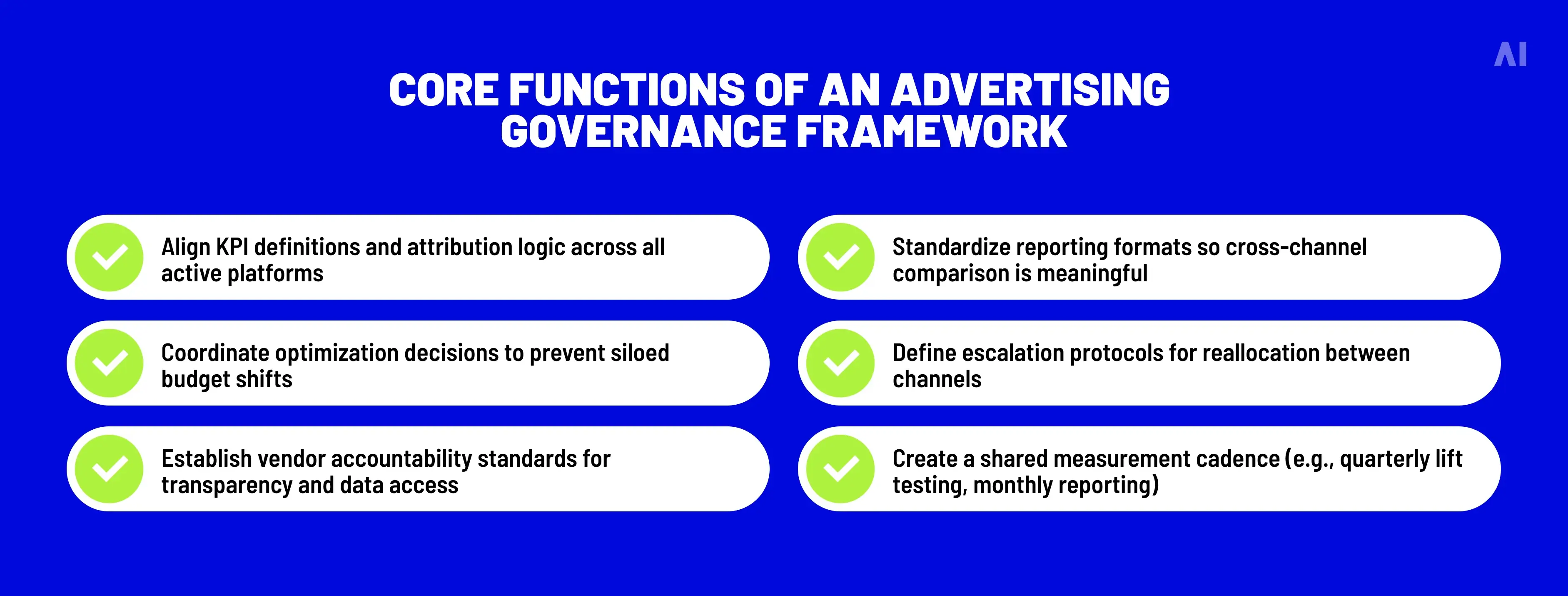
Advertising governance is often discussed in strategic terms, but it only works when it is operationalized. In practice, a governance framework for advertisers typically includes three interconnected components: shared performance definitions, cross-platform reporting standards, and coordinated optimization processes.
These are not aspirational principles. They are the structural elements that make governance operational—the mechanisms through which strategy translates into consistent execution across fragmented systems.
According to the 2025 Gartner Marketing Technology Survey, CMOs currently oversee an average of nine marketing channels, with 20% already in the process of adopting new ones. Managing that breadth without shared governance structures is the operational equivalent of running nine separate businesses under one brand—each with its own definition of success.
Shared performance definitions
Governance begins with alignment on what performance means. This sounds straightforward, but in practice it is anything but.
Different platforms measure success using fundamentally incompatible metrics. A video completion rate on CTV is not the same as a view-through conversion on display. A click on a retail media ad carries different intent signals than a click on a paid social placement. When each channel defines its own KPIs and attribution windows, cross-platform comparison becomes unreliable at best and misleading at worst.
A governance framework addresses this by establishing common KPI definitions that apply across all channels. This might include standardized definitions for what constitutes a completed view, how conversions are attributed, what lookback windows apply, and how incrementality is measured. The goal is not to impose a single metric on every channel—different channels serve different functions—but to ensure that when results are compared, the comparison is meaningful.
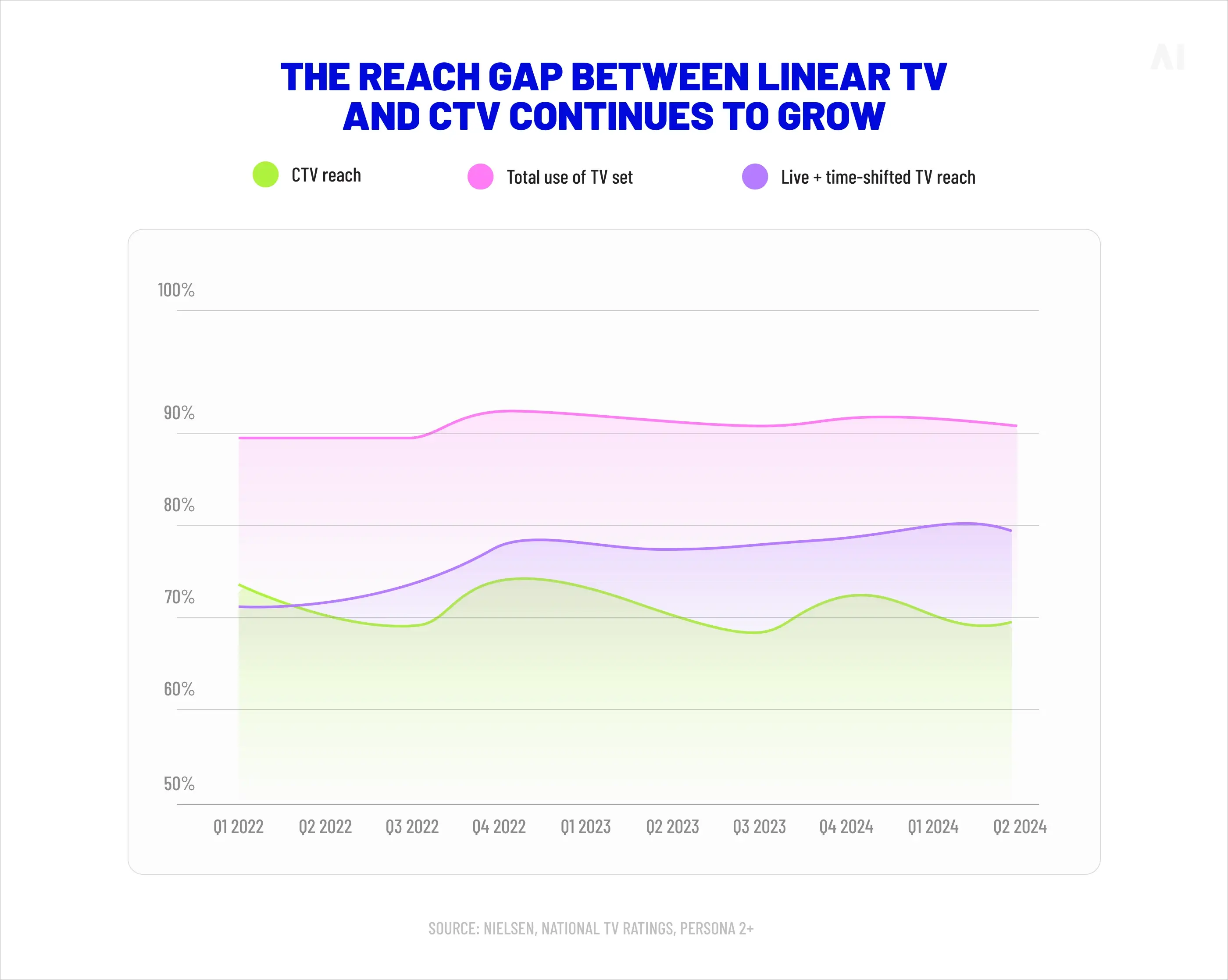
CTV's rapid growth makes this particularly urgent. CTV's share of programmatic spend jumped to 44.2% in Q2 2025, up from 30.4% the previous quarter. Yet the ANA's own data characterizes CTV as having lower media productivity rates and widening performance gaps relative to more established programmatic environments. Without shared performance definitions, brands risk pouring budget into a high-growth channel while lacking the measurement framework to evaluate whether that investment is delivering proportional value.
{{26-What-Is-Advertising-Governance-in-a-Fragmented-Ecosystem-3="/tables"}}
💡 Related read: Digital marketing KPIs
Cross-platform reporting standards
Once performance definitions are aligned, the next step is ensuring that reporting structures reflect that alignment. This is the difference between having data and having insight.
The typical organization today runs on isolated dashboards—one for programmatic display, another for paid social, another for CTV, and so on. Marketers now rely on dozens or more tools, many covering overlapping functions. Each generates its own reports. None were built to communicate with the others.
Cross-channel performance reporting under a governance framework introduces consistent structures that unify insights across platforms. This does not necessarily mean a single mega-dashboard—though it can. More fundamentally, it means standardizing how data is collected, normalized, and presented so that teams can evaluate ecosystem-level performance without manually reconciling conflicting reports.
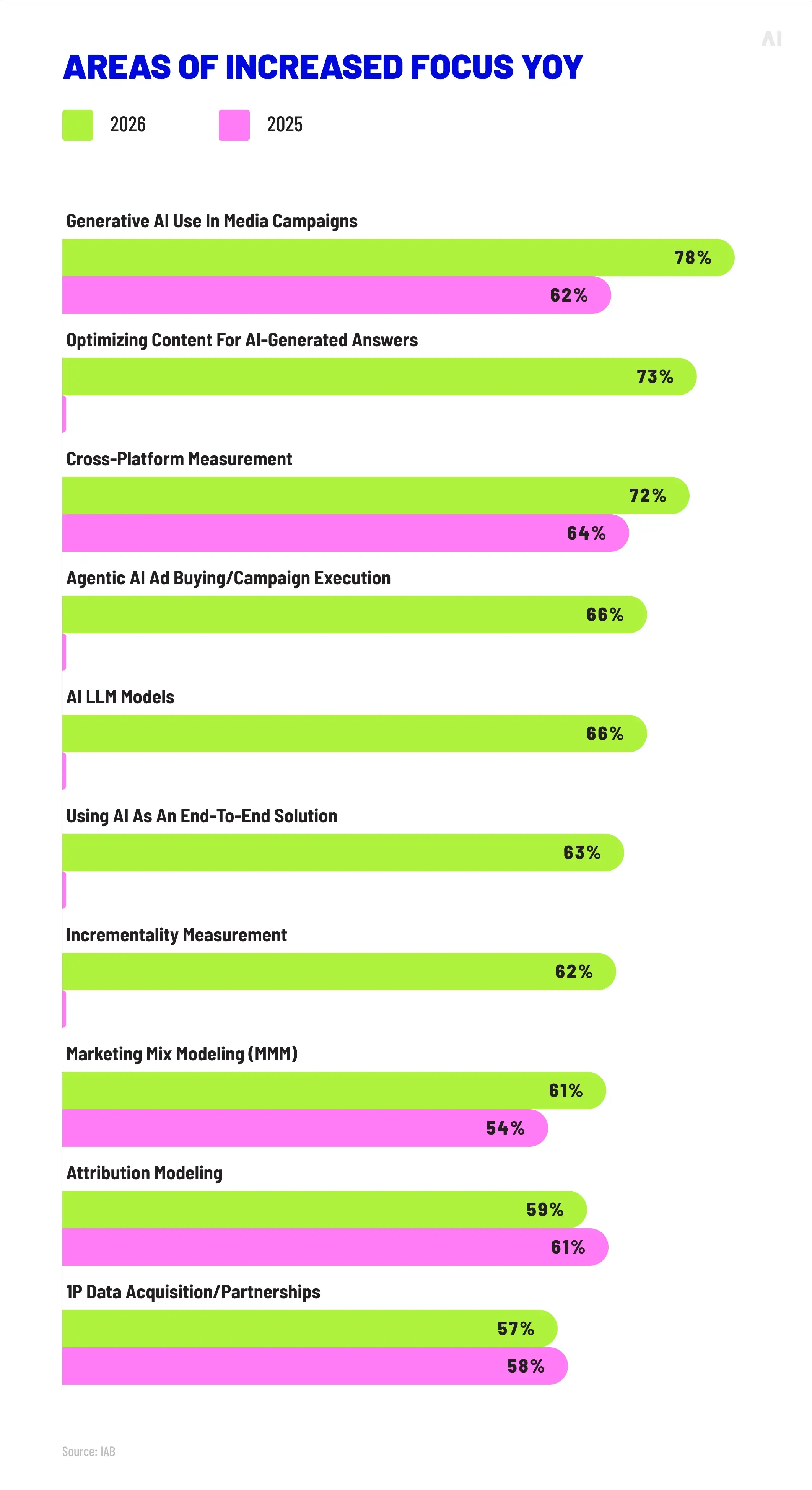
The practical benefits are significant. When reporting is governed by shared standards, teams can identify true frequency across environments, understand how different channels interact along the customer journey, and make budget reallocation decisions based on a unified view rather than platform-specific claims. It is the difference between knowing how each channel performed in isolation and understanding how the entire media investment performed as a system.
💡 Related reads: Alternatives to walled garden reporting
Coordinated optimization processes
The third component of operational governance is optimization coordination. This is where governance moves from measurement into action.
In the absence of governance, optimization happens in silos. The display team optimizes display. The CTV team optimizes CTV. The social team optimizes social. Each team may be doing excellent work within their channel. But without coordination, their collective efforts can produce contradictory outcomes: budget shifts that benefit one channel at the expense of the overall strategy, targeting overlaps that waste spend, or creative sequencing that makes no sense from the consumer's perspective.
Governance frameworks define how optimization decisions are made across platforms. They establish escalation protocols for budget reallocation, set rules for how targeting strategies interact across channels, and ensure that performance signals from one environment inform decisions in others. The result is a media operation that functions as an integrated system rather than a collection of independent efforts.
Operational implications for brands and agencies
Advertising governance resists the project mindset—a defined start, a defined end, a deliverable. It represents a deeper shift in how marketing organizations operate, reaching into team structures, vendor relationships, and daily workflows.
At the most basic level, governance requires teams to align on KPI definitions before campaigns launch, not after they report. It requires optimization strategies to be coordinated across platforms, with clear ownership of cross-channel decisions. It requires vendor and partner relationships to be managed within a shared accountability framework, rather than as independent service agreements.
This often means closer collaboration between marketing, analytics, and technology teams than most organizations are accustomed to. It also means evolving from a model where each channel is managed as a standalone function toward one where the broader advertising ecosystem is orchestrated as a whole.
And the results show up in the numbers. As mentioned earlier, the Gartner 2025 Marketing Technology Survey found that only 49% of martech tools are actively used, and just 15% of organizations qualify as high performers—defined as those meeting strategic goals and demonstrating positive ROI. High performers and the rest often run comparable technology. The gap lives in governance: the ability to align tools, teams, and processes toward common objectives.
💡 Related read: Marketing technology
Advertising governance as an operating model
At maturity, advertising governance operates as a strategic operating model rather than a checklist or quarterly review. It defines how brands orchestrate technology partners, media inventory, and data environments while retaining control over performance outcomes.
Positioning governance as continuous rather than finite is what makes this work. Markets evolve. Platforms alter their measurement frameworks. New channels surface. A mature governance framework absorbs these shifts without demanding that the organization tear down its evaluation standards and start over each time a platform rethinks its attribution approach.
And effective governance frameworks share several characteristics:
- They are vendor-neutral, meaning they do not favor one platform's data or measurement approach over another's.
- They are transparent, providing clear visibility into how budget is allocated, how performance is measured, and where inefficiencies exist.
- And they are coordinated, ensuring that decisions made in one part of the ecosystem are informed by data and objectives from the rest of it.
{{26-What-Is-Advertising-Governance-in-a-Fragmented-Ecosystem-4="/tables"}}
The Open Garden Framework is one example of this approach in practice. Designed as a cross-platform governance model for programmatic advertising, it coordinates fragmented advertising systems while preserving transparency and strategic flexibility—enabling advertisers to operate across multiple DSPs, SSPs, and data environments without being locked into any single platform's proprietary ecosystem.
The next layer: cross-platform measurement governance
Once a governance framework is in place, the next challenge is ensuring that measurement itself is governed consistently across platforms. This is where many organizations discover the deepest gaps—not in their data, but in how that data is structured, interpreted, and acted upon.
Cross-platform measurement governance focuses on aligning attribution models, reporting standards, and performance metrics across all channels and environments. It ensures that when a CTV campaign reports a certain lift, that number is comparable to the lift reported by a display campaign, a paid social campaign, or a retail media activation. Without this layer, governance frameworks risk producing coordinated strategies that are still evaluated using incompatible measurement methodologies—a contradiction that undermines the entire exercise.
This represents the next stage in building a coordinated advertising ecosystem. It also represents a significant opportunity for brands and agencies willing to invest in the structural work required to make it function.
For organizations looking to explore how governance frameworks, cross-platform coordination, and vendor-neutral media execution can work together in practice, AI Digital's managed services, supply management, and intelligence platform are designed to support exactly this kind of ecosystem-level oversight—from media planning and DSP-agnostic execution to transparent performance evaluation across channels. Get in touch to discuss how these capabilities align with your specific media environment.
💡 Related read: Cross-platform measurement governance in digital advertising