Walled Gardens vs Open Internet: Control, Transparency, and Trade-Offs in Digital Advertising

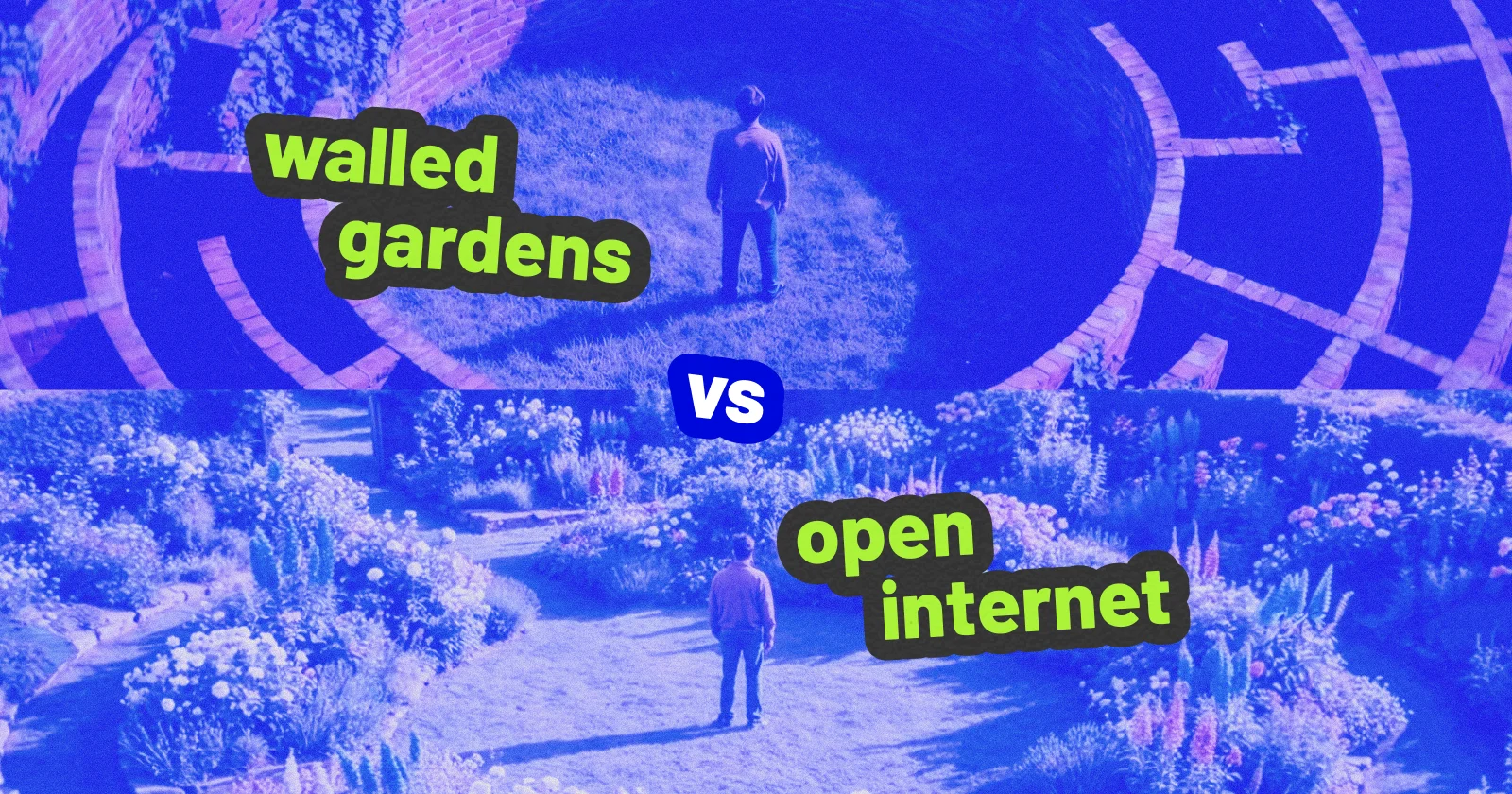
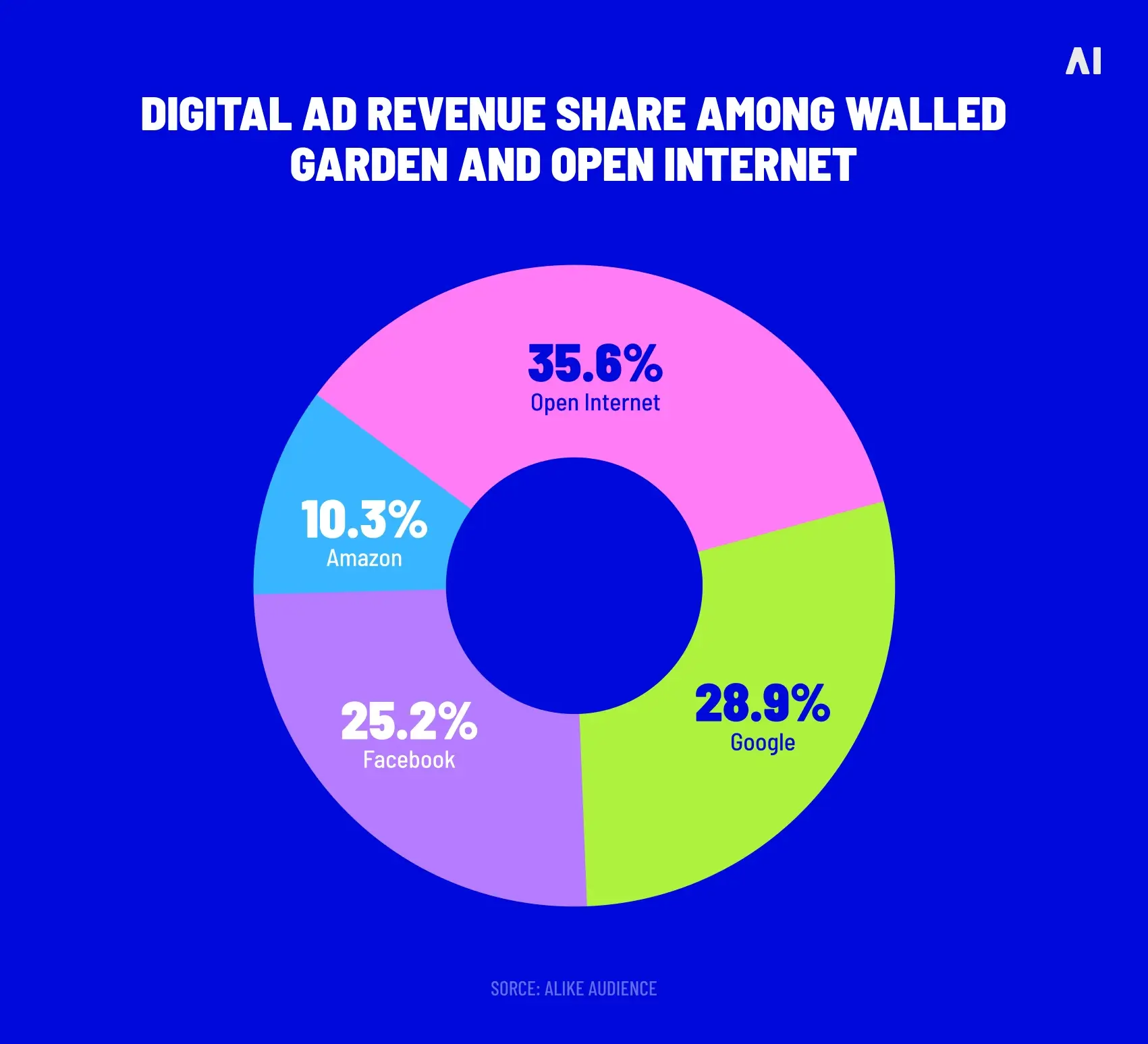
The walled garden vs open internet debate is now central to modern digital advertising. As global ad spend continues to grow, marketers are investing across two very different ecosystems: closed platforms like Google, Meta, and Amazon, and the broader, decentralized open web.
Industry forecasts from GroupM and IAB estimate that global digital ad spend will exceed $700 billion in 2026, with a significant share concentrated in these large platforms. At the same time, open web programmatic advertising continues to power a large portion of display and video inventory, reinforcing the coexistence of both models.
Understanding the difference between walled garden and open internet environments is critical because each model operates on fundamentally different principles.
- Walled gardens centralize data, media buying, and measurement within a single platform
- Open internet advertising relies on a distributed ecosystem of publishers, SSPs, and DSPs
These structural differences directly affect control, transparency, and performance measurement.
From a strategic perspective, the distinction comes down to how control is exercised.
- Walled gardens offer efficiency, scale, and deterministic targeting, but limit visibility and data access
- The open web provides greater transparency, flexibility, and supply path control, but requires more operational effort
This divide is becoming more pronounced as privacy regulations like GDPR and platform changes such as App Tracking Transparency reshape how data can be collected and used.
In reality, open web vs walled garden advertising is not a binary choice. Most advertisers now use both, building hybrid strategies that balance reach, performance, and control across multiple platforms.
This article explores how walled gardens vs open web ecosystems work, where they differ structurally, and what trade-offs marketers must consider when navigating the increasingly fragmented open internet vs walled gardens landscape.
{{26-Walled-Gardens-vs-Open-Internet-Control-Transparency-Trade-Offs-2="/tables"}}
What are walled gardens in digital advertising?
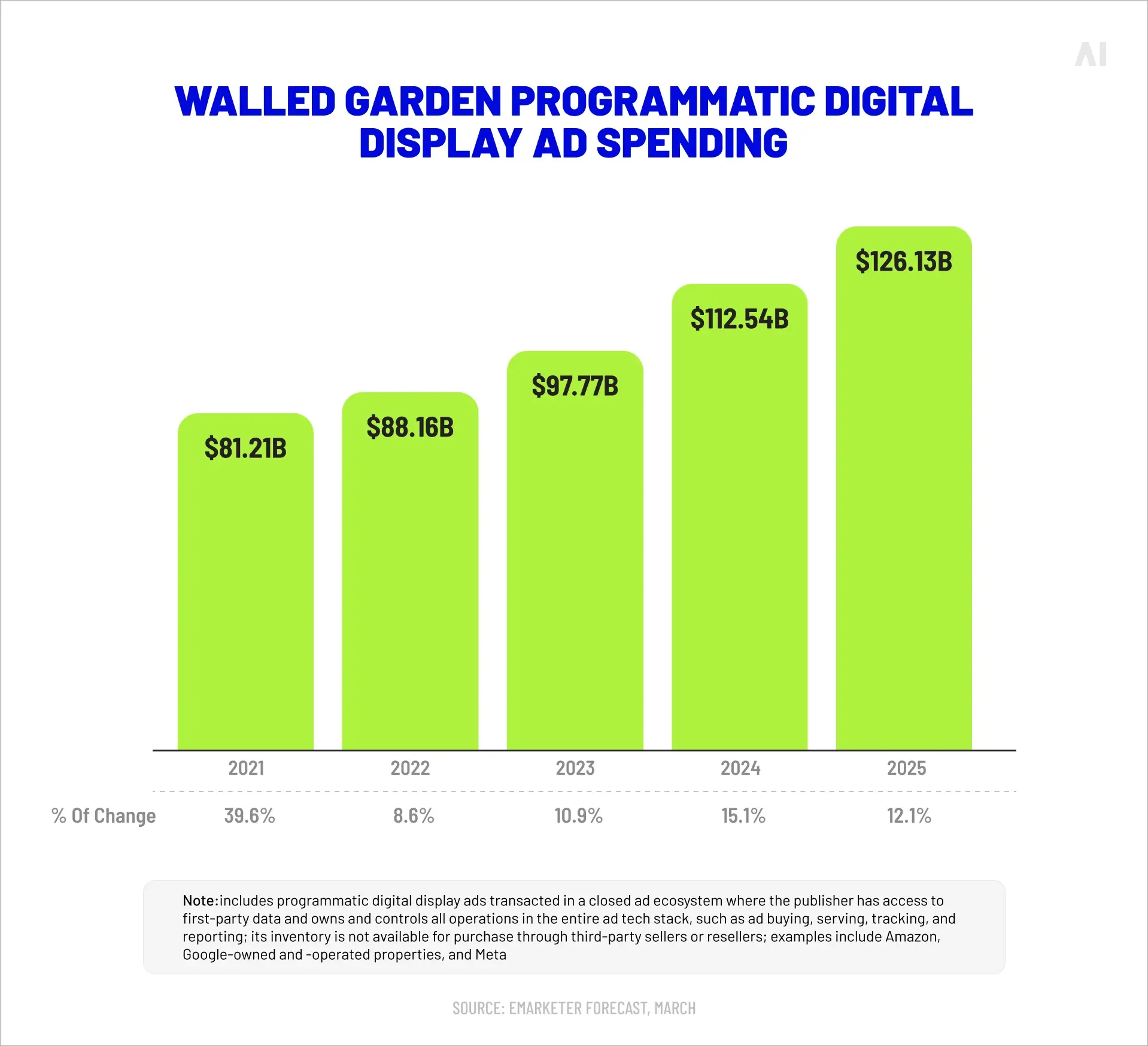
Walled gardens are closed digital advertising ecosystems where a single platform controls user data, media inventory, targeting capabilities, and measurement systems within its own environment. In this model, advertisers do not access raw user-level data or external infrastructure—instead, they operate entirely within the platform’s tools, interfaces, and predefined rules.
The most prominent examples of walled gardens include Google, Meta, and Amazon. These platforms aggregate vast amounts of first-party data from user activity—search behavior, social interactions, or purchase history—and use it to power highly precise targeting and optimization systems.
From an infrastructure perspective, walled gardens are vertically integrated. This means the platform manages:
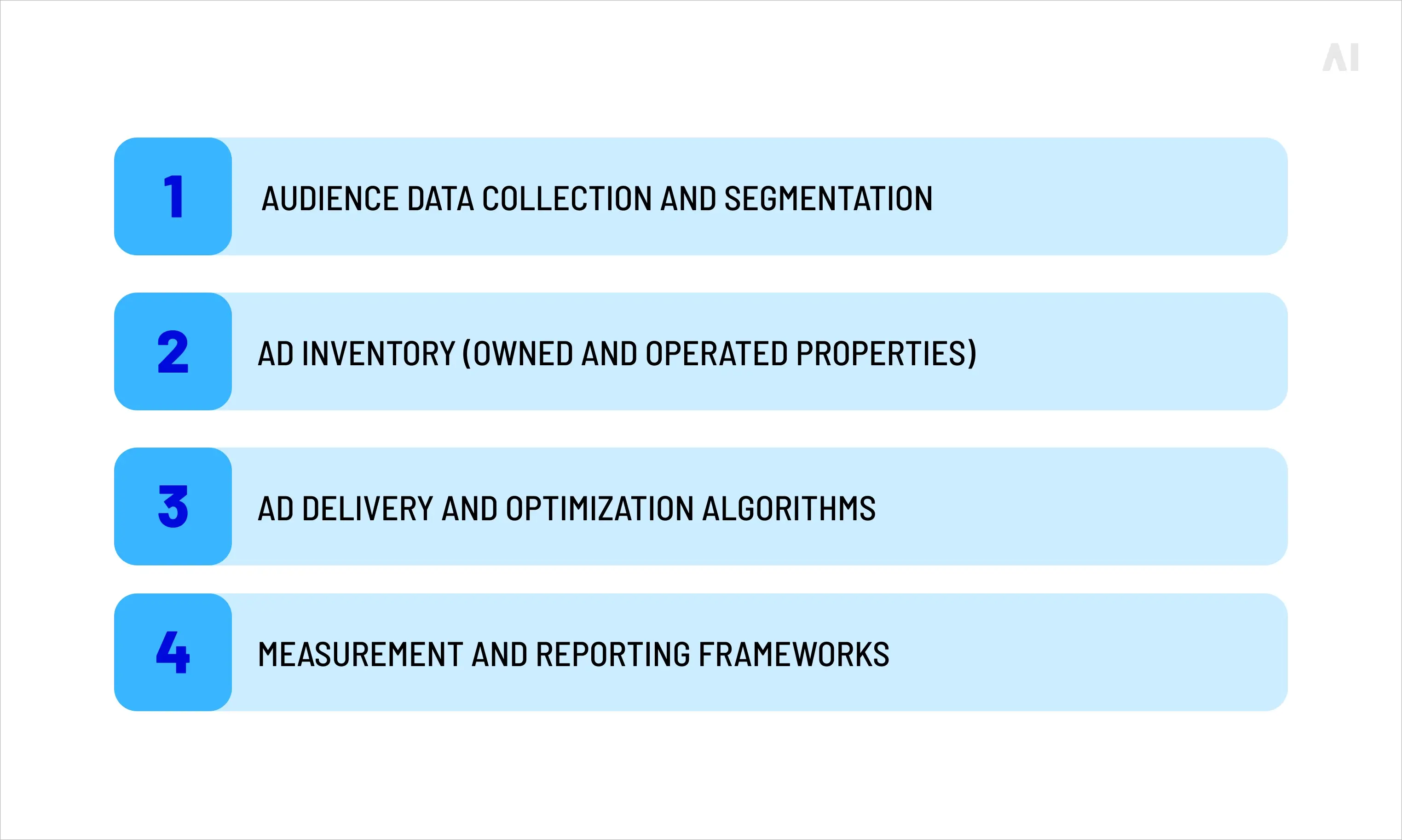
As a result, advertisers benefit from ease of execution, scale, and deterministic targeting, but they are also constrained by limited transparency. For example, campaign performance is measured using platform-defined metrics, and cross-platform data portability is often restricted.
In practice, this creates a controlled environment where advertisers can efficiently reach large audiences, but must accept that visibility into how impressions are priced, delivered, and attributed is partially opaque.
⚡️For a deeper breakdown of how these ecosystems function, see AI Digital’s guide on What Are Walled Gardens in Digital Advertising: Definition, Examples & Why They Matter in 2026.
What is the open internet in digital advertising?
The open internet in digital advertising refers to the decentralized ecosystem outside of major platform-controlled environments. Unlike walled gardens, it is not owned or governed by a single company. Instead, it consists of a network of publishers, ad tech platforms, and marketplaces that enable advertisers to buy and manage media across a wide range of digital properties.
In the open web vs walled garden advertising context, the open internet operates through interoperable technologies such as demand-side platforms (DSPs), supply-side platforms (SSPs), and ad exchanges. These systems work together to facilitate programmatic buying, allowing advertisers to access inventory from multiple sources in a more flexible and transparent way.
Campaigns on the open internet typically run across:
- Publisher websites and mobile apps (news sites, blogs, niche content platforms)
- Programmatic exchanges and marketplaces where inventory is bought and sold in real time
- Independent ad networks that aggregate inventory across multiple publishers
- Connected TV (CTV) environments outside closed ecosystems
💡A key characteristic of the open internet is that advertisers have greater control over where ads appear, how inventory is sourced, and how supply paths are optimized. Unlike walled gardens, where data and measurement are restricted within the platform, the open internet allows for third-party verification, independent measurement, and more granular reporting.

⚡️However, this flexibility comes with increased complexity. Advertisers must navigate multiple partners, manage data across systems, and ensure quality and efficiency across fragmented supply chains. For a deeper explanation of how this ecosystem works, see: Open Internet: What It Is and Why It Matters in Digital Advertising.
Why this comparison matters for modern advertisers
The walled garden vs open internet comparison is critical because each ecosystem is built on fundamentally different mechanics that directly impact campaign outcomes. These differences influence how audiences are reached, how performance is measured, and how much control advertisers retain over execution.
At a high level, the contrast comes down to how data, infrastructure, and optimization are structured. The table below outlines the key trade-offs between walled gardens vs open web environments.
{{26-Walled-Gardens-vs-Open-Internet-Control-Transparency-Trade-Offs-1="/tables"}}
💡Understanding the difference between walled garden and open internet environments helps advertisers make more deliberate decisions about where and how to invest.
Rather than relying on a single model, marketers can align specific campaign goals—such as performance efficiency, reach expansion, or measurement clarity—with the ecosystem best suited to deliver those outcomes.
In practice, this comparison enables more balanced, data-informed media strategies, especially as fragmentation across platforms continues to increase.
Structural design differences between the two ecosystems
The walled garden vs open internet distinction is fundamentally a question of architecture. Each ecosystem is built on a different structural model, which directly determines how data flows, how inventory is accessed, and how campaigns are executed.
At a high level:
- Walled gardens rely on centralized, platform-controlled systems
- The open internet operates through a distributed, interoperable ad tech stack
These structural differences shape everything from targeting precision to measurement transparency.
Platform-controlled environments
Walled gardens operate as vertically integrated ecosystems, where a single platform controls the entire advertising workflow.
This includes:
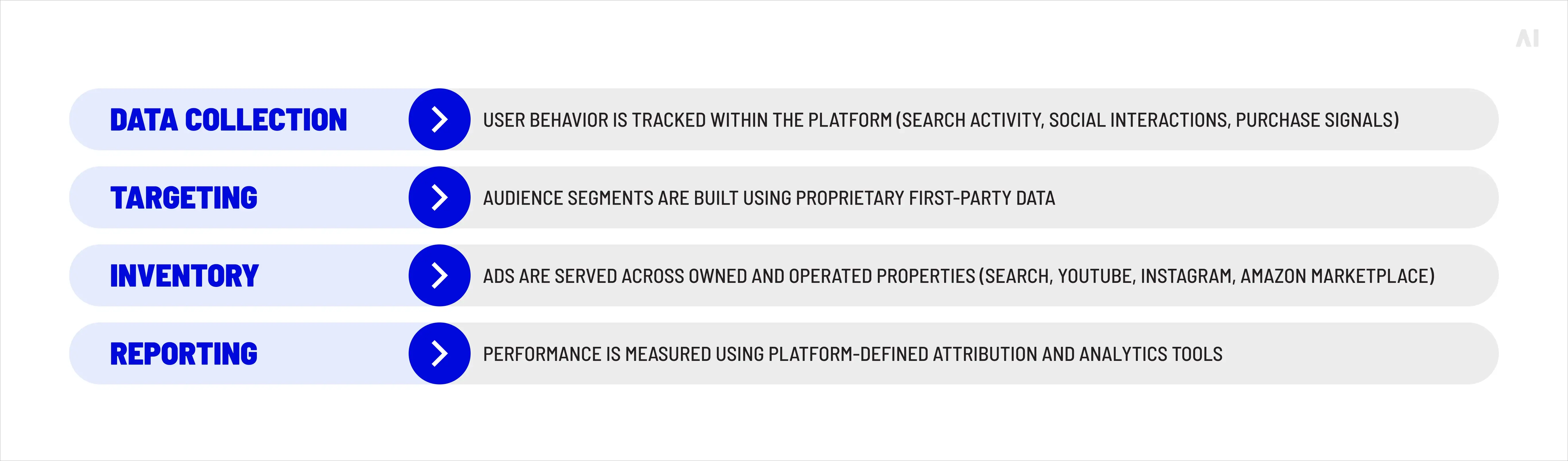
Because all these layers are integrated, walled gardens deliver high efficiency and streamlined execution. However, this structure also limits external visibility—advertisers rely on the platform’s reporting without full access to underlying auction dynamics or user-level data.
Open programmatic infrastructure
In contrast, the open internet is built on a distributed, modular ad tech infrastructure. Instead of a single platform controlling the system, multiple specialized technologies work together to enable media buying and delivery.
Key components include:
- Demand-Side Platforms (DSPs) — Used by advertisers to buy inventory programmatically
- Supply-Side Platforms (SSPs) — Used by publishers to manage and sell their inventory
- Ad Exchanges — Marketplaces where impressions are auctioned in real time
This architecture allows advertisers to access inventory across thousands of publishers, making the open web vs walled garden advertising model significantly more flexible.
The advantage of this system is interoperability and control. Advertisers can:
- Choose specific supply paths
- Apply third-party data and verification tools
- Optimize campaigns across multiple channels and partners
⚡️However, this flexibility introduces operational complexity, as performance depends on how effectively these components are configured and managed. For a deeper breakdown of how this ecosystem works, read AI Digital’s guide on Programmatic Advertising.
Control and data ownership
Control over data is one of the most decisive differences in the walled garden vs open internet landscape. It determines not only how audiences are targeted, but also how performance is measured, validated, and scaled across channels.
Data ownership in walled gardens
In walled gardens, platforms own and control the entire data environment. Companies such as Google, Meta, and Amazon collect vast amounts of first-party, logged-in user data, which becomes the foundation for targeting and optimization.
However, access to this data is tightly restricted.
- Advertisers cannot access raw user-level data
- Audience insights are aggregated and anonymized within platform dashboards
- Measurement relies on platform-defined attribution models
- Data cannot be easily exported or combined with external systems
This creates a model where advertisers benefit from high-quality, deterministic targeting, but must rely on the platform’s interpretation of performance. In practice, this limits independent verification and reduces visibility into how campaigns are actually delivered and optimized.
Data flexibility on the open internet
On the open internet, data operates within a more flexible and interoperable framework. Advertisers are not confined to a single data source or measurement system—they can combine multiple inputs across the ecosystem.
This includes:
- First-party data (CRM, website behavior, customer lists)
- Third-party or contextual data providers
- Independent analytics and attribution tools
- Verification partners for viewability, brand safety, and fraud detection
This flexibility allows advertisers to build a more customized data strategy, integrating insights across platforms and channels. Unlike in walled gardens, where measurement is siloed, the open internet supports cross-channel analysis and unified reporting frameworks.
As a result, the difference between walled garden and open internet becomes especially clear in how control is distributed:
- Walled gardens prioritize data protection and internal optimization
- The open web prioritizes data interoperability and external validation
💡While the open internet offers greater control and transparency, it also requires advertisers to actively manage data integration, ensure consistency across tools, and maintain data quality across fragmented systems.
Transparency and reporting visibility
Transparency differs materially between ecosystems because measurement, reporting, and validation are structured in different ways. This directly affects how confidently advertisers can interpret performance and make optimization decisions.
Limited transparency in platform ecosystems
In walled gardens, reporting is confined to platform interfaces and methodologies. Platforms such as Google and Meta provide aggregated performance data through their dashboards, but methodological control remains internal.
Key characteristics:
- Attribution is platform-defined (e.g., default conversion windows, modeled conversions)
- Impression- and user-level data is not exposed
- Cross-platform comparison is constrained due to non-standardized metrics
- Independent validation is limited, especially at granular levels
💡As a result, advertisers can evaluate performance within each platform, but reconciling results across multiple walled gardens becomes methodologically inconsistent.
Measurement visibility across the open web
The open internet enables measurement beyond a single platform, allowing advertisers to integrate multiple analytics and attribution systems.
Key capabilities:
- Use of independent analytics platforms for unified reporting
- Integration with cross-channel attribution models
- Ability to apply third-party verification and measurement tools
- Greater access to log-level or impression-level data (depending on setup)
This makes it possible to evaluate performance across channels using consistent frameworks, rather than relying on isolated platform metrics.
⚡️For example, multi-touch attribution helps advertisers assign value across the full customer journey rather than giving all credit to a single touchpoint. For marketers looking to understand this model in more depth, AI Digital offers expert guidance on how multi-touch attribution works, why it matters, and how to use it to evaluate performance more accurately across channels. To explore the topic further, read AI Digital’s guide, Multi-Touch Attribution Explained.
%2520.webp)
In the open web vs walled garden advertising comparison, the distinction is clear:
- Walled gardens provide controlled, platform-specific reporting
- The open internet enables customized, cross-channel measurement
💡Open web measurement requires alignment across tools, data sources, and attribution models, but offers a more complete view of performance across the fragmented open internet vs walled gardens landscape.
Economic trade-offs for advertisers
The economic differences between these ecosystems shape how efficiently advertisers can buy media, evaluate value, and control spend. While both models use auction-based buying, the mechanics behind pricing are not equally visible or equally flexible.
Platform-driven pricing environments
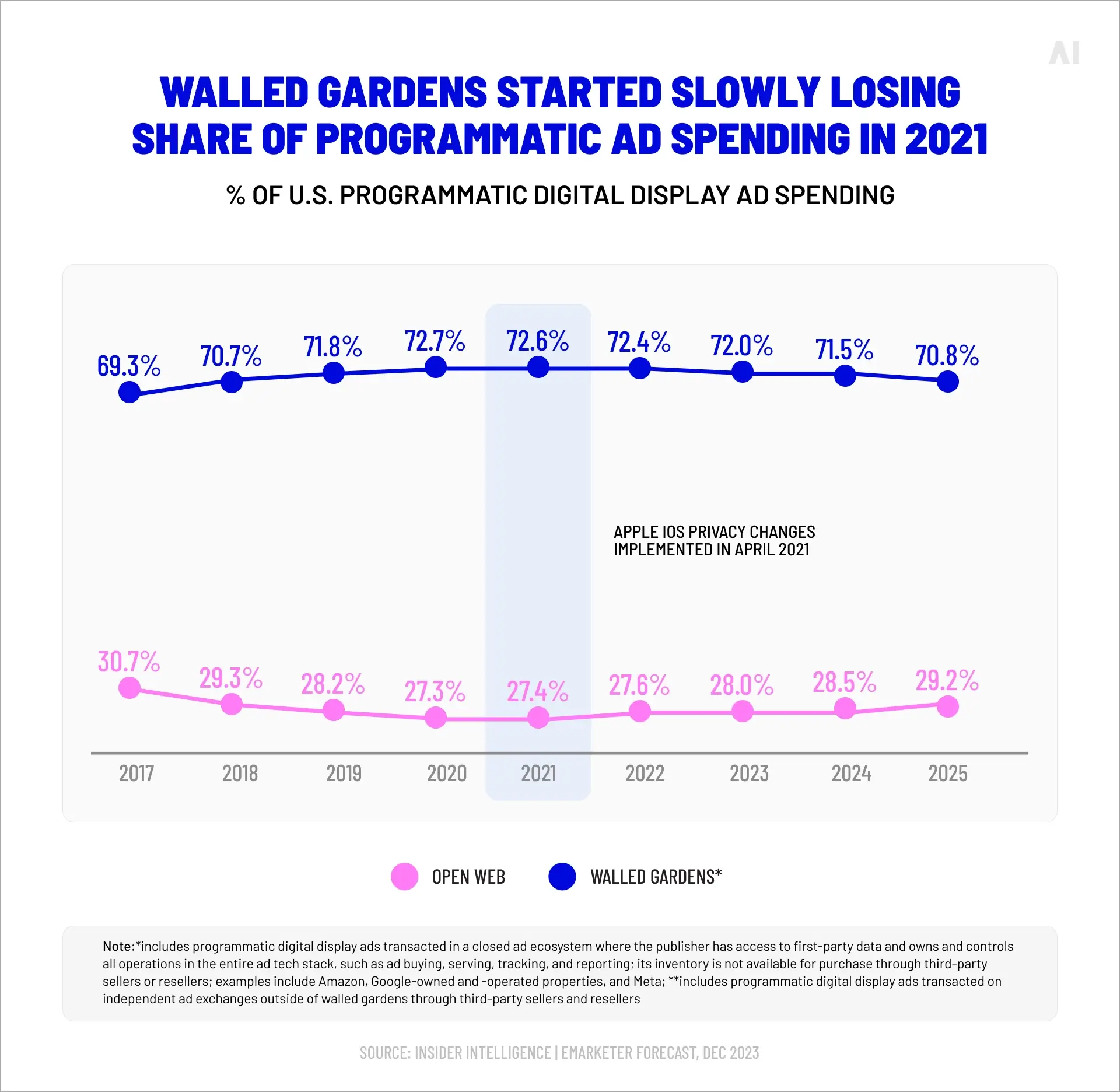
Inside walled gardens, inventory pricing and auction dynamics are largely governed by the platform itself. Advertisers bid within closed systems where the platform controls the available inventory, the auction logic, the optimization rules, and the reporting environment.
This creates a more streamlined buying process, but it also limits visibility into how prices are formed. Advertisers can see campaign outcomes, yet they usually cannot fully examine:
- how auction pressure varies across placements
- how platform algorithms shape bid efficiency
- how much pricing is influenced by internal optimization systems
💡As a result, media buying in walled gardens often prioritizes ease, scale, and automated performance, but gives advertisers less direct control over the economics behind each impression.
Market-based competition in the open internet
On the open internet, pricing is shaped through a broader market-based competitive environment. Inventory is made available across publishers through programmatic exchanges, where multiple buyers can compete in real time for impressions.
This structure gives advertisers more flexibility to assess where value exists across the supply chain. They can compare publishers, evaluate supply paths, and optimize toward inventory sources that better align with cost, quality, and performance goals.
In practical terms, this makes the open internet more adaptable for advertisers who want to:
- compare pricing across different publishers and environments
- reduce unnecessary supply-chain costs
- make buying decisions with greater economic transparency
⚡️A more competitive marketplace can improve pricing efficiency, but it also requires stronger oversight of buying paths, partners, and auction conditions. For a deeper look at how these intermediaries and pricing layers work, see The Digital Advertising Supply Chain Explained.
Performance implications for modern brands
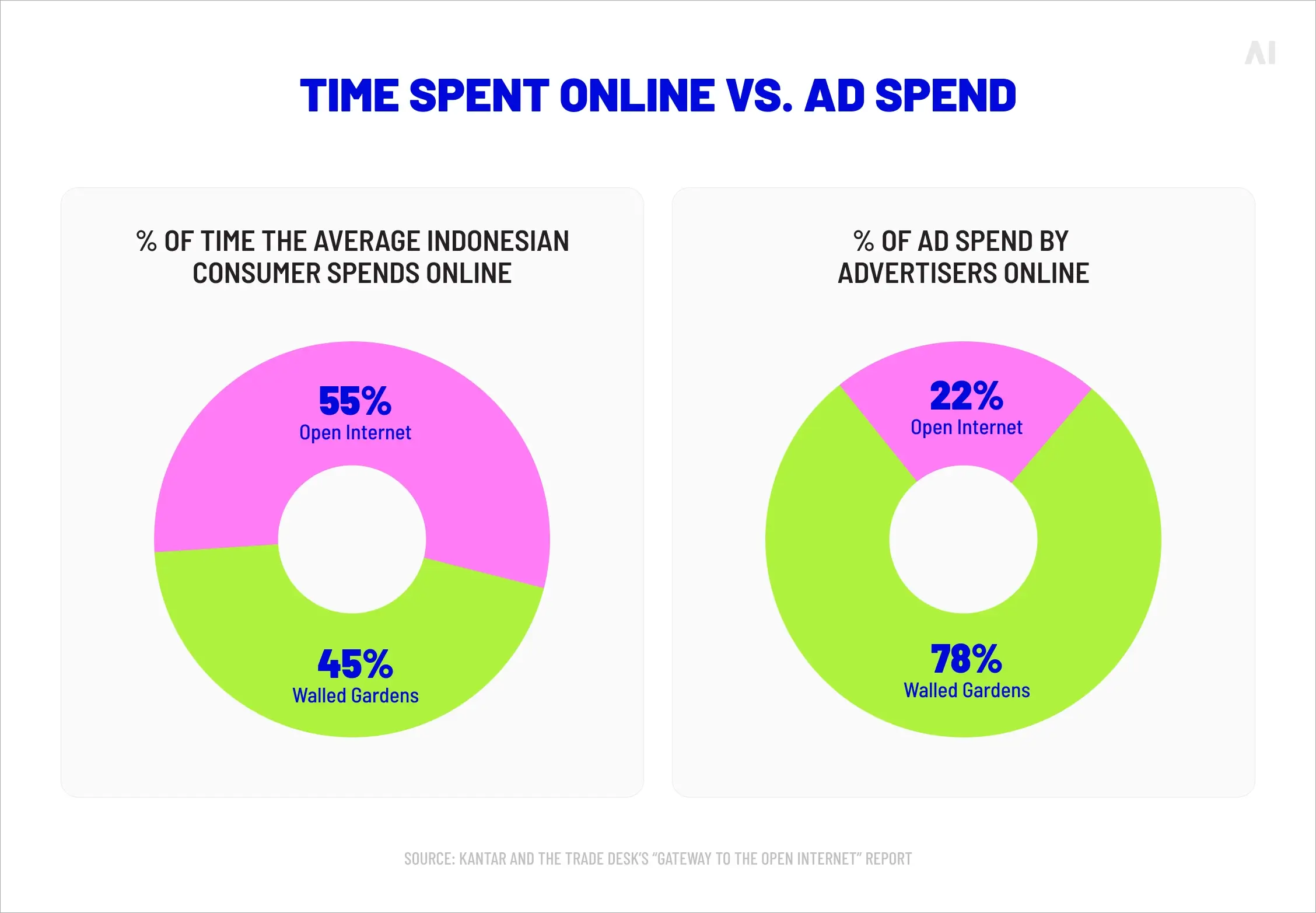
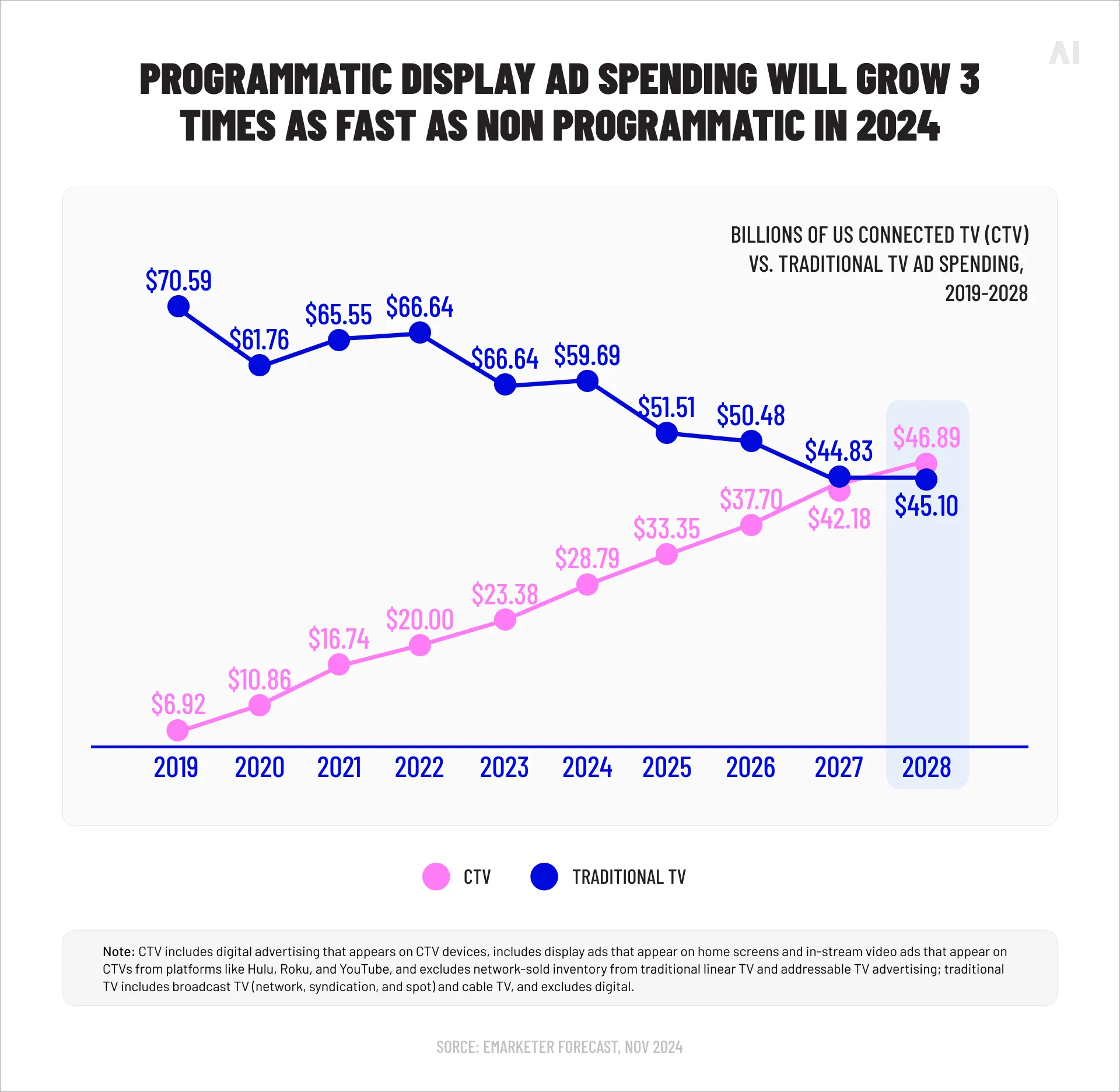
These two ecosystems influence performance in different ways because they optimize around different strengths. Walled gardens tend to deliver stronger targeting precision, while the open internet offers broader reach and more flexible media distribution across channels and publishers.
💡 In walled gardens, performance often benefits from rich first-party user data, closed-loop optimization, and tightly integrated delivery systems. Platforms can match ads to logged-in users based on search intent, browsing behavior, purchase signals, or social activity. This makes them especially effective for campaigns focused on conversion efficiency, retargeting, and lower-funnel outcomes.
The open internet operates differently. Its advantage is not the same level of deterministic targeting, but the ability to reach audiences across a wider set of environments, including publisher sites, independent video inventory, mobile apps, and connected TV. For brands, this can improve incremental reach, frequency management, and audience diversification, especially when platform saturation becomes a constraint.
The challenge is that performance becomes harder to evaluate once campaigns run across both models. Cross-platform attribution remains inconsistent, because each environment uses different identifiers, reporting standards, and conversion methodologies. A campaign may perform well in multiple places, but comparing results directly is often difficult without a broader measurement framework.
This is why multi-channel strategies matter. Modern brands rarely depend on one ecosystem alone. Instead, they combine the targeting strength of walled gardens with the scale and flexibility of the open internet.
Why neither model solves ecosystem fragmentation alone
Although each environment offers clear advantages, neither solves the larger problem of ecosystem fragmentation. Walled gardens reduce complexity inside their own platforms, but they also create isolated measurement environments. The open internet allows more interoperability, yet it remains operationally fragmented because it depends on multiple platforms, publishers, identifiers, and analytics tools.
This means advertisers still face the same structural issue: data, delivery, and measurement remain distributed across separate systems. Performance signals do not flow seamlessly between ecosystems, and reporting still has to be reconciled across multiple sources.
As a result, fragmentation is not resolved by shifting budget entirely into walled gardens or entirely into the open web. It persists because brands must still manage:
- different attribution models
- different definitions of performance
- different data access rules
- different buying and reporting infrastructures
The practical reality is that advertisers operate across multiple ecosystems simultaneously. The strategic task is therefore not to eliminate fragmentation altogether, but to manage it more intelligently through better measurement frameworks, clearer channel roles, and more deliberate control over how platforms work together.
The future of digital advertising ecosystems
The next phase of digital advertising will be shaped less by any single channel and more by how well brands coordinate across multiple ecosystems. Privacy changes, first-party data strategies, platform concentration, and cross-platform measurement are all pushing the market toward a more complex operating model.
- First, privacy-driven infrastructure changes are no longer a future scenario; they are already reshaping how addressability works. In November 2025, IAB Europe reported that 68% of respondents cited cross-platform data access as their top challenge, followed by privacy regulations (58%) and signal loss from cookie deprecation (48%). The same study found that more than 50% of organisations are already testing or adopting data clean rooms and unified IDs. At the browser level, Google has also shifted Chrome’s path away from blanket third-party-cookie deprecation toward a user-choice model, while continuing to invest in Privacy Sandbox APIs.
- Second, first-party data is becoming foundational infrastructure. IAB Europe’s 2025 retail media findings show that growth is being driven by first-party data activation, while buyers are placing increasing weight on transparency, performance, and measurement options when selecting partners. That matters because competitive advantage is moving toward platforms and publishers that control durable identity, commerce, and audience signals. In practical terms, this means advertisers need stronger internal data strategies, not just better media buying tactics.
- Third, the market is moving toward a paradox of greater consolidation and greater fragmentation at the same time. Large ecosystems continue to strengthen their position through owned data, inventory, and measurement environments, yet advertisers are also working across more networks and channels. IAB Europe found that the share of buyers working with 4–6 retail media networks more than doubled, while network fragmentation (51%) and lack of standardisation (53%) remain major barriers to growth. The future, then, is not a single dominant model replacing all others; it is a more crowded ecosystem in which coordination becomes a competitive skill.
That is why cross-platform measurement is becoming more important than platform-specific reporting. As more spend is distributed across closed platforms, retail media networks, CTV, and open web programmatic, marketers need frameworks that can compare outcomes across environments using consistent logic. This is also where AI Digital’s Open Garden approach becomes strategically relevant. AI Digital defines Open Garden as a framework built around cross-platform transparency, unified insights, and DSP-agnostic execution, designed to help brands avoid being locked into a single platform’s measurement logic. AI Digital positions this model not as an alternative to every platform, but as a way to restore clearer control across a fragmented media mix.
⚡️The implication is straightforward: the future of advertising will require better coordination across multiple ecosystems, not deeper dependence on any one of them. For a broader view of how brands can build accountability and decision-making structure across this complexity, see What Is Advertising Governance in a Fragmented Ecosystem?
Conclusion: Navigating the balance between platforms and the open internet
The comparison between walled gardens and the open internet is not about choosing one ecosystem over the other. It is about understanding how each one contributes to a broader digital advertising strategy.
Walled gardens offer scale, deterministic data, and precision targeting, making them effective for reaching large audiences and driving performance within platform-controlled environments. The open internet provides greater transparency, interoperability, and media flexibility, allowing advertisers to work across publishers, partners, and measurement systems with more control.
The main takeaways for marketers are straightforward:
- Walled gardens deliver scale and targeting precision
- The open internet supports transparency and interoperability
- Full-funnel performance depends on using both models effectively
- Cross-platform coordination is becoming more important in a fragmented ecosystem
As fragmentation increases, the challenge shifts from channel selection to ecosystem orchestration—aligning platforms, data, and measurement into a coherent strategy.
⚡️This is where AI Digital’s Open Garden approach becomes particularly relevant. Rather than treating walled gardens and the open internet as separate or competing environments, Open Garden is designed as a DSP-agnostic, cross-platform framework that prioritizes transparency, unified insights, and strategic control. It helps advertisers move beyond siloed platform reporting and instead build a more connected view of performance across the entire media mix.
💡In an increasingly complex landscape, success will depend on the ability to integrate—not isolate—ecosystems. Advertisers that can combine the strengths of walled gardens with the flexibility of the open internet, while maintaining visibility across both, will be better positioned to drive sustainable and measurable growth.