Native Video Advertising: Types, Strategies & Best Practices for 2026

Native video advertising has moved from “nice-to-have” to core channel. As budgets shift toward formats that feel like content rather than interruptions, marketers are realising that native video ads can deliver higher engagement, better attention, and stronger brand outcomes than standard pre-roll or banners.
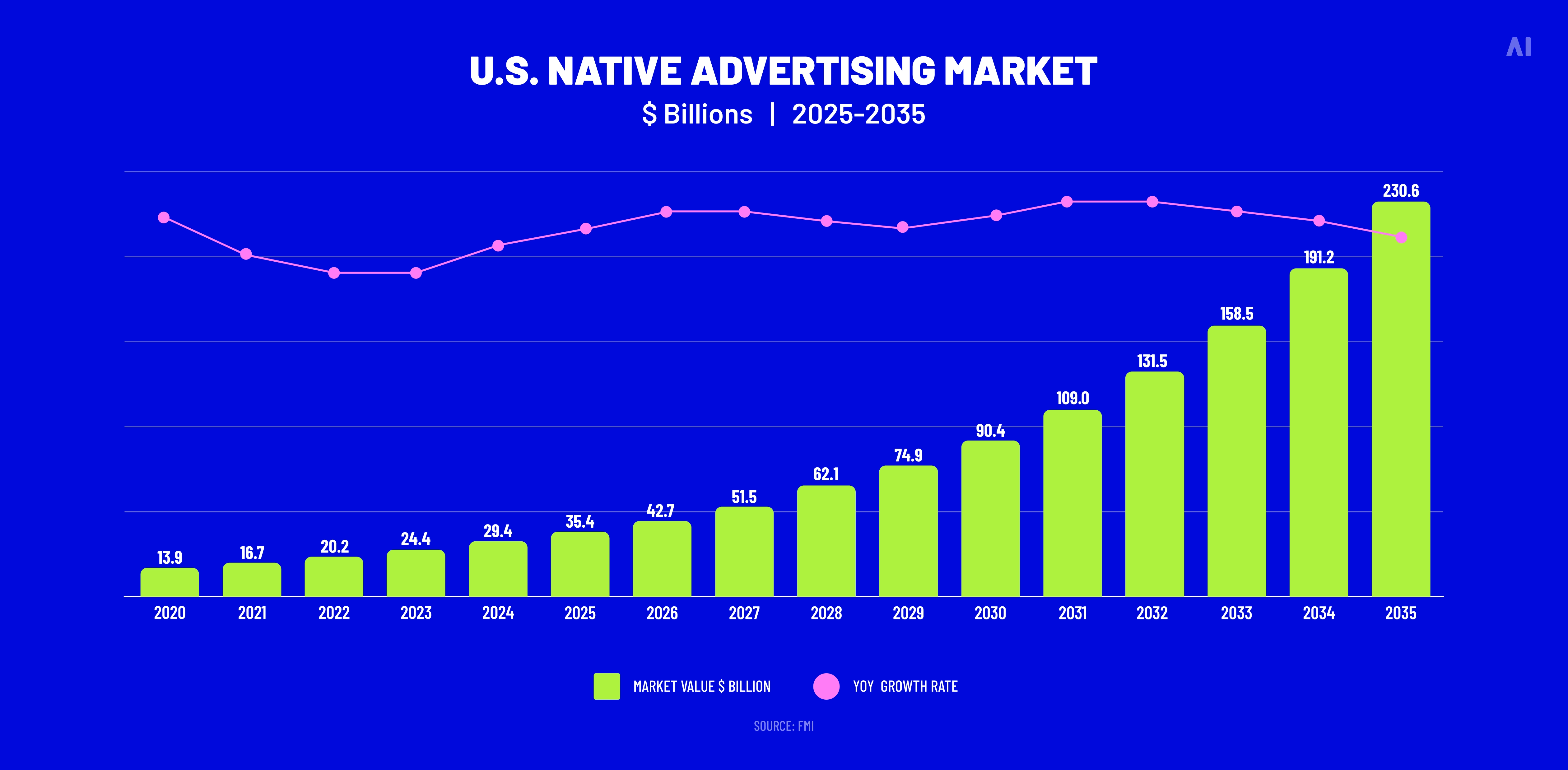
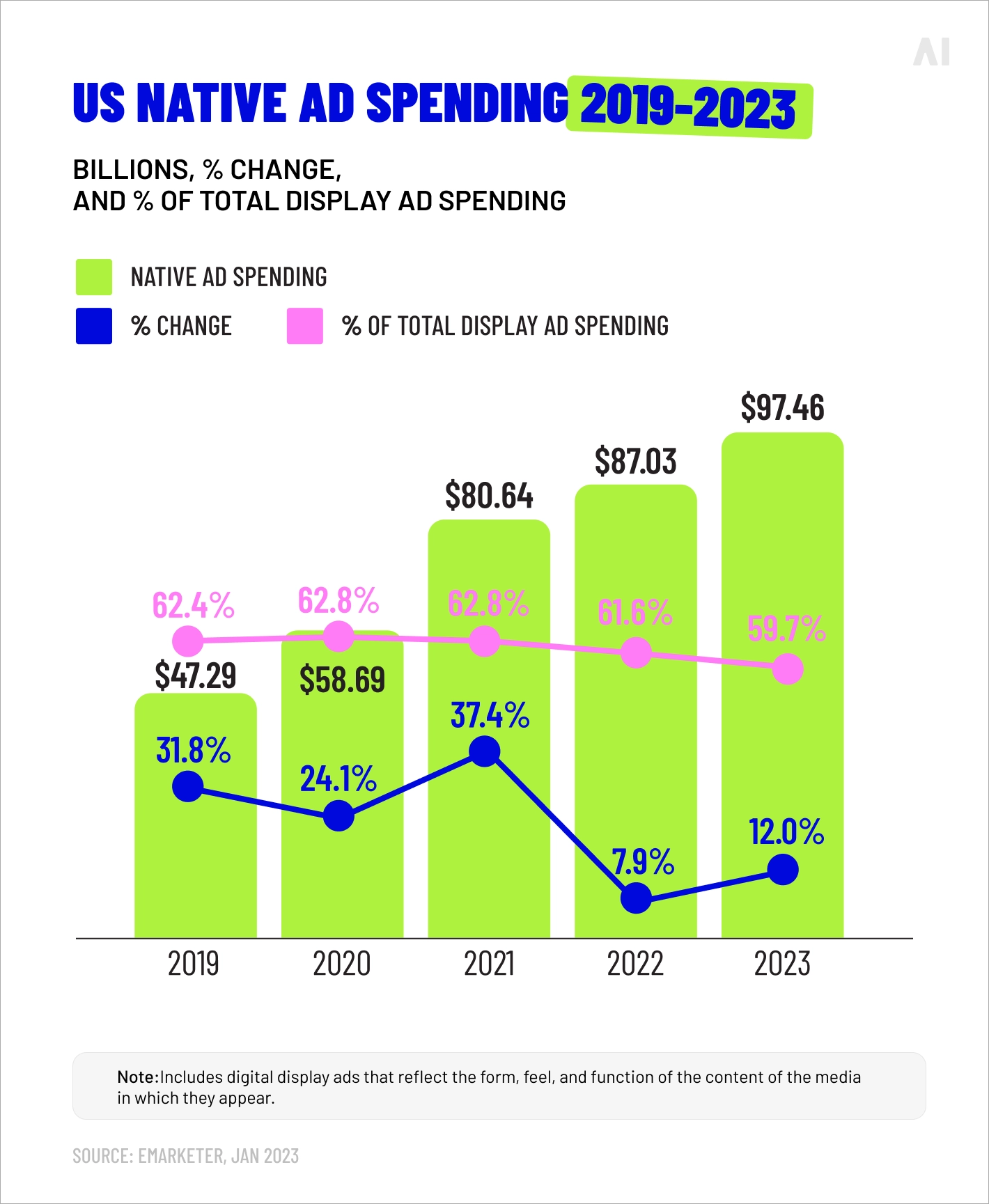
In 2023, US native digital display ad spend was already close to $100 billion, covering formats such as in-feed, outstream, and recommendation widgets. A growing share of that investment is flowing into video, because native video advertising sits exactly where people actually spend their time: social feeds, news articles, streaming and mobile apps.
This article takes you through what native video advertising is, why it’s accelerating into 2026, which formats matter, and how to plan and measure campaigns that perform. We’ll move from strategy to execution, weaving in native video advertising examples, performance benchmarks, and practical checklists so you can brief creative and media teams with confidence.
💡 For a broader view of how video and native formats fit into wider media shifts, see the 2026 Media Trends Report.
What is native video advertising?
Native video advertising is a form of digital video advertising where the ad matches the form and function of the surrounding content. Instead of sitting in a separate ad slot that clearly looks like a commercial, native video ads are designed to blend into feeds, articles, recommendation units, or app interfaces.
In practice, that means:
- The placement looks and behaves like organic content on the platform (a social post, an in-feed card, a recommended story, an in-article module).
- The creative follows the style, tone, and format of that environment (e.g. TikTok-style videos on TikTok; editorial-style clips on a news site).
- The experience is usually opt-in: users can scroll past, but the ad is presented as something worth watching, not as a forced pre-roll.
Common examples of native video advertising:
- A short “how-to” video that appears as a sponsored article tile in a news feed, auto-playing on mute as the user scrolls.
- A TikTok-style vertical video labeled “Sponsored” that looks just like creator content in the For You feed.
- A video module mid-article on a publisher’s site, playing silently as you read, with a headline that matches the editorial tone.
So when someone asks “what is native video?”, the simplest answer is:
⚡ It’s a video with ads that behaves like content in its environment, rather than like a separate TV spot dropped into a digital page.
Native video is still advertising. There is always clear disclosure (“Sponsored”, “Ad”). The difference is that it is delivered as native content within the UX, which makes it better suited to mobile feeds, attention-scarce audiences, and privacy-first targeting.
Why native video advertising is exploding in 2026
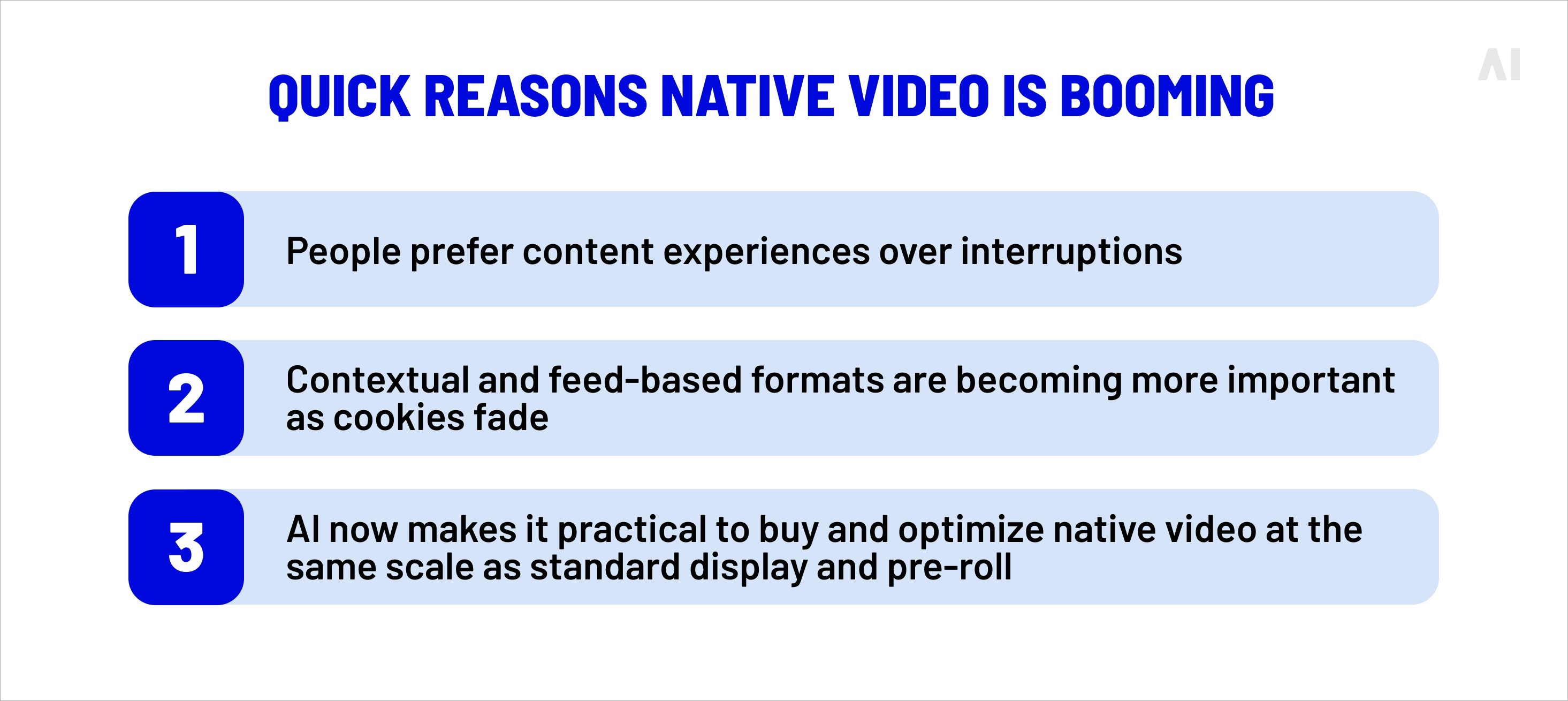
Native video advertising is scaling fast because it sits at the intersection of three big shifts:
- Users are tired of interruptive ads, especially pre-roll that blocks access to content.
- Signal loss and cookie deprecation are pushing brands toward contextual, feed-based, and content-driven formats.
- AI-driven targeting and optimization make it possible to buy native video at scale and still keep it highly relevant.
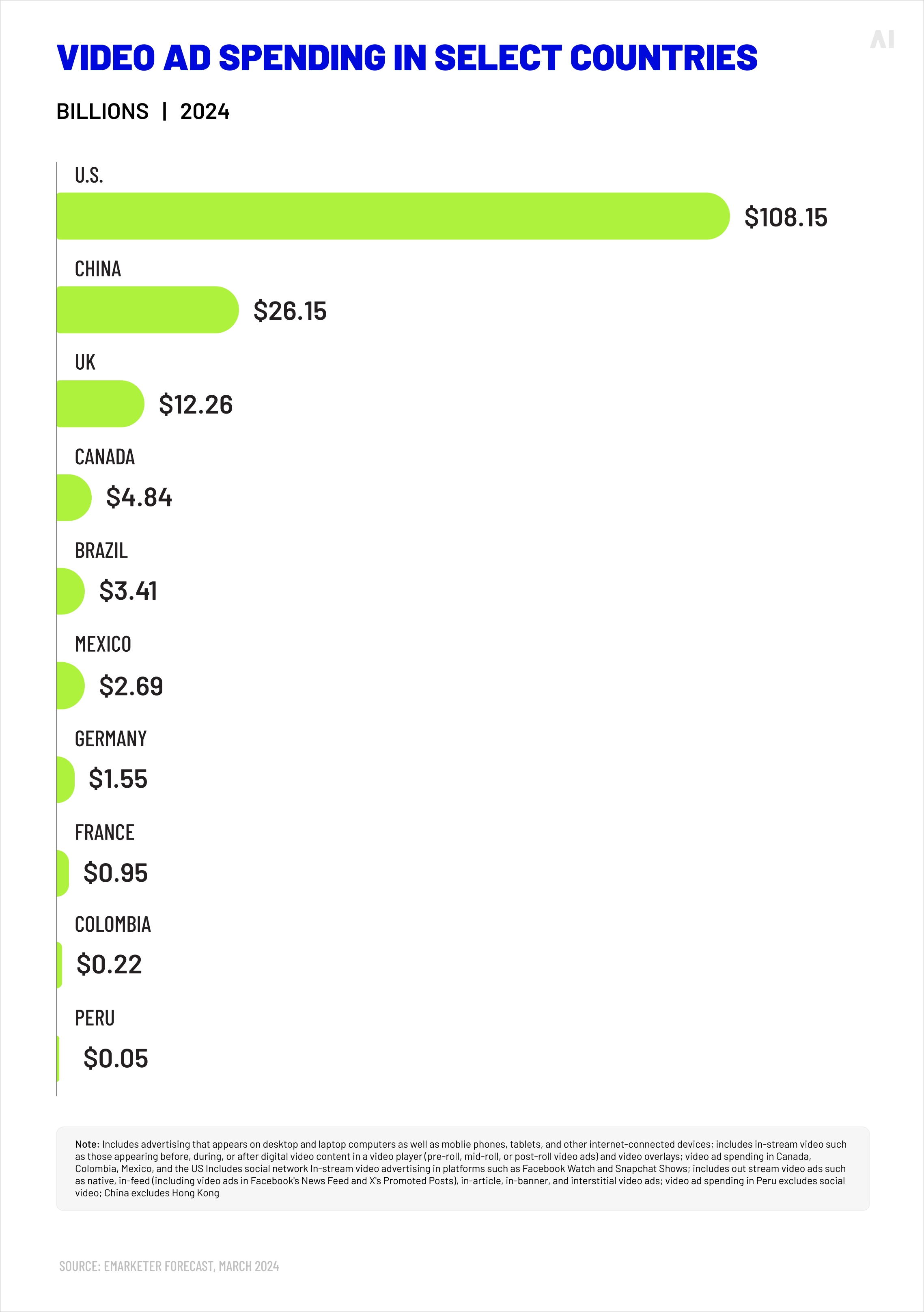
As mentioned in the introduction, eMarketer reports that US native display ad spend was already close to $100 billion in 2023, a sign that advertisers are leaning heavily on native formats as a core way to deliver digital messaging. At the same time, video is one of the fastest-growing parts of the media mix, with US video ad spend projected at over $108 billion in 2024. Native video sits right where those two trends overlap.
⚡ When video spend grows and user tolerance for interruption shrinks, native video becomes the natural middle ground.
{{Native-Video-Advertising-SEO-1="/tables"}}
💡 If you want a broader strategic overview of native formats, it’s worth pairing this article with Native advertising: a complete guide for marketers in 2026 and AI Digital’s pieces on online video:
These resources build out the context for how native advertising video fits into omnichannel planning.
Let’s break down why this format matters so much, starting with benefits for advertisers and viewers.
Advantages for advertisers
Native video is popular with marketers because it combines reach, relevance, and measurable performance.
Some of the clearest advantages:
1. Stronger engagement and attention: Native video ads are integrated into feeds and editorial environments where users are already actively consuming content. That makes them more likely to capture genuine attention than a pre-roll that stands between the viewer and the video they actually wanted.
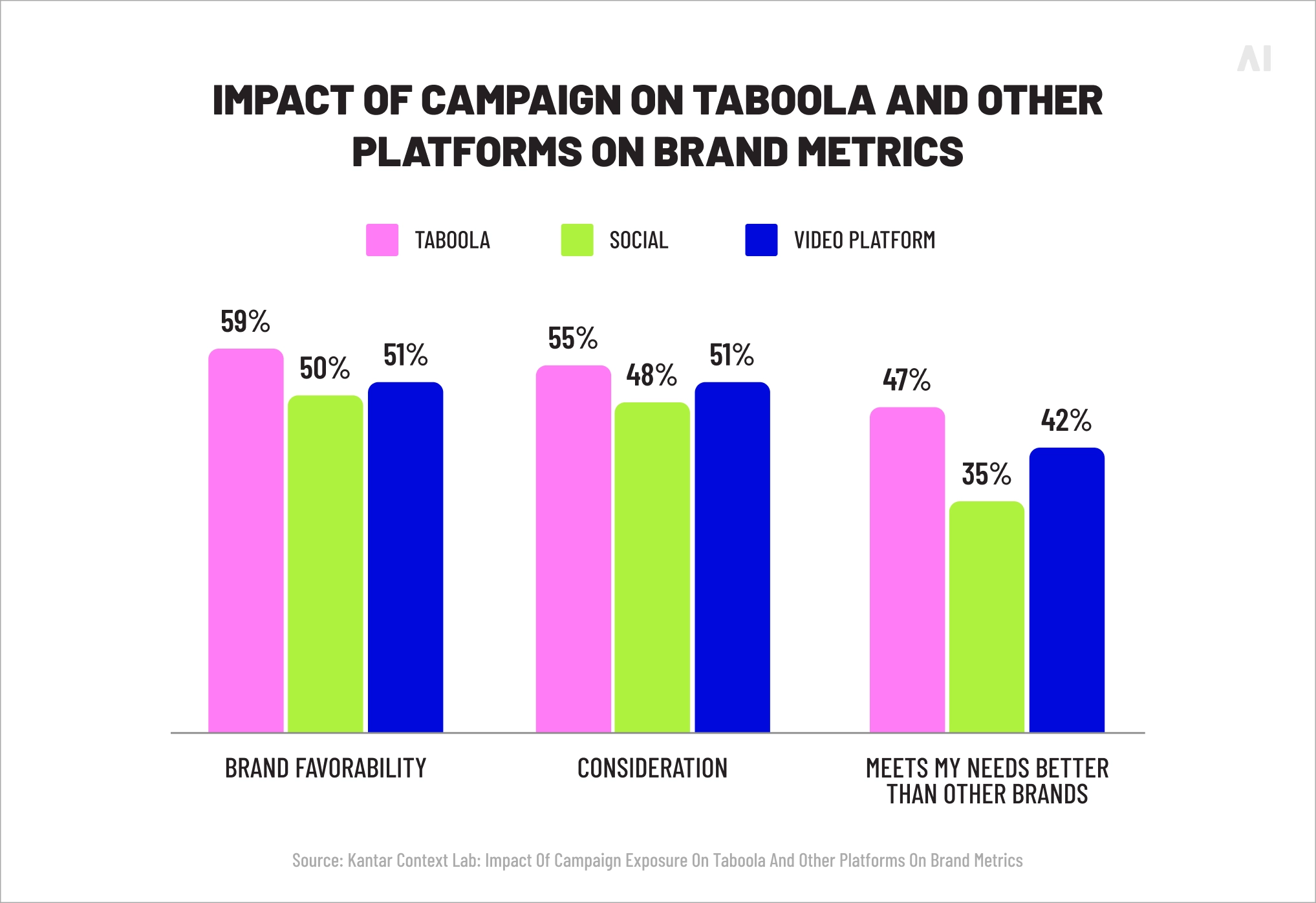
A Kantar study for Taboola found that native video ads on the open web improved brand awareness by 26% when added to the media mix, and also boosted favourability, consideration, and brand image. In other words, people not only saw the ads; they engaged enough for brand metrics to move.
2. Better brand lift than pre-roll: Native video is not just “less annoying”; it often outperforms traditional formats on brand impact. In a Nielsen case study across five campaigns measured with Sharethrough, native video ads drove higher brand lift than pre-roll in all five campaigns. In one example for beverage brand Jarritos, native ads generated an 82% brand lift, compared to about 2% for the campaign’s pre-roll ads.

That kind of delta is hard to ignore if your goal is awareness, preference, or consideration.
3. Support for privacy-first and contextual strategies: As third-party cookies fade out and platform IDs become harder to rely on, brands are shifting toward contextual and content-based strategies. Native video fits perfectly:
- It is placed in content contexts (e.g. travel articles, finance pages, gaming environments).
- It can be targeted and optimized using page-level signals, publisher data, and first-party segments.
- It still allows performance measurement via brand lift, attention metrics, and incrementality testing.
Instead of building everything around personal identifiers, native content marketing leans on relevance and context.
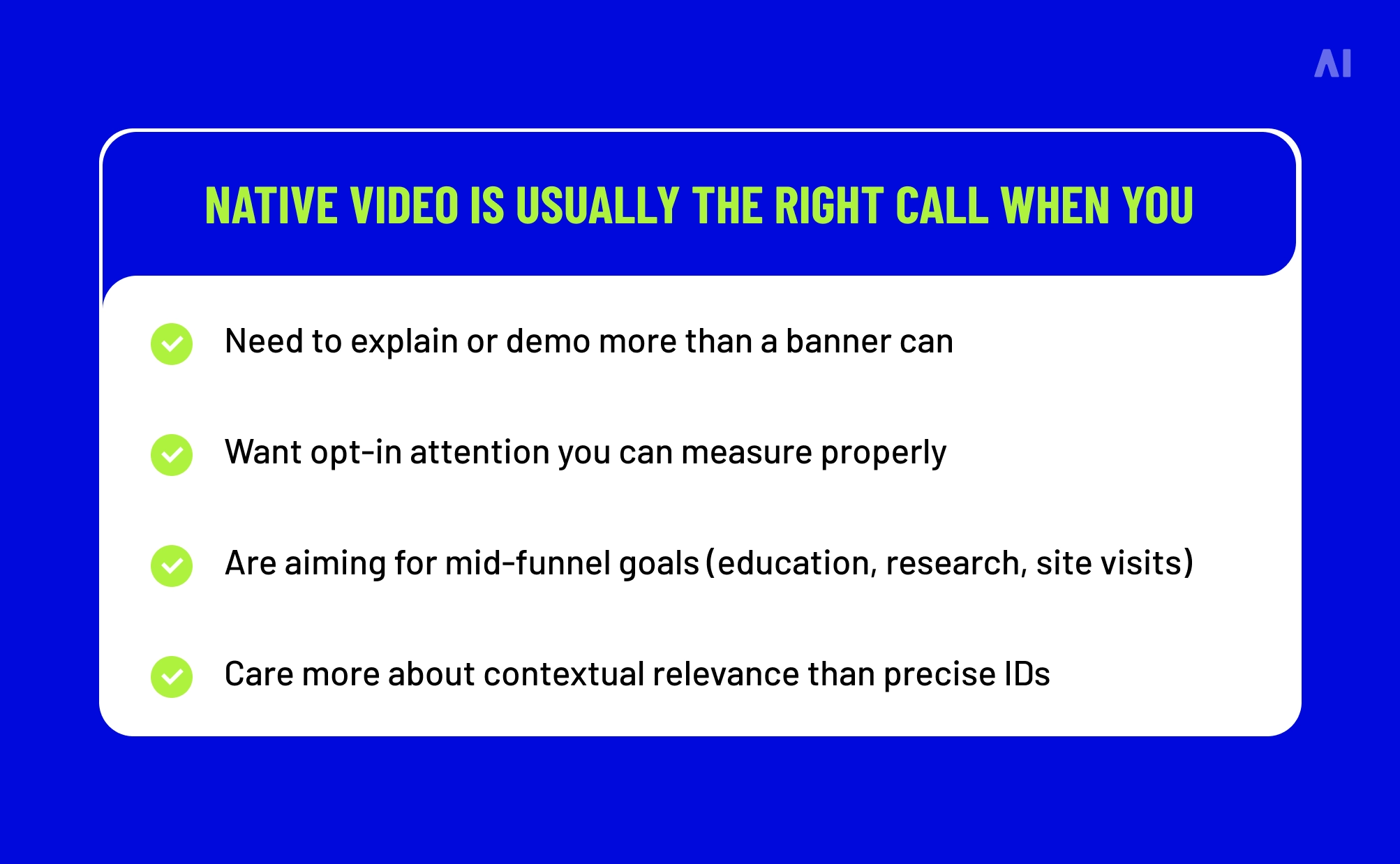
4. Richer mid-funnel performance: Native video ads are well-suited to mid-funnel objectives such as:
- Product education
- Problem-solution storytelling
- Driving traffic to a landing page for deeper consideration
Because they feel like content, viewers are more willing to invest time, which supports more nuanced storytelling than a simple static banner. Paired with strong calls to action and retargeting, native video advertising examples often show a direct impact on site visits, add-to-carts, or lead form starts.
⚡ Native video is where you turn passive awareness into active consideration.
5. AI-friendly format for optimization: Native video placements can be bought through programmatic platforms, which makes them ideal for AI-based optimization around:
- Viewability and completion
- Cost per completed view (CPCV)
- Attention scores
- Brand lift proxies
We will come back to this in the programmatic section, but the key takeaway is simple: native video is structured data in a predictable format, which makes it easier for DSPs to test, learn, and improve.
Advantages for viewers
Native video also works because it is more aligned with what users actually want from their media time.
1. Lower interruption: Native video ads usually appear in the flow of content rather than blocking it. A user can scroll past if they are not interested. That simple fact reduces irritation.
When someone chooses to stop and watch, they are doing it voluntarily. That opt-in behaviour is the foundation for more meaningful engagement.
2. Higher relevance: Native video is surrounded by related content. A user reading an article about sustainable fashion is far more likely to appreciate a short, well-produced video featuring sustainable clothing than a completely unrelated pre-roll.
The Kantar study mentioned earlier also found that native video performed strongly on favourability and brand image, which suggests viewers felt the ads were a better fit for their interests compared with other formats.
3. Entertainment and utility: The best native advertising video feels like a mini-show, a useful tip, or an interesting story that just happens to be branded. Viewers come away having:
- Learned something
- Been entertained
- Found a product that solves a real problem
That is a very different experience from being forced to sit through a generic 30-second spot.
4. Mobile-first user experience: Most native video ads are designed for mobile consumption: vertical or square formats, subtitles, and visually clear storytelling that works on a small screen. For a user, this feels like the rest of their feed, not like a TV ad shrunk down.
When native video ads respect the way people actually use their phones, they earn more goodwill and more genuine viewing time.
⚡ “If a native video feels like an interruption, it isn’t native enough yet.”
Native video vs. traditional video ads
Traditional video ads (pre-roll, mid-roll, standard in-stream) and native video ads both use moving images and sound, but they behave very differently.
Here is a practical way to think about the comparison.
{{Native-Video-Advertising-SEO-2="/tables"}}
Interruption vs. integration
Before we look at performance, it helps to see how each format behaves in the moment a viewer encounters it. The key difference is how much the ad interrupts what someone is trying to do versus how naturally it sits inside their content journey.
- Traditional video ads:
- Often run before or during the content the viewer actually wants.
- Can be non-skippable, which forces exposure.
- Feel like a separate “commercial break”.
- Native video ads:
- Live within the content feed or page itself.
- Do not block access to content.
- Are clearly labeled as “Sponsored” but presented as part of the ongoing experience.
This shift from interruption to integration is one reason native video often drives better sentiment and brand metrics.

UX fit and trust
Traditional pre-roll behaves like TV transplanted into digital. It is familiar but not especially aligned with the way people scroll on their phones.
Native video is built for digital from the start. For example:
- A native video on a news site might be styled like a short editorial segment, matching fonts, colours, and tone.
- A native TikTok ad uses trending sounds, text overlays, and lo-fi visuals that blend with creator content.
Because native units align more closely with their environment, viewers tend to trust them more than disjointed, obviously-separate ad slots. They feel like they belong.
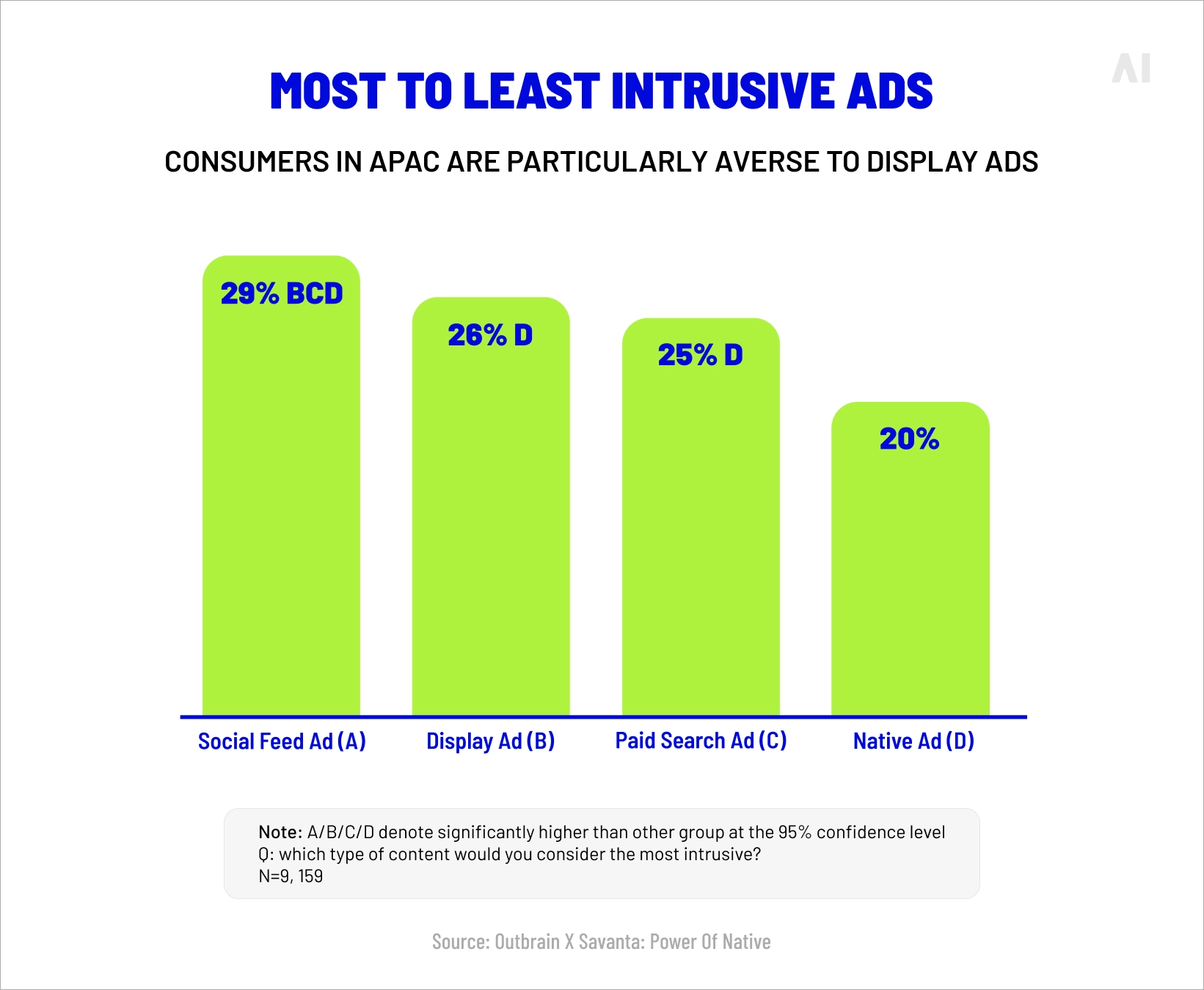
A global study by Outbrain and Savanta found that 68% of consumers trust ads they see in editorial environments, compared with 55% who trust ads on social media, and that native formats were rated the least intrusive of all digital ad types.
⚡ Ads that feel like the page they’re on inherit some of its credibility.
Attention and completion
Traditional video ads can report strong completion rates when they are non-skippable. The question is how much of that completion reflects real attention versus people simply waiting for the ad to end.
Native video ads tend to have:
- Lower forced exposure, but
- Higher voluntary attention when the content and context are right.
Joint ‘Attention in Context’ research from OMD Worldwide, Yahoo and Amplified Intelligence looked at more than 128,000 mobile web ads and found that video formats—including native video—averaged 2.73 seconds of active attention against a 2.5-second benchmark, with native video and video interscroller among the only formats to consistently beat the threshold. That suggests people are willing to stay with native-style video units longer than most other ad types, rather than just waiting for them to end.
If you care about view-through rate (VTR) and completion, you can get both formats to perform on paper. If you care about what happens in the viewer’s head, native often has the edge.
Overall performance
In simplified terms:
- If your only goal is to blast a short logo sting to as many people as possible, non-skippable pre-roll may still have a role.
- If your goal is a mix of attention, brand impact, and mid-funnel action, native video will usually deliver a better balance of metrics.
This is why many modern media plans include both:
- Pre-roll or CTV buying for broad reach.
- Native video for attention, storytelling, and incremental lift on brand and performance KPIs.
Types of native video advertising
“Native video” covers a range of placements. Each type has different strengths, UX patterns, and use cases. Understanding the main categories will help you decide which native video ads belong in which part of your funnel.
Pre-roll video ads
Pre-roll is the most familiar format: a video ad that plays before the content the viewer has chosen.
Not all pre-roll is native. It becomes native pre-roll when:
- It is sold and designed to fit the publisher’s own video environment.
- The creative feels like a continuation or extension of the surrounding content, not a generic TV spot dropped in.
Use pre-roll native video when:
- You want guaranteed visibility before a specific category of content (e.g. ads before product review videos).
- You can tailor creative to fit the show, channel, or publisher style.
Pre-roll is still more interruptive than most native formats, but when carefully integrated (e.g. branded intros to a publisher’s own video series) it can behave more like sponsorship than a random ad.
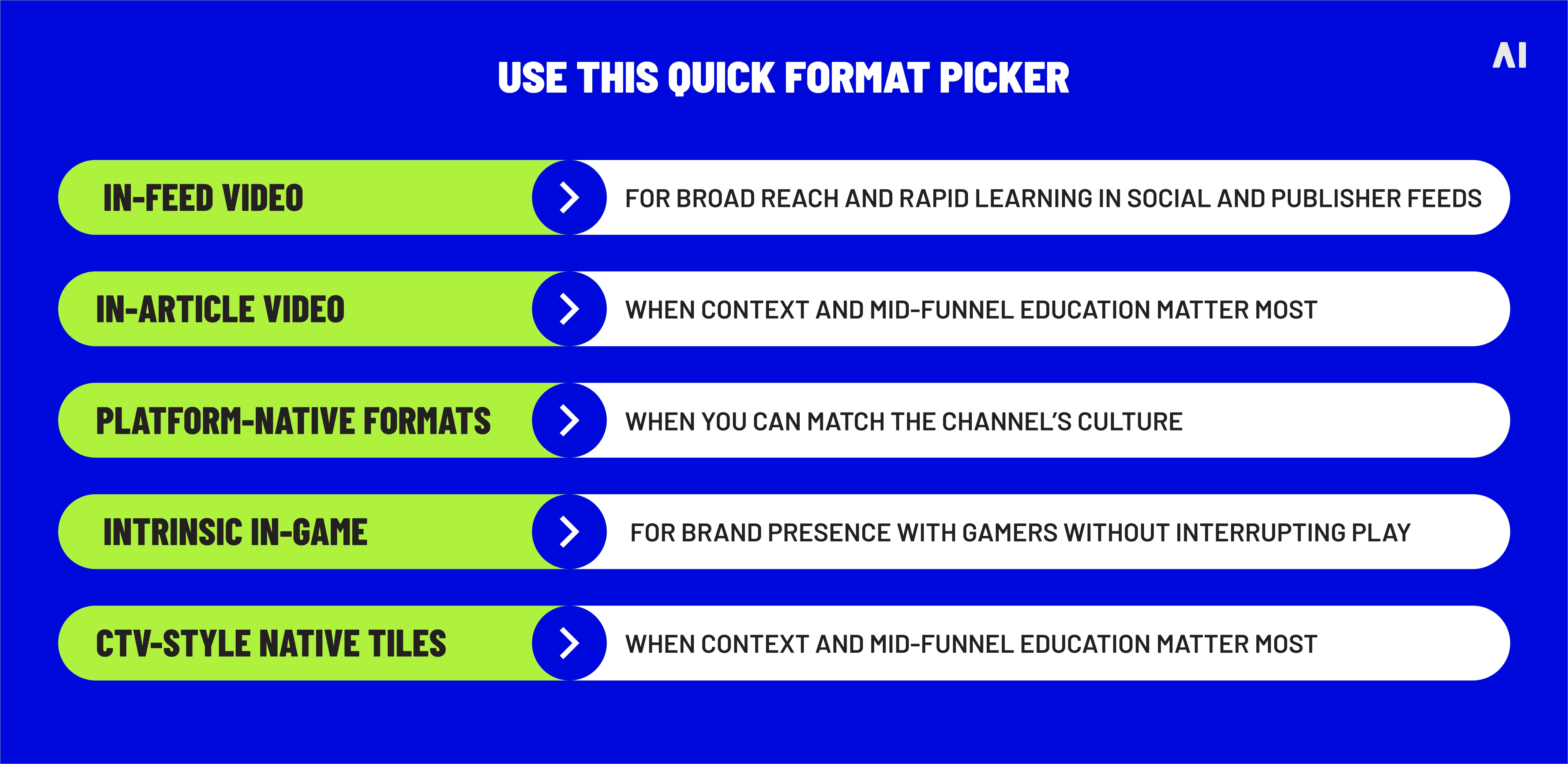
In-feed video ads
In-feed native video is what most marketers think of first.
You see it on:
- Social platforms (Facebook, Instagram, TikTok, LinkedIn, X)
- News feeds on publisher sites
- Content recommendation feeds at the bottom or middle of articles
Key characteristics:
- Appears as a feed item between other posts or stories.
- Often auto-plays on mute as the user scrolls.
- Labeled as “Sponsored” or “Promoted” but formatted like any other card.
In-feed native video is powerful because it:
- Meets users where they naturally scroll.
- Taps into the platform’s content discovery behaviour.
- Is inherently mobile-first.
This is also where your native video advertising examples will often come from: the TikTok campaign that looked like organic creator content, the LinkedIn thought-leadership clip that felt like a regular post, the Instagram Reel that blended into Reels.
In-article video ads
In-article (often called in-read) video units are embedded within the body of an article.
You’ve seen them as:
- A rectangular player between paragraphs in a news story.
- A video that appears and starts playing when it scrolls into view, then pauses when it leaves the viewport.
These are usually outstream units, meaning the video ad does not require an underlying video content stream. The article is the content; the video is the ad.
In-article native video works well when:
- The topic of the ad matches the topic of the article.
- You use headlines and thumbnails that feel editorial rather than overly commercial.
- You rely on clear subtitles, since many users will keep sound off while reading.
This is a strong mid-funnel format for product explainers and how-to content.
Platform-specific native videos (FB/IG/TikTok/LinkedIn)
Every major social and professional platform has its own flavour of platform-native video ads:
- Facebook / Instagram: In-feed video, Stories, Reels, Explore placements.
- TikTok: In-feed ads, Spark Ads that boost creator posts, TopView units.
- YouTube: Discovery ads that appear as video thumbnails in feeds, Shorts ads.
- LinkedIn: Sponsored video posts focused on B2B messaging.
These units are native by design:
- They share the same aspect ratio, interface elements, and interaction behaviours as organic posts.
- They run off the same recommendation algorithms that choose what users see next.
When you tailor creative to each environment, you get better performance than simply resizing the same TVC for every channel. For example, TikTok recommends that ads use its native editing styles, trending audio, and fast pacing; LinkedIn rewards clear hooks and subtitles that make sense in a professional feed.
This is where the line between ad native and influencer content blurs. In 2026, expect more campaigns that mix paid native placements with creator-produced videos to unlock reach and authenticity simultaneously.
Intrinsic in-game native video
Intrinsic in-game ads are placed inside the game world itself. They may take the form of:
- Digital billboards on a racetrack that rotate video ads.
- Video signage around a virtual football pitch.
- Branded video on screens inside a game environment (e.g. a cityscape or stadium).
The IAB describes intrinsic in-game ads as units that are a seamless part of the gameplay environment, not separate pop-ups. They’re “there” as part of the world, which makes them feel more like real-world sponsorship than intrusive banners.
Intrinsic native video works best when:
- The brand fits naturally into the game setting (sportswear in a sports game, beverages in a social sim, entertainment brands in open-world games).
- The video creative is short and loopable, since players may only glance at it.
This type of native advertising video is particularly interesting for reaching Gen Z and gaming-focused audiences without breaking immersion.
Outstream ads
Outstream video is a broad category of video ads that play outside of a dedicated video player.
Typical patterns include:
- In-article video (covered above).
- Video units that appear in sidebars or as sticky overlays while scrolling.
- Video inserted into content recommendation widgets.
Outstream units are often sold programmatically and can be styled to look like either:
- A small, unobtrusive module that expands on interaction.
- A larger card with headline, description, and video thumbnail.
They are considered native when they follow the design system of the publisher and behave like part of the page rather than a bolted-on player.
Outstream is a flexible way to extend native video advertising across the open web, especially when you are working with SSPs and DSPs.
Other types of native video advertising
Beyond the core formats above, you will increasingly see native video in:
- CTV and streaming home screens: Many streaming platforms show sponsored rows or tiles that look like standard show recommendations, but link into branded video hubs or sponsored content. These behave as native CTV placements rather than 30-second interruptive spots.
💡 If you’re curious how streaming ad models are evolving, AI Digital’s piece on Netflix is a useful reference point: Netflix advertising: The future of streaming TV ads
- Interactive and shoppable native video: These units allow viewers to click or tap hotspots within a video to view products, pricing, or directly add items to a cart. The ad still feels like content, but it includes interactive layers that turn attention into action.
- Branded content series: Long-form or episodic content that lives on publisher sites or social channels can also be seen as native video advertising when it is funded by a brand and clearly disclosed, but consumed as entertainment or information.
In each case, the principle is the same: native video shows up where content lives, matches the UX, and offers something worth watching.
Programmatic native video advertising
Programmatic native video advertising refers to buying and serving native video ads through automated platforms (DSPs, SSPs, exchanges) instead of manual, one-off deals with individual publishers.
At a high level, the programmatic stack for native video looks similar to display or traditional video:
- SSPs (Supply-Side Platforms) aggregate native inventory from publishers and native networks.
- DSPs (Demand-Side Platforms) let buyers set targeting parameters, bids, and optimization goals.
- Real-time bidding matches the two sides and serves the winning ad to the user.
⚡ Programmatic doesn’t make your message smarter on its own. It makes it easier to put smart messages in the right places.
{{Native-Video-Advertising-SEO-4="/tables"}}
What makes programmatic native video powerful in 2026 is the combination of:
1. Scale and reach: You can access native video placements across thousands of sites and apps in one plan, including:
- In-feed units on premium publishers.
- In-article and outstream video.
- Recommendation widgets with video tiles.
eMarketer notes that native formats remain a large share of digital display and that social and in-app environments are driving much of the mobile ad growth. Programmatic access is how you tap that at speed.
2. AI-powered targeting and personalization: Modern DSPs use machine learning models to:
- Predict which impressions are likely to achieve a completed view or click.
- Adjust bids in real time to hit CPCV, CPA, or ROAS targets.
- Test combinations of thumbnail, headline, and video to see which yields the best response.
Rather than manually tweaking every lever, you set your guardrails and let optimization models learn what works.
3. Curated and premium marketplaces: Many publishers and platforms now offer curated native video inventories (private marketplaces, deals) that focus on:
- High-quality editorial sites.
- Brand-safe environments.
- Audience segments aligned with your brand.
This allows you to avoid the low-quality corners of the open web, while still buying programmatically.
💡 AI Digital’s Programmatic video advertising explained: Smarter campaigns for the streaming era is a good companion piece if you are setting up your programmatic stack.
4. Supply intelligence and transparency: One challenge with native in the early days was opaque supply. In 2026, the expectation is much higher transparency:
- Clear reporting on which domains, apps, or placements your native video ads ran on.
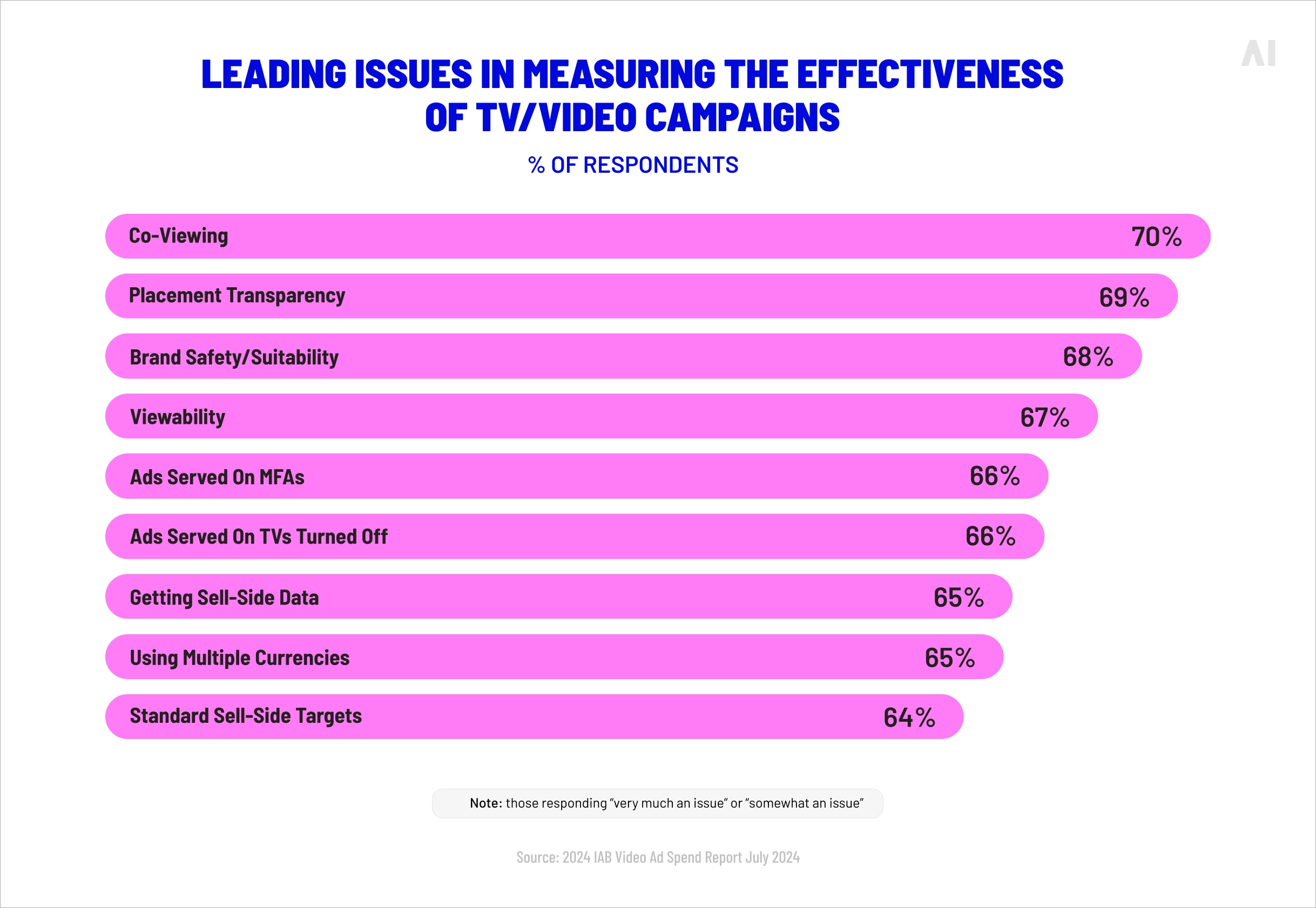
- Measurement beyond clicks: viewability, AVOC, attention, brand lift.
Solutions such as AI Digital’s Smart Supply are specifically designed to bring unbiased supply, transparency, and optimization together for smarter media buying.
Programmatic native video is where the format becomes truly scalable. Instead of running isolated tests, you can make native video a consistent, always-on part of your media plan and manage it with the same rigor as any other programmatic channel.
⚡ Think of programmatic native video as your always-on, context-aware storytelling engine.
7 Best practices for high-impact native video advertising
This is where strategy meets execution. The following seven best practices will help your native video advertising work harder, supported with real-world patterns and examples.
1. Integrate with platform design
Native video should look like it belongs wherever it appears. That goes beyond simply using the right aspect ratio.
To integrate with platform design:
- Mirror visual conventions: colours, typography, framing.
- Follow content norms: what a “normal” post looks like in that environment.
- Respect interaction patterns: swiping, tapping, unmuting, scrolling.
For example:
- On TikTok, vertical videos with quick cuts, music, and on-screen text feel natural.
- On LinkedIn, clear and concise explainer videos with subtitles and a professional tone perform better than hyper-stylised spots.
- On a news site, your video thumbnail and headline should resemble a piece of editorial content.
When you plan budgets and creative for 2026, it will help to track which platforms are best for which outcomes.
💡 A piece such as Best native advertising platforms to discover in 2025 is a good reference point for platform selection.
2. Hook viewers immediately
In a feed, you have about two seconds to earn a pause. That’s it.
Best practices for strong hooks:
- Open on movement or a strong visual, not a logo.
- Use a clear on-screen headline that promises value:
- “3 ways to cut your shipping costs”
- “The mistake most marketers make with video KPIs”
- Start in the middle of the action, not at the beginning of a story.
⚡ If your hook wouldn’t make someone stop scrolling without sound, it isn’t a hook yet.
Kantar’s work on media reactions has repeatedly shown that environments where people are receptive to ads are those where creative gets to the point quickly and respects time The same principle applies within each native placement: front-load the value.
💡 As AI-driven targeting gets more precise, the hook can also be more specific. A piece like AI targeted advertising: How smart targeting Is redefining ROI and personalization dives deeper into the targeting side of this equation, but your creative should assume you are talking to a clearly defined audience.
3. Focus on storytelling, not hard selling
Hard-sell messages rarely perform well in native video ads. Viewers are there for content, not for a direct pitch. The most effective native campaigns behave like short stories or mini-episodes.
Consider these principles:
- Introduce a human or relatable protagonist.
- Show a problem and its context.
- Reveal the product as part of the solution, not as a standalone logo.
Nielsen analyzed consumer reaction to more than 100 pieces of branded content and found that when the same brand ran as both branded content and a pre-roll ad, the branded content drove far stronger results—averaging 86% brand recall versus 65% for pre-roll, and delivering higher lift in affinity, purchase intent and recommendation intent.
That gap reinforces the point that people respond more strongly to story-led, content-style executions than to straightforward product spots.
💡 An article like Dynamic content personalization: How brands create smarter customer experiences in 2026 expands on how personalized storytelling can adapt to different audiences, but the core idea remains: story first, product second.
4. Keep videos short and impactful
Length is not a rigid rule, but there are good guidelines:
- 6–10 seconds for ultra-short awareness bumps.
- 15–30 seconds for most in-feed native video.
- Up to 60–90 seconds for in-article explainers or B2B content, if the narrative earns the extra time.
The important questions:
- Does the video deliver its core message in the first half?
- Would someone realistically watch it all in a scrolling environment?
Completion and cost per completed view (CPCV) often fall off a cliff when videos drag. Short, sharp creative not only performs better; it also gives optimization algorithms more room to test multiple variations.
5. Optimize for mobile-first consumption
Most native video advertising impressions are served on phones. Creative that doesn’t respect that reality underperforms.
Mobile-first guidelines:
- Use vertical (9:16) or square (1:1) formats where possible.
- Always include subtitles; assume sound-off by default.
- Use large, high-contrast text that is readable on a small screen.
- Make sure key visuals sit in the safe area for each platform (so they’re not hidden under UI elements).
Also think about thumb-friendly CTAs: buttons or overlays that are easy to tap, not tiny links.
6. Include a clear CTA
Native video is excellent at upper- and mid-funnel objectives, but it should still signpost what comes next.
Strong CTAs:
- “Learn more” that leads to a focused landing page.
- “Watch the full story” for longer-form content.
- “Try it for free” for SaaS or app products.
- “Shop the collection” for retail.
You can include CTAs as:
- Overlays or end cards in the video itself.
- Companion text and buttons in the native unit.
- Follow-up retargeting (e.g. show a native display ad with an offer after someone watched 75% of a video).
Clarity beats cleverness here. Viewers who liked your content should never have to guess what to do next.
7. Test, measure, and iterate
Native video is not a one-and-done format. The brands that win treat every campaign as a series of experiments.
What to test:
- Hooks: different opening shots and lines.
- Thumbnails and headlines: which combinations drive more starts.
- Lengths: 15 vs 30 seconds.
- CTA variants: “Get the guide” vs “See how it works”.
What to measure:
- Viewability and VTR.
- Cost per copleted view (CPCV).
- Attention metrics (average watch time, interaction rates).
- Downstream actions (click-through rate, conversion, brand lift).
We will detail these metrics in the next section, but the mindset is simple: launch small, learn fast, scale what works.
💡 A piece such as Advertising intelligence: Turning data Into smarter media decisions goes deeper into the analytics side, but the practical takeaway is that your native content marketing should evolve with each cycle of performance data.
Measuring and optimizing native video performance
To manage native video as a serious channel, you need to measure more than impressions and clicks. The metrics below are the ones that matter most in 2026.
Where relevant, we’ll use standard definitions from IAB and other reputable sources.
{{Native-Video-Advertising-SEO-5="/tables"}}
Viewability
Viewability answers the question: did the ad have a chance to be seen?
The IAB defines viewability as an impression where a minimum portion of the ad (typically 50% of pixels for at least one second for display, two seconds for video) was on screen. It does not guarantee that a user actually looked, but it filters out impressions where the ad was never in view.
For native video, you want:
- High viewability rate (ideally 70%+ on quality inventory).
- Sensible thresholds aligned with your buying strategy.
You can improve viewability by:
- Preferring in-feed and in-article placements that only start when in view.
- Avoiding placements known for low scroll-depth or clutter.
View-through rate (VTR) and completion
View-through rate (VTR) measures what percentage of impressions reached a certain watch threshold:
- 25% of the video
- 50%
- 75%
- 100% (completed view)
These curves tell you where people drop off. They are essential for understanding how engaging your native video ads really are.
Optimisation ideas:
- If many viewers drop in the first three seconds, your hook is weak or your video looks like a generic ad.
- If drop-off spikes halfway, the narrative may sag or the content may change style abruptly.
Completion rate also feeds into pricing when you buy on a CPCV basis.
AVOC (Audible and Visible On Completion)
AVOC is an advanced quality metric defined by IAB as the percentage of measurable impressions where the video was both audible and viewable when it reached completion.
In other words:
- The ad was on screen.
- The sound was on.
- The viewer stayed until the end.
This is a very high-value state for storytelling. You will rarely reach huge AVOC percentages, but tracking it helps you understand where you are getting truly complete exposures.
To improve AVOC:
- Encourage sound with subtle cues (“Sound on 🔊”).
- Use audio that rewards unmuting (voice-over or music that adds real value).
- Make sure the first seconds are compelling enough to keep people around.
CPCV (Cost per Completed View)
Cost per completed view (CPCV) is how much you pay (or effectively pay) for each completed video view.
The IAB glossary describes CPCV as the price an advertiser pays every time a video ad runs through to completion, rather than paying for all impressions regardless of completion.
CPCV helps you answer:
- Are we paying a sensible amount for fully-watched views?
- Which creatives, placements, or audiences deliver the best value?
You can lower CPCV by improving creative (so more people complete) or by optimising bids and inventory (so you pay less per impression while keeping completion stable).
Attention metrics
Attention is a broad category that includes:
- Average watch time.
- Dwell time on the page or placement.
- Interactions (taps, un-mutes, hovers, click-throughs).
- Third-party attention scores from specialist vendors.
The industry is increasingly interested in attention because it correlates more strongly with outcomes than simple exposure. A short, attentive view is worth more than a long, ignored one.
Native video is naturally suited to attention metrics, because it:
- Appears in content contexts, where users are more likely to engage.
- Can be designed to reward sustained viewing (useful content, clear payoff).
You can treat attention as a mid-funnel KPI and optimise creative and placement to maximise it.
⚡ Treat attention as its own KPI, not an afterthought. It’s often the missing link between views and outcomes
Brand lift
Brand lift measures how much your campaign moved brand metrics such as:
- Awareness
- Ad recall
- Favourability
- Consideration
- Purchase intent
This is usually done via control-exposed surveys or platform-level brand lift studies.
A Comscore study for Opera Mediaworks that aggregated nine native mobile video campaigns found that native mobile video drove significant brand lift and outperformed Comscore’s mobile norms across the funnel: ad recall was +6 points, perception of ad uniqueness +9 points, brand advocacy +5 points, and purchase intent +5 points among people exposed to the ads versus a matched control group.
Those uplifts show that when native video is built for the environment and follows creative best practices, it doesn’t just get watched—it shifts how people feel about the brand and how likely they are to buy.
For serious investments in native advertising video, building a brand-lift study into your plan will tell you whether the channel is doing more than getting views.
Incrementality
Incrementality answers the question: how many of our conversions or sales happened because of this campaign, beyond what would have happened anyway?
You can measure incrementality with:
- Geo-split tests (run native video in some regions, keep others as control).
- Audience holdouts (expose one group, keep another identical group unexposed).
- Time-series experiments (on/off patterns with careful modelling).
Native video can drive both:
- Direct actions (click-through to site, app installs).
- Indirect influence (priming people who then convert via search, social, or direct visit).
Incrementality helps you quantify the total value of native video in that wider path to conversion.
💡 Finally, good measurement frameworks (for example, those discussed in AI Digital’s 15 essential digital marketing KPIs to track (and improve) in 2026) help you decide which metrics matter most for your business so that AI optimisation has the right targets.
How AI-driven optimisation improves performance
AI and machine learning are now embedded in most serious DSPs and native platforms. For native video ads, optimisation typically happens in three layers:
- Bidding and budget allocation: Models look at historical performance and real-time signals (device, time of day, context, user behaviour) and adjust:
- Which impressions to bid on.
- How much to bid.
- Which line item or creative should get incremental budget.
The goal might be to maximise completed views, minimise CPCV, or hit a CPA. AI can juggle thousands of micro-decisions per second to stay on target.
- Creative optimisation: Dynamic Creative Optimisation (DCO) uses AI to test and serve combinations of:
- Thumbnails
- Headlines and descriptions
- Call-to-action text
- Sometimes even different edits of the video itself
Over time, the system learns which variants drive higher VTR, attention, or conversions for each audience or context.
- Cross-channel coordination: AI can also help you manage frequency and sequencing across channels:
- Show a native video first to warm up a user.
- Follow with a short native display unit for conversion.
- Adjust exposure if brand-lift or attention thresholds are met.
This is where native video advertising examples become part of a broader orchestration, not a siloed tactic.
Conclusion: Build stronger brands through native video advertising
Native video advertising connects creativity, context, and performance in a way few other formats can match.
- It respects the user’s experience instead of forcing attention.
- It rewards strong storytelling and clear value.
- It supports privacy-first strategies by leaning on content and context.
- It plugs into programmatic pipes, which allows AI-driven optimisation at scale.
As you plan for 2026, the key question is no longer “Should we test native video?” but “How do we institutionalise native video as a core part of our media strategy?”
That means:
- Building native concepts into every content brief.
- Harmonising reporting with the rest of your digital video.
- Using programmatic tools, supply intelligence, and creative iteration to keep improving outcomes.
If you want support turning these principles into live campaigns, AI Digital’s services around planning, Smart Supply, and AI-enabled optimisation are built for exactly this role. Check out what we do and drop us a message.