
Influencer marketing is becoming a larger and more operationally demanding channel. The IAB projects that U.S. creator advertising spending will reach $44 billion in 2026, increasing the pressure on brands to manage creator programs with greater consistency, efficiency, and accountability.
Scaling a program, however, involves more than finding additional influencers. Teams must coordinate creator discovery and vetting, outreach, contracts, briefs, approvals, content rights, publishing schedules, payments, and performance data across multiple social platforms and markets. As the number of creators and assets grows, spreadsheets and disconnected workflows make it harder to maintain visibility or compare results.
AI influencer marketing tools can reduce this operational burden by accelerating searches, organizing campaign information, identifying audience or brand-safety signals, and surfacing patterns in performance data. They can help teams make faster, better-informed decisions—but they do not make those decisions infallible. Human judgment remains essential for assessing creator fit, building authentic relationships, approving creative work, interpreting risk signals, and determining whether reported results reflect meaningful business impact.
TL;DR: Best AI Influencer Marketing Tools in 2026
- For end-to-end program operations: Upfluence combines creator discovery, outreach, relationship management, campaign tracking, and payments with Jaice AI, while Influencity connects natural-language discovery with IRM and campaign workflows.
- For creator discovery and vetting: HypeAuditor focuses on audience quality, authenticity signals, and brief-based recommendations through AI Scout. Modash adds natural-language and image search for contextual or visual creator matching.
- For connected social workflows: Sprout Social Influencer Marketing brings AI-assisted discovery, Brand Fit Score, vetting, and campaign management into a broader social media environment.
- For enterprise governance and intelligence: CreatorIQ supports global workflows, measurement, and multimodal brand-safety analysis through SafeIQ. Traackr combines creator intelligence, benchmarking, and reasoned recommendations through Abigail.
- For creator commerce: Aspire connects AI-assisted discovery with recruitment, product seeding, campaign management, affiliate links, and sales reporting.
- For multi-market and large-scale activation: Kolsquare combines international creator intelligence with campaign reporting and AI-accessible data, while Influential Powered by Captiv8 connects machine-learning-based matching with enterprise campaign execution and measurement.
- The right platform depends on the workflow: Brands should compare data coverage, integrations, governance, usability, and measurement—not select a tool based on its “AI-powered” label alone.
What Are AI Tools for Influencer Marketing?
AI influencer marketing tools are software platforms that apply artificial intelligence to one or more parts of the creator-marketing workflow. Depending on their scope, they may use machine learning, generative AI, semantic search, predictive or statistical models, and AI-assisted automation to help brands discover creators, evaluate audiences, conduct outreach, manage campaigns, monitor content, or analyse performance.
“AI-powered” is an umbrella description—not a standardised level of intelligence or automation. One platform may use semantic search to interpret a campaign brief, while another uses statistical models to identify unusual audience patterns. A third may simply add generative text to an otherwise conventional workflow.
Specialised tools may form one component of a broader AI marketing platform, but the two categories are not interchangeable. This article concentrates on software supporting influencer programmes. The separate topic of AI influencer marketing involving synthetic creators examines campaigns in which the creator identity itself is digitally produced.
What Should Brands Look for in an AI Influencer Marketing Tool?
Brands should begin with the workflow problem they need to solve—not the number of features labelled “AI.” This distinction is increasingly important: CreatorIQ’s 2026 research, covering more than 1,700 brands, agencies and creators across over 17 industries, found that nearly all marketers were using AI, but the industry had not reached a clear consensus on how to use it most effectively.
Evaluate potential platforms across six areas:
- Creator-data coverage: Which social platforms, countries, languages and creator tiers are represented? How frequently is the data updated, and where does it come from?
- Discovery and vetting quality: Assess the available filters, semantic or visual search, audience demographics, content history, authenticity signals and brand-fit analysis. A high platform score should initiate review—not replace it.
- Brand safety and governance: Look for configurable suitability criteria, role-based permissions, approval workflows, audit trails and the ability for people to review or override automated recommendations.
- Campaign and relationship workflows: Determine whether the platform supports outreach, creator relationship management, briefs, contracts, approvals, content usage rights, payments and campaign tracking—not merely discovery.
- Integrations and data access: Check compatibility with social platforms, ecommerce systems, affiliate tools, CRM and analytics environments. Brands should also understand whether they can export their creator, content and performance data.
- Reporting and measurement: Examine how the tool defines reach, engagement, audience quality, conversions and attributed revenue. Platform-reported results should not automatically be treated as evidence of incremental impact.
Finally, separate AI decision support from workflow automation. A system that automatically sends reminders or tracks deliverables may save time without determining which creator is right for a campaign. Conversely, an AI-generated shortlist may support a decision without executing the campaign.
Understanding how AI platforms differ from rule-based marketing automation helps brands identify what the software genuinely evaluates, what it merely executes and where human approval remains necessary.
AI Influencer Marketing Tools Compared
The following comparison reflects functionality documented on official platform and product pages reviewed in September 2026. “Best for” describes each platform’s strongest workflow fit rather than an objective ranking. Feature access can vary by package, market, social-network integration and account configuration.
10 AI Influencer Marketing Tools for Brands in 2026
Upfluence — For End-to-End AI-Assisted Creator Programs
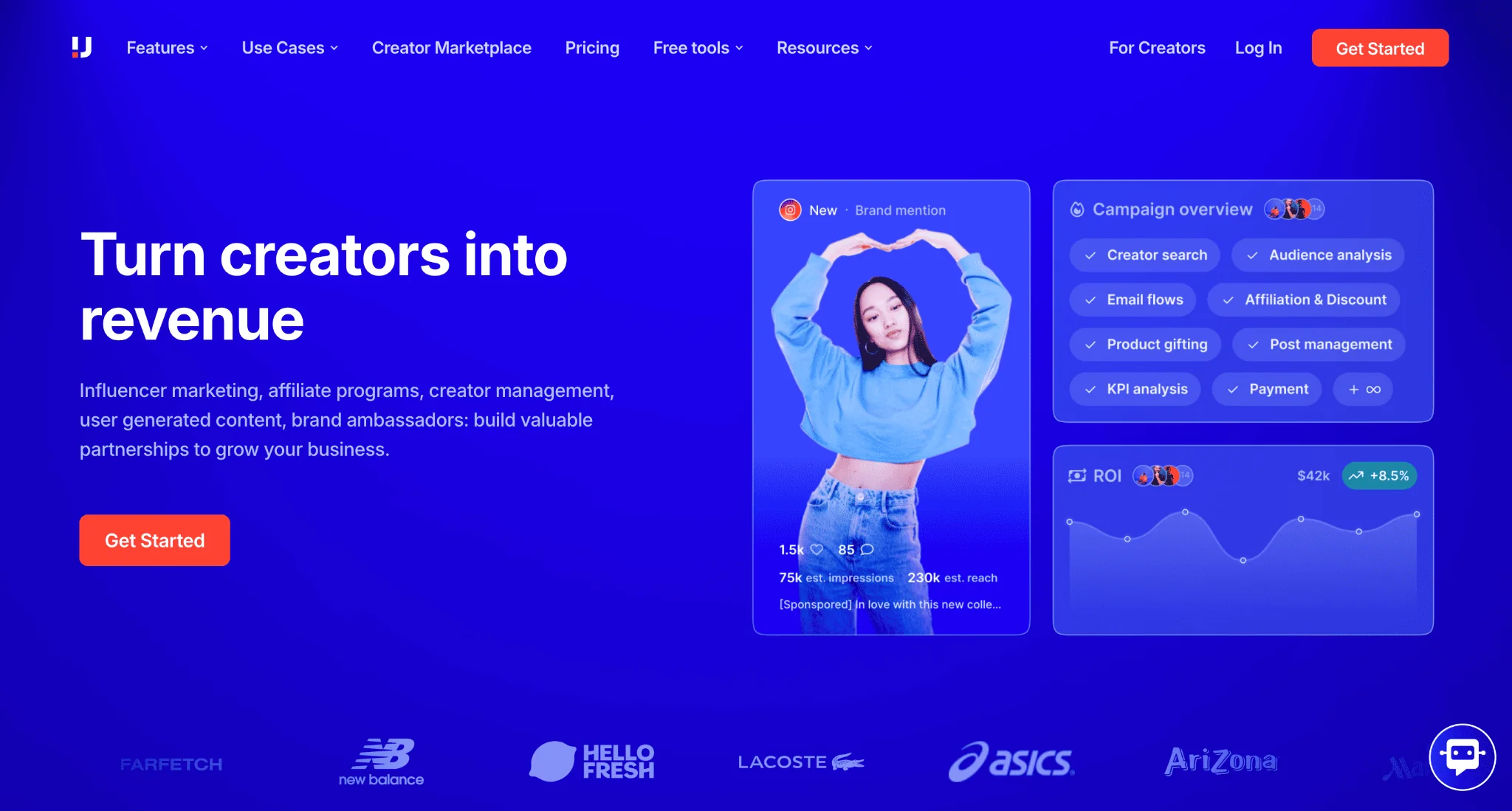
Best for: Brands running creator, affiliate and ecommerce programmes through one operational platform.
What it does: Upfluence combines creator discovery and vetting with campaign planning, influencer CRM, outreach, content tracking, product seeding, affiliate management and creator payments.
- Upfluence currently presents Jaice as a live AI agent built into its platform. According to its official product documentation, Jaice can generate campaign structures, shortlist creators, draft outreach, send invitations, schedule follow-ups and move approved programmes towards publication.
- Upfluence describes Jaice as supporting autonomous execution, but performance figures on its product pages are vendor-reported. Brands should confirm approval controls, account availability and which actions require human authorisation.
HypeAuditor — For Creator Vetting and Audience Quality

Best for: Teams that need detailed creator, audience and authenticity intelligence before activation.
What it does: HypeAuditor now extends beyond fraud-related analysis into creator discovery, relationship management, outreach, contracts, payments, content tracking and campaign reporting.
- AI Scout interprets a written or uploaded campaign brief, questionnaire or previous campaign and produces a ranked creator shortlist with an explanation for each recommendation. Results can then move into My Network, Media Plans or Campaigns.
- Audience Quality Scores, authenticity indicators and AI recommendations are decision-support signals. Brands should still examine recent content, audience relevance, commercial history and category-specific risks before selecting a creator.
Modash — For Flexible Creator Discovery and Campaign Tracking

Best for: Teams prioritising flexible discovery, relationship organisation and automated content tracking.
What it does: Modash connects creator and audience analysis with outreach, conversation history, campaign content collection, performance reporting and payments.
- Modash AI Search supports natural-language and image-based discovery, while its API documentation also describes lookalike search. These modes can supplement demographic and performance filters when marketers need creators with a particular subject, aesthetic or content style.
- Modash’s current platform page states that built-in AI Search works across Instagram, while its API documents a broader text, image and lookalike toolkit. Confirm network and search-mode availability before buying; visual similarity does not establish audience or brand fit.
Sprout Social Influencer Marketing — For Connected Social and Creator Workflows

Best for: Teams that want influencer marketing connected with broader social intelligence and management.
What it does: The platform supports creator discovery, CRM, recruitment, outreach, contracts, content approval, payments, campaign reporting and amplification within the wider Sprout Social environment.
- Topic-led semantic search interprets the subjects a brand wants creators to discuss. The AI-powered Brand Fit Score evaluates alignment between creator content, audience interests and a brand-defined target, while Brand Safety Reports help surface potential content risks.
- A numerical fit score can accelerate comparison, but it cannot evaluate every contextual, cultural or reputational factor. Teams should review the underlying content and audience evidence before approving a partnership.
Influencity — For AI-Assisted Discovery and Relationship Management
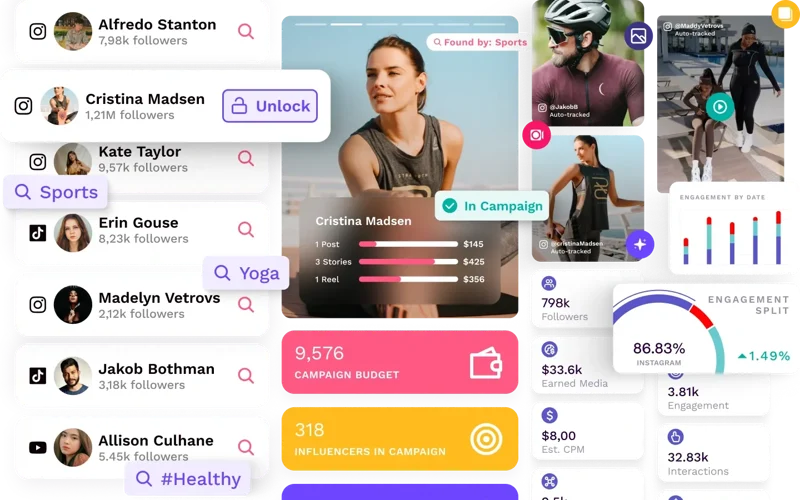
Best for: Brands and agencies that need creator discovery connected to a structured influencer relationship-management system.
What it does: Influencity combines discovery, audience and authenticity analysis, IRM, outreach, campaign briefs, casting, approvals, payments, content tracking and reporting.
- Influencity’s AI Assistant and Autofill Magic translate natural-language descriptions into search filters. This helps marketers move from an informal requirement—such as audience, location, category or content style—to a structured creator search without manually configuring every field.
- Automatically selected filters improve search efficiency, not the reliability of the final partnership. Teams should review the resulting creators’ content, audience quality, previous collaborations and campaign context before making a decision.
CreatorIQ — For Enterprise Creator Intelligence and Governance
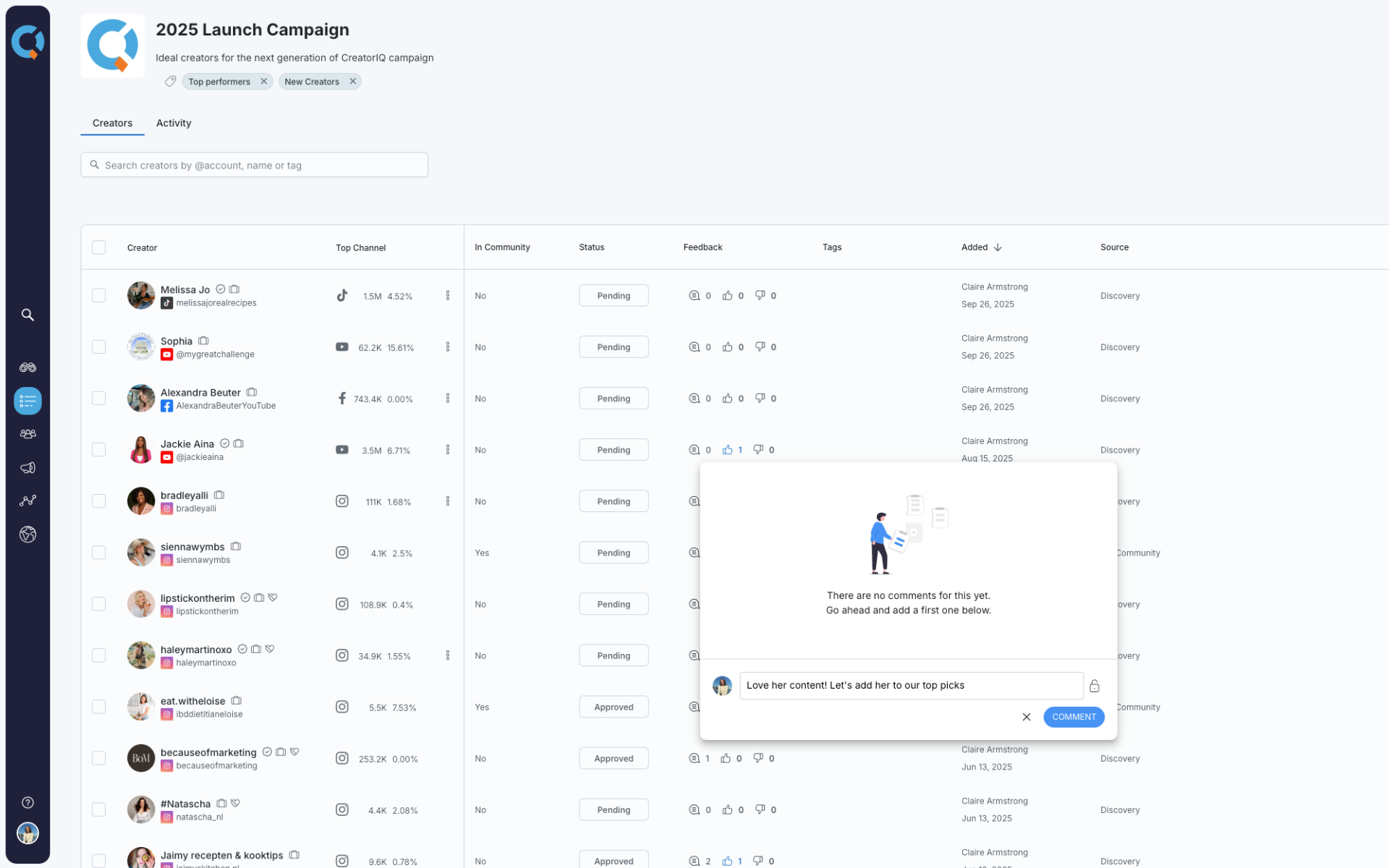
Best for: Large organisations coordinating creator programmes across multiple brands, teams, agencies and markets.
What it does: CreatorIQ combines AI-assisted discovery and evaluation with creator management, campaign execution, contracts, payments, enterprise integrations, reporting, competitive benchmarking and governance controls.
- Content-first discovery uses semantic models and similar-creator recommendations. SafeIQ’s multimodal analysis examines text, imagery, video and audio to surface potential brand-safety or suitability issues within their wider context.
- SafeIQ can expand the volume and types of content teams review, but its outputs remain risk signals rather than final determinations. Human reviewers should consider context, cultural nuance, campaign sensitivity and the organisation’s own suitability standards.
Traackr — For Data-Driven Enterprise Creator Programs
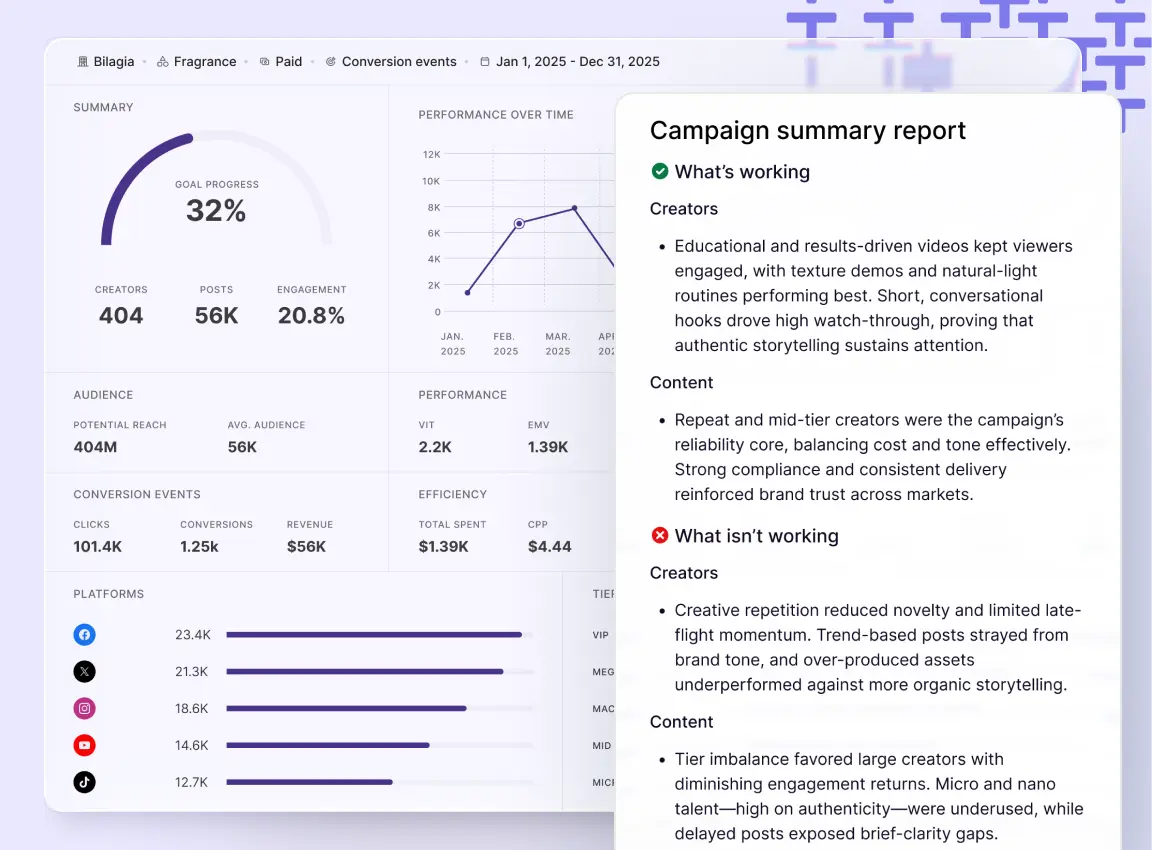
Best for: Enterprise teams combining creator discovery, competitive intelligence, programme execution and benchmarking.
What it does: Traackr supports discovery, audience and content intelligence, campaign activation, collaboration, product seeding, payments, performance measurement and multi-market programme management.
- Traackr formally launched Abigail on 23 September 2026. It can translate a brief into a reasoned creator shortlist, conduct multimodal content analysis and generate campaign summaries and forward-looking recommendations.
- Some Traackr product pages still label brief-to-strategy and modelled-performance workflows Beta. Treat forecasts as planning inputs—not guaranteed results—and verify current account availability because Abigail’s scope is changing rapidly.
Aspire — For Creator Recruitment and Commerce-Oriented Workflows
Best for: Brands combining creator recruitment, marketplace applications, affiliate activity and ecommerce workflows.
What it does: Aspire supports inbound and outbound recruitment, creator relationships, campaign execution, product seeding, content management, affiliate programmes, payments and commerce reporting.
- Aspire’s current AI Creator Discovery page presents natural-language search as available across Instagram and TikTok marketplaces. It uses platform-verified creator metrics and allows selected creators to move directly into projects, groups or outreach workflows.
- Creator Discovery is no longer labelled Beta on the current product page. However, Aspire’s newer Recruit Hub was still described as Beta in its August 2026 update, so teams should distinguish between the live discovery experience and newer recruitment functionality.
Kolsquare — For Creator Intelligence and Multi-Market Reporting

Best for: Brands and agencies managing creator programmes across several European or international markets.
What it does: Kolsquare combines creator intelligence and discovery with IRM, outreach, campaign management, automated content collection, reporting, social listening and competitive analysis.
- Semantic prompt search lets marketers describe creators in natural language. The Kolsquare MCP, currently labelled Beta, connects verified creator and campaign data with compatible AI assistants so teams can request summaries, comparisons or draft reports conversationally.
- The MCP is an access and integration layer—not an autonomous campaign manager. Its usefulness depends on available account data, supported assistant environments and appropriate controls over what information connected systems can retrieve.
Influential Powered by Captiv8 — For Enterprise Matching and Activation

Best for: Enterprises seeking audience-led creator matching, managed campaign execution and broad measurement options.
What it does: Captiv8 has been integrated into Influential Powered by Captiv8 and should not be treated as an unchanged standalone platform. The unified offering covers discovery, audience intelligence, creator workflows, campaign activation, affiliate and commerce functionality, and online and offline measurement.
- The current Captiv8 platform uses natural-language processing, computer vision and machine learning to classify creator content, analyse audience alignment and support matching. CoreCreator adds an audience-first approach to discovery and planning.
- Performance and market-leadership claims published by Influential remain vendor statements unless independently validated. Brands should evaluate the platform against their required integrations, measurement design, operating model and level of managed service.
Which AI Influencer Marketing Tool Fits Your Workflow?
There is no universally best platform. The right choice depends on the operational problem the brand needs to solve, the size and maturity of its creator programme, supported social networks and markets, required integrations, governance standards and the role creator marketing plays within the wider media mix.
Start by identifying the largest source of friction, then test shortlisted platforms using real campaign requirements—not a vendor’s standard demonstration.
⚡️If creator technology must connect with a broader marketing stack, AI Digital’s comparison of leading AI marketing platforms provides a wider framework for evaluating data, automation, integration and measurement capabilities.
If Creator Discovery and Vetting Are the Bottleneck
Prioritise platforms that combine flexible search with evidence for evaluating the results. Useful capabilities include:
- Natural-language, visual and lookalike search alongside conventional filters
- Audience demographics, interests and geographic data
- Authenticity, follower-quality and audience-overlap signals
- Content history, brand-affinity and safety analysis
- Clear explanations for why each creator was recommended
HypeAuditor, Modash, Influencity and Sprout Social Influencer Marketing are relevant starting points for this workflow. However, database coverage should be verified by network, market and creator tier. An AI-generated shortlist accelerates research; it does not prove that every recommended creator fits the campaign.
If You Need End-to-End Campaign Operations
Discovery may be only a small part of the workload for teams managing numerous active partnerships. In this case, examine whether the platform supports:
- Creator relationship records and communication history
- Personalised outreach and scheduled follow-ups
- Briefs, proposals, contracts and negotiation records
- Content submission, feedback and approval
- Usage rights, deadlines and deliverable tracking
- Product seeding, payments and team collaboration
Upfluence, Aspire, Influencity, HypeAuditor and Sprout Social support broad campaign workflows, although the depth of each function varies. During a demonstration, follow one creator from initial discovery through final payment and reporting. This exposes workflow gaps more effectively than reviewing a feature checklist.
If Enterprise Governance and Measurement Matter Most
Enterprise teams should look beyond individual campaign efficiency. Important requirements include standardised data, role-based permissions, audit trails, approval controls, separate brand or regional workspaces, global integrations and consistent reporting.
CreatorIQ, Traackr, Sprout Social and Kolsquare are particularly relevant when several teams, agencies or markets need to work within one operating framework. Evaluation should cover:
- Compatibility with CRM, ecommerce, analytics and business-intelligence systems
- Data export and API access
- Configurable brand-safety standards
- Cross-campaign and competitive benchmarking
- Consistent metric definitions across markets
The goal is not merely to produce more dashboards, but to create a reliable system of record for creator relationships, activity and performance.
If Creator Commerce and Affiliate Revenue Are a Priority
Commerce-focused programmes need more than engagement reporting. Look for creator-specific links and codes, product seeding, catalogue or ecommerce integrations, commission rules, affiliate tracking, creator payments and sales reporting. Upfluence and Aspire are strong starting points, while other enterprise platforms may support commerce through native functionality or integrations.
Platform-attributed revenue should still be interpreted carefully. A sale connected to a creator link or promotional code shows an attributable interaction, but it does not prove that the creator caused an otherwise unlikely purchase. Brands should evaluate incrementality through holdouts, lift studies or other controlled methods where campaign scale and available data permit.
Where AI Influencer Marketing Tools Still Need Human Oversight
AI can accelerate creator research, analysis, and campaign administration, but its recommendations remain decision-support signals—not final decisions. Models can only evaluate the data, criteria, and historical patterns available to them; they may miss cultural context, emerging reputational risks, or the subtleties of a creator’s relationship with their audience.
Human review remains particularly important in four areas:
- Creator matching: A high relevance or brand-fit score does not guarantee cultural alignment, creative chemistry, or suitability for a particular campaign. Teams should review recent content, audience interactions, previous partnerships, and off-platform context.
- Authenticity and fraud analysis: Suspicious follower growth, engagement patterns, or audience-quality scores can identify issues worth investigating. They can also misclassify legitimate behavior, especially among niche or rapidly growing creators.
- Outreach and relationship management: AI-generated messages can speed up personalization, invitations, and follow-ups, but unreviewed outreach may sound generic, reference the wrong content, or communicate an inappropriate offer.
- Sensitive decisions: Automated workflows should not independently approve regulated claims, contracts, usage rights, creator content, disclosure language, or high-risk brand-safety decisions. These steps need defined permissions, escalation rules, and accountable human approval.
Automated execution means software performs predefined tasks, such as sending an approved follow-up or collecting published content. Autonomous decision-making means the system selects an action with limited human involvement. The second model requires stronger controls, but neither replaces campaign strategy, creator relationships, or organizational accountability.
How to Measure Whether an Influencer Marketing Tool Is Actually Worth It
Assess the platform and the campaigns managed through it with two separate scorecards. A successful creator campaign does not automatically prove that the software produced the result, just as a weak campaign does not necessarily mean the tool failed.
Establish a baseline before implementation and compare similar campaigns, teams, or time periods. Include onboarding, integrations, training, and human-review requirements when calculating the platform’s total cost.
Faster discovery, more automated outreach, and higher content volume are efficiency gains. They are not evidence of incremental revenue or marketing ROI by themselves. Similarly, platform-attributed sales show that a tracked interaction occurred; they do not prove that the sale would not have happened without the campaign.
Where investment levels justify it, use a broader marketing measurement framework that combines platform reporting with experiments, holdouts, brand-lift studies, incrementality testing, or attribution analysis to distinguish observed conversions from genuine causal impact.
Build the Tool Stack Around the Workflow, Not the AI Label
The right technology stack begins with a defined influencer marketing problem—not a search for the platform with the most AI features. Identify where the current workflow breaks down, whether that is creator discovery, audience vetting, outreach, content approvals, campaign reporting, or global program governance.
Before selecting a platform:
- Define the required workflow: Document the users, platforms, markets, approval stages, and campaign objectives the tool must support.
- Evaluate the underlying capability: Ask what data powers each recommendation, how frequently it is updated, and where human review remains necessary.
- Test with a realistic use case: Run the same campaign brief or creator sample through shortlisted platforms and compare relevance, efficiency, usability, and reporting quality.
An “AI-powered” label is not a sufficient buying criterion. The most useful platform is the one that improves relevant creator decisions, fits existing systems, and provides suitable data, governance, and measurement without removing accountable human judgment.
Brands seeking to connect creator activity with their wider media strategy can discuss the right approach with AI Digital before adding another platform to their marketing stack.