Why Cross-Platform Measurement Is Still Broken in a Walled Garden World


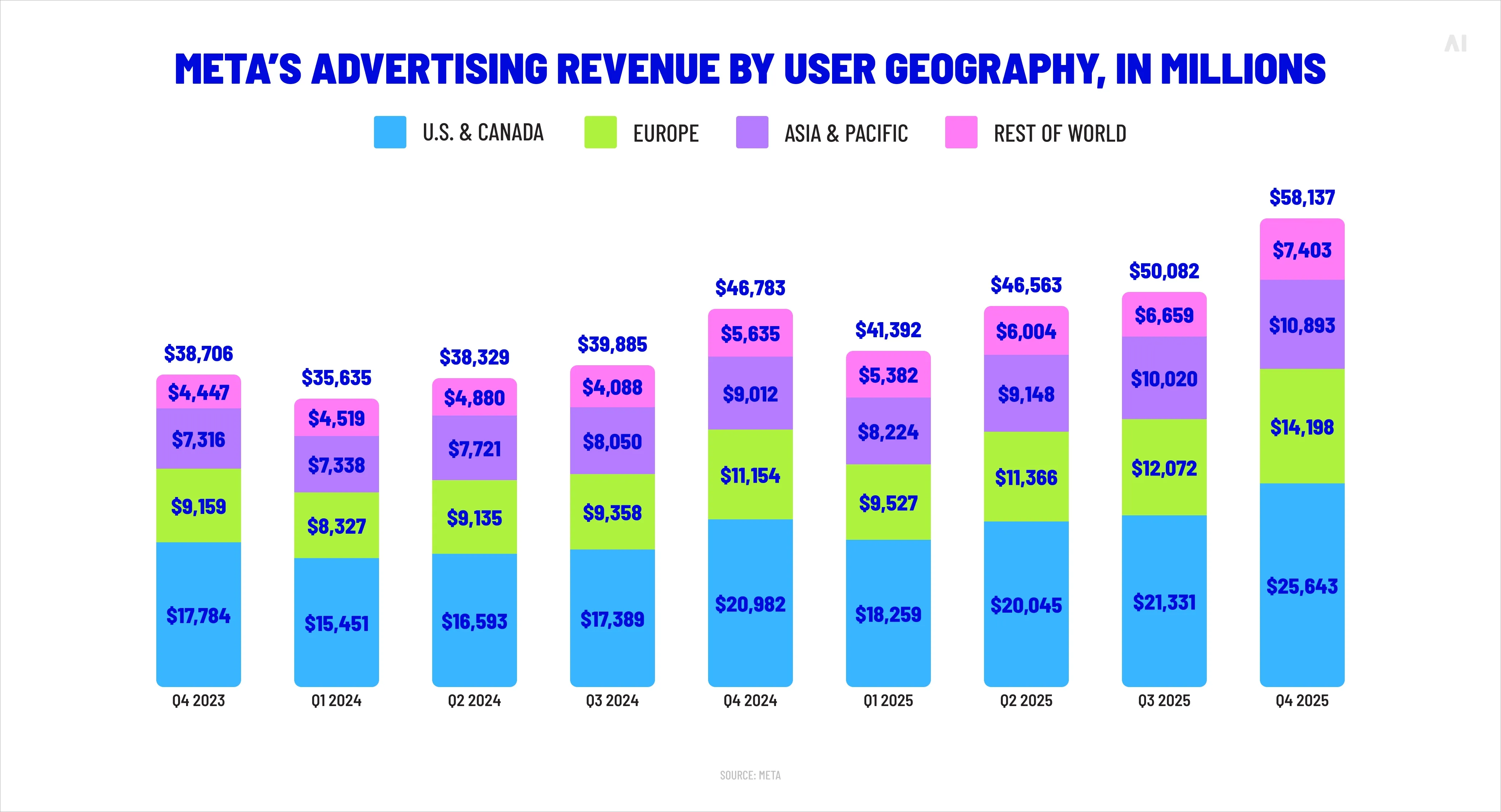
Brands now operate across multiple platforms—search via Google Ads, social through Meta Platforms, video on YouTube, and retail media like Amazon Ads—to maximize cross-platform reach. This shift makes cross-platform measurement essential for understanding how campaigns perform across channels.
However, measurement systems remain fragmented.
Each platform operates as a walled garden, controlling its own data, attribution logic, and reporting standards. According to Nielsen, unduplicated reach can be overestimated by more than 20% when relying on platform-reported data alone, due to audience overlap and lack of reconciliation across environments.
In practice, this leads to structural inconsistencies:
- Duplicate conversions claimed by multiple platforms
- Inconsistent attribution windows across channels
- Limited visibility into cross-platform audience overlap
- No unified source of truth for performance data
💡Despite advances in attribution models and analytics tools, these solutions operate on top of disconnected systems rather than resolving them. The result is a persistent gap.
This article examines why cross-platform measurement is still fundamentally broken—and what this means for modern marketing decision-making.
⚡ ️For a deeper exploration of how cross-platform strategies are structured, see the AI Digital’s guide on What Is Cross-Platform Advertising.
The promise of cross-platform measurement
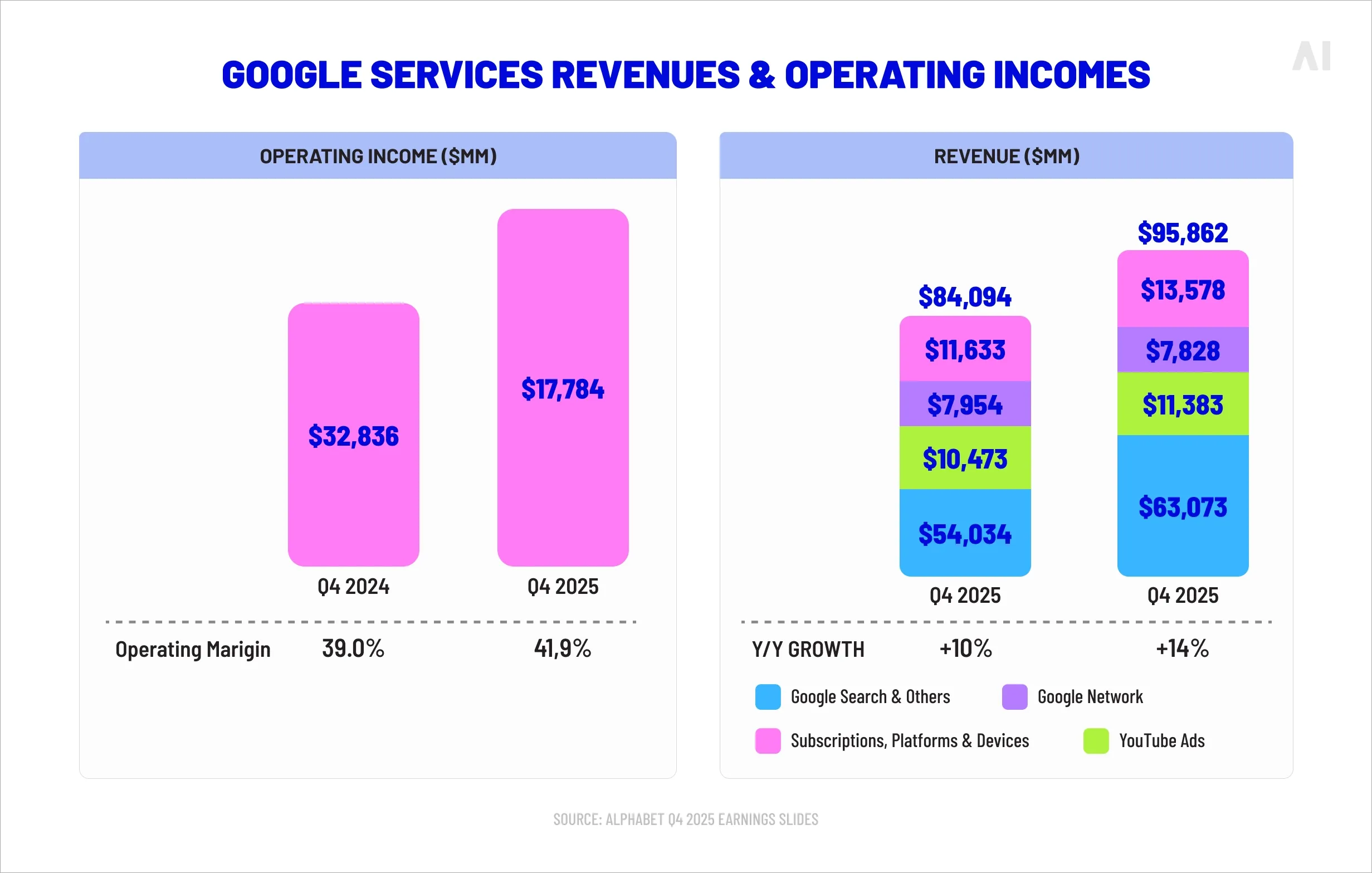
At its core, cross-platform measurement is designed to provide a unified understanding of how advertising performs across multiple digital environments. As campaigns expand across search, social, video, retail media, and programmatic channels, marketers need a measurement framework that reflects how these touchpoints interact—not just how they perform in isolation.
The expectation is straightforward: connect fragmented data into a coherent performance narrative.
In practice, cross-platform measurement is supposed to enable several critical capabilities:
- Understanding how multiple channels contribute to conversions
Rather than crediting a single touchpoint, marketers aim to evaluate the full customer journey—how exposure across platforms influences decision-making over time.
- Evaluating the combined impact of advertising campaigns
Campaigns are rarely siloed. Cross-platform measurement should quantify how channels work together, identifying synergy effects rather than isolated outcomes.
- Managing budget allocation across platforms
With a unified view of performance, marketers can shift investment toward channels that drive the highest overall return—not just the strongest platform-reported metrics.
- Measuring true incremental performance
The ultimate goal is to distinguish between conversions that would have happened anyway and those genuinely driven by advertising exposure across platforms.
This vision aligns with the evolution of modern marketing. As highlighted by the Interactive Advertising Bureau, omnichannel strategies have become standard for advertisers seeking scale and efficiency across fragmented media environments.
💡To support this shift, the industry introduced multi-touch attribution models, identity graphs, and advanced analytics platforms—each promising to unify data and deliver a single source of truth.
However, while the promise of cross-platform measurement is clarity, the reality is far more constrained. These systems depend on data that is inherently fragmented, controlled, and often incompatible across platforms—limiting their ability to deliver on that promise.
Why measurement breaks in walled garden ecosystems
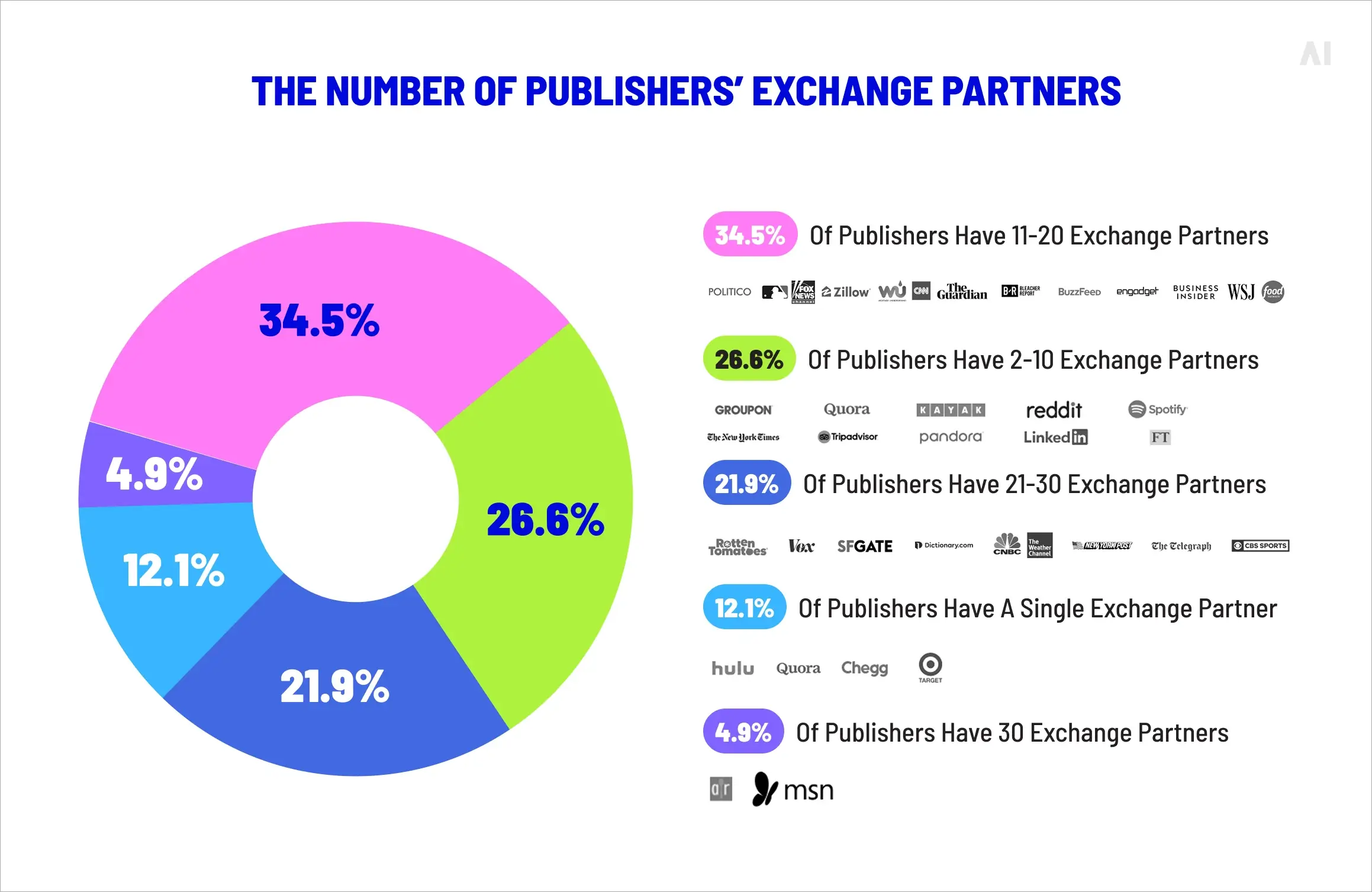
Large advertising platforms operate as closed, vertically integrated ecosystems, where inventory, audience data, optimization algorithms, and reporting systems are tightly controlled within a single environment. These “walled gardens” are designed to maximize performance within the platform—but not interoperability across platforms.
⚡️For a deeper structural overview, see our guide on What Are Walled Gardens in Digital Advertising.
💡This architecture introduces a fundamental limitation: measurement is accurate within platforms but inconsistent across them. Because each platform defines performance on its own terms, there is no shared measurement standard that enables reliable cross-platform comparison.
Platform-controlled reporting
Platforms measure and report campaign performance using their own internal data and attribution frameworks. Whether through native environments (see: Native Advertising Platforms) or programmatic interfaces (see: Programmatic Advertising Platforms), reporting is inherently self-referential.
This creates a structural bias:
- Platforms optimize toward their own attribution logic, not a neutral external standard
- Conversions are often claimed based on platform-specific rules (e.g., click vs. view-through weighting)
- Performance metrics are not directly comparable across platforms
As a result, marketers are not analyzing objective performance—they are comparing platform-specific interpretations of performance.
Restricted data access
Walled gardens significantly limit access to user-level data, impression logs, and event-level tracking. Instead, platforms provide aggregated, privacy-safe reporting through dashboards or controlled environments such as clean rooms.
While this aligns with privacy requirements and data protection frameworks like the General Data Protection Regulation, it introduces measurement constraints:
- No ability to independently verify conversion paths across platforms
- Limited visibility into how users move between channels and devices
- Inability to fully reconstruct cross-platform user journeys
Without granular, interoperable data, cross-platform measurement becomes probabilistic rather than deterministic.
Incompatible measurement systems
Each platform applies its own measurement methodology, including attribution windows, conversion definitions, identity resolution models, and optimization signals.
For example:
- One platform may use a 7-day click attribution window, while another prioritizes view-through conversions within 24 hours
- Identity may be resolved through logged-in user data in one ecosystem and probabilistic modeling in another
- Conversion events may be defined and counted differently across platforms
These differences are not minor—they are structural. They mean that the same user interaction can be interpreted differently depending on the platform measuring it.
The consequence is clear: even if each platform reports accurate results internally, those results cannot be reconciled into a consistent cross-platform view.
This is why cross-platform measurement does not fail due to lack of tools—it fails because the underlying systems are not designed to work together.
The problem of self-attributed performance
A central reason cross-platform measurement breaks down is self-attribution bias—the structural tendency of advertising platforms to credit themselves for conversions based on their own internal attribution models. Because each platform measures performance independently, there is no neutral authority assigning credit across channels.
In a walled garden ecosystem, platforms are both media sellers and measurement providers. This creates a closed feedback loop where performance is evaluated using platform-defined rules, not a shared standard.
When multiple platforms are involved in a campaign, several inconsistencies emerge:
- The same conversion may be counted multiple times
If a user sees an ad on one platform and converts after interacting with another, both platforms may claim credit for the same outcome.
- Attribution windows vary across platforms
One platform may apply a 7-day click window, while another uses a 1-day view-through model—leading to different interpretations of causality.
- Platform-reported results often conflict
Each platform optimizes for its own reporting logic, meaning performance metrics are not directly comparable.
These differences are not anomalies—they are inherent to how platforms are designed. The result is a measurement environment where aggregate platform performance exceeds actual business outcomes, making it difficult to determine true contribution by channel.
Why this breaks cross-platform comparison
Because attribution is defined differently across platforms:
- ROI and performance metrics are not standardized
- Channel contribution cannot be accurately isolated
- Budget allocation becomes biased toward platforms that over-attribute
Even advanced attribution models struggle in this environment because they depend on inputs that are already fragmented and inconsistent.
Ultimately, self-attribution bias means that cross-platform measurement is not just incomplete—it is structurally distorted. Without a shared attribution framework or independent verification layer, marketers are left comparing incompatible performance narratives rather than a unified view of reality.
For a deeper exploration of transparency challenges in digital advertising, see Digital Advertising Transparency: Why It Matters in a Fragmented Ecosystem.
Deduplication challenges across advertising platforms

One of the most critical—and unresolved—issues in cross-platform measurement is deduplication: identifying when the same user has been exposed to ads across multiple platforms and ensuring that interactions are not counted multiple times. In theory, this requires consistent identity signals and shared datasets across environments. In practice, neither condition is reliably met.
⚡️As outlined in Digital Advertising Ecosystem: How It Actually Works in a Fragmented, Platform-Driven World, modern advertising operates across independent, non-interoperable systems, making unified user tracking inherently difficult.
Device fragmentation and identity gaps
Users interact with advertising across multiple devices—smartphones, laptops, tablets, and connected TVs—often within the same conversion journey. However, identity resolution across these devices is inconsistent.
Some platforms rely on deterministic identifiers (e.g., logged-in users), while others depend on probabilistic models. Without a unified identity layer:
- A single user may appear as multiple distinct users across devices
- Cross-device journeys cannot be reliably reconstructed
- Cross-platform reach is often overstated due to duplicated user counts
This fragmentation directly undermines accurate deduplication.
Platform data silos
Each platform stores user interaction data— impressions, clicks, conversions —within its own environment. These data silos prevent cross-platform visibility, meaning no single system has access to the full user journey.
As a result:
- Platforms cannot verify whether a conversion has already been attributed elsewhere
- Impression frequency cannot be accurately controlled across platforms
- Deduplication must rely on partial or modeled data rather than complete datasets
This reinforces the core limitation: cross-platform measurement operates without a shared data foundation.
Privacy restrictions and signal loss
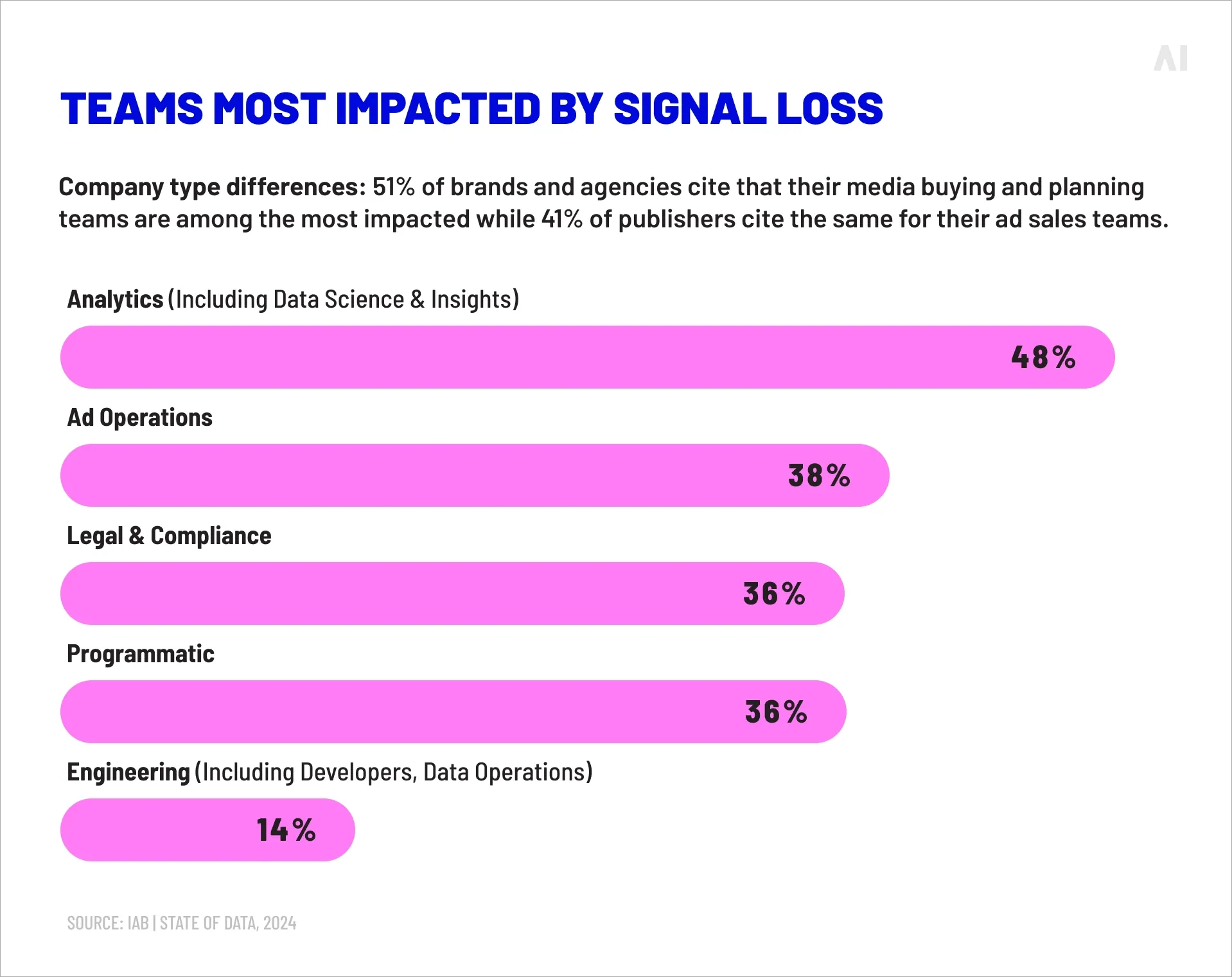
Privacy regulations such as the General Data Protection Regulation, along with platform-level changes (e.g., reduced third-party cookie support and limited mobile identifiers), have significantly reduced the availability of trackable user signals.
This has three direct consequences:
- Fewer deterministic identifiers available for matching users across platforms
- Increased reliance on aggregated and modeled data
- Reduced ability to track user behavior across environments over time
While these changes are necessary for user privacy, they further constrain the already limited ability to deduplicate audiences across platforms.
These challenges are particularly pronounced in emerging environments such as connected TV and retail media, where identity frameworks and measurement standards vary widely. In these ecosystems, user-level tracking is often incomplete or entirely unavailable, making deduplication even more complex.
⚡️For a deeper look at how these issues affect measurement in streaming environments, see our guide on CTV Measurement. In this context, deduplication is not just a technical challenge—it is a structural limitation of a fragmented, platform-driven ecosystem.
Attribution models vs Ecosystem fragmentation
Attribution models are designed to distribute credit across multiple marketing touchpoints, helping marketers understand how different channels contribute to conversions. In theory, they are a core component of cross-platform measurement, offering a structured way to evaluate performance across complex user journeys.
⚡️In practice, however, attribution models operate under a critical constraint: they depend on data that is incomplete, inconsistent, and platform-controlled. For a detailed overview of attribution frameworks, see Multi-Touch Attribution Explained.
Why attribution models fall short
Modern attribution approaches—whether rule-based or algorithmic—assume access to a comprehensive and unified dataset. This assumption does not hold in a fragmented advertising ecosystem.
Several structural challenges limit their effectiveness:
- Missing cross-platform signals
Attribution models cannot assign credit to touchpoints they cannot see. When user interactions occur within closed platforms, those signals are either partially available or entirely absent.
- Inconsistent data access across platforms
Each platform exposes different levels of data granularity. Some provide aggregated insights, others allow limited event-level tracking, but none offer full transparency across environments.
- Platform-controlled attribution windows
Attribution timing varies significantly between platforms. A conversion might be counted within a 7-day click window in one system and excluded entirely in another, depending on attribution rules.
These inconsistencies mean that attribution models are not operating on a single, reconciled version of the user journey, but rather on fragmented subsets of it.
The structural limitation
Even the most advanced attribution model cannot correct for data it does not have or data that is defined differently across platforms. As a result:
- Credit allocation becomes skewed toward observable touchpoints, not necessarily the most impactful ones
- Channels operating in closed ecosystems may be over- or under-valued depending on data visibility
- The resulting performance insights reflect model assumptions as much as actual user behavior
This highlights a key reality: attribution models are analytical overlays, not structural solutions. They attempt to interpret performance within fragmented systems but cannot resolve the fragmentation itself.
Implication for cross-platform measurement
Because attribution depends on input data integrity, and that data is inherently inconsistent across platforms, attribution models cannot deliver a fully reliable cross-platform view.
💡They remain useful for directional insights—but they do not eliminate the underlying issue: cross-platform measurement is constrained by ecosystem design, not by a lack of modeling sophistication.
Clean rooms: A partial solution with structural limits
Data clean rooms have emerged as a privacy-safe mechanism for analyzing campaign data across platforms, particularly as traditional tracking signals decline. Within these environments, advertisers and platforms can match datasets and run queries without exposing individual user-level information, enabling aggregated analysis while maintaining compliance with privacy regulations.
Clean rooms are designed to support key measurement use cases:
- Matching first-party data with platform exposure data
- Analyzing audience overlap in a controlled environment
- Measuring campaign performance without direct access to identifiable user data
However, while they improve collaboration, they do not resolve the core limitations of cross-platform measurement.
- Restricted access to raw data limits analytical depth and prevents full reconstruction of user journeys.
- Platform-controlled environments mean that query logic, data availability, and outputs are defined by the platform itself.
- Limited interoperability between platforms results in multiple, disconnected clean rooms rather than a unified measurement layer.
As a result, clean rooms provide incremental visibility within silos, not a solution to fragmentation across them.
Why adding more measurement tools doesn’t fix the problem
In response to measurement challenges, many organizations invest in additional analytics platforms, attribution tools, and external vendors. The assumption is that more tooling will create clarity. In reality, the issue is not a lack of tools—it is the fragmented structure of the advertising ecosystem.
⚡️For a deeper perspective, see Why Fragmented Data Is Breaking Cross-Platform Performance.
⚡️Advanced solutions such as AI Digital’s Elevate are designed to improve forecasting, planning, and performance interpretation. However, even the most sophisticated tools must operate within the constraints of how data is generated and shared across platforms.
Independent platform infrastructures

Major advertising platforms operate on separate technology stacks and data infrastructures, each with its own identity systems, optimization algorithms, and reporting logic. As explained in DSP vs. SSP vs. Ad Exchange, the programmatic ecosystem itself is built on multiple interconnected but independent components.
Because these infrastructures are not designed to interoperate:
- Data cannot flow freely between platforms
- Identity resolution remains platform-specific
- Measurement cannot be standardized across channels
Inconsistent data access
Each platform exposes different levels of data granularity and accessibility. Some provide aggregated dashboards, others allow limited event-level exports, but none offer full transparency across environments.
This creates a fundamental limitation:
- Performance comparisons are based on non-equivalent datasets
- Attribution models operate on partial inputs
- Cross-platform insights are inherently constrained
Isolated reporting environments
Every platform provides its own reporting interface, metrics definitions, and performance summaries. These isolated reporting environments generate multiple, parallel views of campaign performance.
The result:
- Marketers must reconcile conflicting performance narratives
- Metrics such as conversions, reach, and ROI are defined differently across platforms
- There is no single, authoritative measurement layer
⚡️For a broader strategic perspective, see From Fragmented to Sustainable: Rethinking the Programmatic Supply Path.
Adding more measurement tools does not resolve these issues because the fragmentation originates at the platform and infrastructure level. Tools can aggregate, model, and interpret data—but they cannot unify systems that are fundamentally designed to remain separate.
This is why cross-platform measurement remains structurally constrained, regardless of how advanced the measurement stack becomes.
The governance gap in cross-platform measurement

The limitations of cross-platform measurement are not only technological—they are structural. Modern advertising operates across multiple platforms, data environments, and reporting systems that were never designed to interoperate. As a result, fragmentation persists regardless of how advanced measurement tools become.
⚡️This structural misalignment has led to the emergence of governance-based approaches, such as AI Digital’s Open Garden framework, which focus on coordinating how data is interpreted, rather than attempting to fully unify systems that remain inherently disconnected.
The shift is subtle but important: instead of forcing technical integration, governance frameworks aim to establish consistency, transparency, and decision logic across fragmented environments.
Fragmented measurement frameworks
Each platform applies its own attribution models, reporting metrics, and measurement methodologies. What qualifies as a conversion, how it is counted, and when it is attributed all vary across platforms.
This results in:
- Conflicting performance signals across channels
- Non-standardized KPIs that cannot be directly compared
- Overlapping and sometimes inflated reporting outcomes
Without governance, these differences remain unresolved, leaving marketers to interpret inconsistent data without a clear framework.
Disconnected data environments
Advertising data is distributed across multiple, siloed systems—platform dashboards, analytics tools, clean rooms, and internal databases. There is no single dataset that fully represents the user journey across platforms.
This creates several challenges:
- Incomplete visibility into cross-platform interactions
- Dependence on modeled or aggregated data
- Limited ability to validate performance independently
Governance approaches do not eliminate these silos but instead define how data from different environments should be interpreted and combined.
Organizational coordination challenges
Cross-platform measurement is also an organizational problem. Different teams—performance marketing, brand, analytics, agencies—often operate with separate tools, KPIs, and reporting frameworks.
This leads to:
- Misaligned performance definitions across teams
- Inconsistent reporting methodologies
- Fragmented decision-making processes
Effective governance requires aligning these stakeholders around shared measurement principles, ensuring that performance is evaluated consistently across the organization.
Toward governance-led measurement
Frameworks like Open Garden reflect a broader industry shift: recognizing that fragmentation cannot be fully removed, but it can be managed.
By introducing governance layers—standardized definitions, cross-platform validation logic, and coordinated measurement strategies—organizations can:
- Improve transparency across platforms
- Reduce reliance on platform-specific reporting
- Make more consistent, comparable performance decisions
⚡️For a deeper exploration of this approach, see Cross-Platform Measurement Governance in Digital Advertising.
💡In this context, the future of cross-platform measurement is not about achieving perfect unification, but about building systems of interpretation that can operate effectively within fragmentation.
Conclusion: Why cross-platform measurement needs structural change
Cross-platform measurement remains one of the most persistent challenges in digital advertising because the ecosystem itself is structurally fragmented. Campaigns operate across independent platforms, each with its own data environment, attribution logic, and reporting system, none of which are designed to work together.
As a result, marketers are attempting to evaluate unified performance across systems that are fundamentally disconnected.
While solutions such as attribution models, analytics platforms, and data clean rooms provide incremental improvements, they do not resolve the underlying issue. These tools operate on top of fragmented inputs, meaning the insights they generate are still constrained by incomplete, inconsistent, and platform-controlled data.
The implication is clear: measurement challenges are not primarily technological—they are structural.
Key takeaways
- Cross-platform measurement is limited by platform-controlled data environments
Each platform defines and reports performance independently, restricting visibility across channels.
- Self-attribution and reporting inconsistencies distort performance insights
Platforms apply different attribution models, often over-crediting their own contribution.
- Deduplication across devices and platforms remains difficult
Without unified identity signals, the same user and conversion may be counted multiple times.
- Measurement tools alone cannot solve ecosystem fragmentation
Adding more analytics layers does not unify disconnected systems.
- Governance frameworks are increasingly necessary to interpret cross-platform performance
Structured approaches, such as the Open Garden model, help organizations navigate and standardize measurement across fragmented environments.
Ultimately, improving cross-platform measurement requires rethinking how performance is interpreted across platforms, not just how it is tracked.