Understanding CTV inventory in modern streaming advertising


A familiar streaming logo tells you surprisingly little about the CTV inventory behind a proposal. The content owner, app operator, device platform and company selling the ad space may all have different roles in bringing it to market.
This guide follows that inventory from its source to the advertiser, explaining monetization rights, access arrangements, quality checks and the commercial claims worth examining along the way.
TL;DR: CTV inventory at a glance
- CTV inventory includes in-stream advertising and, on some platforms, television-interface placements.
- Content owners, streaming services and distribution partners may hold different monetization rights within the same viewing environment.
- Direct relationships, programmatic transactions and curated packages describe different aspects of access and can overlap.
- “Premium” needs supporting evidence about the environment, seller, traffic quality and campaign fit.
- Multiple supply paths can provide legitimate access with different terms, fees and disclosure.
- Evaluate the source and buying route together before choosing inventory on CPM alone.
What is CTV inventory?
CTV inventory is the advertising space available in connected television environments, delivered on internet-connected TVs or devices that stream content to a television screen. CTV ad inventory most commonly means video opportunities before, during or after streamed programming.
The definition also covers certain device-level placements. Amazon’s Fire TV specifications, for example, include sponsored tiles, browsing banners and screensavers. These differ from commercials within a program and should be identified separately in a proposal.
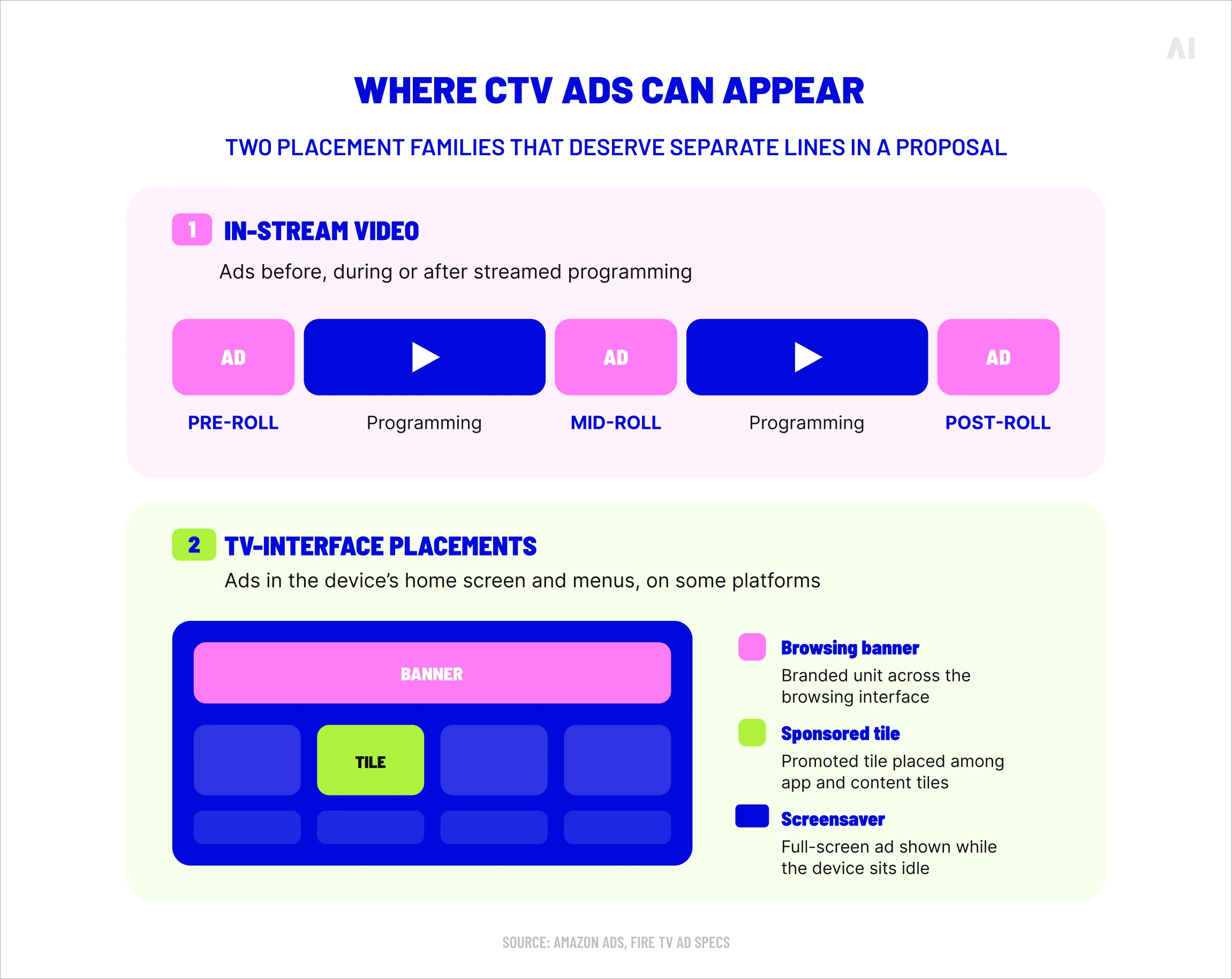
Connected TV inventory describes the advertising opportunity. A content catalog describes what people can watch; an audience describes whom an advertiser wants to reach. Neither establishes which placements a seller can offer. Likewise, a streaming service available on television and mobile devices does not make all its advertising inventory CTV.
Where does CTV inventory come from?
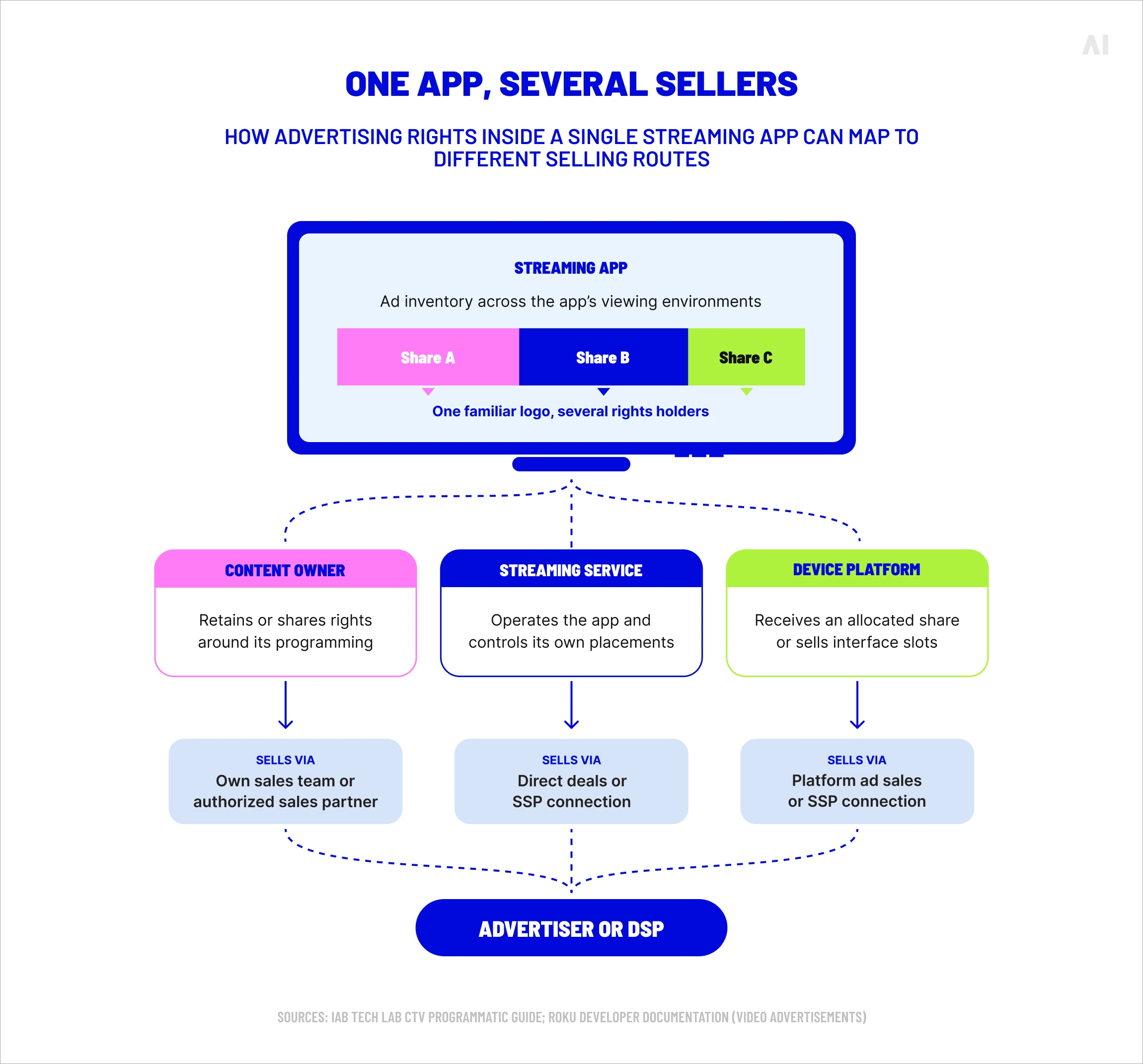
CTV inventory sources span content production, streaming distribution and the television platform itself. The company providing one part of the experience may have rights to monetize only part of its advertising.
Content owners and streaming publishers
Content owners, networks and publishers can create advertising opportunities around programming. Their ability to sell those opportunities depends on the licensing and distribution arrangements involved.
A rights holder may retain advertising rights when a program reaches another service, transfer them or share them with a distribution partner. Buyers therefore need to identify the party authorized to monetize the placement, even when the program and app are familiar. IAB Tech Lab’s inventory-sharing guidance explicitly recognizes multiple entities holding sales rights within an app.
Streaming services, FAST channels and ad-supported tiers
Ad-supported services create supply around on-demand viewing, scheduled channels and live events. Free ad-supported streaming television, or FAST, offers scheduled channels without a subscription charge; subscription services can also make advertising opportunities available through ad-supported tiers.
These categories can coexist within a service. For a buyer, the useful questions concern which viewing environments are included, which devices qualify and what content information accompanies the offer. A platform-wide package should not be assumed to include every program or event.
Distributors, device platforms and inventory-share agreements
Distributors and device platforms may receive monetization rights through commercial agreements. Roku’s developer documentation describes an inventory-split model in which an app routes part of its advertising inventory to Roku while controlling the remainder. That illustrates a particular arrangement, not a universal rule for every service on the platform.
⚡ The name on the screen may explain the viewing experience; the seller relationship explains the purchase.
How CTV inventory reaches advertisers
Advertisers access supply through commercial relationships and the systems supporting them. Understanding both helps establish what the seller can deliver and how the transaction will work.
Direct publisher and platform access
A buyer can negotiate with a publisher, streaming platform or authorized sales representative. The agreement can define eligible inventory, pricing, reporting and delivery commitments.
That commercial relationship can still use programmatic infrastructure. Google Ad Manager’s transaction framework distinguishes direct negotiation from automated execution and supports both through programmatic direct. Consequently, negotiating with a publisher does not establish that no SSP or other ad-tech system participates.
Programmatic access through SSPs and exchanges
Supply-side platforms, or SSPs, and exchanges make sellers’ inventory available to demand-side platforms, or DSPs. They help connect supply with buyers and communicate information used to evaluate advertising opportunities.
For programmatic CTV inventory, ask which seller and inventory pool sit behind the connection. A DSP’s access to a platform does not establish that every placement is available through every deal.
💡 AI Digital’s guide to how supply-side platforms work explains the broader infrastructure.
Open auction and deal-based CTV access
Inventory can be offered through open auctions or arrangements with selected buyers. Reservation, priority and pricing depend on the agreement, as the distinction between private auctions and guaranteed transactions illustrates.
Curation describes how a package is assembled. A curator may select inventory and combine it with data or optimization, then make the package available through Deal IDs. This can coexist with PMP buying rather than form a separate transaction category. The IAB Tech Lab Deals API specification distinguishes the originating system, curator and contracting seller.
Ask what the package contains, whether its inventory can change and what guarantees actually apply.
💡 For campaign execution beyond those supply questions, see the CTV media-buying guide.
What does “premium CTV inventory” actually mean?
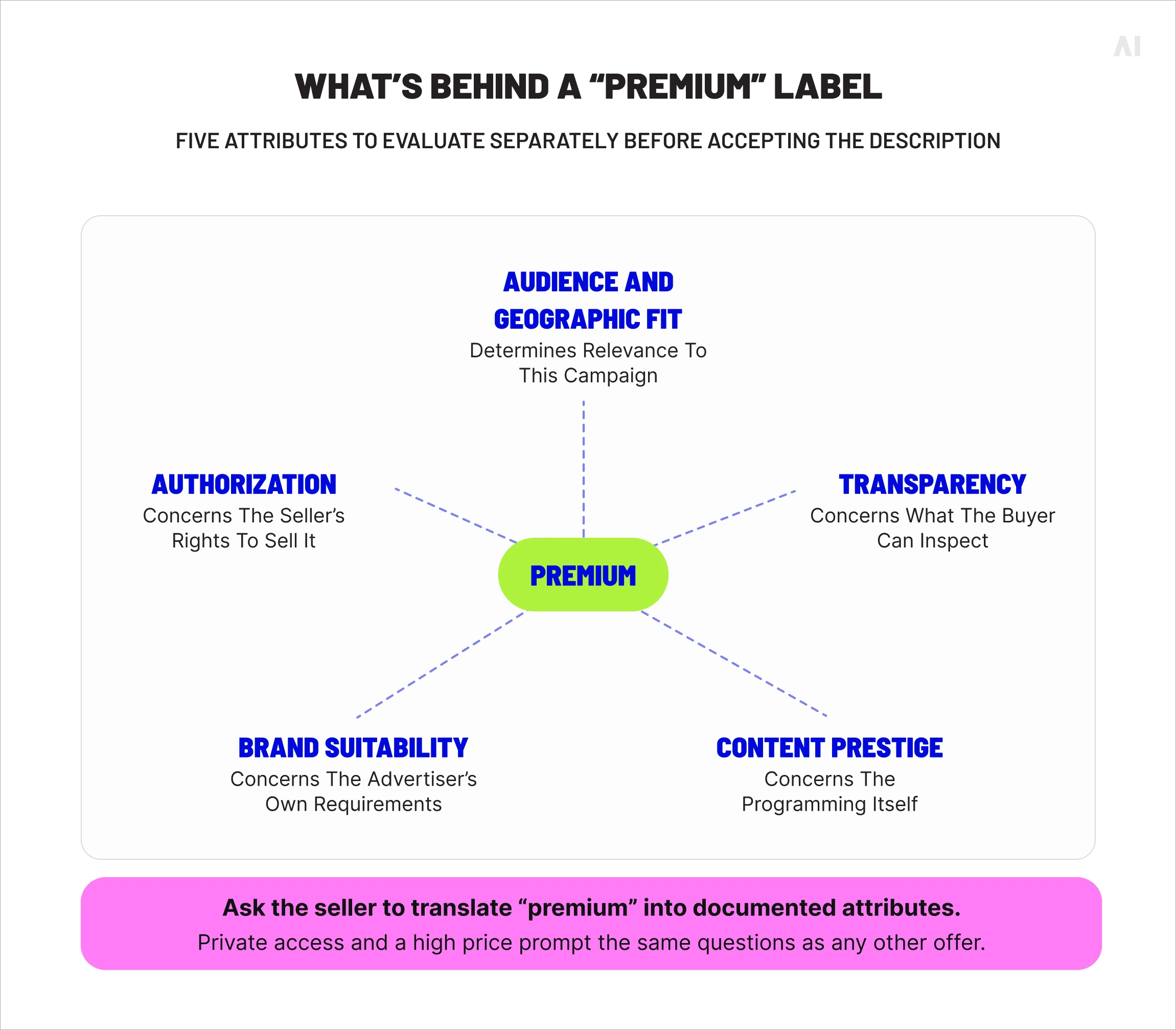
“Premium CTV inventory” is a commercial description that needs unpacking. A seller may use it to describe recognizable programming, restricted access, desirable audiences or particular quality controls. The label alone establishes none of those characteristics.
Evaluate them separately. Content prestige concerns the programming. Authorization concerns the seller’s rights. Transparency concerns what the buyer can inspect. Brand suitability concerns the advertiser’s requirements, while audience and geographic fit determine relevance to the intended campaign.
A national entertainment package could offer excellent programming but limited disclosure about individual placements. A smaller specialist environment could suit a focused audience particularly well. Neither example establishes performance before the campaign runs.
When a proposal promises premium CTV supply, ask the seller to translate that description into documented attributes. Private access and a high price should prompt the same questions as any other offer.
⚡ A premium label becomes useful when the seller can explain the specific attributes behind it.
Why the same CTV inventory can appear through multiple supply paths
Multiple SSP connections, authorized resellers and inventory-sharing arrangements can create several routes into the same or similar streaming supply. The authorized-seller specification accommodates multiple selling systems and inventory partners.
The apparent overlap needs examination. Two sellers naming the same app could represent different inventory shares or content packages. Alternatively, the same opportunity may be offered through parallel connections. Seeing an app on several supply lists does not establish which situation applies, or mean an impression was delivered more than once.
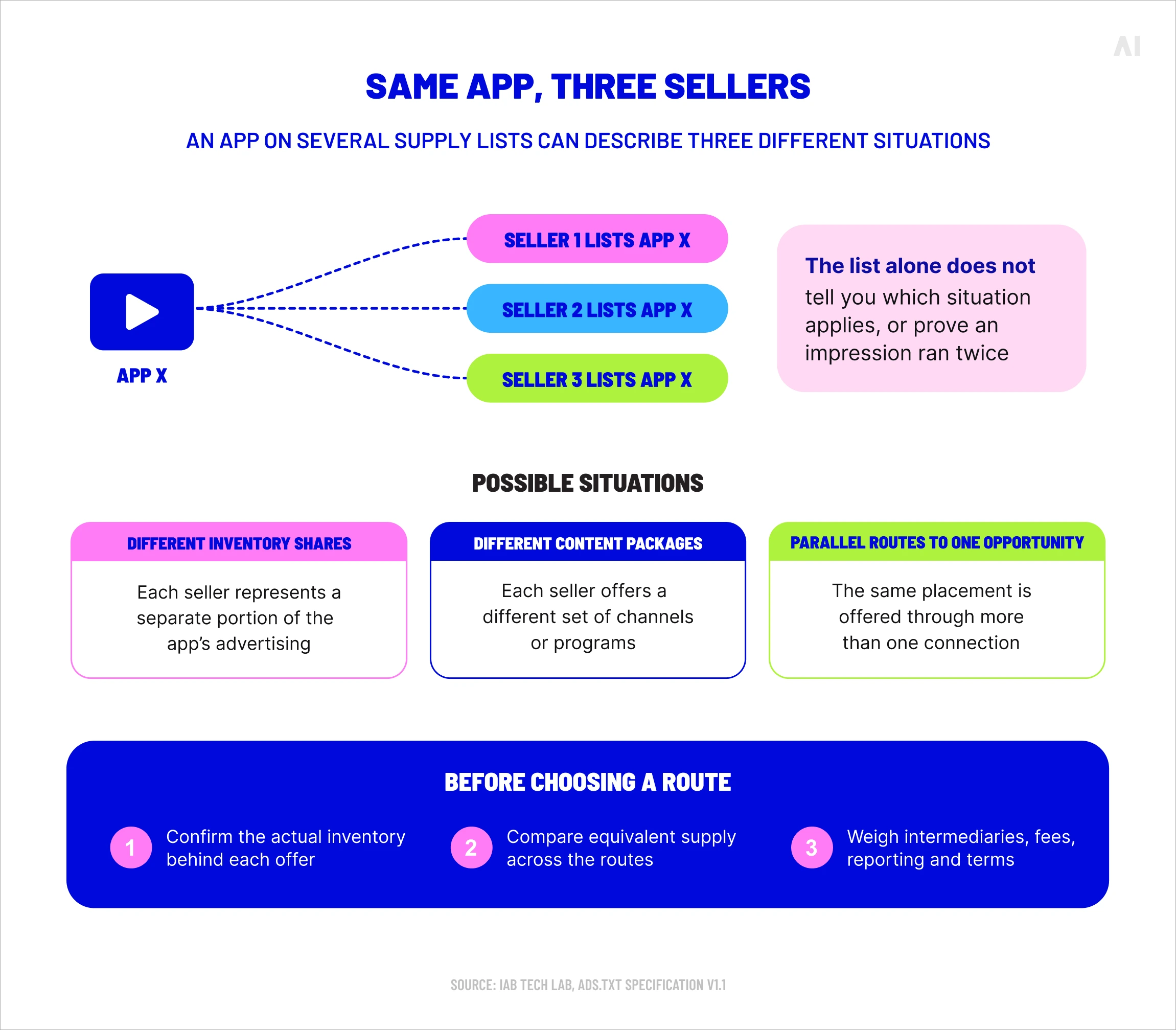
Each CTV supply path may involve different intermediaries, charges, reporting and commercial terms. Buyers should compare equivalent inventory and ask what each participant contributes.
Supply path optimization provides a framework for that assessment. A shorter route deserves consideration, but legitimate access, useful capabilities and total economics should determine the choice. Counting intermediaries alone cannot answer those questions.
How to evaluate CTV inventory quality
Evaluate CTV inventory quality through evidence about the placement, seller and traffic, then assess its relevance to the campaign. A proposal should give the buying team enough information to understand both the offer and its limits.
Verify the app, channel and content environment
Start with where the ad will appear. Request app identifiers, available channel or content information, eligible geography and device context. An app-level report may cover multiple channels and programs, so establish the granularity before buying.
OpenRTB’s CTV guidance describes signals for applications, devices and content. Their availability in a standard does not mean every seller supplies them. Confirm what is available before bidding and what will appear in delivery reports.
Understand who is selling the inventory
Identify the inventory holder, sales representative and intermediaries. In programmatic supply, complementary transparency standards help test those relationships:
- App-ads.txt declares authorized selling accounts for app inventory.
- Sellers.json helps identify the entities behind seller accounts.
- The SupplyChain Object describes the declared transaction path and whether it is complete.
Reconcile these records rather than accepting their presence as sufficient. SupplyChain information concerns the payment path and does not reveal every delivery service or fee. These checks help establish seller relationships; they do not certify content quality, audience relevance or campaign results.
Check for fraud, IVT and inventory spoofing risks
CTV supply can be misrepresented through spoofed apps or devices, fabricated traffic and other invalid activity. The Media Rating Council’s IVT guidance identifies app misrepresentation and bots among the risks requiring filtration.
Ask which controls operate before purchase and after delivery, what environments they cover and how discrepancies are investigated. The MRC accreditation directory specifies coverage by service, metric and environment; accreditation should be checked at that level. For a fuller explanation of the risks, see CTV ad fraud and verification.
Match inventory to the campaign objective
The value of connected TV advertising inventory depends partly on the task it must perform. National entertainment, local streaming, FAST channels, live sports and niche programming offer different contexts to assess against audience, geography and content requirements.
For example, a regional advertiser should examine delivery within its service area before paying for a nationally recognizable package. Content type alone cannot establish likely business results.
What CTV inventory cost actually reflects
CTV advertising inventory is priced within a market influenced by demand and the specifics of the offer. In May, IAB projected US CTV ad spending would grow 11% in 2026. That forecast describes spending growth, not an equivalent increase in CPMs.
For an individual buy, assess publisher and content environment, audience characteristics, geography, targeting restrictions, seasonality and major events. Deal structure, priority and commercial commitments also affect what is being priced.
Then examine the total charge. Amazon’s pricing-transparency guide describes DSP pricing that can include additional targeting, measurement and service fees. Two apparently comparable quotes may therefore include different things.
Ask what the price buys and what remains additional. A higher CPM can reflect a narrower audience or a different service package; a lower CPM does not establish poor-quality supply. Compare those terms with verified delivery and campaign objectives.
⚡A useful CPM comparison starts with equivalent inventory, services and commitments.
Common CTV inventory mistakes
The recurring errors begin when a convenient label substitutes for checking the offer.
Assuming all CTV inventory is the same
Separate content environment, seller rights, device context and reporting. A television-screen classification leaves substantial differences unresolved.
Treating “premium” as proof of quality
Ask which attributes justify the description and what evidence supports them. Recognizable programming still needs suitability and traffic-quality checks.
Assuming “direct” always means the same thing
Clarify who the buyer contracts with, who controls the selling account and which systems transact the impression. Those relationships can differ.
Optimizing for CPM without checking the supply path
Review the source, intermediaries and included charges before rewarding a cheaper route. Confirm that the inventory still meets the campaign’s requirements.
How AI Digital connects CTV supply decisions to campaign outcomes
AI Digital approaches CTV supply through the business goals a campaign is intended to achieve. Smart Supply brings together supply intelligence, media expertise and a platform-independent approach to help advertisers assess inventory against their objectives.
Connecting CTV supply to business KPIs with Smart Supply
Smart Supply is built around improving client KPIs. For CTV advertisers, that means evaluating supply in relation to the intended audience, geographic requirements and campaign objective, then assessing delivery against those expectations.
AI Digital’s team of 350+ media experts supports this approach, combining human judgment with AI-assisted analysis. The emphasis is on using campaign evidence to inform supply decisions and keeping those decisions connected to the advertiser’s goals.
Inventory access and transparency support that work. Understanding the environments being purchased, the buying relationships involved and the associated costs gives advertisers a stronger basis for evaluating what their spending delivers.
Supporting the strategy through the Open Garden Framework
The Open Garden Framework supports Smart Supply through a vendor-neutral approach across DSPs, SSPs and data partners. Platform independence allows the supply strategy to follow campaign requirements without tying it to a single provider.
For CTV campaigns, this means considering relevant supply options across partners while examining access, transparency and commercial terms. Open Garden provides the flexibility to assemble those relationships around the campaign; the underlying advertising rights remain with the relevant inventory holders and authorized sellers.
Better CTV buying starts with better inventory visibility
Streaming TV inventory becomes easier to evaluate when the proposal explains the opportunity, its seller and the route to purchase. That information lets buyers examine cost alongside environment, authorization, traffic quality and campaign fit.
Before committing, establish what can be verified and how delivery will be reported. Carry those expectations into the agreement and review them during the campaign.
To put that approach into practice, discuss your CTV supply strategy with AI Digital.