Top 10 Display Ad Networks for Publishers and Advertisers in 2026

Display ad networks remain one of the central engines of digital advertising, connecting advertisers to high-quality publisher inventory through scalable, automated pipelines. At their core, a display ad network aggregates ad placements across thousands of sites and apps, making it easier for brands to buy impressions and for publishers to monetize their traffic. What distinguishes today’s display advertising environment is the sheer speed and sophistication behind every impression. In 2026, more than 92% of global display spend runs through programmatic advertising, and the majority of those impressions move through AI-enhanced networks capable of real-time decisioning, fraud detection, and privacy-safe audience modeling.
A modern display network is not the same thing as an ad exchange, DSP, or SSP—although all four often work together. Ad exchanges function as the open marketplaces where impressions are auctioned; SSPs help publishers manage and sell their inventory; DSPs help advertisers bid and target audiences; and display ad networks layer curated inventory, direct partnerships, brand-safe environments, proprietary optimization tools, and performance-driven analytics on top of this infrastructure. According to AI Digital’s 2026 market analysis, networks using AI-driven curation and dynamic creative optimization see up to 38% higher CTRs and 27% stronger viewability compared to traditional static networks, highlighting how much value the “network layer” still brings in a fragmented marketplace.
This article maps out those evolving needs and breaks down the top 10 display ad networks that deliver the best results for both sides of the ecosystem in 2026, helping teams choose the right partner for direct buys, programmatic optimization, and scalable growth across channels.
What is display advertising?
Digital Display advertising is a form of digital marketing that delivers visual ads—such as banners, pop-ups, interstitials, video creatives, and native ad units—across websites, apps, and connected platforms. These ads are designed to capture attention quickly through images, animations, headlines, and interactive elements. This helps brands build awareness, drive conversions, and stay visible throughout the customer journey, making it one of the most versatile formats in online media buying.
Display ads move through the broader machinery of programmatic advertising, where impressions are bought and sold in milliseconds. Real-time bidding (RTB), AI-powered optimization, and privacy-safe targeting models determine which ad appears, who sees it, and how much it costs. Display formats adapt to these automated environments, enabling advertisers to reach relevant audiences at scale while improving efficiency and reducing wasted spend.
Because display inventory spans millions of websites and mobile apps, display advertising plays a central role in shaping how brands communicate online. In the programmatic era, display advertising has become smarter, more contextual, and more tightly integrated with data-driven targeting, making it a foundational component of every modern media strategy.
What is a display ad network and how does it work?
A display ad network is a platform that connects advertisers with available ad inventory across thousands of websites, apps, and digital environments. Instead of negotiating placements individually, advertisers can access curated, scalable inventory through a single network, while publishers monetize their content more efficiently.
💡The core role of a display ad network is aggregation: it collects ad spaces from publishers and matches them with advertiser demand based on targeting criteria, budgets, performance goals, and brand-safety filters.
The workflow is a fast, automated cycle. When a user loads a page, the network evaluates the available impression, determines which advertisers are eligible, and selects the highest-value ad to serve. Historically, this matching process relied on direct deals and static placements, but modern networks increasingly integrate real-time bidding (RTB) and machine-learning optimization to refine who sees each ad. RTB enables advertisers to bid on impressions in milliseconds, while AI models predict which combinations of creative, audience segment, and placement are likely to deliver the strongest results.
⚡️This is where the distinction between programmatic vs. RTB becomes important: programmatic advertising is the broader automated ecosystem, while RTB is one of the auction mechanisms operating inside it. For a deeper look at RTB’s role in 2026, see our guide on What is Real-Time Bidding (RTB): Definition, Benefits, and How It Works in 2026.
For publishers, this integration means better yield and more predictable revenue, as the network optimizes inventory allocation across direct deals, contextual targeting, and dynamic auctions. For advertisers, it means more precise audience reach, improved performance metrics, and the flexibility to scale campaigns across display, mobile, native, and video environments.
Types of display ad networks
Display ad networks come in several forms, each offering different levels of inventory quality, targeting capabilities, and control over bidding and placements. The right choice depends on your campaign goals: whether you need massive audience reach, premium brand-safe environments, niche targeting, or a hands-on self-serve setup.
Understanding these categories helps advertisers and publishers decide which ecosystem aligns with their budget, KPIs, and preferred degree of control within the broader programmatic advertising landscape.
Premium display ad networks
Premium networks operate through direct relationships with high-quality publishers, delivering brand-safe placements across trusted media outlets. These networks tend to focus on quality over scale, offering carefully curated inventory, higher viewability standards, and stricter ad-verification protocols. Premium display networks are ideal for advertisers prioritizing brand reputation, contextual alignment, and guaranteed placement quality.
Programmatic ad networks
Programmatic ad networks use automated bidding, machine learning, and real-time data to deliver impressions efficiently across a wide range of publishers. They combine curated supply with programmatic buying mechanics, allowing advertisers to reach audiences at scale while maintaining performance-focused optimization. These networks typically integrate RTB, predictive modeling, fraud detection, and dynamic creative optimization to maximize results.
⚡️For a deeper overview of how programmatic display functions in 2026, see our guide: What Is Programmatic Display Advertising? A Complete Guide for Marketers.
Niche and vertical-specific networks
Niche and vertical-focused networks specialize in specific industries or audience segments—such as gaming, finance, travel, parenting, beauty, or B2B tech. Because they work with publishers and audiences in a defined category, these networks offer more precise contextual targeting and higher relevancy. Advertisers choose them when campaign success depends on reaching users in tightly defined environments rather than broad-scale distribution.
Self-serve and SMB-friendly ad networks
Self-serve networks give advertisers full control over setup, targeting, bidding, and budget allocation through user-friendly dashboards. These platforms are especially popular among startups, small businesses, and independent marketers who want flexibility without relying on managed-service contracts. They often feature automated recommendations, simple creative upload tools, audience presets, and quick campaign activation—making them a practical entry point into display advertising for smaller teams or lower-budget campaigns.
⚡️For benchmarks, see our upcoming report Average CTR for Display Ads (2025–2026): Industry Benchmarks & Optimization Tips.
10 best display ad networks in 2026
The display advertising landscape in 2026 is shaped by automation, privacy-safe targeting, and AI-driven optimization. The networks below stand out for their inventory quality, scalability, bidding efficiency, fraud protection, and monetization performance across display, native, mobile, and video formats. Many also support advanced programmatic workflows and cross-channel retargeting, especially as video inventory grows rapidly, explored further in our guide to Programmatic video advertising. Performance varies by niche, but these ten networks consistently offer strong CTRs, RPMs, and conversion potential.
Google AdSense / Google Ad Manager

Google AdSense and Google Ad Manager remain the industry’s most widely used solutions, offering massive reach, highly optimized fill rates, and robust reporting. Their deep integration with the Google ecosystem gives advertisers access to advanced contextual signals, predictive models, and cross-device reach. For publishers, AdSense and GAM provide stable RPMs, granular controls, and strong ad-quality filtering. As Google moves further toward AI-driven bidding and cookie-less targeting, Ad Manager’s automation tools continue to deliver strong results across display, mobile, and video.
Key Features
• Global reach and massive inventory
• Advanced targeting via Google’s machine-learning models
• Strong fill rates and brand-safety controls
• Supports display, native, and video formats
Ideal For: Both publishers and advertisers seeking scale and stable performance.
Media.net

Media.net is the leading contextual advertising network backed by Yahoo and Bing, known for high-quality placements and strong performance on content-rich sites. Its contextual engine analyzes page semantics to match ads with precise user intent, helping advertisers maintain relevance without relying heavily on third-party cookies. Media.net is particularly effective for publishers in finance, technology, lifestyle, and education, offering high RPMs and flexible ad units.
Key Features
• Strong contextual intelligence
• High-quality demand sources (Yahoo/Bing)
• Responsive native and display formats
• Competitive RPMs for niche publishers
Ideal For: Publishers and advertisers targeting text-heavy, content-rich verticals.
PropellerAds

PropellerAds is a performance-driven ad network specializing in global reach and rapid campaign scaling. Known for flexible formats—push, popunder, in-page push, and display—it provides strong targeting options and automated optimization. While more aggressive formats typically appeal to performance marketers, its display placements and anti-fraud system have matured significantly in 2026, making it a reliable channel for high-volume traffic strategies.
Key Features
• Large global reach across mobile and desktop
• Smart optimization and automated bidding
• Anti-fraud protection
• Multiple ad formats for conversion-focused campaigns
Ideal For: Advertisers running performance campaigns and publishers with high-traffic sites.
AdPushup
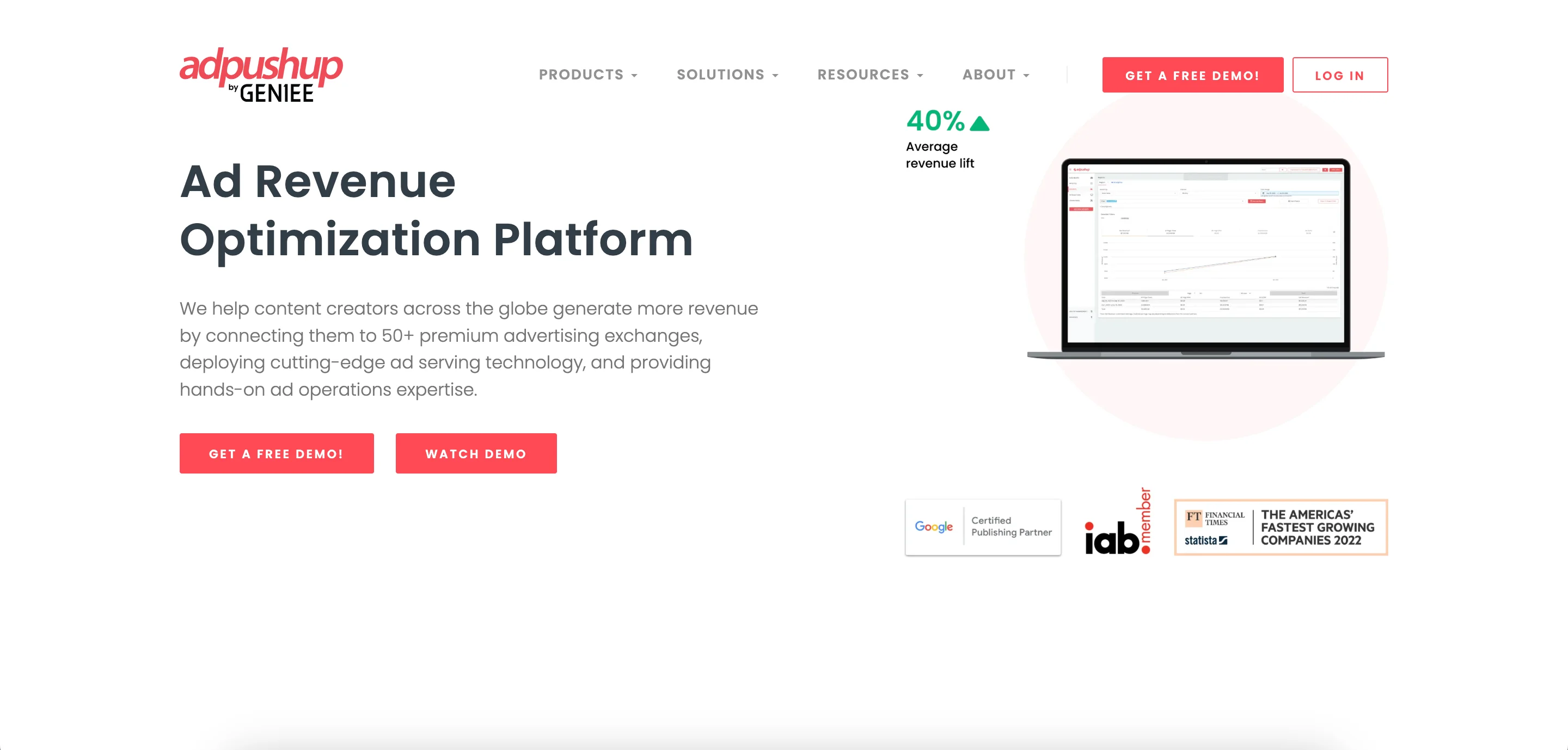
AdPushup focuses on revenue optimization for publishers through advanced A/B testing, header bidding, and layout optimization. Its strength lies in using machine learning to test ad placements and formats, maximizing viewability and RPM. AdPushup also integrates with multiple SSPs and demand sources, offering improved auction pressure. It is particularly useful for mid-sized publishers seeking better monetization without compromising UX.
Key Features
• Header bidding and multi-SSP demand
• Layout optimization and A/B testing
• High viewability scores
• Automated revenue optimization tools
Ideal For: Publishers wanting to improve ad revenue through optimization rather than scale.
Ezoic
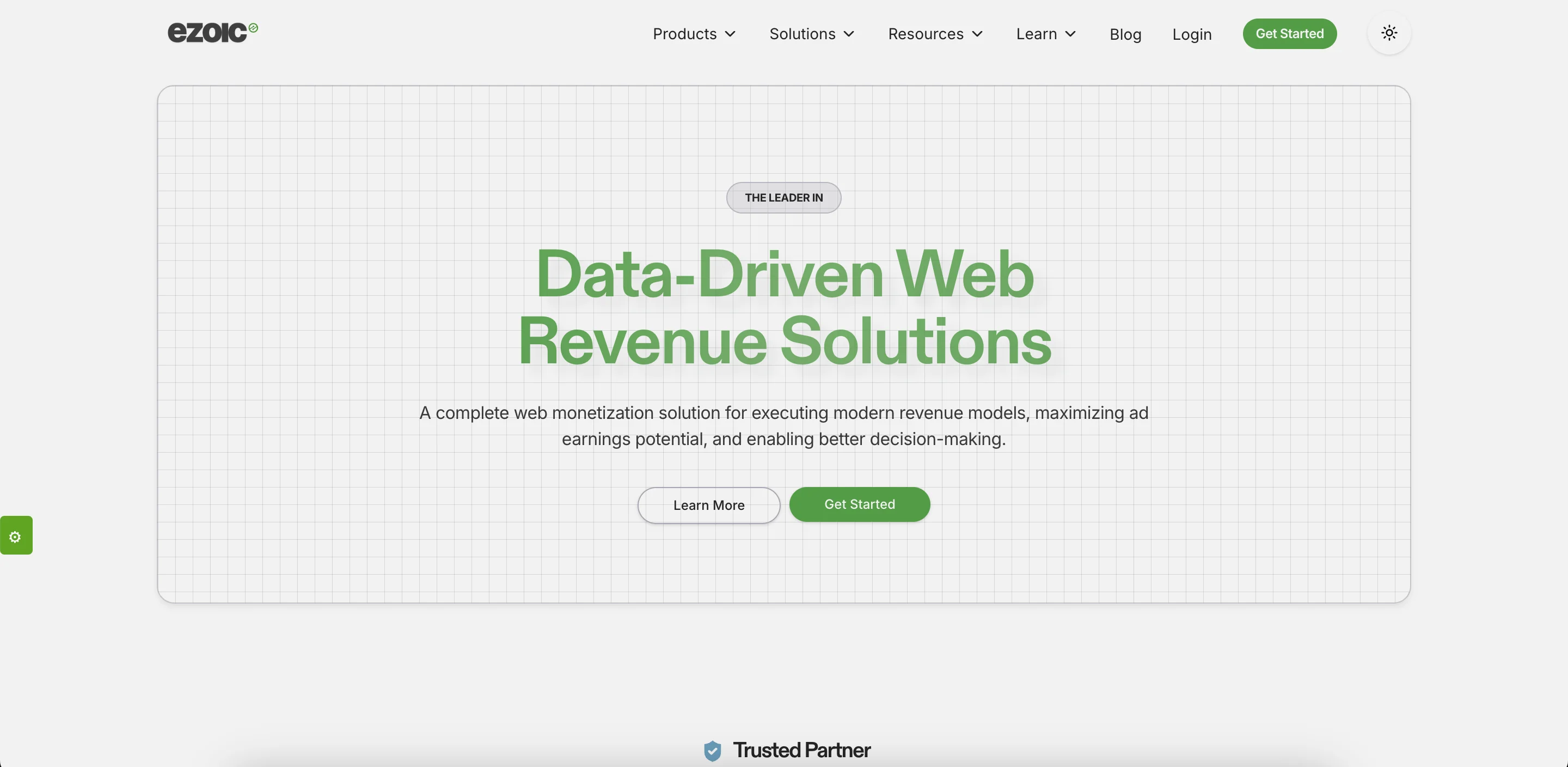
Ezoic is an AI-powered monetization platform that optimizes ad layout, density, and format dynamically. Its strength lies in testing thousands of variations to identify the ideal balance between user experience and revenue. Ezoic also offers site speed tools, SEO enhancements, and in-depth analytics, making it an all-in-one growth platform for digital publishers. RPMs tend to be higher than standard ad networks due to real-time optimization.
Key Features
• AI-driven layout and ad testing
• High RPM potential
• Integrated speed, UX, and analytics tools
• Strong support for small and medium publishers
Ideal For: Publishers of all sizes aiming to maximize RPM through automated testing.
Monumetric / Mediavine / Raptive
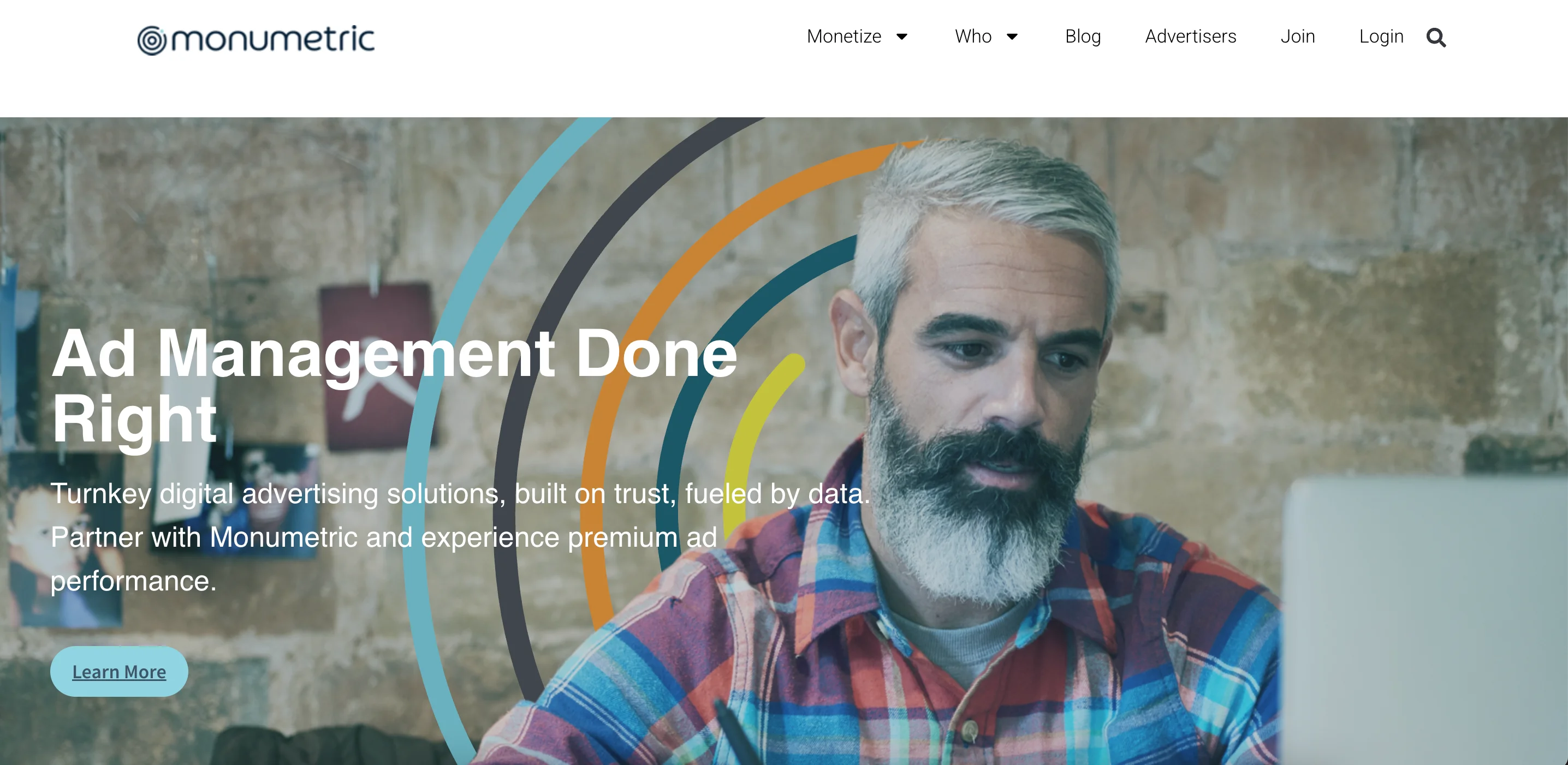

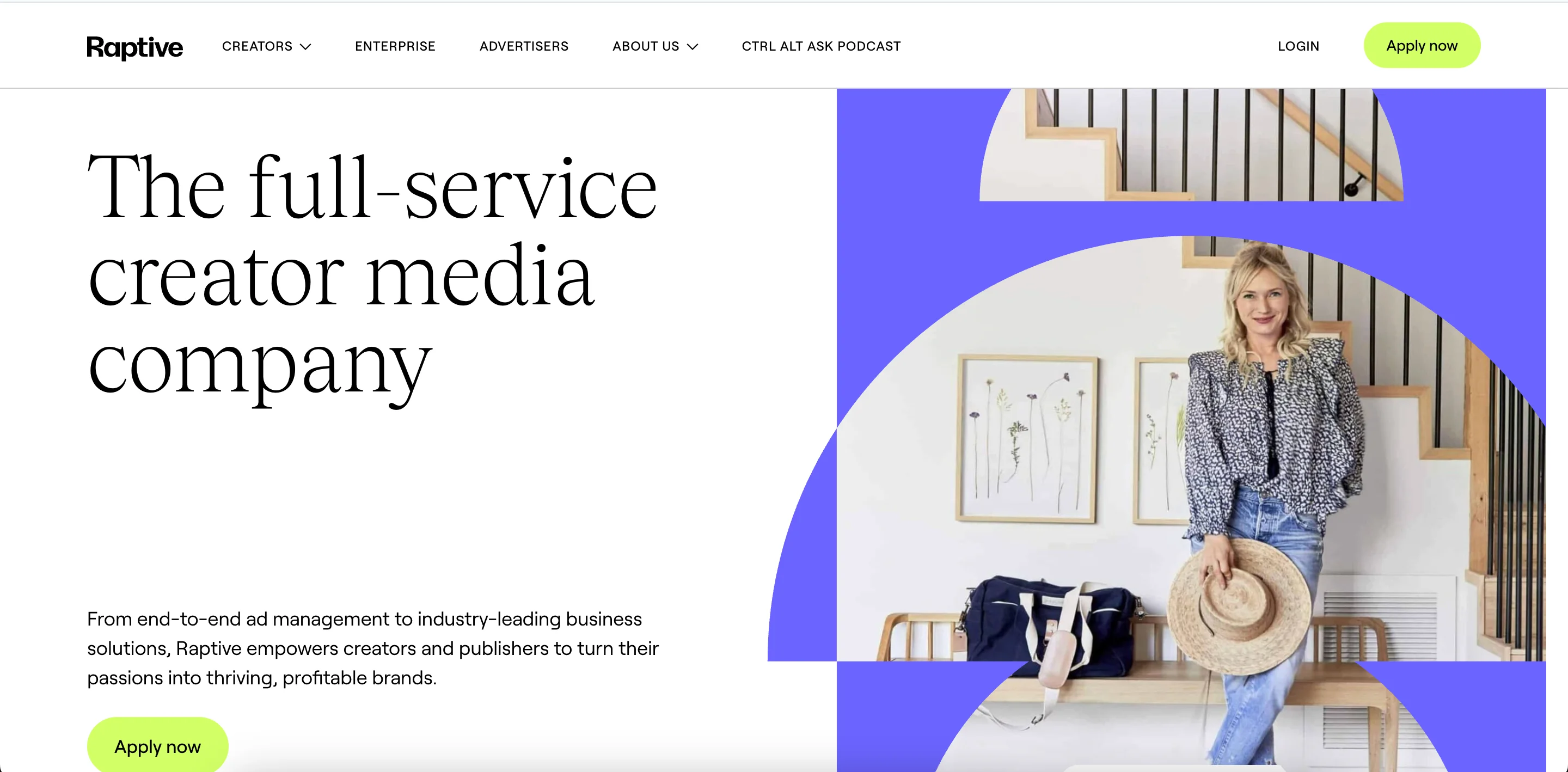
These premium publisher networks—Monumetric, Mediavine, and Raptive—offer some of the industry’s highest RPMs. They work with vetted publishers, ensuring that advertisers access high-quality content and engaged audiences. Their approach focuses on curated inventory, brand-safe environments, and premium demand from top agencies and DSPs. These networks require traffic thresholds but consistently deliver exceptional revenue.
Key Features
• Premium, vetted publisher network
• High RPMs and strong viewability
• Access to top-tier programmatic demand
• Excellent support and optimization services
Ideal For: Established publishers with high-quality content and strong monthly traffic.
Amazon Publisher Services (APS)
.webp)
APS provides a transparent, low-latency supply path connecting publishers to Amazon’s vast demand sources. With formats across display, mobile, and video, APS offers predictable yield and high-performing placements. Unified Ad Marketplace (UAM) simplifies header bidding and increases competition. Advertisers benefit from Amazon’s rich first-party audience data, which enhances campaign relevance in a post-cookie environment.
Key Features
• First-party data advantages
• Low-latency header bidding
• Transparent auction mechanics
• Access to Amazon’s advertiser ecosystem
Ideal For: Publishers seeking stable yield and advertisers targeting e-commerce-driven audiences.
AdRoll

AdRoll is one of the most recognizable networks for retargeting and performance-driven display ads. Its strength lies in cross-device tracking, strong audience segmentation, and automated campaign optimization. AdRoll supports multi-channel experiences across display, social, and email, making it a popular choice for D2C brands and performance marketers. Its analytics tools help teams measure incremental lift and conversion paths.
Key Features
• Retargeting and cross-channel remarketing
• Smart segmentation and predictive audiences
• Dynamic product ads
• In-depth attribution and analytics
Ideal For: Advertisers focused on conversions, retargeting, and personalization.
Criteo

Criteo remains one of the strongest performance display networks thanks to its retail media partnerships and powerful commerce data. Its AI-driven engine predicts user intent and delivers highly personalized ads across web, mobile, and in-app placements. Criteo’s unified commerce audience graph gives advertisers a competitive edge, especially in e-commerce and travel. With robust attribution and strong CTRs, Criteo remains a top choice for conversion-led campaigns in 2026.
Key Features
• Commerce-powered predictive advertising
• Broad global reach
• Dynamic retargeting and product feeds
• Strong CTRs and conversion performance
Ideal For: Advertisers in retail, travel, and e-commerce seeking data-driven results.
BidVertiser / HilltopAds / ReklamStore
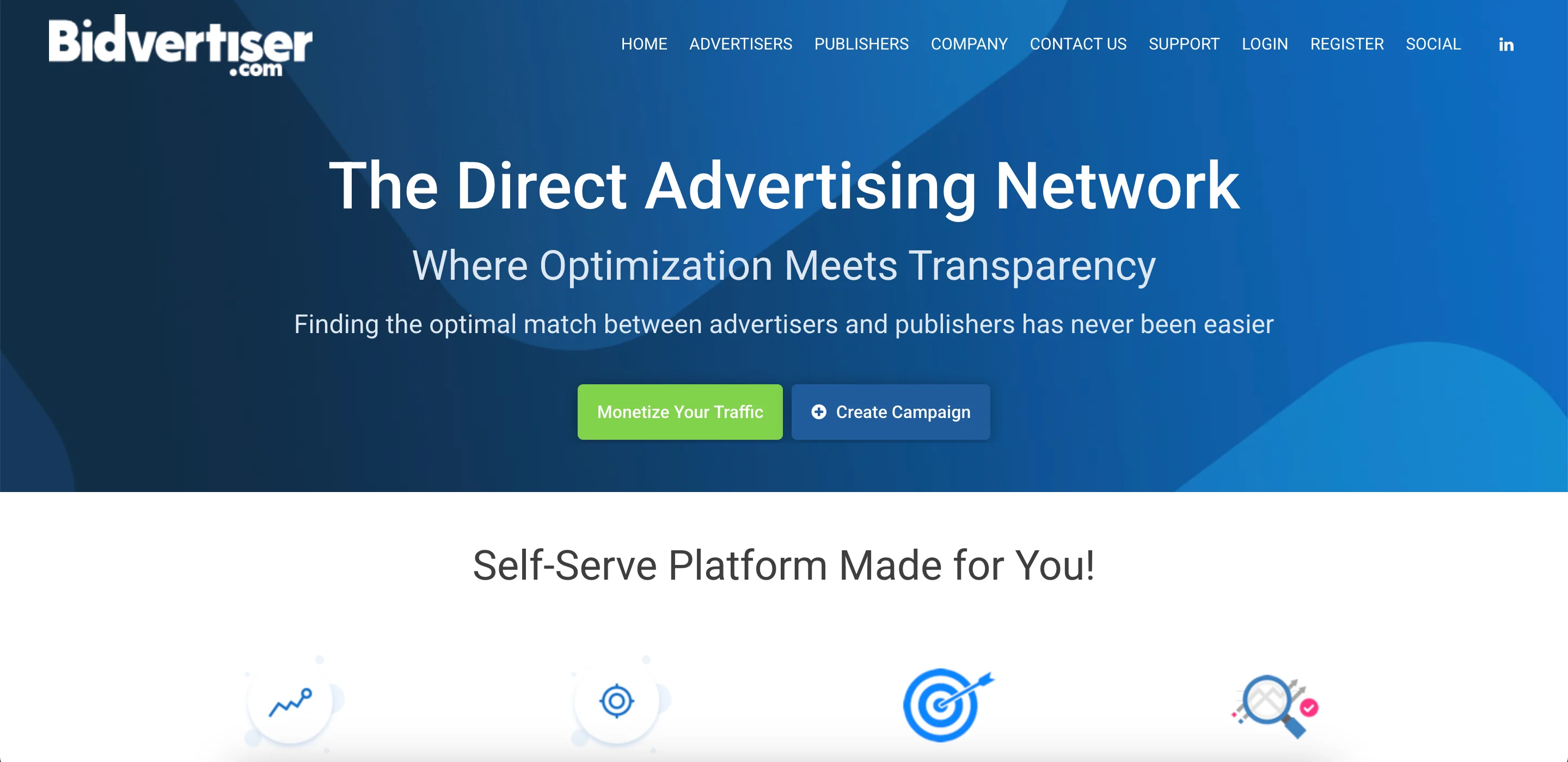
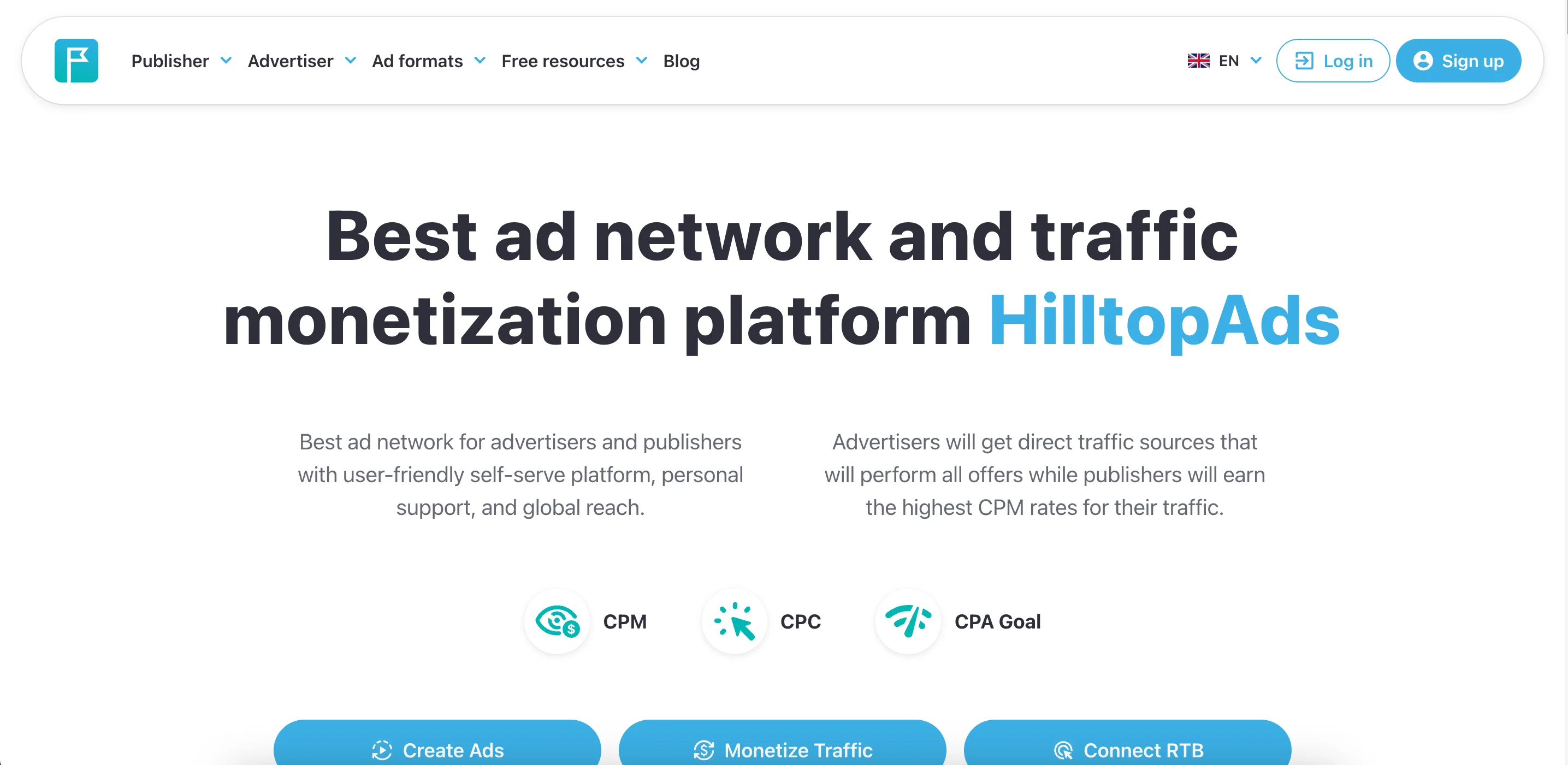
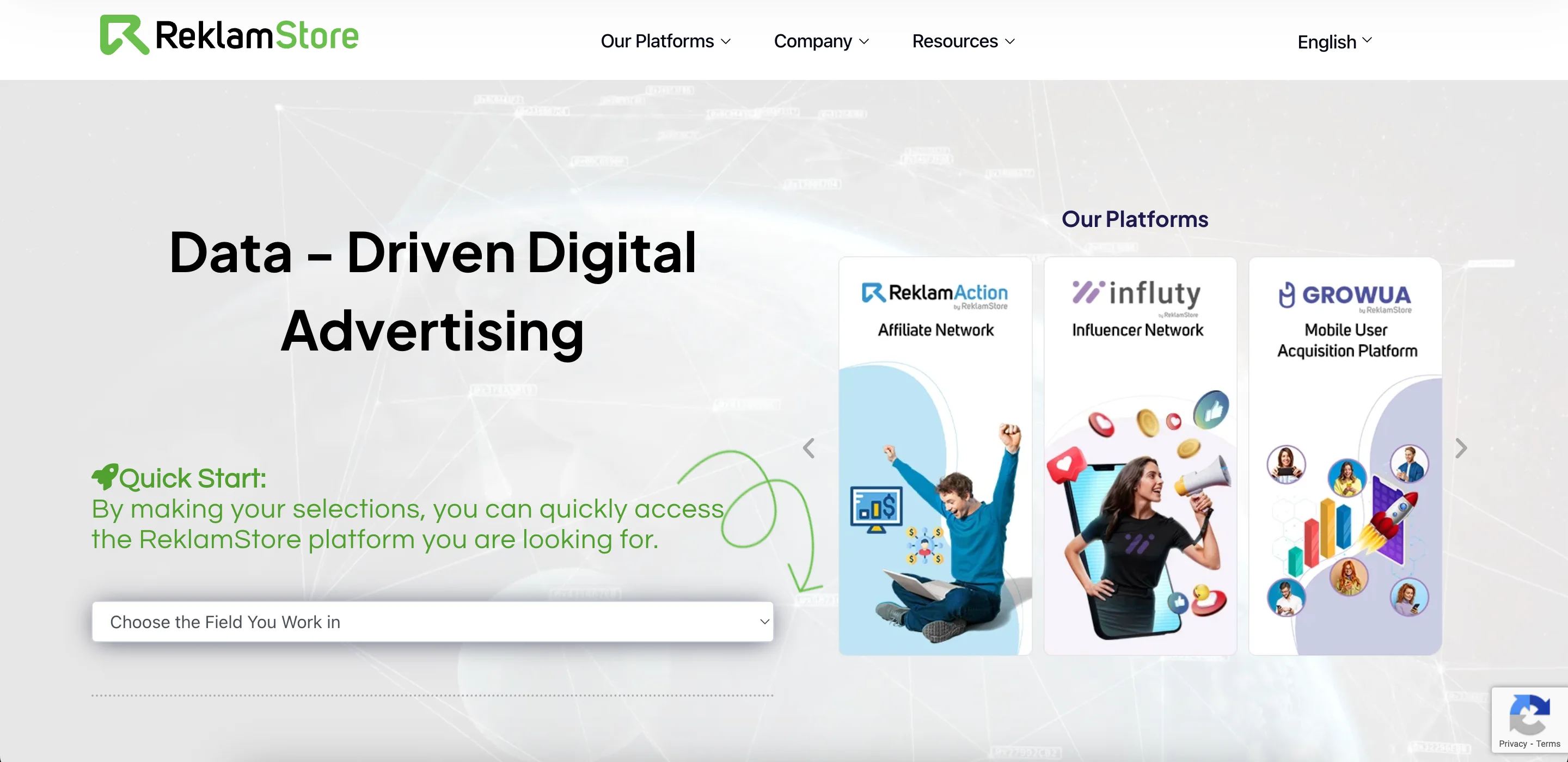
These networks offer accessible, budget-friendly options with flexible pricing (CPM/CPC/CPA) and broad global reach. They cater especially well to smaller advertisers and publishers seeking straightforward setup, moderate-quality inventory, and niche targeting options. In 2026, all three networks have improved fraud protection and added optimized display formats, making them competitive choices for mid-market campaigns.
Key Features
• Budget-friendly CPM/CPC models
• Global traffic sources
• Push, native, and display formats
• Frequent improvements in anti-fraud technology
Ideal For: SMB advertisers and publishers seeking scalable but cost-effective solutions.
SmartyAds (programmatic display network)
.webp)
SmartyAds operates as a full-stack programmatic network offering DSP, SSP, DMP, and ad exchange solutions. It provides curated display and video inventory, AI-driven bidding, and robust fraud filtering. SmartyAds is especially appealing for teams wanting deeper control over programmatic workflows or looking for a white-label solution. Its combination of automation, transparency, and flexible integration gives advertisers strong performance across global traffic sources.
Key Features
• Full programmatic stack (DSP/SSP/Exchange)
• AI-driven RTB optimization
• Global reach with various ad formats
• White-label solutions for agencies
Ideal For: Advertisers and publishers wanting advanced programmatic infrastructure.
Comparison table: top ad networks by type and features
The comparison table below brings together the leading display ad networks of 2026 and highlights their core differences across reach, pricing models, ad formats, and traffic requirements. As display inventory becomes increasingly shaped by automation and privacy-first targeting, these networks now operate inside a larger ecosystem that blends display, video, and programmatic native advertising.
Understanding how each network handles bidding, optimization, and audience targeting helps both publishers and advertisers choose the right partner for performance, brand safety, and long-term revenue growth. This table offers a clear snapshot of where each platform fits within today’s programmatic landscape.
{{2026-Top-10-Display-Ad-Networks-for-Publishers="/tables"}}
How to choose the best display ad network
Selecting the right display ad network depends on your goals, your audience, and the level of control you want over bidding, optimization, and reporting. The ecosystem has become more complex with AI-powered targeting, privacy restrictions, and the rise of programmatic native advertising, making it essential to evaluate networks with a structured approach. The following criteria help both marketers and publishers choose a network that aligns with performance targets and long-term monetization strategy.
Identify your target audience and campaign goals
Every ad network performs differently depending on who you’re trying to reach and what you want to achieve. Performance advertisers might prioritize networks offering retargeting, predictive audiences, and AI-driven bidding.
Brand-focused teams may prefer premium networks with high-quality placements and strong contextual alignment. Publishers should think about the type of content they produce and how well it matches the network’s demand sources. Clear goals—awareness, traffic, conversions, or monetization stability—shape which network delivers the best results.
Compare supported ad formats and inventory quality
Not all networks specialize in the same formats. Some excel at traditional banner placements, while others provide high-impact video, rich media, or in-feed native units. Inventory quality also varies widely: premium networks offer highly vetted, brand-safe environments, while open programmatic networks deliver scale and diversity. Choose a network that supports formats aligned with your creative strategy and make sure the inventory fits your brand’s tone, vertical, and UX expectations.
Evaluate targeting features and optimization tools
Targeting defines who sees your ads—and whether those impressions turn into meaningful outcomes. Look for networks that offer contextual intelligence, first-party integrations, geo-targeting, demographic filters, predictive modeling, and audience retargeting. Optimization tools matter just as much: AI-powered bidding, frequency capping, dynamic creative optimization, and machine-learning recommendations can significantly influence performance. Advanced networks often blend these features to support more personalized and privacy-safe delivery.
Review pricing models, CPM rates, and payout terms
Networks vary in how they charge advertisers and how they pay publishers. CPM, CPC, CPA, and dynamic RTB bidding all affect campaign costs and revenue potential. For publishers, payout terms—net 30, net 60, or revenue-share models—can impact cash flow. For advertisers, understanding average CPMs and competition levels helps predict cost efficiency. Transparent, predictable pricing models usually indicate healthier supply paths and stronger auction fairness.
Check reporting transparency, brand safety, and fraud protection
A strong display ad network must provide clear, real-time reporting on impressions, clicks, conversions, and viewability. Equally important are brand safety and fraud-prevention tools: reliable networks partner with verification providers, run anti-fraud filters, and maintain strict ad-quality controls. This is especially crucial in programmatic environments, where invalid traffic and low-quality inventory can distort campaign performance or reduce publisher trust. A transparent, well-regulated network ensures your ads appear in the right environments—or, for publishers, that your traffic is valued correctly.
⚡️ For a deeper comparison of how different creative formats perform across the funnel—and how each approach influences user attention, engagement, and conversion potential—you can explore our full guide on Native vs. Display Ads, which breaks down their strengths, limitations, and best-use cases in modern programmatic environments.
Conclusion: choosing the right display ad network for your goals
Choosing the right display ad network in 2026 comes down to understanding your audience, your content, and the outcomes you want to achieve. Publishers need networks that protect user experience while maximizing RPM, and advertisers need transparent pathways to high-quality impressions that convert. With the rise of privacy-first targeting, AI optimization, and cross-channel programmatic ecosystems, the “best” network isn’t simply the one with the most reach—it’s the one that aligns with your strategic goals and adapts to how users behave across devices and channels.
This is where AI Digital’s infrastructure makes a meaningful difference. Smart Supply—our premium, privacy-safe supply-path solution—connects advertisers to curated, brand-safe inventory using transparent auction logic and low-latency delivery. It eliminates wasteful hops, improves viewability, and ensures budgets flow to high-value publishers.
For advertisers and publishers looking to go further, Elevate provides real-time media intelligence that standard display networks can’t match. It uses AI to analyze creative impact, define predictive audiences, and measure incremental lift across channels, offering the clarity teams need to scale efficiently. Our deep dive into the platform explains how Elevate brings transparency and control back into programmatic advertising.
Teams that thrive in 2026 take a structured, data-first approach to selecting partners. Here are a few actionable takeaways to guide that process:
- Prioritize networks that offer transparent reporting, predictable CPMs, and clean supply paths—these factors matter more than raw reach.
- Choose partners that support AI optimization and contextual intelligence to future-proof performance in a cookie-restricted environment.
- Match your ad formats to your goals: use display for scale, native for relevance, and video for attention-driven storytelling.
- Build a unified strategy where measurement, creative optimization, and supply-path quality reinforce each other, rather than operating in silos.
The next era of display advertising belongs to teams that combine strong fundamentals with smart automation. With solutions like Smart Supply and Elevate, AI Digital helps marketers and publishers bridge that gap, turning high-quality impressions into measurable, sustainable growth.