

Responsive display ads have moved from a supporting format to a core performance driver in modern digital advertising. For teams asking what’s a key benefit of responsive display ads, the answer increasingly lies in their ability to combine automation, audience data, and creative optimization into a single scalable system.
Recent platform data from Google shows that responsive display ads can reach over 90% of global internet users across the display network, while campaigns using automated, machine learning–driven formats consistently demonstrate higher efficiency in conversion delivery compared to static display ads, when supported by strong asset inputs and conversion tracking. This reflects a structural shift in advertising: performance is no longer driven by isolated creatives, but by systems that continuously learn and optimize in real time.
In practical terms, the benefits of responsive display ads go beyond flexibility. They enable marketers to test multiple messages simultaneously, adapt creatives to different placements, and align ad delivery with user intent signals—without increasing operational complexity. This directly impacts core business metrics, including conversion rate, cost per acquisition (CPA), and scalability of campaigns.
⚡️For senior marketing teams managing multi-channel investments, understanding what’s an advantage of responsive display ads is critical. This article explores the benefits of using responsive display ads through a performance lens, focusing on how they influence outcomes across the full campaign lifecycle — from launch and testing to optimization and scale. For a broader strategic context on how these formats fit into full-funnel planning, read more about media planning and buying.
What are responsive display ads

Responsive display ads (RDAs) are an automated, asset-based advertising format that uses machine learning to dynamically assemble and optimize ads across the display network. Instead of building fixed creatives, advertisers upload a set of modular assets — headlines, descriptions, images, logos, and optionally video and the system generates multiple ad variations automatically.
According to Google, RDAs are designed to adapt in real time to different screen sizes, placements, and audience contexts. This means a single campaign can serve across websites, mobile apps, and video environments without requiring separate creative builds for each format.
💡The key operational shift is that RDAs replace manual creative production and testing with algorithmic assembly and optimization. Rather than designing dozens of banners, marketers provide structured inputs, and the system handles:
- Format adaptation across inventory
- Creative combination generation
- Performance-based optimization
⚡️From a business perspective, this directly answers what’s a key benefit of responsive display ads: they reduce manual workload while increasing scalability and efficiency. Campaigns can be launched faster, expanded across more placements, and continuously improved without proportional increases in effort. For a broader understanding of how this fits within programmatic ecosystems, see Programmatic Display Advertising.
How responsive display ads actually work behind the algorithm
Responsive display ads work by turning your creative inputs into a dynamic testing system. Instead of building every ad size and variation manually, you upload assets—headlines, descriptions, images, logos, and videos — and the platform automatically combines them across available placements.

The important point is that RDAs are not just resizing ads. They are continuously testing which creative combinations perform best for different audiences, contexts, devices, and inventory types. That makes them especially useful for performance teams that need to scale campaigns without slowing down creative production.
{{26-8-Ways-Responsive-Display-Ads-Improve-Campaign-Performance-1="/tables"}}
💡In practice, the algorithm is only as strong as the inputs it receives. Strong RDAs need clear headlines, visually distinct images, relevant descriptions, and properly configured conversion tracking. Without enough asset diversity or reliable performance signals, the system has less room to learn.
⚡️This is where responsive display ads connect to the wider discipline of display strategy. Creative automation works best when it sits inside a clear media plan, with the right targeting, inventory access, and measurement structure. For a broader explanation of how display formats, placements, and buying models work together, see AI Digital’s guide to digital display advertising.
The biggest advantage of responsive display ads (and why it matters)

The biggest advantage of responsive display ads is automated creative testing at scale. Instead of choosing one “best” banner before launch, marketers can upload multiple headlines, descriptions, images, logos, and videos, then let the system test different combinations across placements.
This matters because display advertising now operates across a very large and fragmented environment. Google’s Display Network includes more than 2 million websites, videos, and apps and reaches over 90% of internet users worldwide, which makes manual creative adaptation difficult to manage at scale.
Responsive display ads solve this by using machine learning to arrange assets into many combinations and continuously optimize them for performance. Google’s own documentation describes RDAs as asset-based ads where machine learning combines headlines, descriptions, images, and logos across the web, adjusting formats and optimizing delivery over time.
💡For performance teams, the value is practical: less time spent building separate ad variations, faster learning cycles, and stronger alignment between creative and audience intent. The campaign can identify which messages work best for different users, devices, and contexts without requiring constant manual A/B testing.
This is why automated creative testing is not only a creative benefit. It affects core business outcomes: better conversion performance, lower wasted spend, improved CPA, and more scalable campaign management. The stronger the asset inputs and conversion data, the more effectively the system can learn.
8 ways responsive display ads improve campaign performance
Responsive display ads improve campaign performance by making creative, placement, and optimization more scalable. Instead of treating display ads as fixed banners, RDAs turn campaigns into a dynamic testing environment where assets are combined, served, measured, and refined continuously. For performance teams, the value is clear: better learning speed, broader reach, stronger conversion potential, and more efficient CPA management.
1. Scalable creative testing
The first major benefit is scalable creative testing. With responsive display ads, marketers can upload multiple headlines, descriptions, images, logos, and videos, then let Google AI generate different ad combinations automatically. Google explains that RDAs use these assets to create combinations for websites, apps, YouTube, and Gmail.
This reduces the need to manually produce dozens of separate display ads for every format or audience segment. Instead, one structured asset set can support multiple creative variations. That accelerates learning cycles because teams can see which messages, visuals, and calls to action perform best.

2. Higher reach across inventory
Responsive display ads also improve reach because they automatically adjust their size, appearance, and format to fit available ad spaces. Google’s Display Network includes more than 2 million websites, videos, and apps and reaches over 90% of internet users worldwide, which makes format flexibility a major scalability advantage.
For marketers, this means campaigns can enter more auctions and appear across more placements without requiring separate creative files for each ad size. That matters when teams need to expand reach quickly while keeping production lean.
⚡️This is also why RDAs are useful in broader media strategies that combine digital display with other visual channels. For inspiration on how visual ad formats can support brand presence across environments, see AI Digital’s guide to DOOH advertising examples.

3. Improved conversion performance
Responsive display ads can improve conversion performance because machine learning evaluates which asset combinations are more likely to work in specific contexts. Google’s Ads API documentation explains that advertisers upload assets and Google uses a machine learning model to determine the optimal combination to show.
💡This is important because conversion performance depends on relevance. A headline that works for a remarketing audience may not work for a prospecting audience. A product image may perform better on mobile, while a video asset may support stronger engagement in another placement.
RDAs help manage this complexity by matching creative combinations to performance signals over time. The system does not simply show more ads; it learns which combinations are more likely to drive action.
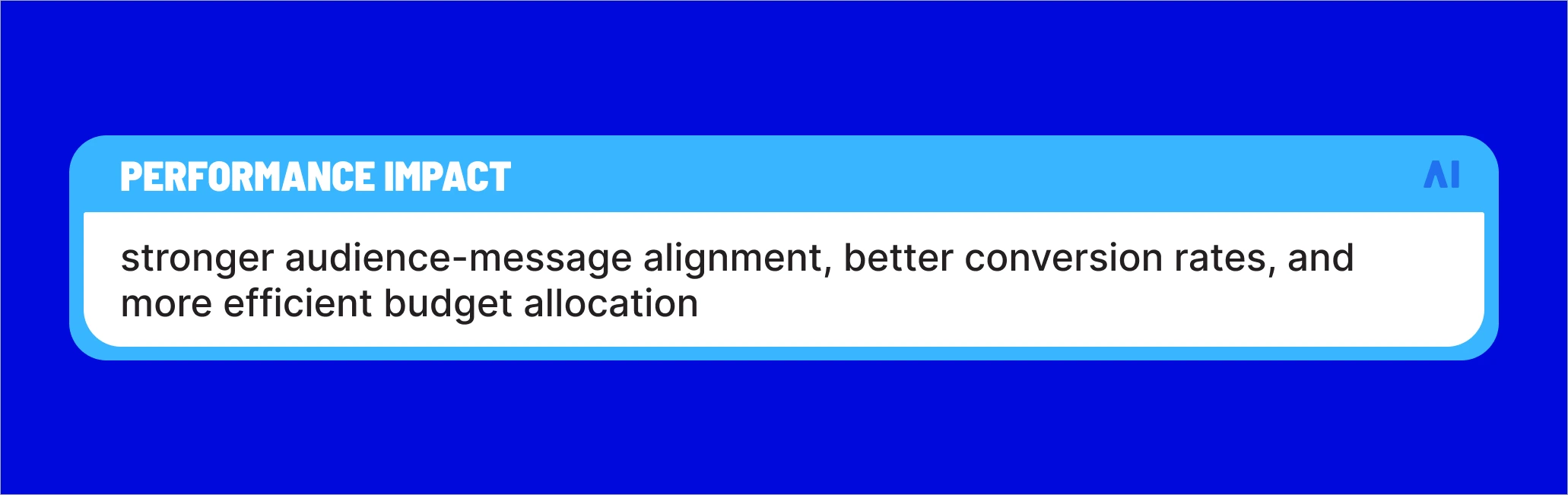
4. Lower CPA (Cost Per Acquisition)
Responsive display ads can help lower CPA by reducing the amount of budget spent on weak creative combinations. Google describes RDAs as asset-based ads that use machine learning to arrange headlines, descriptions, images, and logos in multiple combinations, then optimize for performance across the web.
For performance teams, this matters because CPA improves when the system has enough data to shift delivery toward combinations that are more likely to convert. Instead of spending evenly across every variation, RDAs gradually prioritize stronger assets and reduce exposure for weaker ones.
⚡️This makes CPA management more efficient, especially when RDAs are paired with reliable conversion tracking and bidding strategies. For better context on how CPA connects to other performance metrics, read AI Digital’s guides: “CTR vs CPC vs CPM vs CPA vs CPV: Understanding Ad Metrics and Pricing Models” and Display Ad KPIs That Actually Drive Performance (Not Just Reports)

5. Faster time-to-market
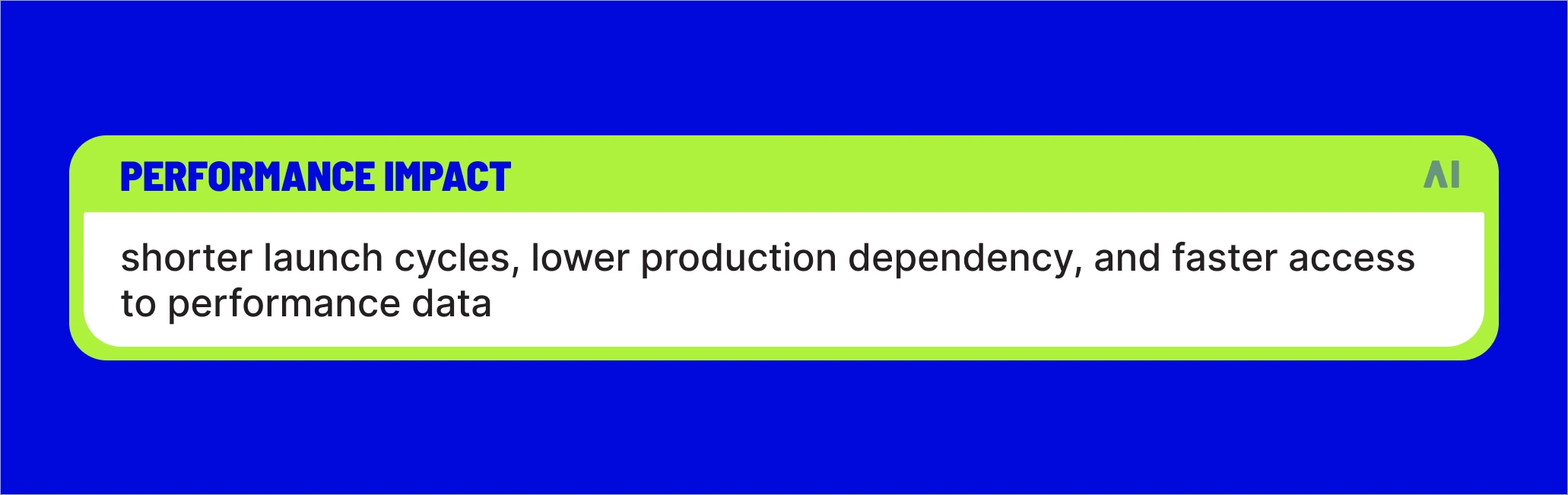
Another benefit of responsive display ads is faster campaign launch. Traditional display campaigns often require multiple banner sizes, format versions, and creative exports before a campaign can go live. RDAs simplify that workflow because marketers upload core assets once, and the platform adapts them into different ad formats.
Google Ads Help specifically notes that responsive display ads help advertisers save time by reducing the overhead of managing ad portfolios across ad groups and campaigns.
For teams managing seasonal promotions, product launches, or multi-market campaigns, this speed matters. Campaigns can move from planning to activation faster, while creative teams spend less time producing repetitive format variations.
6. Built-in personalization
Responsive display ads support built-in personalization because different asset combinations can be matched to different audiences, placements, and funnel stages. Google’s RDA documentation explains that advertisers upload assets, and Google uses machine learning to determine the optimal combination to show.
This allows one campaign to serve different messages depending on context. A broad awareness audience may see a benefit-led headline, while a warmer remarketing audience may receive a more direct conversion-focused message. When video assets are included, Google can also use them instead of images where it determines video may drive better performance.
⚡️This connects closely to dynamic creative optimization, where creative elements change based on audience, context, and performance data. For a deeper view of the strategy behind this, read AI Digital’s guide to AI-driven personalization, which explains how data can be used to tailor user experiences across marketing channels. Also, Dynamic Creative Optimization (DCO): How It Works & How to Drive Real Performance help readers understand how responsive display ads fit into the broader shift toward adaptive, data-led creative.

7. Better use of existing creative assets
RDAs also help brands extract more value from existing creative. Instead of treating every campaign as a new production cycle, marketers can reuse approved images, product visuals, brand messages, logos, and video snippets as modular inputs.
This is especially useful for teams with strong brand libraries but limited production capacity. A single asset set can support multiple formats and placements, extending the usable life of creative without requiring a full redesign. Google’s business guidance also frames RDAs as a way to reduce the time, energy, and resources needed to create and launch display campaigns.
RDAs make creative assets more flexible. They allow teams to test existing materials in new combinations and identify which visuals or messages still perform.

8. Continuous optimization without manual work
The final benefit is continuous optimization. Responsive display ads do not stop learning after launch. As more impressions, clicks, and conversions are collected, the system keeps evaluating which asset combinations perform best.
Google states that responsive display ads automatically adjust their size, appearance, and format to fit available ad spaces, while machine learning helps determine which combinations to show. This means campaign performance can improve over time as the system gathers more reliable signals.
For marketing teams, this does not remove the need for strategy. Human oversight is still needed to review asset quality, monitor conversion data, and replace weak inputs. But RDAs reduce the manual burden of day-to-day creative testing.

Limitations of responsive display ads
Responsive display ads give marketers scale and automation, but they also introduce trade-offs. The main limitation is that performance depends heavily on asset quality, conversion data, and how much creative control the brand is willing to give to the algorithm.
{{26-8-Ways-Responsive-Display-Ads-Improve-Campaign-Performance-2="/tables"}}
For decision-makers, the key is not to avoid responsive display ads, but to manage them properly. Strong asset governance, clear conversion tracking, and regular performance reviews help reduce these limitations while preserving the scale and efficiency benefits of RDAs.
When responsive display ads work — and when they don’t
Responsive display ads work best when the goal is to scale performance efficiently across a broad set of placements. They are especially useful for prospecting, remarketing, product promotion, lead generation, and campaigns where teams need fast creative testing without building dozens of static banners.
They also work well when advertisers have enough audience data, conversion volume, and creative variety to help the system learn. In this context, RDAs can support better reach, lower CPA, and stronger optimization over time.
However, RDAs are not always the best choice. If a campaign requires strict creative control, premium brand storytelling, complex visual sequencing, or a highly curated user experience, static display, rich media, native advertising, or direct placements may be more appropriate.
⚡️Native ads, for example, can work better when the priority is contextual fit and editorial-style engagement rather than scalable creative testing. For a deeper comparison of format choice, read AI Digital’s guide to native vs. display ads, which explains how each format supports different campaign goals, user experiences, and performance expectations.
How to make responsive display ads actually perform
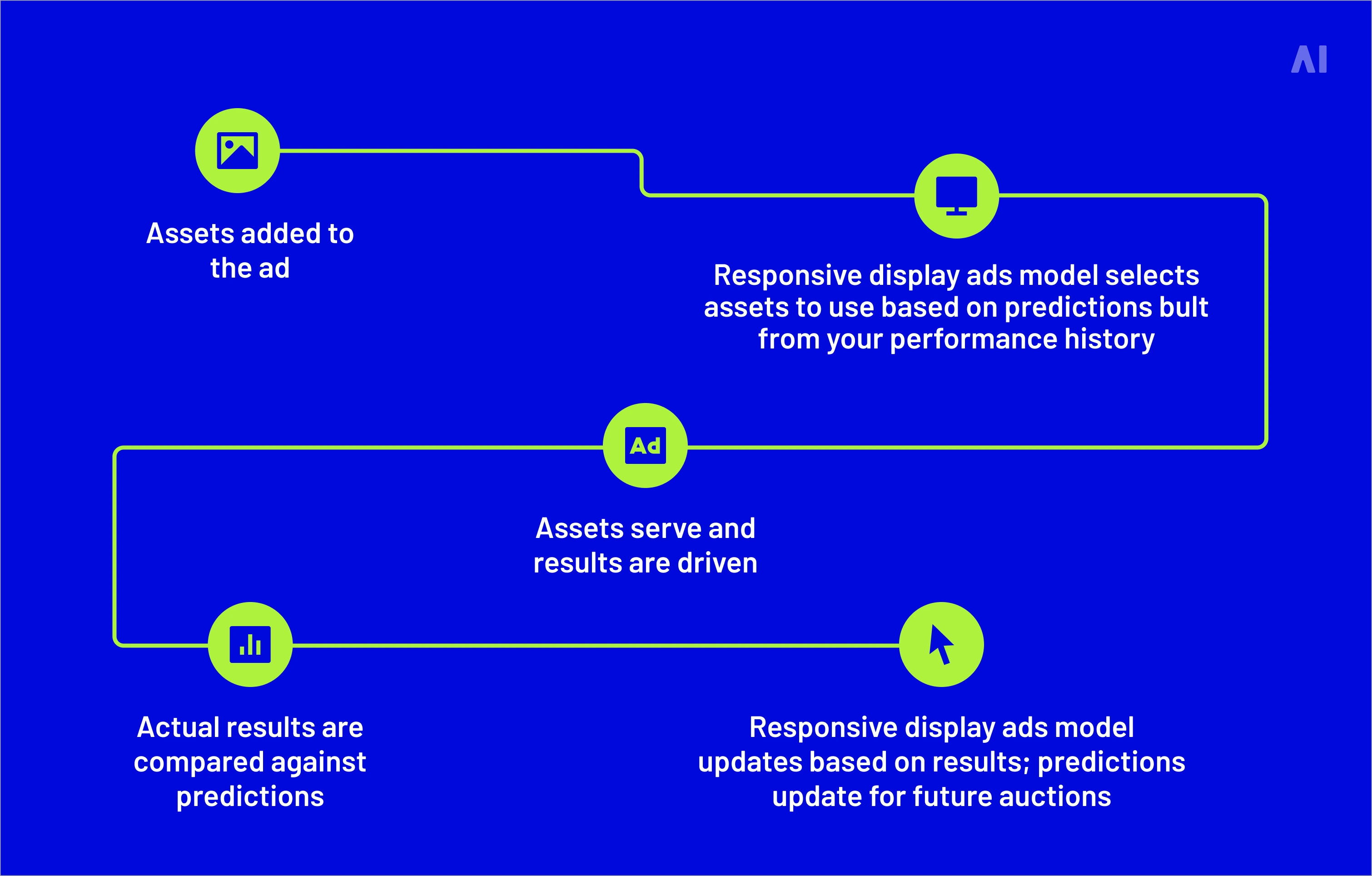
Responsive display ads perform best when they are treated as a structured performance system, not just an automated ad format. The algorithm can test combinations, adapt formats, and optimize delivery, but it still needs strong inputs: clear assets, audience signals, conversion tracking, and regular review.
⚡️This is also why platform choice matters. Different display networks offer different reach, targeting options, inventory quality, and reporting controls. For broader context on where RDAs fit within the wider display ecosystem, read AI Digital’s guide to top display ad networks, which compares the environments where display campaigns can scale.
1. Structure assets
Start by giving the system enough creative variety to test meaningfully. Use multiple headlines, descriptions, images, logos, and video assets where relevant. Each asset should communicate a distinct angle: product benefit, value proposition, offer, proof point, or call to action.
Avoid uploading assets that all say the same thing in slightly different words. RDAs perform better when the algorithm can compare real message differences, not minor copy variations.
2. Match funnel stages
Responsive display ads should not use the same message for every audience. Match creative inputs to the user’s stage in the funnel.
For awareness audiences, use broader benefit-led messaging. For consideration, focus on differentiation, proof, or product value. For conversion and remarketing, use stronger calls to action, urgency, offers, or trust signals.
This helps RDAs align creative combinations with audience intent instead of serving generic messages across the whole campaign.
3. Use data signals early
RDAs need reliable data to optimize effectively. Before launch, make sure conversion tracking is configured correctly, audience segments are defined, and bidding strategy matches the campaign goal.
Without clean data signals, the system may optimize toward weak indicators such as clicks rather than meaningful business outcomes like leads, purchases, or qualified conversions.
⚡️ For better context on how data supports smarter campaign decisions, read more AI Digital’s guide to Creating a Data-Driven Marketing Strategy.
4. Monitor asset-level performance
Automation does not remove the need for oversight. Review asset-level reporting to understand which headlines, descriptions, images, and videos are rated as stronger or weaker by the platform.
Replace underperforming assets regularly, especially if they have low engagement, weak conversion contribution, or limited delivery. At the same time, avoid making changes too quickly before the system has enough data to learn.
⚡️For deeper context on evaluating engagement quality, read AI Digital’s guide to CTR for display ads, which explains how click-through rate should be interpreted alongside broader performance metrics.
How to scale responsive display ads effectively
Responsive display ads scale best when they are supported by the right data, inventory, and execution infrastructure. RDAs can automate creative testing, but scale depends on more than the ad format itself. To expand performance without losing efficiency, marketers need stronger control over where ads run, how campaigns are activated, and how performance data connects across channels.
Connect inventory and demand
To scale RDAs effectively, brands need access to high-quality inventory that matches campaign goals. More reach is useful only when it connects to relevant audiences, safe environments, and efficient media buying paths.
⚡️This is where structured inventory management becomes important. AI Digital’s Smart Supply helps advertisers improve how demand connects with valuable supply, supporting better distribution across high-quality placements. For responsive display ads, this matters because the algorithm performs better when campaign delivery is supported by cleaner inventory access and stronger supply-path visibility.
💡Instead of scaling impressions blindly, marketers can focus on efficient reach, better placement quality, and stronger performance control.
Activate campaigns at scale
Scaling responsive display ads also requires a system for campaign execution, optimization, and reporting. As campaigns expand across audiences, markets, and formats, manual workflows become harder to manage. Teams need a framework that supports faster activation while keeping performance goals visible.
⚡️AI Digital’s Elevate is designed to support this type of scalable campaign execution. It helps advertisers move from fragmented activation to a more performance-driven operating model, where planning, optimization, and results can be managed with greater consistency.
For RDAs, this creates a stronger foundation for growth. Campaigns can be launched, monitored, and optimized with clearer performance logic, helping teams scale without losing control over CPA, conversions, or budget efficiency.
Break silos across channels
Responsive display ads often sit inside broader multi-channel strategies. The challenge is that performance data, audience insights, and measurement signals are usually split across platforms. When teams manage campaigns in silos, it becomes harder to understand what is actually driving growth.
⚡️AI Digital’s Open Garden Framework addresses this challenge by helping brands connect data, measurement, and campaign intelligence across fragmented advertising environments. For responsive display ads, this matters because better cross-channel visibility can improve targeting decisions, budget allocation, and performance interpretation.
💡This is especially important as marketers move beyond single-platform optimization. RDAs may perform well inside one display environment, but their full value becomes clearer when connected to broader media activity, attribution signals, and audience strategy.
⚡️For additional context, read AI Digital’s article Introducing Open Garden: A New Framework for Navigating Fragmented Digital Advertising, which explains how brands can improve performance visibility, data coordination, and campaign governance across disconnected platforms.
Use the benefits of responsive display ads to build a scalable performance
The main benefits of responsive display ads come from their ability to combine automation, creative testing, and scalable delivery. RDAs help campaigns move faster by generating multiple ad combinations from one asset set, reducing manual production work and helping teams learn which messages, images, and calls to action perform best.
But automation alone is not enough. Responsive display ads perform better when they are supported by strong creative inputs, accurate targeting, reliable conversion tracking, and a clear optimization strategy. The algorithm can improve delivery over time, but it needs quality data and well-structured assets to make useful decisions.
Key takeaways:
- RDAs scale faster by automating creative testing across placements, helping teams move from manual production to performance-led experimentation.
- Performance improves over time as campaign data supports stronger optimization across creative combinations, audiences, and inventory.
- Strong inputs drive stronger results, especially high-quality assets, accurate targeting, clean conversion tracking, and clear performance goals.
- Best outcomes come from strategy, not automation alone. RDAs work best when connected to the right media infrastructure, inventory strategy, and cross-channel measurement framework.
- AI Digital helps brands turn RDA automation into scalable performance by connecting campaign execution through Elevate, improving supply-side efficiency with Smart Supply, and reducing platform fragmentation through the Open Garden Framework.
⚡️For marketing teams looking to scale display performance with stronger data, inventory, and execution systems, get in touch with AI Digital.


.webp)