

The ad network vs ad exchange distinction matters because digital media buying is now too large and complex to manage through unclear buying paths. In 2025, U.S. digital advertising revenue reached $294.6 billion, up 13.9% year over year, according to the IAB/PwC Internet Advertising Revenue Report.
Ad networks and ad exchanges are two different ways to buy and sell digital advertising inventory within the programmatic ecosystem. Both connect advertisers with publishers, but they do it in different ways.
An ad network usually aggregates inventory from multiple publishers, packages it into audience or category segments, and resells it through a managed buying model. An ad exchange is a technology-driven marketplace where advertisers bid on individual impressions, often through DSPs, SSPs, and real-time bidding.
The difference affects five important areas:
- Inventory access
- Pricing transparency
- Audience targeting
- Campaign control
- Reporting depth
This article explains how both models work, where each creates value, and how advertisers can choose the right approach based on business goals, budget, data strategy, and media buying maturity.
⚡️For broader context, AI Digital’s guide to programmatic advertising explains how automated buying works across the digital advertising ecosystem.
What is an ad network?
An ad network is an intermediary that connects advertisers with digital advertising inventory from multiple publishers. Instead of buying impressions directly from each publisher, advertisers use an ad network to access packaged inventory across websites, apps, or content environments.
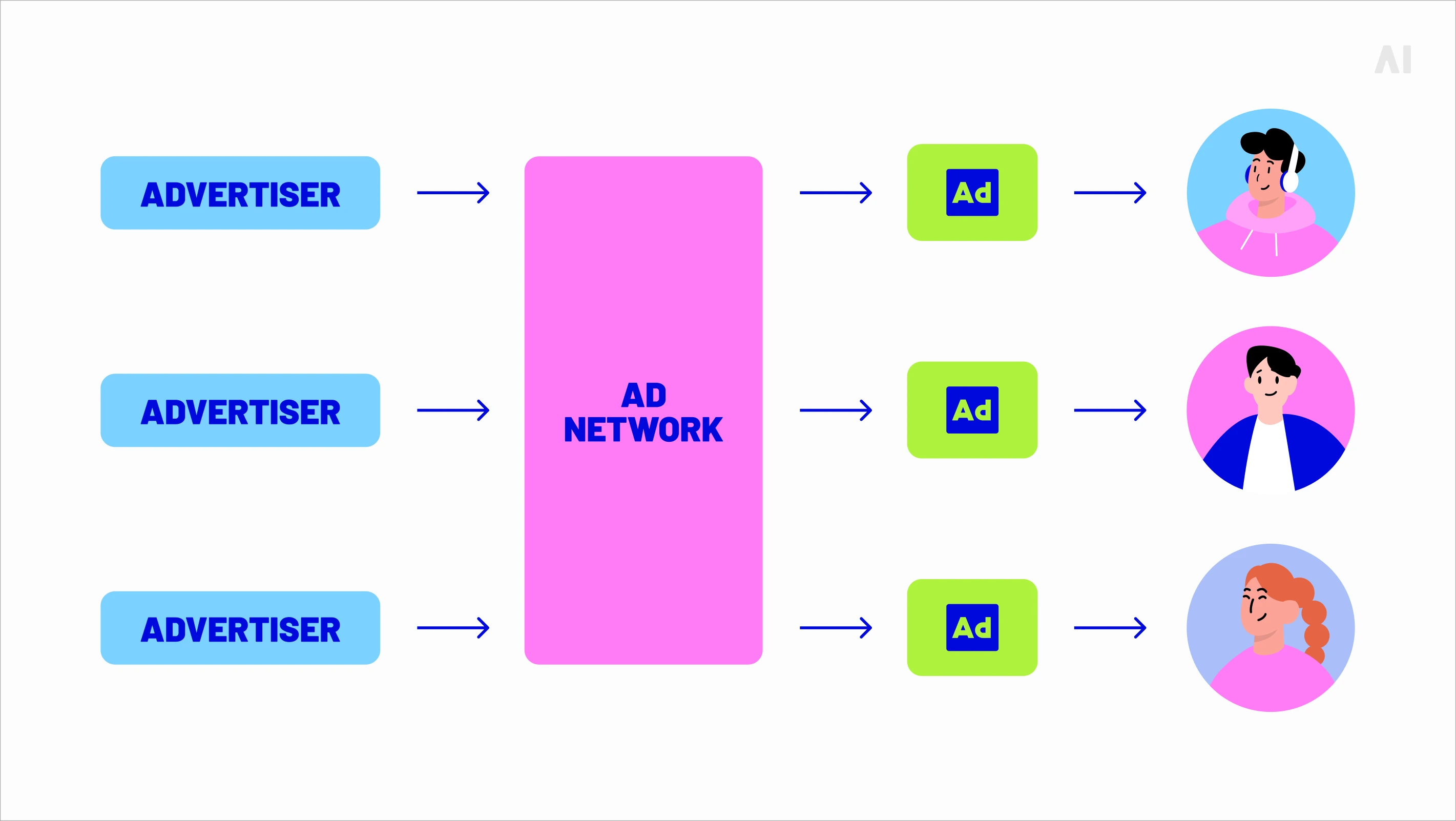
In the ad network vs ad exchange comparison, the key difference is control. An ad network simplifies buying by grouping publisher inventory into ready-made packages. An ad exchange gives advertisers more direct access to impression-level auctions, but it also requires more technical setup and active optimization.
Ad networks usually work in three steps:
- They aggregate inventory from many publishers.
- They package that inventory by audience, category, format, or placement type.
- They resell it to advertisers, often with a markup or managed-service fee.
This model is common in display, native, and performance advertising. Google Display Network helps advertisers run display ads across websites, apps, YouTube, and Gmail. Taboola and Outbrain are often associated with native advertising and content recommendation placements across publisher environments.
The scale of these businesses shows why ad networks still matter. In Q1 2026, Taboola reported $466.4 million in revenue, up 9.1% year over year, and raised its full-year 2026 revenue outlook to $2.0–$2.1 billion. Alphabet also reported $7.8 billion in Google Network revenue for Q4 2025, showing the continued commercial role of network-based advertising inventory.
⚡️For advertisers comparing vendors, AI Digital’s guide to top display ad networks provides a useful overview of network options. The guides on native advertising and digital display advertising also explain two common formats where ad networks are frequently used.
💡The main advantage of an ad network is simplicity. Advertisers do not need to negotiate with every publisher, manage every supply path, or evaluate every impression in real time. The network handles much of that work.
The trade-off is transparency. Advertisers may not always see exactly:
- Which publishers delivered impressions
- How much each placement cost
- What markup the network applied
- Which auction dynamics influenced pricing
- How media spend was divided between publishers and intermediaries
That is why ad networks can be efficient for execution, but less ideal for advertisers that need granular control, publisher-level reporting, and deeper supply-chain visibility.
How ad networks package inventory
Ad networks package inventory by grouping impressions from multiple publishers into segments that are easier for advertisers to buy. These packages may be based on audience type, website category, content vertical, geography, device, or ad format.
Some networks focus on remnant inventory, which is unsold publisher inventory that can be bundled and resold. Others focus on premium inventory, where the network offers access to higher-quality publishers, stronger brand safety controls, or more curated placements.
There are two broad types of ad networks:
- Blind networks: advertisers get scale and lower costs, but limited visibility into specific placements.
- Premium networks: advertisers get more curated inventory, stronger controls, and often higher pricing.
This packaging model makes buying easier, but it also means advertisers are often buying a bundle rather than selecting each impression directly.
How ad network pricing works
Ad network pricing is usually designed to be simple and predictable. The most common models are:
- Fixed CPM: advertisers pay a set cost per thousand impressions.
- CPC: advertisers pay when someone clicks the ad.
- CPA or performance pricing: advertisers pay when a specific action happens, such as a lead or sale.
- Flat-rate packages: advertisers pay a fixed amount for a defined placement or campaign period.
💡The benefit is budget predictability. Advertisers can plan spend more easily because the network manages the buying and pricing structure.
The limitation is visibility. In many ad network buys, advertisers do not see the full publisher-level pricing breakdown. They may know the campaign CPM or CPC, but not the exact cost paid to each publisher, the network margin, or the auction-level details behind delivery. This makes ad networks easier to use, but harder to audit.
What is an ad exchange?
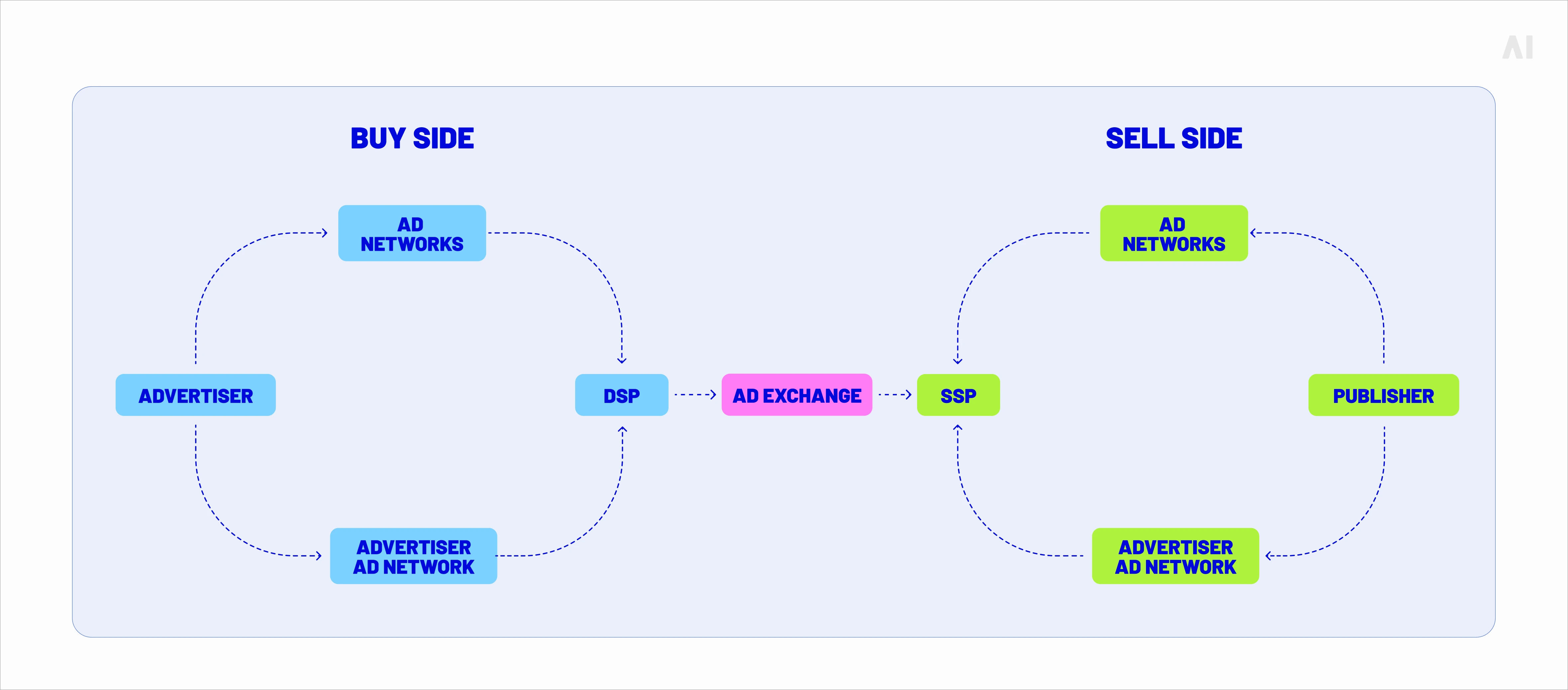
An ad exchange is a technology-driven marketplace where digital advertising inventory is bought and sold through automated auctions. Instead of purchasing a pre-packaged bundle of impressions from an ad network, advertisers can bid on individual ad opportunities in real time.
In the ad exchange vs ad network comparison, the main difference is transparency and control. An ad network simplifies the buying process by packaging inventory for advertisers. An ad exchange gives advertisers more direct access to publisher inventory, but it also requires stronger programmatic infrastructure, clearer data strategy, and active optimization.
Ad exchanges usually connect three parts of the programmatic ecosystem:
- Advertisers and agencies, often buying through a demand-side platform
- Publishers and media owners, often selling through a supply-side platform
- The exchange itself, where impressions are auctioned, priced, and matched with eligible demand
This model gives advertisers more control over how they buy media. They can evaluate impressions based on audience signals, placement context, device, geography, bid price, and campaign rules before deciding whether to bid.
Examples of ad exchange and exchange-connected platforms include Google Ad Exchange / Authorized Buyers, OpenX, Magnite, and Microsoft Monetize/Xandr-related supply infrastructure. These platforms help facilitate programmatic transactions across display, video, mobile, CTV, and other digital formats.
The scale of exchange-based infrastructure shows why this model is central to modern programmatic advertising. In Q1 2026, Magnite reported $164.4 million in revenue, up 6% year over year, with CTV contribution ex-TAC growing 30% year over year. This reflects how exchange-connected platforms continue to support large-scale automated buying and selling across premium digital environments.
⚡️To understand how advertisers access exchanges, AI Digital’s guide to demand-side platforms explains the buyer-side technology used to evaluate and bid on impressions. The guide to supply-side platforms explains how publishers make inventory available to buyers. For a complete comparison, DSP vs SSP vs ad exchange shows how these components work together in the programmatic supply chain.
How real-time bidding works
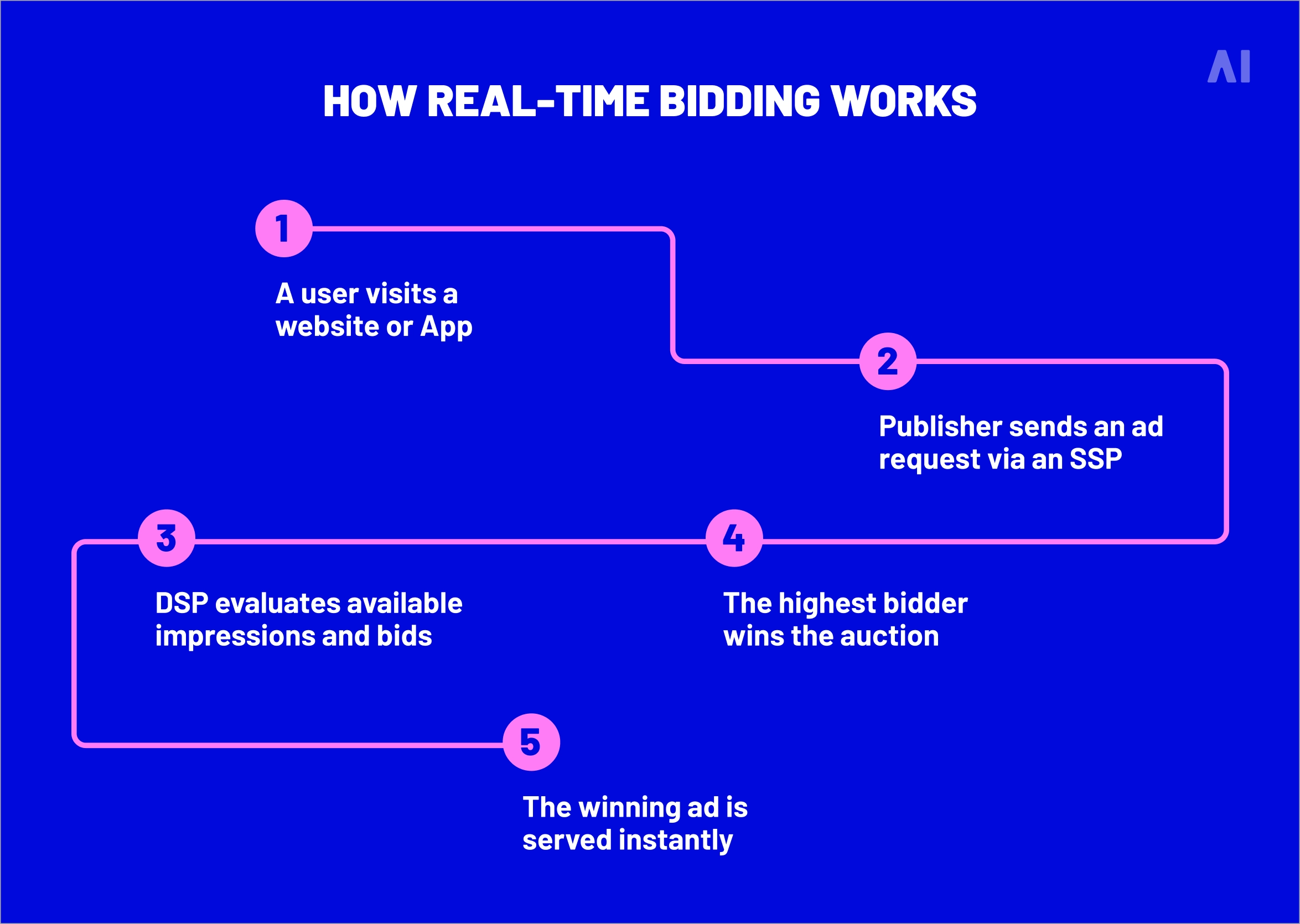
Real-time bidding, or RTB, is the auction process that makes ad exchanges structurally different from ad networks. Instead of buying a fixed package of inventory in advance, advertisers compete for impressions as they become available.
A simplified RTB sequence works like this:
- A user visits a website or app.
- The publisher’s ad server or SSP sends a bid request.
- The ad exchange shares the opportunity with eligible buyers.
- DSPs evaluate the impression using audience, context, budget, and campaign rules.
- Advertisers submit bids in real time.
- The winning bid is selected.
- The winning ad is served to the user.
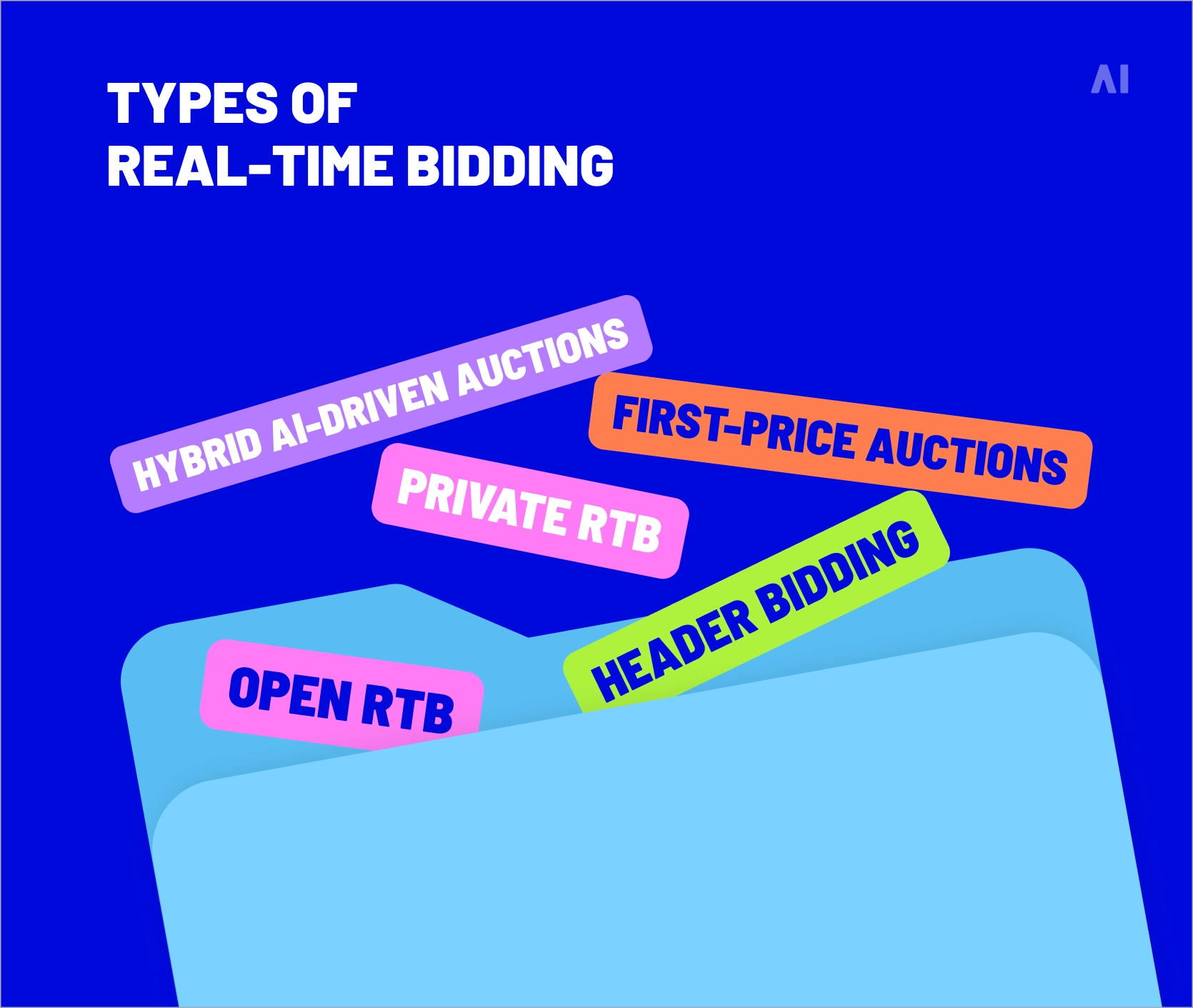
⚡️This process happens in milliseconds. It allows advertisers to decide what each impression is worth instead of accepting a fixed price for a packaged media bundle. AI Digital’s guide to real-time bidding explains this auction process in more detail.
Open exchanges vs PMPs
Not all ad exchange buying happens in the same environment. There is a spectrum from fully open auctions to more controlled private deals.
- An open exchange allows many eligible buyers to bid on available inventory. It can provide broad reach and efficient pricing, but it requires strong controls for brand safety, fraud prevention, and inventory quality.
- A private marketplace, or PMP, is more selective. Publishers invite specific advertisers or buyers to access certain inventory under agreed rules. PMPs are often used when advertisers want more control, stronger publisher relationships, and higher-quality placements.
- There are also programmatic guaranteed deals, where inventory and pricing are agreed in advance, but delivery still uses programmatic infrastructure. This can be useful for advertisers that want the automation of programmatic buying with the predictability of direct media deals. AI Digital’s guide to programmatic guaranteed explains how this model works.
Ad network vs Ad exchange: How a single ad impression is bought
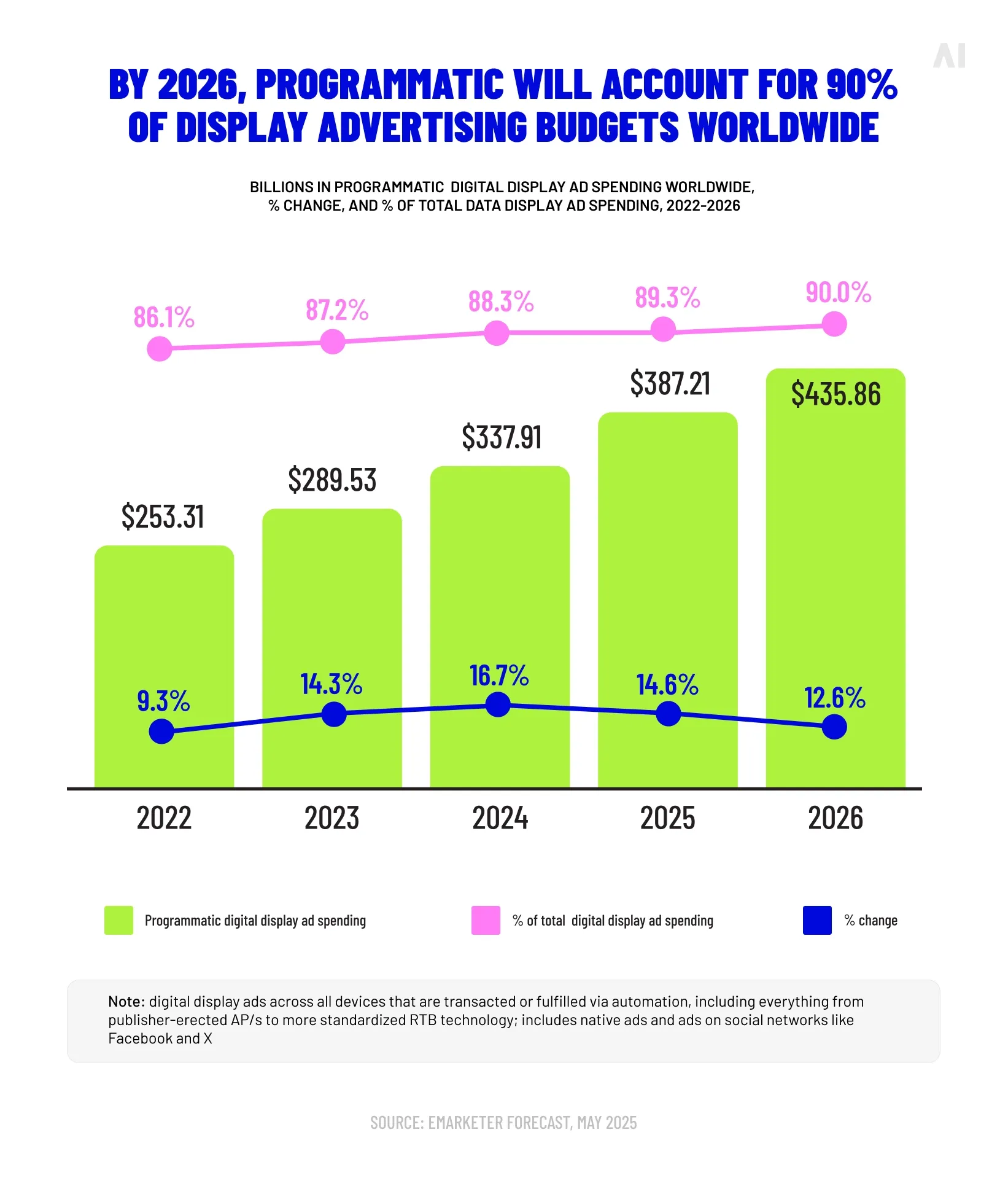
The difference between ad network and ad exchange becomes clearer when advertisers follow one ad impression from the buyer to the publisher. Both models help advertisers access digital inventory, but the buying path is different.
In an ad network, the impression is usually part of a packaged media buy. The advertiser buys access to a group of publishers, audiences, or placements managed by the network.
In an ad exchange, the impression is evaluated and bought individually through an automated auction. The advertiser can decide whether that specific impression is worth bidding on based on data, context, price, and campaign rules.
This difference affects:
- How inventory is accessed
- How prices are set
- Where fees are applied
- How much visibility advertisers receive
- How much revenue reaches the publisher
⚡️For a wider explanation of how money and inventory move through programmatic media, AI Digital’s guide to the digital advertising supply chain provides useful context.
Buying through an ad network
When an advertiser buys through an ad network, the process is managed and simplified.
A typical path looks like this:
- Publishers make inventory available to the network.
- The ad network aggregates that inventory across many sites, apps, or content environments.
- The network packages inventory by audience, category, placement type, or performance goal.
- The advertiser buys the package through a fixed CPM, CPC, CPA, or managed campaign model.
- The network serves ads across the available publisher inventory.
- The publisher receives revenue based on the network’s payment structure or revenue share.
This model is easier for advertisers that want speed and simplicity. They do not need to manage each publisher relationship, evaluate every impression, or operate a complex programmatic stack.
The trade-off is visibility. The advertiser may not know exactly which publisher received each impression, what the publisher was paid, or how much margin the network retained. This can make campaign setup easier, but it can also make media efficiency harder to audit.
Buying through an ad exchange
When an advertiser buys through an ad exchange, the process is more granular.
A typical exchange-based path looks like this:
- A user opens a webpage, app, or digital content environment.
- The publisher’s SSP sends a bid request to the exchange.
- The ad exchange shares the impression opportunity with eligible buyers.
- The advertiser’s DSP evaluates the impression using audience data, context, device, location, bid strategy, and campaign rules.
- The DSP submits a bid if the impression matches the advertiser’s criteria.
- The winning bid is selected.
- The ad is served, and the publisher is paid through the programmatic supply chain.
💡This model gives advertisers more control because each impression can be evaluated before purchase. It also gives publishers access to more demand because multiple buyers can compete for the same impression.
⚡️Header bidding, private marketplaces, and auction competition can all influence pricing and inventory access. AI Digital’s article on How Header Bidding Changed Digital Advertising can explain how publishers use header bidding to increase auction competition before the ad server makes a final decision.
Where advertiser money goes
The money flow is one of the most important differences in the ad networks vs ad exchanges discussion.
In an ad network, the advertiser usually pays the network. The network then pays publishers after applying its margin, fee, or revenue-share model. This makes budgeting simple, but the advertiser may not see the full cost breakdown.
In an ad exchange, spend moves through several programmatic partners, such as DSPs, exchanges, SSPs, verification providers, data providers, and publishers. This can provide more transparency, but only if the advertiser has the tools and reporting structure to inspect the supply path.
That is why supply-path optimization has become more important. PubMatic reported in 2026 that supply path optimization represented 55%+ of total activity on its platform in 2025, showing how buyers are increasingly focused on cleaner, more efficient buying routes.
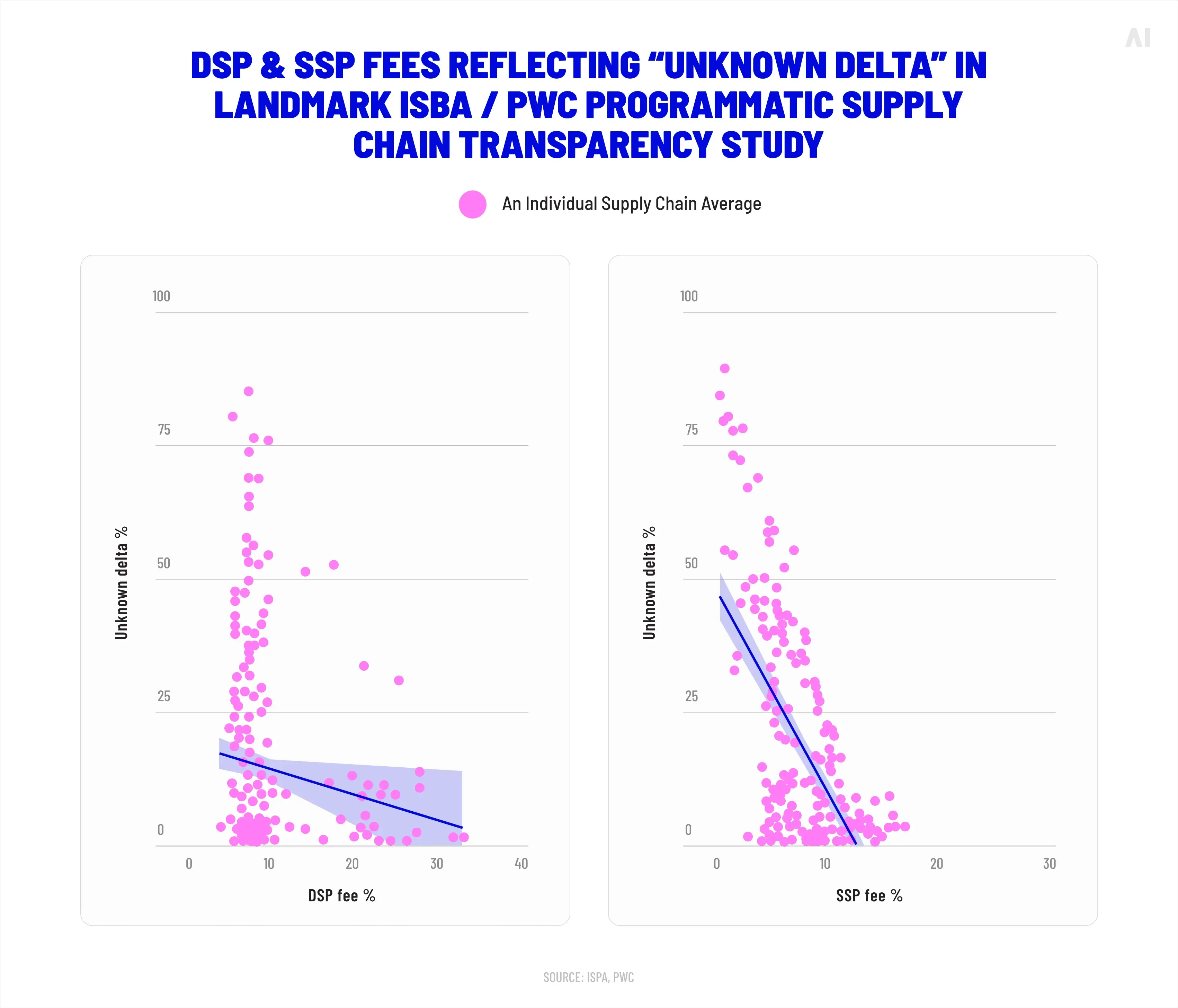
For advertisers, the goal is not only to reduce fees. It is to understand which paths deliver quality inventory, better performance, stronger transparency, and fairer publisher monetization.
⚡️AI Digital’s guide to supply path optimization explains how advertisers can evaluate and improve these buying routes.
Ad network vs Ad exchange: Key differences
The ad network vs ad exchange decision is not only about where advertisers buy inventory. It affects how much control they have, how clearly they can see where money goes, how precisely they can target audiences, and how much expertise they need to manage campaigns.
For decision-makers, the key differences are:
- Transparency and visibility
- Inventory access
- Pricing models
- Targeting capabilities
- First-party data and privacy
- Technical complexity
- Scale and reach
These differences determine whether an advertiser should prioritize simplicity, control, efficiency, or long-term programmatic maturity.
Transparency and visibility
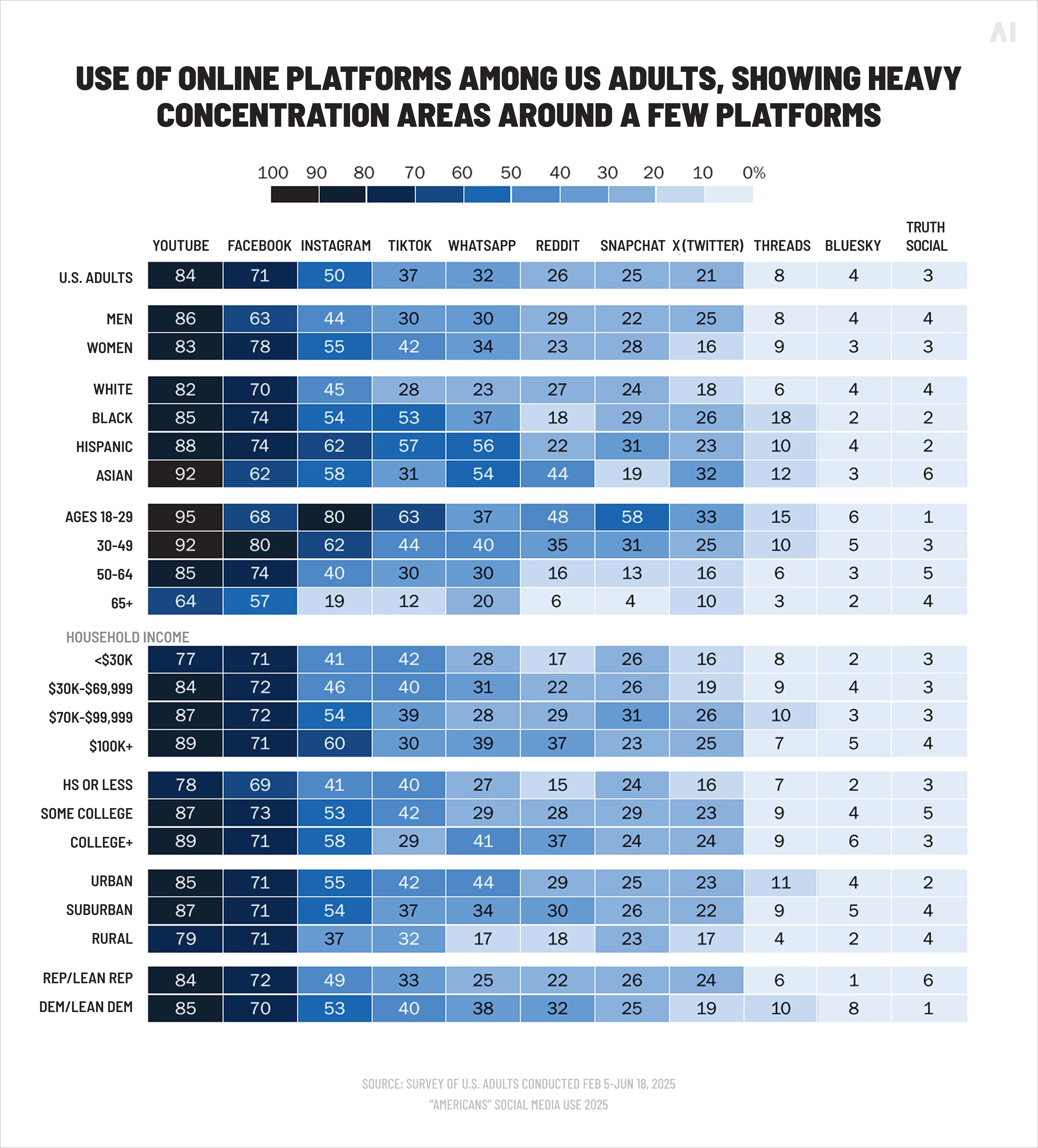
Ad networks usually provide less granular visibility than ad exchanges. Advertisers may see campaign-level reporting, but they may not always receive full publisher-level data, placement-level cost breakdowns, or auction-level details.
Ad exchanges offer more visibility because advertisers can often access impression-level reporting through DSPs, SSPs, verification tools, and supply-path analysis. This can help buyers understand which publishers, placements, devices, and audiences are driving performance.
💡Transparency also affects brand safety. If advertisers cannot see where ads appear, it becomes harder to control unsuitable placements, low-quality inventory, fraud risk, or content misalignment.
⚡️This is why our guides such as Brand Safety in Advertising: Why It Matters in Programmatic and Digital Media and What Is Ad Verification and Why It Matters in Programmatic Advertising can help readers understand how transparency connects to campaign quality.
In 2026, IAB Europe reported that 52% of digital advertising stakeholders identified media quality issues, including fraud, brand safety, viewability, and transparency, as a key barrier to growth. This shows why visibility is now a strategic requirement, not just a reporting preference.
⚡️For deeper context, AI Digital’s guide to transparency in advertising explains why clearer supply-chain visibility matters for advertisers, publishers, and media efficiency.
Inventory access
Ad networks provide managed access to packaged inventory. This can be useful when advertisers want faster campaign setup and do not need to select each publisher or impression manually.
Ad exchanges provide broader access to inventory across publishers, formats, and supply sources. This can create more opportunity, but it also creates more responsibility.
The trade-off is simple:
- Ad networks reduce setup time but offer less control over exact placements.
- Ad exchanges provide wider access but require stronger filtering, brand safety rules, and campaign controls.
For advertisers with limited programmatic resources, a network may be easier to manage. For advertisers with more advanced media teams, exchanges can provide more flexible access to premium, open web, mobile, video, and CTV inventory.
Pricing models
Ad networks often use simpler pricing models, such as fixed CPM, CPC, CPA, or managed campaign packages. This gives advertisers more predictable budgets, but less visibility into how prices are built.
Ad exchanges use auction-based pricing. In real-time bidding, the price of each impression can change based on demand, competition, floor prices, audience value, and bid strategy.
This creates two different pricing advantages:
- Ad networks: more predictable pricing and easier budgeting.
- Ad exchanges: more potential efficiency, but more bid volatility.
In exchanges, buyers also need to understand mechanisms such as floor prices and bid shading. Floor prices set the minimum amount a publisher is willing to accept for an impression. Bid shading helps buyers avoid overpaying in certain auction environments.
⚡️AI Digital’s guide to programmatic vs RTB explains how real-time bidding fits within the broader programmatic buying model.
Targeting capabilities
Ad networks usually sell pre-built audience or category segments. This can be convenient because the advertiser does not need to build a full targeting strategy from scratch.
Ad exchanges give advertisers more control over targeting because buyers can activate data through DSPs. This may include first-party audiences, contextual signals, device data, geography, frequency rules, and campaign-level exclusions.
The difference matters most when advertisers need precision. A brand running a general awareness campaign may find network segments sufficient. A brand using first-party data, account-based audiences, or advanced retargeting may need the flexibility of exchange-based buying.
⚡️For a deeper explanation, AI Digital’s guide to programmatic targeting explains how advertisers use data, context, and automation to reach relevant audiences.
First-party data and privacy
Privacy changes have made first-party data more important. Advertisers can no longer rely only on third-party tracking signals, especially as browser controls, consent rules, and platform restrictions continue to reshape addressability.
Ad networks may support audience targeting through their own data or packaged segments. This can be useful, but it may limit how much control the advertiser has over data activation and reporting.
Ad exchanges, used through DSPs and privacy-safe infrastructure, can give advertisers more flexibility to activate first-party data, contextual signals, and clean-room-based insights.
Two approaches are becoming more important:
- Contextual targeting, which uses content signals rather than personal identifiers.
- Data clean rooms, which allow privacy-safe data collaboration without directly exposing user-level data.
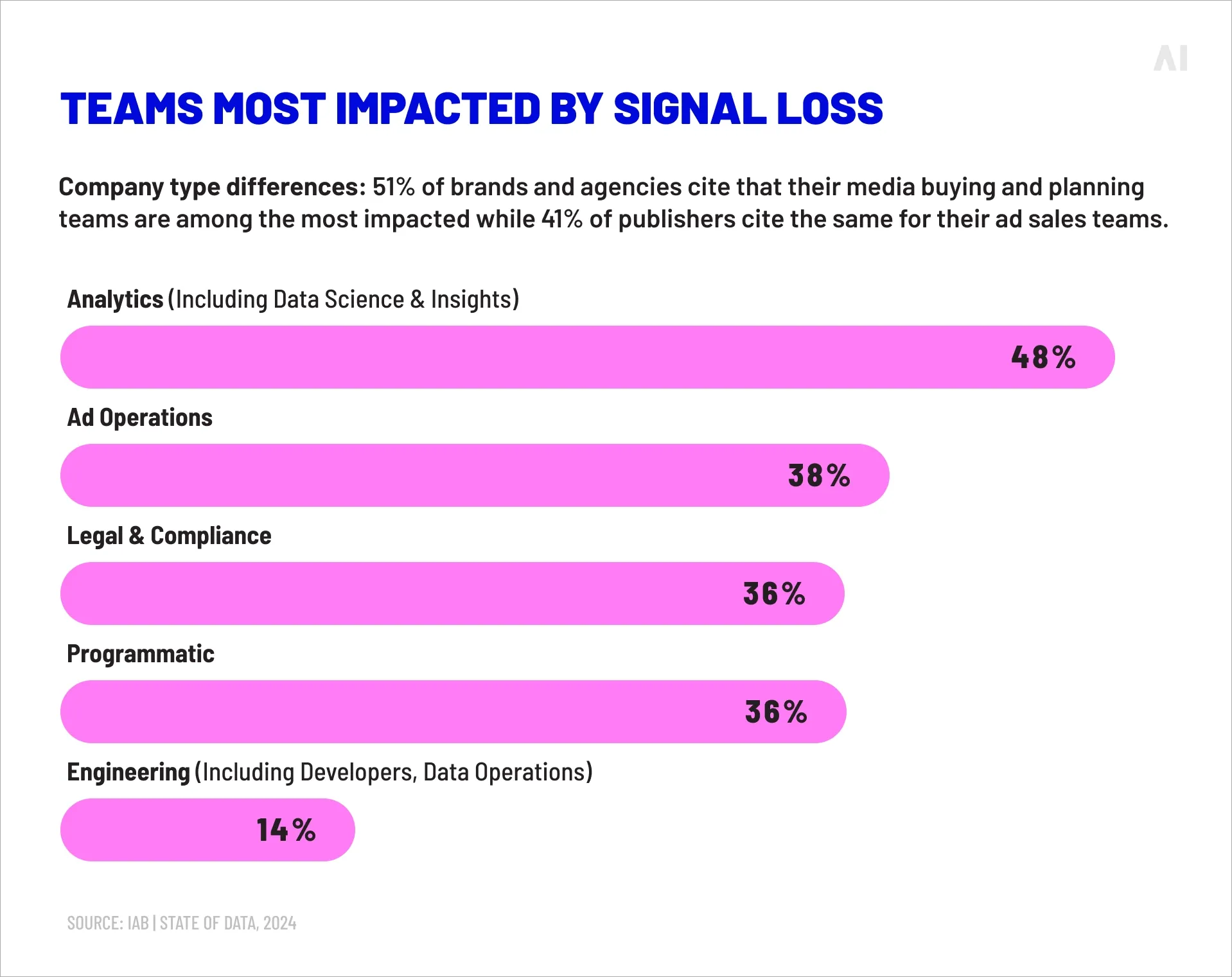
⚡️AI Digital’s guides to contextual advertising and data clean rooms explain how advertisers can adapt targeting strategies in a privacy-first environment.
Technical complexity
Ad networks are easier to operate because they abstract much of the ad tech stack. Advertisers can often launch campaigns with fewer tools, fewer integrations, and less internal programmatic expertise.
Ad exchanges require more operational maturity. Advertisers may need:
- DSP access
- Audience management
- Brand safety controls
- Verification tools
- Supply-path analysis
- Optimization expertise
- Clear measurement frameworks
This complexity can create better performance, but only when the advertiser has the skills and systems to manage it.
Scale and reach
Both models can provide scale, but the type of scale differs.
Ad networks offer packaged scale. They help advertisers reach many publishers quickly through one managed buying relationship.
Ad exchanges offer open and flexible scale. Advertisers can access broader inventory across many publishers, formats, devices, and geographies, but they need stronger controls to manage quality.
For growth-focused advertisers, the right choice depends on campaign maturity. Networks can help brands move quickly. Exchanges can help brands scale with more transparency, precision, and control.
Ad Network vs Ad Exchange: Side-by-Side Comparison
The main difference between an ad network and an ad exchange is how much simplicity, transparency, and control the advertiser gets. Ad networks are easier to use because inventory is packaged and managed for the buyer. Ad exchanges give advertisers more control over impression-level buying, but they also require stronger programmatic expertise and more active campaign management.
For most advertisers, the right model depends on the trade-off they are willing to make: faster execution with less visibility, or more control with greater operational complexity.
Which model fits your business?
The right choice between an ad network and an ad exchange depends on how much control, transparency, and technical capability the advertiser needs. Neither model is universally better. Each one solves a different media buying problem.
An ad network is usually better when the advertiser needs speed, managed execution, and simpler campaign setup. An ad exchange is usually better when the advertiser needs impression-level control, first-party data activation, broader inventory access, and stronger transparency.
Advertisers should evaluate the decision across five practical criteria:
- Budget size: smaller budgets may benefit from the simplicity of managed network buying.
- Internal expertise: teams with limited programmatic resources may not be ready for exchange-based buying.
- Transparency needs: advertisers that need publisher-level reporting usually need exchange access.
- Targeting strategy: first-party data and advanced audience rules are easier to activate through DSP-led buying.
- Growth goals: brands that want long-term media efficiency may need more control over supply paths and optimization.
⚡️AI Digital guides on Programmatic vs Direct Advertising: Key Differences, Benefits, and Trade-Offs and Programmatic vs Non-Programmatic Advertising in Modern Media Buying helps advertisers place this decision within a wider buying strategy.
⚡️For teams comparing technology partners, AI Digital’s guide to programmatic advertising platforms explains how platforms support automated buying, targeting, and optimization.
When to choose an ad network
An ad network is a strong fit when the advertiser wants a simpler route to market. It reduces the need to manage multiple publisher relationships, complex bidding tools, and detailed supply-chain decisions.
Choose an ad network when the campaign needs:
- Fast setup
- Managed execution
- Simpler reporting
- Pre-built audience or category segments
- Lower internal technical requirements
- Predictable pricing through fixed CPM, CPC, or CPA models
This model can work well for smaller teams, advertisers with limited programmatic expertise, or campaigns that prioritize reach and speed over granular control. The trade-off is that the advertiser may receive less visibility into exact placements, publisher-level pricing, and network margins.
When to choose an ad exchange
An ad exchange is better suited for advertisers that need more control over how impressions are bought, priced, measured, and optimized. It allows buyers to evaluate individual ad opportunities rather than buying only pre-packaged inventory.
Choose an ad exchange when the campaign requires:
- Impression-level buying
- Publisher and placement visibility
- First-party data activation
- Advanced targeting through DSPs
- Stronger brand safety and exclusion controls
- Greater control over bids, frequency, and supply paths
- More detailed performance and delivery reporting
This model is stronger for advertisers with mature media operations, clear data governance, and the ability to manage programmatic buying tools. The benefit is more transparency and flexibility. The cost is higher operational complexity.
When a hybrid approach makes sense
Many advertisers do not need to choose only one model. A hybrid approach can combine the simplicity of ad networks with the control of ad exchanges.
A hybrid strategy may make sense when:
- Ad networks are used for fast reach or managed campaigns
- Ad exchanges are used for high-priority audiences or premium inventory
- Networks support upper-funnel scale
- Exchange-based buying supports precision, optimization, and transparency
- The advertiser wants to test programmatic maturity before moving more budget into exchanges
💡This approach helps advertisers balance speed and control. The key is to avoid unnecessary complexity. A hybrid model should have clear roles for each buying path, consistent measurement rules, and a defined plan for budget allocation.
Beyond ad networks and exchanges: The intelligence layer
Access to inventory is no longer enough to create strong programmatic performance. Advertisers can buy through ad networks, ad exchanges, DSPs, SSPs, PMPs, and direct publisher relationships, but access alone does not guarantee efficiency.
The larger challenge is decision quality. Advertisers need to know which supply paths are efficient, which audiences are valuable, which placements are safe, and which investments are creating measurable business outcomes.
This is where the intelligence layer becomes important. AI-powered analytics, supply-path optimization, DSP-agnostic execution, and cross-channel measurement help advertisers move beyond basic media access and toward smarter media decision-making.
⚡️AI Digital’s guide to advertising intelligence explains how data and analytics improve campaign decisions across complex media environments. From Data to Decisions: How Marketing Intelligence Transforms Performance Strategy expands this idea by showing how raw campaign data becomes practical business action.
⚡️Another AI Digital’s guide to data fragmentation in advertising also explains why fragmented platforms, reports, and data sources make unified decision-making harder.
Why modern advertisers need more than inventory access
Modern advertisers do not only need more inventory. They need better ways to evaluate inventory quality, campaign efficiency, and business impact.
Programmatic media buying creates several operational challenges:
- Data fragmentation: performance data often sits across separate platforms and reports.
- Supply-path inefficiency: multiple intermediaries can increase cost and reduce transparency.
- Measurement gaps: platform metrics may not show the full customer journey.
- Optimization complexity: teams must compare audiences, channels, bids, formats, and placements.
- Cross-channel decision-making: advertisers need to understand how each channel contributes to growth.
This is why inventory access must be supported by intelligence. Advertisers need systems that connect data, expose waste, improve supply quality, and guide budget decisions across channels.
⚡️For brands buying outside closed ecosystems, AI Digital’s guide to open web programmatic explains how advertisers can access scalable digital inventory while maintaining more control over transparency, targeting, and optimization.
Improving media performance through smarter decision-making
The next stage of programmatic maturity is not simply buying more media. It is managing media more intelligently.
Advertisers need to understand which campaigns are efficient, which placements create value, and where budget should move next. That requires more than access to an ad network or ad exchange. It requires visibility, analysis, and decision support across the full buying environment.
⚡️This is where AI Digital’s branded solutions become relevant. Smart Supply helps advertisers improve media quality by focusing on curated inventory, transparent supply paths, and more efficient access to premium placements. Instead of treating all impressions as equal, Smart Supply supports a more selective approach to inventory quality and supply-chain efficiency.
Smart Supply can help advertisers:
- Reduce waste across inefficient supply paths
- Prioritize higher-quality inventory
- Improve brand safety and contextual relevance
- Increase transparency into where media spend flows
- Maximize the value of each impression purchased
Elevate supports the decision-making side of media performance. It helps advertisers use AI-powered intelligence to analyze campaign signals, compare scenarios, identify optimization opportunities, and make faster budget decisions.
Elevate can help marketing teams:
- Monitor performance across campaigns and channels
- Identify where spend is underperforming
- Forecast media opportunities
- Support budget allocation decisions
- Connect campaign activity to business outcomes
⚡️Together, Smart Supply and Elevate help advertisers move from media buying to media intelligence. Another article on AI in Programmatic Advertising: How It Improves Targeting, Bidding, and Optimization expands this discussion by explaining how AI supports bidding decisions, targeting strategy, and performance optimization across programmatic environments.
Gaining greater control over media investments
Programmatic advertising gives advertisers access to scale, but scale without control can create waste. When budgets are spread across platforms, exchanges, networks, and supply partners, it becomes harder to understand which paths are efficient and which decisions are driven by platform limitations.
Advertisers need more control over:
- Where budgets are allocated
- Which supply sources are used
- How campaign performance is measured
- Which platforms influence optimization decisions
- How business outcomes are evaluated beyond platform-reported metrics
The Open Garden Framework is designed to help advertisers reduce dependency on closed ecosystems and make media decisions with greater flexibility. Instead of being locked into one platform’s inventory, reporting, or optimization logic, advertisers can evaluate performance across a wider set of supply sources and buying environments.
⚡️AI Digital’s guide to what the Open Garden Framework is explains how this approach supports transparency, DSP-agnostic execution, and more independent media decision-making.
For advertisers comparing ad networks and ad exchanges, this matters because the buying model is only one layer of the decision. The larger question is how much visibility and control the business has over its media investments. With the right intelligence layer, advertisers can choose inventory, optimize supply paths, and allocate budget based on business objectives rather than platform constraints.
Questions to Ask Before Investing in an Ad Network or Ad Exchange
Before choosing between an ad network and an ad exchange, advertisers should evaluate more than cost and reach. The right buying model depends on campaign goals, data maturity, transparency needs, internal resources, and the level of control the business needs over media spend.
A practical evaluation should start with these questions:
- What type of inventory do we need?
If the campaign needs fast access to packaged display, native, or performance inventory, an ad network may be enough. If the campaign requires broader access to publisher inventory, PMPs, CTV, video, or open web supply, an ad exchange may offer more flexibility.
- How much pricing transparency do we need?
Ad networks may provide simpler pricing, but advertisers often have less visibility into publisher-level costs and margins. Ad exchanges can provide more granular reporting, but only if the advertiser has the tools to analyze bids, fees, and supply paths.
- Do we need advanced targeting?
Networks often offer pre-built segments. Exchanges, usually accessed through DSPs, give advertisers more control over first-party data, contextual signals, exclusions, frequency rules, and privacy-safe audience strategies.
- How important is brand safety?
Advertisers should ask whether they can control where ads appear, exclude unsuitable placements, use verification tools, and review publisher-level reporting. This is especially important when buying across the open internet.
- Who owns the data?
If campaign data stays mainly inside a closed platform or vendor dashboard, optimization becomes harder. AI Digital’s guide to walled gardens explains why platform dependency can limit visibility, while walled gardens vs open internet shows how open buying environments can support more flexible media strategies.
- Do we have the right ad tech stack?
Exchange-based buying often requires DSP access, reporting tools, brand safety controls, audience management, and optimization expertise. AI Digital’s guide to the ad tech stack explains the core tools advertisers need to manage modern digital media.
- Can this model scale with our strategy?
A network may be suitable for early testing or managed campaigns. An exchange may be better for advertisers that want long-term control, stronger transparency, and more advanced optimization.
💡The strongest decision is not based on whether an ad network or ad exchange is generally better. It is based on which model gives the advertiser the right balance of inventory quality, pricing visibility, targeting control, brand safety, data ownership, scalability, and operational fit.
Ad network vs Ad exchange: making the right choice
The ad network vs ad exchange decision should be based on business needs, not assumptions about which model is better. Ad networks and ad exchanges both have value, but they solve different problems.
An ad network is usually the better choice when advertisers need faster setup, managed execution, simpler pricing, and less technical complexity. It can help teams launch campaigns quickly without building a full programmatic operation. The trade-off is reduced visibility into placements, pricing, margins, and auction dynamics.
An ad exchange is usually the better choice when advertisers need impression-level buying, stronger transparency, advanced targeting, first-party data activation, and more control over media spend. It offers more flexibility, but it also requires stronger programmatic expertise, better reporting, and more active optimization.
The right model depends on:
- Transparency requirements
- Targeting needs
- Budget size
- Internal expertise
- Data strategy
- Brand safety expectations
- Long-term growth goals
💡Advertisers should also consider where programmatic media buying is heading. AI-driven optimization, supply-path intelligence, contextual targeting, and privacy-first data strategies are becoming more important as third-party signals become less reliable and media environments become more fragmented.
Key takeaways
- Ad networks simplify media buying by packaging inventory and managing execution for advertisers.
- Ad exchanges provide more control by allowing advertisers to bid on individual impressions through programmatic auctions.
- Ad networks are easier to use, but they often provide less pricing and placement transparency.
- Ad exchanges offer stronger visibility and targeting, but they require more technical capability.
- Neither model is universally better. The best choice depends on campaign goals, resources, and media maturity.
- A hybrid strategy can work well when advertisers need both managed scale and impression-level control.
- Future-ready media buying requires more than inventory access. Advertisers also need intelligence, transparency, optimization, and privacy-safe measurement.
⚡️For businesses evaluating which buying model fits their strategy, AI Digital can help assess media goals, data readiness, transparency needs, and programmatic growth opportunities. To discuss the right approach for your media investment, get in touch with AI Digital.