
Choosing between a CDP vs DMP has become a strategic data decision, not just a martech comparison. In 2026, advertisers are under pressure to improve targeting, personalization, and measurement while working with stricter privacy expectations, weaker third-party signals, and more fragmented media environments.
⚡️IAB forecasts 9.5% year-over-year growth in U.S. ad spend in 2026, with digital channels such as social media, connected TV, and commerce media growing faster than the broader market. That growth makes customer data infrastructure more important for every team investing in programmatic advertising.
The core difference between a CDP and a DMP comes down to the type of data each platform is built to manage. A customer data platform organizes first-party customer data from owned sources such as CRM systems, websites, apps, transactions, and email engagement. It creates persistent customer profiles that support personalization, retention, lifecycle marketing, and consent-based activation. A data management platform, by contrast, is designed around anonymous audience data, third-party signals, and cookie-based segments used mainly for programmatic reach, prospecting, and media buying.
This distinction matters because marketers are no longer judged only on how many people they reach. They are judged on how accurately they understand customers, activate audiences, respect consent, and prove performance across channels. Salesforce’s 2026 State of Marketing report found that 83% of marketers recognize the shift toward personalized, two-way messaging, but only one in four are satisfied with how they use data to power those moments.
For marketing leaders, media buyers, and martech decision-makers, the question is not whether CDPs or DMPs are “better.” It is which platform aligns with their data maturity, privacy requirements, acquisition goals, retention strategy, and long-term advertising model.
Understanding CDPs and DMPs
The distinction between CDPs and DMPs matters because modern advertising now runs on two different data models: anonymous audience reach and known customer intelligence. A DMP helps advertisers organize audience signals for paid media activation. A CDP helps businesses unify first-party customer data into persistent profiles that support personalization, retention, and long-term customer growth.
💡This is not only a technical difference. It affects how a company owns data, manages consent, activates audiences, measures performance, and builds customer relationships over time.
The market shift reflects this divide. Fortune Business Insights estimates that the global customer data platform market will grow from USD 4.07 billion in 2026 to USD 17.03 billion by 2034, showing how strongly businesses are investing in first-party customer intelligence. At the same time, DMPs remain relevant for media activation: Mordor Intelligence estimates the data management platform market at USD 2.93 billion in 2026, with continued growth expected through 2031.
In simple terms:
- Use a DMP when the goal is anonymous reach, prospecting, and programmatic audience activation.
- Use a CDP when the goal is customer recognition, personalization, retention, and lifecycle marketing.
- Use both when acquisition teams and customer marketing teams need different tools for different stages of the journey.
What a DMP does
A data management platform collects, organizes, and activates audience data for advertising. In the traditional DMP model, this data often comes from third-party sources, publisher networks, cookie-based signals, device IDs, and behavioral data from across digital environments.
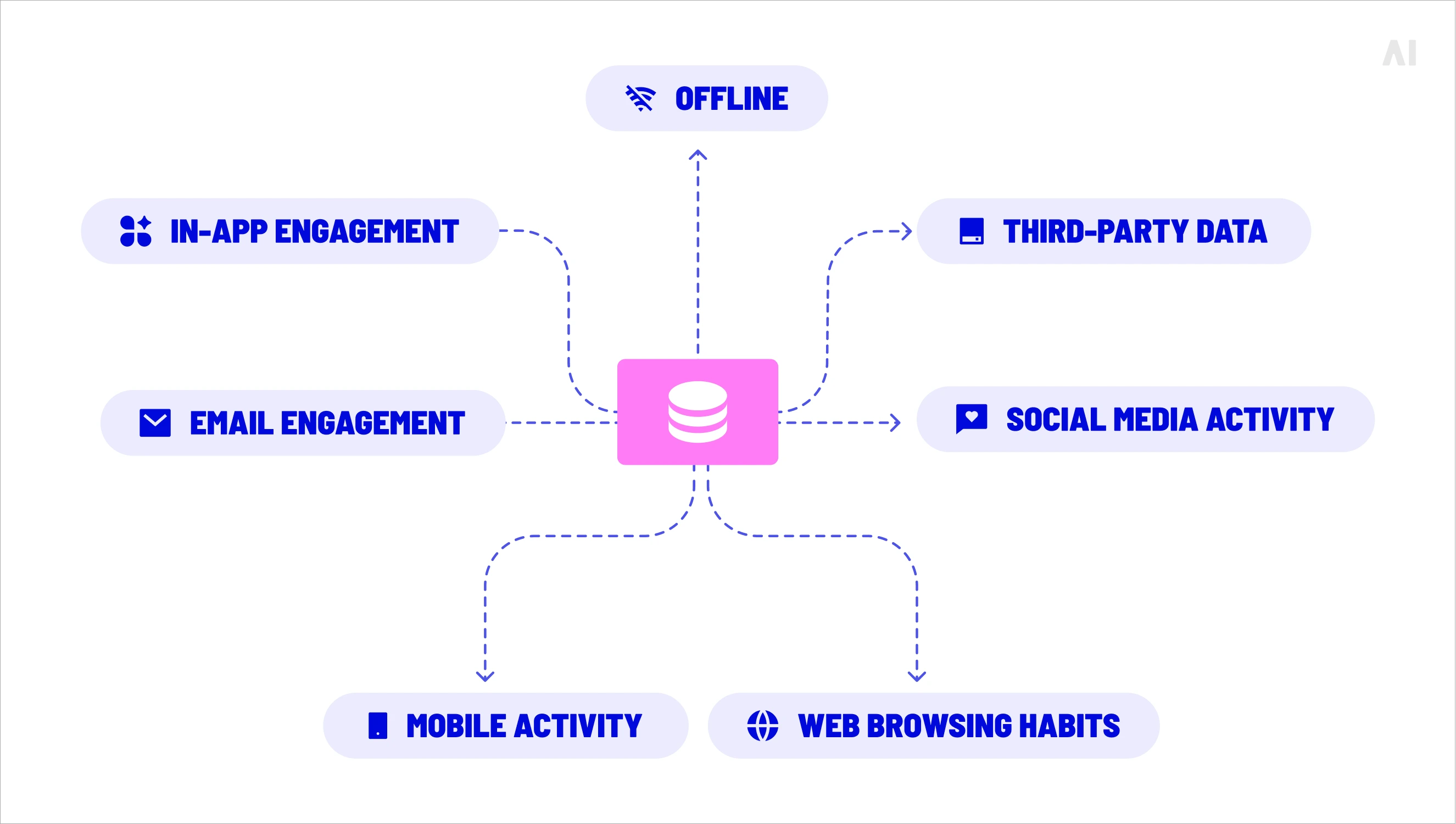
A DMP turns these signals into audience segments. For example, an advertiser may use a DMP to build segments such as:
- “luxury travel intenders”
- “in-market car buyers”
- “B2B software researchers”
- “sports streaming audiences”
- “high-income urban consumers”
These are not known customer profiles. They are anonymous or pseudonymous groups built for media activation.
⚡️The usual DMP workflow is straightforward. The platform collects or imports audience data, groups users into segments, and sends those segments into a demand-side platform. The DSP then uses those segments to decide which impressions to bid on. In real-time bidding, this decision happens in milliseconds as an impression becomes available.
This is why DMPs are built for reach, not relationship. They help advertisers find people who may be relevant to a campaign before those people have directly interacted with the brand. That makes DMPs useful for awareness campaigns, prospecting, audience extension, lookalike modeling, and programmatic display.
💡The limitation is depth. Because DMPs usually work with anonymous identifiers, they cannot reliably show who the person is, what they bought, what consent they gave, or which message should come next in a customer journey. A DMP can help a brand reach an audience, but it is not designed to manage long-term customer relationships.
What a CDP does
A CDP starts with owned customer data. It collects first-party data from systems such as CRM platforms, websites, apps, ecommerce tools, email platforms, loyalty programmes, customer support systems, and transaction records.
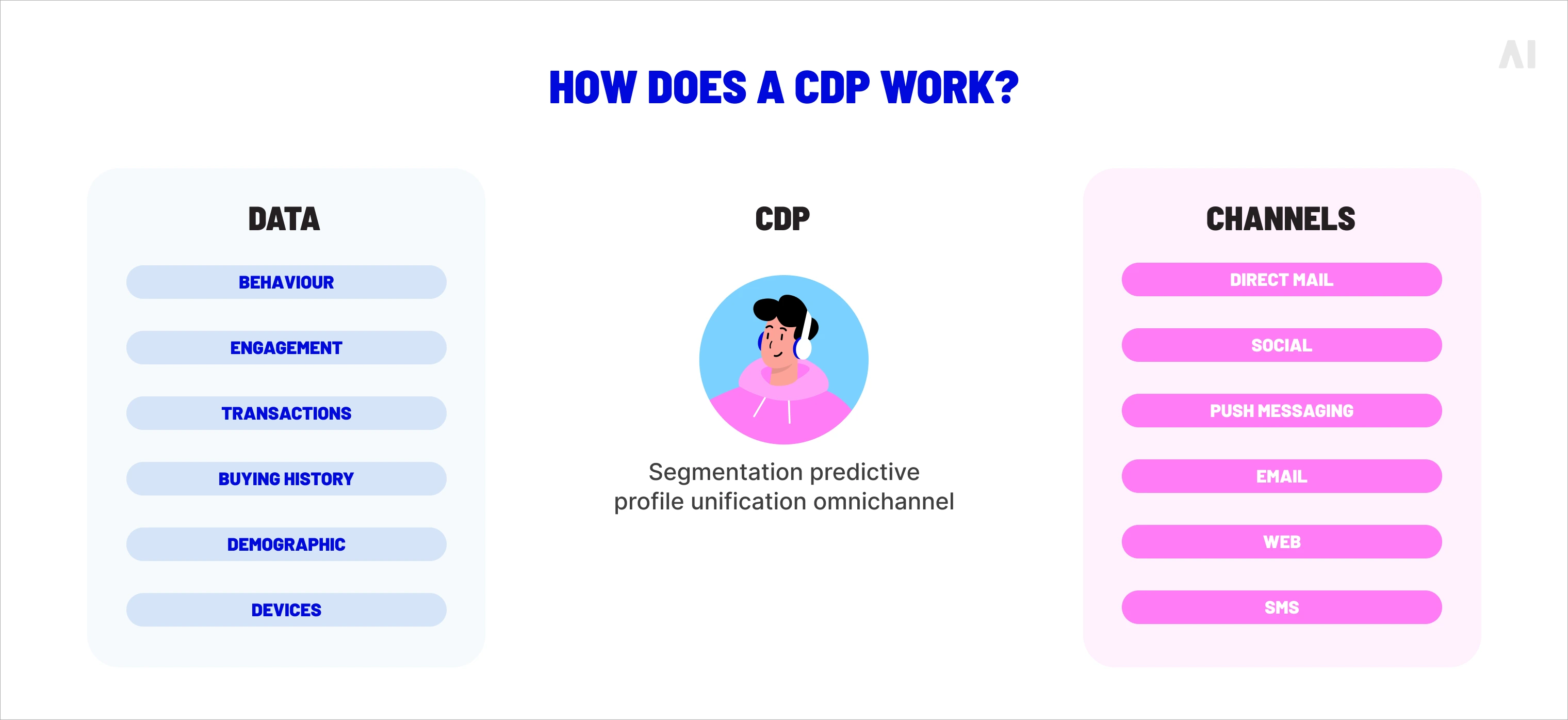
Instead of creating temporary anonymous segments, a CDP builds persistent customer profiles. These profiles become more valuable as the customer continues to interact with the brand.
For example, a CDP can connect data from:
- a website visit
- an email click
- a product purchase
- a mobile app login
- a loyalty account
- a customer support request
- a consent preference update
This process is called identity resolution. A CDP usually relies on deterministic identifiers such as email addresses, login IDs, customer IDs, phone numbers, and transaction records. Some platforms also use probabilistic matching, but the core value is the same: the business can recognize a customer over time and use that profile to improve communication.
That is why CDPs are built for retention and personalization. A retailer can use a CDP to identify customers who bought sunscreen last summer but have not returned this year. A SaaS company can use a CDP to trigger onboarding messages based on product usage. A subscription business can use a CDP to predict churn risk and send targeted win-back campaigns.
💡The strategic difference is clear: a DMP helps a brand find potential audiences; a CDP helps the brand understand and activate existing customer relationships.
Why some teams need both
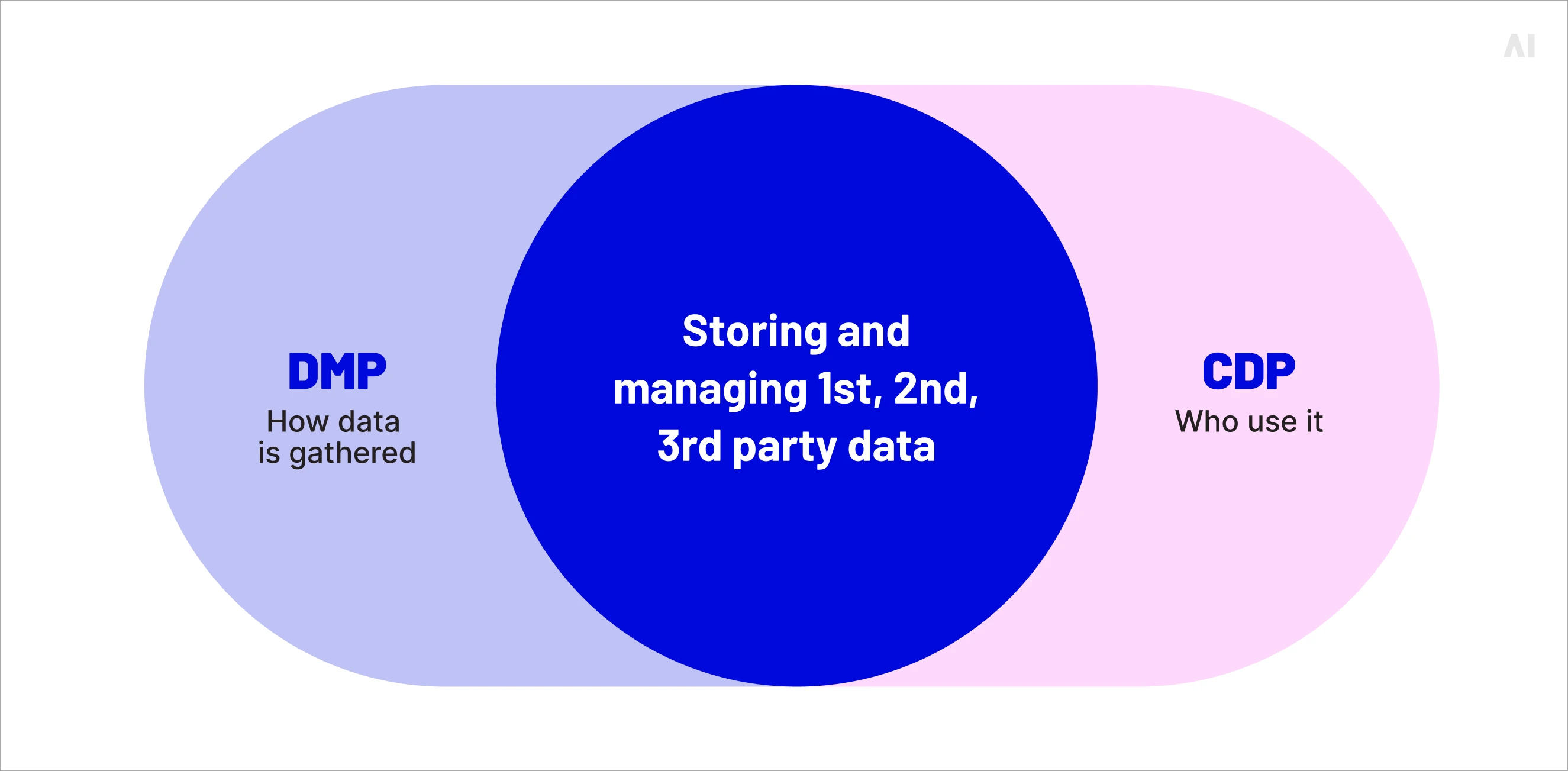
CDPs and DMPs are often compared as if one must replace the other. In practice, they can coexist because they support different stages of the funnel.
A DMP can support top-of-funnel acquisition by helping media teams reach anonymous audiences across programmatic environments. A CDP can support mid-funnel and lower-funnel activation once a person becomes known through a form submission, account creation, purchase, app login, or subscription.
For example, a travel company may use a DMP to reach anonymous users interested in summer destinations. If one of those users later signs up for the newsletter or books a trip, that person can enter the CDP. From there, the company can personalize emails, suppress irrelevant ads, recommend destinations, and build loyalty campaigns using first-party data.
💡This is the right way to think about CDP vs DMP: not as a software rivalry, but as a data architecture decision. If the business needs more efficient prospecting, a DMP may still have value. If the business needs stronger customer recognition, consent management, and personalization, a CDP becomes more important. If the business needs both acquisition scale and owned customer intelligence, the best answer may be a connected architecture where each platform supports the part of the journey it was built for.
The key differences between CDPs and DMPs
The main difference between CDPs and DMPs comes down to three structural factors: data sources, identity models, and data retention. These factors shape everything that follows, from audience targeting and personalization to compliance, measurement, and long-term marketing performance.
A CDP is built around owned customer data. It helps a business recognize customers, understand behavior over time, and activate first-party data across marketing, sales, service, analytics, and advertising channels. A DMP is built around anonymous audience data. It helps advertisers group users into segments and activate those segments in programmatic media environments.
This distinction matters because data quality is now a strategic constraint. Cisco’s 2026 Data and Privacy Benchmark Study found that 65% of organizations struggle to efficiently access relevant, high-quality data. For advertisers, that makes platform architecture important. A CDP and a DMP do not just store different data. They create different levels of control, accuracy, and business value.
First-party vs. third-party data
The first major difference is the source of the data.
A CDP relies mainly on first-party data. This is data a company collects directly from its own customer touchpoints, such as:
- CRM records
- website behavior
- mobile app activity
- purchase history
- email engagement
- loyalty programmes
- customer support interactions
- consent and preference data
Because this data comes from owned channels, the business has more control over its quality, permissions, and long-term usability. This makes CDPs useful for customer retention, lifecycle marketing, personalization, segmentation, and privacy-aware activation.
A DMP, by contrast, has traditionally relied on third-party data and anonymous behavioral signals. This can include data from publishers, ad networks, data brokers, third-party cookies, device IDs, and browsing behavior across digital environments. The platform uses these signals to group users into audience segments for media buying.
This is where the downstream difference begins. A CDP helps a company understand people who have already interacted with the brand. A DMP helps advertisers reach people who may match a target audience but are not yet known customers.
⚡️For programmatic targeting, this distinction is important. A DMP can help expand reach by identifying anonymous audience segments that match a campaign goal. A CDP can improve targeting by using owned customer data to build more precise segments, suppress existing customers from acquisition campaigns, or create high-value audience models from real customer behavior.
In practice:
- DMP data is useful for broad reach and prospecting.
- CDP data is useful for precision, personalization, and retention.
- The strongest strategy often connects both, but does not treat them as interchangeable.
Known profiles vs. anonymous segments
The second major difference is identity.
A CDP builds known customer profiles. It connects data points from different systems to the same person or account where consent and identifiers allow it. These identifiers can include email addresses, login IDs, phone numbers, CRM IDs, transaction IDs, or loyalty numbers.
This creates a stable customer view. For example, a CDP can show that the same customer visited a product page, opened an email, purchased twice, contacted support, and opted into SMS updates. That profile can then inform the next best message, offer, channel, or suppression rule.
💡A DMP works differently. It usually creates anonymous or pseudonymous audience segments. Instead of saying, “This is Valentina, a returning customer with three purchases,” a DMP says, “This browser or device appears to belong to a user in a travel-intent segment.” That segment may be useful for media buying, but it is not the same as a persistent customer profile.
This affects personalization depth.
A DMP can support audience-level personalization, such as showing a travel ad to people who recently browsed destination content. A CDP can support customer-level personalization, such as sending a specific offer to a loyalty member who searched for beach destinations, booked Sicily last year, and has not purchased this season.
It also affects cross-channel consistency. A CDP can help coordinate messaging across email, SMS, website personalization, paid media, app notifications, and customer support. A DMP is usually strongest inside advertising environments, especially where anonymous audience activation is the goal.
⚡️The strategic difference is simple: DMPs classify audiences; CDPs recognize customers.
Data retention: months vs. days
The third major difference is how long the data remains useful.
DMP data is often temporary. Because many DMP segments are tied to cookies, device signals, or short-term behavioral indicators, the data usually expires quickly. In many cases, DMP audience data is retained for around 30 to 90 days, depending on the platform, data provider, browser environment, and campaign setup.
This short retention window makes sense for campaign activation. If someone has recently browsed car reviews, travel content, or enterprise software pages, that signal may be valuable now. But it may lose relevance quickly.
A CDP works on a longer timeline. Because CDPs rely on first-party identifiers and owned customer records, customer profiles can persist and grow over time. A profile may include years of purchases, interactions, preferences, consent changes, subscription activity, loyalty behavior, and engagement history.
This has major implications for marketing strategy. CDP data can support:
- customer journey mapping
- lifecycle segmentation
- churn prediction
- loyalty programmes
- customer lifetime value modeling
- next-best-action campaigns
- suppression and reactivation strategies
This is why CDPs are better suited to long-term customer intelligence. DMPs are effective for short-term audience activation. CDPs are more useful when the business needs to understand how customer behavior changes over time.
⚡️This distinction will become especially important for teams investing in Customer Journey Analytics Explained: Data, Touchpoints, and Cross-Channel Insights, because journey analysis depends on persistent customer data rather than temporary audience signals.
Identity resolution
Identity resolution is where the CDP vs DMP difference becomes operational.
A CDP usually relies on deterministic identity resolution. This means it connects customer data using identifiers that directly link to a person or account, such as:
- email address
- login ID
- customer ID
- phone number
- transaction record
- loyalty account
- authenticated app session
This approach is not perfect. It still depends on data quality, consent, governance, and correct implementation. But it gives the business a more reliable foundation for personalization and customer-level activation.
A DMP usually relies more on probabilistic identity signals. These may include cookies, device IDs, IP address patterns, browser attributes, location signals, and behavioral similarities. The platform infers that a browser, device, or user belongs to a certain audience segment, but it does not usually create a stable, named customer profile.
This creates an accuracy trade-off. Probabilistic identity can be useful for scale, but it is less reliable for individual-level personalization, compliance, and long-term measurement. Deterministic identity is more precise, but it requires first-party data, customer authentication, and stronger data governance.
This is why privacy and data governance now influence platform choice. Cisco’s 2026 study found that 46% of organizations identify clear communication about how data is collected and used as the most effective way to build customer confidence. For CDPs, this reinforces the need for transparent consent and preference management. For DMPs, it highlights the challenge of managing trust when data often comes from indirect or third-party sources.
CDP vs DMP comparison table
The easiest way to understand the difference between a CDP and a DMP is to compare how each platform handles data, identity, activation, and long-term marketing value. A CDP is built for owned customer intelligence, while a DMP is built for anonymous audience activation. The table below shows how that difference plays out across the areas that matter most for advertising and martech teams.
Why GDPR and the post-cookie era favor CDPs
Privacy regulation and third-party signal loss have changed the CDP vs DMP debate. The issue is no longer only which platform can target audiences more efficiently. It is which platform gives the business enough control over consent, identity, data provenance, and activation.
This is where CDPs have a structural advantage. A CDP is built around first-party data collected from owned customer touchpoints. That makes it easier to connect consent, preferences, identity, and activation rules to the same customer profile. A DMP, by contrast, has traditionally depended on anonymous audience data, third-party cookies, brokered segments, and probabilistic identifiers. That model can still support reach, but it is harder to govern at the individual level.
The compliance risk is not theoretical. DLA Piper’s 2026 GDPR Fines and Data Breach Survey reports that European supervisory authorities issued approximately €1.2 billion in GDPR fines in 2025, bringing cumulative GDPR fines to around €7.1 billion by January 2026. The same report found that personal data breach notifications in Europe rose 22% year over year, reaching an average of 443 notifications per day.
⚡️For advertisers, the message is clear: customer data infrastructure is now part of risk management. First-party data, consent governance, contextual advertising, and privacy-safe collaboration through data clean rooms are becoming more important as teams move away from uncontrolled third-party data dependency.
Third-party data and compliance risk
DMPs can fall short when advertisers need to prove where data came from, how consent was collected, and whether the user agreed to a specific type of processing. This is a major issue under GDPR, CCPA, and ePrivacy rules, where transparency, purpose limitation, opt-out rights, and consent traceability matter.
The challenge is that third-party audience data often moves through several intermediaries before it reaches the advertiser. A segment may originate from a publisher, pass through a data marketplace, sync with a DMP, and then activate through a DSP. Each step can add distance between the advertiser and the original consent event.
That creates practical questions:
- Who collected the original data?
- What exactly did the user consent to?
- Was the consent valid for advertising activation?
- Was the consent passed through the supply chain correctly?
- Can the advertiser prove this during an audit or regulatory review?
A CDP does not automatically make a company compliant. Poor implementation can still create risk. But a CDP is better aligned with privacy governance because it works with owned customer data and can connect consent signals to specific profiles, channels, and purposes.
For example, a CDP can help a business record whether a customer agreed to email marketing, SMS messages, personalization, paid media retargeting, or data sharing with advertising partners. That creates a clearer audit trail than a DMP segment built from anonymous third-party signals.
Cookie deprecation
The phrase “post-cookie era” should be used carefully. Third-party cookies have not disappeared from every environment at once. Google has shifted away from a full Chrome cookie phaseout and now maintains a user-choice model. At the same time, several Privacy Sandbox advertising APIs have been retired after low adoption.
Even so, the direction of travel is clear. Third-party cookies are less reliable because of:
- browser restrictions
- user opt-outs
- consent banners
- mobile platform privacy controls
- regulatory scrutiny
- weaker cross-site tracking signals
- reduced confidence in third-party audience data
This affects DMPs more directly than CDPs. DMPs were built around anonymous audience activation, and many of their traditional use cases depend on cookies or similar identifiers. When those signals weaken, advertisers may see lower match rates, smaller addressable audiences, less reliable lookalike modeling, and weaker frequency capping.
The impact is especially clear in programmatic campaigns. A DMP may still help with prospecting and audience extension, but it becomes harder to maintain accuracy when the underlying identifiers are unstable.
CDPs are less exposed to this shift because they rely on first-party data. If a user logs in, makes a purchase, joins a loyalty programme, submits a form, or updates a preference, the brand can build a direct customer relationship. That data does not depend on a third-party cookie being available across the open web.
This does not mean CDPs replace all media tools. They do not. But they give advertisers a more durable foundation for activation because the customer relationship belongs to the business, not to a third-party identifier.
Consent management
Consent management is one of the strongest reasons CDPs are becoming more important in privacy-led marketing.
A DMP usually works with anonymous or pseudonymous identifiers. That makes consent enforcement more difficult at scale. The platform may know that a browser belongs to a segment, but it may not know the person behind that browser or the full history of their consent choices across channels.
A CDP can manage consent more directly because it works at the customer-profile level. When implemented correctly, a CDP can store and enforce consent rules across different use cases, such as:
- email marketing
- SMS communication
- website personalization
- app notifications
- paid media retargeting
- lookalike audience creation
- data sharing with partners
- analytics and measurement
This matters because consent is not a general permission slip. A customer may agree to receive emails but reject SMS. They may allow personalization on the website but opt out of advertising cookies. They may consent in one region but require different handling under another privacy regime.
A CDP can help operationalize these rules by connecting consent status to activation workflows. If a customer withdraws consent for paid media targeting, the CDP can suppress that profile from retargeting audiences. If a customer agrees to personalization but not third-party sharing, the CDP can still support owned-channel personalization while blocking partner activation.
⚡️This is also where data fragmentation in advertising becomes a compliance issue. When consent data lives in one system, CRM data in another, web behavior in another, and media audiences in another, teams struggle to enforce rules consistently. A CDP reduces that risk by creating a more unified layer for identity, consent, and activation governance.
💡The strategic takeaway is simple: privacy regulation does not eliminate the need for audience activation. It changes the conditions under which activation can happen. DMPs can still support reach, especially for anonymous prospecting. But as consent, identity, and data governance become central to advertising performance, CDPs give organizations a stronger foundation for long-term, compliant customer data strategy.
DMP vs CDP: How to choose
The right choice between a DMP and a CDP depends on the business problem. A DMP is strongest when the goal is to reach anonymous audiences at scale. A CDP is strongest when the goal is to understand known customers and activate first-party data across the customer lifecycle.
The decision should start with three questions:
- Are we trying to reach new audiences or deepen relationships with known customers?
- Do we need anonymous scale or persistent customer profiles?
- Is our main challenge media activation, customer journey orchestration, or both?
This matters because advanced marketing depends on data readiness, not just platform access.
Adobe’s 2026 AI and Digital Trends research found that only 39% of organizations have a shared customer data platform capable of supporting agentic AI, while 75% cite data integration and quality as a top implementation challenge. In other words, choosing between CDP and DMP is also a decision about how prepared the business is to connect data, activation, and customer experience.
When a DMP makes sense
A DMP makes sense when the primary goal is audience reach. It is most useful for campaigns where the advertiser wants to find relevant people before they become known customers.
DMPs are a strong fit for:
- prospecting campaigns
- programmatic display
- DSP-driven audience extension
- lookalike modeling
- interest-based targeting
- top-of-funnel awareness
💡For example, a travel brand may want to reach people interested in beach holidays, luxury hotels, or short-haul flights. These users may not have visited the brand’s website or shared any first-party data. A DMP can help the brand build anonymous audience segments and activate them in paid media.
⚡️This is useful in programmatic vs RTB environments, where advertisers need to evaluate large numbers of impressions quickly. A DMP can send audience segments into a DSP, where the buying platform decides whether to bid. It can also support media teams using a programmatic advertising platform to manage reach across open-web inventory and data-enriched media environments.
Choose a DMP when:
- the audience is mostly anonymous
- the objective is reach or awareness
- the media team needs segments for DSP activation
- the business has limited first-party data
- the goal is prospecting, not lifecycle personalization
A DMP is the better fit when anonymous targeting at volume matters more than long-term customer recognition.
When a CDP makes sense
A CDP makes sense when the business needs to use owned customer data more effectively. It is the stronger choice for retention, personalization, loyalty, lifecycle marketing, and cross-channel customer experience.
CDPs are a strong fit for:
- win-back campaigns
- churn prevention
- loyalty personalization
- customer journey orchestration
- next-best-action messaging
- suppression of existing customers from acquisition campaigns
- first-party audience activation in paid media
For example, an ecommerce company may want to identify customers who bought once but never returned. A CDP can combine purchase history, website behavior, email engagement, product preferences, and consent status to create a precise win-back segment. That segment can then be activated across email, SMS, website personalization, app notifications, or paid media.
A CDP also becomes more important when customer data is fragmented across CRM, ecommerce, analytics, email, and media systems. Instead of forcing teams to work from disconnected data, the CDP creates a shared customer profile that can support more consistent activation.
Choose a CDP when:
- the business has meaningful first-party data
- the goal is retention or personalization
- teams need persistent customer profiles
- consent and preference management are important
- customer data is fragmented across multiple systems
A CDP is the better fit when customer recognition matters more than anonymous scale.
When you need both
Some organizations need both because DMPs and CDPs support different parts of the journey. A DMP can seed top-of-funnel awareness. A CDP can activate mid-funnel and lower-funnel engagement once a person becomes known.
The handoff works like this:
- A DMP helps the brand reach an anonymous audience segment.
- The user clicks, visits, signs up, purchases, or creates an account.
- The person becomes identifiable through a consented first-party signal.
- The CDP connects that interaction to a customer profile.
- The brand uses the CDP for personalization, suppression, retention, or lifecycle campaigns.
For example, a financial services company may use a DMP to reach users researching investment products. If one of those users later downloads a guide or submits a lead form, that person can enter the CDP. From there, the company can personalize follow-up messages, coordinate sales outreach, and avoid showing generic acquisition ads to someone already in the pipeline.
⚡️This is where advertising intelligence becomes important. Marketers need to understand how audience data, media performance, customer behavior, and business outcomes connect across the full journey.
💡The practical rule is simple: use a DMP when the audience is anonymous and the goal is reach. Use a CDP when the customer is known and the goal is relevance. Use both when the business needs a bridge between acquisition and retention.
The Real Challenge Isn't CDP vs. DMP
Choosing between a CDP and a DMP solves only one layer of the advertising problem. A CDP can organize first-party customer data. A DMP can support anonymous audience activation. But neither platform, by itself, solves the wider issue many advertisers now face: fragmented media execution.
Modern campaigns run across DSPs, SSPs, retail media networks, CTV, paid social, search, open web inventory, and walled gardens. Each environment has its own data rules, reporting logic, optimization models, and measurement limitations. That creates a bigger strategic challenge than CDP vs DMP alone: how to coordinate data, media, supply, and measurement without losing transparency or control.
This matters because advertising power is increasingly concentrated inside closed ecosystems. EMARKETER projects that Google, Meta, and Amazon will account for 62.3% of global digital ad spending in 2026. For advertisers, that concentration creates convenience, but it also increases dependence on platform-defined data, attribution, and optimization logic.
⚡️That is why transparency in advertising has become a strategic priority. Marketers do not only need better data platforms. They need operating models that help them understand where spend goes, how inventory is selected, how outcomes are measured, and whether platform incentives align with advertiser goals.
⚡️For more on this, read How Header Bidding Changed Digital Advertising and Brand Safety in Advertising: Why It Matters in Programmatic and Digital Media. The buying ecosystem has become more automated, but not always more accountable.
Limits of walled gardens
Walled gardens offer scale, rich first-party data, and powerful optimization tools. For many advertisers, they are difficult to avoid. Platforms such as Google, Meta, Amazon, and TikTok can deliver efficient reach because they control large user bases, logged-in data, inventory, buying tools, and measurement systems inside the same environment.
The trade-off is limited visibility. Walled gardens restrict how much signal advertisers can access outside the platform. They also make it harder to compare performance across channels because each platform defines attribution, conversions, audience quality, and optimization success in its own way.
For teams running multi-DSP or cross-channel strategies, this creates several problems:
- audience data does not move cleanly across platforms
- reporting methodologies differ by environment
- attribution windows are inconsistent
- frequency management is difficult across disconnected systems
- optimization may favor platform performance rather than total business outcomes
- supply quality is harder to compare across open and closed ecosystems
💡This is not an argument against walled gardens. They can be valuable. The issue is overdependence. A brand that relies only on platform-controlled measurement may struggle to understand whether performance is truly incremental, duplicated across channels, or shaped by the platform’s own reporting logic.
⚡️That is why many advertisers now evaluate open web programmatic, walled gardens vs open internet, and walled gardens as part of the same strategic question: where can we scale media while keeping enough control to measure and optimize intelligently?
⚡️For more on this, read, What Is Ad Verification and Why It Matters in Programmatic Advertising. As buying paths become more automated, advertisers need stronger verification, clearer supply paths, and more independent visibility into where ads appear.
The Open Garden Framework: a vendor-neutral alternative
AI Digital’s Open Garden Framework responds to this challenge by shifting the focus from platform selection to orchestration. It is not an anti-platform position. It is a vendor-neutral operating model designed to help advertisers plan, buy, measure, and optimize across fragmented environments with the business KPI at the center.
⚡️The Open Garden Framework is built around four practical principles:
- vendor-neutral architecture
- curated supply strategy
- AI-powered execution
- unified cross-channel measurement
The value is control. Instead of letting one platform define the strategy, Open Garden allows advertisers to choose DSPs, SSPs, supply paths, audiences, and measurement approaches based on fit. That helps reduce lock-in and makes it easier to compare performance across environments.
For brands and agencies, this matters because the problem is rarely “we need one more platform.” More often, the problem is that existing platforms do not work together cleanly. Open Garden gives advertisers a framework for coordinating what they already use, while keeping decision-making tied to business outcomes rather than platform defaults.
Smart Supply: efficient programmatic supply chain
Smart Supply addresses the supply-side part of the problem. In programmatic advertising, performance depends not only on audience data but also on the quality, cost, and transparency of the inventory path.
Generic open auction buying can expose advertisers to unnecessary intermediaries, low-quality placements, hidden markups, and brand safety risks. Smart Supply replaces that with curated, KPI-based Deal IDs designed around campaign outcomes.
The model combines AI-powered filtering with human oversight to improve supply quality before impressions reach the advertiser. It focuses on:
- curated Deal ID buying
- direct SSP access
- supply path optimization
- brand-safe inventory
- transparent traffic sources and pricing
- real-time performance adjustments
⚡️This connects directly to supply path optimization, programmatic guaranteed, and the wider digital advertising supply chain. The goal is not simply to buy cheaper impressions. It is to reduce waste, improve quality, and make the path from advertiser to publisher more accountable.
Elevate: cross-platform planning and activation
Elevate is AI Digital’s AI-powered marketing intelligence platform. Its role is to connect research, planning, optimization, and reporting across fragmented media environments. According to AI Digital, Elevate analyzes 150 billion monthly data points, uses 10,000 audience attributes, and integrates with 12+ DSPs.
This makes Elevate the operational layer behind the Open Garden model. Instead of forcing teams to move between disconnected planning tools, DSP dashboards, reporting exports, and manual analysis, Elevate helps centralize campaign intelligence across the full workflow.
⚡️For advertisers, the value is not only automation. It is decision quality. A marketing intelligence platform should help teams understand audiences before launch, forecast media plans, optimize in flight, and report performance in a way that connects media activity to business outcomes.
⚡️For more on this, read AI in Programmatic Advertising: How It Improves Targeting, Bidding, and Optimization and From Data to Decisions: How Marketing Intelligence Transforms Performance Strategy.
The key takeaway is that CDPs and DMPs still matter, but they are not the whole architecture. The real challenge is building a media system where customer data, audience activation, supply quality, measurement, and optimization work together. That is the strategic gap Open Garden, Smart Supply, and Elevate are designed to address.
Integrating CDPs and DMPs into Your Martech Stack
CDPs and DMPs do not operate in isolation. They sit inside a broader marketing technology ecosystem that includes CRM systems, analytics tools, automation platforms, DSPs, data warehouses, consent tools, ecommerce systems, and customer engagement channels.
This is why the CDP vs DMP decision should be evaluated as an architecture decision, not just a platform decision. The question is not only what the tool can do. It is how well it connects to the systems that already collect, process, activate, and measure customer and audience data.
That integration challenge is growing. The 2026 Marketing Technology Landscape lists 15,505 martech products, with 1,488 tools added and 1,367 removed in one year. The market is not simply expanding; it is turning over quickly. For marketing teams, that makes stack design more important than tool accumulation.
⚡️Read more: The Modern Marketing Stack: CRM, Automation, Analytics — and What’s Missing.
DMP integrations
A DMP usually connects most closely to the media-buying side of the stack. Its main role is to collect or ingest audience data, organize it into segments, and pass those segments into activation environments.
Common DMP integrations include:
- DSPs such as The Trade Desk and DV360
- ad exchanges
- ad networks
- publisher platforms
- data marketplaces
- third-party audience providers
- tag management systems
- analytics and campaign reporting tools
The typical data flow is straightforward. Audience data enters the DMP from third-party providers, publisher sources, website tags, or data marketplaces. The DMP organizes that data into audience segments. Those segments are then synced with a DSP or another media-buying platform for campaign activation.
This is why DMP onboarding is often lighter than CDP implementation. A DMP does not usually need to unify every customer record across the business. It needs access to audience signals, segment rules, and media activation endpoints.
For example, a media team may use a DMP to create a segment of users interested in business travel, push that segment into a DSP, and activate it across programmatic display. The same logic applies to audience extension, prospecting, lookalike modeling, and retargeting where anonymous reach is the main goal.
⚡️Read more: Ad Networks vs Ad Exchanges Explained.
The limitation is that DMP integrations are usually strongest in adtech environments, not in the full customer lifecycle. A DMP may connect efficiently to media platforms, but it is not designed to become the central source of truth for customer identity, preferences, purchase history, or consent status.
CDP integrations
A CDP connects more deeply to the customer data layer. Its role is to collect first-party data from multiple systems, resolve identity, create persistent customer profiles, and make those profiles usable across marketing, analytics, service, and advertising channels.
Common CDP integrations include:
- CRM systems such as Salesforce
- marketing automation platforms such as HubSpot
- ecommerce platforms
- customer engagement tools such as Klaviyo and Braze
- analytics platforms
- data warehouses
- customer support tools
- consent management platforms
- paid media and ad activation platforms
⚡️This makes the CDP a central data layer across the martech and ad tech stack. Instead of each system holding a partial view of the customer, the CDP connects behavioral, transactional, preference, and consent data into a more complete profile.
The implementation requirements are higher than with a DMP. A CDP needs clean first-party data, consistent event tracking, reliable identity resolution, and clear consent governance. Teams also need to define which systems send data into the CDP, which systems receive audiences from it, and which rules control activation.
Before implementing a CDP, organizations should evaluate:
- which first-party data sources are reliable
- whether customer identifiers are consistent across systems
- how consent and preferences are captured
- which channels need access to CDP audiences
- whether the team has the technical resources to maintain the integration layer
This is where stack discipline matters. In the same 2026 martech analysis, iPaaS and data integration grew 8.0%, while governance, compliance, and privacy grew 7.1%. Those categories are growing because modern marketing depends on connected systems and enforceable data rules, not just more campaign tools.
💡The practical takeaway is simple: use a DMP when the integration priority is media activation. Use a CDP when the integration priority is customer intelligence. If the business needs both prospecting scale and lifecycle personalization, the stack should define how DMP audience signals, CDP profiles, consent data, and media platforms work together before implementation begins.
Choosing the right platform for your business
Choosing between a CDP, a DMP, or both depends on what the business needs the data to do. A DMP is useful when the priority is reaching new audiences at scale. A CDP is more valuable when the business needs to recognize customers, personalize communication, and use first-party data across the full customer lifecycle.
The decision should be based on data maturity, marketing goals, compliance needs, and internal resources.
Assess your data maturity
Start by evaluating the quality and accessibility of your first-party data. If customer data is already available across CRM, ecommerce, app, website, loyalty, and support systems, a CDP can help unify those signals into persistent profiles.
A CDP makes more sense when the business has:
- reliable customer identifiers
- meaningful purchase or engagement history
- consented first-party data
- multiple customer touchpoints
- a need for cross-channel personalization
If first-party data is limited, fragmented, or low-volume, a DMP may still be useful for audience acquisition. It can help advertisers reach anonymous segments before those users become known customers.
Define your primary marketing goals
The next question is whether the business is more focused on acquisition or retention.
A DMP supports acquisition-focused goals such as:
- prospecting
- awareness campaigns
- programmatic display
- audience extension
- lookalike modeling
A CDP supports retention-focused goals such as:
- personalization
- loyalty marketing
- win-back campaigns
- lifecycle journeys
- churn prevention
- customer lifetime value modeling
If the goal is to reach people who have not interacted with the brand, a DMP may be the better fit. If the goal is to increase value from existing customers, a CDP is usually more strategic.
Consider privacy and compliance requirements
Privacy requirements should strongly influence platform choice. A CDP is usually better suited to businesses that need to manage consent, preferences, and customer data governance at the profile level.
This is especially important for organizations operating in regulated or privacy-sensitive environments, where teams need clearer control over:
- what data is collected
- how consent is stored
- which channels can use the data
- when a customer should be suppressed from activation
- how data use can be documented internally
A DMP can still support media activation, but third-party audience data may create more challenges around consent traceability and data provenance.
Evaluate your internal resources
CDPs usually require more technical and operational effort. They depend on clean data, identity resolution, event tracking, governance rules, and cross-team coordination. Marketing, analytics, IT, legal, and customer experience teams often need to work together.
DMPs are typically lighter to implement because they are more focused on media activation. They still require campaign strategy and audience governance, but they do not usually require the same level of customer-data integration.
CDP vs DMP evaluation checklist
Use this checklist to guide the decision:
- Do we have enough first-party data to power a CDP?
- Are we trying to acquire new audiences or grow existing customer relationships?
- Do we need anonymous segments or persistent customer profiles?
- How important are consent management and data governance?
- Which channels need to activate the data?
- Do we have the internal resources to manage identity resolution and integrations?
- Are we solving a media-buying problem, a customer intelligence problem, or both?
The practical answer is straightforward: choose a DMP for anonymous reach, a CDP for known customer intelligence, and both when the business needs to connect acquisition with retention.
Customer Data Platform vs DMP: Key takeaways
The difference between a customer data platform and a DMP comes down to how each platform handles data, identity, and activation. A CDP is built for first-party customer intelligence. A DMP is built for anonymous audience activation.
A CDP is the stronger choice when the business needs to unify customer data, manage consent, personalize communication, support retention, and build long-term customer relationships. It works best when teams have enough first-party data to create persistent customer profiles across channels.
A DMP is the better fit when the goal is reach, awareness, prospecting, or programmatic audience activation. It helps advertisers use anonymous audience segments at scale, especially when targeting users who have not yet interacted directly with the brand.
For many organizations, the right answer is not CDP or DMP in isolation. It is a connected data architecture where each platform supports the part of the journey it was built for:
- DMPs help find and activate anonymous audiences.
- CDPs help recognize, personalize, and retain known customers.
- Consent, identity, and governance determine how safely that data can be used.
- Flexible martech infrastructure determines whether teams can connect acquisition, retention, and measurement.
As privacy requirements increase and third-party signals become less reliable, first-party data infrastructure will continue to gain strategic value. But platform choice should always follow business goals. A company focused on acquisition may still need DMP capabilities. A company focused on lifecycle growth will need a stronger CDP foundation. A company managing both needs clear rules for how audience data, customer profiles, consent signals, and activation channels work together.
⚡️To build a more transparent and flexible advertising data strategy, get in touch with AI Digital.