

A data-driven marketing strategy gives marketing teams a structured way to decide where to invest, which audiences to prioritize, what messages to deliver, and how to measure performance beyond surface-level campaign metrics. Instead of treating data as a reporting layer after campaigns are already live, it turns customer signals, media performance, channel behavior, and business KPIs into a connected decision-making system.
This matters because growth teams are operating in a more expensive and fragmented environment. Acquisition costs are rising, customer journeys are spread across more touchpoints, and privacy changes have made traditional tracking less reliable. At the same time, CMOs and performance teams are under more pressure to prove how marketing contributes to revenue, pipeline, retention, and long-term customer value.
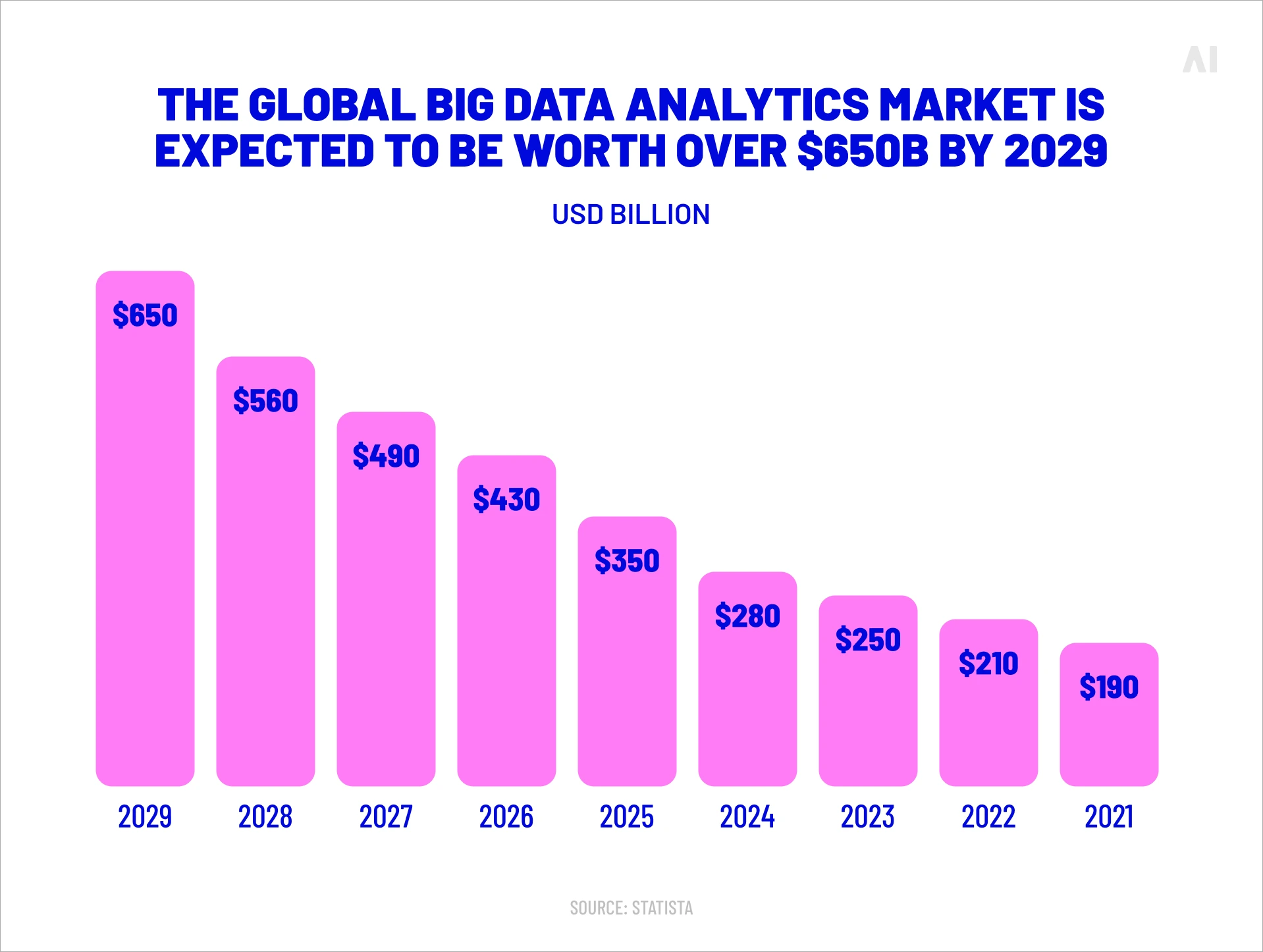
Research from Google and Boston Consulting Group found that digitally mature advertisers are 2x more likely to grow market share over a 12-month period, while also outperforming less mature peers in revenue and cost efficiency. That difference comes from how effectively teams connect data, technology, media planning, and execution.
💡A strong marketing data strategy brings these elements into one coordinated framework. It helps teams move from disconnected insights to clearer targeting, smarter budget allocation, more relevant messaging, and continuous performance optimization.
⚡️Read more: Programmatic advertising and how it supports data-driven media buying.
What is a data-driven marketing strategy?
A data-driven marketing strategy is a structured approach to using customer data, campaign insights, channel performance, and business KPIs to guide marketing decisions. It helps teams decide who to target, which channels to invest in, what messages to deliver, and how to optimize performance over time.
Unlike intuition-based marketing, a data-driven approach does not depend only on broad assumptions about audience behavior. It uses continuous analysis to understand which customers are most likely to convert, which channels create the highest-value interactions, and which campaigns contribute to revenue, pipeline, or long-term customer growth.

For example, instead of spreading budget evenly across paid search, display, social, and CTV, a performance team can use conversion data, customer lifetime value, and audience intent signals to shift investment toward the channels producing the strongest incremental impact. In the same way, a brand can use customer data to adjust messaging for new visitors, returning users, high-intent buyers, and existing customers instead of delivering the same generic campaign to everyone.
This is why a strong marketing data strategy is now a foundation for scalable growth. Salesforce reports that 84% of marketers use first-party data, showing how central owned customer data has become to modern marketing execution. But the value does not come from collecting data alone. It comes from turning that data into clear decisions about targeting, channel selection, personalization, and measurement.
💡A data-driven strategy gives marketing teams a repeatable system for improving efficiency, reducing wasted spend, and connecting campaign performance to measurable business outcomes.
⚡️Read more: Performance marketing strategy and how it connects campaigns to measurable growth.
Data-driven marketing vs Traditional marketing
The main difference between data-driven marketing and traditional marketing is how decisions are made. Traditional marketing often relies on historical experience, broad audience assumptions, and fixed campaign plans. Data-driven marketing uses real-time signals, customer behavior, and performance insights to guide decisions continuously.
In a traditional model, a team might define an audience as “women aged 25–45” or “business decision-makers in the US” and build one campaign around that broad segment. In a data-driven marketing strategy, the same team would go deeper. It could separate high-intent website visitors, repeat purchasers, abandoned-cart users, lookalike audiences, and customers with high lifetime value. Each group can then receive different messaging, offers, and channel experiences based on actual behavior.

The difference also appears in budget allocation. Traditional marketing often locks spend into predefined channels before performance is clear. A data-driven approach allows teams to adjust investment based on what is working. If connected TV improves assisted conversions, paid search captures high-intent demand, and email drives repeat purchases, the media mix can be optimized around each channel’s real contribution.
This shift is important because many teams still struggle to connect customer data into one usable system. Salesforce reports that only 31% of marketers are fully satisfied with their ability to unify customer data sources. That gap shows why traditional, siloed execution is no longer enough. When data is fragmented, targeting becomes less precise, personalization becomes weaker, and measurement becomes harder to trust.
{{ddms-1}}
Data-driven marketing solves this by creating a more connected operating model. It helps teams move from one-size-fits-all campaigns to precise segmentation, continuous optimization, and measurable business impact.
5 Core components of a data-driven marketing strategy
A complete data-driven marketing strategy is not built from one dashboard, one platform, or one campaign report. It depends on several connected components that help marketing teams collect reliable data, understand audiences, choose the right channels, personalize communication, and measure business impact. When these components work together, data becomes more than information. It becomes a system for making better growth decisions.
Data collection: first-, second-, and third-party data

Strong data collection is the foundation of any marketing data strategy. Without accurate, connected, and compliant data, teams cannot make reliable decisions about targeting, budget allocation, personalization, or performance.
First-party data is usually the most valuable because it comes directly from a company’s own customer interactions. This can include website visits, CRM records, purchase history, email engagement, product usage, and customer service interactions. Second-party data comes from trusted partners, while third-party data can add broader audience, market, or contextual signals.
The priority is not only collecting more data, but unifying the right data. For example, if a retail brand has purchase data in its ecommerce platform, loyalty data in its CRM, and campaign data in separate ad platforms, each team sees only part of the customer journey. A unified data foundation helps marketers understand who the customer is, what they need, and which signals should guide the next action.
💡This is becoming more important as privacy rules and signal loss reshape digital advertising. According to IAB’s State of Data 2024 report, 71% of brands, agencies, and publishers are increasing their first-party datasets. That shift shows why first-party data is now central to scalable and privacy-conscious marketing.
⚡️Read more: Data management platforms and how they support unified customer data.
Customer segmentation & Audience modeling
Once data is collected, it needs to be translated into useful audience segments. In data-driven marketing strategies, segmentation goes beyond basic demographic groups like age, location, or gender. It uses behavioral, contextual, and predictive signals to identify which audiences are most likely to convert, retain, or generate long-term value.
For example, a SaaS company might segment users by trial activity, product usage, company size, and likelihood to upgrade. An ecommerce brand might separate first-time visitors, cart abandoners, repeat buyers, discount-sensitive users, and high-LTV customers. Each group requires different messaging, offers, and media investment.
💡Audience modeling helps teams prioritize the segments that matter most. Instead of treating every visitor or lead equally, marketers can focus on high-intent users, lookalike audiences, and customer groups with stronger revenue potential. This improves targeting accuracy, supports better personalization, and helps reduce wasted spend across data driven marketing campaigns.

⚡️Read more: Programmatic contextual targeting and how it helps reach relevant audiences.
Channel & Media strategy
A data-driven channel strategy helps marketers decide where to invest based on performance, customer behavior, and business impact. Instead of choosing channels because they worked in the past, teams can use data to understand how each channel contributes to awareness, conversion, retention, and revenue.
For example, paid search may capture high-intent demand, display may support retargeting, CTV may strengthen brand recall, and email may improve lifecycle engagement. The goal is not to force every channel to do the same job. The goal is to understand each channel’s role in the customer journey and allocate budget accordingly.
This makes media planning more flexible. If one channel drives low-cost traffic but poor conversion quality, budget can shift. If another channel produces fewer conversions but stronger customer lifetime value, it may deserve more investment. A strong data-driven marketing strategy helps teams evaluate media performance through business outcomes, not isolated platform metrics.
Personalization & Content strategy
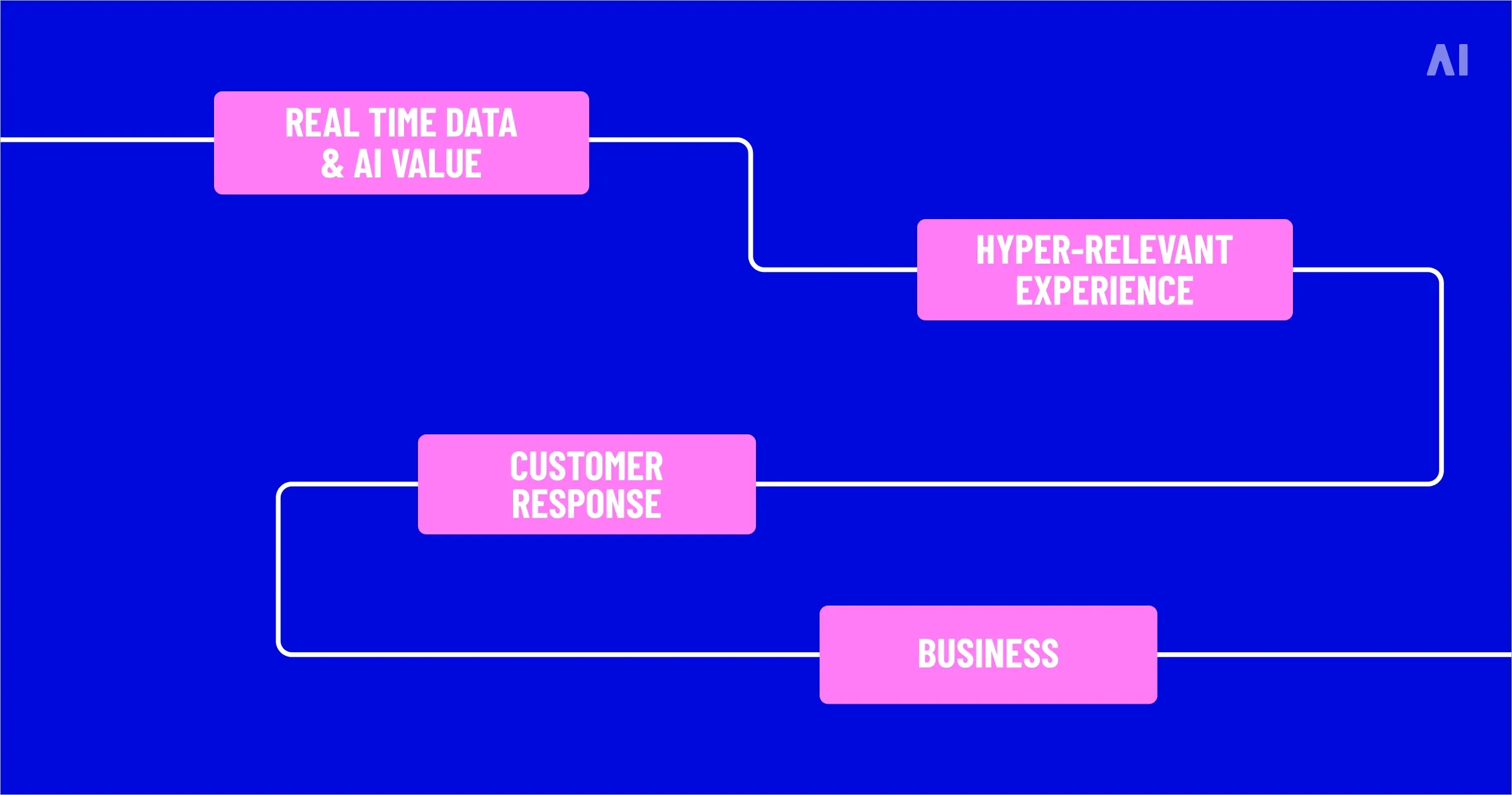
Data also shapes how brands communicate with different audiences. A strong personalization and content strategy uses customer signals to deliver more relevant messages across campaigns, channels, and lifecycle stages.
For example, a new visitor may need educational content that explains the problem. A returning visitor may need product comparisons, proof points, or case studies. An existing customer may need retention messaging, upgrade offers, or cross-sell recommendations. Data helps marketers match the right message to the right audience at the right moment.
This is where data driven marketing campaigns become more scalable. Instead of manually creating disconnected messages for every channel, teams can build a structured content framework based on audience intent, funnel stage, and customer value. Personalization should not feel random or superficial. It should make the customer journey clearer, more relevant, and more useful.
⚡️Read more: Dynamic content personalization and how it supports relevant customer experiences.
Measurement, attribution & KPIs
Measurement is the component that connects marketing activity to business performance. A data-driven marketing strategy should define which KPIs matter before campaigns are launched, not after results are already collected.
Useful KPIs depend on the business model, but they often include customer acquisition cost, return on ad spend, conversion rate, customer lifetime value, pipeline contribution, retention rate, and incremental revenue. These metrics help teams understand not only whether campaigns generated activity, but whether they created meaningful business value.
Attribution also plays a key role. It helps marketers understand how different touchpoints contribute to conversion, especially when customers interact with several channels before making a decision. However, attribution should not be treated as a perfect answer. It should be used alongside incrementality testing, media mix analysis, and revenue-based KPIs to guide smarter decisions.
💡The purpose of measurement is not to create more reports. It is to help teams decide what to scale, what to reduce, and what to improve next.
⚡️Read more: Multi-touch attribution and how it connects marketing touchpoints to performance.
Benefits of a data-driven marketing strategy
The value of a data-driven marketing strategy is not limited to better reporting. Its real impact appears in how marketing teams target audiences, allocate budget, increase conversions, and connect campaign activity to revenue. When data is used as a decision-making system, marketing becomes more efficient, more measurable, and easier to scale.
Improved targeting and reduced wasted spend
One of the clearest benefits of data-driven marketing strategies is more precise targeting. Instead of spending budget on broad audience groups, marketers can use behavioral signals, purchase intent, engagement history, contextual data, and predictive models to focus on users who are more likely to take action.
For example, a B2B software company does not need to target every operations leader with the same campaign. It can prioritize users who visited pricing pages, downloaded comparison guides, returned to the website multiple times, or matched high-value account profiles. This helps reduce wasted impressions and move spend toward audiences with stronger conversion potential.
Better targeting also improves media efficiency. When teams understand which segments produce qualified leads, higher order values, or stronger retention, they can stop optimizing only for cheap clicks and start optimizing for business value.
Higher conversion rates and Customer Lifetime Value
Data improves conversion by making marketing more relevant. When teams understand audience behavior, lifecycle stage, and customer needs, they can deliver messages that match the user’s intent instead of relying on one generic campaign.
For example, a first-time visitor may need educational content, while a returning visitor may respond better to proof points, pricing information, or a product comparison. Existing customers may need onboarding, renewal, upsell, or loyalty messaging. These differences matter because personalization is closely connected to revenue growth. McKinsey reports that companies with faster growth rates generate 40% more of their revenue from personalization than slower-growing companies.
💡In this context, personalization is not only about improving engagement. It helps increase conversion rates, average order value, retention, and customer lifetime value by making each interaction more relevant to the customer’s stage and intent.
Faster and smarter decision-making
A strong marketing data strategy helps teams make decisions faster because they are not waiting until the end of a campaign to understand what is working. Real-time data allows marketers to identify weak audiences, underperforming creatives, inefficient channels, or high-performing segments while campaigns are still active.
For example, if one audience segment has a higher CAC but produces better long-term value, the team can adjust investment based on profitability rather than immediate cost alone. If another channel generates traffic but low-quality conversions, spend can be reduced before more budget is wasted.
This creates a continuous optimization loop where marketers test, learn, adjust, and scale based on evidence.
Better alignment between marketing and sales
Data-driven marketing also improves alignment between marketing, sales, and leadership. When teams use shared data and common KPIs, they can evaluate performance based on the same business goals instead of separate departmental metrics.
For example, marketing may focus on lead volume, while sales cares about lead quality and leadership cares about revenue efficiency. A data-driven framework connects these priorities through shared metrics such as pipeline contribution, qualified opportunities, CAC, conversion rate, and customer lifetime value.
This alignment helps marketing teams generate better-fit leads, sales teams prioritize stronger opportunities, and leadership understand how marketing investment contributes to revenue growth.
How to build a data-driven marketing strategy that actually drives growth
Building a data-driven marketing strategy starts with sequencing. Teams need to define business goals first, then connect audiences, data signals, channels, personalization, and measurement into one growth system. Without that order, data stays fragmented and marketing teams risk optimizing individual campaigns without improving revenue, CAC, LTV, or profitability.
This discipline matters because marketing budgets remain under pressure. Gartner’s 2025 CMO Spend Survey found that marketing budgets stayed flat at 7.7% of overall company revenue, meaning teams are expected to create growth without simply relying on more spend. A structured strategy helps marketers use existing resources more efficiently.
1. Define business objectives and growth levers
The first step is to connect the data-driven marketing strategy to business outcomes. The goal should not be “increase traffic” or “get more impressions.” Those metrics can be useful, but they do not prove whether marketing is improving growth.
Instead, teams should define objectives such as lowering customer acquisition cost, increasing qualified pipeline, improving customer lifetime value, raising retention, or expanding revenue from existing accounts. Then they should identify which growth levers matter most: acquisition, retention, expansion, reactivation, or market penetration.
For example, a subscription brand with strong acquisition but high churn should not only optimize for new signups. It should use data to understand which customer segments retain longer, which onboarding journeys reduce cancellation, and which messages increase renewal.
2. Identify high-value audiences
After objectives are clear, teams need to identify the audiences most likely to support those goals. In data-driven marketing strategies, not every audience receives equal investment. Segments should be prioritized by intent, conversion likelihood, expected order value, retention potential, and fit with business objectives.
For example, an ecommerce brand may find that discount-driven buyers convert quickly but have low repeat purchase rates. At the same time, customers who engage with product guides before purchasing may convert more slowly but generate higher lifetime value. A data-driven approach helps the team decide which audience deserves more budget, stronger personalization, or specific retention campaigns.
This step turns customer data into investment logic. It helps teams focus on the users who are most likely to create profitable growth.
3. Align data signals with the customer journey
A strong marketing data strategy maps data signals to each stage of the customer journey. The purpose is to understand what customers are doing, what their behavior indicates, and what marketing action should happen next.
At the awareness stage, useful signals may include content views, video engagement, or contextual interest. At the consideration stage, teams may track comparison page visits, guide downloads, product page depth, or repeat sessions. At the conversion stage, signals may include cart activity, demo requests, pricing page visits, or abandoned forms. After conversion, teams can track onboarding activity, repeat purchases, product usage, renewal risk, or upsell potential.
This makes data actionable. Instead of viewing each interaction separately, marketers can understand customer progression and design campaigns that move users from one decision moment to the next.
4. Design channel and investment strategy
Once audiences and journey signals are defined, teams can design a channel and investment strategy. The key is to allocate budget based on expected return, customer behavior, and incremental impact rather than historical habits.
For example, paid search may be best for capturing existing demand, while programmatic display may support retargeting and audience expansion. CTV may help build reach among qualified segments, while email and CRM campaigns may improve retention and upsell. Each channel should have a defined role in the growth system.
A data-driven marketing strategy also requires budget flexibility. If one channel produces cheap leads but weak pipeline, spend should not continue only because the cost per lead looks good. If another channel produces fewer conversions but stronger customer value, it may deserve more investment. The goal is to optimize around business contribution, not isolated platform metrics.
5. Build a personalization framework
The final step is to create a personalization framework that can scale across data driven marketing campaigns. Personalization should be based on audience needs, lifecycle stage, intent signals, and customer value.
For example, a high-intent prospect who has visited a pricing page should not receive the same message as a first-time visitor reading an educational article. A repeat customer should not see the same acquisition offer as someone who has never purchased. A dormant customer may need reactivation messaging, while a loyal customer may respond better to an upgrade or cross-sell offer.
To make this scalable, teams should define core audience segments, message rules, content variations, and measurement criteria before campaigns go live. This creates consistency across channels and prevents personalization from becoming fragmented.
The result is a strategy where targeting, media investment, messaging, and measurement work together. That is what turns data from a reporting asset into a growth engine.
Real-world use cases of a data-driven strategy
A data-driven marketing strategy becomes valuable when it changes how teams plan, target, personalize, and optimize real campaigns. The strongest use cases are not limited to reporting performance after campaigns end. They help marketers make better decisions while budget is still active and customer behavior is still changing.
This is especially important as AI becomes more central to marketing execution. BCG’s 2025 CMO research found that 71% ofCMOs plan to invest more than $10 million annually in GenAI over the next three years, showing that advanced data use is becoming a strategic priority, not only an experimental capability.
⚡️Read more: AI-driven personalization and how it improves customer experiences.
Media mix & Budget optimization

One practical use case is media mix and budget optimization. A retail brand, for example, may run campaigns across paid search, display, CTV, paid social, and email. Without a connected data view, each channel may look successful inside its own platform. But when the team compares CAC, assisted conversions, repeat purchase rates, and revenue contribution, the picture may change.
💡Paid social may generate low-cost traffic but weak customer value. Paid search may produce fewer leads but stronger purchase intent. CTV may support awareness and assisted conversions. Email may drive repeat purchases at a lower cost. A data-driven approach helps the team reallocate spend toward the channels creating the strongest business impact.
High-intent audience targeting
Another use case is targeting audiences based on real-time signals instead of static demographics. For example, a B2B software company should not target every finance leader in the same way. A visitor who reads a general blog post is not showing the same intent as someone who visits the pricing page, compares features, downloads a buying guide, and returns twice in one week.
A data-driven marketing strategy helps teams identify these high-intent signals and prioritize budget accordingly. The campaign can separate early-stage researchers from active buyers and deliver different messages to each group. This improves relevance, reduces wasted impressions, and helps sales teams focus on stronger opportunities.
⚡️Read more: How to Convert High-Intent Audiences on the Open Web.
Lifecycle & Retention optimization
Data also helps teams improve retention and customer lifetime value. For example, a subscription app may notice that users who do not complete onboarding within the first seven days are more likely to cancel. Instead of waiting for churn, the marketing team can trigger lifecycle campaigns that guide users toward key actions, such as completing setup, using a core feature, or booking a support session.
This kind of strategy turns customer behavior into retention action. It also helps teams identify upsell opportunities. If a customer repeatedly uses advanced features, views upgrade pages, or reaches usage limits, they may be ready for a higher-tier plan.
Cross-channel personalization

Cross-channel personalization is another major use case for data driven marketing campaigns. A customer may first see a paid ad, then visit a product page, open an email, read a comparison article, and later return through search. If these touchpoints are disconnected, the customer receives repetitive or irrelevant messages.
With a connected data strategy, each channel can reflect the customer’s previous behavior. A first-time visitor may receive educational content. A returning visitor may see proof points or product comparisons. An existing customer may receive loyalty, renewal, or upsell messaging. The result is a more consistent journey across paid, owned, and earned channels.
Predictive planning in data driven marketing programs
Predictive planning helps marketers use past and current data to forecast future performance. For example, a fashion retailer preparing for a seasonal campaign can analyze previous sales patterns, product demand, audience behavior, weather trends, and channel performance before deciding where to invest.
Instead of reacting after spend is already wasted, the team can forecast which products, regions, and customer segments are likely to perform best. This supports smarter inventory planning, more accurate budget allocation, and stronger campaign timing. In data driven marketing programs, predictive planning helps teams reduce uncertainty and make growth decisions before market demand fully appears.
5 Mistakes in data-driven marketing strategies (and how to avoid them)
Even mature teams can struggle to turn data into measurable business outcomes. The problem is rarely a lack of dashboards. It is usually a lack of strategic alignment between data, goals, tools, teams, and execution. The following mistakes can weaken data-driven marketing strategies and make it harder to connect marketing activity to revenue impact.
Treating data as reporting instead of strategy
One common mistake is using data only to describe what already happened. A dashboard may show impressions, clicks, conversions, or cost per lead, but those numbers do not automatically improve performance. Data becomes strategic only when it changes what the team does next.
For example, if a campaign generates many leads but few qualified opportunities, the team should not simply report the lead volume. It should investigate audience quality, channel source, message relevance, and sales conversion patterns. The fix is to connect every report to a decision: what to scale, what to pause, what to test, and what to change.
Over-reliance on tools without a marketing data strategy
Another mistake is assuming that better tools will automatically create better performance. A company may invest in a CDP, attribution platform, AI tool, or analytics dashboard, but still fail to improve growth if it has not defined how data will guide decisions.
For example, if a team buys a personalization platform before defining priority segments, lifecycle stages, content rules, and measurement criteria, the tool may only create more fragmented execution. The fix is to define the marketing data strategy before choosing technology. Teams should clarify business goals, required data inputs, activation use cases, ownership, and success metrics first. Then tools can support the strategy instead of replacing it.
Fragmented data and siloed execution
Fragmented data is one of the biggest barriers to effective data-driven marketing campaigns. When CRM data, website analytics, ad platform data, sales data, and customer service insights sit in separate systems, teams make decisions from incomplete information.
For example, paid media may optimize for low-cost leads, while sales later finds that many of those leads are poor-fit accounts. At the same time, retention teams may identify high-value customer behaviors that acquisition teams never use for targeting. This creates budget waste, inconsistent messaging, and distorted performance analysis.
The fix is to integrate key data sources and create shared audience, campaign, and revenue views. Gartner notes that 59% of organizations do not measure data quality, which makes it difficult to know how unreliable data affects business decisions. That is why integration must also include validation, ownership, and quality control.
⚡️Read more: Digital Advertising Ecosystem: How It Actually Works in a Fragmented, Platform-Driven World
Misaligned KPIs across teams
A data-driven marketing strategy can also fail when different teams optimize for different outcomes. Marketing may focus on lead volume, sales may focus on opportunity quality, and leadership may focus on revenue efficiency. Each team may be using data, but the data does not support one shared growth model.
For example, a campaign may look successful because it lowers cost per lead. But if those leads do not convert into pipeline or customers, the campaign is not improving business performance. The fix is to align KPIs across the full funnel. Teams should track metrics such as qualified pipeline, CAC, LTV, conversion quality, retention, and revenue contribution alongside campaign-level metrics.
⚡️Read more: Digital marketing KPIs and how to connect metrics to business outcomes.
Ignoring data quality and governance
The final mistake is treating data quality and governance as technical details instead of strategic requirements. Poor naming conventions, duplicate records, inconsistent tracking, missing consent signals, and unverified attribution logic can all lead to flawed decisions.
For example, if one platform records conversions differently from another, a team may overinvest in a channel that appears stronger than it really is. If CRM records are incomplete, audience segmentation and personalization become less reliable. The fix is to define governance rules for data collection, validation, access, compliance, and performance measurement.
Good governance does not slow marketing down. It makes scaling safer, clearer, and more measurable.
⚡️Read more: Cross-Platform Measurement Governance in Digital Advertising.
Best practices for scaling data-driven marketing strategies
Scaling data-driven marketing strategies requires more than collecting data or adding new platforms. It means building a repeatable operating model where data, AI, media buying, measurement, and human decision-making work together across channels and teams. The goal is to turn strategy into consistent execution, so every campaign can be planned, optimized, and measured against real business outcomes.
Centralize and activate first-party data
The first best practice is to centralize first-party data and make it usable across targeting, personalization, and measurement. Customer data from CRM systems, website behavior, purchase history, email engagement, product usage, and sales interactions should not stay locked in separate platforms.
For example, a brand may know which customers purchased twice in the last six months, which users abandoned checkout, and which accounts have strong sales potential. But if that data is not connected to activation channels, media teams cannot use it to improve targeting or suppress irrelevant audiences.
A centralized data foundation helps marketers create consistent audience definitions, reduce duplicated spend, and improve personalization. It also makes the strategy more resilient as third-party identifiers become less reliable.
Use AI to drive planning and optimization
AI can help teams scale decision-making across complex data driven marketing programs. Instead of manually reviewing fragmented reports from multiple channels, marketers can use AI to identify patterns, forecast performance, recommend budget shifts, and surface optimization opportunities faster.
⚡️This is where AI Digital’s Elevate fits naturally into a scaled marketing data strategy. Elevate is positioned as an AI-powered marketing platform that connects fragmented digital data into clearer planning, optimization, analytics, and business results. AI Digital states that Elevate analyzes 8,000 ad campaigns, processes 150 billion monthly data points, uses 10,000 audience attributes, and integrates with 12+ DSPs. These capabilities show how AI can support more transparent, cross-channel decision-making at scale.
For marketing leaders, the value is not automation for its own sake. The value is faster planning, clearer insights, and more confident decisions about where to invest, which audiences to prioritize, and how to optimize campaigns against business goals.
⚡️ Read more: AI in digital marketing and how it improves campaign performance.
Align media investment with business outcomes
Scaling a data-driven marketing strategy also requires a shift from channel-level optimization to business-level decisioning. Many teams still optimize each platform separately: paid search for cost per click, social for engagement, display for reach, and email for open rates. These metrics can be useful, but they do not show whether marketing is improving revenue efficiency.
A stronger approach is to evaluate media investment through metrics such as pipeline contribution, CAC, LTV, incremental revenue, retention, and profit contribution. For example, a channel with a higher cost per acquisition may still be valuable if it brings customers with stronger lifetime value. Another channel may look efficient at the campaign level but produce low-quality conversions.
💡The best practice is to assign each channel a clear role in the customer journey and judge performance based on its contribution to growth.
Optimize Supply Paths
In programmatic advertising, inefficient supply paths can increase costs, reduce transparency, and weaken traffic quality. Advertisers may pay through multiple intermediaries before reaching inventory, which can make it harder to understand where budget is going and which placements are creating value.
⚡️Supply path optimization helps advertisers choose cleaner, more efficient routes to media. AI Digital’s Smart Supply is designed around this problem. The service focuses on transparent supply paths, AI-powered deal optimization, improved cost efficiency, better targeting, traffic quality, and curated premium inventory. AI Digital describes Smart Supply as a way to remove unnecessary intermediaries and eliminate non-brand-safe or low-quality inventory before it reaches advertisers.
For a scaled data-driven marketing strategy, this matters because media efficiency is not only about audience targeting. It also depends on how inventory is sourced, priced, verified, and optimized.
Build continuous testing and learning
Data-driven growth depends on continuous testing. Teams should regularly test audience segments, creative messages, landing pages, offers, bidding strategies, and channel combinations. The goal is not to run isolated experiments, but to create a learning system that improves over time.
For example, a performance team can test whether high-intent audiences respond better to case-study messaging, product-led messaging, or pricing-led messaging. The results can then guide future creative strategy, budget allocation, and audience prioritization.
Continuous testing helps teams avoid static campaign planning and makes optimization part of the operating model.
Combine AI with human insight
AI should improve strategic decision-making, not replace it. Automated systems can process large volumes of data, detect patterns, and recommend optimizations faster than manual analysis. But human marketers still need to define business priorities, interpret context, protect brand positioning, and make judgment-based trade-offs.
For example, AI may identify a segment with strong short-term conversion potential. A marketing leader still needs to decide whether that segment supports long-term customer quality, brand fit, and profitability. The strongest data-driven marketing strategies combine automation with human oversight, so teams gain speed without losing control.
Technology stack alignment
Finally, teams need a technology stack that supports the strategy instead of fragmenting it. Analytics platforms, CRM systems, CDPs, attribution tools, AI platforms, and activation channels should be aligned around shared data flows and clear use cases.
A disconnected stack creates inconsistent reporting, duplicated audiences, and slow decision-making. An aligned stack helps teams move from insight to activation more efficiently. For example, customer data from CRM and analytics can inform audience segmentation, which can then guide media buying, personalization, and measurement.
The best practice is to audit the stack regularly. Every tool should have a clear role: collecting data, unifying data, activating audiences, optimizing campaigns, or measuring outcomes. If a tool does not support the marketing data strategy, it may be adding complexity instead of value.
Conclusion: Smart data-driven marketing strategy is your great advantage
A strong data-driven marketing strategy is not built by collecting more data alone. It comes from using data to make better decisions across targeting, media investment, personalization, measurement, and optimization. When customer data, audience insights, AI, and performance metrics work together, marketing becomes more precise, more efficient, and more accountable to business growth.
The main takeaway is simple: data should guide strategy, not just reporting. Teams need to connect marketing activity to revenue, CAC, LTV, pipeline quality, and long-term customer value. They also need to focus budget on high-value audiences, use channel data to improve investment decisions, and build personalization frameworks that scale across the customer journey.
For modern growth teams, the advantage comes from continuous improvement. The most effective data-driven marketing strategies help marketers test faster, optimize smarter, reduce wasted spend, and turn fragmented signals into a coordinated growth system.
Key takeaways:
- Align data with business goals, not vanity metrics.
- Prioritize high-value audiences based on intent, behavior, and revenue potential.
- Use AI and analytics to improve planning, optimization, and measurement.
- Connect campaign performance to real outcomes such as CAC, LTV, pipeline, and revenue.
- Treat data-driven marketing as an ongoing operating model, not a one-time campaign setup.
⚡️Get in touch with AI Digital to build a smarter data-driven growth strategy.


