Multichannel content marketing strategy: a complete guide


Multichannel content marketing is no longer just about publishing content across several platforms. In 2026, it has become a coordinated growth system that connects content, channels, data, and performance measurement into one unified strategy. For marketing leaders, the challenge is not only creating more content, but making every asset work harder across the full customer journey.
This matters because customer behaviour is now more fragmented than ever. Deloitte’s 2026 marketing trends report found that 60% of consumers say social content, recommendations, or communities influence how they discover new brands, while search is increasingly used afterward for validation.
At the same time, Salesforce reports that 83% of marketers recognize the shift toward personalized, two-way messaging, yet only one in four are satisfied with how they use data to power those experiences.
A strong multichannel content strategy helps brands close this gap. It aligns messaging across owned, paid, and earned channels while allowing each platform to serve a specific role in the funnel. Instead of treating SEO, email, social, programmatic, and native media as separate campaigns, multichannel content marketing turns them into connected touchpoints that support awareness, engagement, conversion, and retention.
💡From AI Digital’s perspective, this is where content becomes a performance asset. When content strategy is connected to channel planning and data, brands can improve reach, reduce wasted effort, and create scalable growth.
⚡️For teams focused on measurable outcomes, this approach should work alongside a broader performance marketing strategy.
Why most multichannel content strategies fail to scale
Most brands already publish across multiple channels. They have blog content, email campaigns, social posts, paid media, landing pages, and sometimes CTV, native, or programmatic campaigns running at the same time. The problem is that more activity does not always create more growth.
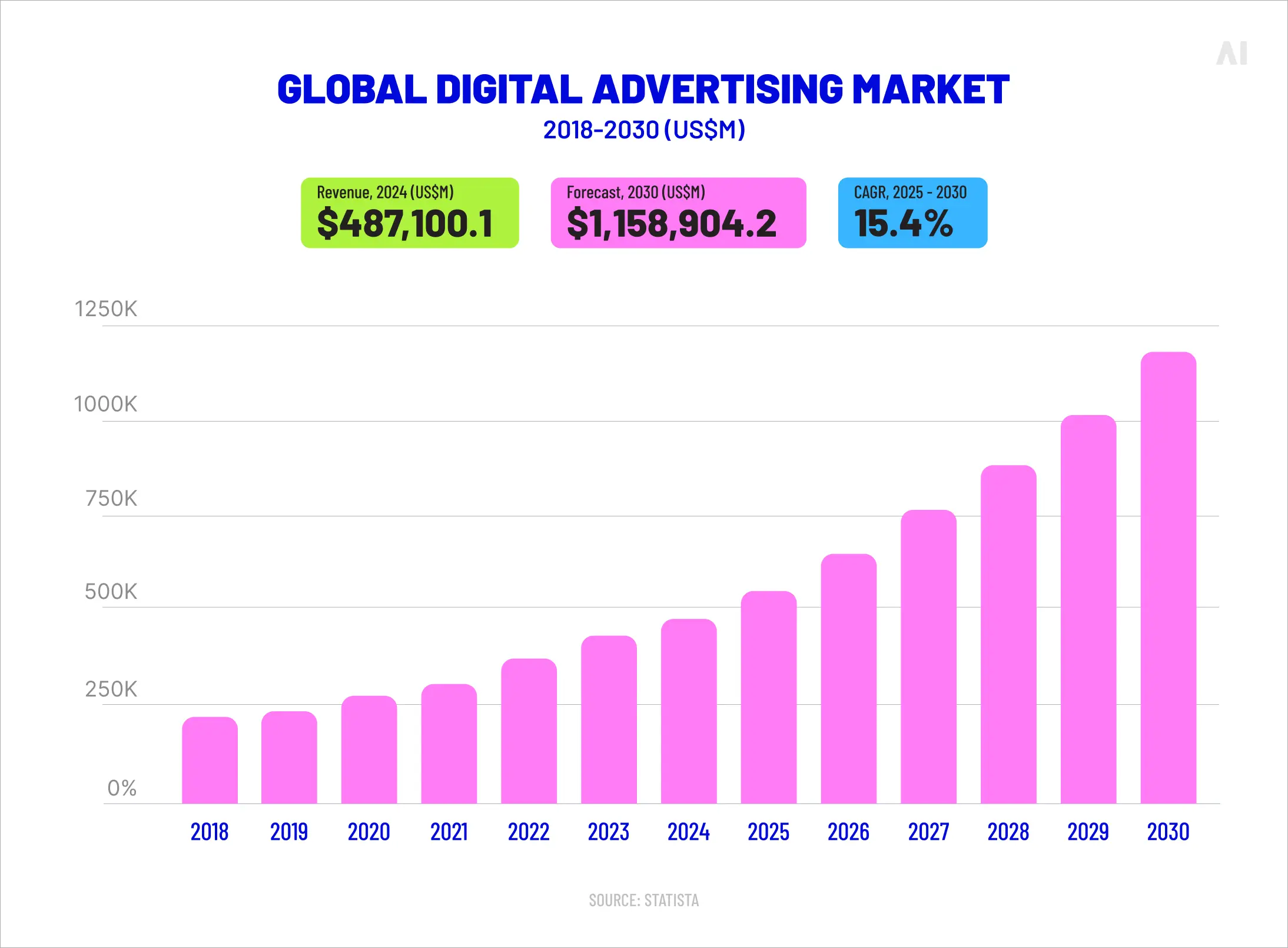
Digital display is expected to expand at a 15.5% CAGR by 2030, outpacing search at 12.2%. Growth speed differs, market weight does not. Search accounts for 40.9% of the global digital advertising and marketing market. (Global Industry Analysts)
In many cases, the real barrier is not content volume. It is the lack of a connected system. When teams plan content separately, manage channels in silos, and measure performance through disconnected dashboards, multichannel content marketing becomes difficult to scale. Messaging becomes inconsistent, budgets are harder to control, and teams struggle to understand which channels actually contribute to revenue.
%25E2%2580%258D%2520.webp)
This is especially important in 2026, as marketers are under stronger pressure to prove impact across fragmented customer journeys. Funnel’s 2026 Marketing Intelligence Report found that 72% of in-house marketers say they have large amounts of data but struggle to turn it into insights. The same report found that 86% do not have a clear signal through the noise when trying to understand each channel’s impact on performance.
The “more channels = more results” myth
A common mistake in multichannel marketing is assuming that every new channel automatically increases reach, engagement, and conversions. In reality, adding channels without a clear strategy usually increases operational complexity.
Each channel needs its own format, audience logic, creative requirements, budget, and performance metrics. Without shared messaging and unified planning, teams end up producing more content but not necessarily better outcomes. A strong multi channel content strategy should not start with the question, “Where else can we publish?” It should start with, “Which channels support the customer journey and business goal?”
Cost of content fragmentation

Content fragmentation creates hidden costs across the business. Teams duplicate work, rewrite similar messages for different platforms, and spend budget promoting assets that are not connected to a wider funnel. This weakens brand consistency and makes attribution harder.
When data is fragmented too, the problem becomes bigger. Teams can see channel-level metrics, but they cannot easily connect those metrics to full-funnel performance.
What multichannel content marketing really is
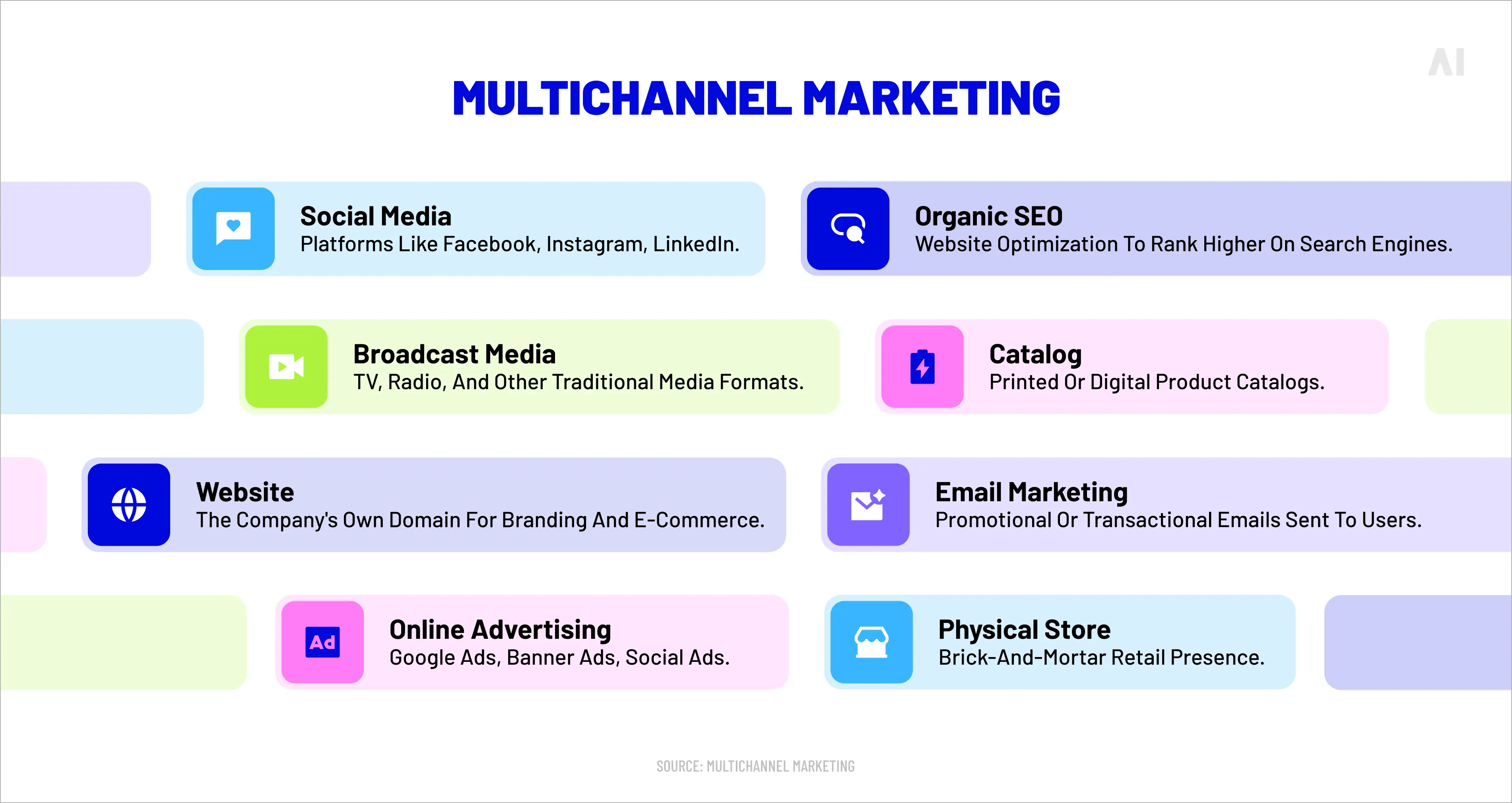
Multichannel content marketing is a coordinated system where content, channels, data, and workflows work together to drive scalable distribution and conversions. It is not simply the practice of publishing the same message across a website, email, social media, paid media, and other platforms.
In a strong multichannel content strategy, each channel has a defined role. SEO captures demand, paid media expands reach, email nurtures relationships, social supports discovery, and landing pages convert interest into measurable action. The goal is to make these touchpoints work as one connected strategy rather than isolated content activities.
This matters because modern marketing is increasingly shaped by personalization and data-driven execution. Salesforce reports that 83% of marketers recognize the shift toward personalized, two-way messaging, but only one in four are satisfied with how they use data to power those experiences. For AI Digital, this highlights a central point: multichannel content only scales when brands connect their content strategy with audience data, channel planning, and performance measurement.
A strong multichannel content system should help teams:
- Create one core message and adapt it across channels
- Use data to guide distribution, not guesswork
- Align content with funnel stages and customer intent
- Maintain brand consistency across platforms
- Measure performance across touchpoints, not only by channel
Multichannel vs Omnichannel vs Cross-channel

The difference between multichannel, omnichannel, and cross-channel marketing is practical, not just conceptual.
- Multichannel marketing means a brand uses several channels to reach its audience. These channels may include SEO, paid social, programmatic advertising, email, native media, and PR. However, they may still operate separately.
- Cross-channel marketing connects some of these channels. For example, a user may read a blog post, see a retargeting ad, and later receive an email based on that interaction. The channels start to support one another.
- Omnichannel marketing goes further by creating a more unified customer experience across online and offline touchpoints. The focus is not only on channel presence, but on continuity, personalization, and journey-level coordination.
⚡️For a deeper comparison, read AI Digital’s article Integrated Marketing vs. Omnichannel Marketing.
Content as a scalable asset
In a mature multichannel content marketing model, content is not created as a one-off piece. It is built as a modular asset that can be reused, adapted, and distributed across different marketing channels.
For example, one research-led article can become several paid ads, email sections, LinkedIn posts, short-form videos, sales enablement copy, and landing page messaging. This reduces duplicated work and helps teams scale without losing consistency.
The strongest content systems usually include:
- Content pillars that support long-term themes
- Modular sections that can be reused across formats
- Channel-specific versions adapted for platform behaviour
- Shared messaging guidelines to protect brand consistency
- Performance feedback loops to improve future content
This is where multichannel content becomes a growth asset. Instead of producing more content for more platforms, teams build structured assets that can move across channels, support different funnel stages, and generate measurable business value over time.
The multichannel operating model (how it works)
A strong multichannel content strategy works like an operating model, not a publishing calendar. It connects audience intent, content structure, channel orchestration, and performance data into one repeatable system. This helps marketing teams move from disconnected activity to coordinated growth.
The model starts with audience intent. Teams need to understand what users are trying to solve at each stage of the journey: discovering a problem, comparing options, evaluating solutions, or deciding to convert. This intent should shape both the content topic and the channel used to deliver it.
Next comes content structure. Instead of creating separate assets for every platform, brands build core content pillars that can be adapted into multiple formats. A single strategic asset can support SEO, paid ads, email sequences, landing pages, social posts, and sales enablement.
The third layer is channel orchestration. Each channel should have a defined role in the journey:
- SEO captures existing demand.
- Paid media expands reach and tests audiences.
- Email nurtures prospects and customers.
- Social platforms support discovery and engagement.
- Landing pages turn attention into action.
Finally, data loops connect performance back to planning. Teams should track which messages, formats, audiences, and channels drive results, then use those insights to improve future content and distribution.
💡From AI Digital’s perspective, this is where multichannel content marketing becomes scalable. The goal is not to manage more channels manually, but to create an infrastructure where content, media, audience data, and measurement work together.
⚡️AI Digital’s Open Garden Framework is a practical example of this approach. It is designed to help brands move beyond fragmented, platform-controlled media environments by connecting data, inventory, and outcomes in a more flexible system. Instead of locking brands into one DSP, SSP, or closed platform, the framework is vendor-neutral, DSP-agnostic, and built for cross-channel orchestration.
The framework is based on four core pillars:
- Vendor-neutral architecture: avoids dependence on a single DSP or SSP and gives brands more flexibility in how they buy media.
- Smart Supply strategy: uses curated supply, transparent CPM tiers, and supply-path optimization to improve efficiency.
- AI-powered intelligence: supports budget allocation, saturation modelling, audience overlap analysis, and cross-channel attribution.
- Unified cross-channel measurement: connects attribution, frequency, and partner data to improve visibility across platforms.
For multichannel content marketing, this matters because content performance depends on more than creative quality. Brands also need the right infrastructure to distribute content efficiently, control frequency, reduce platform bias, and understand which channels are contributing to business outcomes.
Multichannel content strategy: Where to focus
A strong multichannel content strategy does not require a brand to be active everywhere. It requires clear prioritization: choosing the channels that match business goals, audience behaviour, funnel stage, and measurable ROI.
This is especially important as customer journeys become more fragmented. A user may discover a brand through social media, compare options through search, return through retargeting, and convert through email or a landing page. Without channel prioritization, teams risk spreading budget and content production too thin.
For AI Digital, the goal is to help brands identify which channels actually move the audience forward. This means using data to decide where content should appear, how it should be adapted, and which touchpoints support acquisition, retention, or brand building.
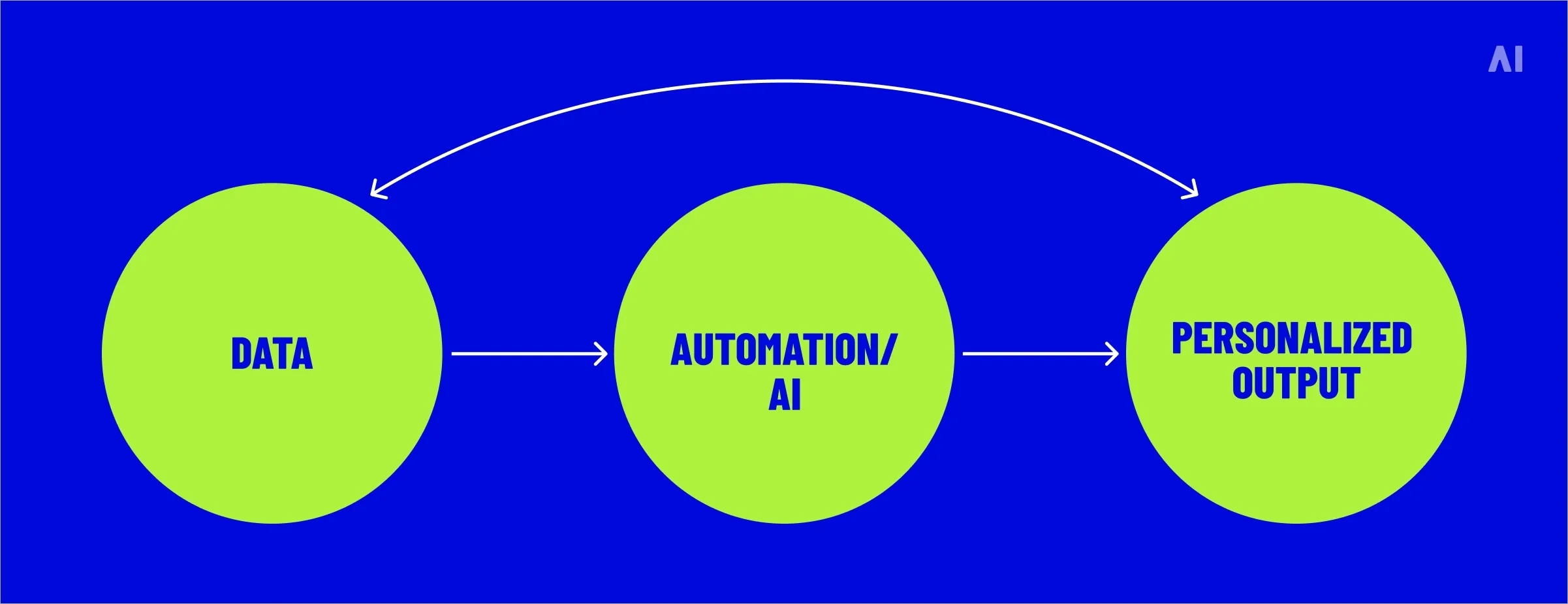
⚡️Dynamic content can also improve this process by tailoring messages to user context, behaviour, and stage in the journey. To explore this further, read AI Digital’s guide to dynamic content personalization.
Owned channels: SEO, website, email
Owned channels are the foundation of sustainable multichannel content marketing. They give brands more control over messaging, audience relationships, and first-party data.
SEO and website content help capture existing demand, answer high-intent questions, and build long-term visibility. Email supports direct communication with known audiences, making it useful for nurturing leads, retaining customers, and increasing lifetime value.
In 2026, owned channels remain important because they reduce overdependence on rented platforms. Social algorithms, ad costs, and third-party media environments can change quickly. A strong owned-channel base gives brands a more stable system for education, conversion, and relationship-building.
Paid channels: programmatic, social, native
Paid channels help brands scale reach faster than organic channels alone. They are especially useful for audience testing, message validation, retargeting, and performance optimization.
💡Programmatic advertising is central to this model because it allows brands to distribute content across digital inventory using audience data, automated buying, and real-time optimization.
⚡️For teams that need efficient reach across fragmented media environments, AI Digital’s guide to programmatic advertising explains how automated media buying supports scalable distribution.
Native advertising also plays a valuable role because it places branded content in formats that match the surrounding media environment. This can support discovery, education, and mid-funnel engagement when executed transparently and strategically.
⚡️For more context, read AI Digital’s articles on native advertising benefits and native advertising.
Earned channels: PR, partnerships
Earned channels add credibility. PR coverage, expert mentions, creator relationships, partner content, and industry collaborations can extend reach beyond owned and paid activity.
These channels are especially useful for building trust because the brand message is supported by third-party validation. While earned media is less controllable than paid or owned channels, it can strengthen authority, improve brand recall, and amplify content across relevant communities.
How to prioritize channels
Channel selection should start with the business objective, not the platform list. For example, SEO and email may be stronger for long-term demand capture and retention, while programmatic, native, and paid social may support acquisition and audience expansion.
A practical prioritization model should ask:
- What is the primary goal: awareness, acquisition, conversion, retention, or reactivation?
- Where does the audience already spend time?
- Which channels match the funnel stage?
- What data is available for targeting and measurement?
- Can the team produce channel-specific content consistently?
- Which channels show the clearest path to ROI?
⚡️This same logic applies to advanced media environments such as OTT and CTV, where brands need to consider audience access, content protection, delivery quality, and measurement. AI Digital’s article on OTT DRM offers useful context for understanding how digital media infrastructure affects channel strategy.

The strongest multichannel content strategies focus on impact, not volume. Brands do not need every channel. They need the right combination of owned, paid, and earned touchpoints working together toward measurable growth.
How to build a multichannel content strategy
A successful multichannel content strategy starts with a system. Instead of creating one-off campaigns for different platforms, teams need a repeatable process for planning, producing, adapting, distributing, and measuring content across the full customer journey.
The goal is not to publish more. The goal is to make every content asset work harder across channels, audiences, and funnel stages. For AI Digital, this means connecting strategy with data, media planning, and performance outcomes from the beginning.
Step 1. Define business outcomes
Every multichannel content marketing plan should begin with clear business goals. Before deciding what to create or where to publish, teams need to define the result they want to influence.
Common goals include:
- Revenue growth
- Pipeline generation
- Customer acquisition
- Lower CAC
- Higher retention
- Improved ROAS
- Stronger brand awareness
This step matters because content can easily become disconnected from business performance. A blog post, paid ad, email sequence, or landing page should not exist only because the channel needs content. It should support a measurable outcome.
⚡️For example, awareness content may focus on reach and engagement, while conversion content should be measured against leads, sign-ups, sales, or pipeline contribution. AI Digital’s guide to digital marketing KPIs explains how teams can connect marketing activity to clearer performance indicators.
Step 2. Build scalable content pillars
After defining outcomes, teams should build content pillars. These are core themes that support the brand’s positioning, audience needs, and commercial goals over time.
Instead of planning isolated articles or campaigns, content pillars give teams a structure for repeatable execution. One pillar can support SEO content, email campaigns, paid media angles, social posts, webinar topics, sales enablement materials, and landing page messaging.
For example, a B2B brand focused on performance marketing may build pillars around measurement, personalization, programmatic advertising, customer acquisition, and media efficiency. Each pillar can then be expanded into multiple assets for different channels and funnel stages.
Step 3. Design content for repurposing
Scalable multichannel content is modular. This means content should be planned in parts that can be reused and adapted across several platforms.
A single long-form guide can become:
- A blog article for organic search
- Paid ad copy for acquisition campaigns
- Email content for lead nurturing
- Short videos for social media
- Infographics for engagement
- Landing page sections for conversion
- Sales copy for lower-funnel enablement
This approach helps teams scale distribution without recreating content from scratch. It also protects message consistency because each format is built from the same strategic idea.
Step 4. Align content to funnel stages
A strong multi channel content strategy maps content to the buyer journey. Not every asset should sell immediately. Some content should educate, some should compare, and some should convert.
- At the awareness stage, content should help the audience understand a problem or opportunity.
- At the consideration stage, it should explain approaches, solutions, and differentiators. At the conversion stage, it should reduce friction and support action through case studies, landing pages, demos, product messaging, or clear calls to action.
This funnel alignment helps teams decide which channels to use. SEO may capture high-intent research. Paid social may support discovery. Programmatic can expand reach. Email can nurture leads. Retargeting can bring users back when they are closer to conversion.
Step 5. Adapt content for each channel
The final step is channel adaptation. The core message should stay consistent, but the format, tone, CTA, and delivery should change based on platform behaviour.
A LinkedIn post should not read like a landing page. A programmatic ad should not repeat a full blog introduction. An email should not simply copy a social caption. Each channel has its own audience expectations, attention span, creative requirements, and performance signals.
⚡️AI can help teams scale this process more efficiently. AI Digital’s Elevate platform supports audience intelligence, strategic planning, optimization, reporting, and AI-assisted media planning, helping marketers move from manual guesswork to more data-led execution.
⚡️The same logic applies to targeting: AI Digital’s guide to AI-targeted advertising explains how AI can improve audience segmentation, personalization, and campaign relevance.
💡When these five steps work together, multichannel content marketing becomes more than content distribution. It becomes a structured growth system where every asset has a role, every channel has a purpose, and every decision is connected to measurable performance.
How to orchestrate channels for maximum impact
Real growth in multichannel content marketing comes from coordinated interaction between channels, not isolated performance. A blog post, paid ad, email, native placement, and CTV campaign should not work as separate activities. Each one should move the audience closer to the next step.
This matters because marketers are managing more complexity in 2026. HubSpot reports that 61% of marketers believe marketing is experiencing its biggest disruption in 20 years because of AI, while Salesforce found that 83% of marketers recognize the shift toward personalized, two-way messaging, but only one in four are satisfied with how they use data to power those moments. These numbers show why orchestration matters: brands need systems that connect content, targeting, delivery, and measurement.
⚡️AI Digital’s Smart Supply supports this orchestration by strengthening the delivery layer of multichannel strategy. It focuses on outcome-based programmatic supply, AI-powered optimization, curated deal IDs, direct SSP access, transparent supply paths, and real-time performance adjustments. For brands, this means content distribution can be connected more closely to campaign KPIs, traffic quality, and media efficiency.
Sequence messaging across channels
Channel orchestration starts with message sequencing. Instead of repeating the same content everywhere, brands should guide users through a structured journey:
- Awareness: Use SEO, social, native, or CTV to introduce the problem and build interest.
- Consideration: Use blogs, comparison content, email, and retargeting to explain solutions.
- Conversion: Use landing pages, demos, offers, and product-focused ads to drive action.
- Retention: Use email, personalized content, and remarketing to maintain engagement.
This approach helps each channel play a clear role. The audience receives the right message at the right stage, while the brand avoids wasting budget on disconnected impressions.
Use retargeting loops
Retargeting loops connect paid and owned channels to reinforce messaging over time. For example, a user who reads a blog article can later receive a programmatic ad, visit a landing page, and then enter an email nurture sequence.
⚡️This is especially relevant as CTV and programmatic channels become more integrated into performance strategies. Retargeting allows brands to re-engage users after exposure and continue the journey across devices and platforms. AI Digital’s guide to CTV retargeting explains how connected TV can support sequential messaging and lower-funnel re-engagement.
Effective retargeting loops should:
- Reinforce the core message without repeating the same creative.
- Match the user’s journey stage and previous interaction.
- Connect paid exposure with owned-channel follow-up.
- Use frequency controls to avoid fatigue.
- Measure contribution across touchpoints, not only last-click results.
Ensure consistency without duplication
Consistency does not mean copying the same content across every channel. It means keeping the same strategic message while adapting the format, tone, CTA, and creative to each platform.
A strong multi channel content strategy should define:
- One core narrative for the campaign or content pillar.
- Channel-specific versions for SEO, paid media, email, social, native, and CTV.
- Clear creative rules for tone, visuals, claims, and CTAs.
- Performance feedback loops to refine what works by channel.
This is how multichannel content becomes scalable. Teams maintain one connected brand voice while giving each platform enough flexibility to perform.
How to scale multichannel content without operational chaos
Scaling multichannel content marketing does not mean asking teams to produce more content faster. It means building a system where strategy, workflows, automation, AI, and measurement work together. Without that structure, more channels can quickly create approval delays, duplicated work, inconsistent messaging, and unclear ownership.
This is why operational design matters. In 2026, marketing teams are under pressure to use AI, personalize content, and move faster, but many still struggle with fragmented data and disconnected workflows. Salesforce’s 2026 State of Marketing report highlights AI, data, and personalization as core priorities for nearly 4,500 marketers worldwide, while HubSpot’s 2026
State of Marketing report shows that top teams are using AI to improve speed, insight, and personalization.
A scalable multichannel content system should define how content moves from planning to production, adaptation, distribution, and optimization.
{{mccm-1}}
💡AI plays a practical role in this model. It can help teams identify audience segments, adapt content variations, personalize messaging, and analyze performance signals faster than manual workflows.
⚡️AI Digital’s guide to AI-driven personalization explains how AI can support more relevant experiences by using behavioural and contextual signals. Its article on AI in digital marketing also shows how AI can improve targeting, optimization, campaign planning, and measurement.
The key is to use AI as part of a structured workflow, not as a shortcut for disconnected content production. Teams still need clear strategy, ownership, editorial standards, and performance goals.
To scale without chaos, marketing leaders should focus on four operating principles:
- Build repeatable systems, not one-off campaigns.
- Assign clear ownership across strategy, content, media, and analytics.
- Use automation to reduce manual work, not remove strategic control.
- Measure performance across the full journey, not only inside individual channels.
When these elements are in place, multichannel content becomes easier to scale. Teams can create high-quality assets, adapt them across platforms, and optimize performance without adding unnecessary complexity.
What top multichannel content strategies do to win
High-performing multichannel content strategies do not treat content as a set of separate campaigns. They turn content into a scalable growth system by aligning creation, distribution, and data across channels.
This is the difference between simply publishing on multiple platforms and building a strategy that drives measurable outcomes. A blog article, paid media asset, social post, email sequence, CTV campaign, and landing page should not compete for attention separately. They should support one connected journey.
For AI Digital, this is where multichannel content becomes part of a broader performance infrastructure. The focus is not only on producing content, but on connecting audience intelligence, media delivery, optimization, and measurement.
⚡️AI Digital’s What We Do page shows this wider approach by connecting strategy, media execution, AI, data, and performance growth across the marketing ecosystem.
⚡️This same logic applies in complex sectors where trust, compliance, and audience precision matter. For example, AI Digital’s article on TV in pharma marketing shows how channel strategy can help brands combine broad reach with more targeted, measurable media execution.
Build systems, not campaigns
The strongest teams build repeatable systems. They do not start from zero every time a new campaign begins.
A scalable system usually includes:
- Content pillars that support long-term business themes
- Reusable formats for blogs, ads, emails, landing pages, and social posts
- Clear workflows across strategy, creative, media, and analytics teams
- Shared messaging rules to protect brand consistency
- Measurement frameworks that connect content to business outcomes
💡This makes production faster and more consistent. It also allows teams to adapt content across channels without losing the core message.
Prioritize distribution over creation
Many brands focus too much on content creation and not enough on distribution. But even strong content will underperform if it is not delivered through the right channels, to the right audience, at the right moment.
Top teams plan distribution before production. They decide how each asset will be used across SEO, paid media, email, social, native, CTV, and sales enablement. This ensures content is not just published, but actively amplified.
A strong multi channel content strategy should answer:
- Where will this content create the most value?
- Which audience segment should see it first?
- What channel should support the next step?
- How will performance be measured?
Optimize continuously with data
Winning multichannel content strategies treat optimization as an ongoing process. Teams should use performance data to refine formats, messaging, targeting, channel mix, and budget allocation over time.
This means looking beyond single-channel metrics. A paid ad may not convert immediately, but it may support branded search, email sign-ups, or later retargeting performance. A blog post may not drive direct revenue alone, but it can support demand capture, education, and conversion paths.
The best multichannel teams do not simply create more content. They build systems that connect content, distribution, and data into one growth engine.
⚡️For a deeper look at using data to guide marketing decisions, read AI Digital’s new article Creating a Data-Driven Marketing Strategy.
Conclusion: Make multichannel content work as one system
The success of multichannel content marketing does not come from creating more content or adding more channels. It comes from building a connected system where content, distribution, data, and measurement work together toward the same business goals.
For marketing leaders, this means moving beyond fragmented campaigns and isolated channel performance. A strong multi channel content strategy should define what each channel is responsible for, how content moves across the customer journey, and how performance data is used to improve future decisions. When this system is in place, teams can create fewer disconnected assets and more scalable content that supports awareness, engagement, conversion, and retention.
The strongest brands treat multichannel content as part of a wider performance engine. They build reusable content pillars, adapt assets for each platform, orchestrate channels around audience intent, and continuously optimize based on measurable results. This creates consistency without duplication and scale without unnecessary complexity.
⚡️For teams ready to move from fragmented activity to a more structured, performance-driven approach, AI Digital can help connect strategy, media, data, and execution into one growth system. To explore how this could work for your business, get in touch with AI Digital.
Key takeaways:
- Multichannel success depends on systems, not isolated campaigns.
- Distribution is as critical as content creation because content needs strategic amplification.
- Content should be designed for scalability and reuse across channels and funnel stages.
- Channels must work together, not operate as separate performance silos.
- Data should drive continuous optimization and support better marketing decisions over time.