Best Incrementality Testing Tools and Platforms


A marketing dashboard can be entirely accurate and still produce the wrong conclusion.
The campaign ran; revenue arrived; the ad platform found thousands of conversions inside its attribution window and presented an impressive return on ad spend. Yet some of those customers already knew the brand. Others searched after seeing a television commercial, passed a store, received an email, or encountered several ads from several companies. Many would have bought anyway.
Attribution can document a relationship between advertisng and an outcome. It cannot, by itself, recreate the outcome that would have occurred without the advertising.
That absent alternative is the counterfactual, and it is the central concern of incrementality testing. An incrementality experiment compares observed results with a credible estimate of what would have happened without a campaign, channel, promotion, or change in spending. The difference is incremental lift: the additional sales, conversions, visits, leads, or other outcomes caused by the intervention.
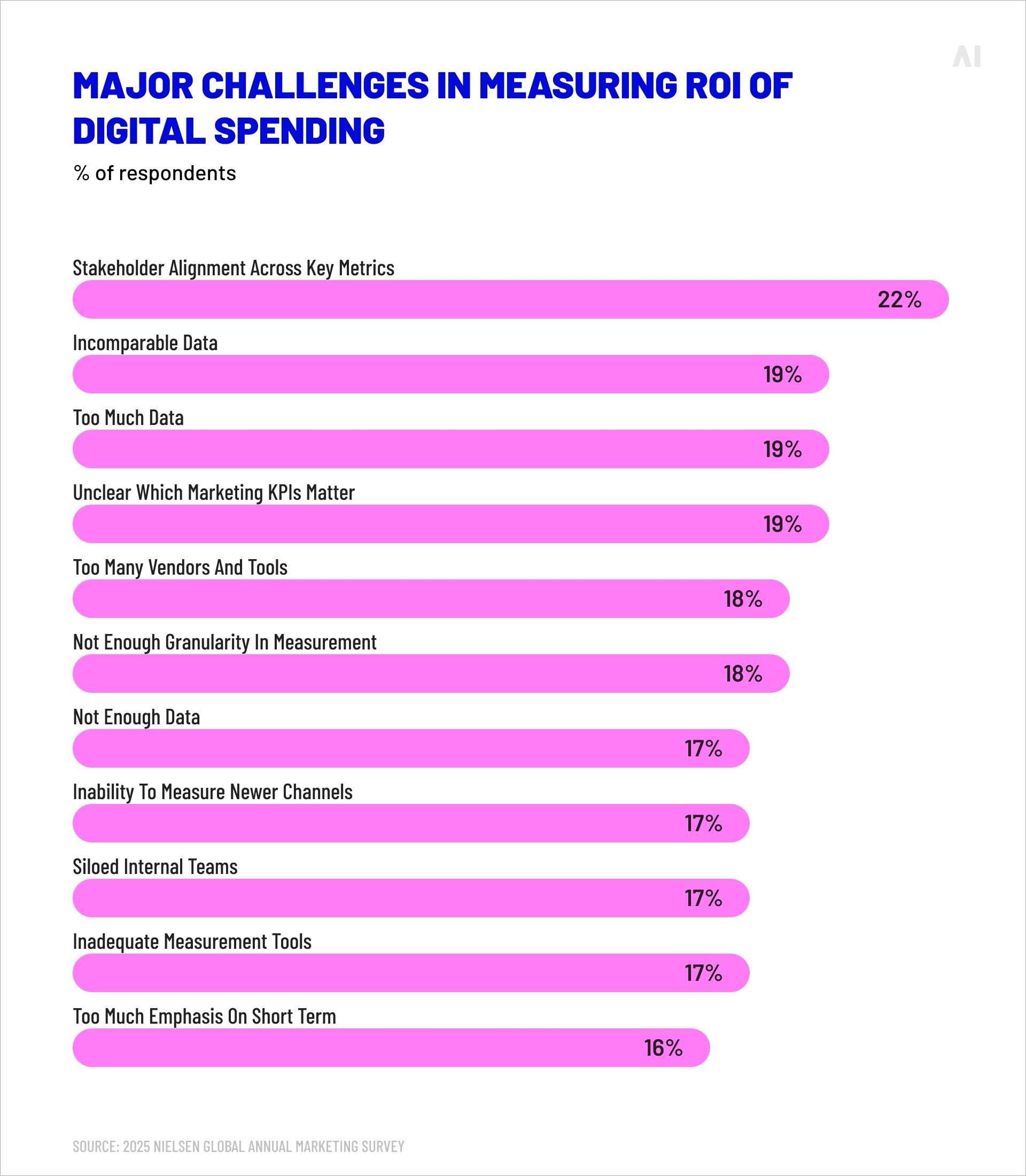
Demand for that answer is growing as user-level tracking becomes less complete and media buying spreads across CTV, retail media, search, social, programmatic display, audio, out-of-home, and offline sales channels. Nielsen’s 2025 Annual Marketing Report found that only 32% of global marketers measured media spending holistically across digital and traditional channels, despite the continued expansion of cross-media campaigns.
The result is a widening gap between the precision implied by a dashboard and the certainty the underlying data can support.
Incrementality testing tools for marketing attempt to close that gap, but they do not all do the same job. Some run controlled geographic experiments. Some build synthetic control groups. Some combine experiments with marketing mix modeling. Others use continuous causal inference to estimate the effect of day-to-day changes without deliberately switching campaigns off.
Their operating models differ as well. A growth team may want software it can use independently. A large advertiser may need experiment design, data engineering, statistical review, and executive interpretation. An ecommerce brand may care about Shopify, Amazon, and retail halo effects, while an enterprise advertiser may need to connect online media, CTV, stores, call centers, and several years of business data.
The best incrementality platform is therefore not simply the one with the longest feature list. It is the one whose methodology, data requirements, operating model, and decision cadence match the organization using it.
What incrementality testing tools actually measure
Incrementality testing software measures the causal difference between an observed outcome and a credible counterfactual.
Suppose a campaign appears to have generated 10,000 conversions. Traditional attribution attempts to distribute credit for those conversions across the recorded touchpoints. An incrementality test asks a prior question: how many of the 10,000 conversions would still have occurred without the campaign?
If a comparable control group produces the equivalent of 8,000 conversions, the estimated incremental contribution is 2,000. Those 2,000 conversions — not the full 10,000 — form the basis for incremental cost per acquisition and incremental return on ad spend.
This distinction separates credit allocation from causal measurement.

⚡ Attribution assigns credit. Incrementality asks whether the credit was earned.
Attribution remains useful for campaign reporting, journey analysis, bidding, and tactical optimization. Its weakness appears when recorded exposure is treated as proof of causation. People who are already likely to buy are also more likely to search for the brand, visit its website, join its mailing list, and qualify for retargeting. An attribution model may reward media for finding demand that already existed.
Incrementality testing introduces a treatment and a counterfactual. Depending on the method, the counterfactual may come from:
- A randomized group of users who were eligible for ads but did not receive them
- Geographic markets where media was withheld
- Matched or weighted combinations of untreated geographic areas
- A synthetic time series estimating what would have happened without an intervention
- An econometric or Bayesian model informed by previous experiments
The closer that counterfactual comes to the untreated reality, the more defensible the lift estimate becomes.
{{bitt-1}}
Incrementality software becomes particularly valuable when:
- Platform-reported conversions add up to more than total sales
- Brand search, retargeting, and affiliate media appear exceptionally efficient
- A company invests in upper-funnel channels that last-click reporting undervalues
- CTV, audio, out-of-home, retail media, or offline sales sit outside a complete user-level path
- Privacy controls reduce identifier coverage
- Finance requires evidence that media produced net-new revenue
- A team is deciding whether to increase, reduce, or remove a channel
- Several platforms each claim the same customer conversion
The method does not remove uncertainty. A test may be underpowered. Treatment can leak into control markets. Local events can distort sales. A campaign can have delayed effects beyond the test period. A single experiment may also capture conditions specific to one season, creative concept, spending level, or competitive environment.
Good incrementality measurement platforms expose those uncertainties through confidence or credible intervals, power estimates, sensitivity checks, and assumptions. Weak implementations concentrate attention on a single lift percentage.
💡 Related reading: Digital Marketing Measurement Across Channels: Why Modern Attribution Is No Longer Enough
Best incrementality testing tools and platforms in 2026
The following incrementality measurement platforms approach the same causal question from different directions. The order is not an absolute ranking. Each product is strongest under a particular combination of business scale, experiment type, analytical maturity, and desired operating model.
Haus
Haus is one of the most recognizable specialist platforms for geo-based incrementality experiments. Its software divides geographic areas into treatment and holdout groups, measures the divergence in business outcomes, and uses synthetic controls to estimate what would have happened without the tested media activity.
A synthetic control combines data from several untreated regions rather than relying on a single comparison market. Haus says its Causal Intelligence system evaluates several candidate models against a pre-intervention placebo period and gives more influence to the models that predict that period most accurately.
The platform supports randomized GeoLift tests as well as Fixed Geo Tests for situations where treatment areas cannot be selected freely. Fixed tests are relevant to regional television, out-of-home, store launches, direct mail, sponsorships, and other activity concentrated in predetermined locations.
Haus has also expanded beyond individual experiments. Its current product range includes causal MMM and causal attribution, allowing enterprise teams to use experimental evidence within a wider measurement system.
- Best suited to: Brands with sufficient geographic scale, material media budgets, clear business KPIs, and teams prepared to run a structured experimentation program.
- Principal strength: Purpose-built geo experimentation with sophisticated counterfactual construction and support for difficult offline or regional tests.
- Watch for: Geo tests still require adequate regional variation, a measurable outcome, a suitable pre-period, and controls for spillover. A technically advanced synthetic control cannot compensate for a poorly chosen KPI or a treatment too small to detect.
Measured
Measured is aimed primarily at enterprise advertisers seeking an ongoing media-effectiveness program rather than an isolated testing utility.
The platform combines incrementality experiments, media mix modeling, platform data, and business outcomes. Its proposition centers on triangulation: experiments establish causal benchmarks, while models extend those findings across channels, periods, and spending scenarios.
Measured supports geo experiments and known-audience tests, then feeds the findings into planning and optimization. This makes it attractive to companies with complex portfolios where it would be impractical to maintain a live holdout for every campaign and tactic throughout the year.
Its operating model also includes substantial strategic and analytical support. That can reduce the burden on an advertiser’s internal team, although it also makes Measured more comparable to a managed measurement ecosystem than a lightweight self-serve testing tool.
- Best suited to: Large advertisers with many channels, significant spend, established data pipelines, and a need to present one reconciled performance view to marketing, analytics, and finance.
- Principal strength: Integration of experiments and MMM within an enterprise decision process.
- Watch for: Buyers should establish how much of the workflow they will control directly, how model assumptions are documented, how frequently findings are refreshed, and which work depends on vendor analysts.
SegmentStream
SegmentStream combines geo holdout experimentation with analytics and reporting aimed at helping marketers compare attributed and incremental performance.
Its geo framework works with aggregate sales across countries, states, cities, designated market areas, or ZIP codes. Ads are reduced or withheld in selected regions, while a control or synthetic counterfactual estimates the outcome that would have occurred without the intervention.
SegmentStream is particularly vocal about the weaknesses of poorly executed geo testing. Its own educational material warns that synthetic controls, confidence intervals, market selection, and statistical power require scrutiny. That skepticism is useful: geo experimentation is sometimes sold as an automatic replacement for attribution when it is, in practice, another method with its own assumptions.
- Best suited to: Performance-oriented teams seeking a more accessible route into geo lift measurement alongside broader reporting.
- Principal strength: A focused connection between experimentation and the reporting questions performance marketers already face.
- Watch for: Buyers should ask to see uncertainty ranges, pre-test power calculations, placebo checks, treatment contamination controls, and the exact procedure used to select or weight control regions.
Recast
Recast is best understood as a Bayesian MMM platform with incrementality capabilities, rather than as a conventional geo-testing tool that later added modeling.
Its fully Bayesian framework produces channel-level return estimates, saturation curves, lag assumptions, and probability distributions. Experimental findings can be incorporated as priors or calibration evidence while retaining the uncertainty attached to each test.
That distinction is useful. An experiment is a time-bounded observation under particular conditions. Recast’s documentation emphasizes that a result from December may not represent July, and that channel performance can vary over time. The model is intended to combine several pieces of imperfect evidence rather than treating one test as a permanent conversion factor.
In May 2026, Recast introduced multichannel impact tests, allowing the model to incorporate experiments in which several media channels change together. This reflects a common practical problem: businesses do not always have the appetite or operational ability to isolate one channel at a time.
- Best suited to: Analytically mature companies that regard MMM as the central planning system and want experimental evidence incorporated into a Bayesian framework.
- Principal strength: Thoughtful integration of uncertainty, time variation, saturation, and experiment evidence.
- Watch for: The product demands statistical literacy from the customer, even when much of the modeling is automated. Teams seeking a simple test-launch interface may find the MMM-first approach more extensive than they require.
Lifesight
Lifesight presents itself as a unified marketing measurement platform combining MMM, incrementality testing, causal inference, and attribution.
Its product structure is designed to reconcile strategic and tactical analysis. Geo-based experiments can produce channel-level incrementality factors; MMM can examine broader contribution and spending response; causal attribution can apply experimentally or model-derived factors to platform-reported conversion totals.
This can be valuable for organizations trying to reduce disagreement between several measurement systems. Instead of allowing attribution, MMM, and lift studies to produce separate answers for separate teams, Lifesight attempts to connect them within one framework.
The platform also covers online and offline channels, making it relevant to retail, CTV, and other omnichannel advertisers whose outcomes cannot be captured through a single website pixel.
- Best suited to: Mid-market and enterprise brands seeking one environment for MMM, experimentation, forecasting, and causal attribution.
- Principal strength: Broad methodology coverage and an explicit attempt to reconcile granular reporting with aggregate causal evidence.
- Watch for: Breadth can hide important differences between methods. Buyers should determine which outputs come from randomized experiments, which come from modeled counterfactuals, and how conflicting findings are resolved.
LiftLab
LiftLab connects geo experimentation to what it calls Agile Marketing Mix Modeling.
Its incrementality suite runs geographic experiments and feeds their findings back into the MMM. The aim is not merely to report that a campaign produced lift, but to use the evidence to refine response curves, saturation estimates, and the next budget recommendation.
LiftLab’s wider system includes scenario planning, marginal-return analysis, full-funnel modeling, and PlatformSense, which brings live platform signals into the model at a more frequent cadence than traditional quarterly MMM engagements.
The proposition is particularly relevant to companies that dislike the separation between testing and planning. A lift study stored in a presentation has little operational value. LiftLab attempts to create a loop in which each experiment improves the next model and each model identifies the next useful experiment.
- Best suited to: Omnichannel growth teams that want MMM, experiments, and budget planning connected within one operating rhythm.
- Principal strength: Direct calibration between geo tests and ongoing budget models.
- Watch for: Buyers should inspect how quickly a test influences the model, whether calibration is automatic or analyst-mediated, and how the system avoids over-weighting one unusual experiment.
WorkMagic
WorkMagic is particularly relevant to ecommerce brands. Its platform combines geo incrementality testing, incrementality-adjusted attribution, calibrated MMM, multi-touch attribution, and data enhancement.
Its experiments can evaluate outcomes across a direct-to-consumer store, Amazon, retail sales, and other conversion environments. That helps address a frequent ecommerce problem: an ad may influence a sale that occurs outside the brand’s primary website and is therefore absent from ordinary platform reporting.
WorkMagic then uses experiment results to adjust attribution at campaign, ad-set, or ad level. The resulting view is intended to preserve the operational granularity marketers use each day while correcting it with causal evidence.
The platform is among the more practical incrementality testing tools for ecommerce companies that need to compare paid social, YouTube, CTV, marketplace, and retail outcomes without building a measurement department from the ground up.
- Best suited to: Ecommerce and consumer brands that need geo tests connected to campaign-level reporting and sales across several retail environments.
- Principal strength: Ecommerce integrations and the connection between experiments, halo sales, attribution, and creative analysis.
- Watch for: Granular “incrementality-adjusted” attribution is still an allocation layer built from broader causal estimates. Teams should understand how a channel-level test is translated into campaign- or ad-level values.
INCRMNTAL
INCRMNTAL takes a different route from holdout-based testing. Its platform uses causal inference and interrupted time-series analysis to detect the impact of marketing changes without requiring advertisers to stop campaigns or exclude a deliberate control group.
The system records changes in budgets, campaigns, targeting, creatives, promotions, and other business activity. It then estimates the counterfactual for each event and uses later observations to update its understanding of channel contribution and cannibalization.
This continuous model is attractive when formal blackout tests would be commercially expensive, operationally difficult, or too slow. It can also work without user-level identifiers, relying instead on aggregated time-series data.
There is, however, an important methodological distinction. A randomized holdout creates variation through experimental design. Continuous causal inference observes variation that already occurred and attempts to separate the effect of one change from other concurrent influences. The result can be highly useful, but its credibility depends on model specification, data completeness, event logging, and the availability of enough independent variation.
- Best suited to: Advertisers that make frequent media changes and want always-on causal estimates without recurring geographic blackouts.
- Principal strength: Continuous measurement without deliberate campaign interruption or user-level tracking.
- Watch for: Buyers should ask how the system handles several simultaneous changes, unrecorded external events, seasonality, pricing, competitor activity, and feedback loops between spend and demand.
Rockerbox
Rockerbox adds incrementality testing to an established measurement suite built around attribution, MMM, and centralized marketing data.
This makes it a natural option for teams already using attribution workflows but seeking experimental validation. Rockerbox Testing can isolate lift from a campaign, tactic, or channel, while its wider platform compares those findings with multi-touch attribution and marketing mix modeling.
The appeal is organizational as much as statistical. Teams do not need to abandon the reporting environment used for daily performance management. They can introduce controlled tests as a validation layer and investigate why attribution, MMM, and experiments disagree.
- Best suited to: Digital-first brands that already rely heavily on attribution and want to add incrementality without replacing their full reporting stack.
- Principal strength: Incrementality integrated into familiar attribution and data workflows.
- Watch for: Incrementality should remain an independent validation method, not merely a coefficient used to make existing attribution results look more causal than the underlying test permits.
Platform-native lift studies
Google, Meta, and TikTok all offer native lift studies, usually for eligible advertisers with sufficient campaign volume.
- Google Conversion Lift supports user-based and geo-based studies. User-based studies compare eligible audiences exposed to ads with a withheld control group, while geography-based studies use aggregated regional data and can support offline outcomes.
- Meta Conversion Lift uses randomized holdouts to compare conversions among people eligible for Meta ads with a control group that was withheld from treatment.
- TikTok Conversion Lift evaluates incremental business outcomes from TikTok campaigns. Its Brand Lift Study uses exposed and control groups with survey-based metrics such as awareness, recall, and purchase intent.
Native studies have genuine advantages:
- The platform controls ad eligibility and delivery
- Randomization can occur close to the auction or user level
- The platform has access to its own identity and exposure data
- Campaign setup can be simpler than an independent cross-channel test
- Results can inform optimization within the same platform
Their limitation is scope. A platform can test the incremental effect of activity inside its own environment, but it does not provide a neutral view of duplication, substitution, or interaction across the full media portfolio.
A Meta lift study may indicate that Meta caused additional conversions. It does not, by itself, establish whether the same budget would have produced more incremental revenue in CTV, search, retail media, or the open web. Nor can a platform-native study fully resolve the commercial conflict created when the seller of media also defines the measurement environment.
Native tools are therefore valuable components of a measurement program, but they are not a complete cross-channel system.
💡 Related reading:The Problem with Platform-Reported Data: Why You Can’t Trust the Numbers
Top platforms for incrementality testing CTV and omnichannel measurement
CTV presents a particularly difficult measurement problem. An impression may be delivered to a household television, while the eventual sale occurs through a mobile device, desktop browser, store, call center, marketplace, or dealer. Device graphs can connect some of those events, but the match is incomplete and often dependent on proprietary identity systems.
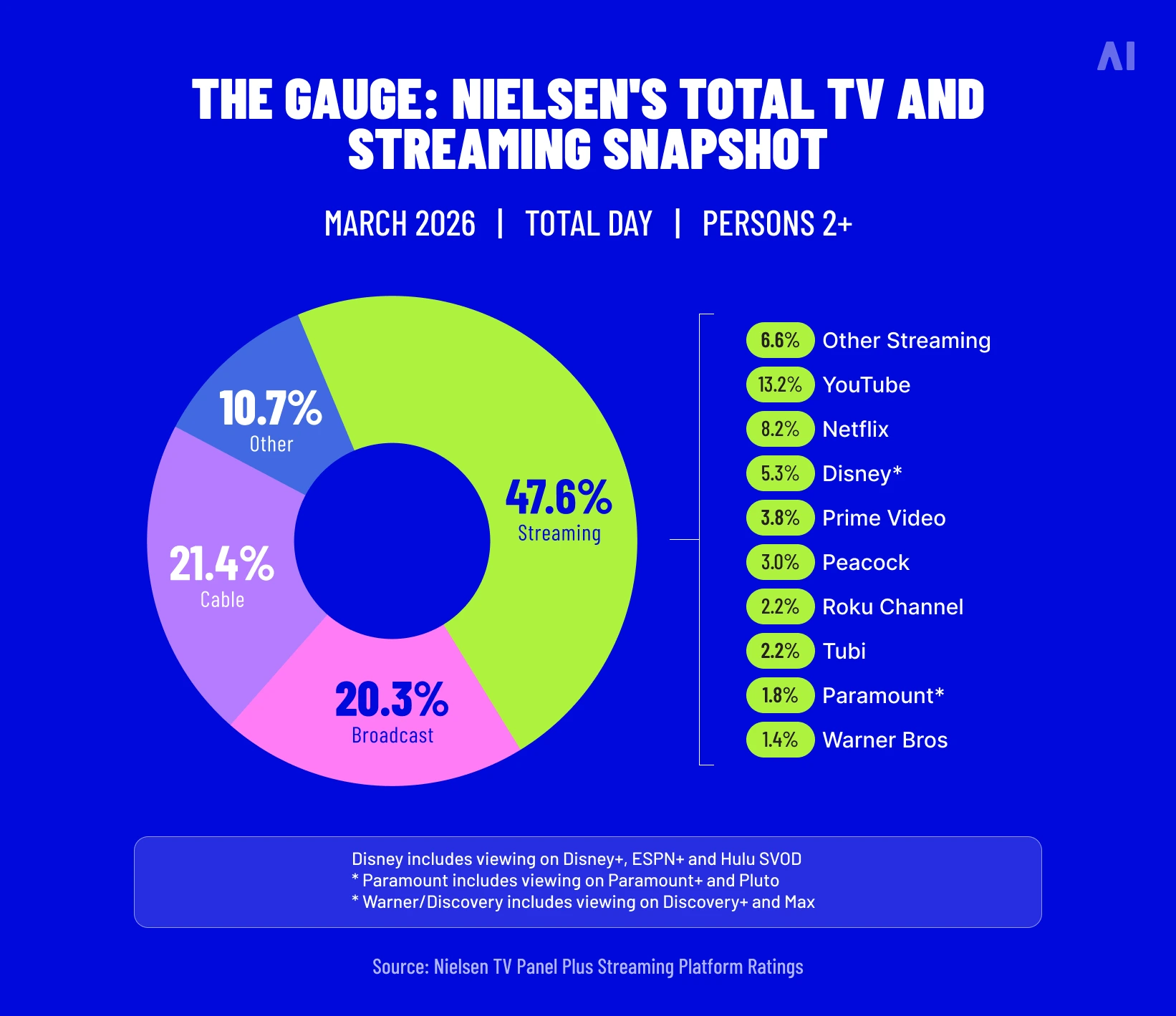
The need is becoming more urgent. Nielsen reported in 2025 that 56% of surveyed marketers planned to increase OTT or CTV spending, yet cross-media measurement remained uncommon.
For CTV and omnichannel campaigns, the strongest incrementality platforms generally share four characteristics:
- They can work with aggregate business outcomes rather than web conversions alone.
- They support geo or market-level experiments.
- They can include offline, retail, marketplace, or call-center sales.
- They connect individual tests to a wider budget or MMM framework.
Viewed through these criteria, the leading options differ mainly in the types of CTV campaigns, business outcomes, and measurement environments they are built to handle:
- Haus is strong where CTV exposure can be varied geographically or where fixed regional media plans require synthetic controls.
- Measured is suited to enterprise advertisers combining CTV experiments with MMM and several sales channels.
- LiftLab connects geo evidence to response curves and budget planning.
- Lifesight offers broad online and offline measurement within a unified stack.
- WorkMagic is relevant to commerce brands that need to detect CTV effects across direct, Amazon, and retail revenue.
- Platform-native studies can add useful evidence where the CTV inventory sits within Google or another eligible environment.
Independent analysis is still needed to compare that evidence across publishers, devices, and other media investments.
Beyond incrementality tools: AI Digital’s marketing intelligence platform
An incrementality experiment can establish that a campaign caused additional sales. It does not automatically determine the next media plan, reconcile every channel report, select better supply paths, or carry the finding into live campaign execution.
That is the role of the wider marketing intelligence and operating system around the test.
AI Digital approaches the problem through three connected components: Elevate, Smart Supply, and the Open Garden Framework. These are not direct substitutes for a specialist geo-testing platform. They provide the research, planning, reporting, media activation, and vendor-neutral coordination needed to apply causal findings across the full campaign cycle.

💡 Related reading: From Data to Decisions: How Marketing Intelligence Transforms Performance Strategy
Improving media planning and measurement decisions
Elevate is AI Digital’s marketing intelligence platform for research, audience development, media planning, optimization, attribution analysis, and reporting.
Its advanced measurement capabilities include marketing mix modeling and path-to-conversion analysis. MMM provides an aggregated view of how channels, spending, and wider business variables relate to outcomes over time. Path-to-conversion analysis examines the touchpoints and sequences that preceded conversion.
These methods answer different questions from an incrementality experiment. MMM can identify broad spending patterns and estimate response curves. Path analysis can reveal common journeys. Experiments can provide causal evidence against which those modeled or observational findings are checked.
Elevate connects these inputs to planning. The platform draws on more than 150 billion monthly data points, over 10,000 audience attributes, and historical information from more than 8,000 campaigns across 12 or more DSPs. Its AI-assisted planner can develop media scenarios, recommend allocations, and prepare a structured plan for human review.
The opportunity is not to allow one model to pronounce a final answer. It is to use each source of evidence according to its strengths:
- Incrementality tests validate causal lift
- MMM informs portfolio-level allocation
- Path-to-conversion analysis explains observed journeys
- Live reporting identifies changes requiring attention
- Planning tools convert findings into channel and budget scenarios
⚡ An experiment becomes commercially valuable when its result changes the next decision.
💡 Related reading: Marketing Planning Software: How to Connect Planning, Optimization, and Reporting
Driving transparent and outcome-based media buying
Measurement can identify an effective channel while leaving substantial inefficiency inside the media path used to buy it.
Smart Supply addresses the supply side of programmatic execution. It builds and optimizes deal IDs according to the advertiser’s KPI, removes low-quality or invalid traffic, reduces unnecessary intermediaries, and works across DSPs and SSPs without requiring the advertiser to favor one buying platform.
This provides a practical downstream use for incrementality findings. Suppose a geo test confirms that programmatic video generates incremental sales, but analysis also finds wide performance variation across publishers and supply paths. The answer is not necessarily to increase every programmatic video impression. It may be to concentrate spending through cleaner, more direct inventory routes and remove placements that contributed cost without measurable business value.
Smart Supply is designed to make that refinement possible through:
- KPI-led deal construction
- Direct SSP relationships
- Fraud and invalid-traffic filtering
- Brand-safety controls
- Supply-path optimization
- Contextual and audience layers
- In-flight performance adjustments
- Transparent placement and pricing information
Incrementality identifies additional business impact. Supply curation helps determine how efficiently the advertiser can continue producing it.
💡 Related reading: Transparency in Advertising
Reducing dependence on walled-garden measurement
AI Digital’s Open Garden Framework is a vendor-neutral operating model connecting data, media platforms, inventory, measurement, and business objectives.
The framework does not require advertisers to reject Google, Meta, Amazon, TikTok, or other large platforms. Those systems provide reach, data, optimization, and useful native experiments. The problem arises when each platform becomes its own planner, seller, optimizer, attribution system, and judge.
An open approach allows the advertiser to compare native findings with independent experiments, MMM, business data, and results from other channels. It also makes it easier to select buying technology and supply according to advertiser KPIs rather than the commercial priorities of one platform.
For incrementality programs, this independence is important. A test result should be able to influence spending across the portfolio. Evidence that remains trapped inside one platform may improve that platform’s campaign while leaving the larger allocation question unanswered.
💡 Related reading: Walled Gardens vs. the Open Internet | Data Fragmentation in Advertising
Side-by-side comparison of incrementality platforms
Platform selection should begin with operating conditions.
A retailer with 500 stores and weekly regional sales has a different testing surface from a subscription app with global user-level events. A DTC company spending heavily on Meta may be able to run a simple geo holdout. A multinational advertiser may need an experimentation calendar, MMM calibration, privacy review, offline data engineering, and governance across several agencies.
The following factors have the greatest effect on implementation:
- Available geographic or user-level variation
- Conversion volume and minimum detectable effect
- Access to business outcome data
- Frequency of media and pricing changes
- Internal statistical expertise
- Need for managed support
- Number of online and offline channels
- Requirement for ongoing MMM or attribution
- Willingness to hold out media
- Speed at which decisions must be made
Synthetic controls vs. matched markets
A matched-market experiment pairs a treatment region with one or more similar control regions. Similarity may be based on historical sales, population, customer composition, media spending, or other pre-treatment variables.
The method is intuitive, but one city rarely provides a perfect untreated version of another. A local promotion, weather event, competitor opening, sports fixture, or economic change can distort the comparison.
Synthetic controls construct the counterfactual from a weighted combination of untreated regions. Instead of comparing one treatment city with one control city, the model may combine portions of several markets to reproduce the treatment region’s historical behavior.
Synthetic controls can improve the pre-treatment fit, but the label alone does not guarantee a reliable result. Buyers should ask:
- How were donor regions selected?
- Which variables were used to establish similarity?
- Was the model tested on a placebo period?
- How sensitive is the result to alternative control weights?
- Were treatment and control markets exposed to overlapping media?
- What uncertainty interval surrounds the lift estimate?
- Could a local event explain the measured divergence?
Randomized paired geo experiments remain stronger where randomization is practical. Synthetic controls are especially valuable when treatment geographies are predetermined or when no clean one-to-one control exists.
Self-serve vs. managed-service platforms
Self-serve incrementality testing tools offer faster access and greater internal control. They are attractive to growth teams that already understand experimental design and have clean data pipelines.
A self-serve platform can reduce the cost of repeated testing, but software cannot make several organizational decisions on the marketer’s behalf. Someone still needs to choose a commercially meaningful hypothesis, estimate power, coordinate media changes, assess contamination, interpret uncertainty, and decide what action the result supports.
Managed platforms add statisticians, data engineers, strategists, and program governance. They are better suited to complex enterprises, although they may involve longer onboarding, higher cost, and less direct control over the analysis.
Hybrid models often provide the strongest compromise: software for test setup and reporting, accompanied by specialist review for design and interpretation.
Pricing models and vendor incentives
Most enterprise incrementality vendors do not publish standardized pricing. Contracts may be based on an annual platform subscription, number of brands, number of markets, data volume, experiment count, managed-service hours, media spend, or a combined arrangement.
Each model creates different incentives.
- Annual subscriptions encourage ongoing use but may be expensive for companies planning only one or two tests.
- Per-test pricing is easy to understand but can discourage the repeated experimentation needed to build organizational knowledge.
- Managed-service retainers support deeper analysis but make it harder to separate software value from consulting work.
- Spend-linked fees can create tension when measurement recommends reducing media.
- Performance-linked fees require an agreed definition of improvement and a credible baseline.
Buyers should ask whether a vendor benefits financially when media spending rises, whether it also sells media, and whether negative results are presented with the same prominence as positive lift.
The cleanest commercial relationship is one in which the measurement provider is rewarded for producing credible decisions, including a recommendation to stop spending.
Which platforms work without cookies, pixels, or PII
Geo-based testing can often operate without cookies or direct personal identifiers because treatment, spend, and outcomes are analyzed at an aggregated regional level.
Haus, SegmentStream, LiftLab, Measured, WorkMagic, and other geo-testing platforms can use market-level revenue or conversion data. INCRMNTAL also emphasizes aggregated time-series analysis rather than user-level exposure matching. MMM systems such as Recast work primarily with aggregated historical data.
“Cookie-free” does not mean “data-free.” These systems still require reliable outcome information, campaign spend, treatment records, geographic breakdowns, and enough variation to distinguish marketing effects from ordinary volatility.
User-level randomized holdouts may provide a cleaner experimental design for some digital campaigns, but they depend on the platform’s ability to assign users, suppress ads, and observe outcomes. Privacy controls can reduce match rates and reporting granularity even when the experiment itself is randomized.
MMM integration and unified measurement capabilities
Incrementality testing and MMM are complementary because each compensates for a weakness in the other.
An experiment can produce strong causal evidence for a particular channel, period, and spending range. It cannot test every channel continuously under every future condition.
MMM covers a broader portfolio and longer period. Its estimates, however, are model-dependent and can struggle when channel spending moves together or when the historical data contains little useful variation.
Experimental results can calibrate or constrain the MMM. The model can then help determine which uncertainty deserves the next experiment.
Measured, Recast, LiftLab, Haus, Lifesight, WorkMagic, and Rockerbox all connect incrementality with MMM in some form. Buyers should establish the depth of that connection. An “integrated” product may place two reports in the same interface, or it may formally incorporate experimental uncertainty into the model.
The second arrangement is methodologically stronger, provided the implementation is transparent.
Platform comparison matrix
The matrix below brings the main differences into one view, covering methodology, MMM integration, privacy readiness, operating model, and ideal use case.
{{bitt-2}}
No row should be read as a verdict. “Privacy-ready” can refer to very different data arrangements, and “MMM integration” can range from shared dashboards to formal statistical calibration. Procurement should require a methodology session, not only a product demonstration.
Incrementality testing methodologies behind leading platforms
The quality of incrementality testing depends less on the interface than on the counterfactual behind the result.
IAB’s 2025 Guidelines for Incremental Measurement in Commerce Media organize causal approaches around credible counterfactuals, control of bias, and separation of genuine signal from ordinary variation. Those principles apply well beyond commerce media.
💡 Related reading: How to Measure Incrementality in Marketing Campaigns
How geo lift testing works
A geo lift experiment divides geographic markets into treatment and control groups. The advertiser changes media in the treatment markets while maintaining the existing plan in the controls.
The change may involve:
- Launching a new channel
- Increasing or reducing spend
- Removing a campaign
- Introducing new creative
- Expanding into CTV or out-of-home
- Testing a promotion
- Changing targeting or bidding strategy
The analysis estimates how treatment-market outcomes differed from the counterfactual during the test period. Incremental return on ad spend divides the additional revenue by the additional media cost.
A credible geo experiment requires more than choosing two cities that appear similar. It needs a stable pre-period, adequate statistical power, treatment compliance, limited spillover, and controls for outside events.
Geographic experimentation is attractive in privacy-constrained environments because it can use aggregate sales and spending. It can also capture effects across devices and sales channels. Its limits include small numbers of markets, regional heterogeneity, national media leakage, and the commercial cost of withholding activity.
Holdout-based and user-level experimentation
User-level lift studies randomly assign eligible users to treatment and control groups.
The treatment group can receive ads normally. The control group is prevented from seeing the advertiser’s campaign, receives a neutral public-service message, or is excluded through another auction-level mechanism. The difference in conversion rates estimates incremental lift.
Common forms include:
- Randomized conversion lift: Eligible users are assigned before exposure.
- Public-service announcement tests: Control users receive a neutral ad in place of the advertiser’s creative.
- Ghost-ad designs: The system records when a control user would have won an advertiser impression without serving the actual ad.
- Audience holdouts: A first-party customer or prospect group is divided into marketed and unmarketed cells.
Randomization reduces selection bias because treatment eligibility is assigned independently of likely conversion. The approach can provide high statistical power when the platform has substantial reach and conversion volume.
Its practical weakness is dependence on platform infrastructure and identity. The advertiser may not be able to reproduce the method independently or inspect every element of assignment, matching, and outcome reporting.
Always-on incrementality measurement
Always-on measurement attempts to estimate causal contribution continuously rather than through a succession of fixed test windows.
There are two broad versions.
- The first uses repeated experiments to recalibrate an ongoing model. The company runs selected geo or audience tests, while MMM, Bayesian models, or attribution systems extend the findings to periods where no active test is running.
- The second uses observational causal inference. The system records changes in spend, campaign settings, promotions, pricing, and external conditions, then estimates the outcome that would have occurred without each change.
Continuous systems offer speed and avoid the recurring cost of deliberate holdouts. They are also exposed to confounding when several variables change together.
The central buyer question is therefore not “Does the platform use AI?” It is: What variation allows the system to identify the effect, and which alternative explanations were ruled out?
Bayesian inference can update beliefs as evidence arrives and preserve uncertainty rather than producing one permanent coefficient. It cannot create identifying information where the data contains none.
How to choose the right incrementality testing platform
The selection process should begin with the decisions the company expects to make.
Testing “whether Meta works” is rarely specific enough. The answer may depend on prospecting versus retargeting, creative type, audience, spending level, season, promotional activity, and the effect on other channels.
A better buying process starts with a list of recurring decisions:
- Should we add another $1 million to CTV?
- How much branded search captures existing demand?
- Does paid social generate sales in stores or on Amazon?
- Is retargeting producing incremental orders?
- What happens if we reduce affiliate spending?
- Did an out-of-home campaign increase new-customer revenue?
- Which experiment would improve our next annual MMM?
- Can finance reproduce the assumptions behind the answer?
A platform that cannot support the required decision is not the right system, however polished its dashboard may be.
💡 Related reading: Incrementality Testing Framework: Step-by-Step
Match the right platform to business needs
The right fit depends less on company size alone than on channel mix, available data, internal expertise, and the decisions the platform must support.
{{bitt-3}}
Business size is not the only consideration. A smaller brand with geographically diverse sales may be easier to test than a larger business operating in one concentrated market. Data variation, rather than company prestige, often determines feasibility.
Should you build an internal incrementality framework?
An internal system can make sense when a company has:
- Experienced causal-inference and experimentation specialists
- Reliable geographic, transaction, and media data
- Engineering resources for test assignment and monitoring
- A high volume of recurring experiments
- Unusual business constraints that packaged software cannot support
- Governance capable of reviewing and reproducing results
Building the statistical model is only one part of the work. The company also needs experiment intake, prioritization, power analysis, media coordination, anomaly monitoring, documentation, result storage, and a process for applying previous findings.
Dedicated software becomes more attractive when speed, repeatability, visual workflows, integrations, and external methodological review outweigh the value of complete internal control.
A hybrid model is often practical. The company retains its data and analytical ownership while using a platform for design, workflow, counterfactual generation, and reporting.
Incrementality testing vs. MMM vs. attribution tools
These categories should not be treated as competing claims to one measurement throne.
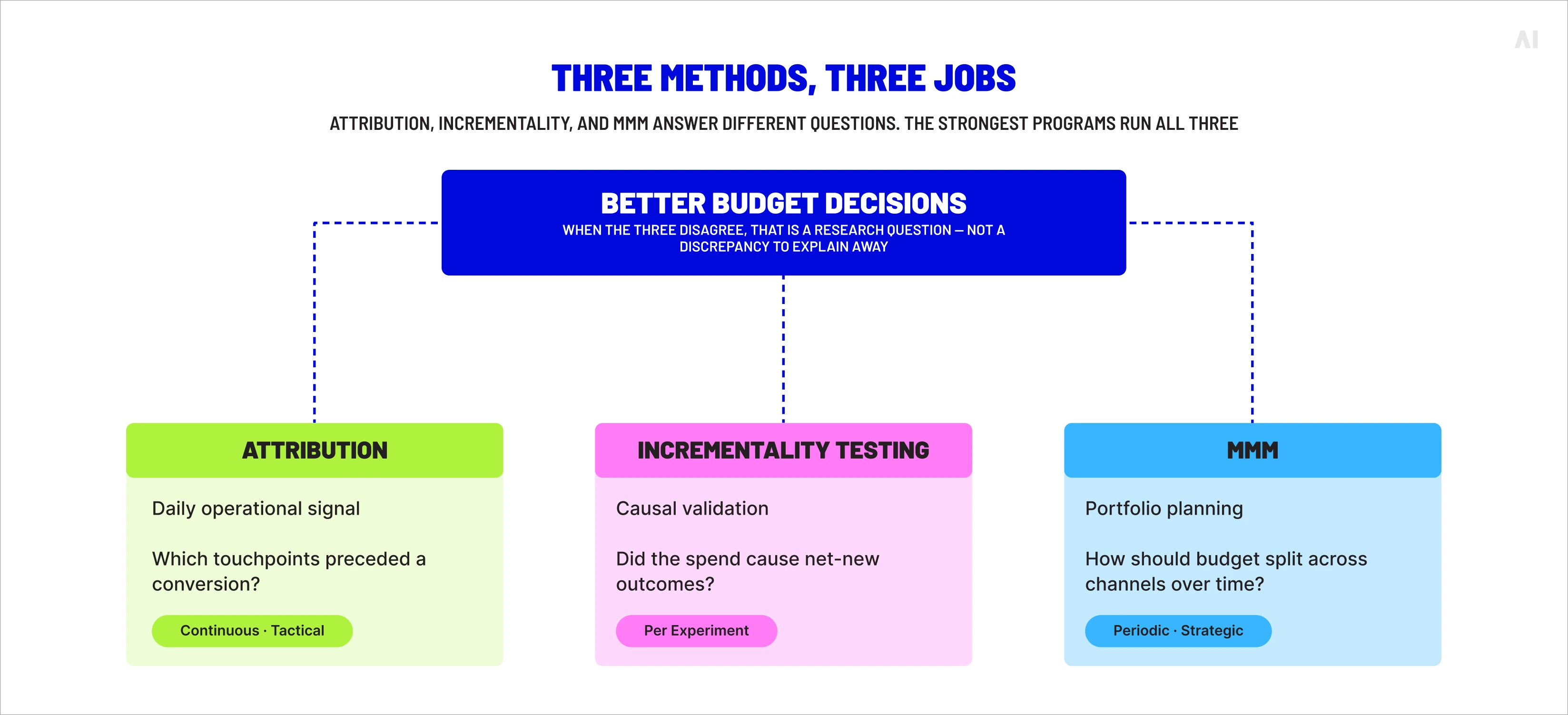
- Attribution is suited to daily reporting and granular optimization. It can identify which campaigns and journeys are associated with conversions, provided the user-level data is available.
- Incrementality testing is suited to causal validation. It can establish whether changing or removing an activity changes the business outcome.
- MMM is suited to cross-channel planning, historical analysis, forecasting, and spending scenarios across online and offline media.
A mature system uses all three with clear boundaries:
- Attribution provides fast operational signals.
- Experiments test the most commercially important assumptions.
- MMM connects the portfolio and extends knowledge beyond individual tests.
- Conflicts between the methods become research questions rather than inconvenient discrepancies.
For example, attribution may show a strong return from branded search. A holdout test may reveal that many of those sales would have occurred through organic search. MMM may then estimate the remaining role of search across different spending levels and seasons.
The answer is not to select whichever method produces the highest ROAS. It is to understand why the methods disagree.
💡 Related reading: Marketing Measurement vs. Attribution vs. MMM: What’s the Difference?
Choosing the right incrementality platform starts with measurement strategy
The software market offers no universal winner because advertisers do not share one testing environment.
Haus may be the stronger choice for a brand building a rigorous geo-experimentation program. Measured may suit an enterprise requiring managed cross-channel measurement. Recast may fit a company placing Bayesian MMM at the center of planning. WorkMagic may be more practical for an ecommerce brand connecting DTC, Amazon, retail, and CTV. INCRMNTAL may appeal to a team that cannot repeatedly switch media off.
The product decision should follow five questions:
- Which business decisions will the evidence support?
- What counterfactual can the platform credibly construct?
- What data and operational changes will the company need to provide?
- How is uncertainty communicated?
- How will the result alter planning, buying, and budget allocation?
The fifth question is frequently neglected. A company can accumulate statistically respectable studies while continuing to allocate money according to platform ROAS, internal politics, or the previous year’s budget.
Specialist incrementality testing tools establish causal evidence. A wider marketing intelligence system helps carry that evidence through planning, execution, reporting, and optimization.
AI Digital connects those functions through Elevate, Smart Supply, and its Open Garden Framework. Elevate brings research, planning, MMM, path-to-conversion analysis, and cross-channel reporting into one intelligence layer. Smart Supply applies KPI-led optimization to programmatic inventory and supply paths. Open Garden provides the vendor-neutral structure needed to compare platforms without surrendering the full decision to any one of them.
Advertisers reviewing their measurement and media operations can get in touch with us at AI Digital to discuss how our services can connect planning, measurement, programmatic execution, and business outcomes.
Better dashboards can display more information. Better measurement changes what the company does next.