Programmatic Direct vs Programmatic Guaranteed: What’s the Difference?


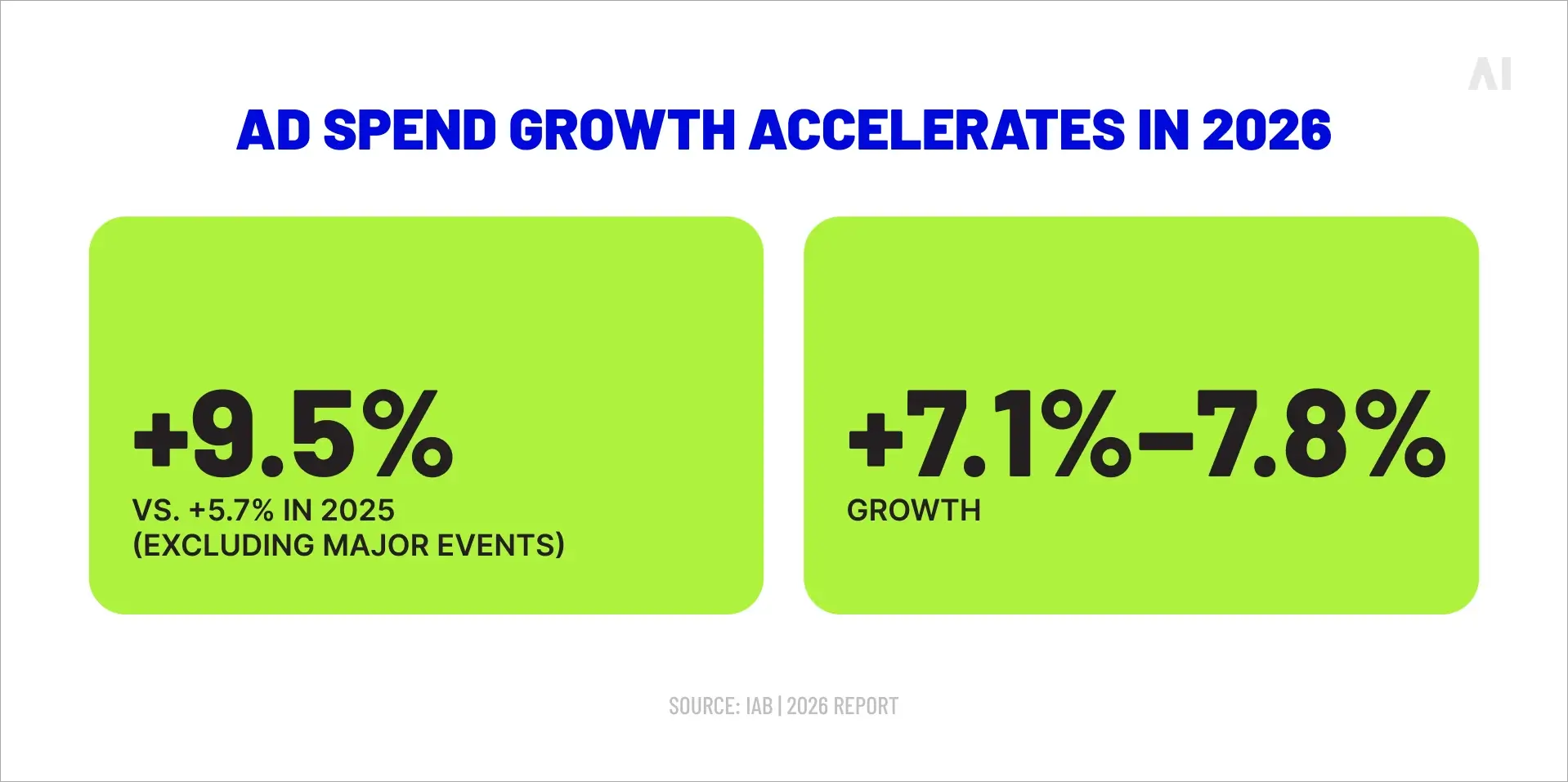
As programmatic advertising has expanded, the technology, transaction methods, and campaign controls available to advertisers have become considerably more sophisticated. The scale of investment reflects that shift: U.S. digital advertising revenue reached a record $294.6 billion in 2025, increasing 13.9% year over year, while Europe’s digital advertising market grew 10.5% to €131 billion. IAB also projects total U.S. advertising spend to rise 9.5% in 2026, with digital channels continuing to drive market growth.
However, as programmatic advertising has matured, its terminology has become increasingly difficult to navigate. In particular, programmatic direct vs programmatic guaranteed is often presented as a comparison between two separate buying models.
💡 The more accurate distinction is hierarchical: Programmatic Direct is the broader category of automated, one-to-one media transactions between a publisher and a specific buyer, while Programmatic Guaranteed is a reserved deal type within that category. Google Ad Manager, for example, uses Programmatic Direct to facilitate both guaranteed, reserved campaigns and non-guaranteed Preferred Deals.
Understanding this relationship is essential when evaluating inventory access, pricing commitments, delivery certainty, and campaign flexibility. This article explains how each model works, how it compares with Preferred Deals, PMPs, and open auctions, and which deal structure best supports different campaign objectives.
What Is Programmatic Direct?
Programmatic Direct is automated, one-to-one media buying between a specific advertiser and publisher. Unlike an open auction, where multiple buyers compete for eligible impressions in real time, the parties establish pricing, inventory access, targeting, or delivery terms before activation. The transaction then runs through the publisher’s ad server and the buyer’s ad tech stack, replacing much of the email, spreadsheet, trafficking, and insertion-order work associated with traditional direct sales.
Automation does not eliminate commercial negotiation. Advertisers and publishers may still agree directly on the CPM, inventory package, audience, campaign dates, creative specifications, and measurement terms. Technology standardizes the proposal, activation, billing, and reporting workflow. IAB Tech Lab’s OpenDirect standard, for example, supports automated planning, buying, activation, and reporting for reserved direct transactions.
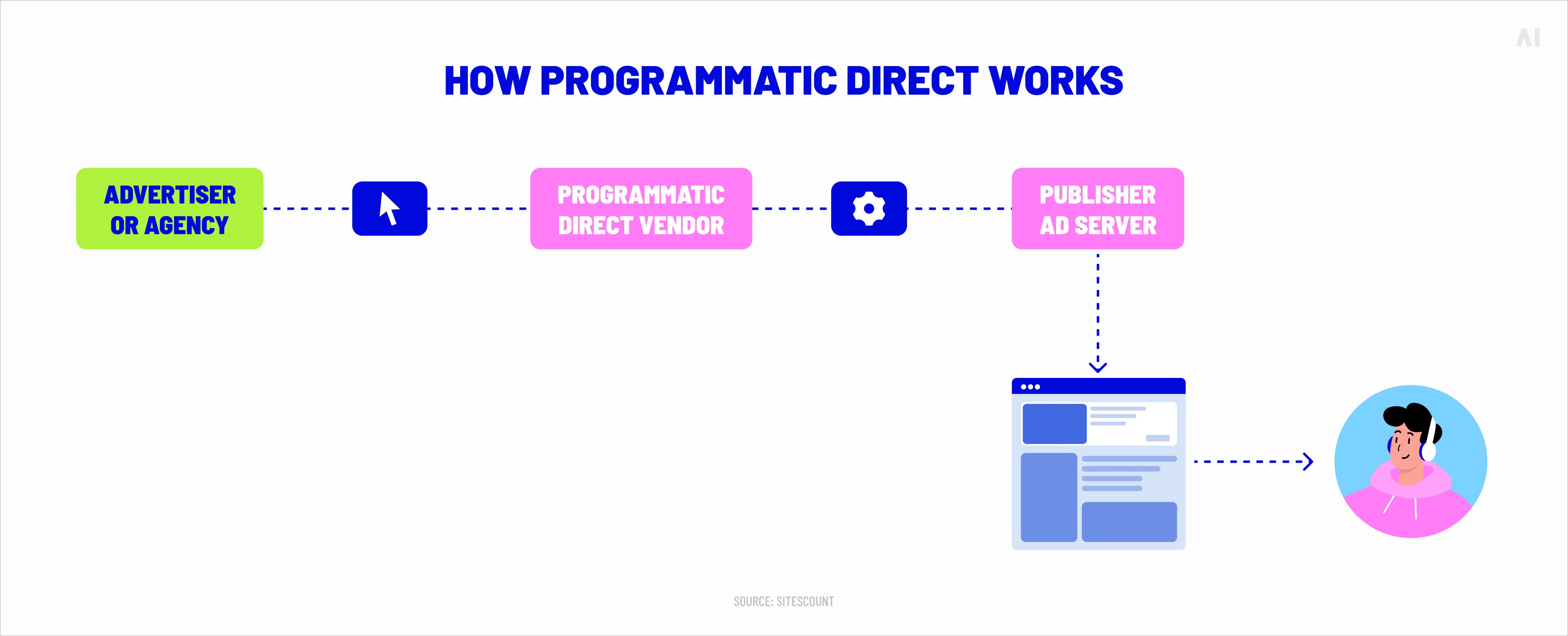
Programmatic Direct is therefore a buying relationship and workflow, not one pricing or delivery model. In Google Ad Manager, it covers Programmatic Guaranteed and Preferred Deals: the first uses guaranteed, reserved inventory, while the second is non-guaranteed and unreserved. Private Marketplace arrangements are also commonly assessed alongside these direct deal types because they restrict inventory access to selected buyers. Google’s narrower taxonomy defines PMPs as non-guaranteed transactions that include Preferred Deals and Private Auctions.
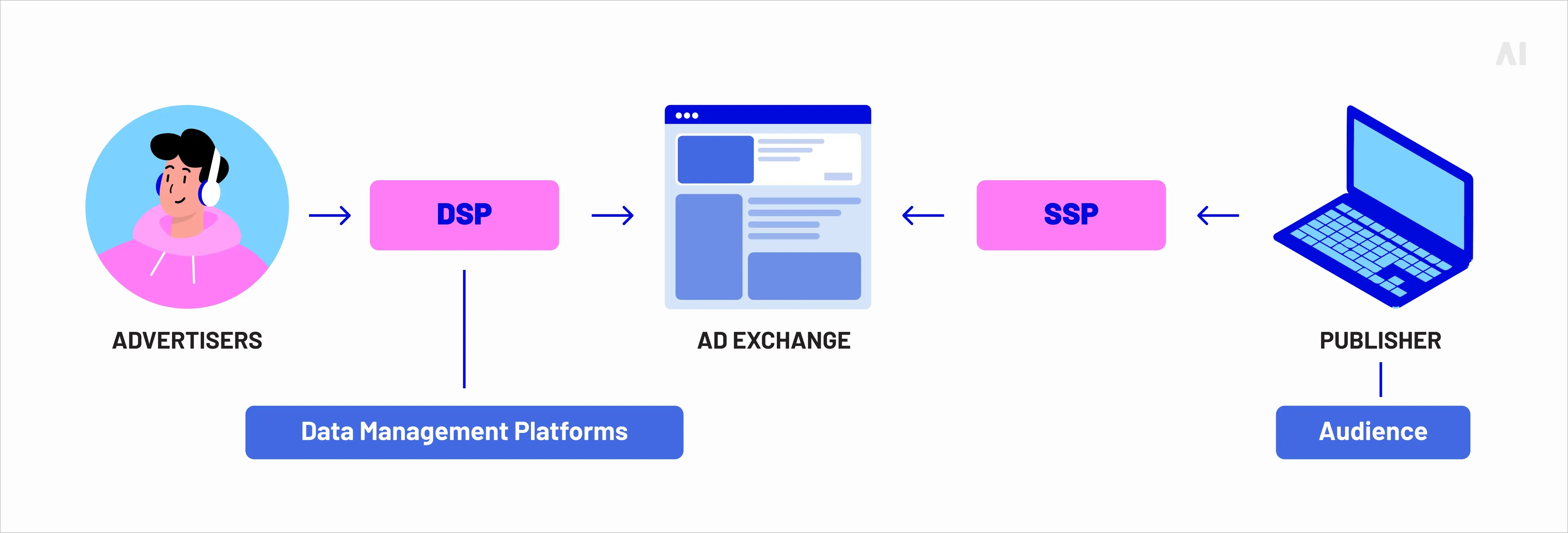
⚡️Understanding the roles of a DSP, SSP, and ad exchange helps clarify how each transaction is executed.
Benefits of Programmatic Direct Advertising
Programmatic Direct combines publisher-level commercial control with automated media buying. Its main advantages include:
- Premium inventory access. Publishers can offer selected buyers high-value placements, curated audience packages, video, and CTV supply.
- Greater pricing transparency. Advertisers know the negotiated CPM or auction floor before activation.
- Stronger brand-safety controls. Buyers can define acceptable publishers, placements, content environments, and creative requirements.
- Closer publisher relationships. Both parties can coordinate timing, audience strategy, custom packages, and measurement expectations.
- Automated execution. Deal IDs and platform workflows streamline proposals, trafficking, billing, and reporting.
- More predictable delivery. Curated access can reduce auction uncertainty, although certainty varies by transaction type.
Programmatic Guaranteed provides the highest commitment and delivery certainty because inventory is reserved and the advertiser agrees to buy a specified volume. Preferred Deals provide premium access without a purchase obligation, while PMPs retain competitive auction dynamics.
💡Direct describes the trading relationship; guaranteed describes the commitment.
Why Programmatic Direct and Programmatic Guaranteed Are Often Confused
The terms are often used interchangeably because vendors simplify related transaction types under labels such as “direct deals,” “reserved programmatic,” or simply “programmatic deals.”
Platform terminology adds another layer of confusion: Google Ad Manager explicitly treats Programmatic Guaranteed and Preferred Deals as campaigns negotiated through Programmatic Direct.
The distinction is clearer when each term answers a different question:
- Direct describes who transacts: a specific advertiser and publisher.
- Guaranteed describes what is committed: reserved inventory and an agreed purchase volume.
Therefore, every Programmatic Guaranteed transaction is Programmatic Direct, but not every Programmatic Direct transaction is guaranteed.
The Three Deal Types to Know
The table below compares the three structures most commonly evaluated in direct and curated programmatic buying.
{{pdpg-1}}
Programmatic Guaranteed reserves a defined impression volume at an agreed CPM, and the buyer commits to purchasing it. It is best suited to campaigns where inventory access, delivery, and timing outweigh short-term optimization flexibility.
Preferred Deals give a selected buyer the first opportunity to evaluate eligible impressions at a fixed CPM. The inventory is not reserved, and the advertiser can decide whether to buy each impression.
Private Marketplaces restrict auction participation to approved buyers. The publisher or SSP establishes access terms and usually a floor price, but buyers still compete. PMPs deliver greater supply curation than the open auction without guaranteed delivery. Google currently includes Preferred Deals and Private Auctions within its PMP category.
⚡️For the wider distinction between automated and manually negotiated media transactions, read Programmatic vs Direct Advertising: Key Differences, Benefits, and Trade-Offs.
What Is Programmatic Guaranteed?
Programmatic Guaranteed is a reserved media transaction in which a publisher agrees to deliver a fixed volume of impressions at a negotiated CPM, while the advertiser commits to purchasing that inventory. Unlike an open auction, impressions are not offered to competing buyers individually. The price, volume, campaign period, and delivery conditions are established before activation.
This model combines the certainty of traditional reserved media buying with automated programmatic execution. The advertiser retains direct control over inventory selection and commercial terms, while technology manages workflows such as proposals, campaign trafficking, creative delivery, billing, reconciliation, and reporting. IAB Tech Lab defines automated guaranteed buying as a directly negotiated transaction in which both inventory and pricing are guaranteed, with the request-for-proposal and trafficking processes automated through technology.
The operational effect can be substantial. A Boston Consulting Group study commissioned by Google found that Programmatic Guaranteed transactions saved publishers an average of 57% of the time required for traditional reservations, while agencies and advertisers saved 29%. The efficiencies came largely from reducing repetitive insertion-order administration, tag exchanges, manual data entry, reporting work, and campaign reconciliation.
💡Programmatic Guaranteed automates the transaction without removing the commercial guarantee.
Benefits of Programmatic Guaranteed
The principal advantage of Programmatic Guaranteed is that it gives both sides greater certainty before the campaign begins. Its benefits include:
- Guaranteed access to inventory. Advertisers can reserve limited or high-demand placements before they become available through other buying channels.
- Predictable pricing. A negotiated CPM reduces exposure to auction volatility and supports more accurate budget planning.
- Delivery certainty. The publisher commits to delivering the agreed impression volume during a defined campaign period.
- Premium publisher relationships. Buyers can negotiate directly around placements, audiences, formats, sponsorships, and measurement requirements.
- Enhanced brand safety. Advertisers can evaluate the publisher, content environment, placement, and delivery conditions before committing spend. This makes the model especially relevant when brand safety in advertising is a strategic requirement.
- Streamlined execution. Automated proposals, trafficking, reporting, and reconciliation reduce administrative work and the risk of discrepancies.
These characteristics make guaranteed deals particularly effective for product launches, seasonal campaigns, major sponsorships, brand-awareness initiatives, and inventory that may be difficult to secure consistently through auctions.
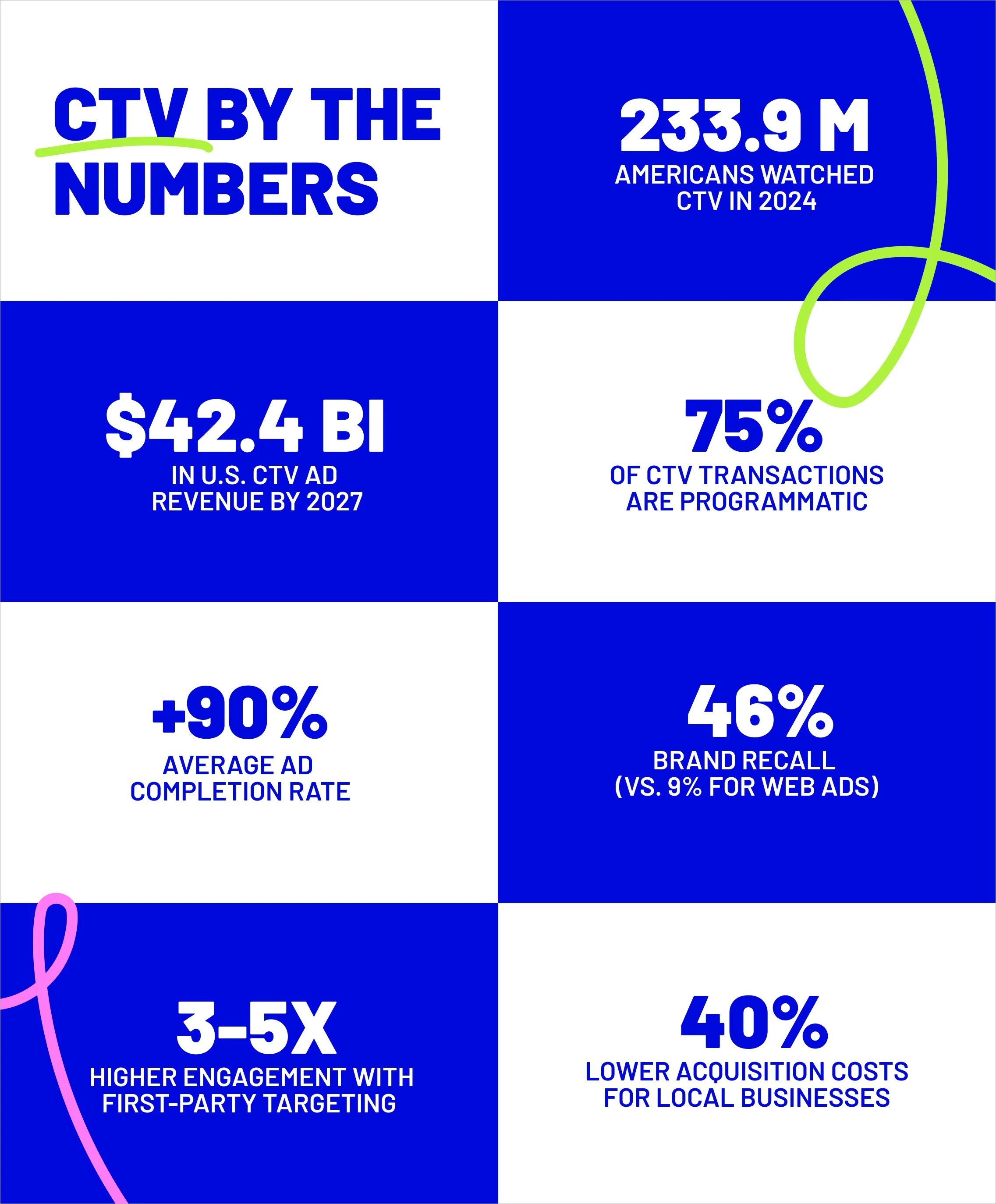
They are also increasingly relevant to connected TV advertising. IAB projects U.S. digital video advertising expenditure to exceed $80 billion in 2026, representing 11% year-over-year growth, while digital video is expected to account for more than 60% of total TV and video advertising spend. CTV spending alone is forecast to grow by 11% in 2026. As more premium programming and live sports move to streaming environments, advertisers have stronger incentives to reserve valuable inventory in advance.
What a Programmatic Guaranteed Deal Includes
A Programmatic Guaranteed agreement should define every material delivery condition before launch. The exact terms vary, but most deals cover:
- Negotiated CPM: the fixed price paid per thousand impressions.
- Impression volume: the number of impressions the publisher is required to deliver.
- Campaign dates: the agreed start date, end date, and delivery schedule.
- Inventory and placements: the sites, apps, programs, content categories, devices, ad units, or positions included in the deal.
- Audience targeting: the demographic, contextual, geographic, behavioural, or first-party audience criteria used to qualify impressions.
- Creative specifications: accepted formats, dimensions, durations, file requirements, approval processes, and submission deadlines.
- Brand-safety requirements: content exclusions, suitability controls, fraud protections, viewability expectations, and verification arrangements.
- Measurement terms: reporting fields, attribution requirements, frequency controls, and agreed performance indicators.
These conditions distinguish Programmatic Guaranteed from auction buying, where availability and clearing prices are determined impression by impression. Advertisers should validate targeting conditions carefully because narrower audience requirements can reduce the publisher’s available supply and affect its ability to forecast delivery.
First-party audience matching can also be incorporated into negotiations. Google Ad Manager, for example, allows buyers to attach first-party audience lists to a proposal so the publisher can forecast how much reserved inventory matches those users before finalizing the deal. This adds addressability to the certainty of reserved buying and makes guaranteed transactions more valuable as marketers place greater emphasis on consented customer data.
⚡️For a wider explanation of audience, contextual, and data-based activation methods, read programmatic targeting strategies.
Why Premium Inventory Uses Programmatic Guaranteed
Premium publishers have strong incentives to sell scarce, differentiated inventory through Programmatic Guaranteed rather than expose all of it to real-time auctions. High-value placements often have limited supply, strict creative requirements, concentrated audience demand, or significant commercial value tied to specific content.
Guaranteed transactions help publishers secure revenue in advance while maintaining control over pricing, packaging, buyer access, and campaign delivery. Advertisers gain corresponding certainty that strategically important inventory will remain available when their campaigns launch.
This structure is particularly useful when:
- Inventory is connected to live events, sports, premieres, or seasonal programming.
- Advertisers require controlled and identifiable media environments.
- Campaign delivery must align with a fixed launch or promotional window.
- Premium video or CTV impressions are limited relative to buyer demand.
- Creative assets have been produced for specific placements or publishers.
CTV has accelerated this need because streaming inventory combines television-quality content with programmatic audience activation. However, supply remains fragmented across publishers, platforms, devices, and distribution environments.
Using programmatic TV advertising workflows allows buyers to automate execution, while CTV media buying through guaranteed agreements helps secure high-value placements before auction demand affects availability.
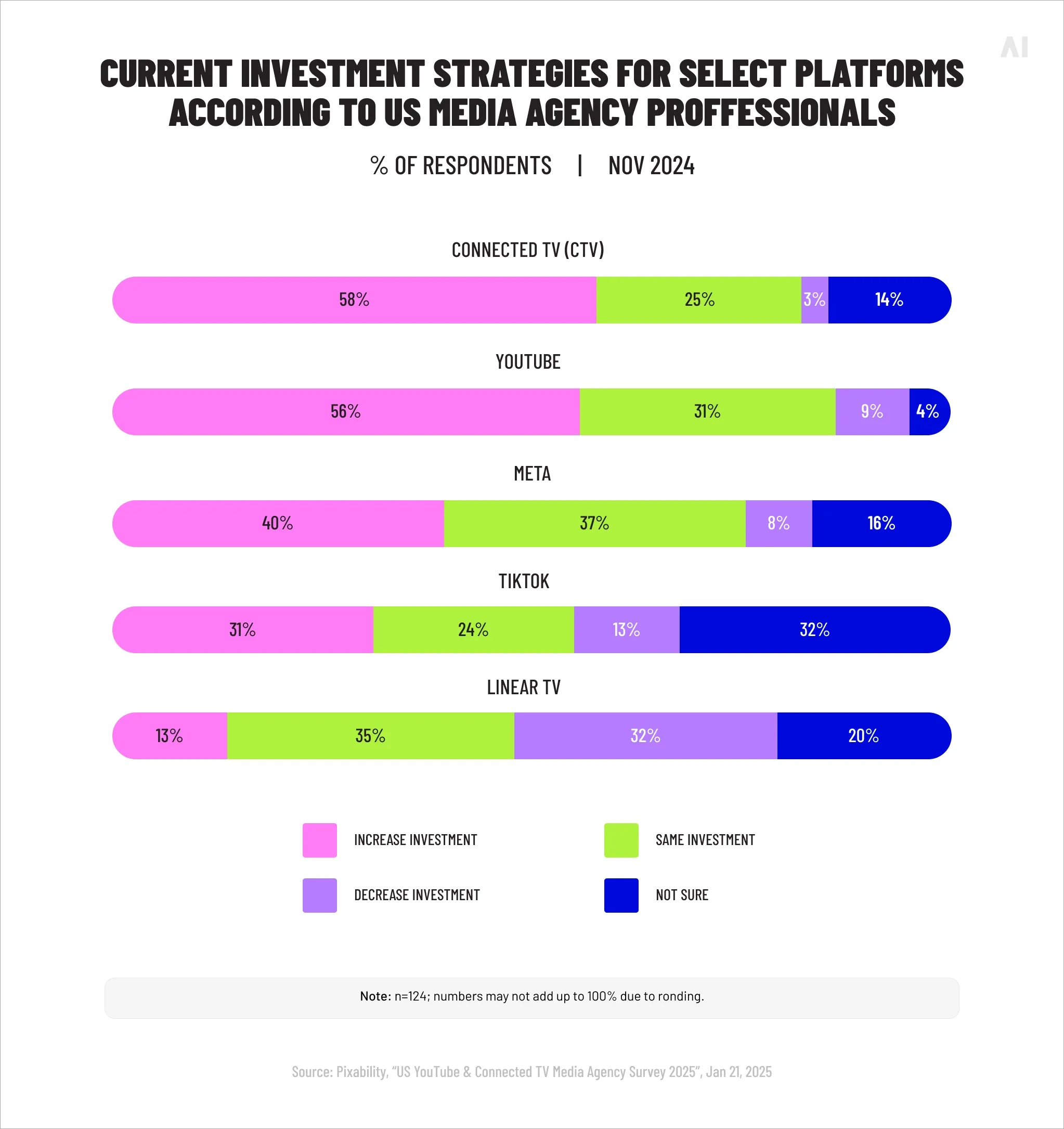
💡Programmatic Guaranteed therefore offers a practical exchange: the advertiser accepts a firmer budget commitment in return for predictable access, pricing, and delivery, while the publisher receives greater revenue certainty for premium inventory.
Programmatic Direct vs Programmatic Guaranteed: Key Differences
The distinction between Programmatic Direct and Programmatic Guaranteed is categorical rather than competitive. Programmatic Direct is the broader method of conducting automated, one-to-one media transactions between an advertiser and a publisher. Programmatic Guaranteed is one specific deal structure within that category.
In other words, Programmatic Guaranteed is not an alternative to Programmatic Direct. It is the most committed form of Programmatic Direct because the publisher reserves an agreed volume of inventory and the advertiser commits to purchasing it.
The comparison below shows how the broader buying category differs from its guaranteed subtype.
{{pdpg-2}}
The central trade-off is flexibility versus certainty. Programmatic Direct can include several transaction structures, allowing advertisers to choose different levels of commitment, publisher access, pricing control, and auction participation. Non-guaranteed direct deals give buyers more freedom to evaluate inventory and adjust spending as campaign conditions change.
Programmatic Guaranteed provides less flexibility because the core commercial conditions are fixed before launch. Once the advertiser commits to a CPM, impression volume, campaign period, and inventory package, reallocating spend or changing targeting may require renegotiation. Narrow targeting or delayed creative approval can also affect the publisher’s ability to deliver the reserved volume.
In return, advertisers receive more predictable inventory access, pricing, budget allocation, and campaign delivery. This makes Programmatic Guaranteed valuable when missing a placement or delivery window would create greater business risk than committing budget in advance.
💡Programmatic Guaranteed exchanges the optionality of auction buying for the certainty of reserved delivery.
The appropriate model therefore depends on campaign priorities. Advertisers that require optimization freedom and scalable audience discovery may prefer non-guaranteed deals or auctions. Those prioritizing premium inventory, fixed timelines, and dependable delivery may benefit from the stronger commitments provided by Programmatic Guaranteed.
Programmatic Guaranteed vs Preferred Deals
Programmatic Guaranteed and Preferred Deals are both forms of Programmatic Direct, but they provide different levels of inventory commitment and campaign flexibility. Programmatic Guaranteed reserves inventory in advance, while a Preferred Deal gives an advertiser priority access to impressions without requiring the publisher to reserve them or the buyer to purchase them.
In a Programmatic Guaranteed transaction, the advertiser and publisher agree on a fixed CPM, impression volume, campaign period, and delivery conditions before launch. The publisher commits to making the inventory available, and the advertiser commits to buying the agreed volume. This creates predictable delivery and budget allocation but limits the advertiser’s ability to reduce spending or change campaign requirements after the deal has been finalized.
A Preferred Deal also uses a negotiated fixed CPM, but inventory remains unreserved. When an eligible impression becomes available, the selected advertiser receives the opportunity to purchase it before it is offered through a private or open auction. The advertiser can accept or decline each impression, creating greater control over audience relevance, pacing, and performance.
The main trade-offs are therefore:
- Inventory access: Guaranteed deals reserve supply; Preferred Deals provide priority access only.
- Purchase commitment: Guaranteed buyers must purchase the agreed volume; Preferred Deal buyers have no obligation.
- Pricing: Both generally use a negotiated fixed CPM.
- Campaign control: Preferred Deals offer greater optimization flexibility, while guaranteed deals provide stronger delivery certainty.
Advertisers should prioritize Programmatic Guaranteed when securing specific placements or impression volumes is essential. Preferred Deals are better suited to campaigns that need premium publisher access but must retain the ability to adjust spending as performance and market conditions change.
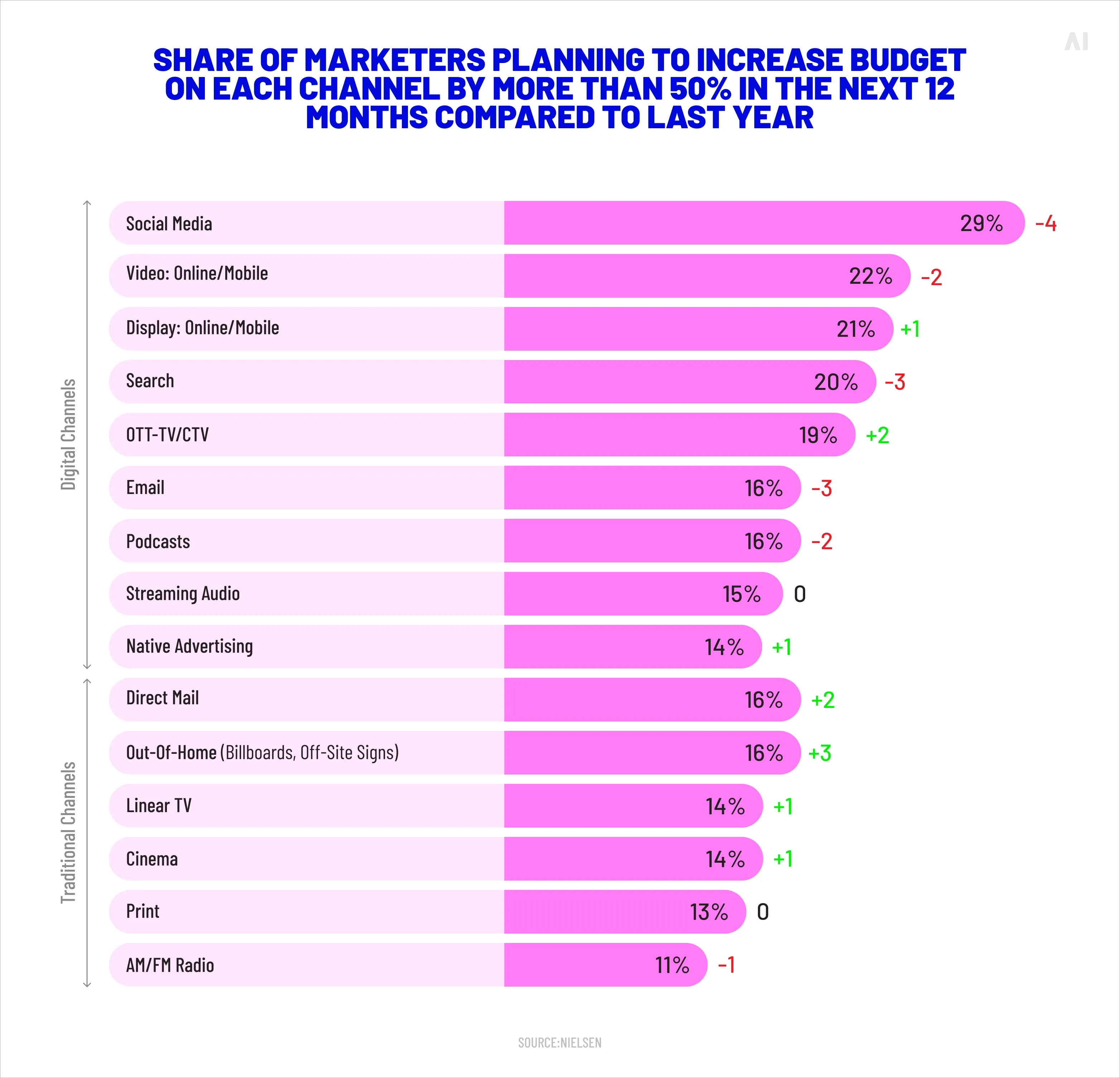
This distinction should be addressed during media planning and buying, when teams evaluate whether campaign success depends more on guaranteed delivery or ongoing optimization flexibility.
💡Preferred Deals preserve buyer choice; Programmatic Guaranteed protects delivery certainty.
Which Programmatic Deal Should You Choose?
The right programmatic deal depends on which campaign variable matters most: delivery certainty, premium inventory access, optimization flexibility, scale, or cost efficiency.
Programmatic Guaranteed is designed for committed, predictable delivery; Preferred Deals provide priority access without a buying obligation; and PMPs or open auctions support broader reach and real-time optimization.
The table below maps common business priorities to the most appropriate buying model.
{{pdpg-3}}
When to Choose Programmatic Guaranteed
Choose Programmatic Guaranteed when campaign success depends on securing a specific volume, placement, audience, or delivery period in advance. It is particularly appropriate for:
- Product launches tied to a fixed release date
- Seasonal campaigns with limited activation windows
- Premium publisher partnerships and sponsorships
- CTV and premium video inventory with constrained supply
- Regulated industries requiring carefully controlled media environments
- Campaigns with guaranteed audience-delivery requirements
- Media plans requiring predictable budget allocation
This model is strongest when the cost of missing the required inventory or campaign window is greater than the value of maintaining complete buying flexibility. Advertisers should confirm that targeting, creative assets, approvals, and measurement requirements are ready before committing to the deal.
When to Choose Preferred Deals
Preferred Deals are better suited to advertisers seeking premium publisher access without accepting a guaranteed purchase obligation. They provide a negotiated fixed CPM and priority access to eligible impressions, while allowing the buyer to decide whether each impression meets campaign requirements.
Choose a Preferred Deal when:
- Testing a publisher before making a larger commitment
- Campaign requirements may evolve during activation
- Performance teams need control over impression selection
- Premium inventory is desirable but guaranteed delivery is unnecessary
- Budgets may need to shift between publishers, audiences, or channels
The primary trade-off is availability. Because the publisher does not reserve inventory, the advertiser may receive fewer eligible impressions than expected, particularly during periods of high demand.
When to Choose PMP or Open Auction
PMPs and open auctions remain effective when advertisers prioritize scalable prospecting, audience expansion, dynamic optimization, and cost-efficient reach.
A PMP is appropriate when buyers want auction flexibility combined with curated publishers, controlled participation, and higher-quality supply. An open auction is generally better for broad reach, impression-level bidding, rapid testing, and finding incremental audiences across a larger inventory pool.
Enterprise advertisers rarely need to select only one model. A campaign can use:
- Programmatic Guaranteed for essential premium placements and committed delivery.
- Preferred Deals or PMPs for flexible access to curated inventory.
- Open auctions for scalable reach, audience discovery, and performance optimization.
This portfolio approach allows guaranteed buying to provide certainty while auction-based channels supply the flexibility and scale needed to respond to performance data.
Common Programmatic Buying Mistakes
Programmatic Direct deals provide greater control over inventory, pricing, and publisher relationships, but they also create commitments that require careful planning. The following mistakes can reduce campaign efficiency or prevent advertisers from receiving the full value of premium media investments.
- Treating every direct deal as Programmatic Guaranteed.
Programmatic Guaranteed, Preferred Deals, and PMPs differ in inventory reservation, buying obligations, and pricing. Confusing these structures can lead advertisers to expect guaranteed delivery from a deal that only provides priority or invitation-only access.
- Committing before campaign requirements are finalized.
Guaranteed deals should not be signed until budgets, audiences, placements, campaign dates, creative formats, and approval timelines are clear. Late targeting changes can reduce available inventory, while delayed approvals may place delivery at risk.
- Evaluating deals solely by CPM.
A lower CPM does not automatically represent better value. Advertisers should assess placement quality, audience relevance, viewability, brand suitability, supply-chain fees, and business outcomes alongside media cost. Understanding how CPM works in TV and premium video advertising is particularly important when comparing CTV inventory with lower-cost display supply.
- Overlooking supply-path quality.
Even premium deals can involve unnecessary intermediaries, duplicated auction routes, or opaque fees. Buyers should evaluate the number and role of technology partners, prioritize authorized supply, and use a sustainable programmatic supply path that improves transparency, efficiency, and inventory quality.
- Relying exclusively on publisher-reported performance.
Publisher reports are useful for confirming delivery, but they should not be the only source of campaign evaluation. Independent measurement helps advertisers compare performance across publishers and deal types, identify discrepancies, and connect media exposure with business outcomes.
- Failing to align creative production with delivery schedules.
Reserved inventory can begin on a fixed date even when creative assets are not ready. Advertisers should confirm specifications, approval processes, localization needs, and submission deadlines before finalizing a guaranteed agreement.
Avoiding these mistakes requires advertisers to evaluate the entire transaction—not only the negotiated media price. The strongest direct deals align inventory quality, commercial commitments, measurement, and creative readiness before campaign activation.
Building a Smarter Programmatic Buying Strategy
Selecting the right transaction structure is only one part of effective programmatic media buying. A Programmatic Guaranteed deal may secure premium inventory, a Preferred Deal may preserve buying flexibility, and an auction may provide scalable reach—but none of these structures automatically guarantees strong business performance.
Long-term results depend on three connected capabilities:
- Independent, cross-channel measurement that evaluates performance beyond the reporting supplied by individual publishers and buying platforms.
- Transparent, outcome-based inventory selection that considers the quality and efficiency of the entire supply path.
- Creative designed for the audience, placement, publisher, and campaign objective, rather than repurposed uniformly across every media environment.
💡AI Digital brings these capabilities together through an integrated ecosystem. Elevate provides the intelligence layer, Smart Supply strengthens media quality and supply-path performance, the Open Garden Framework preserves cross-platform transparency, and AI Creative Studio connects creative production with media execution.
Used together, these solutions help advertisers extract greater value from Programmatic Guaranteed, Preferred Deals, PMPs, and open-auction campaigns rather than managing each buying model as an isolated channel.
Measure Performance Beyond Platform Reports
Publisher and platform reports are essential for confirming delivery, but they do not always provide a complete or comparable view of campaign performance. Each platform may apply its own attribution window, conversion definitions, identity logic, and reporting methodology. As a result, the same conversion may be claimed by multiple channels, while the influence of upper-funnel media may be underestimated.
Advertisers therefore need a measurement layer that is independent of any single publisher or buying platform. A strong unified marketing measurement framework combines delivery data with attribution, path-to-conversion analysis, incrementality, marketing mix modelling, and business outcomes. It asks not only which platform reported a conversion, but also which media exposure contributed meaningful incremental value.
Elevate, AI Digital’s AI-powered marketing intelligence platform, centralizes research, planning, optimization, and reporting within one intelligence environment. The platform processes more than 150 billion data points per month, incorporates over 10,000 audience attributes, and draws on campaign experience across 12-plus DSP integrations. These capabilities allow teams to examine Programmatic Guaranteed, Preferred Deal, PMP, and open-auction activity through a consistent analytical framework rather than comparing disconnected platform dashboards.
For advertisers, this unified view supports several critical decisions:
- Comparing performance across publishers and deal types
- Identifying overlap between guaranteed and auction-based reach
- Evaluating whether premium inventory produces incremental business value
- Reallocating flexible budgets based on cross-channel results
- Separating delivery success from genuine campaign effectiveness
Elevate also supports more accurate cross-channel attribution by connecting touchpoints across the media journey instead of assigning value according to each platform’s isolated view. AI Digital positions measurement as a continuous operating capability—one that informs planning, optimization, and future deal negotiations—not merely a report produced after the campaign ends.
Improve Inventory Quality and Transparency
A premium deal structure is only as valuable as the inventory and supply path behind it. A negotiated CPM or reserved placement does not automatically reveal how many intermediaries participate in the transaction, how fees are distributed, whether duplicate paths exist, or whether the supply consistently meets the advertiser’s quality standards.
This is why supply path optimization must extend beyond selecting the cheapest route. Advertisers should evaluate directness, authorization, inventory quality, auction mechanics, technology costs, brand suitability, and performance against business KPIs.
Smart Supply applies AI-driven supply-side decisioning to identify and activate premium, outcome-based inventory. Rather than treating every available impression as equally valuable, it qualifies supply and optimizes paths according to campaign performance, helping advertisers reduce inefficient intermediaries and direct more investment toward environments that support measurable outcomes.
AI Digital reports that a Smart Supply activation with Index Exchange increased video completion rates by 19% while reducing cost per completed view, illustrating how supply quality and media efficiency can improve together.
The Open Garden Framework provides the governance layer around this execution. It is designed as a DSP-agnostic model that connects data, inventory, optimization, and measurement without requiring advertisers to accept the logic or incentives of one closed platform. This gives buyers greater visibility into how decisions are made across publishers, demand-side platforms, and supply-side platforms.
Together, Smart Supply and Open Garden address two related requirements:
- Smart Supply improves what inventory is selected and how efficiently it is accessed.
- Open Garden improves visibility, neutrality, and control across the wider buying ecosystem.
This combination helps advertisers move from basic deal access to accountable supply governance. It also advances transparency in advertising by making inventory sources, technology relationships, media costs, and performance signals more understandable and actionable.
Match Creative to Premium Inventory
Premium media cannot reach its full value when the creative was produced without considering the environment in which it will appear. A CTV placement, premium publisher homepage, mobile video unit, and audience-targeted display impression each impose different requirements for storytelling, duration, format, message hierarchy, and calls to action.
Programmatic Guaranteed deals make creative readiness particularly important because campaign dates and impression volumes are committed in advance. Missing specifications or delayed approvals can waste reserved inventory. Even when delivery proceeds as planned, generic assets can weaken the value of a high-quality placement by failing to reflect the audience, publisher context, or campaign objective.
AI Creative Studio combines AI-assisted production with human creative oversight to help advertisers create, adapt, and optimize assets at greater speed and scale. The capability supports rapid versioning across formats, audiences, publishers, markets, and campaign stages without treating automation as a substitute for brand governance or strategic judgment.
It also supports dynamic creative optimization, which uses modular assets, data signals, and decisioning logic to determine the most relevant combination of imagery, messaging, offers, products, and calls to action for an audience or impression. DCO gives advertisers the flexibility to improve creative relevance within Programmatic Guaranteed and other premium programmatic campaigns, provided that personalization rules remain compatible with the deal’s targeting and delivery conditions.
AI Digital’s strategic value is therefore not limited to buying inventory. Its model connects intelligence, supply, and creative execution:
- Elevate identifies what is working across channels.
- Smart Supply improves where and how media is purchased.
- Open Garden provides transparency and cross-platform control.
- AI Creative Studio improves what audiences see.
This integrated approach helps advertisers treat Programmatic Guaranteed, Preferred Deals, PMPs, and open auctions as coordinated components of one accountable media strategy—each measured against business outcomes rather than platform-specific proxy metrics.
Choose the Right Deal for Your Business
The central distinction is straightforward: Programmatic Direct is the broader category of automated, one-to-one media buying, while Programmatic Guaranteed is one specific deal type within it. The right choice depends on how much certainty, flexibility, and control a campaign requires.
Programmatic Guaranteed is best suited to campaigns that need reserved premium inventory, fixed pricing, predictable delivery, and firm budget allocation. Auction-based buying—including PMPs and open auctions—offers greater flexibility, scalable reach, dynamic optimization, and the ability to respond quickly to performance signals. Preferred Deals occupy the middle ground, providing priority access to premium inventory without requiring a guaranteed purchase.
Modern enterprise media strategies rarely rely on only one buying model. Instead, they combine deal types according to campaign goals, inventory scarcity, audience requirements, budget certainty, measurement capabilities, and creative readiness. Guaranteed deals can secure critical placements, while auction buying expands reach and supports ongoing optimization.
The strongest strategy is therefore not to identify one universally superior model, but to assign each deal structure a clear role within the wider media plan. To build a programmatic approach aligned with your business objectives, contact AI Digital.