Marketing Attribution Challenges: Why Traditional Attribution Models Don’t Work


For most of the past fifteen years, marketing attribution carried an unspoken promise: every dollar of spend could be traced to a conversion, every channel scored, every budget decision justified with a number. That promise underwrote a generation of dashboards, performance reviews, and quarterly planning. It is now coming apart. Customer journeys have stretched across more channels and devices than any tracking system was designed to follow, privacy regulation and consent requirements have removed much of the user-level signal those systems depended on, and the largest advertising platforms each report performance through their own logic, leaving marketers to reconcile numbers that refuse to agree.
The result is a measurement problem that has graduated from a technical inconvenience to a business one. The IAB's State of Data 2026 traces the problem to four converging pressures — privacy regulation, signal loss, platform-embedded optimization, and fragmented data — that have together made it harder to connect media exposure to outcomes with any confidence, just as AI raises expectations for speed and decision-readiness. Attribution challenges in digital marketing now surface in places they once never reached — finance reviews, board decks, budget defences.
This article is a practical guide to those challenges and what to do about them. It works through why the original attribution model broke down, the specific failures that recur across multi-touch setups and long sales cycles, why leadership has started to distrust the reports, and how a broader measurement approach — combining attribution with incrementality, marketing mix modeling, and experimentation — produces decisions a business can actually stand behind.
The original promise of attribution
Attribution became the dominant measurement method because it answered a question every marketer was being asked and few could answer well: which of these activities is producing the sales? In an earlier, simpler digital environment, attribution answered it convincingly. A prospect clicked a search ad, landed on a page, and bought; the cookie connected the three events, and credit flowed to the channel that earned the click. Compared with the era of unmeasurable brand spend that preceded it, this was a genuine advance. Marketers could see a path, assign value to it, and move budget toward whatever the path rewarded.
The method rested on a set of assumptions that held up reasonably well in 2012 and have eroded ever since.
- It assumed a single user on a single device, observable from first touch to purchase.
- It assumed a journey short enough to sit inside a tracking window, and linear enough that credit could be assigned along it.
- It assumed the platforms reporting the data had no particular stake in how the credit fell.
Each of those assumptions has since been undermined — by the multiplication of devices and channels, by the lengthening of the buying cycle, by privacy law, and by the commercial incentives of the platforms doing the measuring. Attribution failed because the conditions it was built for stopped existing, not through any flaw in the underlying idea.
What replaced those conditions is a marketing environment where a single purchase decision is informed by dozens of interactions across paid, organic, social, email, and offline touchpoints, many of which leave no trackable trace at all. Attribution still describes part of that environment accurately. It no longer describes the whole of it, and treating its partial view as the complete picture is where the trouble starts.
💡 Related reading: Digital Marketing Measurement Across Channels: Why Modern Attribution Is No Longer Enough
Why traditional attribution models no longer work
Several changes arrived at once, and their combined effect was to pull the ground out from under user-level tracking. None of them is individually fatal; together they make the traditional model unreliable enough that decisions built on it carry real risk. The shifts below are worth taking one at a time, because each breaks attribution in a different way and each calls for a different response.
💡 Related reading: The digital advertising ecosystem.
Customer journeys became fragmented
Attribution assumes a journey it can follow. Modern buyers do not provide one. A purchase decision now plays out across phones, laptops, connected TVs, and tablets, through search, social, email, review sites, messaging apps, and conversations that happen entirely offline. Each device break and each move between a logged-in and logged-out environment severs the thread that user-level attribution depends on, and the gaps are filled with guesswork or simply lost.
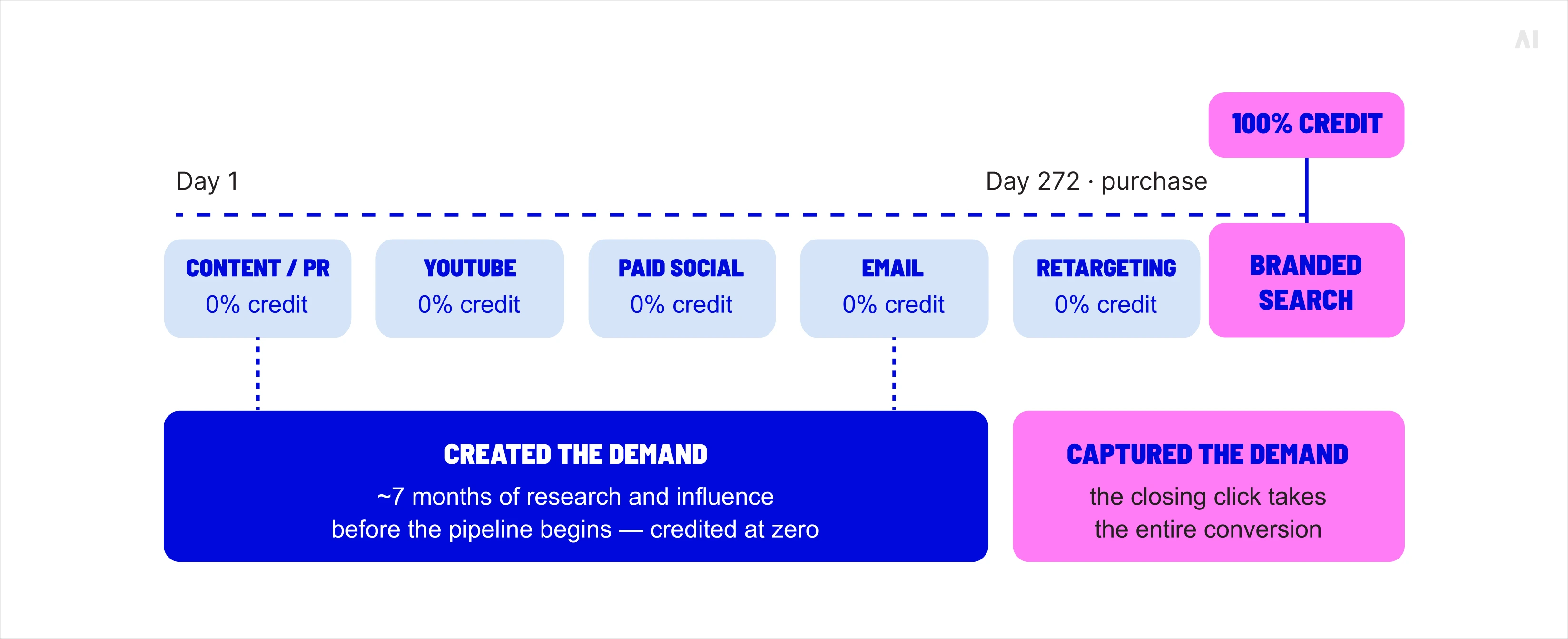
The scale of this in considered purchases is stark. Dreamdata's 2026 benchmarks, drawn from millions of B2B customer journeys, put the average path to purchase at 272 days and 88 distinct touchpoints, with buyers spending roughly the first seven months in self-directed research before they ever enter a sales pipeline. No cookie survives 272 days. No single tracking window spans 88 touchpoints across that many channels. Linear attribution, which asks where to place credit along a path, struggles when most of the path is invisible and the visible part is a fraction of what influenced the decision.
Privacy restrictions reduced visibility
The signal attribution feeds on has been thinning for years, and the trend is structural rather than cyclical.
- Consent requirements under GDPR and a widening set of US state privacy laws mean a meaningful share of users are never tracked at all.
- Browser-level restrictions—Safari's tracking prevention, the long saga over Chrome's third-party cookies—remove or shorten the identifiers that connected touchpoints to conversions.
- Mobile changes, led by Apple's app tracking permissions, cut off another large source of cross-app signal.
The effect is not that the data is wrong, but that it is partial in ways the reports do not advertise. A dashboard showing 100 attributed conversions may rest on a tracked population that excludes everyone who declined consent, used a privacy-restricted browser, or crossed a device boundary mid-journey.
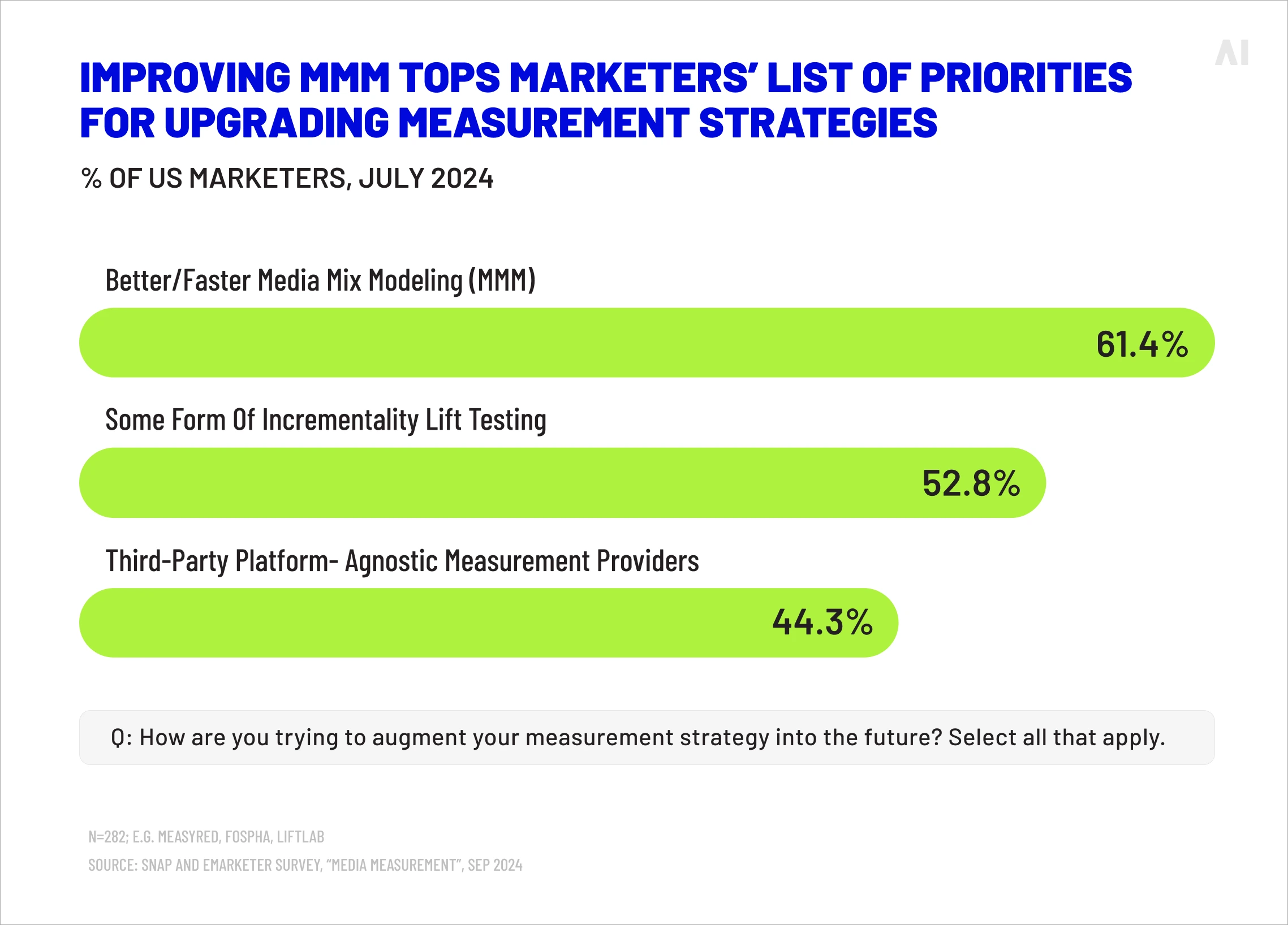
The IAB's measurement research (cited above) describes an industry adapting to exactly this condition: a privacy-by-design environment where signal loss is permanent and measurement has to be rebuilt to work without the user-level certainty it once assumed. Attribution that reports confidently on a shrinking slice of reality is not measuring less; it is measuring a different, smaller thing than it claims to.
Walled gardens limit visibility
Beyond the privacy layer sits a commercial one. The largest platforms operate as closed environments that report their own performance using their own attribution logic, their own lookback windows, and their own definitions of a conversion. The advertiser sees what the platform elects to show. Because each platform marks its own homework, cross-platform comparison turns into an exercise in translation, and budgets drift toward whichever environment reports the most flattering numbers — which is rarely a coincidence. AI Digital has examined the mechanics of these closed ecosystems in detail; the short version is that measurement controlled by the seller will tend to favour the seller.
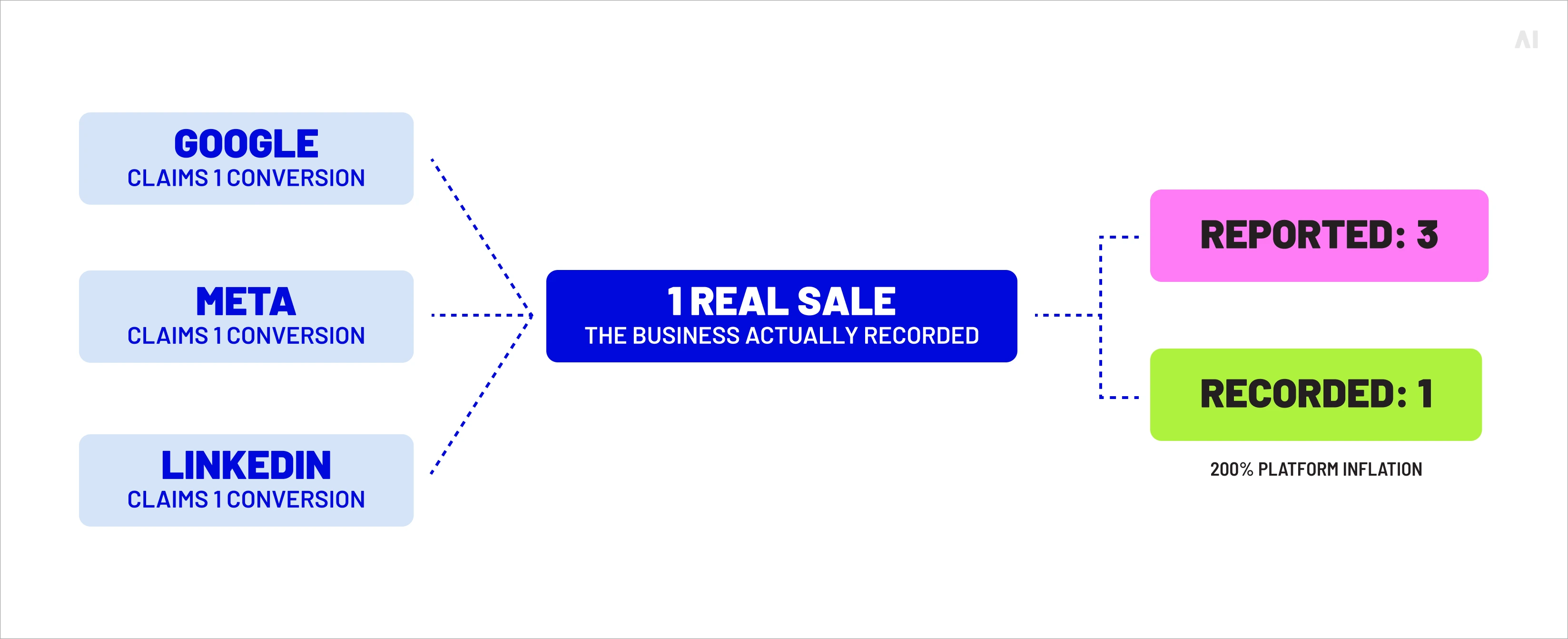
The practical consequence for attribution is double-counting. A buyer who sees an ad on one platform and clicks on another may be claimed as a conversion by both, so the sum of platform-reported conversions routinely exceeds the conversions a business actually recorded. Reconciling that gap by hand, or accepting the inflated total, are the two unhappy options a walled-garden environment leaves open.
💡 Related reading: Walled gardens vs the open internet; Transparency in advertising.
Last-click rewards conversion capture
The most durable distortion in attribution is the one baked into its most common model. Last-click assigns the entire value of a conversion to the final touchpoint before purchase, which means it consistently rewards the channels that capture demand rather than the ones that create it. Branded search, retargeting, and direct traffic sit close to the conversion almost by definition; they collect credit for closing journeys that earlier, unmeasured activity actually set in motion.
The industry has acknowledged the problem in its tooling, if not always in its habits. Google retired its rules-based attribution models across 2023 and 2024, leaving only last-click and data-driven, and made data-driven the default in GA4. The tooling moved on while habits stayed put. Plenty of teams still optimize toward last-click numbers because they are simple to read and reassuring to report, and in doing so they systematically defund the upper-funnel work that fills the pipeline last-click later takes credit for closing.
Awareness channels lose visibility
The mirror image of last-click's over-crediting is the disappearance of everything that happens early. Content marketing, PR, YouTube, podcasts, brand campaigns, and offline media all tend to influence decisions long before a trackable click occurs, and attribution reports they were never there. A whitepaper read in month one, a podcast heard on a commute, a brand impression that lodged months before the prospect searched — none of these produces the click that attribution can see, so none of them earns the credit.
This is how genuinely effective channels acquire a reputation for underperformance. They do their work in the part of the journey attribution cannot observe, post no measurable return, and become the first candidates for budget cuts in a review that trusts the attributed numbers. The activity that built future demand vanishes from the report that decides next year's spend.
Easy-to-track channels dominate budgets
Put those distortions together and a predictable bias in budgeting follows. Marketers, sensibly enough, invest where they can see returns. Attribution makes some channels highly visible — those near the conversion, inside a single platform, on tracked devices — and leaves others in shadow. Spend migrates toward the visible channels not because they create the most value but because they are the easiest to credit.
The longer-term cost is a portfolio optimized for measurability rather than effectiveness. Lower-funnel, easily tracked tactics accumulate budget; awareness and brand-building, which compound over the kind of 272-day journey the data now describes, get starved on the evidence of reports that were never able to see them. A business can spend years making locally rational decisions that add up to a strategically poor one.
Challenge 1: multi-touch marketing attribution still struggles
Multi-touch attribution was meant to fix last-click by spreading credit across the journey instead of dumping it on the final step. It is a real improvement in principle, and it remains a meaningful source of challenges in multi-channel marketing attribution in practice. Distributing credit more fairly is not the same as distributing it correctly, and the harder problems — proving causation, handling complexity, surviving a long sales cycle — survive the upgrade intact.
Attribution models still guess
A multi-touch model decides how much credit each touchpoint deserves, and it makes that decision by rule or by algorithm — never by proof. A linear model splits credit evenly; a time-decay model weights recent touches more heavily; a data-driven model infers weights from patterns in historical conversions. Each is a defensible way of dividing the spoils, and none demonstrates that any given touchpoint caused the conversion rather than merely appearing on the path to it. The model produces a confident allocation from what remains an assumption about influence. Dressed in more sophisticated mathematics, the guess is better disguised, but it is still a guess.
More tracking doesn't guarantee accuracy
The intuitive response to an incomplete picture is to track more of it — more pixels, more touchpoints, more integrations, more granular events. Past a point this adds complexity faster than it adds clarity. Each new data source brings its own definitions, its own latency, and its own failure modes, and the work of reconciling them grows faster than the insight they yield. Teams end up with more numbers and no more confidence, having mistaken the volume of data for the quality of the decision it supports. Comprehensive tracking and accurate measurement are related goals, but they are not the same goal, and the gap between them widens as the stack grows.
Long sales cycles break precision
Touch-level attribution is least reliable exactly where the stakes are highest. The Dreamdata data puts the average B2B journey at 272 days across roughly ten stakeholders, and a process of that length defeats touch-level precision on several fronts at once. Tracking windows expire mid-journey. Stakeholders research independently on separate devices, so the buying group fractures into unconnected individual paths. A large share of the most decisive interactions — an executive briefing, a peer recommendation, a procurement review — happen entirely offline and never enter the model.
⚡ Common attribution challenges in B2B marketing are structurally different from the consumer version, not merely more severe: the buyer is a committee, and the journey runs long, spreads across devices, and plays out substantially offline, beyond the reach of any touch-level model.
Challenge 2: marketing attribution alone cannot explain performance
Even an attribution setup working exactly as intended answers a narrow question: which observed touchpoints preceded a tracked conversion. That is useful, and it is not the same as explaining what drove the business. The more consequential challenge is conceptual rather than technical — attribution is one input into understanding performance, and trouble arrives when it is treated as the whole account.
Attribution misses incremental lift
The question attribution answers and the question a business needs answered are not the same question. Attribution reports which touchpoints appeared before a conversion. The business needs to know which conversions would not have happened without the marketing — the incremental lift. A retargeting ad served to someone who had already decided to buy will collect attribution credit for a sale that was coming regardless, and on the attributed numbers that ad looks like a triumph. Incrementality measures the gap between what happened and what would have happened anyway, and that gap is where the real return lives. Attribution, by design, cannot see it.
💡 Related reading: Incrementality vs attribution: what's the difference and why the shift is happening.
Some channels influence indirectly
A great deal of marketing works by changing what people do later rather than what they do now. A brand campaign raises the odds that a prospect responds to a performance ad three months on. A thought-leadership piece shapes the shortlist before any vendor is contacted. These effects are real and often large, and they appear in no direct attribution path because their influence is separated from the conversion by weeks or months. Judged only on attributed conversions, the channels that prime future demand will always look like underperformers, and a business acting on that judgement will keep cutting the activity that makes everything downstream work harder.
Channels work together
Attribution's deeper conceptual flaw is that it treats channels as competitors for a fixed pool of credit when they actually operate as a system.
- Search captures intent that social and brand built.
- Email converts an audience that content nurtured.
- Paid media accelerates demand that PR and word of mouth created.
Assigning a conversion to one channel, however cleverly the credit is split, implies the others could be removed without consequence — which is rarely true. The interactions between channels frequently count for more than any channel's standalone contribution, and a method designed to divide credit between channels is poorly equipped to measure the effect they produce together.
Attribution is only one measurement layer
The reasonable conclusion is not to abandon attribution but to demote it from verdict to evidence. It is strong at tactical, in-flight optimization within digital channels where user-level data exists, and weak at measuring incrementality, offline impact, brand effect, and the system-level interactions that decide overall performance. Used as one layer among several, it earns its place. Used as the single source of truth, it produces precise answers to a question narrower than the one being asked.
💡 Related reading: Unified marketing measurement: why attribution alone no longer works.
Challenge 3: businesses stop trusting marketing attribution data
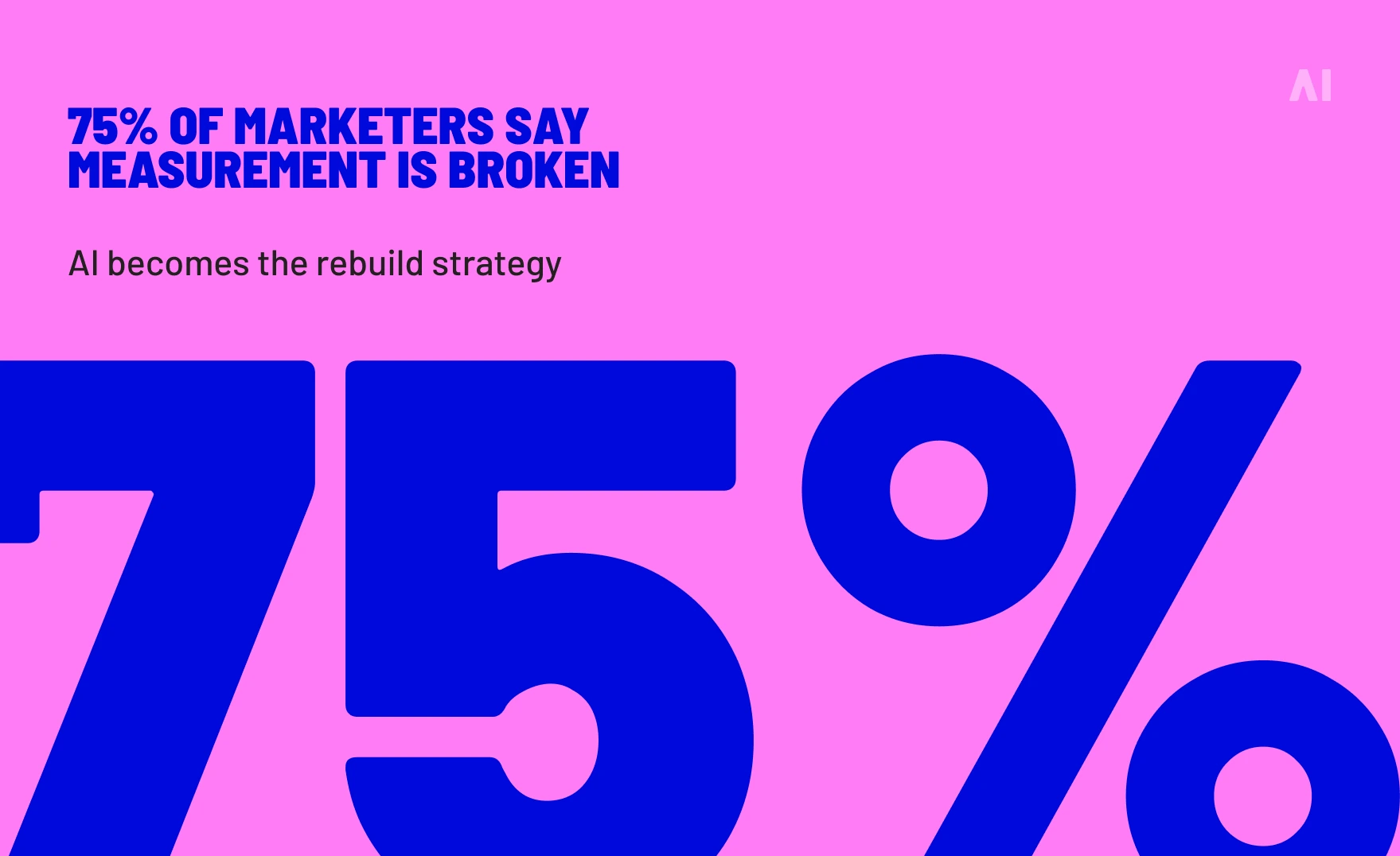
The failures above produce a downstream effect that is becoming the most visible attribution challenge of all: senior leaders have stopped believing the reports. Investment in analytics and martech has risen for a decade, and confidence in the resulting numbers has not risen with it. When the data cannot be trusted, the work of measurement quietly shifts from informing decisions to surviving scrutiny.
Every platform reports different numbers
The fastest way to lose a room's confidence in attribution is to show it two reports of the same campaign. Google, Meta, LinkedIn, the CRM, and the analytics platform will rarely agree, because each applies its own attribution logic, lookback window, and conversion definition, and each counts the conversions it can credit to itself. The proliferation of tools makes this worse rather than better. NIQ's CMO Outlook for 2026 found that a third of CMOs now use between six and fifteen separate tools to measure ROI, and a few use more than fifteen — a count that all but guarantees the numbers will conflict, since every tool measures a slightly different thing and calls the result the same name.
💡 Related reading: The Problem with Platform-Reported Data: Why You Can’t Trust the Numbers.
Marketing reports become harder to explain
When the dashboards disagree, the report stops being a source of answers and becomes a thing that needs explaining. A marketing leader presenting performance now spends a portion of every review accounting for why the platform numbers, the analytics numbers, and the finance numbers do not match, before any conversation about strategy can begin. Each reconciliation chips away at the credibility of the whole exercise. Stakeholders who cannot follow why the figures diverge reasonably conclude that the figures cannot be relied on, and the report that was meant to build confidence in marketing starts eroding it instead.
Teams spend more time defending data
The end state of distrust is a marketing function that spends more of its hours defending its measurement than improving its work. Analysts who should be finding the next opportunity are instead auditing the last report, tracing a discrepancy across three platforms to explain a number nobody will act on anyway. It is a strange use of some of the most capable people in the building — assembling forensic cases for why two dashboards disagree, while the campaigns those dashboards describe wait for attention. The effort is real, the cost is real, and almost none of it makes the marketing better. Measurement that consumes more energy than it returns has stopped being an asset and become a tax.
⚡ When a marketing team spends more time reconciling its reports than acting on them, the measurement system has become the thing being managed, rather than the tool doing the managing.
Attribution vs modern measurement approaches
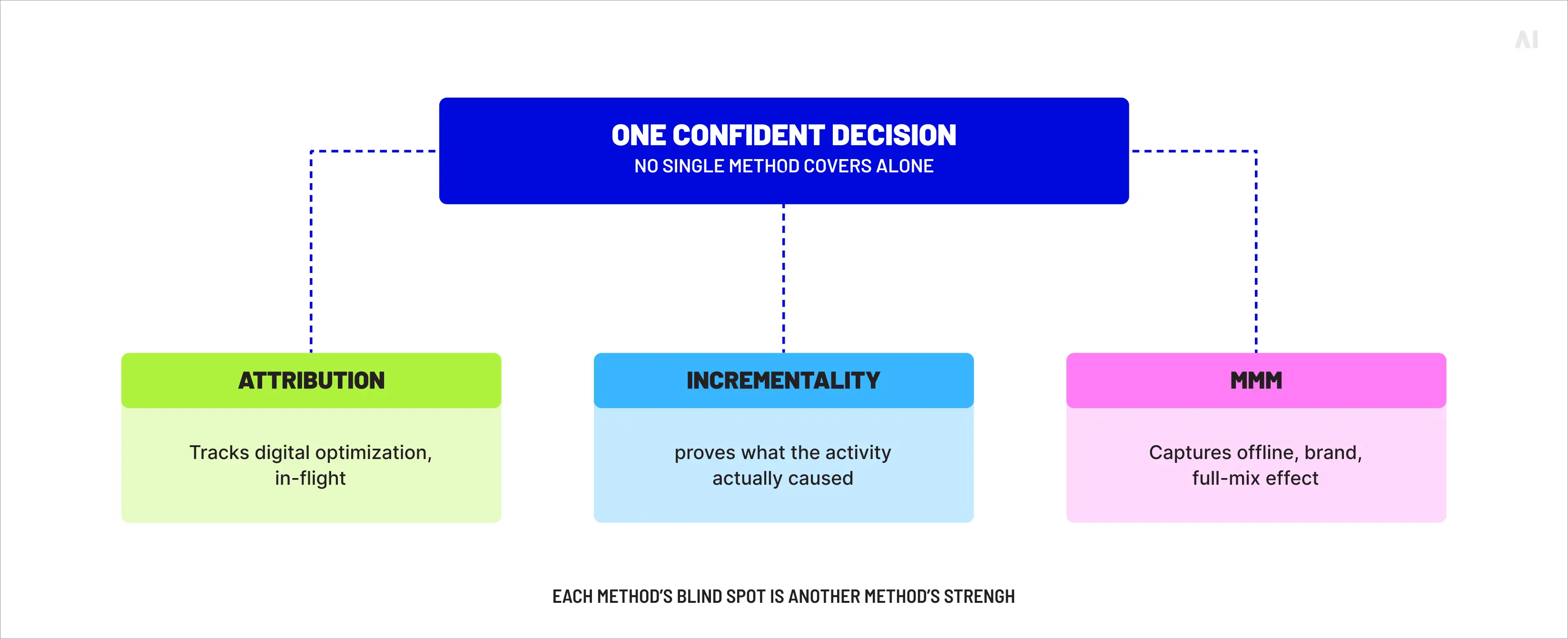
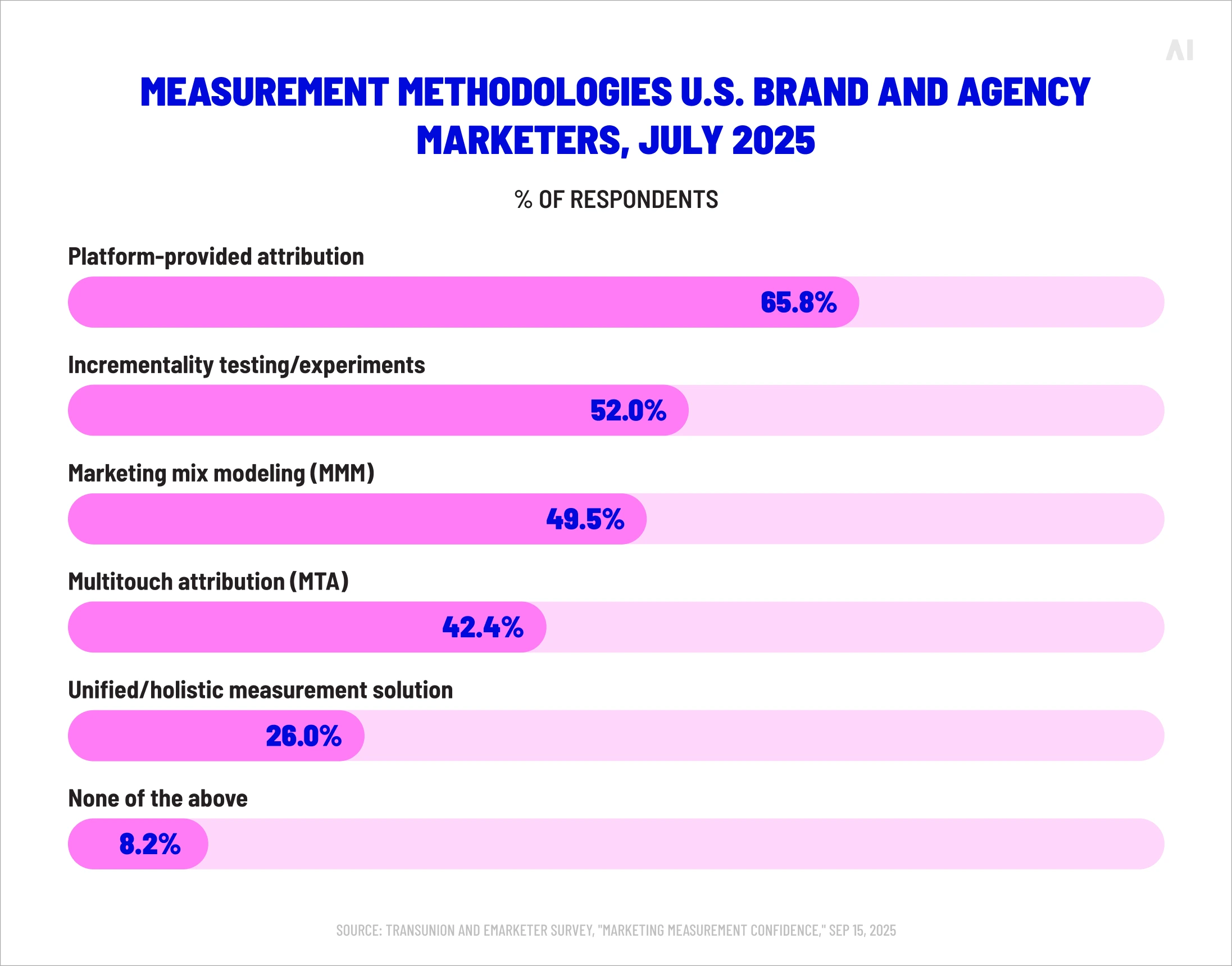
No single method measures marketing performance completely, and the organizations getting the most from their data have stopped looking for one that does. They combine approaches, using each for the question it answers best and accepting that the others cover its blind spots. The table below sets out the main methods, what each is for, and the business question each is built to answer; the point is not to crown a winner but to show why a portfolio beats any individual choice.
The reason leading teams stack these methods is that their weaknesses are complementary.
- Attribution's blindness to incrementality is exactly what incrementality testing measures.
- Attribution's inability to see offline and brand effect is precisely MMM's strength.
- Customer journey analysis supplies the structural picture neither attribution nor MMM provides, and
- Unified measurement is the discipline of holding all of them in one view rather than letting whichever report is loudest win the argument.
How AI Digital solves modern attribution challenges
Better measurement is partly a question of method and partly a question of infrastructure. The methods above only produce trustworthy answers when the underlying media execution, data, and reporting are connected rather than scattered across platforms that each report their own version of events. AI Digital approaches the problem from that infrastructure side: improving the quality and transparency of the data attribution depends on, and connecting execution to measurement so the numbers describe one coherent picture instead of several competing ones.
💡 Related reading: Marketing measurement strategy: how to measure and optimize performance across channels | Black box AI in marketing: risks and limitations.
Improve cross-channel decision-making
Most attribution trouble starts with data that lives in separate systems and never reconciles. Elevate, AI Digital's marketing intelligence platform, brings research, planning, optimization, and reporting into a single layer, drawing on intelligence from billions of cross-channel data points so that performance can be read across platforms rather than one walled garden at a time. Its Path to Conversion view maps the full sequence of touchpoints that influenced a conversion instead of crediting only the last click, and its marketing mix modeling estimates the cross-channel contribution that user-level attribution cannot see.
The value lies in having one place to examine the journey and channel contribution together, rather than another standalone dashboard — which is what makes faster, better-grounded decisions possible.
💡 Related reading: Elevate: transparent AI media intelligence
Increase measurement transparency
A large part of the attribution problem is structural: when the platform selling the media also measures it, the reporting bends toward the platform. AI Digital's Open Garden framework is built to remove that conflict, executing across more than fifteen demand-side platforms rather than inside any single closed ecosystem, so that inventory and performance can be compared on neutral terms. Measurement that is not controlled by the seller is measurement a business can actually compare across channels — which is the precondition for attribution numbers that mean the same thing from one platform to the next.
⚡ Independent measurement is what separates comparing channels from comparing each channel's opinion of itself.
💡 Related reading: the demand-side platform explained; alternatives to the walled garden.
Reduce wasted media spend
Cleaner measurement is worth less if the media underneath it is low quality, and a great deal of programmatic spend is lost to inflated supply paths and inventory that never had a chance of performing. Smart Supply addresses the supply side directly, using supply-path optimization to strip out the unnecessary intermediaries that inflate a bid before it reaches a buyer, and curating inventory so that budget reaches placements with a genuine chance of working. A $25 bid that arrives as a $34 bid after passing through several intermediaries is not just wasted money; it is wasted money that pollutes the very measurement meant to evaluate it. Removing that inefficiency improves both the return and the quality of the signal attribution has to work with.
Unify media execution and analytics
The throughline across all of it is connection. Attribution fails partly because buying, optimization, analytics, and reporting are handled by separate systems that never speak to one another, so the data arrives fragmented and the reports contradict. Bringing execution and measurement into one connected operation means the numbers describe a single coherent picture: what was bought, how it performed, and what it contributed, read from one source rather than reconciled across many after the fact. That connection does more for attribution accuracy than any refinement of the credit-assignment model itself, because it fixes the fragmentation that broke the model to begin with.
How businesses operationalize better marketing attribution
Improving measurement is less about buying a better tool than about adopting better practices, most of which are within reach of any team willing to change how it works rather than what it owns. The steps below are ordered roughly from immediate hygiene to longer-term capability, and a team that works through them will improve the reliability of its measurement well before any new platform is involved.
💡 Related reading: the sustainable programmatic supply path.
Audit reporting gaps regularly
Most measurement problems are discoverable before they become embarrassing, if anyone looks. A regular audit compares conversion counts across platforms to find double-counting, checks for touchpoints that no system records, and confirms that attribution logic is applied consistently from one campaign to the next. The aim is not perfect data, which is unavailable, but a clear and current map of where the data is wrong and by roughly how much — so the inevitable gaps are known quantities a team can account for, rather than surprises that surface in front of leadership.
💡 Related reading: From data to decisions: how marketing intelligence transforms performance strategy.
Align teams around business outcomes
A great deal of measurement conflict dissolves once everyone agrees on what is being measured. When marketing, analytics, and leadership orient around pipeline growth, acquisition cost efficiency, retention, and revenue quality, the disagreements between platform-level metrics carry far less weight, because the platform numbers stop being the scoreboard and become inputs to a shared one. Aligning on business outcomes also corrects the budgeting bias that easy-to-track channels create, since outcome-level goals do not reward visibility for its own sake the way channel-level attribution does.
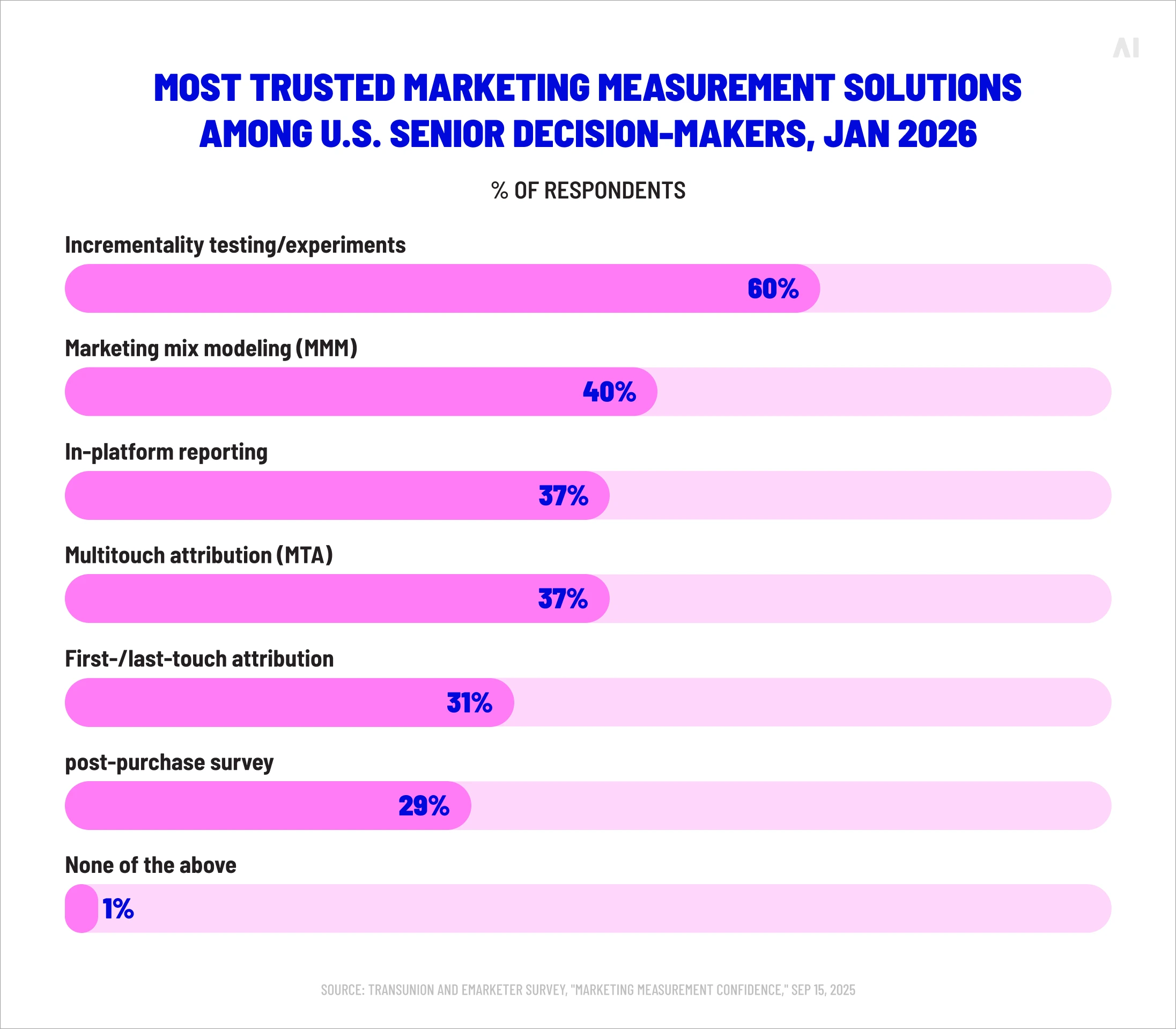
Combine multiple measurement methods
The single most effective practice is to stop relying on one method. Attribution handles tactical digital optimization; incrementality testing validates whether a channel genuinely adds value; MMM allocates budget across the full mix including offline; first-party data analysis grounds the picture in signal the business actually owns. Used together, each method covers the others' blind spots, and the combined read is far more reliable than any single approach pretending to completeness. This is the practice with the highest return, because it addresses the root limitation rather than refining a model that was never going to be sufficient alone.
💡 Related reading: Best attribution models for B2B and long sales cycles | Best incrementality testing tools and platforms
Build connected measurement systems
Disconnected tools produce disconnected answers, which is most of why platforms disagree in the first place. A connected measurement system — where planning, optimization, and reporting draw on the same data rather than separate exports reconciled by hand — produces consistent numbers because there is one set of numbers to begin with. Consistent numbers are what let a team trust a report enough to act on it quickly — the whole reason for measuring at all.
💡 Related reading: Marketing Planning Software: How to Connect Planning, Optimization, and Reporting in One System | Integrated marketing systems: why connected operations drive better performance.
Optimize for decisions, not perfect accuracy
The most useful change is one of expectation. Complete attribution precision is not available and is not coming back; chasing it wastes the effort that better decisions require. A measurement framework should be judged on whether it improves the quality and speed of decisions, not on whether it reconciles to the last conversion. Directionally correct and timely beats precisely wrong and late, and a team that internalises this stops spending its energy defending numbers and starts spending it acting on them.
The Comviva Global CMO Survey 2026 sharpens the stakes here: 90% of organizations raised their AI marketing investment over the past two years, and only 12% can prove it worked, with well over half citing the complexity of attributing revenue across multiple touchpoints as the obstacle. The gap between spending and proving is not closing on its own, and it will not be closed by demanding more precision from a method that cannot supply it.
💡 Related reading: Marketing measurement framework: how to build a scalable system
Rethinking attribution for modern marketing
Traditional attribution models break down because buying behaviour has outrun the assumptions they were built on, regardless of how well a team sets them up. Buying behaviour has grown too distributed, too long, too private, and too cross-channel for any system that tries to trace a single user along a single path to capture it honestly.
The marketing attribution challenges examined here — fragmentation, signal loss, walled-garden opacity, last-click bias, the multi-touch models that improve on it without solving it, and the erosion of trust that follows — are not separate problems with separate fixes. They are facets of one structural mismatch between a measurement method and the reality it is asked to measure.
The way forward is not a better attribution model but a broader measurement practice. Attribution keeps its place as a fast, tactical input for digital optimization. Around it, incrementality testing establishes cause, MMM allocates budget across the full mix, journey analysis explains how channels combine, and a connected, transparent data foundation makes all of them consistent enough to trust. The goal moves from a single number that explains everything to a set of methods that, taken together, support a confident decision.
This is the work AI Digital is built for: connecting media execution and analytics through Elevate, removing the measurement conflict inherent in closed platforms through the Open Garden framework, and improving the quality of the underlying media through Smart Supply, so that the data attribution depends on is cleaner, more transparent, and genuinely comparable across channels. If your team is spending more time reconciling reports than acting on them, that is the conversation worth having. Get in touch to talk through what measurement built for a fragmented, privacy-first environment looks like in practice.