Why AI Alone Can’t Fix Marketing Performance (And What Actually Works)

.webp)
AI has made marketing faster, but it has not automatically made marketing more profitable. Teams can now produce content, automate campaigns, personalize messages, optimize bids, and generate reports at a scale that was not possible before.
Still, many businesses face the same performance problems: unclear ROI, fragmented reporting, duplicated conversions, inefficient budget allocation, and results that look strong inside platforms but weak in actual business outcomes.
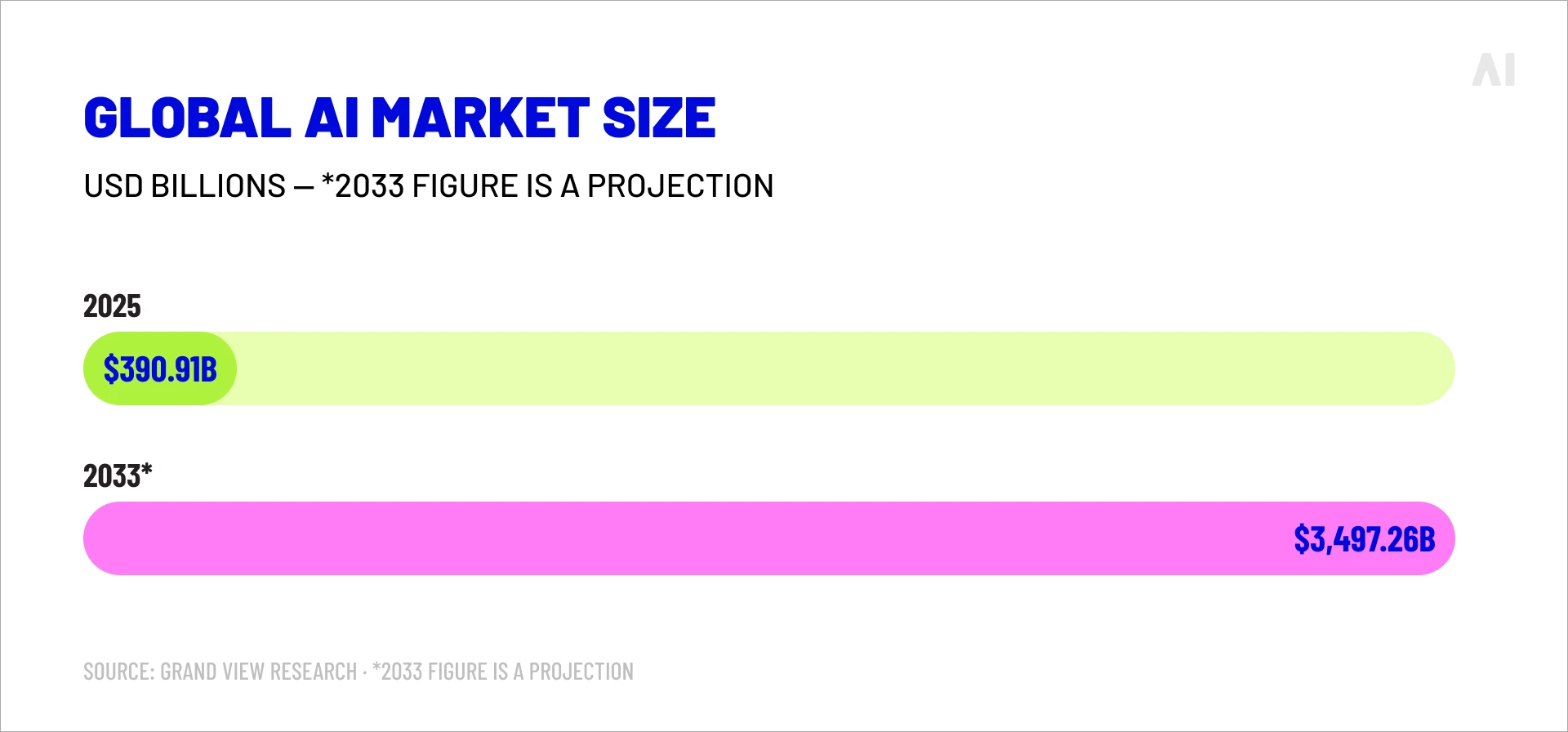
Source: The global AI market size is projected to accelerate in the coming years, with industry value surpassing $3.4 trillion by 2033. If correct, this will mark a compound annual growth rate (CAGR) of 30.6% between 2026 and 2033.
That is the core issue behind many problems with AI in marketing. AI improves execution, but marketing performance depends on the system around it: strategy, data quality, measurement, and decision-making. If the strategy is unclear, AI optimizes activity instead of growth. If the data is fragmented, AI works from incomplete signals. If measurement is unreliable, AI can reward results that appear efficient but do not prove real impact.
The market has already moved beyond the question of whether marketers use AI. Salesforce reports that 63% of marketers currently use generative AI, which means the real advantage is not adoption itself, but the ability to apply AI inside a connected performance system.
This article explains the main challenges of AI in marketing, why AI alone cannot fix performance, and what businesses need instead: connected data, validated measurement, clear strategy, and outcome-driven marketing intelligence.
💡 Related read: Navigating AI Marketing Compliance: Our Partnership with GetGenAI
What AI promises in marketing
AI promises a faster, more efficient marketing operation. It helps teams produce more campaign assets, automate repetitive workflows, personalize messages, optimize bids, and analyze performance signals at a speed human teams cannot match manually. That matters in a market where marketing leaders are under pressure to increase output without increasing resources. Gartner’s 2025 CMO Spend Survey found that marketing budgets remained flat at 7.7% of company revenue, which makes productivity and budget accountability more urgent.
The value of AI is strongest in execution. It can generate creative variations, summarize audience behavior, automate reporting, classify leads, recommend budget shifts, and support real-time campaign optimization. In paid media, AI models can adjust bids and placements based on live performance signals. In content and marketing automation, AI can help draft emails, test subject lines, segment audiences, and trigger messages based on behavior.
⚡️But these gains create new challenges of AI in marketing because speed does not equal strategic accuracy. AI can make campaigns run faster, but it cannot decide whether the campaign supports the right business goal. It can optimize toward conversions, but it cannot prove whether those conversions were incremental. It can organize reports, but it cannot turn fragmented or biased data into reliable intelligence.
This is why AI should not be treated as the engine of marketing performance. It is an execution layer. If the strategy is weak, AI scales weak decisions. If the data is incomplete, AI learns from partial signals. If measurement is platform-dependent, AI may optimize toward results that look efficient in dashboards but do not improve revenue, profitability, or long-term growth.
{{caim-1}}
Performance gaps: where results break down

The challenges of AI in marketing usually become visible through performance gaps before teams understand the deeper cause. The first symptom is inefficient budget allocation. A campaign may receive more spend because one platform reports a strong cost per conversion, while another channel appears weaker because it plays an earlier role in the customer journey. Without a connected view of media performance, budget decisions become reactive: money moves toward the cleanest dashboard, not necessarily the channel creating the most business value.
- This is why stronger media planning and buying cannot rely only on platform automation. AI can recommend where to shift spend, but if each channel reports success through its own attribution window, audience model, and conversion logic, those recommendations may reinforce the wrong priorities. The problem is not only campaign execution. It is the lack of a shared measurement reality across channels.
- Nielsen’s 2025 Annual Marketing Report found that only 32% of marketers globally measure media spend comprehensively across digital and traditional channels. That means most marketing teams are still making performance decisions with an incomplete view of how channels work together. For AI-driven optimization, that is a serious limitation: a model can only optimize what the measurement system allows it to see.
- The second gap appears in cross-channel performance. Paid search may claim high-intent conversions. Paid social may report assisted demand. Retail media may show strong platform sales. Programmatic may deliver efficient reach. Separately, each channel can look valuable. Together, the numbers may not explain whether the business is acquiring new customers, growing revenue, or simply paying multiple platforms to claim credit for the same outcome. This is where cross-platform measurement becomes essential.
⚡️The third gap is unreliable reporting. Platform dashboards are useful for campaign management, but they are not neutral sources of truth. AI Digital’s article, The Problem with Platform-Reported Data: Why You Can’t Trust the Numbers, goes deeper into why platform-reported data often overstates performance, duplicates credit, or hides incrementality gaps. The immediate point is simple: if reporting cannot separate attributed activity from real contribution, AI will optimize toward what is easiest to measure, not what actually drives growth.
Problems with AI in marketing: what limits performance
AI rarely fails because it cannot process enough data or automate enough tasks. It fails because the marketing system around it is not ready for automated decision-making. When data is fragmented, strategy is unclear, platforms lack transparency, and measurement cannot prove impact, AI does not remove those weaknesses. It scales them.
That is one of the most common problems with AI in marketing: teams treat AI as a performance engine when it is usually an execution layer. It can optimize toward a target, but it cannot decide whether the target is strategically correct. It can act on available data, but it cannot know whether that data is complete, clean, or biased. It can generate recommendations, but it cannot always explain why a specific budget shift, audience segment, or creative variation was prioritized. This is why transparency in advertising matters more as AI adoption grows. The more automated the system becomes, the more important it is to understand what inputs it uses, what incentives shape its recommendations, and whether its reported outcomes reflect real business value.
Gartner’s 2025 Marketing Technology Survey found that martech utilization has dropped to 49%, showing that many companies are still not fully using the tools and systems they already own. This is an important signal: the issue is not always lack of technology. It is often poor integration, unclear ownership, weak governance, and disconnected decision-making. Adding AI to that environment can increase complexity instead of improving performance.
⚡️AI Digital’s article, Marketing Attribution Challenges: Why Traditional Attribution Models Don’t Work Anymore goes deeper into the measurement side of this issue.
💡The immediate point is clear: if AI is trained to optimize against incomplete attribution, platform-biased reporting, or short-term signals, it will reinforce those limitations at scale.
Fragmented data
Fragmented data is one of the clearest challenges of AI in digital marketing because AI depends on the quality of the information it receives. Most marketing data does not live in one clean system. It is spread across ad platforms, analytics tools, CRM systems, retail media networks, ecommerce platforms, offline sales records, and customer service data. Each source uses its own definitions, attribution windows, identifiers, and reporting logic.
This creates a basic visibility problem. Meta may report one version of performance, Google another, the CRM another, and revenue data another. If these systems are not connected and validated, AI does not see the full customer journey. It sees fragments.
For example, an AI model may increase spend on a channel that appears to generate low-cost conversions. But if the CRM shows that many of those users were existing customers, or if another channel already influenced the purchase, the optimization may not be creating new demand. It may simply be reallocating budget toward the easiest signal to capture.
⚡️This is where AI Digital’s new guide on Why Fragmented Martech Stacks Kill Marketing Performance can support the broader argument.
💡Fragmentation does not only make reporting messy. It changes what AI learns from. When inputs are incomplete, AI optimization becomes incomplete too.
Lack of strategy
AI cannot define business priorities. It cannot decide whether a company should focus on revenue growth, profitability, retention, market share, customer acquisition, or brand differentiation. These are strategic choices, not automation tasks.
Without a clear strategy, AI optimizes activity. It may chase clicks, impressions, conversions, lead volume, or low-cost traffic because those are the signals available inside the system. But activity is not the same as progress. A campaign can generate more leads while attracting the wrong customers. It can increase conversions while reducing margin. It can improve click-through rate while weakening brand positioning.
⚡️This is one of the most overlooked common challenges of AI in marketing. Teams often expect AI to improve performance before defining what performance actually means. If the business goal is vague, the AI target becomes tactical by default. Creating a Data-Driven Marketing Strategy explains this in more detail. Data-driven strategy does not mean letting platforms decide what matters. It means defining the business outcome first, then using data and AI to support that outcome with discipline.
Black box decisions and platform bias
Many AI-driven marketing platforms operate as black boxes. They make automated decisions about bids, placements, audience expansion, creative delivery, and budget distribution without giving marketers full visibility into the logic behind those decisions. This limits the ability to validate whether performance improved because of better optimization or because the platform shifted spend toward easier-to-convert audiences.
A 2025 Stanford Foundation Model Transparency Index found that major AI companies scored an average of only 40 out of 100 on transparency, down from 58 in 2024, with the lowest-scoring companies reaching just 14 out of 100. For marketers, the lesson is clear: as AI becomes more powerful, it does not automatically become more explainable. That makes transparency, independent validation, and human oversight essential when AI systems influence media spend, targeting, and performance reporting.

The issue is not only lack of transparency. It is also platform bias. Platforms are not neutral measurement environments. They are commercial systems designed to sell inventory, retain spend, and prove their own value. Their AI models usually optimize within their own ecosystem, using their own attribution logic and performance definitions.
That does not make platform AI useless. It makes independent validation necessary.
For example, a platform may report that automated targeting improved conversions. But without visibility into audience overlap, incrementality, frequency, placement quality, and post-campaign revenue impact, the business cannot know whether AI improved performance or simply found users who were already likely to convert.
⚡️Black Box AI in Marketing: Risks and Limitations, can expand this point. The risk is not automation itself. The risk is letting opaque systems make budget decisions without enough external measurement, transparency, or human accountability.
Wrong metrics and no causal measurement
Many AI systems optimize toward the metrics they can see most easily. That often means clicks, impressions, engagement, platform-reported conversions, cost per acquisition, or return on ad spend. These metrics can be useful, but they do not always prove business impact.
A click is not a customer. A conversion is not always incremental. A platform-reported sale is not always proof that the platform created demand. Without causal measurement, AI can become very efficient at chasing signals that look valuable but do not necessarily drive revenue, profitability, or long-term growth.
This is where weak measurement becomes dangerous. If AI is rewarded for lowering CPA, it may shift spend toward users who were already close to purchase. If it is rewarded for ROAS, it may favor retargeting over new customer acquisition. If it is rewarded for lead volume, it may generate more low-quality leads that never convert into profitable customers.
⚡️The article on digital marketing KPIs can support this section by showing why KPI selection shapes performance decisions. Another guide by AI Digital, Marketing Dashboards: Why Data Doesn’t Turn Into Decisions can go further into the reporting problem. Dashboards can show movement, but they do not automatically explain causality.
💡The real question is not whether AI improved a platform metric. The question is whether marketing investment created incremental business value.
No differentiation
AI can scale content, but scale does not guarantee distinction. Most generative AI tools work by learning from existing patterns. That makes them useful for producing variations, summaries, drafts, and campaign assets. It also creates a strategic risk: many brands start sounding the same.
In saturated markets, this matters. If every competitor uses similar prompts, similar category language, and similar content structures, the output converges. Landing pages repeat the same claims. Ads use the same benefit statements. Emails follow the same logic. The brand becomes more productive, but less memorable.
This is another performance limitation that does not appear immediately in a dashboard. AI-generated content may increase publishing volume and reduce production time, but if it weakens brand identity, it can reduce long-term differentiation. The business may gain speed while losing its point of view.
AI can support creative execution, but it cannot replace positioning. It can generate options, but it cannot define what the brand should stand for, what market tension it should own, or why customers should choose it over competitors.
Over-reliance on automation
AI executes based on inputs, rules, models, and targets. Humans remain responsible for deciding the strategy, validating the data, selecting success metrics, and interpreting trade-offs. When teams over-rely on automation, performance accountability becomes weaker.
This happens when marketers accept AI recommendations without questioning the assumptions behind them. A platform may suggest moving budget, expanding audiences, changing bids, or prioritizing specific creative assets. Those recommendations may be useful, but they still need human review. The team must ask: Does this support the business goal? Is the data reliable? Are we optimizing for growth, margin, retention, or short-term platform efficiency?
The IAB’s 2025 State of Data report frames AI in media campaigns as a transition from AI-assisted workflows toward deeper integration, while also emphasizing ongoing challenges around reliability, effectiveness, and future readiness. That distinction is important: using AI is not the same as having a mature AI-enabled marketing system.
💡AI works best when it supports expert decision-making. It becomes risky when it replaces strategic judgment. The goal is not to remove humans from marketing performance. The goal is to give teams better systems, better evidence, and better intelligence so automation serves the business instead of steering it blindly.
Marketing performance is a system problem
Marketing performance is not created by one tool, one channel, or one optimization model. It is created by the interaction between data, measurement, strategy, media execution, and decision-making. When those parts work together, AI can improve speed and precision. When they are fragmented, AI only accelerates the same weaknesses.
Walled gardens show why this matters. Platforms such as Google, Meta, Amazon, and retail media networks give advertisers access to scale, data, targeting, automation, and built-in reporting. That makes them powerful execution environments. But they are also closed systems. A walled garden controls its own inventory, audience signals, attribution logic, optimization rules, and reporting environment. According to LiveRamp, walled gardens manage how advertising is bought, sold, tracked, and reported, often limiting access to first-party data and returning only aggregated insights.
This creates a structural performance problem. A campaign may look efficient inside one platform, while the business still lacks visibility into audience overlap, duplicated conversions, incremental reach, or cross-channel contribution. AI can optimize inside that environment, but it cannot automatically see what happens outside it. It can improve platform-level performance while the wider marketing system remains fragmented.
This is where AI Digital’s perspective becomes important. The goal is not to reject walled gardens. They are too important to modern media buying. The goal is to stop treating their internal dashboards as the full truth of marketing performance.
AI Digital’s approach is to help brands connect closed-platform activity with broader data, measurement, and decision intelligence, so marketers can understand how each channel contributes to business outcomes rather than only how each platform reports its own success.
This is especially urgent as spend continues shifting into fragmented growth channels. IAB’s 2025 outlook projects double-digit growth for retail media, CTV, and social, while noting that fragmentation, signal loss, and the proliferation of walled gardens are pushing buyers to revisit marketing mix models and improve reach and frequency measurement.
⚡️That is why understanding walled gardens is central to solving AI-driven performance gaps. AI can optimize execution inside platforms, but performance improves only when businesses connect platform activity to unified data, validated measurement, and strategic decision-making across the whole marketing system.
How to diagnose your marketing system
A marketing system can look advanced from the outside and still fail at the performance level. The team may have AI tools, dashboards, automation workflows, and multiple media platforms, but still lack a clear view of what is working, what is wasting spend, and which decisions are driving growth. The fastest way to diagnose the problem is to test the system across four areas: data, measurement, strategy, and platform dependency.
{{caim-2}}
This checklist helps identify where AI is being asked to compensate for structural gaps. If the data layer is weak, AI will learn from incomplete signals. If measurement is weak, AI will optimize toward reported performance instead of real impact. If strategy is weak, AI will scale activity without clarifying direction. If platform dependency is high, AI may reinforce the logic of the platforms rather than the priorities of the business.
💡The point is not to remove AI from marketing. The point is to place it correctly. AI should support a marketing system that already knows what it is trying to measure, what outcome it is trying to improve, and how decisions will be validated.
From fragmented tools to marketing intelligence
The next step is not adding another AI tool to the stack. It is moving from disconnected tools and platform-specific reporting to a unified marketing intelligence system. That shift matters because many performance problems do not come from a lack of execution. They come from the lack of a shared operating layer where data, measurement, and decisions can be connected.
Disconnected tools create disconnected decisions. One platform may recommend increasing spend because its conversion rate looks strong. Another may show weaker results because it plays an earlier role in the journey. A dashboard may summarize activity, but still fail to explain which investments are creating incremental revenue, improving efficiency, or supporting long-term growth.
Marketing intelligence changes the logic. Instead of treating each platform as its own source of truth, it connects performance data into a wider decision system. It helps teams see how channels interact, where spend is duplicated, which results are validated, and which actions should change. This is the difference between reporting what happened and understanding what to do next.
Salesforce’s 2026 State of Marketing reporting found that teams satisfied with their unified customer data are 42% more likely to regularly respond to customers and 60% more likely to use AI agents to scale their efforts than teams without strong data foundations. The interpretation is clear: AI becomes more useful when customer and performance data are connected, not when automation is added on top of fragmented systems. (Salesforce)
⚡️AI Digital’s new article, Marketing Intelligence Platforms: From Data to Decisions to Performance explains the system in more detail. Another article, Marketing Intelligence vs Marketing Analytics: What’s the Difference? clarifies why analytics reports performance, while intelligence supports decisions.
Unified data instead of platform silos
Unified data is the foundation of marketing intelligence. Without it, teams are forced to compare performance across systems that use different definitions, attribution windows, audience logic, and reporting structures. This creates discrepancies before analysis even begins.
A platform silo does not only limit visibility. It changes decision quality. If paid search, paid social, programmatic, retail media, CRM, and ecommerce data remain separate, the business cannot clearly see how channels work together. One platform may claim a conversion, another may claim assisted influence, and the CRM may show that the customer was already active. Each system may be technically accurate inside its own logic, while the overall performance picture remains incomplete.
Unified data reduces that problem by creating a consistent view across channels, audiences, spend, and outcomes. It allows marketers to compare performance with shared definitions instead of platform-specific interpretations. It also gives AI better inputs. A model trained on connected data can support better optimization than one reacting only to isolated platform signals.
This is where AI Digital’s perspective should come through: performance improves when businesses stop managing marketing as separate platform dashboards and start building a connected intelligence layer.
⚡️New guide by AI Digital, Unified Marketing Measurement: What It Is and Why It Matters expands this point by showing how unified data supports more accurate measurement and optimization.
Measurement you can validate
Marketing intelligence also requires measurement that can be validated. Platform-reported metrics are useful for campaign management, but they are not enough to prove business impact. They often show what a platform can attribute, not what marketing actually caused.
That distinction matters. A reported conversion may reflect real influence, but it may also reflect retargeting, brand demand, audience overlap, or a customer who would have purchased anyway. If AI optimizes toward these signals without validation, it may improve dashboard performance while doing little for incremental growth.
💡Validated measurement asks harder questions. Did the campaign create additional revenue? Did it reach new customers or only capture existing demand? Did the channel improve profitability, retention, or long-term growth? Are the results consistent with CRM, sales, ecommerce, and finance data?
This is where attribution, incrementality, marketing mix modeling, and KPI governance become important. None of these methods is perfect alone, but together they create a more reliable view of performance than platform dashboards can provide by themselves. The IAB’s 2025 State of Data report also emphasizes that AI adoption in media depends on stronger data and measurement readiness, not just automation.
⚡️Marketing Measurement Strategy: How to Measure and Optimize Performance Across Channels, develops this further. The core point is simple: AI should optimize against validated business evidence, not just the easiest metrics to report.
Outcome-driven decisions
The final shift is from platform-driven decisions to outcome-driven decisions. In a fragmented system, teams often react to platform signals: lower CPA, higher ROAS, more clicks, more conversions, stronger engagement. These signals matter, but they are not always the same as business growth.
Outcome-driven decision-making starts with the business question. Should the company prioritize revenue, margin, new customer acquisition, retention, market share, or efficiency? Once that goal is clear, marketing data can be interpreted through the right lens. A campaign with a higher CPA may still be valuable if it brings in profitable new customers. A channel with lower last-click conversion may still matter if it creates demand earlier in the journey. A tactic with strong platform ROAS may deserve less spend if it mostly captures customers who were already going to buy.
This is where marketing intelligence becomes more than reporting. It connects data to action. It helps leaders decide where to invest, where to reduce waste, which channels deserve credit, and which optimizations actually support growth.
💡For AI Digital, this is the expert positioning: AI should not replace marketing judgment. It should support a decision system where data is unified, measurement is validated, and performance is judged by business outcomes.
How AI Digital improves your marketing performance
AI Digital improves marketing performance by treating it as a connected system, not a single-channel optimization problem. The goal is not to add more tools to an already fragmented stack. It is to connect the parts that determine whether marketing investment produces measurable business value: data, supply, measurement, intelligence, and decision-making.
This matters because many performance problems happen before AI starts optimizing. If campaign data is fragmented, AI works from partial inputs. If media supply is inefficient, optimization is shaped by waste before the model can improve results. If measurement is platform-dependent, teams may mistake attributed conversions for real business impact. In that environment, more automation does not create more control. It can make the system move faster without making it more accurate.
AI Digital’s framework brings these layers together. Open Garden creates a more connected, vendor-neutral operating model for media strategy. Smart Supply improves the quality and transparency of programmatic inventory. Decision intelligence then helps marketers connect performance signals to outcomes such as revenue, efficiency, customer acquisition, and growth.
💡The difference is practical: brands get a clearer view of what is working, where spend is being wasted, and which decisions should change. AI becomes useful because it operates inside a stronger system. It supports better execution, but the foundation is connected data, validated measurement, and business-focused decision-making.
Build a reliable data foundation
A reliable data foundation starts with connecting and validating the signals that shape campaign decisions. Marketing data is often spread across ad platforms, DSPs, SSPs, CRM systems, retail media networks, analytics tools, and offline business data. If those signals remain disconnected, teams are forced to optimize from separate versions of performance. AI then learns from fragments instead of a complete view of the customer, the channel mix, and the business outcome.
- AI Digital’s Open Garden Framework is designed for this problem. It is described as a DSP-agnostic, transparent programmatic model that connects data, inventory, and outcomes across a fragmented ecosystem. Instead of locking strategy inside one platform, it gives marketers a vendor-neutral way to orchestrate media, supply, data, and measurement around business KPIs.
- The article on what the Open Garden Framework is explains the same shift as a move from platforms to orchestration. It frames Open Garden as an operating model for connecting planning, activation, optimization, and measurement across multiple buying and data environments, with the advertiser’s KPI at the center. (AI Digital)
- Smart Supply strengthens this foundation by improving the quality of the media inputs themselves. AI Digital’s Smart Supply focuses on outcome-based supply, direct SSP access, AI-powered optimization, full transparency, and DSP-agnostic execution. It also emphasizes removing biases, optimizing traffic quality, and reducing inefficient placements before they distort performance signals.
💡Together, Open Garden and Smart Supply help brands solve a basic performance problem: AI cannot optimize accurately if the data, supply, and measurement environment is already fragmented. A better foundation gives AI better inputs, gives marketers clearer visibility, and gives leadership more confidence in the decisions that follow.
Rethink marketing measurement
Improving marketing performance requires measurement that can explain impact, not just report activity. Platform dashboards are useful for managing campaigns, but they often show attributed conversions rather than incremental business value. To understand what actually works, marketers need to combine attribution, media mix modeling, and incrementality.
Each method answers a different question. Attribution helps explain which touchpoints influenced a conversion path. MMM shows how channels contribute to business outcomes over time, including offline impact, seasonality, saturation, and cross-channel effects. Incrementality testing validates whether marketing activity created results that would not have happened otherwise. Used together, they create a stronger measurement system than any single model can provide.
⚡️AI Digital’s article on mixed media modeling explains this clearly: MMM measures the incremental impact of marketing investment on outcomes such as revenue, profit, or customer acquisition, rather than relying only on click-level signals. It also highlights that attribution and MMM serve different purposes: attribution supports tactical optimization, while MMM supports strategic allocation.
⚡️This is where Elevate strengthens the measurement layer. AI Digital describes Elevate as a KPI-first platform that optimizes for business outcomes rather than platform metrics, with planning, optimization, reporting, and analytics brought into one intelligence layer.
⚡️Another article, Media Mix Optimization: How to Use MMM for Budget Allocation, can go deeper into how marketers use MMM outputs to move budget away from saturated or over-attributed channels and toward investments with stronger marginal returns.
Align marketing with business outcomes
Marketing performance should be evaluated by business outcomes, not only by media metrics. Clicks, impressions, CPA, ROAS, and conversion volume can help teams manage campaigns, but they do not always show whether marketing is improving revenue, profitability, customer acquisition, retention, or long-term growth.
This is why decision intelligence matters. A campaign with a higher CPA may still be valuable if it brings in high-LTV customers. A channel with weaker last-click performance may still deserve investment if it creates demand earlier in the journey. A tactic with strong platform ROAS may need less budget if it mostly captures customers who were already going to buy.
Elevate supports this shift by connecting campaign activity to KPI-first optimization. AI Digital positions the platform as a way to move beyond closed systems and proxy metrics, giving marketers a clearer view of planning, optimization, reporting, and business impact across channels. Its relaunch announcement describes Elevate as unifying research, planning, optimization, and reporting into a single intelligence layer designed to drive measurable business results.
⚡️AI Digital’s new article, From Data to Decisions: How Marketing Intelligence Transforms Performance Strategy, expands this point: the value of marketing intelligence is not more reporting. It is better decisions.
Apply AI where it works
AI should support the parts of marketing where speed, scale, and pattern recognition create clear value. It is useful for campaign execution, audience analysis, predictive planning, bid optimization, reporting assistance, content variation, and workflow automation. These are areas where AI can reduce manual work and help teams act faster.
But AI should not be treated as the source of strategy. It should not decide business priorities, define positioning, validate measurement, or replace human accountability. Those decisions require context: margin pressure, category dynamics, customer value, brand direction, and growth goals.
Within AI Digital’s connected system, AI becomes a supporting layer rather than the driver of performance. The Open Garden approach provides a more neutral and connected operating model. Smart Supply improves the quality of media inputs. Elevate then applies AI to planning, optimization, measurement, and reporting in a way that remains tied to business KPIs.
⚡️AI Digital’s article on AI in marketing automation frames AI automation as most valuable when it improves measurable revenue and efficiency metrics, not when it simply automates tasks. Another article, AI in Programmatic Advertising: How It Improves Targeting, Bidding, and Optimization, can go deeper into where AI adds the most value in media execution.
What changes when you move beyond AI
When businesses move beyond AI as a standalone solution, marketing performance becomes easier to see, explain, and improve. The focus shifts from adding more automation to building a connected system where data, measurement, strategy, media quality, and execution work together.
The first change is clearer visibility. Instead of relying on separate platform dashboards, teams can understand how channels interact, where audiences overlap, and which campaigns contribute to real business outcomes. This reduces the risk of treating platform-reported performance as the full truth.
The second change is more accurate budget allocation. When measurement is validated across attribution, MMM, incrementality, and business data, marketers can make investment decisions based on contribution rather than convenience. Spend can move away from duplicated credit, low-quality supply, saturated channels, or tactics that capture existing demand without creating new growth.
The third change is reduced waste. AI can still support optimization, but it works from stronger inputs. Clean data, transparent supply, and validated measurement help prevent automation from reinforcing inefficient patterns at scale.
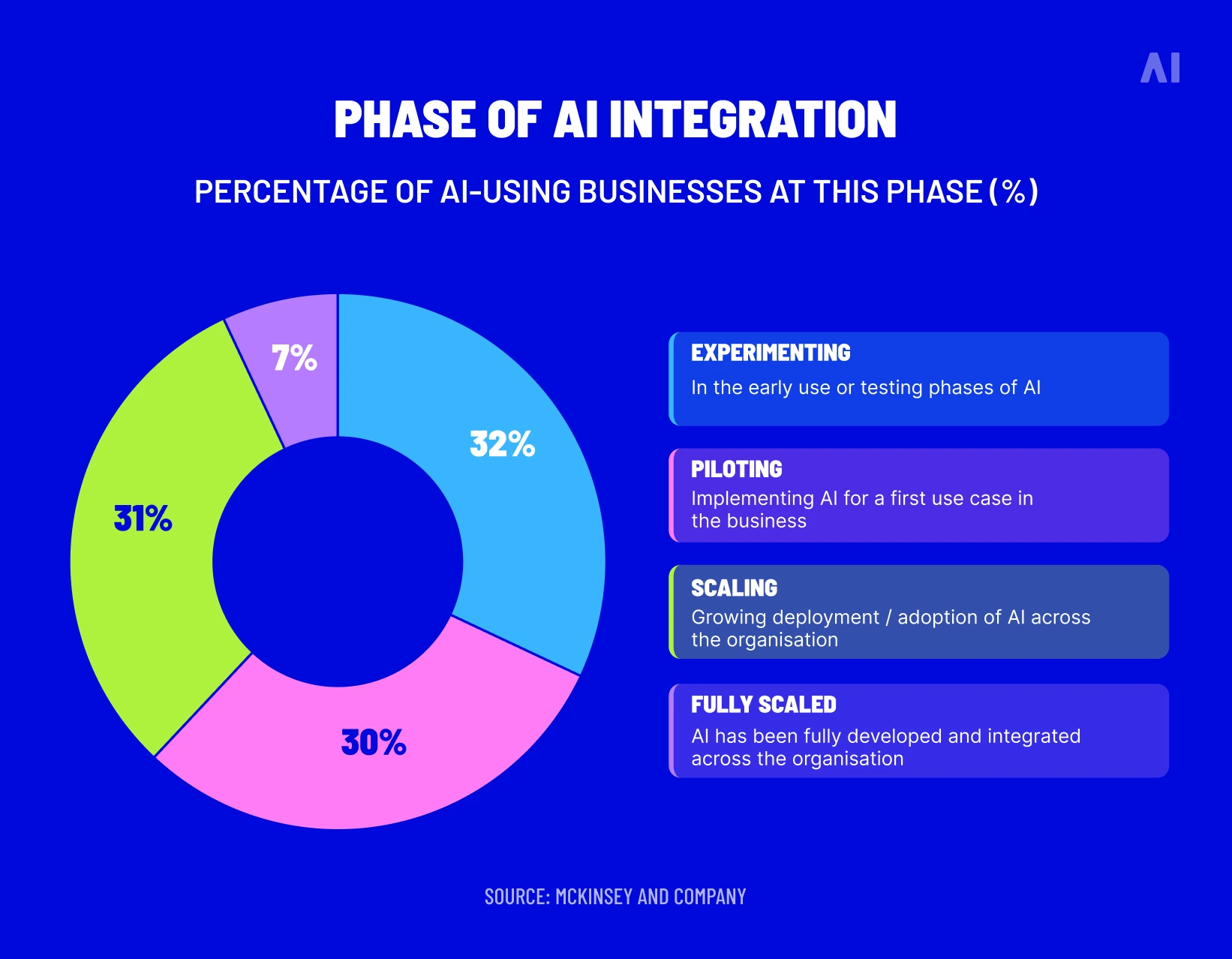
The final change is more predictable growth. McKinsey’s 2025 State of AI research shows that organizations capturing more value from AI are those that combine it with management practices across strategy, operating model, technology, data, and adoption at scale. The same logic applies to marketing: AI creates more value when it is embedded in a disciplined system, not treated as a shortcut.
- AI is not the performance strategy. AI can improve execution, automation, and analysis, but it cannot fix unclear goals, fragmented data, weak measurement, or platform-biased reporting on its own.
- Real performance comes from system alignment. Marketing improves when data, measurement, media supply, strategy, and decision-making work together. More AI tools do not solve performance if the underlying system remains disconnected.
- Connected data gives AI better inputs. AI performs better when it works from unified, validated data instead of isolated platform signals. AI Digital’s Open Garden approach supports this shift by helping brands move from closed-platform dependence toward greater visibility and control across fragmented media environments.
- Platform metrics are not enough. Dashboards can show attributed conversions, CPA, ROAS, and campaign activity, but they do not always prove incremental business impact. Brands need measurement that validates what marketing actually caused.
- Media quality affects optimization quality. If supply paths, placements, or inventory sources are inefficient, AI may optimize inside a wasteful environment. Smart Supply helps strengthen the supply layer by improving transparency, inventory quality, and outcome-based media execution.
- Marketing intelligence turns data into decisions. The goal is not more reporting. The goal is to understand where to invest, where to reduce waste, which channels deserve credit, and which actions support revenue, profitability, and growth.
- The real shift is from automation to intelligence. Moving beyond AI means using automation where it works, while grounding marketing performance in connected data, validated measurement, and business-focused decision-making.
⚡️Real performance improves when data, measurement, and strategy are aligned. AI can accelerate that system, but it cannot replace it. To build a marketing system that connects intelligence, execution, and business impact, get in touch with AI Digital.