OLV vs CTV: What’s the Difference and When Should Brands Use Each?


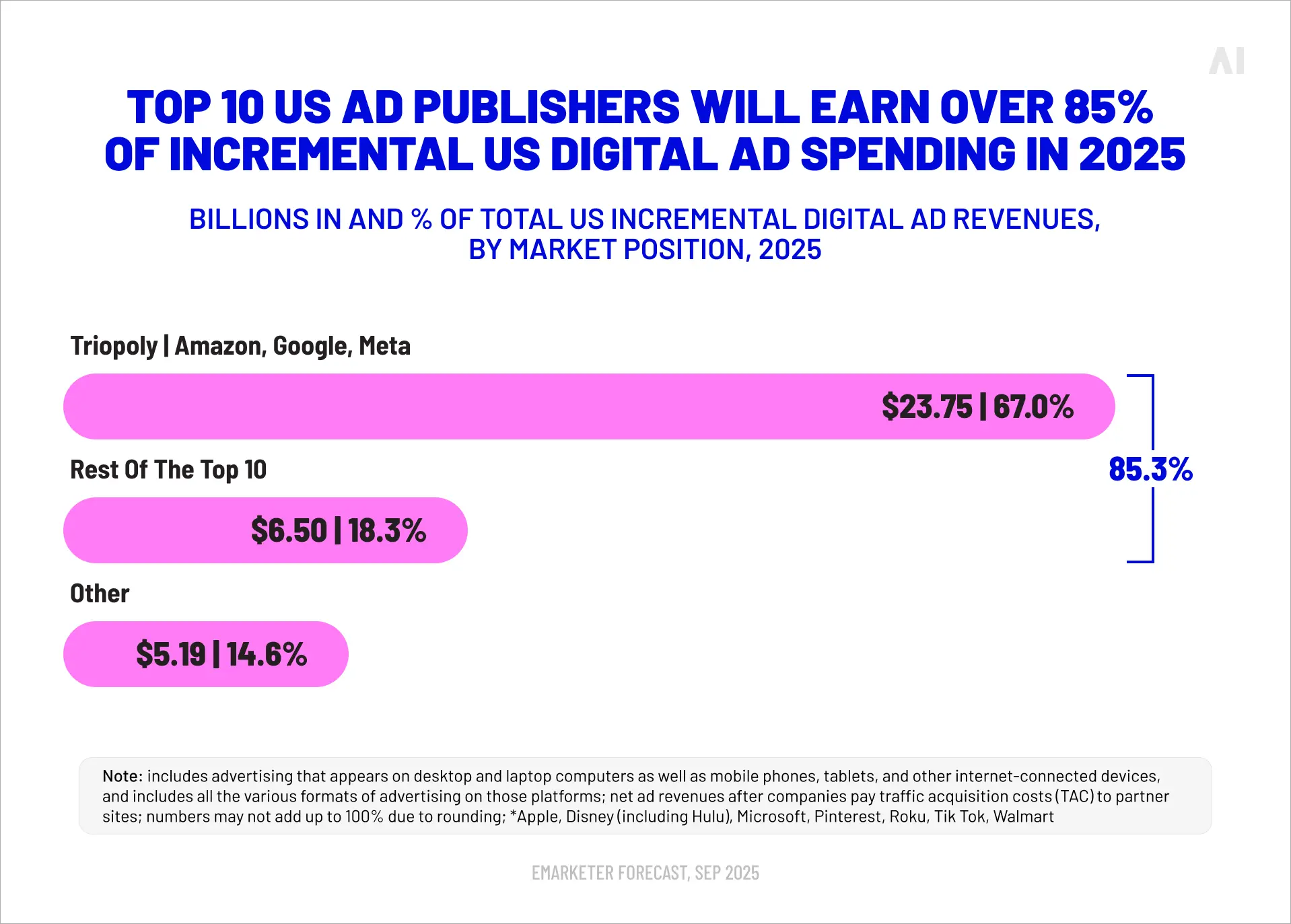
Video advertising is entering a more complex phase in 2026. IAB forecasts that US digital video ad spend will exceed $80 billion this year, growing 11% year over year and accounting for more than 60% of total TV and video advertising spend. Connected TV (CTV) alone is expected to grow by 13.8%, as advertisers continue moving budgets towards streamed, addressable video.
TL;DR: Key Takeaways
OLV and CTV serve different roles within a connected video strategy. The right choice depends on what the campaign must achieve, who it needs to reach, and how success will be measured.
- OLV offers flexible, cross-device reach across mobile, desktop, tablet, apps, websites, and social platforms.
- CTV delivers high-impact, full-screen advertising to streaming audiences on internet-connected televisions.
- OLV is typically stronger for performance marketing, including retargeting, website traffic, lead generation, creative testing, and online conversions.
- CTV is often better for brand awareness and storytelling, particularly when advertisers need household reach or access to streaming-first audiences.
- CTV generally costs more per thousand impressions, while OLV usually offers broader inventory and more budget flexibility.
- Neither format is universally better. Campaign objectives, audience, budget, creative, and measurement capabilities should determine the investment mix.
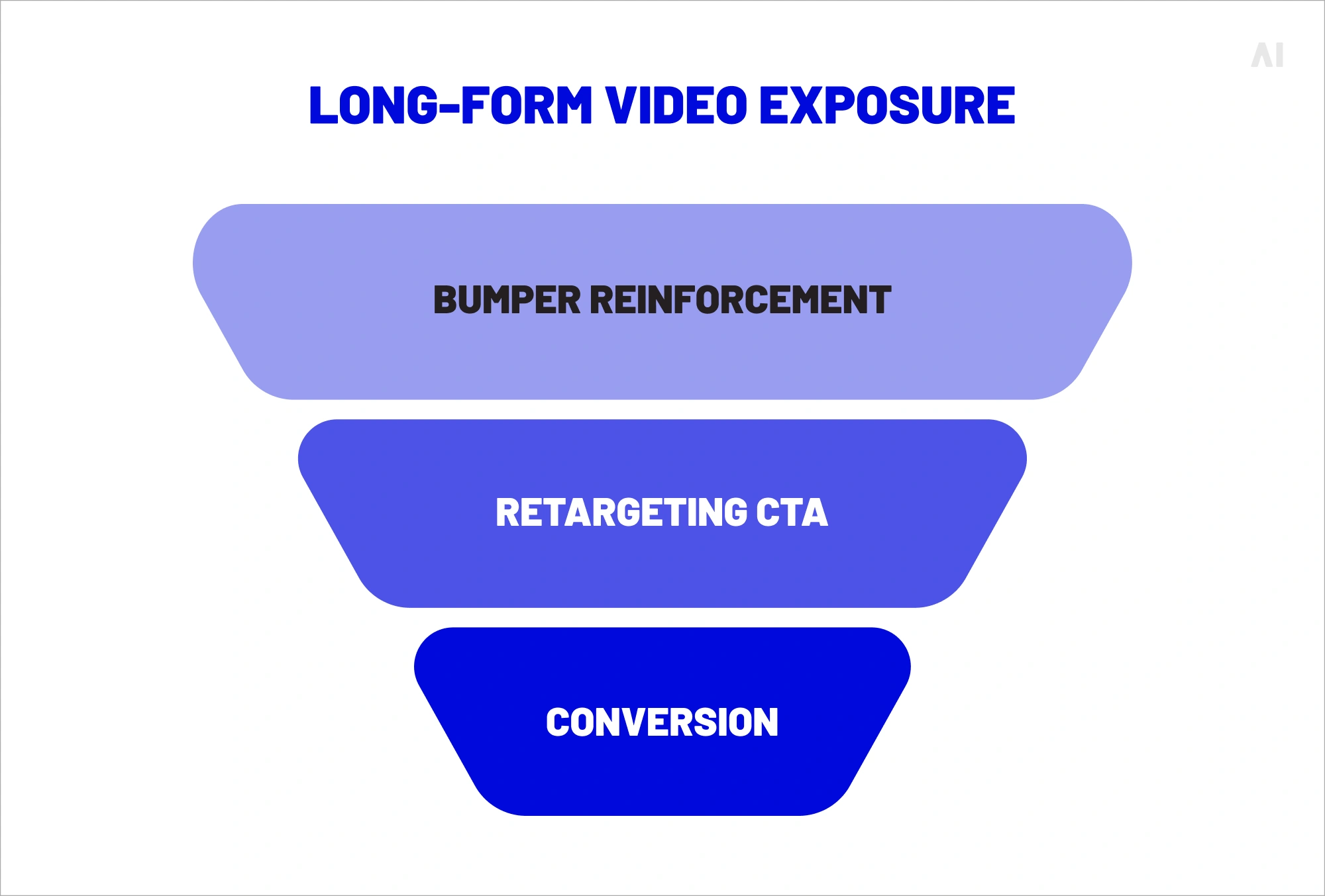
- Using OLV and CTV together can support the full funnel: CTV builds awareness, while OLV reinforces the message and creates a direct path to action.
- Unified measurement is essential for deduplicating reach, managing cross-screen frequency, and identifying the incremental value of each channel.
However, online video (OLV) and CTV are not interchangeable channels. OLV typically reaches individuals across websites, apps, and mobile or desktop devices, while CTV delivers advertising within television-based streaming environments. These differences affect audience targeting, viewing context, creative execution, inventory access, pricing, attribution, and the metrics used to evaluate performance.
As video becomes increasingly digital, the strategic question is no longer whether to invest in streaming, but how to allocate spend between OLV and CTV without creating fragmented campaigns or duplicating reach. This guide explains the key differences between OLV and CTV and provides a practical framework for deciding when to use OLV, CTV, or both.
OLV vs CTV Explained
OLV, CTV, and OTT describe different parts of the digital video ecosystem. Over-the-top (OTT) refers to the delivery of video content through the internet instead of traditional cable or satellite infrastructure. Online video (OLV) describes the advertising format, while connected TV (CTV) identifies the television device on which an online video ad may appear.
As explained in this overview of how streaming TV advertising works, OTT delivers the content, OLV describes the video ad, and CTV describes one of the screens displaying it.
What Is Online Video (OLV) Advertising?
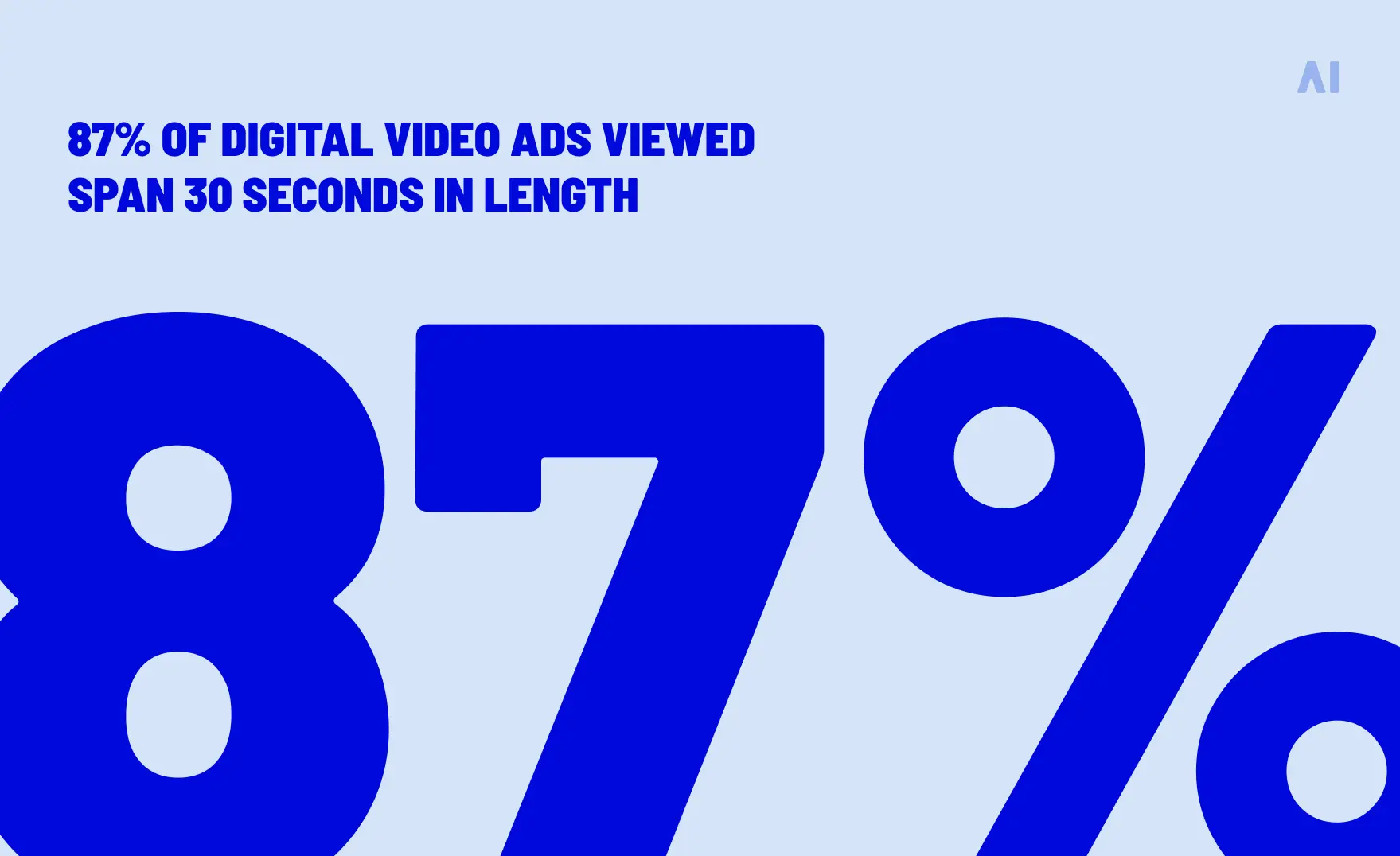
Online video advertising is digital video advertising delivered across internet-connected devices, including mobile phones, desktops, tablets, and connected TVs. As covered in our complete guide to OLV advertising formats and targeting, common placements include pre-roll and mid-roll ads within video content, as well as outstream ads across publisher websites, social platforms, apps, and ad-supported streaming services.
What Is Connected TV (CTV) Advertising?
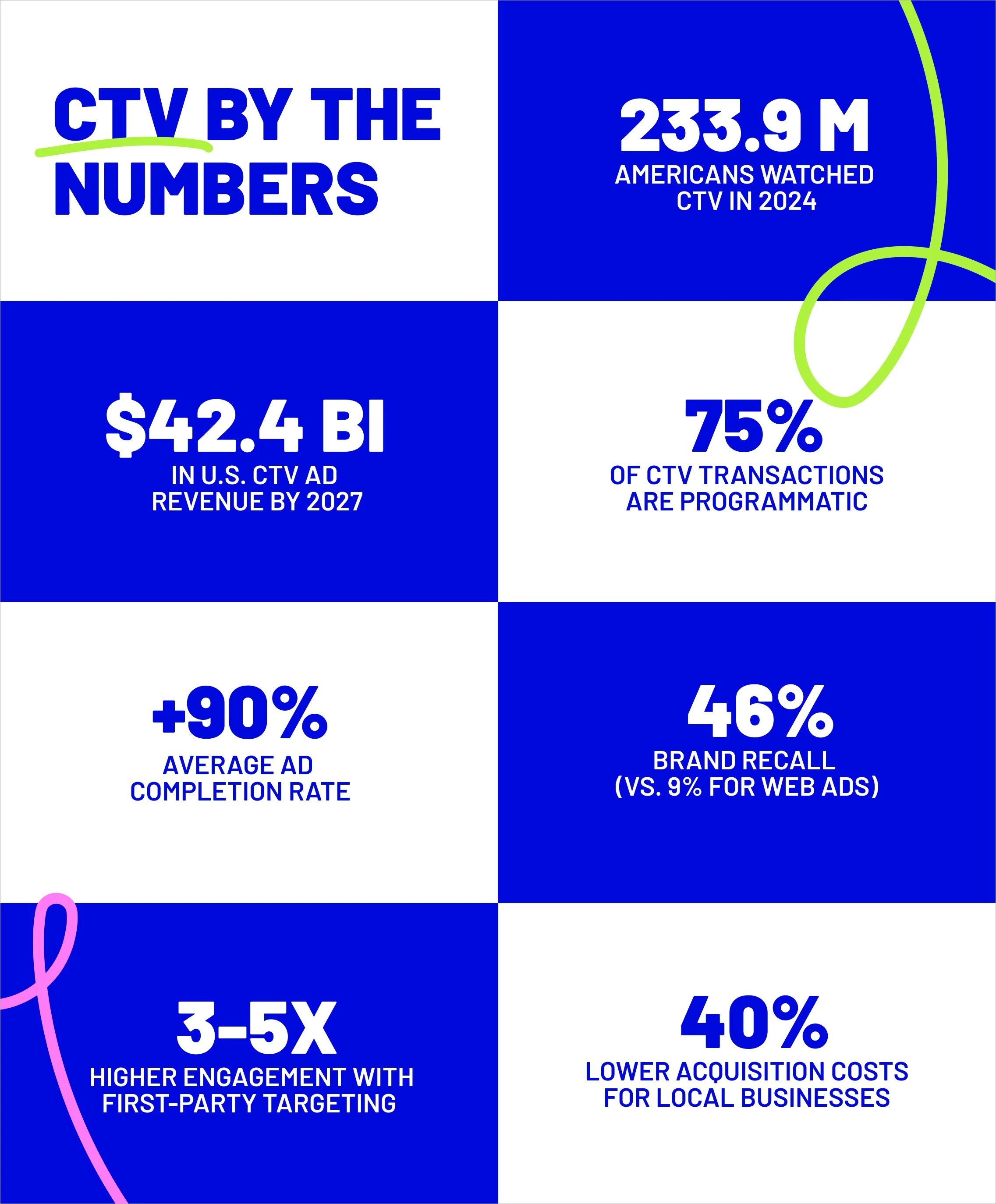
Connected TV advertising is video advertising delivered specifically on an internet-connected television screen. This includes smart TVs and televisions connected through devices such as Roku, Amazon Fire TV, and Apple TV or through internet-enabled gaming consoles.
CTV is therefore a device category within the wider OTT ecosystem—not a separate video format. Because OLV campaigns can span multiple internet-connected devices, their inventory may include CTV placements alongside mobile, desktop, and tablet delivery. Our guide to connected TV advertising explains the channel in more detail, including how it differs from linear TV and other digital video environments.
Is CTV Part of OLV?
Yes. CTV is generally considered a premium segment of the broader OLV market because it delivers online video ads on television screens. However, advertisers and demand-side platforms often separate CTV from other OLV inventory due to its household viewing environment, premium supply, higher pricing, device-specific targeting, and TV-oriented measurement requirements.
As current connected TV statistics and viewing trends demonstrate, CTV has become a sufficiently important part of the video market to require distinct planning and reporting. Advertisers can allocate budgets, tailor creative, and evaluate performance separately by screen while connecting CTV with desktop, mobile, and tablet delivery to measure deduplicated reach, frequency, completed views, and outcomes across the full video campaign.
OLV vs CTV: Key Differences
The central difference between OLV and CTV is where the ad is delivered. OLV can reach viewers across mobile phones, desktops, tablets, publisher websites, apps, and connected TVs. CTV refers specifically to video ads shown on internet-connected television screens.
That distinction affects the available formats, targeting signals, inventory costs, buying methods, and campaign KPIs.
These CPM ranges are directional US market estimates. Actual pricing varies by audience, geography, inventory quality, content, seasonality, and buying model.
In practical terms, OLV usually provides broader cross-device reach and more opportunities for direct interaction, while CTV offers a premium, television-style viewing environment at a higher CPM. The following sections examine how these differences affect media planning and budget allocation.
Targeting
OLV usually targets individuals and devices, while CTV primarily targets households. OLV campaigns use browsing behaviour, contextual signals, content consumption, device type, platform activity, and first-party data. These signals help advertisers optimise campaigns for video views, website visits, and conversions.
CTV combines first-party customer data with publisher data, household identifiers, and automatic content recognition (ACR) signals. ACR can identify content and ads displayed on participating smart TVs. Advertisers can use these insights to understand viewing habits, suppress previously reached households, and find incremental audiences.
The key trade-off is individual precision versus household reach. OLV may identify a specific user more accurately. CTV, however, can reach several people through one shared screen.
This shared environment creates measurement challenges. A CTV impression does not always reveal which household member watched the ad or completed an action on another device. Cross-device identity resolution is therefore essential for accurate attribution.
Frequency also requires close control. Innovid’s 2025 CTV advertising benchmarks, based on hundreds of billions of impressions, found that the average campaign reached 19.64% of measured US households at an average frequency of 7.09. In other words, additional spending may increase repetition without expanding reach at the same rate.
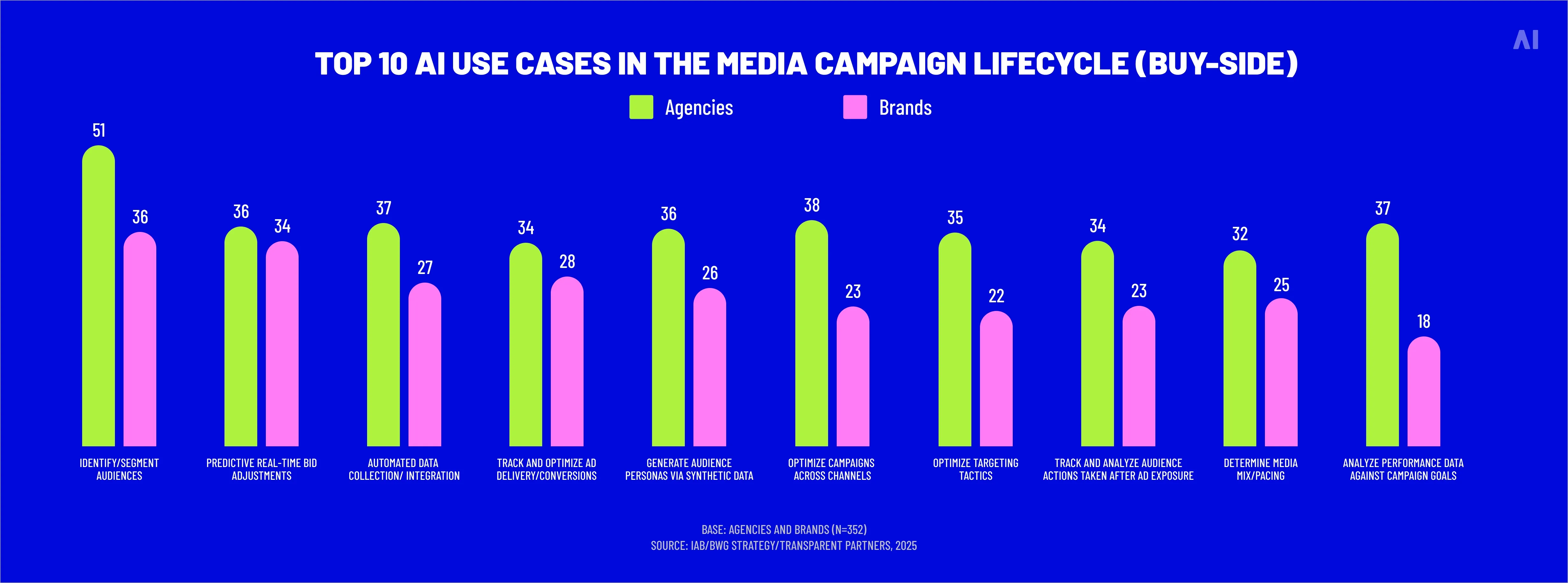
Effective programmatic targeting must distinguish between people, devices, and households instead of treating every identifier as equal. AI-targeted advertising can connect these fragmented signals and predict audience relevance. However, its performance still depends on data quality, consent, and interoperability.
Ad Formats
OLV offers more format flexibility, while CTV provides a consistent, television-style experience.
OLV includes pre-roll, mid-roll, post-roll, outstream, in-feed, social, vertical, and bumper ads. Placements may be skippable or non-skippable. They can appear within video content, between sections of an article, or inside a social feed.
The range of YouTube ad formats shows this flexibility. Options include skippable and non-skippable in-stream ads, six-second bumpers, in-feed video, Shorts, and pause ads.
Each format creates a different viewing opportunity. A completed non-skippable ad cannot be compared directly with a skippable impression or a video shown in a fast-moving social feed.
CTV ads are usually full-screen and non-skippable. Amazon describes its streaming TV ads as placements that appear before, during, or after programmes, films, and live entertainment.
Pause, shoppable, QR-enabled, and remote-enabled formats are also expanding the channel.
The choice between pre-roll, mid-roll, and post-roll ads affects attention, completion, available inventory, and cost. Pre-roll provides early exposure. Mid-roll reaches viewers who are already engaged, while post-roll typically reaches a smaller remaining audience.
Both OLV and CTV rely on standard video ad-serving infrastructure. A VAST tag passes the creative file, playback instructions, and tracking events between the ad server and video player. However, device compatibility and measurement capabilities can still differ across environments.
Pricing & Buying
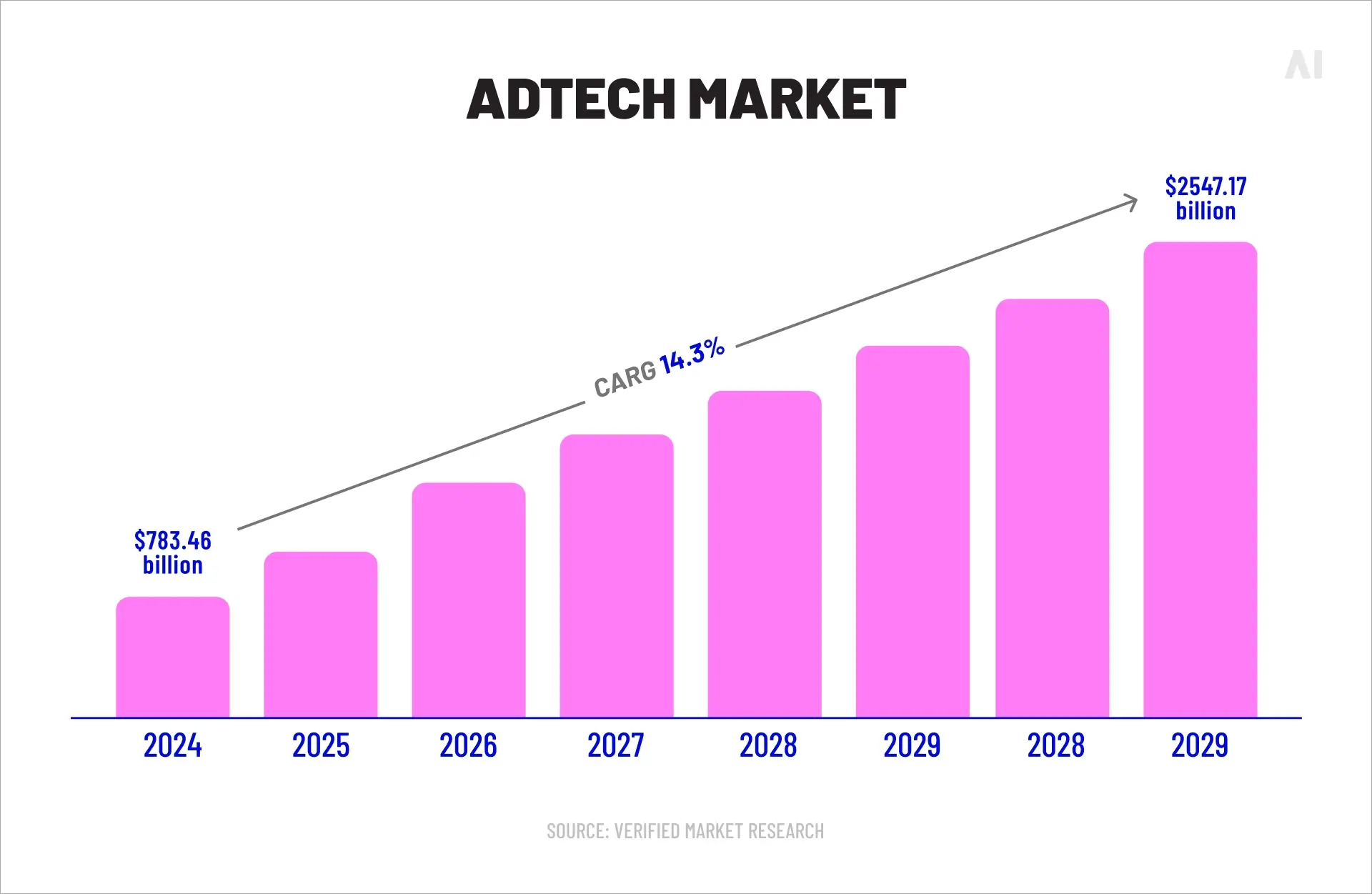
OLV usually provides greater scale at a lower CPM, while CTV charges a premium for full-screen access to streaming audiences. Actual CPMs vary widely by publisher, audience, geography, content, season, and deal structure.
OLV inventory is widely available through platform auctions, open programmatic markets, private marketplaces, and direct publisher agreements. This larger supply pool allows advertisers to scale quickly. However, low-priced impressions may offer weaker viewability, placement quality, or completion potential.
CTV can also be purchased through open auctions. Premium inventory, however, is often accessed through Private Marketplace, preferred, and Programmatic Guaranteed deals.
These buying methods provide greater certainty over publishers, content environments, inventory volumes, and prices. Open-auction CTV may cost less, but buyers should verify the app, device, seller, and supply path. An impression labelled as CTV does not automatically represent premium television inventory.
Demand is also increasing. IAB expects US CTV advertising spend to grow by 13.8% in 2026, which may intensify competition for high-quality inventory.
CTV campaigns can create costs beyond media. Advertisers may need television-quality production, additional creative versions, identity resolution, cross-device attribution, and brand- or sales-lift studies.
As a result, a higher CPM does not automatically mean lower efficiency. Likewise, a low CPM does not guarantee valuable reach. Advertisers should compare CPM, CPC, and CPA against the intended outcome.
Understanding the roles of DSPs, SSPs, and ad exchanges is equally important. Unnecessary intermediaries can increase costs and reduce supply-path transparency.
Performance by Objective
The right format depends on the campaign objective—not simply the lowest CPM or highest completion rate.
CTV is well suited to campaigns that need household reach, high-impact exposure, or association with premium content. Brand awareness and product launches often benefit from its large-screen viewing environment.
However, completed views should not be confused with proven attention. A non-skippable ad can finish playing without changing brand perception or purchasing behaviour. Incremental reach, controlled frequency, brand lift, search lift, and sales lift provide stronger evidence of impact.
OLV is generally better suited to objectives that require immediate action. Clickable placements can direct users to a website, app, product page, or lead form. They also provide faster signals for campaign optimisation.
Product launches and full-funnel strategies often need both formats. CTV can introduce the campaign on the largest screen. OLV can then reinforce the message across personal devices and provide a direct path to conversion.
The two channels should therefore perform complementary roles. They should be measured through deduplicated reach and incremental outcomes instead of competing for credit for the same conversion.
Inventory context also affects performance. Brand safety and brand suitability should guide placement decisions. Brand safety reduces exposure to harmful content, while brand suitability evaluates whether an environment fits the brand, audience, and message.
Creative Requirements
OLV creative must adapt to different screens and attention patterns. CTV creative must remain effective from a distance in a full-screen, usually sound-on environment.
OLV placements may require horizontal 16:9, square 1:1, and vertical 9:16 assets. Six-second videos work well for simple reminders. Fifteen- and 30-second versions provide more room for product information or storytelling.
Mobile users may scroll quickly or watch without sound. The brand, product, and main message should therefore appear early. Captions and strong on-screen visuals should communicate the idea without relying on audio.
Interactive end cards can create a clear next step. Depending on the placement, viewers may be able to visit a website, download an app, request information, or purchase a product directly.
CTV mainly uses horizontal 16:9 video in six-, 15-, or 30-second formats. Creative can rely more heavily on sound and narrative, but television delivery does not guarantee attention. The opening seconds must still establish the brand and give viewers a reason to keep watching.
CTV assets must also follow TV-safe design principles. Logos, disclaimers, QR codes, and important text should remain within safe margins. They also need enough contrast and size to remain legible from across a room.
QR codes can move viewers from the television to a mobile experience. They must remain on screen long enough to scan and lead to a landing page that continues the same message.
Interactive CTV is also making television advertising more actionable. Innovid found that interactive CTV formats generated an average of 71 additional seconds of engagement compared with standard pre-roll.
One master asset will rarely perform equally well across vertical feeds, desktop players, and television screens. Producing multiple lengths, aspect ratios, openings, and calls to action creates a creative bottleneck when scaling ad production.
The solution is not simply to produce more videos. Marketers need a modular creative system that adapts the same central idea to each format, screen, and viewing environment.
OLV vs CTV Measurement
OLV and CTV should not be evaluated through the same reporting framework. OLV measurement often centres on viewability, clicks, and device-level conversions. CTV measurement places greater weight on household reach, frequency, incremental reach, and cross-device outcomes.
The difference reflects how people use each channel. OLV ads often appear on personal, clickable devices. CTV ads run on shared television screens, where viewers rarely complete a conversion directly.
Effective CTV measurement must therefore answer questions that standard digital reporting cannot resolve alone:
- Did the ad reach a new household?
- How many people may have viewed the shared screen?
- Was the same audience also exposed through OLV?
- Did the exposure influence an action on another device?
- Would the conversion have happened without the campaign?
Unified measurement connects these signals across screens. It gives advertisers a clearer view of total reach, frequency, attribution, and business impact.
Viewability
Viewability is a standard OLV metric, but it is less informative for CTV.
Under the Media Rating Council’s digital video standard, an impression is generally considered viewable when at least 50% of the ad’s pixels remain in view for two continuous seconds. This matters for OLV because video ads may appear below the fold, inside a small player, or within a page that the user quickly scrolls past.
Viewability helps OLV advertisers assess whether an impression had a reasonable opportunity to be seen. It should be considered alongside other display advertising KPIs, including measurable impressions, time in view, video starts, and completion rates.
CTV creates a different measurement environment. Ads typically occupy the full television screen and run within streaming content. As a result, the traditional percentage-of-pixels threshold provides limited differentiation between placements.
However, full-screen delivery does not prove that a person watched the ad. The television may be on while viewers leave the room, look at another device, or stop paying attention. Technical delivery and human attention are not the same outcome.
CTV measurement should therefore look beyond basic viewability and consider:
- Valid and measurable impressions
- Full-screen playback
- Audibility and player status
- Ad starts and completions
- Device and app quality
- Presence or attention signals, where available
The key measurement principle is simple: OLV viewability tests whether an ad had the opportunity to be seen, while CTV measurement must determine whether full-screen delivery produced meaningful exposure.
Completion Rates
CTV usually generates higher video completion rates than OLV because its ads are commonly full-screen and non-skippable. Viewers are also more likely to be watching long-form content when the ad appears.
OLV completion rates vary more widely. Performance depends on:
- Whether the ad is skippable
- Its position within the content
- The device and screen size
- Video length
- Player size and page placement
- Connection quality
- Whether the placement is in-stream or outstream
For example, a non-skippable mid-roll ad shown during a programme has a different opportunity to complete than a vertical video placed inside a mobile feed. Comparing their completion rates without considering these conditions can produce misleading conclusions.
Completion rate is also a delivery metric—not a business outcome. A video may finish playing without receiving active attention or changing consumer behaviour. This is especially important for CTV, where viewers may be unable to skip an ad.
Advertisers should interpret completion rates alongside:
- Unique and incremental reach
- Frequency
- Cost per completed view
- Brand or search lift
- Website and app activity
- Conversions and sales lift
A high completion rate confirms that the creative played to the end. It does not prove that the campaign reached the right audience or generated incremental value.
Reach & Frequency
OLV commonly reports reach at the user, browser, account, or device level. CTV more often measures reach at the household or television-device level.
This difference creates several challenges. One person may use multiple devices, while several people may watch the same television. Device counts can therefore overstate audience reach, while household counts may understate the number of people exposed through co-viewing.
Advertisers must resolve four questions:
- Identity: Which devices and household identifiers belong to the same audience?
- Co-viewing: How many people were likely to be present during a CTV impression?
- Deduplication: Was the audience reached through both OLV and CTV?
- Frequency: How many total exposures occurred across publishers, platforms, and screens?
Frequency becomes difficult to control when every platform applies its own cap. A household might receive three CTV impressions from one publisher, four from another, and several additional OLV impressions. Each platform may report an acceptable frequency even though the audience experiences excessive repetition.
Innovid’s 2025 CTV reach and frequency benchmarks, based on hundreds of billions of impressions, found that the average campaign reached 19.64% of more than 95 million measured US households at an average frequency of 7.09. Campaigns exceeding 200 million impressions reached an average frequency above 10.
These results show why frequency capping across channels cannot be managed effectively through isolated publisher reports. Advertisers need a shared identity layer and deduplicated reporting to redirect spending from overexposed households towards new audiences.
The objective is not to minimise frequency at all costs. It is to find the exposure level that supports recall and action without creating waste or audience fatigue.
Attribution
OLV provides more direct attribution signals because viewers can click an ad and convert on the same device. Advertisers may connect impressions and clicks with website visits, app activity, leads, purchases, or other digital events.
Even then, OLV attribution is incomplete. Users may see an ad on one device and convert on another. Privacy restrictions, cookie loss, platform boundaries, and limited identity matching can break the path between exposure and conversion.
CTV creates an even larger gap. Television screens generate few conventional clicks, so measurement often relies on:
- QR-code interactions
- Matched household or device identifiers
- Cross-device website visits
- Conversion APIs
- App-install or purchase data
- Store-visit and offline sales matching
- Brand, search, and sales-lift studies
IAB identifies fragmented platforms, limited user identifiers, co-viewing, and the lack of direct clicks as central barriers to connecting CTV exposure with conversion outcomes.
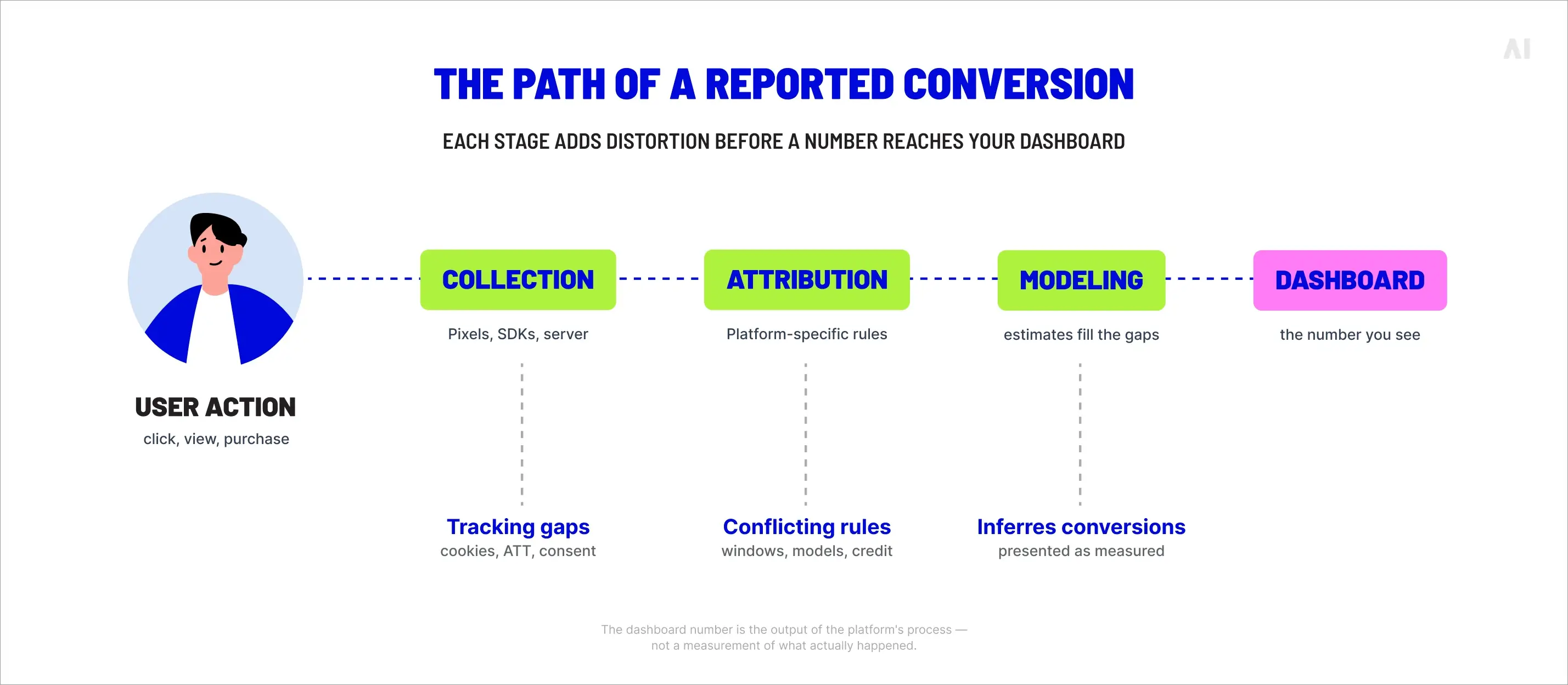
Platform reporting adds another limitation. Publishers and walled gardens may use different identity systems, attribution windows, and conversion rules. The same conversion can receive credit from several channels, while some cross-device journeys remain invisible.
Cross-channel attribution creates a more complete path by connecting exposures and outcomes across OLV, CTV, search, social, display, and other touchpoints. Multi-touch attribution can then distribute credit across those interactions instead of assigning the full conversion to the final measurable click.
However, attribution still measures observed relationships. It does not automatically prove that advertising caused the outcome. That distinction makes incrementality essential.
Incrementality
Incrementality testing measures how many outcomes occurred because of advertising—not merely after an ad exposure. It compares an exposed audience with a statistically comparable control group that did not receive the campaign.
The incremental effect can be expressed as:
[
\text{Incremental Lift} =
\frac{\text{Exposed Group Outcome Rate} - \text{Control Group Outcome Rate}}
{\text{Control Group Outcome Rate}}
\times 100
]
For example, suppose 5% of an exposed group purchases, compared with 4% of a control group. The campaign generated a one-percentage-point absolute lift and a 25% relative lift.
Advertisers can test incrementality through:
- Randomised audience holdouts
- Geographic experiments
- Matched-market tests
- Ghost-ad or opportunity-to-see controls
- Public-service announcement controls
- Platform conversion-lift studies
These methods help isolate the additional impact of OLV and CTV from existing demand, seasonality, promotions, and other marketing activity. They are especially valuable for retargeting, where audiences may already have a high likelihood of converting.
Incrementality can also improve budget allocation. Separate tests can show whether CTV adds unique household reach, whether OLV creates additional conversions, and whether using both produces more lift than either channel alone.
No single method provides a complete answer. Attribution offers granular and timely campaign signals. Experiments estimate causal lift. Marketing mix modelling measures broader channel effects over time. Unified marketing measurement combines these methods to create a more balanced view of performance.
This combined approach is particularly important across walled gardens and the open internet, where incompatible identifiers and closed reporting systems prevent a complete user-level view.
Ultimately, incrementality testing in marketing answers the question that platform attribution
cannot: How many results would disappear if the campaign had not run? For cross-screen video, that is the clearest basis for evaluating true business impact.
Common OLV vs CTV Mistakes
OLV and CTV can support the same video strategy, but they should not be planned as interchangeable inventory. They reach audiences in different viewing environments, use different identity signals, and require different performance metrics. Treating them as one channel can hide wasted spending and weaken campaign results.
Common mistakes include:
- Treating CTV like traditional linear TV: CTV combines television-style viewing with digital targeting and measurement. Planning it only around broad reach overlooks household-level audiences, first-party data, frequency controls, and cross-device outcomes. However, treating CTV like standard digital display is equally limiting. Clicks are rare on television screens, so performance must be assessed through incremental reach, brand lift, search activity, cross-device conversions, and sales.
- Relying only on platform-reported results: Publishers and platforms use different identity systems, attribution windows, and conversion rules. Their reports may also credit the same household or conversion more than once. These inconsistencies are among the central marketing effectiveness measurement challenges affecting cross-screen campaigns. Independent ad serving, deduplicated reach, conversion data, incrementality tests, and marketing mix modelling provide a more reliable view than any single platform dashboard.
- Overlooking invalid traffic and inventory quality: A CTV impression is not automatically premium simply because it was delivered to a television device. Spoofed apps, falsified device information, unauthorised reselling, and bot-generated impressions can make low-quality inventory appear legitimate. HUMAN found that longer programmatic supply paths can carry greater invalid-traffic risk, with fraud rates in emerging channels such as CTV reaching seven times the norm. Effective CTV ad fraud prevention should combine authorised-seller checks, supply-chain transparency, pre-bid filtering, post-bid verification, and app-level reporting.
- Managing OLV and CTV as one undifferentiated video budget: A blended budget may appear efficient while concealing major differences in cost and performance. Low-cost OLV impressions can reduce the campaign’s average CPM, while premium CTV impressions may generate incremental household reach that click-focused reporting fails to value. Budgets should reflect the role of each channel: CTV can build awareness and household reach, while OLV can extend coverage, retarget users, and create a direct path to action.
- Using the same creative everywhere: A television commercial may not work in a vertical, sound-off mobile feed. Likewise, mobile-first creative may look weak on a full-size television. OLV needs fast openings, captions, adaptable aspect ratios, and clear interactive actions. CTV requires high-resolution horizontal assets, sound-led storytelling, legible TV-safe text, and QR codes where a direct response is needed.
The strongest approach is to give OLV and CTV separate objectives, budgets, creative requirements, and channel-level KPIs, then reconnect them through unified reach, frequency, attribution, and incrementality reporting. This preserves the strengths of each format without losing sight of their combined business impact.
When to Use OLV, CTV, or Both
Choose between OLV and CTV based on the job the campaign must perform. OLV is usually stronger for cost-efficient reach, testing, retargeting, and direct response. CTV is better suited to premium storytelling and household-level awareness. Using both can connect high-impact exposure with measurable action across the funnel.
This distinction matters as video consumption becomes increasingly fragmented. Nielsen found that streaming represented 48.6% of US television use in May 2026. Meanwhile, IAB expects US digital video advertising—which includes OLV, CTV, and social video—to exceed $80 billion in 2026.
When to Use OLV
OLV is the stronger choice when a campaign needs flexible targeting, rapid optimisation, or a direct path to conversion. Ads can reach audiences across mobile, desktop, tablet, websites, apps, and social platforms.
OLV is particularly effective for:
- Performance marketing and lead generation
- Website traffic and app installs
- Product and cart retargeting
- Short-term retail promotions
- Rapid creative and message testing
- Cost-efficient cross-device reach
- Campaigns with limited budgets
OLV gives advertisers more immediate performance signals than CTV. Clicks, landing-page visits, form submissions, purchases, and app events can help teams identify which audiences and creative variations perform best.
Its broad inventory supply also supports rapid experimentation. Advertisers can test different openings, video lengths, calls to action, aspect ratios, and audience segments before moving more budget towards the strongest combinations.
A retailer, for example, could promote a weekend sale with short mobile and desktop videos. Viewers who watch the ad or visit a product page could then receive retargeting creative featuring specific products or a limited-time offer.
A B2B company could use OLV to reach decision-makers consuming relevant business content. Clickable videos could direct them to a webinar, report, or demo request page. The campaign could then optimize towards completed forms instead of video views alone.
Revlon provides a practical retail example. After adding OLV to its Amazon Ads campaign, the brand achieved a 194% increase in branded search rate. The result is specific to that campaign, but it shows how OLV can connect video exposure with measurable consideration behaviour.
Through programmatic advertising, advertisers can automate inventory buying and adjust bids, audiences, and placements as performance data becomes available. This makes OLV particularly useful when speed and optimisation matter more than a premium television environment.
When to Use CTV
CTV is the better choice when a campaign needs large-screen impact, premium storytelling, or household reach within streaming content. Its full-screen, usually non-skippable format can give a brand more room to build emotion, demonstrate a product, or communicate a complex idea.
CTV is well suited to:
- Brand-awareness campaigns
- National or regional product launches
- Premium brand storytelling
- Reaching streaming-first and cord-cutting households
- Incremental reach beyond linear television
- Campaigns measured through brand, search, or sales lift
CTV is most valuable when the viewing environment supports the message. A 15- or 30-second spot within premium long-form content can create a stronger brand experience than a short video placed inside a fast-moving feed.
For example, an automotive company launching a new model could use CTV to present its design, technology, and positioning on the largest screen in the home. Household and geographic targeting could focus delivery on markets where the vehicle is available.
A national consumer brand could also use CTV to reach households that watch little or no linear television. The campaign could measure incremental reach, branded search, website visits, and sales lift rather than relying on clicks.
Michelin used Roku home-screen placements to reach drivers researching vehicle and tyre-related content. Roku reported that the campaign generated a 17% lift in brand awareness and a 15% increase in purchase consideration. Although results from one platform campaign should not be treated as universal benchmarks, they illustrate CTV’s role in influencing upper-funnel brand metrics.
Current CTV advertising trends also show the channel expanding beyond conventional television commercials. Shoppable formats, QR codes, first-party audience activation, and cross-device measurement are making CTV more useful across the funnel.
Combined OLV + CTV Strategy
Using OLV and CTV together allows each channel to perform a different role in the customer journey. CTV can introduce the campaign through a high-impact household experience. OLV can then reinforce the message across personal devices and create a direct path to action.
A combined campaign could follow this sequence:
- Build awareness with CTV: Introduce the product or brand story through full-screen video.
- Extend reach with OLV: Reach additional users across mobile, desktop, tablet, apps, and publisher sites.
- Reinforce the message: Serve shorter creative variations to exposed or high-intent audiences.
- Drive action: Use clickable OLV ads to generate website visits, leads, app installs, or purchases.
- Measure combined impact: Deduplicate reach, control frequency, and compare incremental outcomes across both channels.
Amazon Ads reports that campaigns using more than one of its video solutions achieved 15% more incremental reach, a 142% higher detail-page view rate, and an 84% higher purchase rate than campaigns using one video solution. These figures reflect Amazon’s own campaign data, but they demonstrate the potential value of assigning complementary roles to different video environments.
The strategy still requires unified audience and measurement systems. Without them, the same household may receive too many impressions, and both channels may claim credit for the same conversion.
Cross-channel attribution tools can connect CTV exposures with later OLV interactions and conversions. However, attribution should be supported by incrementality testing to determine whether the combined campaign generated outcomes that would not otherwise have occurred.
The strategic goal is not simply to add OLV impressions to a CTV campaign. It is to create a connected sequence in which each exposure moves the audience towards the next stage of the journey.
Decision Matrix
Use OLV when the priority is action, flexibility, or efficiency. Use CTV when the priority is impact, storytelling, or household reach. Use both when the campaign must connect awareness with measurable performance across screens.
Best Practices for OLV and CTV
Effective video planning begins with the campaign objective, not a preference for OLV or CTV. Experienced media buyers define the required audience, outcome, viewing environment, and measurement method before allocating the budget.
Follow these best practices:
- Assign each channel a clear role. Use CTV to build household reach and deliver high-impact storytelling on the largest screen. Use OLV to extend reach across personal devices, retarget engaged audiences, test creative, and drive measurable actions.
- Plan around the customer journey. CTV can introduce the brand or product, while OLV reinforces the message and provides a direct route to the website, app, lead form, or product page. The channels should work as a connected sequence rather than as isolated campaigns.
- Match KPIs to the objective. Evaluate awareness campaigns through incremental reach, frequency, brand lift, and sales lift. For performance campaigns, prioritise qualified visits, conversions, CPA, and ROAS. Completion rates and CPMs provide context, but they do not prove business impact.
- Choose CTV inventory carefully. Effective CTV media buying requires more than accessing television devices. Buyers should assess publishers, content environments, authorised sellers, supply paths, app-level reporting, and invalid-traffic protections before treating inventory as premium.
- Adapt creative to each screen. CTV needs high-resolution, TV-safe creative that remains clear from across a room. OLV requires faster openings, captions, flexible aspect ratios, and stronger calls to action. Keep the central campaign idea consistent while adapting its execution to each viewing environment.
- Deduplicate audiences across screens. A person may see OLV ads on several devices, while multiple people may share one connected TV. Unified identity and reporting help advertisers calculate true reach, manage total frequency, and redirect spending from overexposed audiences towards new viewers.
- Use independent measurement. Platform dashboards apply different attribution windows, identity systems, and conversion rules. Combine platform data with independent ad serving, first-party outcomes, cross-channel attribution, and unified reach reporting to reduce duplication and reporting bias.
- Measure incremental impact. Attribution shows which exposures preceded a conversion, but it does not prove that advertising caused it. Learning how to measure incrementality in marketing helps advertisers compare exposed and control groups and isolate the additional reach, conversions, or sales produced by OLV, CTV, or their combined effect.
The strongest strategy does not ask whether OLV or CTV is universally better. It asks which role each channel should perform, how they should work together, and whether each additional investment creates measurable value.
How to Simplify OLV and CTV Advertising with AI Digital
OLV and CTV campaigns work better when media buying, measurement, and creative production are connected. AI Digital brings these functions into one workflow.
Elevate unifies campaign data. Smart Supply improves inventory quality. The Open Garden Framework connects platforms and partners. AI Creative Studio adapts campaign assets for each screen.
Together, these solutions help brands:
- Collect performance data across OLV and CTV.
- Identify the channels, placements, and creative assets driving results.
- Direct budgets towards higher-quality inventory.
- Adapt creative for different devices and formats.
- Use campaign results to improve future planning.
Measure Performance Across Every Screen
CTV platforms, DSPs, and OLV publishers often use different metrics and attribution rules. This makes it difficult to compare performance or understand the complete customer journey.
Elevate brings campaign data into one intelligence platform. It integrates with more than 12 DSPs and analyses over 150 billion data points each month.
This unified view helps marketers:
- Compare OLV and CTV performance in one place
- Identify audience overlap across screens
- Measure unique and incremental reach
- Analyse the path to conversion
- Support cross-channel attribution
- Compare channel contributions through marketing mix modelling
- Reallocate budgets based on business outcomes
Elevate also reduces reliance on platform-reported metrics. Instead of allowing each platform to grade its own performance, marketers can compare channels through a shared measurement framework.
A marketing intelligence platform should do more than organise campaign data. It should help teams turn that data into faster planning, measurement, and budget decisions.
Improve Inventory Quality
Strong measurement cannot fix poor-quality inventory. OLV and CTV supply chains may include several exchanges, resellers, and other intermediaries. Each additional step can increase costs and reduce transparency.
Smart Supply uses curated deal IDs, direct SSP access, and AI-powered filtering to improve inventory quality. It removes invalid traffic, inefficient placements, and unsuitable inventory before they waste more campaign budget.
Smart Supply also monitors performance during the campaign. It can adjust deals based on the advertiser’s KPIs, helping brands focus spending on inventory that supports their objectives.
Effective supply path optimisation removes unnecessary intermediaries and identifies better routes to each impression. The cheapest route is not always the best. Advertisers must balance cost with placement quality, transparency, and performance.
The Open Garden Framework connects DSPs, SSPs, data providers, and measurement partners without tying the brand to one platform. This gives advertisers more control over their data, inventory, and campaign decisions.
Together, Smart Supply and the Open Garden Framework help brands:
- Access curated OLV and CTV inventory
- Reduce DSP and SSP bias
- See where ads appear and how inventory is sold
- Apply consistent audience and KPI strategies
- Improve cross-platform frequency management
- Move budgets when performance or inventory quality changes
This makes inventory selection an ongoing part of campaign optimisation—not a decision made only before launch.
Scale Creative for Every Screen
One video asset rarely works equally well across mobile feeds, desktop players, and connected TVs.
A cross-screen campaign may need horizontal CTV video, vertical mobile assets, shorter OLV variations, captions, interactive end cards, and QR-enabled television formats. Producing every version manually can be slow and expensive.
AI Creative Studio combines AI-powered production with human creative oversight. It turns one campaign concept into assets designed for different platforms, placements, and audiences.
Its capabilities include:
- Horizontal, square, and vertical video
- Six-, 15-, and 30-second variations
- Multi-platform resizing and adaptation
- Localised creative versions
- Interactive CTV overlays and QR codes
- Rapid testing and creative updates
- Asset tagging and performance analysis
AI speeds up repetitive production tasks. Human oversight protects brand quality, strategic consistency, and creative judgement.
Dynamic creative optimisation connects modular creative assets with audience, context, and performance data. The goal is not simply to produce more ads. It is to serve the most relevant combination of message, visual, offer, and call to action.
The solutions form a continuous workflow. Elevate shows what is working. Smart Supply improves where ads run. AI Creative Studio adapts what audiences see. The Open Garden Framework connects the data and platforms behind them.
This integrated approach helps brands improve OLV and CTV performance without losing control over measurement, inventory quality, or creative consistency.
Build an Effective OLV and CTV Strategy
The OLV versus CTV decision should not begin with formats. It should begin with the business outcome. CTV and OLV solve different problems within the same video strategy. CTV provides high-impact household reach and premium storytelling, while OLV extends campaigns across personal devices and creates a direct path to action.
At AI Digital, we believe the strongest campaigns do not treat these channels as competing budget lines. They give each format a clear role:
- CTV creates demand through large-screen reach and memorable brand experiences.
- OLV captures and converts demand through cross-device reinforcement, retargeting, and interactive formats.
- Unified measurement connects the journey by deduplicating audiences and evaluating incremental outcomes across both channels.
The strategic question is not, “Which format performs better?” It is, “What should each format contribute, and how will we prove that contribution?”
Answering that question requires three decisions:
- Objective: Define whether the campaign must build awareness, extend reach, influence consideration, or generate conversions.
- Audience: Determine whether the strategy should reach individuals, devices, households, or all three.
- Measurement: Select KPIs that reflect business impact, including incremental reach, cross-channel attribution, brand lift, conversions, and sales.
A channel can appear efficient in isolation while weakening the wider media strategy. Low CPMs may conceal poor inventory, high completion rates may not indicate attention, and platform-attributed conversions may not represent incremental growth. The next stage of video advertising will therefore be defined by orchestration—not channel-level optimisation.
Brands that connect audience intelligence, transparent supply, format-specific creative, and independent measurement will be better positioned to turn fragmented video exposure into measurable growth.
To build that connected approach, explore an outcome-led OLV and CTV strategy with AI Digital.