Best Marketing Intelligence Platforms in 2026 (Comparison & Use Cases)

.webp)
Choosing the best marketing intelligence software in 2026 is harder than comparing feature lists. “Marketing intelligence platform” has become an umbrella term for tools that collect data, visualise it, measure campaign impact, automate workflows, or track competitors—often for very different business purposes.
The distinction matters: IAB’s 2026 State of Data research found that 60–75% of buy-side users say current advanced measurement approaches fall short on rigor, timeliness, trust, or efficiency. About half are already scaling AI within their measurement frameworks, while more than 70% of those not yet scaling expect to do so within the next one to two years.
The market becomes clearer when platforms are grouped by the problem they solve.
- Cross-channel measurement platforms connect performance across media environments and support attribution, incrementality, and budget decisions.
- Data integration and BI platforms bring information together and make it usable through reporting and dashboards.
- Competitive intelligence platforms look outward, tracking competitors, market shifts, and strategic signals.
At AI Digital, we view marketing intelligence as decision infrastructure rather than a single software category. Choosing the right platform therefore starts with understanding which intelligence problem needs to be solved—and where measurement, integration, and competitive insight should work together.
What Is a Marketing Intelligence Platform?
A marketing intelligence platform turns scattered marketing data into a clearer view of performance—and, more importantly, into decisions teams can act on.
It can bring together data from:
- advertising platforms and DSPs;
- web and app analytics;
- CRM and customer data;
- commerce and transaction systems; and
- offline marketing and sales activity.
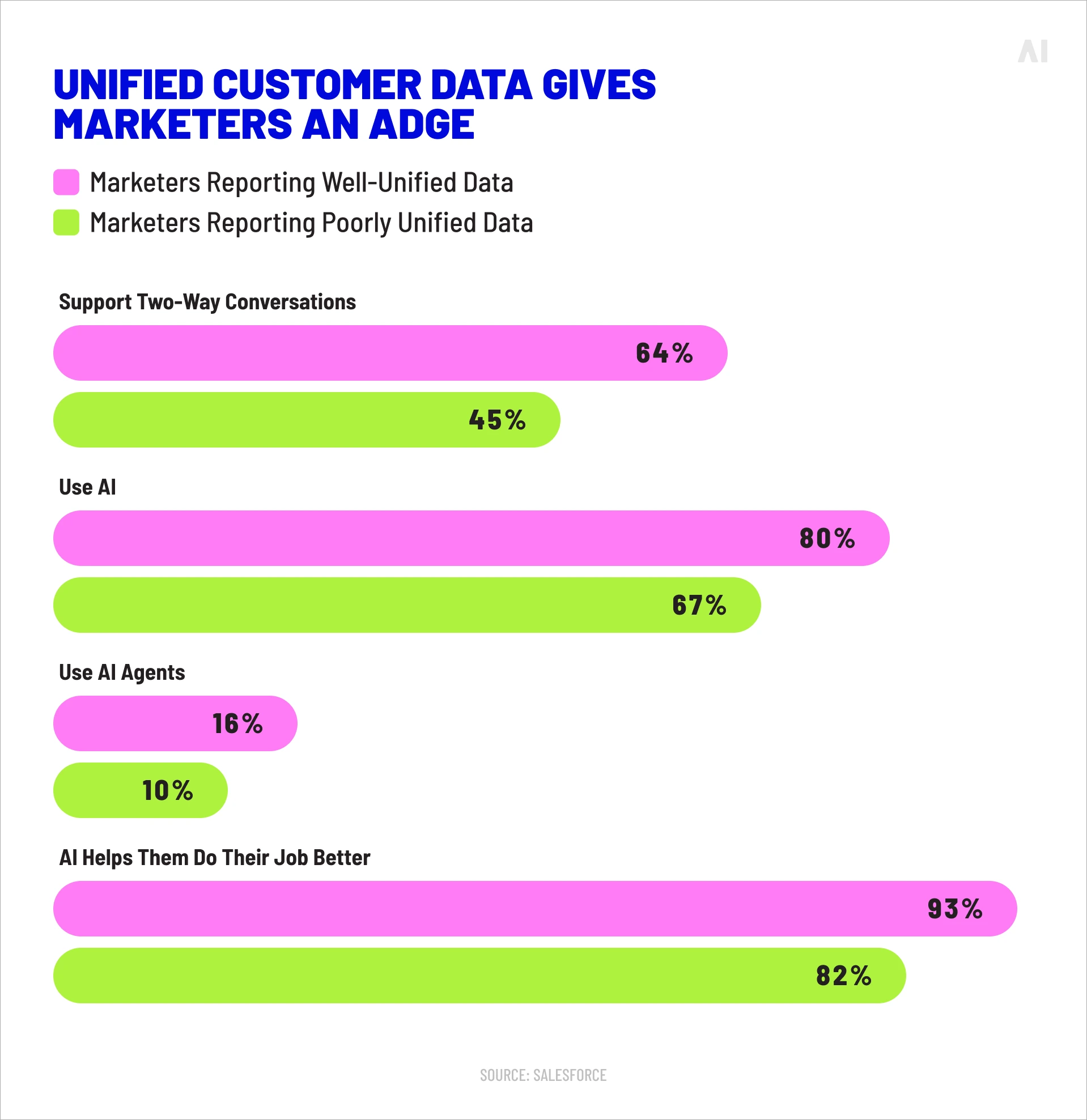
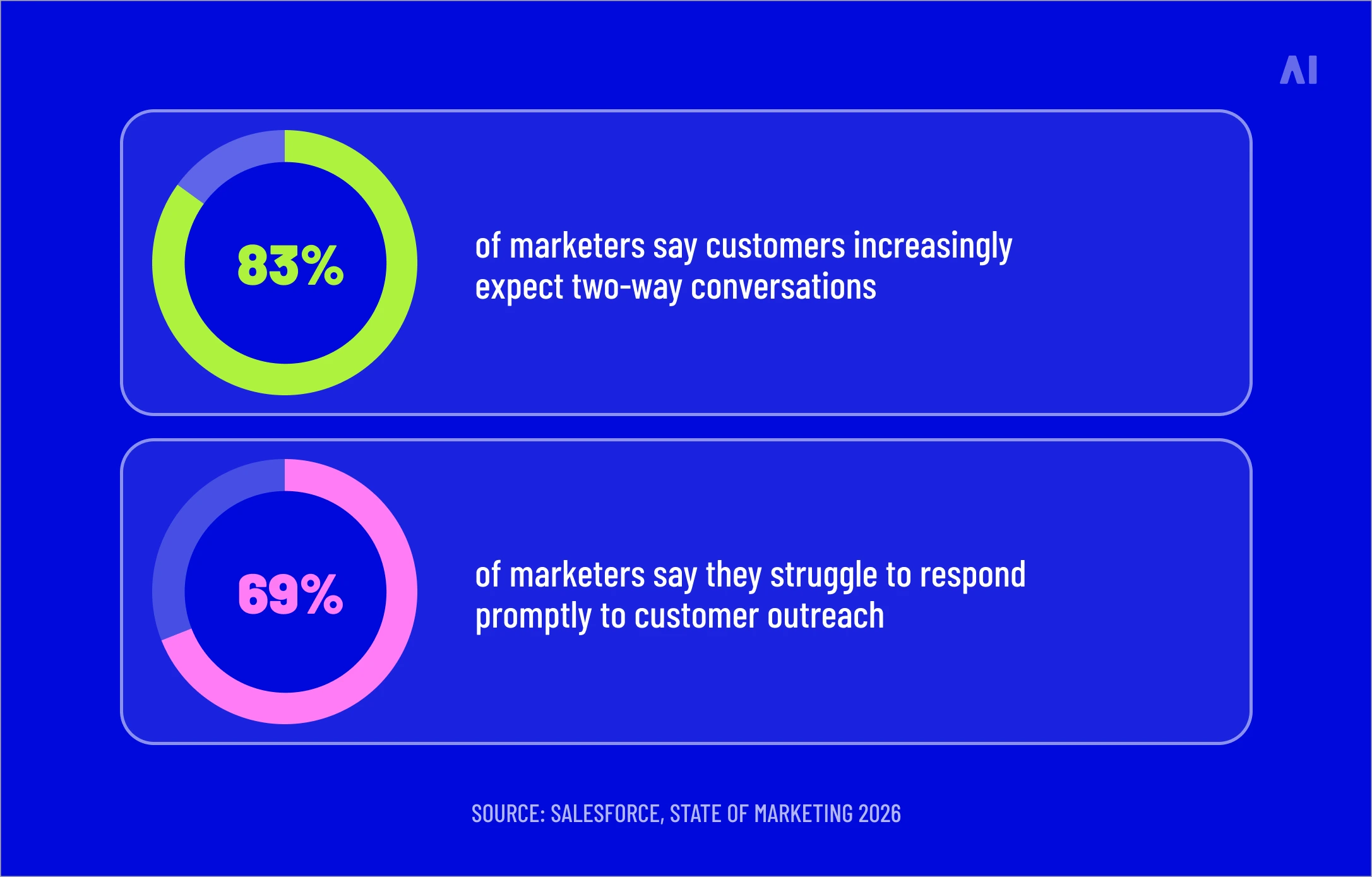
That unified view matters because access is still fragmented. Salesforce’s 2026 State of Marketing found that only 58% of marketers have complete access to service data, 56% to sales data, and 51% to commerce data. Marketing teams that have successfully unified their customer data are also 42% more likely to regularly respond to customers than teams dissatisfied with their data foundation.
💡The goal is not another dashboard. It is a better decision.
A marketing intelligence platform connects the signals behind performance so marketers can identify what is working, understand why it is happening, and decide where to optimize or invest next. This is why intelligence works best within a broader marketing measurement framework that connects data, measurement methodologies, and business decisions.
At AI Digital, we see an important distinction between tools that execute, display, observe, and interpret marketing data:
- Marketing automation executes campaigns and workflows.
- BI tools visualize and report business data.
- Competitive intelligence platforms monitor competitors and external market signals.
- Marketing intelligence platforms connect marketing signals to the decisions that improve performance.
⚡That last distinction is critical. Our analysis of marketing intelligence vs. marketing analytics explains where reporting and analysis end and decision intelligence begins.
A modern marketing intelligence platform should therefore do more than centralize information. It should reduce the distance between data and action.
How to Evaluate Marketing Intelligence Platforms
The best marketing intelligence platform is not necessarily the one with the longest feature list. Enterprise buyers should evaluate how well a platform connects data, measures performance, turns signals into action, and remains trustworthy as the organization scales.
Start with this checklist:
- Coverage: Does it connect the channels and business systems you actually use?
- Measurement: Can it evaluate performance independently across platforms?
- Intelligence: Does AI recommend actions or simply summarize dashboards?
- Governance: Can teams control access, definitions, and data quality?
- Scalability: Will the infrastructure still work as data volume and channel complexity grow?
The important question is simple: Will this platform help your team make better decisions—or just give it another interface to manage?
Data Integration and Source Coverage
Marketing intelligence is only as complete as the data feeding it.
A strong platform should connect:
- paid search and social platforms;
- DSPs and programmatic media;
- CRM and customer systems;
- web and app analytics;
- CTV and streaming environments;
- retail media networks;
- offline sales and conversion data; and
- cloud data warehouses.
But connector count alone is a weak buying criterion. Buyers should also ask about data freshness, granularity, API reliability, schema normalization, and what happens when an integration fails.
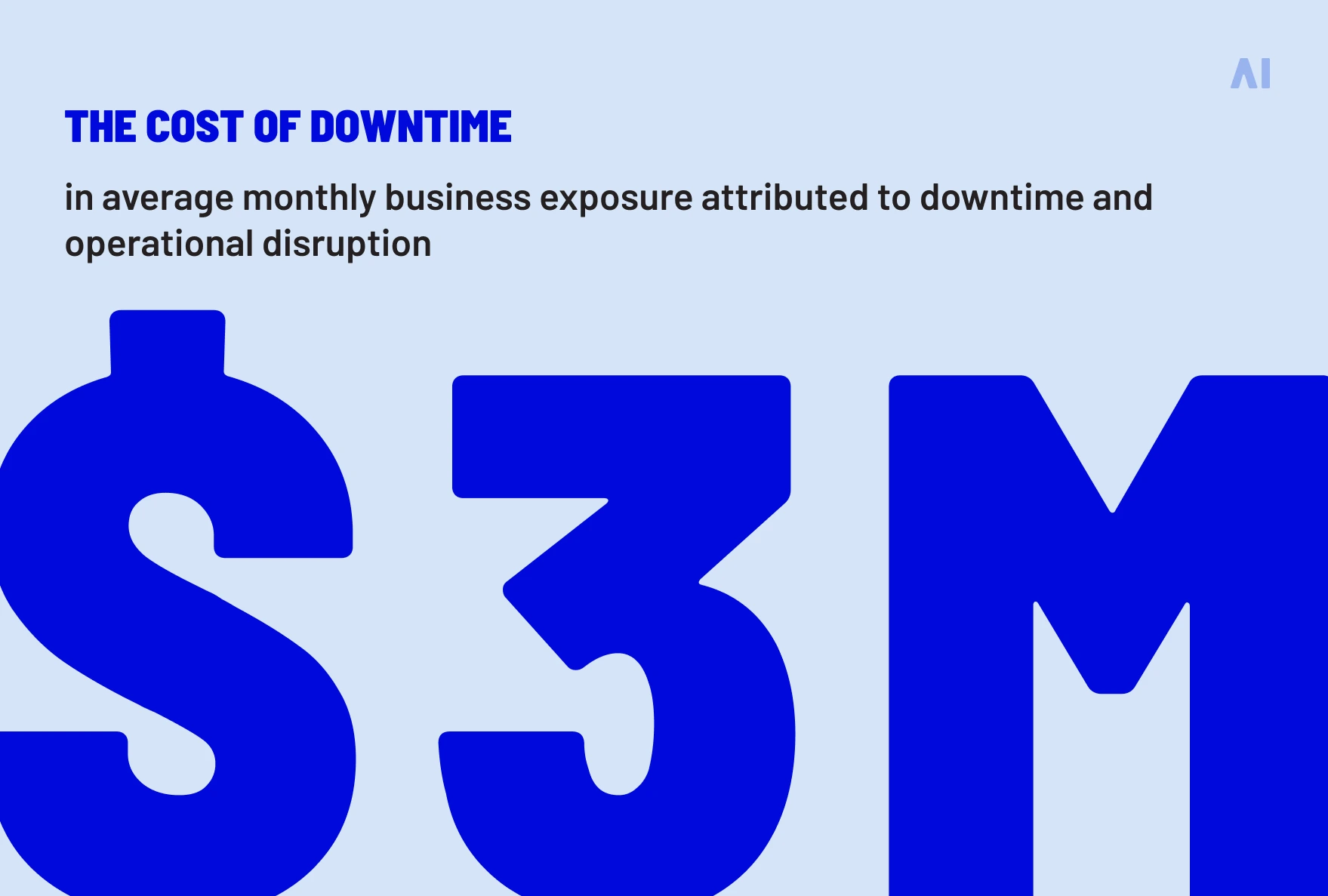
That last point carries real business risk. Fivetran’s 2026 enterprise benchmark found that 97% of senior data and technology leaders said pipeline failures had slowed analytics or AI initiatives. Large enterprises reported an average of more than 60 hours of pipeline downtime per month.
For marketing teams, unreliable pipelines mean stale dashboards, incomplete attribution, delayed optimization, and AI recommendations built on yesterday’s information.
AI Digital’s view is that integration should create a decision system, not simply a larger data repository. That requires connecting channels, measurement, and execution through integrated marketing systems and designing a modern marketing data stack where each layer has a defined role.
What to check: Can the platform connect your full marketing ecosystem reliably enough to support decisions in real time?
Independent vs. Platform-Reported Measurement
Platform dashboards are useful for managing campaigns inside that platform. They are less reliable as an independent source of truth across the entire marketing mix.
Why? Each advertising ecosystem can use different:
- attribution windows;
- conversion definitions;
- identity signals;
- modeled data;
- view-through rules; and
- methods for assigning conversion credit.
A conversion may therefore be claimed by several platforms at once.
This is one reason cross-platform measurement became a priority for 72% of advertisers in IAB’s 2026 Outlook Study, up from 64% a year earlier.
Enterprise buyers should look for platforms that can pull these signals into a neutral measurement layer, normalize definitions, identify attribution overlap, and connect media exposure to actual business outcomes.
This is the foundation of What Is Cross-Channel Attribution: performance should be evaluated across the customer journey rather than according to whichever platform reports the conversion.
⚡For a deeper look at the issue, AI Digital explores the key challenges of measuring marketing effectiveness and explains how alternatives to walled gardens can give marketers a more consistent, independent view of cross-channel performance.
What to check: Is the platform measuring performance independently—or simply reproducing each channel’s version of performance?
AI-Driven Insights and Automation
In 2026, having an AI assistant is not enough to make a platform AI-powered marketing intelligence.
There is an important difference:
Basic AI tells you what the dashboard says.
Useful AI helps determine what should happen next.
A mature intelligence layer should be able to:
- detect unusual performance changes;
- forecast likely outcomes;
- identify budget or pacing issues;
- surface optimization opportunities;
- compare scenarios; and
- recommend next actions for marketers to review.
The business case is already moving beyond basic automation. Deloitte’s 2026 State of AI in the Enterprise found that 53% of organizations report improved insights and decision-making from AI, yet only 34% say they are truly reimagining their business through AI.
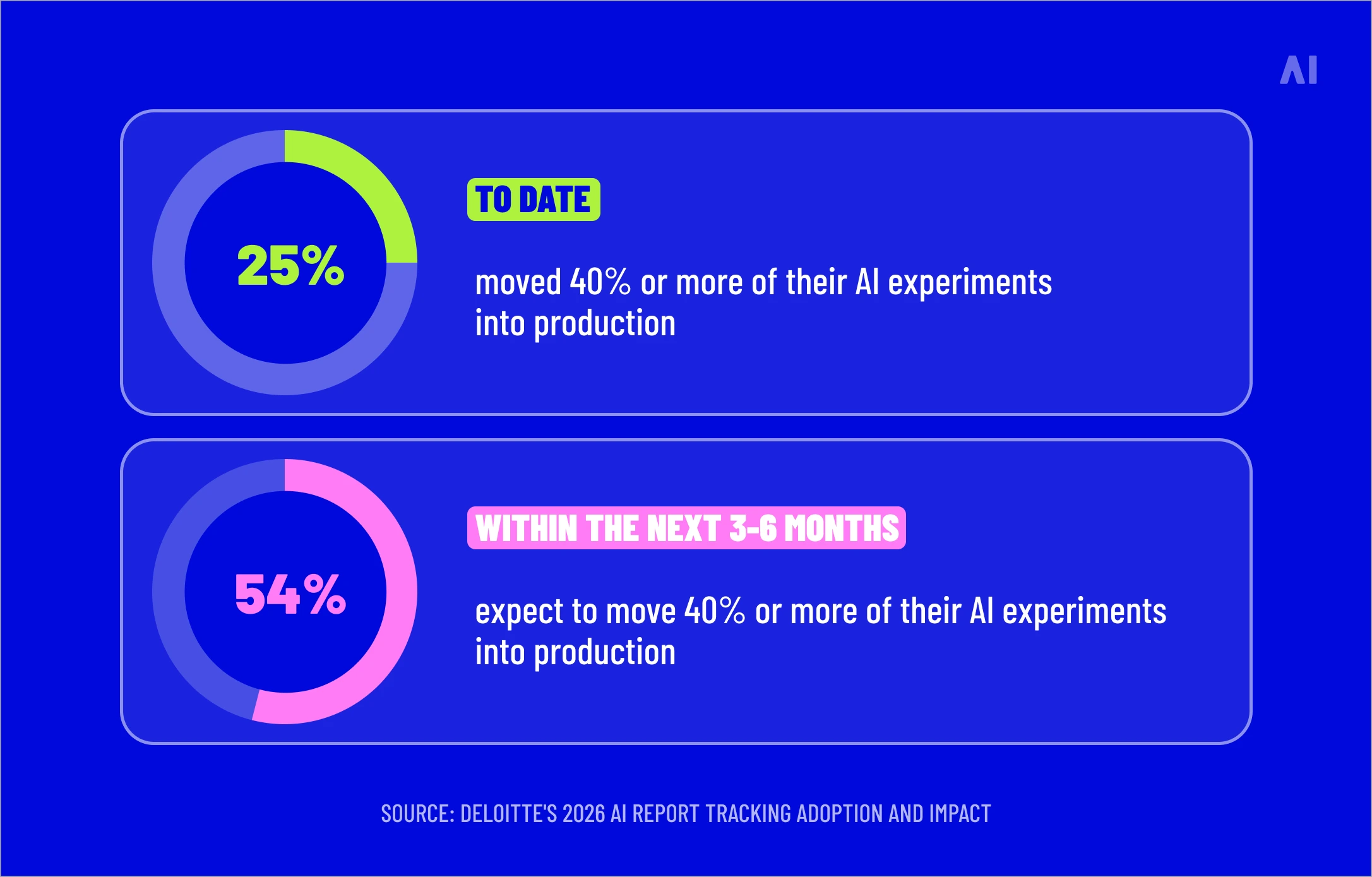
That gap is useful when evaluating vendors. An AI-generated paragraph explaining yesterday’s ROAS is convenient. An intelligence system that recognizes a performance shift, identifies its likely drivers, models alternative budget decisions, and surfaces an action is fundamentally more valuable.
AI is reshaping performance marketing by helping teams move from passive reporting toward faster optimization and decision-making. This shift is also changing how companies think about the transition from a traditional martech stack to an AI marketing platform.
It also sets the foundation for AI Marketing Agents and the Future of Campaign Management, where intelligence moves further toward coordinated action.
What to check: Does AI explain data—or help your team make a better decision with it?
Governance, Security, and Scalability
Enterprise marketing intelligence cannot be evaluated on analytics features alone.
As more sensitive customer, campaign, revenue, and AI-generated data flows through one environment, buyers need to assess:
- role-based permissions;
- data ownership and lineage;
- privacy and consent controls;
- auditability;
- regulatory compliance;
- API flexibility;
- security architecture; and
- the ability to scale users, markets, channels, and data volume.
This has become even more important as AI enters enterprise workflows. Cisco’s 2026 Data and Privacy Benchmark Study found that 93% of organizations plan to increase resources for privacy and data governance over the next two years, while only 12% describe their AI governance committees as mature and proactive.
A platform may deliver excellent analysis today and still become a liability if teams cannot explain where its data came from, who can access it, or how automated decisions are governed.
That is why AI Digital treats advertising governance as part of performance infrastructure, not administrative overhead.
The same principle applies to cross-platform measurement governance: consistent definitions and accountability are what make cross-channel data trustworthy enough to act on.
What to check: Can the platform scale without sacrificing control, transparency, or trust?
The Best Marketing Intelligence Platforms in 2026
There is no single best marketing intelligence software for every organization. A platform designed to unify paid-media measurement solves a very different problem from one built to move data into a warehouse, monitor competitors, or automate CRM workflows.
The right comparison starts with the business question you need the platform to answer.
{{bmis-1}}
These categories can also overlap with customer intelligence platforms, which focus more heavily on customer profiles, behaviour, segmentation, and lifecycle insights. Buyers evaluating AI capabilities should likewise compare the underlying use case—not simply the presence of AI features—in an AI marketing platform comparison.
Best for Cross-Channel Marketing Measurement: Elevate
Elevate is built for marketers who need to understand performance across advertising ecosystems rather than inside one platform at a time.
It brings campaign intelligence from DSPs, walled gardens, CTV, and the open internet into a common environment for planning, optimization, and measurement.
Its current scale gives an indication of the data layer involved:
- 150 billion data points processed monthly
- 12+ integrated DSPs
- 10,000+ audience attributes
- 8,000+ campaigns analyzed
Those figures come from Elevate’s current platform specifications.
The difference is important because Google, Meta, a DSP, and a retail media network can each report performance according to their own attribution logic. Elevate is designed to move the decision above those individual platform views and toward business outcomes.
Its measurement capabilities include Marketing Mix Modeling (MMM) and Path to Conversion analysis, while incrementality experiments can complement that intelligence to validate whether observed results were actually caused by media activity. This reflects the broader principle behind unified marketing measurement: attribution, MMM, and incrementality answer different questions and are stronger when used together.
For teams managing substantial media investment, this changes the conversation from:
“Which platform reports the highest ROAS?”
to:
“Which channels are actually contributing enough value to deserve the next dollar?”
That business-outcome focus is also central to effective digital marketing measurement, where campaign signals are evaluated across channels rather than optimized in isolation.
Best fit: brands, agencies, and performance teams that need independent cross-channel visibility and data-driven budget allocation.
Best for Marketing Data Integration: Adverity
Adverity addresses a different problem: getting fragmented marketing data cleanly and reliably into the same data infrastructure.
Adverity Connect currently supports 600+ maintained connectors across 24 source categories, including advertising platforms, CRM systems, analytics tools, retail media, databases, and data warehouses.
Its strengths are primarily infrastructural:
- automated data extraction;
- transformation and harmonization;
- cross-platform schema consistency;
- data-quality monitoring; and
- delivery into warehouses such as Snowflake, BigQuery, Databricks, and Redshift.
That makes Adverity particularly useful when the core problem is data fragmentation.
But integration and intelligence are not automatically the same thing. Adverity’s own documentation notes that its data can feed dashboards and BI tools, making it a strong foundation for analytics rather than necessarily the final decision layer.
A team might therefore use Adverity to create reliable pipelines and then use a digital marketing dashboard, BI environment, or specialist measurement platform to interpret the resulting data.
This distinction becomes particularly important when organizations work toward full visibility across their marketing ecosystem: connecting every source is step one; establishing what the combined data means is step two.
Best fit: enterprises and agencies that need robust marketing ETL and already have—or plan to build—their own analytics and measurement layer.
Best for Competitive Intelligence: AlphaSense, Crayon, and Klue
Competitive intelligence tools belong in the marketing intelligence conversation, but they answer an external question:
What is changing in the market around us?
They are not substitutes for cross-channel campaign measurement.
AlphaSense is strongest for research-intensive market intelligence. Its platform brings together 500+ million premium financial and business documents and is used by more than 7,000 enterprises, combining company filings, broker research, expert transcripts, financial data, and internal content with AI-assisted research.
Crayon focuses more directly on competitor monitoring. It tracks signals such as website changes, pricing updates, product announcements, reviews, and news, then surfaces relevant changes for competitive and sales teams.
Its 2026 State of Competitive Intelligence report also illustrates how quickly AI is entering this category: 82% of surveyed teams running AI agents in their sales motion reported revenue impact, compared with 42% among teams that did not.
Klue combines competitive intelligence with win-loss analysis, bringing market signals and deal-level feedback together so revenue teams can understand why deals are won or lost and equip sellers with relevant competitive guidance.
The distinction is straightforward:
- Cross-channel intelligence asks: What is driving our marketing performance?
- Competitive intelligence asks: What are competitors and markets doing around us?
Both can inform strategy, but they should not be evaluated using the same criteria. That distinction becomes even more important as competitive advertising intelligence becomes part of wider media and market planning.
Best fit: strategy, product marketing, research, sales enablement, and competitive intelligence teams.
Best for Marketing Automation and CRM Intelligence: HubSpot and Salesforce
HubSpot and Salesforce sit closer to the customer relationship.
They can provide valuable intelligence about:
- leads and opportunities;
- customer interactions;
- email and lifecycle engagement;
- pipeline progression;
- conversion history; and
- sales outcomes.
HubSpot combines CRM records with automation capabilities such as workflows, marketing emails, lead processes, and sequences. That makes it useful for connecting marketing activity with what happens to a lead after acquisition.
Salesforce offers a much broader enterprise ecosystem spanning CRM, customer data, marketing automation, analytics, and AI. Importantly, Salesforce CRM intelligence should not be confused with Salesforce Marketing Cloud Intelligence. The latter is a separate marketing analytics capability designed to connect and harmonize data across advertising, analytics, CRM, commerce, and other sources.
The broader lesson is that CRM intelligence and independent media measurement answer different questions.
CRM systems are strong at showing who became a lead or customer and what happened next. Dedicated cross-channel measurement is needed to establish how multiple paid-media ecosystems contributed to that outcome without relying exclusively on their own attribution.
This is where closed-loop marketing becomes important: campaign activity, CRM outcomes, and revenue data need to reconnect rather than live in separate reporting systems.
As AI marketing platforms evolve, those layers are becoming more closely connected. The same is happening with AI-powered marketing automation, which is moving beyond predefined workflows toward prediction, prioritization, and adaptive decision-making.
Best fit: organizations primarily focused on lead management, lifecycle marketing, customer intelligence, and connecting marketing activity with sales outcomes.
💡 The takeaway: Do not choose a marketing intelligence platform by asking which tool has the most features. Choose it by identifying the intelligence gap first. Measurement platforms explain performance, data-integration platforms connect the inputs, competitive intelligence platforms explain the market, and CRM platforms explain the customer.
Marketing Intelligence Platform Use Cases
The value of a marketing intelligence platform changes depending on who is using it and what decision they need to make.
For a CMO, intelligence may mean knowing where the next $1 million should go. For a performance marketer, it may mean catching overspend before the end of the day. For an analyst, it means having enough granular data to prove whether marketing actually caused an outcome.
For CMOs and Marketing Leaders
CMOs need a view of marketing that connects media activity to financial performance, not another collection of channel metrics.
The most useful intelligence helps leadership answer:
- Are we creating enough revenue for total marketing spend? → MER
- What does acquiring a new customer actually cost? → CAC
- Is customer value high enough to justify acquisition costs? → LTV:CAC
- How much revenue would not have happened without marketing? → incremental revenue
- Where should the next portion of the budget go? → marginal ROI
This is becoming particularly important for MMM. Google’s April 2026 analysis of Harvard Business Review research found that 87% of respondents consider MMM important, but only 28% say their organization is very effective at turning MMM insights into timely action.
That is the real leadership challenge: measurement without action does not improve ROI.
A stronger approach connects marketing mix modeling with business outcomes and scenario planning so leaders can test how budget shifts could affect growth before reallocating spend.
This also changes how teams approach digital marketing ROI, improving marketing ROI across channels, and eventually using AI to improve marketing ROI.
Best use case: strategic budget allocation, financial accountability, and proving marketing’s incremental contribution to growth.
For Performance Marketing Teams
Performance teams operate closer to the campaign.
They need intelligence that tells them what requires attention now, not only what happened last quarter.
That means monitoring:
- Pacing: Are campaigns spending too quickly or too slowly?
- Reach: Are campaigns finding enough unique users?
- Frequency: Are the same audiences seeing ads too often?
- Creative: Which assets are gaining or losing performance?
- Media quality: Are impressions actually appearing in valuable environments?
- Cross-channel performance: Where can budget move without sacrificing outcomes?
Media quality deserves particular attention. IAB’s July 2026 video research found that 43% of buyers had somewhat to no confidence in inventory quality even across the most trusted CTV buying methods. For open exchange/RTB inventory, that figure reached 67%.
💡So optimization cannot stop at CPM, CTR, or ROAS. Teams also need to know where impressions appeared, who they reached, how often they were exposed, and whether the inventory was worth buying.
That makes frequency capping across channels, real-time optimization across CTV, programmatic, and retail media, and effective campaign pacing part of the same intelligence workflow.
Best use case: daily optimization, budget pacing, audience management, creative decisions, and media-quality control.
For Analysts and Data Teams
Analysts need to go deeper than an executive dashboard.
Their priority is access to the underlying data and methodology.
Look for platforms that provide:
- granular campaign and conversion data;
- APIs and warehouse integrations;
- consistent dimensions across channels;
- exportable raw data;
- transparent attribution logic; and
- inputs for experimentation and statistical modeling.
Why does this matter?
In Google’s 2026 analysis of MMM adoption, 47% of organizations identified data quality as a major obstacle to making MMM actionable, while 46% cited difficulty integrating siloed data from multiple sources.
A visually impressive dashboard cannot compensate for weak inputs. Analysts should therefore be able to combine several measurement approaches rather than depend on one model. Incrementality testing can establish causal lift, while marketing mix modeling provides a broader view of channel contribution and budget effects.
Teams building more mature measurement systems may also need to compare incrementality testing tools and platforms or evaluate the best media mix modeling platforms according to data access, methodology, calibration, and implementation requirements.
Best use case: attribution modeling, MMM, incrementality experiments, custom analysis, and validation of executive-level insights.
Common Platform Selection Mistakes
Many marketing intelligence implementations fail before the platform is even deployed. The problem is often not missing technology, but choosing technology for the wrong reason.
Watch for these four mistakes:
- Treating BI as marketing measurement
A BI dashboard can visualize revenue, spend, conversions, and campaign KPIs. It does not automatically determine incrementality, attribution, or causal impact. Before buying another visualization layer, define what your marketing measurement system actually needs to prove.
- Accepting every platform’s numbers at face value
If several advertising platforms claim credit for the same conversion, adding their reported conversions together does not create a more accurate result. Buyers should ask how a platform normalizes definitions, handles attribution overlap, and validates performance independently.
- Underestimating connector maintenance
A long connector list looks impressive during procurement. What matters later is whether those connections remain reliable when APIs, schemas, permissions, and platform requirements change. Effective martech stack optimization should therefore assess maintenance effort as well as initial connectivity.
- Ignoring data and inventory quality
More data does not automatically mean better intelligence.
IAS’s July 2026 Media Quality Report found that mobile web display represented 45% of measured impressions but accounted for 72% of MFA impressions and 55% of brand-suitability failures.
That imbalance shows why buyers need visibility into what sits underneath aggregate performance numbers. Poor-quality inputs, inconsistent taxonomies, low-value inventory, or incomplete channel data can distort the conclusions produced by even sophisticated analytics.
Solving data fragmentation in advertising therefore means more than centralizing datasets. It requires making sure the data being unified is consistent, transparent, and trustworthy enough to guide investment.
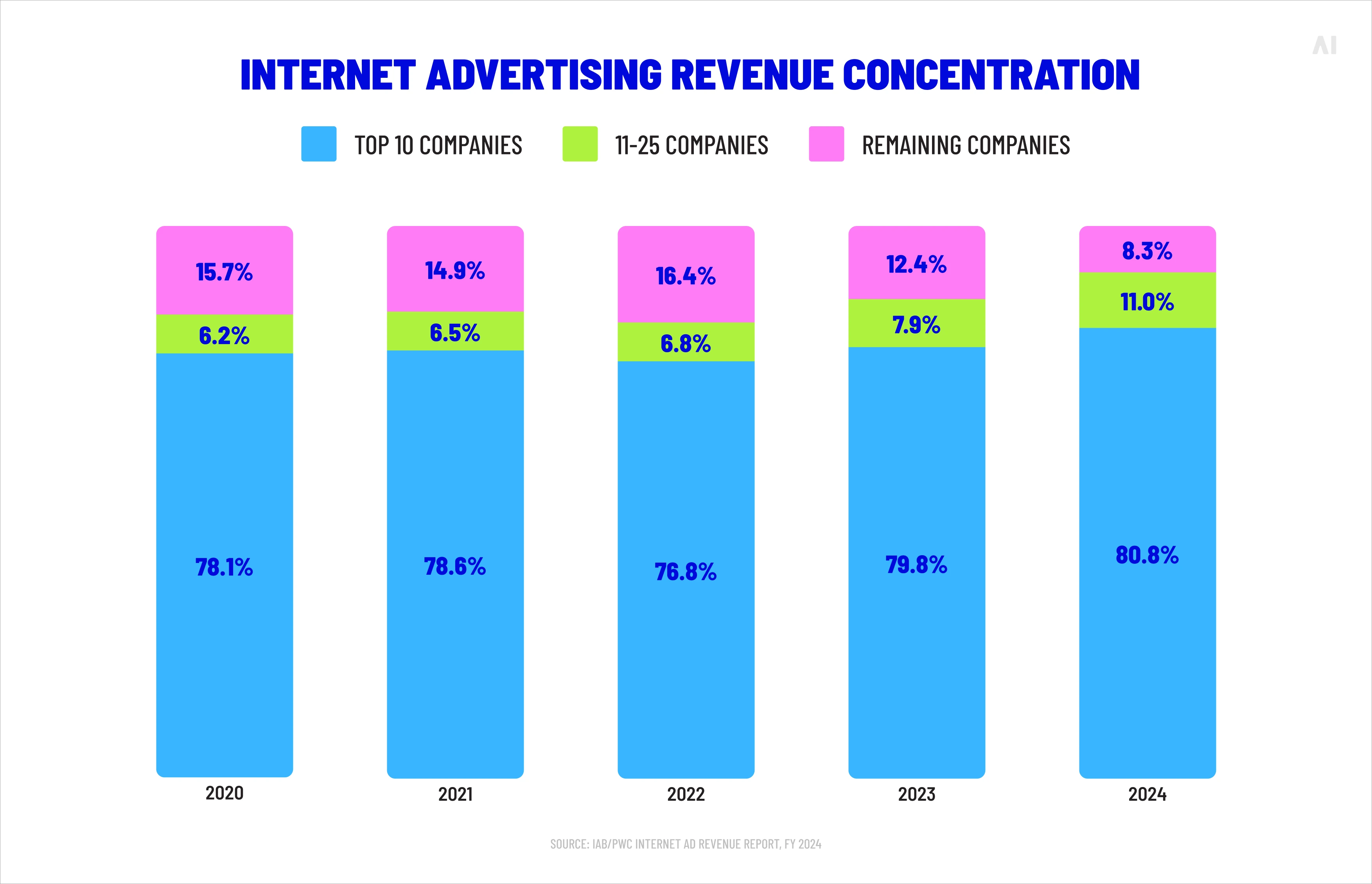
⚡ The takeaway: Choose a platform based on the decisions it must support. Then evaluate whether the data, methodology, and underlying media signals are strong enough to trust those decisions.
Why Modern Marketing Intelligence Requires Multiple Platforms
Modern marketing intelligence is not one capability. It combines measurement, media quality, cross-platform visibility, and creative optimization—and expecting one tool to perform every function usually creates another closed system.
The need for a connected approach is becoming more pronounced as automation grows. IAB’s 2026 Outlook found that two-thirds of buyers are focused on agentic AI for media buying and campaign execution, increasing the importance of reliable data and measurement behind automated decisions.
A stronger enterprise model connects specialized layers:
Measure → improve the media inputs → compare ecosystems → act through better creative.
Each platform has a different job, but the intelligence becomes more valuable when those jobs connect.
Independent Measurement: Elevate
Elevate provides the intelligence layer: bringing signals from multiple channels into a common view so marketers can compare performance without making decisions from isolated platform dashboards.
This helps teams answer questions such as:
- Which channels are contributing most to business outcomes?
- Where is spend approaching diminishing returns?
- How should budgets shift across channels?
- Which customer journeys are actually leading to conversion?
Its Marketing Mix Modeling capability gives teams a broader statistical view of channel contribution, while Path to Conversion helps reveal the touchpoints appearing before conversion. Incrementality testing can then complement that measurement by testing whether observed outcomes would have happened without the marketing exposure.
💡The point is not to create another report. It is to move from fragmented metrics to defensible budget decisions—the same shift explored in how marketing intelligence transforms performance strategy.
Role in the stack: determine what is working and where investment should move.
Better Media Decisions: Smart Supply
Measurement becomes less useful when the media being measured is low quality.
Smart Supply addresses that problem closer to the inventory layer. Instead of treating every available impression as equally valuable, it uses curated Deal IDs, direct SSP access, AI-driven filtering, and in-flight optimization to prioritize supply aligned with campaign KPIs.
Its model focuses on:
- filtering fraud, IVT, and inefficient placements;
- improving supply-path transparency;
- optimizing inventory while campaigns are live;
- maintaining DSP-agnostic execution; and
- providing visibility into placements, traffic sources, and performance.
AI Digital reports 99.9% coverage from top-tier supply sources through Smart Supply’s direct SSP access.
Why does this belong in a marketing intelligence architecture?
Because bad inputs produce misleading conclusions. A channel may appear inefficient because spend is flowing through poor placements, unnecessary intermediaries, or weak inventory—not because the channel itself is ineffective.
This is particularly important when budgets move between walled gardens and the open internet, where advertisers face different levels of control, transparency, inventory access, and measurement.
Role in the stack: improve the quality of what marketing dollars actually buy.
Cross-Platform Measurement: Open Garden Framework
Even strong measurement becomes incomplete when each media ecosystem operates according to different rules.
The Open Garden Framework addresses that fragmentation through a vendor-neutral, DSP-agnostic operating model designed to connect data, inventory, activation, and measurement across platforms.
Rather than forcing marketers to choose between walled gardens and the open web, the framework is designed to work across:
- DSPs and SSPs;
- data partners;
- CTV environments;
- open-web inventory; and
- closed advertising ecosystems.
Its cross-channel measurement layer brings together attribution alignment, frequency harmonization, and vendor interoperability, while additional signals such as ACR and foot-traffic data can extend the view beyond platform-reported outcomes.
This creates an important distinction:
Platform reporting asks how a campaign performed inside one ecosystem.
Cross-platform measurement asks how those ecosystems performed together.
That broader view can help marketers identify overlap, compare results more consistently, and make budget decisions without allowing a single vendor’s measurement logic to define success.
Role in the stack: create a consistent view across otherwise disconnected media environments.
Creative Optimization: AI Creative Studio
Measurement tells teams what needs to change. Creative optimization gives them a way to change it quickly.
AI Creative Studio combines AI-assisted production with human creative oversight to produce, adapt, test, and optimize campaign assets across formats and channels.
Its workflow supports:
- rapid creative prototyping;
- multi-platform versioning;
- resizing and localization;
- AI-powered testing and audience feedback;
- asset tagging and optimization; and
- dynamic, interactive, video, CTV, and social formats.
That speed matters because creative performance is not static. Audiences fatigue, offers change, placements require different formats, and one message rarely performs equally well across every environment.
The studio can take one concept and turn it into hundreds of variations, allowing teams to respond to performance signals without rebuilding the campaign from scratch.
💡This is also the logic behind dynamic creative optimization: data identifies what is happening, creative variants provide alternatives, and performance feedback determines what should be prioritized next.
Role in the stack: turn intelligence into faster testing and creative action.
💡 The takeaway: Modern marketing intelligence works best as a connected system. Elevate helps explain performance, Smart Supply improves the media inputs, Open Garden connects fragmented ecosystems, and AI Creative Studio turns insights into creative action. The advantage comes not from asking one platform to do everything, but from making specialized capabilities work from the same performance strategy.
Questions Before Choosing a Platform
A marketing intelligence platform can become part of your decision infrastructure for years. Before comparing demos or feature lists, buyers should test whether the platform can support today’s marketing ecosystem and tomorrow’s operating model.
Use these questions during vendor evaluation.
Does It Connect to All Your Marketing Data?
Start with the data you actually need—not the number of connectors on a vendor’s website.
Ask whether the platform can integrate:
- advertising platforms and DSPs;
- CRM and customer systems;
- web and app analytics;
- CTV and streaming data;
- retail media networks;
- offline conversions and sales;
- data warehouses; and
- custom or future data sources through APIs.
Then go deeper.
How frequently is the data refreshed? What granularity is preserved? Who maintains connectors when APIs change? Can new sources be added without rebuilding the architecture?
A platform that covers 90% of your ecosystem can still create a distorted performance view if the missing 10% represents an important revenue channel.
Look for: broad connectivity, reliable APIs, flexible schemas, historical data support, and clear processes for adding new integrations.
Can You Trust the Measurement?
A polished dashboard does not guarantee reliable measurement.
Ask vendors to explain exactly how performance is calculated:
- How are conversions attributed?
- Are metrics normalized across platforms?
- How is duplicated conversion credit handled?
- Can platform-reported results be independently validated?
- Does the system support MMM, incrementality, attribution, or other measurement methodologies?
- Can analysts inspect the methodology behind the output?
Also ask what happens when data conflicts. Google, Meta, a DSP, a CRM, and your analytics platform may all report different versions of the same customer journey.
Look for: transparent methodology, cross-channel validation, consistent definitions, and enough underlying data to challenge the result when necessary.
Does AI Provide Actionable Insights?
“AI-powered” has become too broad to be a meaningful buying criterion by itself.
Instead, ask what the AI actually does.
Can it:
- detect anomalies before teams notice them manually?
- forecast likely performance?
- identify the drivers behind a change?
- recommend budget or campaign actions?
- prioritize opportunities according to business impact?
- explain why it made a recommendation?
There is a major difference between summarizing a dashboard and interpreting what should happen next.
Buyers should also examine what data the AI can access, whether recommendations are traceable, and where human approval remains necessary.
Look for: forecasting, anomaly detection, recommendations, explainability, and controlled automation—not simply a chatbot attached to reporting.
Will It Scale with Your Business?
The platform that works for one market and five users may not work for twenty markets, hundreds of campaigns, and multiple business units.
Evaluate:
- implementation and migration requirements;
- role-based permissions and governance;
- security and compliance controls;
- reporting customization;
- API limits and flexibility;
- data-volume constraints;
- multi-market and multi-brand support;
- vendor dependencies; and
- the cost of expanding usage over time.
Vendor flexibility deserves particular scrutiny as AI becomes embedded in enterprise systems. An IBM Institute for Business Value study of 1,000 senior executives published in June 2026 found that 91% did not fully understand their AI dependencies across vendors, models, and infrastructure, while 71% said switching their primary AI vendor or model would be difficult.
That makes portability and interoperability business requirements, not merely technical preferences.
Look for: an architecture that can expand without forcing the organization into unnecessary technical debt, rigid workflows, or vendor lock-in.
💡 The takeaway: Do not ask only whether a platform can meet today’s requirements. Ask whether its data, measurement, AI, governance, and architecture will remain usable as your marketing operation becomes more complex.
Choose the Best Marketing Intelligence Platform for Your Business
The best marketing intelligence platform is the one that solves the decision problem your team actually has.
If your main challenge is understanding performance across paid media, prioritize independent cross-channel measurement. If fragmented data is the bottleneck, focus on data integration and BI infrastructure. If leadership needs stronger visibility into competitors and market shifts, a competitive intelligence platform may be the better fit.
Many enterprise teams will need a combination of these capabilities rather than one all-purpose system.
Before choosing a platform, define:
- which decisions it needs to improve;
- which data sources it must connect;
- how independently performance should be measured;
- what role AI should play in analysis and optimization; and
- how the platform will fit into the wider marketing stack.
This broader approach reflects the role of advertising intelligence: bringing together data, measurement, market context, and actionable insights so teams can make better investment decisions.
The objective is not to collect more dashboards. It is to build a marketing intelligence system that helps teams understand performance, identify opportunities, and act with greater confidence.
If your organization is evaluating how to connect these capabilities across channels and platforms, talk to AI Digital about building a more unified measurement and intelligence strategy.