Why Podcast Ads Are Becoming a Premium Media Channel
Podcast advertising has become one of the most valuable media channels for brands that want to reach attentive, engaged, and highly specific audiences. Instead of interrupting users in crowded feeds or low-attention environments, podcast ads appear inside content that listeners actively choose, often from hosts they already trust.
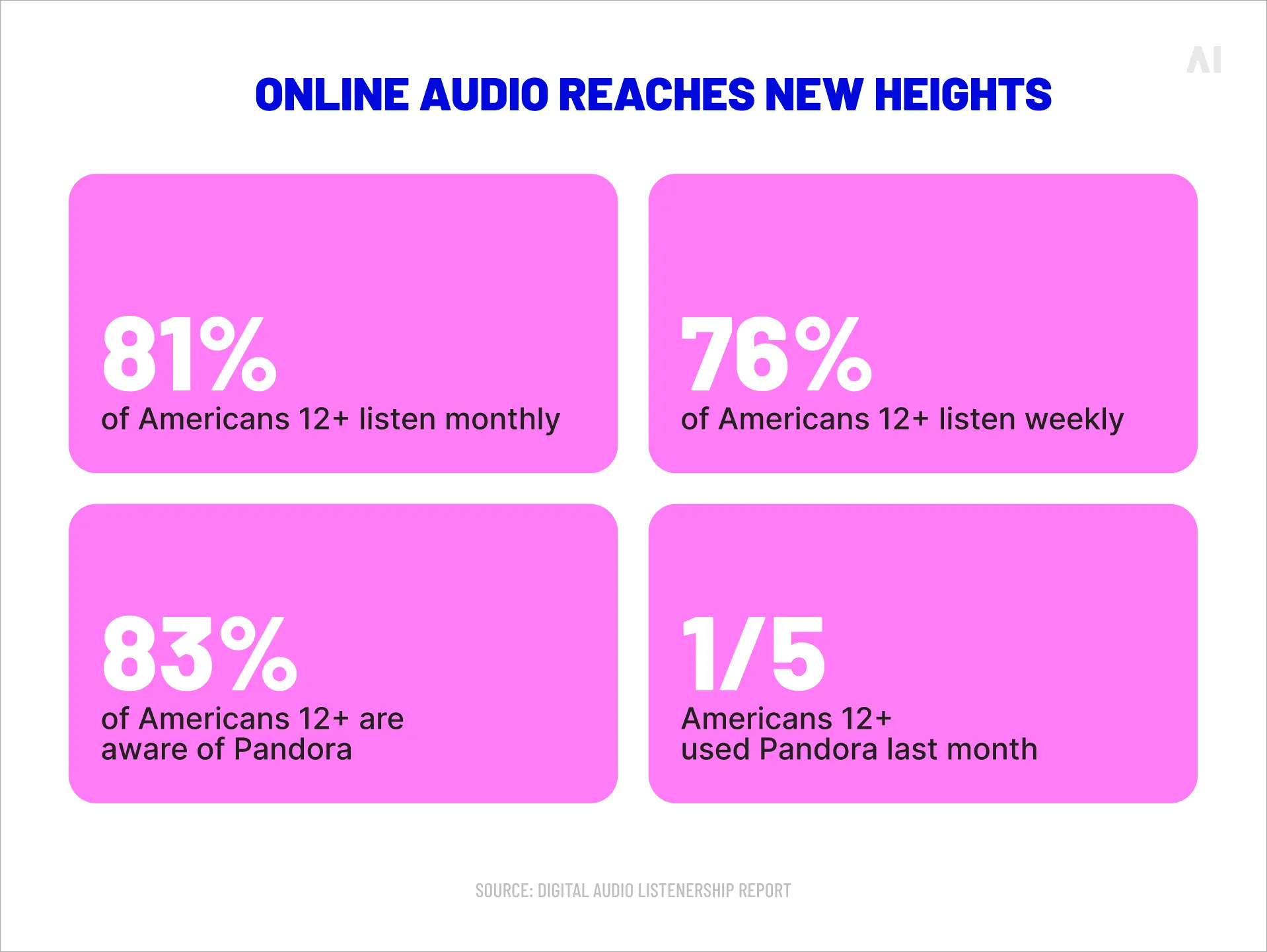
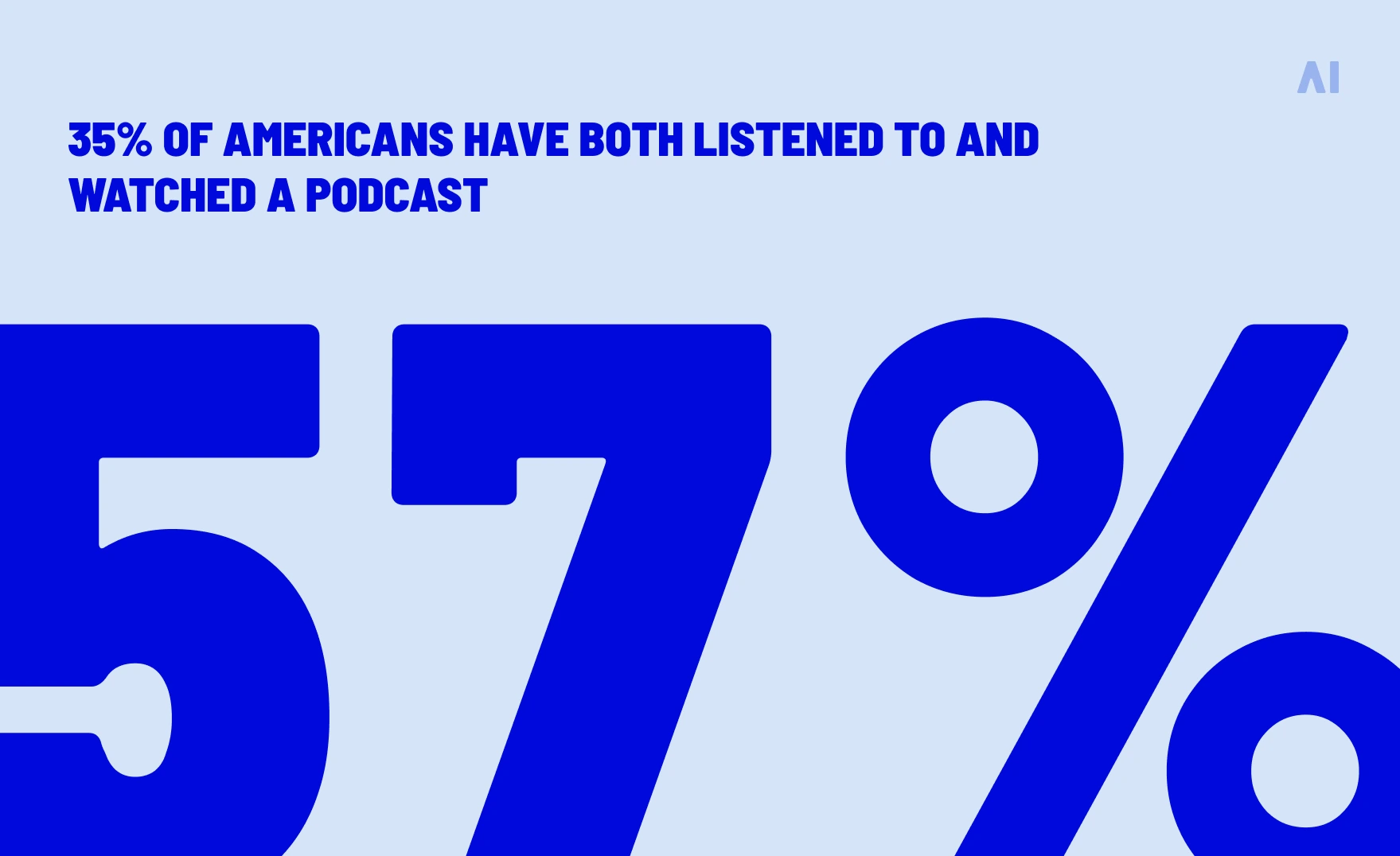
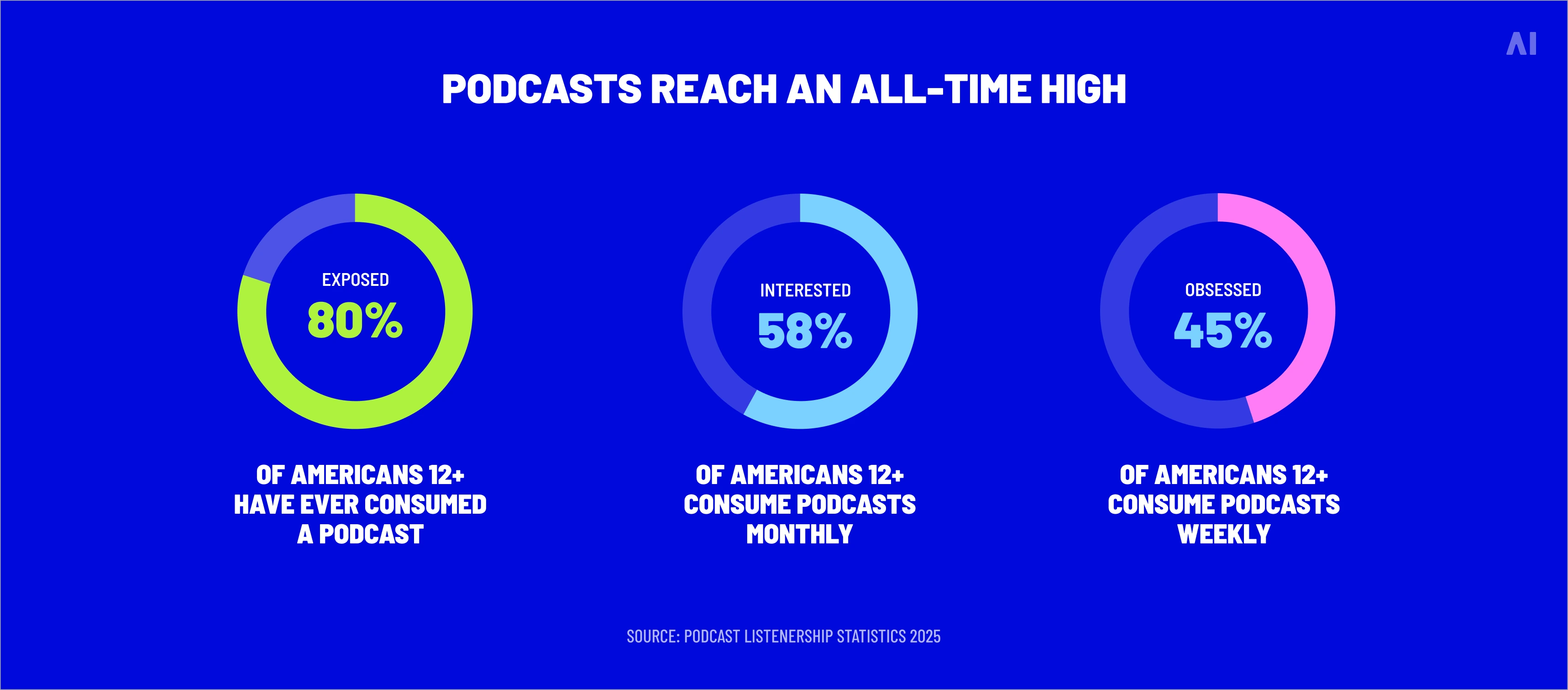
The scale of the channel now supports that strategic value. In 2026, 58% of Americans age 12+ consumed a podcast in the last month, equal to around 167 million people, while 45% consumed a podcast in the last week, equal to around 130 million people. Podcasting is also expanding beyond audio: 57% of Americans have both listened to and watched a podcast.
At its core, podcast advertising allows brands to promote products or services through audio or video podcast content.
This growth matters because advertisers are looking for media channels that offer more than reach alone. Podcasts combine audience trust, long-form attention, contextual relevance, and increasingly sophisticated buying and measurement capabilities.
This guide explains why podcast advertising is becoming a premium media channel and how brands can use it effectively. It covers the main benefits of advertising on podcasts, the different types of podcast ads, pricing models, campaign strategy, measurement challenges, and the future of podcast advertising as AI, programmatic buying, and cross-channel analytics reshape the market.
What is podcast advertising?
Podcast advertising is the practice of promoting a brand, product, or service through podcast content. A podcast ad can appear in an audio episode, a video podcast, or a broader digital audio campaign, depending on the format, buying method, and campaign objective.
Brands use podcast advertising because it places their message inside content that audiences actively choose to consume. Instead of appearing as a quick interruption in a feed, podcast ads often sit within longer-form content where the listener already has interest in the topic, the host, or the show community.
Common types of podcast ads include:
- Host-read ads, where the podcast host delivers the message in their own voice
- Produced ads, where the brand provides a polished audio or video creative
- Dynamically inserted ads, where placements are served into episodes based on targeting criteria
- Baked-in ads, where the ad becomes a permanent part of the episode
- Sponsorships, where a brand is associated with a show, episode, segment, or series
- Branded podcasts, where the brand creates or sponsors original editorial-style content
Podcast advertising is also becoming more connected to the wider digital audio ecosystem.
⚡️For brands that want automated buying, targeting, and campaign optimization, programmatic audio advertising explains how audio inventory can be bought through data-driven media systems. For a broader view of the channel, digital audio advertising shows how podcasts fit alongside streaming audio, digital radio, and other audio formats.
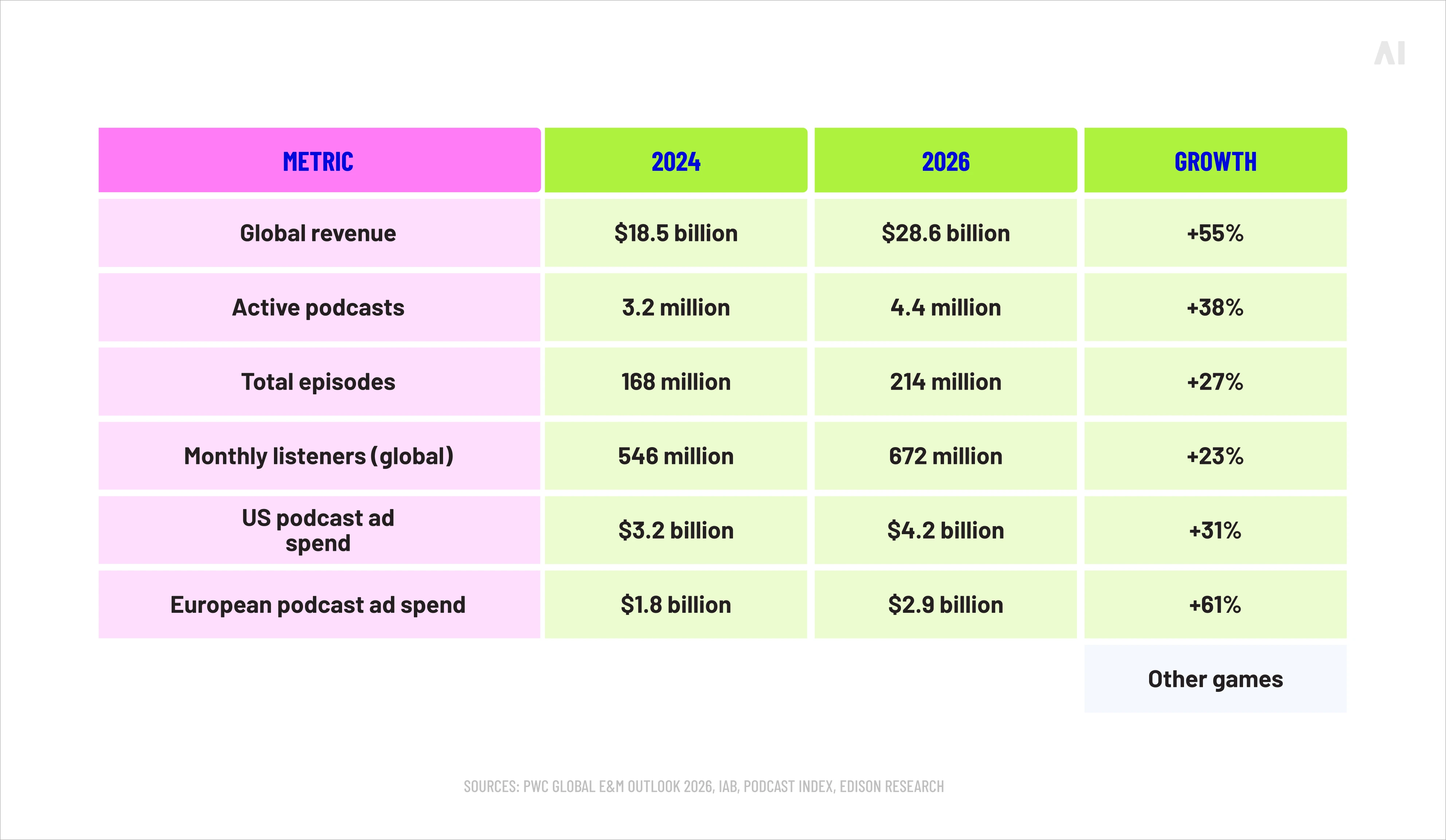
The market is expanding because podcasts are no longer treated as a small experimental channel. Deloitte predicts that global advertising revenue from podcasts and vodcasts will reach roughly $5 billion in 2026, up nearly 20% year over year. That growth shows that advertisers are allocating more serious budget to podcast advertisements as part of the modern media mix.
Why podcast advertising is growing
Podcast advertising is growing because the channel now combines audience attention, creator trust, and better media infrastructure.
Several shifts are driving this growth:
- Advertisers are moving toward attention-based media. Brands are looking for environments where audiences are more focused and less likely to ignore the message.
- Video podcasts are expanding the format. Spotify reported that more than 500 million users have streamed a video podcast on the platform, up nearly 50% year over year.
- Podcast audiences are commercially valuable. In the UK, 43% of adults listen to an ad-supported podcast every month, and 79% of those listeners recalled hearing a podcast ad in the past week.
- The format supports both brand and performance goals. Podcast ads can build awareness, increase consideration, support direct response, and reinforce customer loyalty.
- Buying and measurement are improving. Dynamic ad insertion, programmatic buying, promo codes, vanity URLs, brand lift studies, and cross-channel analytics make campaigns easier to plan, test, and optimize.
💡This is why advertising on podcasts continues to attract budget even as competition increases across social media, YouTube, CTV, display, and streaming audio. Podcasts give advertisers something many digital channels struggle to provide at the same time: trusted context, engaged audiences, and a media environment built around attention rather than interruption.
Why a podcast ad is considered premium media
A podcast ad is considered premium media because it combines several qualities that standard digital placements often struggle to deliver at the same time: trust, attention, engagement, audience quality, and measurable business impact.
In many digital channels, advertisers buy access to impressions. In podcast advertising, they often buy access to a relationship. The listener has chosen the show, understands the host’s voice, and is already spending time with content that feels relevant to their interests. That makes the advertising environment more intentional than many interruptive placements across display, social, or short-form video.
⚡️This is why podcast ads are increasingly used across both brand and performance objectives. For teams balancing awareness, consideration, and conversion, brand marketing vs performance marketing helps explain why premium channels should not be judged by one metric alone.
💡Podcast campaigns often need the same logic: they can influence short-term response, but their value also comes from trust-building, repeated exposure, and incremental reach across the media mix.
⚡️That also makes podcast advertising relevant to cross-channel marketing measurement. A podcast campaign may not always receive full credit in last-click attribution, but it can still influence search demand, direct traffic, branded recall, and assisted conversions.
Trust and engagement
Podcast advertising benefits from the relationship between the host and the audience. A host-read podcast ad can feel more like a recommendation than a traditional commercial, especially when the host explains the product in their own language and connects it to the show’s context.
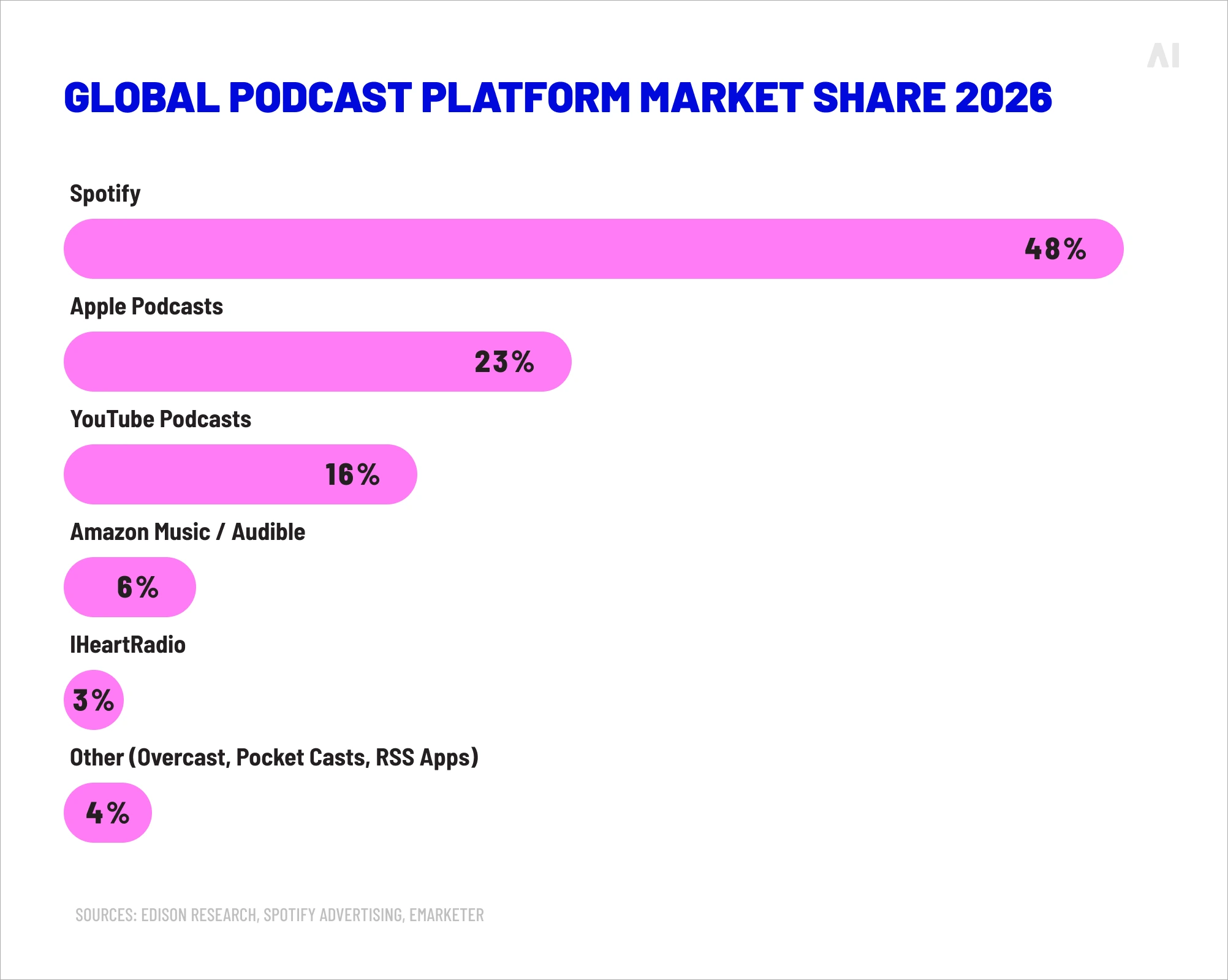
This matters because listeners are often in focused environments when they consume podcasts, such as commuting, walking, exercising, cooking, or working. These moments create a different attention profile from feed-based media, where the user may scroll past an ad in seconds.
Acast and Nielsen’s 2026 Incremental Impact Study found that 80% of podcast audio consumers paid full or most attention to the channel, compared with 74% for music streaming and 64% for radio. The same study found that 46% described podcast audio advertising as engaging or entertaining, compared with 42% for music streaming and 34% for radio.
For advertisers, that attention advantage supports stronger creative impact. Podcast ads can work especially well when the message is:
- Contextually aligned with the show topic
- Delivered in a natural host voice
- Easy to understand without visual support
- Connected to a clear next step, such as a landing page, offer, or brand search
⚡️This is also why contextual advertising is relevant to podcast strategy. The value of a placement does not come only from who hears the ad. It also comes from the environment in which the message appears.
Incremental reach and audience quality
Podcast ads also qualify as premium media because they help brands reach audiences that may be difficult to access efficiently through other channels.
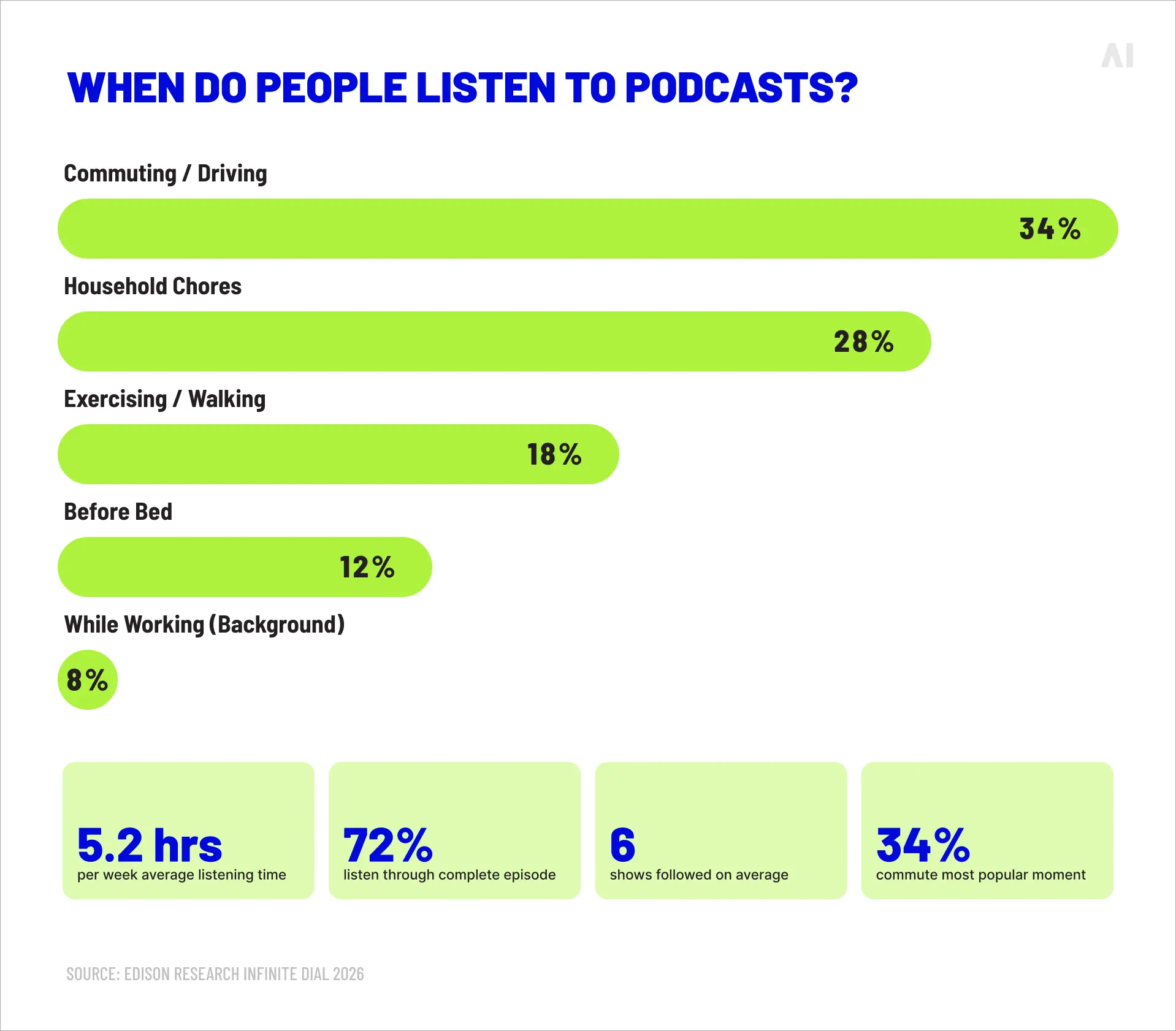
For example, business, finance, technology, wellness, culture, and niche entertainment podcasts often attract highly specific communities. These audiences are not always easy to isolate through broad social or display targeting, especially when privacy changes reduce the reliability of user-level tracking.
Podcast advertising can support incremental reach in several ways:
- Reaching people in moments where they are not browsing or scrolling
- Adding exposure beyond social, search, display, radio, and CTV
- Connecting with niche audiences through trusted content environments
- Improving media mix quality by reducing overdependence on one platform
Acast and Nielsen’s 2026 study found that podcasts added +34% incremental reach to radio campaigns and +22% incremental reach to music streaming campaigns. For video media, podcasts added +28% incremental reach to BVOD, +21% to live TV, and +13% to SVOD.
⚡️That is why podcast advertising should be evaluated through an incrementality lens, not only through direct attribution. Articles such as What Is Incrementality Testing in Marketing and Incrementality vs Attribution: What’s the Difference and Why the Shift Is Happening can help readers understand why incremental impact often gives a more accurate view of podcast performance than last-click reporting alone.
Full-funnel marketing impact
Podcast advertising is not limited to awareness. A well-planned campaign can support the full customer journey.
At the top of the funnel, podcast advertisements help brands build recognition through repeated exposure in trusted content. In the middle of the funnel, they can explain value propositions, educate listeners, and build consideration. At the bottom of the funnel, they can drive action through promo codes, vanity URLs, search prompts, limited-time offers, or direct-response landing pages.
Podcast ads can support different funnel objectives:
- Awareness: introducing the brand to a relevant audience
- Consideration: explaining why the product matters
- Conversion: encouraging listeners to visit, search, subscribe, book, or buy
- Retention: reinforcing trust with existing customers through repeated brand presence
- Advocacy: turning loyal listeners into customers who recommend the brand
This is one reason podcast advertising is attractive for both B2C and B2B brands. A consumer brand may use podcast ads to create familiarity and purchase intent, while a SaaS or professional services company may use them to reach decision-makers in a specific category.
Why advertisers pay premium CPMs
Podcast inventory can command premium CPMs because advertisers are not paying only for reach. They are paying for a higher-quality media environment.
Several factors support premium pricing:
- High audience attention: listeners spend more time with long-form content
- Host credibility: host-read ads can carry stronger trust than generic creative
- Audience specificity: niche shows can reach valuable segments with less waste
- Brand-safe context: advertisers can select shows aligned with their category and values
- Creative flexibility: brands can test host reads, produced ads, sponsorships, and dynamic placements
- Full-funnel value: campaigns can support both brand lift and direct response
For 2026 planning, Acast estimates $25–$40 CPM for host-read sponsorships on individual shows, compared with $15–$30 CPM for pre-recorded ads bought across a network. It also notes that high-value categories such as business, finance, and B2B podcasts can command $40+ CPMs because advertisers are paying to reach more valuable and harder-to-access audiences.
💡This is why CPM should be interpreted carefully. A lower CPM is not always more efficient if the audience is broad, distracted, or poorly aligned. A higher CPM can be justified when the placement delivers stronger attention, better audience fit, and clearer strategic value.
⚡️For readers comparing pricing models across channels, what is CPM in TV advertising explains how CPM works in premium video environments, while CPM vs CPC vs CPA helps clarify when cost-per-thousand impressions, cost-per-click, and cost-per-acquisition should be used to evaluate campaign performance.
Is podcast advertising right for your business?
Podcast advertising can be a strong fit for brands that need more than low-cost reach. It works best when a business needs to build trust, explain value, reach a specific audience, or influence a decision that may not happen immediately after the first impression.
A podcast ad is usually most effective when the product has at least one of these qualities:
- A clear problem-solution message
- A story that benefits from explanation
- A defined audience or niche community
- A trust-based buying process
- A customer journey that includes research, comparison, or repeat exposure
This is why podcast ads are often used by brands that want to influence the full customer journey, not only generate quick clicks. A listener may hear the message during an episode, search for the brand later, compare options, return through another channel, and convert after several touchpoints.
⚡️AI Digital’s article on Customer Journey Analytics Explained: Data, Touchpoints, and Cross-Channel Insights helps marketers understand how podcast exposure connects with these wider customer journeys.
B2B and SaaS brands
Podcast advertising can be especially useful for B2B and SaaS brands because many podcast audiences are built around professional interests, industry communities, and specialist topics.
This allows advertisers to reach decision-makers in a more focused environment than broad digital media can usually provide.
For B2B marketers, podcast ads can support:
- Category education, especially for complex products
- Thought leadership, when the brand needs to build authority
- Demand generation, by introducing solutions to relevant audiences
- Account-based marketing, when podcast audiences overlap with high-value sectors or buyer personas
- Longer sales cycles, where repeated exposure matters more than immediate conversion
⚡️This makes podcasts useful alongside account-based marketing, especially when the goal is to influence specific industries, roles, or buying committees rather than reach a broad consumer audience.
Consumer and DTC brands
Consumer and DTC brands often perform well with podcast advertisements because the format gives them time to build familiarity and trust. A host can explain the product, describe a use case, share a personal experience, or make the offer feel more relevant to the audience.
In the 2026 UK Advertising Landscape research, 44% of UK podcast listeners said they had made a purchase after hearing a podcast ad. Among listeners who had consumed a podcast ad in the previous three months, 30% searched for more information, 20% discussed the product with others, and 14% wrote down a promo code.
These behaviors are important for DTC brands because they show that podcast advertising can influence more than immediate clicks. It can also drive research, conversation, brand search, and later purchase activity.
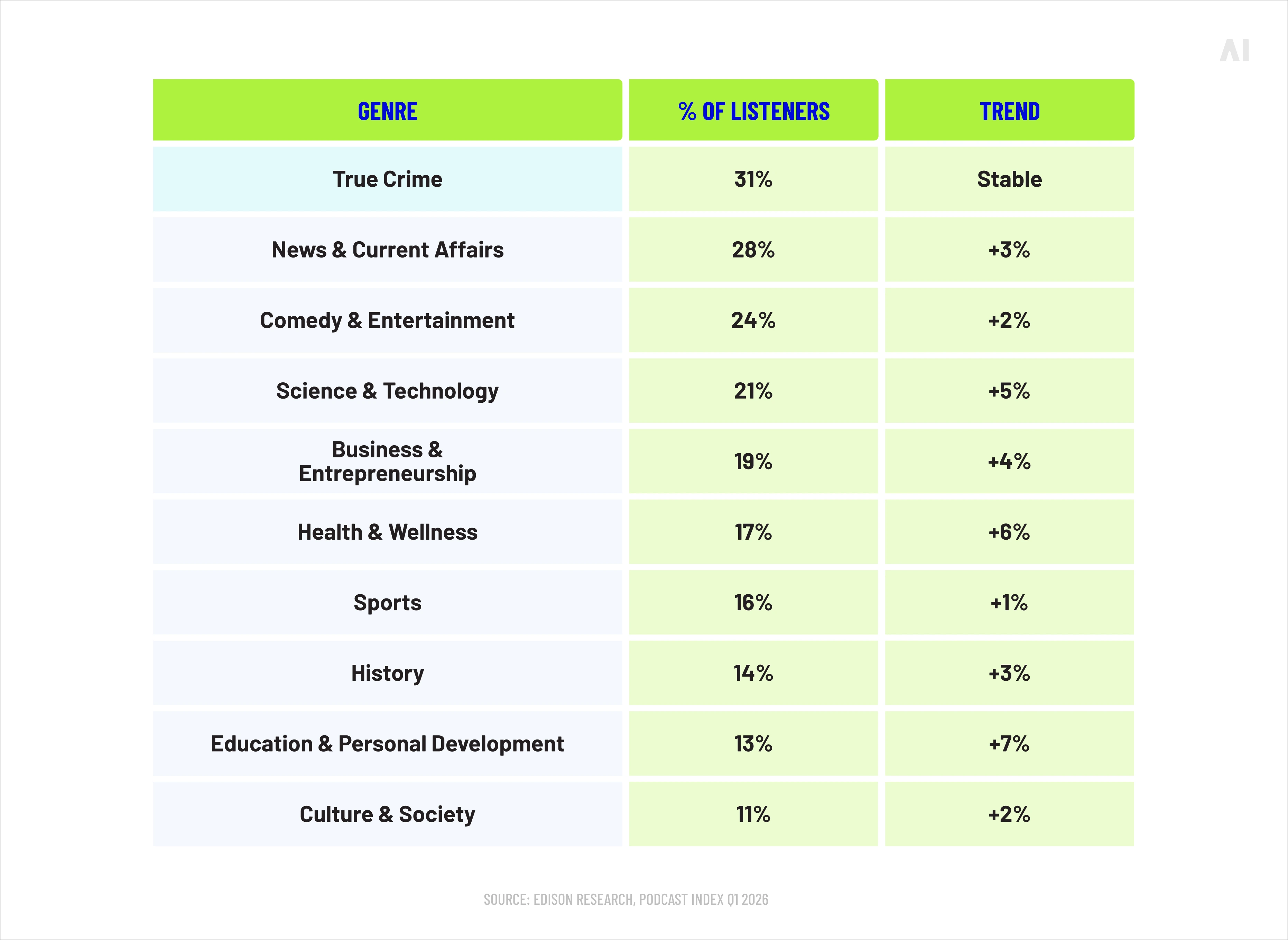
Podcast ads are often a good fit for consumer brands in categories such as:
- Health and wellness
- Beauty and personal care
- Financial services
- Education and online learning
- Subscription products
- Food, beverage, and lifestyle brands
- Apps and digital services
When podcasts aren’t the right fit
Podcast advertising is not the right channel for every campaign. Some brands may perform better through visual, local, or high-intent channels depending on the product and objective.
Podcasts may be less effective when:
- The product needs strong visual demonstration, such as fashion styling, home decor, or visual design tools
- The campaign is highly local, and the brand needs precise geographic reach at small scale
- The objective depends on immediate attribution, such as same-day conversions or last-click reporting
- The offer is too broad, with no clear audience fit or contextual relevance
- The creative is over-scripted, making the ad feel disconnected from the host and show environment
Types of podcast ads and how they work
Podcast advertising is not a single format. Brands can use different types of podcast ads depending on whether they want to build awareness, drive consideration, generate conversions, or create a deeper content partnership with a specific audience.
The most common podcast ad formats include host-read ads, produced ads, baked-in placements, dynamic ad insertion, sponsorships, and branded content. Each one works differently. Some formats are built for authenticity and host trust, while others are designed for scale, targeting, creative control, or long-term brand association.
For marketers, the right format depends on several factors:
- Campaign objective: awareness, consideration, conversion, or retention
- Creative style: natural host delivery or polished brand-produced audio
- Buying model: direct sponsorship, network buying, or programmatic placement
- Targeting needs: broad reach, niche audience alignment, or dynamic audience targeting
- Measurement expectations: brand lift, promo-code use, site visits, or assisted conversions
💡This is why format selection matters. A host-read mid-roll ad may be effective when trust and explanation are important, while a dynamically inserted produced ad may work better when the advertiser needs campaign flexibility, audience targeting, and scalable testing.
⚡️For brands planning campaigns across platform-based audio environments, Spotify ads offers useful context on how podcast placements can fit into a wider audio advertising strategy.
Host-read vs produced ads
Podcast ads are often divided into two main creative styles: host-read ads and produced ads.
A host-read ad is delivered by the podcast host in their own voice. This format usually feels more natural because the message comes from someone the audience already listens to and trusts. Instead of sounding like a separate commercial, the ad can feel like part of the episode, especially when the host explains the product through a personal example or relevant use case.
Host-read ads are especially effective when brands need:
- Trust and credibility
- A more conversational message
- Product explanation
- Audience-specific storytelling
- Stronger alignment with the show’s tone
A produced ad, on the other hand, is created by the brand, agency, or production team before being placed into the podcast. It gives advertisers more control over the script, voiceover, music, sound design, pacing, and compliance language. This can be useful when the campaign needs consistent messaging across many podcasts or markets.
Produced ads are often better for:
- Brand consistency
- Large-scale campaigns
- Regulated messaging
- Programmatic buying
- Repeatable creative testing
The main difference is the balance between authenticity and control. Host-read ads usually offer stronger native engagement, while produced ads give advertisers more creative precision and scalability.
Baked-in vs dynamic ads
Podcast ads can also be delivered in two different ways: baked-in or dynamic.
A baked-in ad is permanently included in the episode file. Once the episode is published, the ad stays there for anyone who listens later. This can create long-term exposure, especially for evergreen brand messages or sponsorships that are meant to stay relevant over time.
Baked-in ads are useful for:
- Long-term brand association
- Evergreen campaigns
- Creator partnerships
- Sponsorship-style placements
- Messages that do not expire quickly
The limitation is flexibility. If the offer changes, the landing page is updated, or the campaign ends, the baked-in ad may no longer be accurate.
A dynamic ad is inserted into an episode at the moment of listening. This gives advertisers more control over targeting, timing, frequency, and campaign updates. A brand can change the creative, rotate messages, pause a campaign, or serve different ads to different audience segments.
Dynamic ads are useful for:
- Audience targeting
- Location-based campaigns
- Time-sensitive promotions
- A/B testing
- Programmatic podcast advertising
- Campaign optimization during flight
⚡️This is where dynamic creative optimization becomes relevant. When advertisers can adjust creative based on performance signals, they can test different messages, improve relevance, and avoid relying on one fixed version of the ad.
Pre-roll, mid-roll, and post-roll ads
Podcast ad placements also differ by where they appear within an episode. The three main placements are pre-roll, mid-roll, and post-roll ads.
A pre-roll ad appears at the beginning of the episode, usually before or shortly after the main content starts. It can be useful for reach because most listeners who start the episode will hear it. However, the listener may not yet be fully engaged with the content.
A mid-roll ad appears in the middle of the episode. This placement is often considered valuable because it reaches listeners after they have already committed to the content. If the ad is host-read and contextually relevant, it can feel like a natural pause in the episode rather than an interruption.
A post-roll ad appears at the end of the episode. It is usually less expensive than pre-roll or mid-roll inventory, but it may receive lower attention because some listeners stop before the episode finishes.
In general:
- Pre-roll ads are useful for quick exposure and broad reach.
- Mid-roll ads are useful for attention, engagement, and host-read storytelling.
- Post-roll ads are useful for lower-cost reinforcement or secondary calls to action.
The best placement depends on the campaign goal. A brand that wants strong recall or detailed product explanation may prioritize mid-roll ads. A brand testing reach or frequency may use a mix of placements across several shows.
Branded podcasts and sponsorships
Beyond standard podcast ad placements, brands can also invest in sponsorships and branded podcasts.
A podcast sponsorship connects a brand with a show, episode, segment, or series. The brand may sponsor a recurring feature, appear in opening mentions, or be positioned as the partner behind a specific content theme. This works well when the advertiser wants a closer association with the podcast’s audience and topic.
Sponsorships make sense when the goal is:
- Brand awareness
- Audience trust
- Category association
- Longer-term visibility
- A stronger connection with a specific show or creator
A branded podcast goes further. Instead of placing ads inside an existing show, the brand creates or sponsors original content. This can be useful for companies that want to educate the market, explain complex topics, build thought leadership, or create a long-form storytelling asset.
Branded podcasts are best suited for brands that have:
- A clear editorial point of view
- Expertise worth turning into content
- A long-term content strategy
- A topic that audiences genuinely want to follow
- The budget and patience to build an audience over time
These formats are not always the right choice for short-term performance campaigns. However, when the objective is to build authority, trust, and deeper audience engagement, sponsorships and branded podcasts can create value that standard ad placements may not achieve on their own.
Podcast ads vs Other advertising channels
Podcast ads play a different role from many standard digital advertising channels. They are not usually the fastest way to generate high-volume impressions, but they can be highly effective when brands need attention, trust, and deeper audience engagement.
Channels such as social media, display, YouTube, and CTV each serve a different purpose in the media mix. Social media is strong for scale and fast testing. YouTube and CTV are useful for visual storytelling. Display can support retargeting and broad reach. Podcast advertising is different because it places the brand inside a chosen content environment where listeners already trust the host, topic, or community.
⚡️The comparison is not about whether podcast ads are better than other channels. It is about where they create value. For brands using premium video environments, performance TV advertising offers a useful comparison because both channels combine storytelling, audience targeting, and measurable business outcomes.
Podcasts vs social media advertising
Podcast advertising and social media advertising both help brands reach specific audiences, but they create different types of engagement. Social platforms are strong for scale, fast testing, and direct-response campaigns. Podcasts are usually stronger when the goal is to build trust, explain value, and reach listeners in a more focused content environment.
The difference comes down to how people consume each channel. Social media users often scroll quickly, while podcast listeners usually choose a show and stay with it for a longer session. That gives podcast ads less scale than social platforms, but often more depth.
Podcasts vs YouTube advertising
Podcasts and YouTube both support storytelling, but they work in different consumption environments. YouTube is visual, search-driven, and often used for discovery, tutorials, reviews, and entertainment. Podcasts are more audio-first and relationship-driven, with listeners often staying with one host or show for longer sessions.
⚡️AI Digital’s new article, YouTube Ad Formats: Which Ones Actually Drive Results helps advertisers compare YouTube placements in more detail. For brands using YouTube in a connected TV strategy, YouTube TV ads offers a useful next step.
Podcasts vs CTV advertising
Podcasts and CTV both work well for premium storytelling, but they create different audience experiences. CTV advertising is screen-based, visual, and often used for high-impact brand campaigns. Podcast advertising is more intimate and host-led, making it useful when the message needs trust, explanation, or repeated exposure in a focused listening environment.
💡The two channels can also complement each other. CTV can introduce a brand with strong visual impact, while podcast ads can reinforce the message through host credibility, longer-form explanation, and niche audience alignment.
⚡️For brands building a video-led media plan, connected TV advertising explains how CTV reaches streaming audiences, while CTV media buying shows how advertisers can plan and buy premium TV inventory.
Podcast advertising compared to other media channels
Podcast advertising should be evaluated within the wider media mix, not as a standalone channel. Each major advertising channel offers a different balance of scale, attention, targeting, creative requirements, and measurement complexity. The figures below show how large adjacent media channels have become, helping advertisers understand where podcast ads fit alongside social media, YouTube, CTV, display, and digital audio.
- Social media advertising: U.S. social media ad revenue reached $117.7 billion in 2025, growing 32.6% year over year.
- YouTube advertising: YouTube revenue across ads and subscriptions exceeded $60 billion in 2025.
- CTV advertising: U.S. CTV ad spend is projected to reach $80 billion in 2026, growing 11% year over year.
- Digital video advertising: U.S. digital video ad spend is projected to reach $81.9 billion in 2026, growing 11% year over year.
- Display advertising: U.S. display revenue reached $81.6 billion in 2025, growing 9.8% year over year.
- Digital audio advertising: U.S. digital audio revenue reached $8.4 billion in 2025.
Podcast ad costs and pricing models
Podcast ad costs depend on the format, audience size, placement, buying method, and quality of the podcast inventory. A host-read mid-roll ad on a niche business podcast will usually cost more than a pre-produced ad bought programmatically across a wider network because the value comes from trust, audience fit, and placement quality.
For 2026 planning, Libsyn Ads lists these podcast advertising benchmarks:
- Programmatic ads: around $12–$15 CPM for 30- or 60-second pre-produced ads
- Dynamic episodic ads: around $18–$22 CPM for dynamically inserted host-read or pre-produced ads
- Baked-in host-read ads: around $24–$26 CPM for ads that stay in a specific episode permanently
- General podcast CPM range: around $18–$25 CPM, though niche or high-demand audiences can cost more
Several factors influence the final cost:
- Ad format: host-read ads usually cost more than produced ads because they use the host’s credibility.
- Placement: mid-roll ads often cost more than pre-roll or post-roll because they appear when listeners are already engaged.
- Audience size: larger shows usually require higher total spend, even when CPMs are similar.
- Audience quality: B2B, finance, technology, and other high-value audiences often command higher rates.
- Buying method: direct sponsorships offer stronger show alignment, while programmatic buying offers more scale and flexibility.
- Inventory quality: brand-safe, contextually relevant shows usually justify higher pricing.
Podcast ads can be priced in several ways:
- CPM pricing: advertisers pay per thousand impressions or downloads. This is common for scalable campaigns.
- Flat-rate sponsorships: advertisers pay a fixed fee for a show, episode, or segment sponsorship. This is useful for deeper brand association.
- Performance-based pricing: advertisers pay based on actions such as leads, sales, or conversions. This can reduce upfront risk but may limit reach or premium inventory access.
💡The right model depends on the campaign goal. CPM is useful for reach and testing, flat-rate sponsorships work well for brand alignment, and performance-based pricing is better when the advertiser needs clearer direct-response accountability.
⚡️For a deeper understanding of media efficiency metrics, eCPM, rCPM, and fill rate explains how advertisers and publishers evaluate the real value of ad inventory.
How to build a podcast advertising strategy
A strong podcast advertising strategy starts with clear planning. Advertisers need to know who they want to reach, what action they want the audience to take, which podcast formats fit the message, and how performance will be evaluated after launch.
Podcast campaigns work best when they are planned as part of a wider media strategy, not as isolated sponsorships. The goal is to connect audience selection, creative execution, buying method, and measurement into one system.
⚡️For a broader planning foundation, media planning and buying explains how advertisers can align channels, budgets, and campaign objectives across the full media mix.
⚡️AI Digital’s article on Creating a Data-Driven Marketing Strategy can also help marketers connect podcast campaigns with audience insights, performance data, and cross-channel decision-making.
1. Match podcast genres to campaign goals
Different podcast categories support different campaign objectives. A business podcast may be useful for reaching decision-makers, while a wellness, culture, or lifestyle show may be better for consumer consideration.
Advertisers should match show selection to the campaign goal:
- Awareness: choose podcasts with strong reach and broad category relevance.
- Consideration: choose shows where the host can explain the product in context.
- Conversion: choose podcasts with loyal audiences and clear CTA opportunities.
- Retention: choose recurring sponsorships that reinforce trust over time.
The best genre is not always the largest one. It is the one where the audience, topic, and brand message fit naturally.
2. Choose the right podcast buying model
Podcast ads can be bought through direct deals, podcast networks, or programmatic platforms.
- Direct buying gives advertisers closer access to specific shows, hosts, and sponsorship opportunities. It works well for premium host-read ads and long-term creator partnerships.
- Network buying gives advertisers access to multiple podcasts through one publisher or sales partner. It is useful when brands want scale but still need category alignment.
- Programmatic buying allows advertisers to buy podcast inventory through automated systems using targeting, frequency control, and campaign optimization. This can be useful for scalable testing and broader audio campaigns.
⚡️For brands using automated buying, demand-side platforms explains how advertisers access inventory through DSPs, while programmatic advertising platforms covers the wider technology stack behind programmatic media buying.
3. Evaluate podcast inventory quality
Not every podcast placement has the same value. Advertisers should evaluate inventory quality before committing budget.
Key factors include:
- Audience relevance: does the show reach the right people?
- Engagement quality: do listeners trust the host and stay with the content?
- Content alignment: does the topic fit the brand message?
- Placement quality: is the ad pre-roll, mid-roll, post-roll, host-read, or produced?
- Brand safety: does the content environment match the brand’s standards?
- Supply transparency: does the advertiser understand where the impression is coming from?
⚡️This is where supply path optimization becomes important. Better supply paths can help advertisers reduce waste, improve inventory quality, and make campaign delivery more transparent.
4. Create high-performance podcast ads
Effective podcast creative should sound clear, natural, and relevant to the listener. The strongest ads usually give the host enough structure to communicate the message, but enough flexibility to keep the delivery authentic.
A strong podcast ad brief should include:
- The core product message
- The audience problem
- Key benefits
- Proof points or examples
- Required compliance language
- The call to action
- Pronunciation guidance
- What the host can personalize
The CTA should also match the campaign objective. A brand awareness campaign may ask listeners to search the brand, while a direct-response campaign may use a promo code, vanity URL, or landing page.
⚡️Marketing Measurement Framework: Building a Scalable System for Smarter Decisions helps advertisers connect these creative choices to clear measurement goals.
5. Build a scalable campaign framework
Podcast advertising should be structured for testing before scale. Instead of committing all budget to one show or one message, advertisers can build a framework that allows them to compare formats, audiences, placements, and CTAs.
A scalable framework may include:
- A test phase across several shows or categories
- Creative variations for different audiences
- Clear success metrics before launch
- Consistent tracking links, codes, or landing pages
- Budget reserved for optimization
- A plan for expanding the best-performing placements
This approach helps brands learn which podcasts create the strongest response before increasing spend.
6. Common mistakes to avoid
Podcast campaigns often underperform when advertisers treat the channel like standard display or social advertising. The format depends heavily on trust, context, and audience fit.
Common mistakes include:
- Choosing shows only by audience size
- Using over-scripted host reads
- Ignoring show context and listener expectations
- Using weak or unclear CTAs
- Expecting last-click attribution to show the full impact
- Testing too few shows before judging the channel
- Changing creative too quickly before enough data is collected
The strongest podcast strategies combine audience intelligence, creative judgment, media discipline, and measurement flexibility. That is what allows advertisers to move from one-off podcast ads to a scalable channel for brand growth and customer acquisition.
Smarter podcast ads with AI and programmatic buying
Podcast advertising is becoming more data-driven. As the channel matures, advertisers are no longer limited to manual show selection, fixed sponsorships, or basic campaign reporting. AI-powered tools and programmatic infrastructure now make it possible to plan, buy, optimize, and measure podcast ads with greater precision.
This shift matters because podcast advertising increasingly sits inside a larger media ecosystem. Brands may run podcast ads alongside CTV, YouTube, streaming audio, social media, and display. Without transparent reporting and cross-channel visibility, it becomes difficult to understand which placements are creating real business value.
One major challenge is the rise of closed media ecosystems. Walled gardens can give advertisers access to large audiences, but they often limit transparency, independent measurement, and flexible optimization. The difference between walled gardens vs the open internet is especially important for podcast advertisers that want to compare performance across multiple platforms, publishers, and buying routes.
AI Digital’s approach is built around solving this problem: giving advertisers more control, better visibility, and smarter decision support across the full campaign lifecycle.
Open Garden: More transparency, more control
The Open Garden Framework helps advertisers move beyond platform-limited reporting and fragmented campaign visibility. Instead of relying only on metrics from closed ecosystems, brands can evaluate podcast advertising within a more transparent, cross-channel measurement structure.
This is important because podcast performance may not appear in one clean platform report. A listener may hear a podcast ad, search for the brand later, visit the website through another channel, and convert after additional exposure. Without unified reporting, that influence can be undervalued.
The Open Garden approach supports podcast advertisers through:
- DSP-agnostic execution
- Unified reporting across channels
- Independent measurement
- Greater control over buying decisions
- Reduced dependence on platform-reported metrics
- Clearer visibility into business outcomes
⚡️For marketers evaluating this shift, what is the Open Garden Framework explains how transparent media systems work, while alternatives to walled gardens shows why advertisers are looking for more flexible buying environments.
Smart Supply: Better inventory, better performance
Podcast campaign performance depends heavily on inventory quality. A low-cost impression is not valuable if it appears in the wrong context, reaches the wrong audience, or passes through an inefficient supply path.
Smart Supply helps advertisers improve media quality by focusing on curated inventory, transparent supply routes, and more efficient access to premium placements. For podcast campaigns, this can help brands reduce waste and prioritize content environments that are more relevant, brand-safe, and performance-ready.
Smart Supply can support podcast advertising by helping advertisers:
- Access higher-quality inventory
- Reduce unnecessary intermediary costs
- Improve supply path transparency
- Strengthen brand safety controls
- Prioritize contextually relevant placements
- Maximize value from media investment
⚡️For a deeper foundation, digital advertising supply chain explained outlines how media inventory moves through the programmatic ecosystem, while sustainable programmatic supply path explains why efficient supply paths matter for both performance and accountability.
Elevate: AI-powered planning and optimization
Podcast campaigns also need better planning and optimization. Advertisers need to understand which audiences to prioritize, how to allocate budget, when to scale, and which performance signals matter most.
Elevate brings AI-powered analytics and decision support into that process. Instead of relying only on manual analysis, advertisers can use predictive insights, scenario modeling, and performance monitoring to make faster, better-informed decisions.
For podcast advertising, Elevate can help teams:
- Forecast campaign opportunities
- Compare budget allocation scenarios
- Monitor performance across channels
- Identify underperforming placements
- Optimize spend based on business outcomes
- Connect podcast activity with wider media performance
⚡️The article Elevate: Transparent AI Media Intelligence explains how AI can support media decision-making without removing transparency. For a broader view of the operating system behind these decisions, marketing intelligence platform shows how data, analytics, and optimization can work together.
⚡️AI Digital’s article on AI in Programmatic Advertising: How It Improves Targeting, Bidding, and Optimization expands this discussion further.
Human strategy meets AI intelligence
AI can improve podcast advertising, but it should not replace strategic judgment. The best campaigns still depend on human decisions about audience fit, brand positioning, creative quality, host alignment, and measurement priorities.
AI can help advertisers process more data, compare options faster, and identify optimization opportunities. Human teams decide what matters, what risks to avoid, and how the brand should show up in trusted content environments.
That balance is where podcast advertising becomes smarter: AI improves planning and optimization, while human strategy protects relevance, credibility, and long-term brand value.
How AI Transforms Performance Marketing: From Data to Optimization shows how this same principle applies across the wider performance marketing ecosystem.
Podcast measurement challenges and how to solve them
Podcast advertising can be difficult to measure because listener behavior does not always follow a simple click-and-convert path. A listener may hear a podcast ad while commuting, remember the brand later, search for it on another device, visit the website through a different channel, and convert days or weeks after the original exposure.
That makes podcast measurement more complex than channels where users can click directly from the ad. However, limited attribution visibility does not mean podcast performance cannot be evaluated. It means advertisers need a broader measurement framework.
The most common podcast measurement challenges include:
- Limited click-level attribution, especially for audio-only placements
- Delayed response, because listeners may act later rather than immediately
- Cross-device behavior, where exposure and conversion happen on different devices
- Platform-reported metrics, which may not show the full customer journey
- Overreliance on last-click attribution, which can undervalue upper- and mid-funnel influence
To solve this, advertisers should combine several measurement methods instead of relying on one metric.
Useful podcast measurement approaches include:
- Brand lift studies to measure changes in awareness, recall, favorability, or purchase intent
- Incremental reach analysis to understand whether podcasts add new audience exposure beyond other channels
- Promo codes and vanity URLs to capture direct response activity
- Search lift analysis to see whether podcast ads increase branded search demand
- Website traffic analysis to identify changes in direct, organic, or referral traffic during the campaign period
- Multi-touch attribution to evaluate how podcast exposure works alongside other channels in the conversion path
⚡️For advertisers comparing different attribution approaches, multi-touch attribution explains how multiple touchpoints can contribute to one conversion.
⚡️AI Digital guide on Digital Marketing ROI: How to Measure and Improve It helps readers connect podcast campaign results to revenue, cost efficiency, and long-term business value.
Marketing Measurement vs Attribution vs MMM: What’s the Difference clarifies how attribution, marketing mix modeling, and broader measurement frameworks each answer different performance questions.
⚡️Attribution Is Broken: Why Traditional Models No Longer Work helps readers understand why podcast advertising is often undervalued when brands rely too heavily on last-click reporting.
⚡️Unified Marketing Measurement: Why Attribution Alone No Longer Works shows why podcast performance should be assessed alongside brand lift, incrementality, direct response, and cross-channel business outcomes.
Prepare for the future of podcast advertising
The future of podcast advertising will be shaped by better creative automation, stronger contextual targeting, wider video podcast adoption, and more advanced measurement. As the channel becomes more competitive, advertisers will need to treat podcast ads less like isolated sponsorships and more like a connected part of the media strategy.
💡AI will play a larger role in campaign planning and creative development. Brands will be able to test different messages, adapt scripts for specific audiences, analyze performance signals, and identify which shows or categories are most likely to support business goals. For a broader view of how AI is reshaping media and marketing operations, AI in digital marketing explains how automation, analytics, and optimization are changing campaign execution.
Contextual targeting will also become more important. As advertisers move away from overreliance on individual-level tracking, podcast campaigns can use show topics, episode themes, audience interests, and content environments to improve relevance. Programmatic contextual targeting offers useful context on how brands can reach audiences through content signals rather than only personal data.
To stay competitive, advertisers should focus on:
- Testing audio and video podcast formats
- Using contextual signals to improve audience relevance
- Building measurement frameworks before campaigns launch
- Connecting podcast performance with wider media activity
- Using AI for planning and optimization, not replacing strategic judgment
Podcast advertising will continue to reward brands that combine technology with strong media discipline. The advertisers that perform best will be those that choose the right content environments, measure beyond last-click attribution, and use podcast ads as part of a smarter cross-channel growth strategy.
⚡️To explore how this can work within a broader media plan, advertisers can get in touch with AI Digital.